































Why Most AI Investments Fail: The AI Maturity Assessment Every Enterprise Should Run

 Share -


- 01What Does It Really Mean to Be 'Mature' in AI?
- 02How Leading Firms Stand Apart? An Enterprise AI Maturity Benchmarking Framework
- 03Benefits of AI Maturity Assessment in Organizations
- 04Why Assess AI Maturity Level: The Business Use Case
- 05Key Frameworks to Assess AI Maturity for Enterprises
- 06From Theory to Action: A 4-Step Guide to Your AI Maturity Assessment
- 07Your Implementation Playbook: Moving Up the AI Maturity Ladder
- 08Common Pitfalls in AI Maturation and How to Avoid Them
- 09How to Future-Proof Your AI Strategy for Enterprises
- 10How Appinventiv Helps Organizations in AI Maturity Assessment and Implementation
- 11FAQs

Key takeaways:
- Maturity isn’t only about tech; it is the whole picture that includes your data, people, processes, and governance. Get one part wrong, and the whole thing stalls.
- A real-deal AI maturity assessment shows you where the potholes are before you hit them, saving you from costly wrong turns.
- Don’t reinvent the wheel. Models from Gartner, Deloitte, and BCG are proven blueprints you can adapt.
- The point isn’t just to get a score. It’s to build a concrete plan that takes your organization from just messing around with AI to truly leading with it.
You’ve heard it a thousand times: AI is transforming business. It’s no longer a futuristic buzzword whispered in innovation labs; it’s the engine behind smarter operations, hyper-personalized customer experiences, and unprecedented growth.
According to McKinsey’s 2025 AI report, 78% of companies now use AI somewhere in their business, jumping from just 55% a year earlier. That’s massive adoption in a remarkably short time.
But here’s the tough question very few are asking: Is your organization actually ready to drive AI value? BCG found that 74% of companies haven’t seen any real value from their AI investments. That’s not just disappointing; it’s downright scary when you think about the millions being poured into AI initiatives, but the payoff is not impressive.
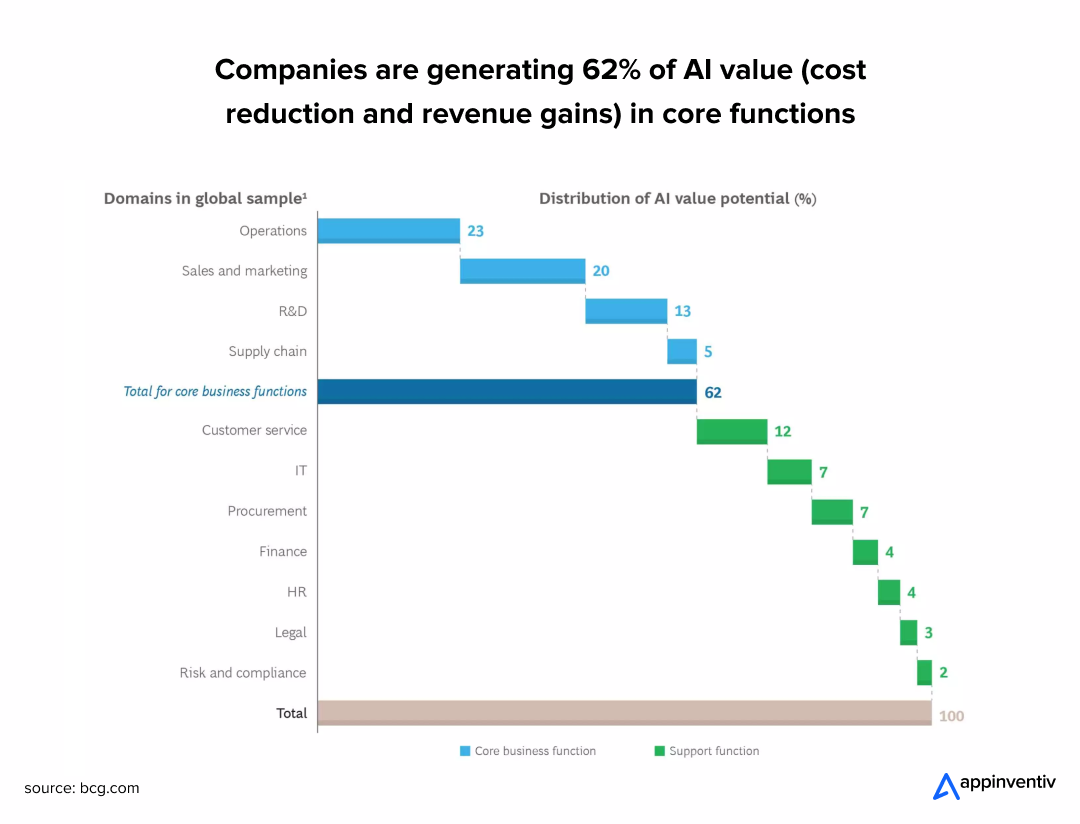
So what’s going wrong? The problem isn’t with AI itself. It’s that most organizations are jumping into AI without understanding where they actually stand. They’re like someone trying to run a marathon without knowing if they can even jog around the block.
This disconnect between investment and results creates some serious problems. Companies end up with failed pilot programs that never scale, wasted budgets that could’ve been spent on initiatives that actually work, and missed opportunities while competitors pull ahead. Without really understanding their current capabilities, businesses often bite off more than they can chew with AI projects.
The solution? A clear, honest, and strategic AI maturity assessment. This isn’t just another corporate checklist. It’s a compass that shows you exactly where you are on your AI journey, what gaps you need to fill, and how to build a roadmap that actually makes an impact.
This blog will walk you through the most practical frameworks for assessing your AI maturity and share strategies that actually work in the real world. So, without further ado, let’s get started.
78% of companies use AI, but 74% aren’t seeing real value. Assess your AI maturity with Appinventiv and get the real value of your AI investments.
What Does It Really Mean to Be ‘Mature’ in AI?
Before you can improve, you have to understand “what is an AI maturity model”. AI maturity in business isn’t about having the most complex algorithms or the biggest data sets. Real AI maturity has nothing to do with flashy tech. It’s about how thoroughly AI gets baked into your company’s DNA.
Think of it like this: anyone can buy a top-of-the-line kitchen, but that doesn’t make them a Michelin-star chef. A great chef understands the ingredients (data), the tools (technology), the techniques (processes), and the team (people & culture) needed to create something amazing, consistently.
AI maturity in business is the exact same thing. It’s a measure of your organization’s mastery over all the ingredients needed for AI success.
AI Readiness vs AI Maturity: Know The Differences
Teams often confuse AI readiness with AI maturity. These concepts actually mark two distinct phases in corporate technology adoption.
AI readiness checks if a business has the basic tools to start using new systems. AI maturity tracks how well a company uses, expands, and controls technology across all operations.
| AI Readiness | AI Maturity |
|---|---|
| Concentrates on preparing for new tools | Tracks growth and daily usage |
| Examines files, hardware, staff talent, and executive backing | Checks the company coordination, strict rules, and returns |
| Teams measure this prior to big projects | Managers check progress during widespread company usage |
| Resolves: “Can we use these tools?” | Resolves: “Do we deploy technology well?” |
In short, initial readiness helps your company launch new software systems. After that, this maturity shows how far you have advanced, highlighting clear spots where updates create much better financial returns.
The Five Pillars of Enterprise AI Maturity
To get a true read on your AI readiness, you have to look beyond the code. A solid enterprise AI maturity is built on five pillars that all have to stand together:
Data: This fuels your AI engine. Maturity means having clean, accessible, well-managed data. It’s not just about volume; it’s about the ability to reliably feed your models with clean, relevant information.
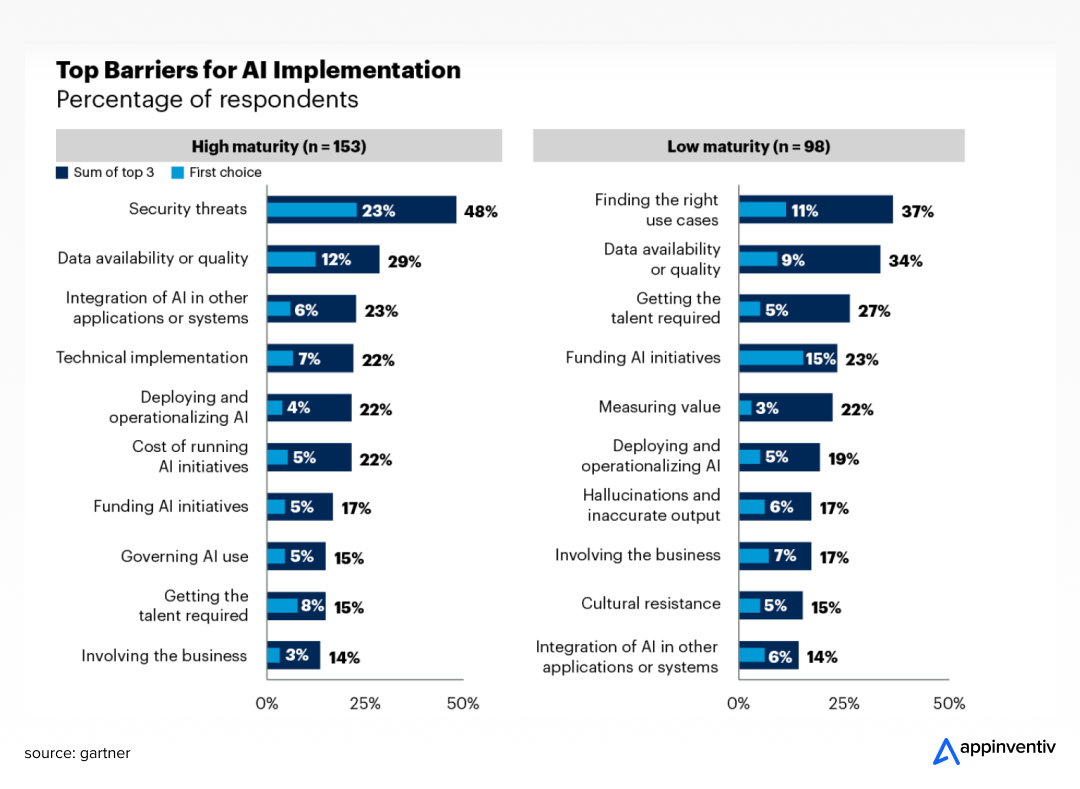
According to Gartner’s June 2025 report, 34% of leaders from low-maturity organizations and 29% from high-maturity organizations cite data availability and quality as top challenges in AI implementation.
Technology: Do you have the right infrastructure, tools, and platforms to build, deploy, and manage AI models at scale? This pillar covers everything from your cloud environment to your MLOps pipelines.
People & Culture: AI isn’t just for tech experts. Mature organizations create data literacy across all departments. They have clear roles, training programs, and leadership that backs AI from the executive level down.
Processes: How seamlessly is AI integrated into your day-to-day workflows and decision-making? Mature companies don’t just have AI models; they have AI-powered processes that are faster, smarter, and more efficient.
Governance & Ethics: This is arguably the most critical and often overlooked pillar. It involves having clear policies for responsible AI use, ensuring fairness, transparency, and accountability. A robust AI governance maturity model is a non-negotiable for long-term success.
What Gets Evaluated in an AI Maturity Assessment?
An AI maturity assessment framework reviews the skills needed to build, expand, govern, and run programs across a business. Testing methods change, but most companies check five basic pillars.
| Assessment Area | What Is Evaluated |
|---|---|
| Data Readiness | Data quality, ease of access, governance, system links, and ownership. |
| Technology Infrastructure | Cloud setup, software platforms, launch tools, and engineering maturity. |
| Talent & Culture | Staff skills, executive backing, company adoption, and team cooperation. |
| Processes & Operations | Task flows, automation maturity, and daily expansion limits. |
| Governance & Risk Management | Safety rules, compliance checks, data security, and tool oversight. |
A strong score in technology infrastructure depends on having the right AI infrastructure architecture to support scalable deployment, monitoring, compliance, and long-term operational efficiency.
Reviewing these parts shows the actual AI maturity of a company. This review points out missing skills that stop projects from creating clear financial gains.
Charting Your Journey: The Five AI Maturity Stages
No one goes from zero to hero overnight. Organizations move along an AI maturity curve, hitting predictable stages and levels along the way. Knowing the stages of AI maturity helps you pinpoint your current position and identify the next logical steps.
| AI Maturity Stage | Current Traits | Next Steps |
|---|---|---|
| Stage 1: The Experimenter | Different departments run isolated tests without a central corporate plan or clear data rules. | Evaluate your current data setup and pick three clear tasks to automate to save time. |
| Stage 2: The Builder | Individual teams build separate software tools, but these projects remain disconnected across the company. | Fix the data-sharing rules and bring all company leaders onto a single timeline. |
| Stage 3: The Operator | Software directly supports core business tasks, and leadership monitors budgets with clear data rules. | Deploy successful automation projects to other departments and build a central technology team. |
| Stage 4: The Leader | Live data models guide major executive decisions and lower operating costs in multiple departments. | Roll out the software tools to all employees and connect advanced predictive tracking systems. |
| Stage 5: The Visionary | Proprietary technology beats your industry rivals and forms the foundation of your business strategy. | Test emerging tools like autonomous agents and create entirely new revenue streams from your data. |
How Leading Firms Stand Apart? An Enterprise AI Maturity Benchmarking Framework
You can easily test your AI maturity by matching company skills against top industry leaders. Growth metrics differ across fields. Still, companies that constantly get high returns from these tools share a few clear main traits.
| Skill Group | Low-Growth Companies | High-Growth Companies |
|---|---|---|
| Tech Plan | Small test projects | Firm-wide technology plans matching core corporate goals |
| File Base | Locked and mismatched facts | Controlled, available, and safe corporate records |
| Tool Launch | Trial or single-team setups | Full-scale software setups built into tasks |
| Oversight | Small checks and loose rules | Strict policies, hazard tracking, and legal checks |
| Staff & Training | Trust in tiny tech groups | Wide software training plus leader backing |
| Corporate Gains | Focus on trials | Target clear, tracked results and profits |
Companies that reach top levels of AI maturity view tech as a basic corporate skill instead of a software project. Their funds reach past code tools to cover safety rules, staff growth, team links, and broad execution.
Benefits of AI Maturity Assessment in Organizations
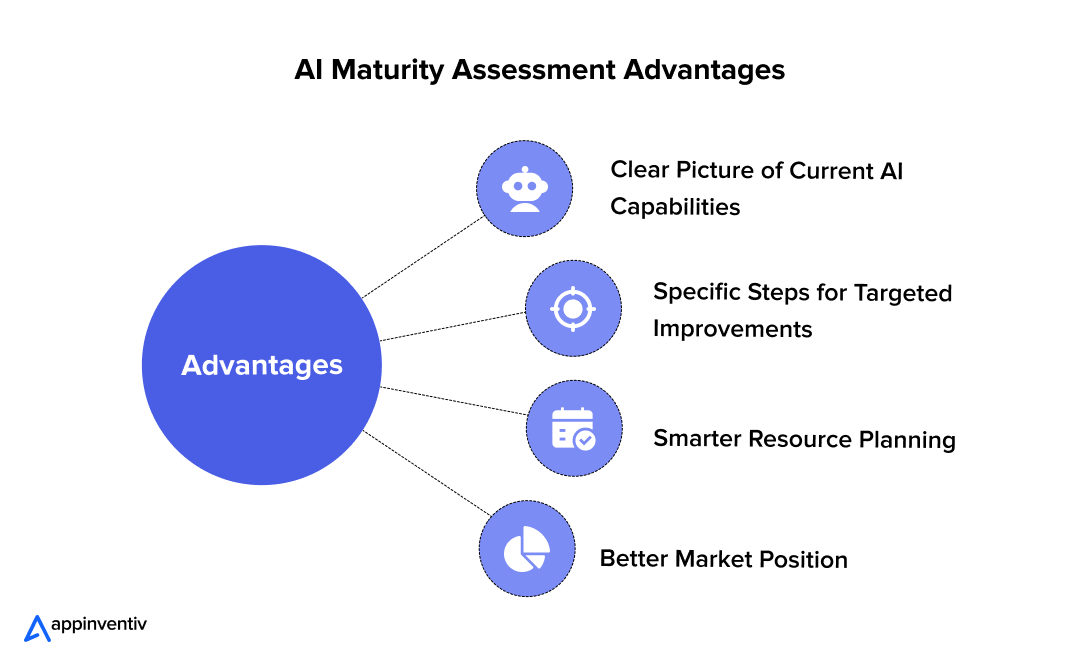
Knowing where your company stands with AI maturity level opens up several advantages that shape how you build an AI strategy for your business. When you check your AI maturity, your business gains valuable insights pointing toward successful AI projects.
1. Clear Picture of Current AI Capabilities
An AI maturity assessment reveals what your organization rocks at and where it falls short across important stuff like tech, data, staff, workflows, and rules. This reality check shows your position in the AI game and highlights what deserves focus first.
2. Specific Steps for Targeted Improvements
A solid AI maturity assessment spots exact weak points in your AI capabilities. Your data foundation might need fixing, your crew could use new skills, or your oversight processes need upgrading. These findings help you choose wisely and spend cash where it matters most.
3. Smarter Resource Planning
AI maturity assessments guide where you put investments, directing funds toward areas that’ll pack the biggest punch. Whether purchasing AI gear, bringing in talent, or growing AI initiatives, understanding your maturity position helps you target spots that deliver genuine results.
4. Better Market Position
Regular evaluation of your AI maturity level keeps you ahead of industry shifts and rival moves. An AI maturity assessment digs up intelligence that lets you keep pushing boundaries and expanding AI in ways that pump up operational smoothness, customer happiness, and business wins.
Why Assess AI Maturity Level: The Business Use Case
Checking your AI maturity level matters big time for companies wanting to use AI the right way. It makes sure AI spending matches what your business actually needs and creates lasting value. Here’s why you can’t skip it:
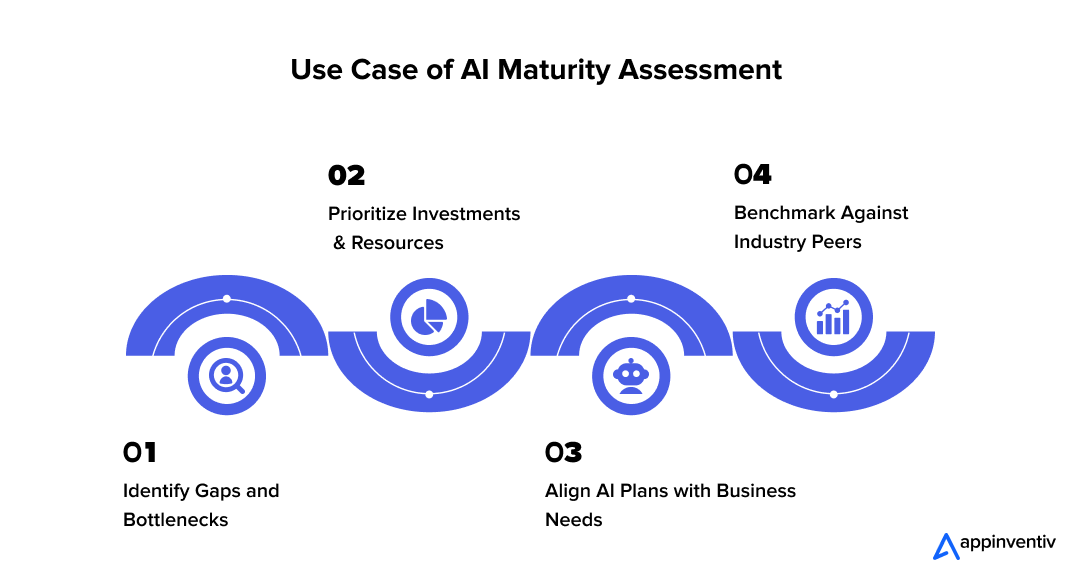
1. Identify Gaps and Bottlenecks
The biggest win from an AI maturity assessment is catching weak spots in your AI game plan. Maybe your data management is a mess, you don’t have the right resources, or your tech setup can’t handle what you want to do. An AI maturity assessment helps you find these roadblocks early, so you don’t waste money on stuff that won’t work.
2. Prioritize Investments and Resources
AI eats up resources fast, and knowing your AI maturity helps you figure out where to spend wisely. When you know what needs fixing first, you can put money where it counts most – upgrading systems, fixing data problems, or training your team.
3. Align AI Plans with Business Needs
AI projects should help your business, not just look cool. AI maturity assessments guide where you put investments, directing funds toward areas that’ll pack the biggest punch. Whether purchasing AI gear, bringing in talent, or growing AI initiatives, understanding your maturity position helps you target spots that deliver genuine results.
4. Benchmark Against Industry Peers
Regular evaluation of your AI maturity level keeps you ahead of industry shifts and rival moves. An AI maturity assessment digs up intelligence that lets you keep pushing boundaries and expanding AI in ways that pump up operational smoothness, customer happiness, and business wins.
Key Frameworks to Assess AI Maturity for Enterprises
Companies checking AI maturity often look at popular models like Gartner’s AI Maturity Model or Deloitte’s AI Maturity Framework. These frameworks give broad direction for understanding AI readiness, but they miss the specific hurdles and requirements your business faces.
Most models cover important areas of AI maturity, such as technology, data, people, processes, and governance, but there’s no universal solution for AI maturity that can fit all business needs. Since all organizations are unique, and so are their AI readiness level, your company needs custom AI maturity assessments designed specifically for your organization’s goals and industry context.
This tailored approach makes sure your AI projects match your unique needs and growth possibilities.
Top AI Maturity Frameworks Compared
Many top systems help companies test their AI maturity. They show the skills you need to expand your programs. Every system uses a distinct method. Still, they all check how well the software meets goals, runs tasks, follows rules, and builds growth.
| Framework | Primary Focus | Best Suited For |
|---|---|---|
| Gartner AI Maturity Model | Corporate usage, clear rules, and daily execution | Teams are expanding tools across many separate departments |
| Deloitte AI Maturity Framework | Plans, staff, files, tools, and team skills | Firms building organized corporate change plans |
| MIT CISR Enterprise AI Maturity Model | Making financial gains and updating daily work styles | Companies chasing total corporate changes |
| Forrester AI Readiness Model | Initial setup, tech tools, and company preparation | Groups starting or growing their software usage |
These setups operate as structured AI maturity models. They help large organizations check their actual skills, find empty slots, and sketch a real roadmap for stepping through separate levels.
They offer excellent advice. But many big companies still need a unique testing style. This style must match trade rules, legal demands, main targets, and future goals.
The DIY Option: Your Custom Self-Assessment Framework
This AI maturity assessment framework offers a clear starting point to assess your preparedness, spot weak links, and prioritize major fixes first.
While the big models are great, sometimes you just need a straightforward way to get started. A custom AI maturity framework lets you ask the questions that are most urgent for your business right now.
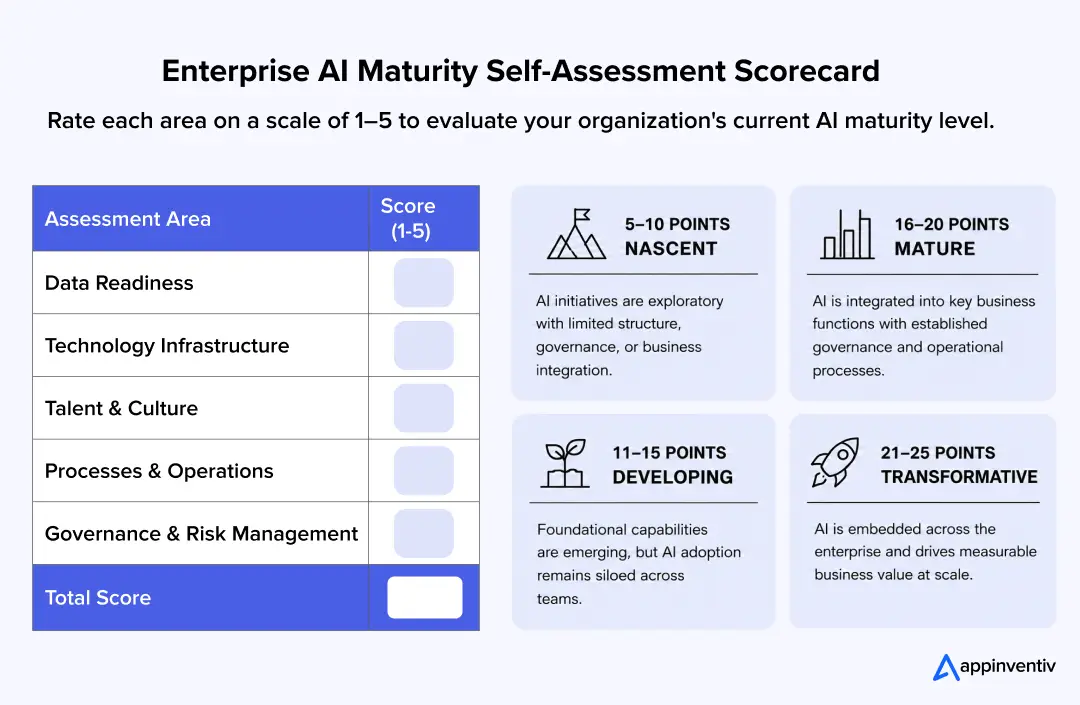
Here’s a simple four-quadrant framework to kick off the conversation internally:
1. Data: Is Your Fuel Tank Full or Empty?
- Is our data actually clean and trustworthy, or is it a liability?
- Can our teams get to the data they need without jumping through a million hoops?
- Does anyone actually own our data governance?
2. Tech & Infrastructure: Do You Have a Go-Kart or a Formula 1 Car?
- Do we have the right tools for the job, or are our developers duct-taping things together?
- Can our systems handle more than a couple of AI models without falling over?
- How big a headache is it to plug a new AI model into our existing software?
3. Culture & Talent: Do You Have a Team of Believers or Skeptics?
- Do we have the right staff? If not, do we have a plan to train or hire them?
- Does our leadership actively champion AI, or do they just talk about it?
- Do our business and tech teams work together, or do they operate on different planets?
4. Governance & Ethics: Do You Have Guardrails on the Road?
- If an AI model makes a mistake, who’s accountable?
- How are we making sure our models aren’t biased?
- Can we actually explain why our AI made a certain decision?
Building a solid AI governance maturity model starts with these critical questions. Establishing clear governance processes helps organizations manage risk, maintain compliance, and create accountability as AI adoption expands across the enterprise.
As AI capabilities become more sophisticated, organizations often need specialized assessment frameworks to evaluate emerging technologies and use cases.
For example, a generative AI maturity model can help assess readiness for large language models (LLMs), enterprise copilots, and content-generation workflows.
Similarly, an agentic AI maturity model can help organizations assess their preparedness for autonomous AI agents that can make decisions, execute tasks, and coordinate actions with limited human intervention.
Why a Custom AI Maturity Framework is Essential
While general frameworks offer helpful guidelines, a custom AI maturity framework is essential for organizations that want a roadmap specific to their needs. At Appinventiv, we provide bespoke AI maturity assessments that help you:
- Understand your AI readiness across various business functions.
- Identify capability gaps specific to your company’s size, industry, and business goals.
- Create a tailored implementation plan that aligns AI initiatives with long-term business objectives.
From Theory to Action: A 4-Step Guide to Your AI Maturity Assessment
An assessment only matters if it leads to real changes. Here’s a practical roadmap to move from understanding frameworks to building an actual plan for your organization.
Step 1: Benchmark Your Current State
You need to know where you’re starting from. This means collecting real information from across your company to get the full picture of your current situation. Don’t just trust what executives think is happening; dig deeper.
- Gather Real Insights: Mix surveys, workshops, and individual conversations with people from different departments (IT, data, marketing, operations, legal). Find out what challenges they face, what’s working, and how they view AI.
- Run Technical Audits: Check your data setup, tools, and infrastructure. Where do things get stuck? What actually works well?
- Use Assessment Tools: Try AI maturity assessment tools, which could be fancy third-party platforms or simple internal questionnaires based on your chosen AI maturity framework.
Step 2: Find Your Capability Gaps
Once you know your starting point, the problems become clear. This connects where you are now with where you want to go. Your AI capability assessment should reveal specific weak spots.
- Data Problems: Is your biggest issue messy, scattered data? Research consistently shows that poor data quality blocks AI adoption more than anything else.
- Skill Shortages: Maybe you have smart data scientists but no “AI translators” who can connect technical possibilities with business needs?
- Rule Blind Spots: Have you deployed models without clear policies on ethical use, data privacy, or performance tracking? This creates huge risks that need immediate attention.
Step 3: Connect with Business Strategy
This step matters most. An AI strategy that doesn’t tie directly to business goals is expensive entertainment, not a smart investment. Every AI project should clearly answer, “How does this help us win?”
- Connect to Results: For each gap you found, link it to specific business outcomes. For example, data infrastructure problems might prevent launching personalized marketing that could boost customer retention by 15% or more.
- Skip “AI for AI’s Sake”: Avoid projects that sound cool but lack clear business value. Focus on initiatives solving real problems or creating new opportunities. As Andrew Ng often says, “AI is the new electricity.” Electricity matters because of what it powers, not just because it exists.
Step 4: Build Your Action Plan
Turn your findings into a phased, doable plan. Your roadmap should be a working document balancing quick wins with long-term strategic changes.
- Rank Projects: Use a scoring system for potential projects based on business value and how hard they are to implement. Go after easy wins (high value, low difficulty) first to build momentum and get support.
- Break Into Phases: Don’t try fixing everything at once. Your roadmap should move your organization up the AI maturity curve step by step. Structured approaches like Capability Maturity Model Integration (CMMI) for AI can provide solid frameworks for process improvement.
Your Implementation Playbook: Moving Up the AI Maturity Ladder
Got your assessment results? Time to act. Whether you’re just beginning to explore AI or looking to scale, the next steps are crucial for advancing your AI capabilities and ensuring long-term success. Here’s what to do based on your current AI maturity stage.
For Levels 1-2 (The Experimenters)
Early days mean laying groundwork and showing AI actually works through small tests.
Focus Areas: Fix data mess, run tiny pilot projects, teach users basic AI stuff.
What to Do:
Try Small Tests: Grab one big business headache and attack it with a focused AI experiment. Early victories help sell skeptics.
Rally AI Fans: Find people already excited about AI and let them champion projects in their areas.
Fix Data Problems: AI bombs with garbage data. Start the boring but essential job of organizing and cleaning your information.
For Level 3 (The Operators)
You’ve scored some wins. Time to scale up and build systems that last through your AI adoption maturity model.
Focus Areas: Write AI rules, buy proper platforms, and create dedicated AI teams spanning departments.
What to Do:
Build AI Command Center: Form a central squad that writes playbooks, shares resources, and steers AI strategy everywhere.
Write the Rulebook: Lock down your AI governance maturity model. Decide what’s ethical, how to test models, and stay legal.
Buy Real Tools: Stop using random software and get integrated MLOps systems that handle everything from building to running models.
For Levels 4-5 (The Transformers & Leaders)
AI runs your business strategy now. Focus on constant innovation and beating competitors.
Focus Areas: Make AI central to everything, build an innovation mindset, and connect with bleeding-edge tech.
What to Do:
Give Everyone AI: Hand business folks simple AI tools so they build their own stuff, freeing your experts for harder problems.
Test Wild Ideas: Try crazy new tech like generative AI (upgrade your generative AI maturity model), reinforcement learning, and quantum computing.
Invent New Business: Use AI to create totally new ways of making money, not just tweaking old processes.
Get a clear roadmap for success with a custom AI maturity assessment.

Common Pitfalls in AI Maturation and How to Avoid Them
The road to enterprise AI maturity has plenty of traps waiting. Spotting them early helps you dodge major problems. Here’s a look at the most frequent obstacles and how to sidestep them for a smoother AI journey.
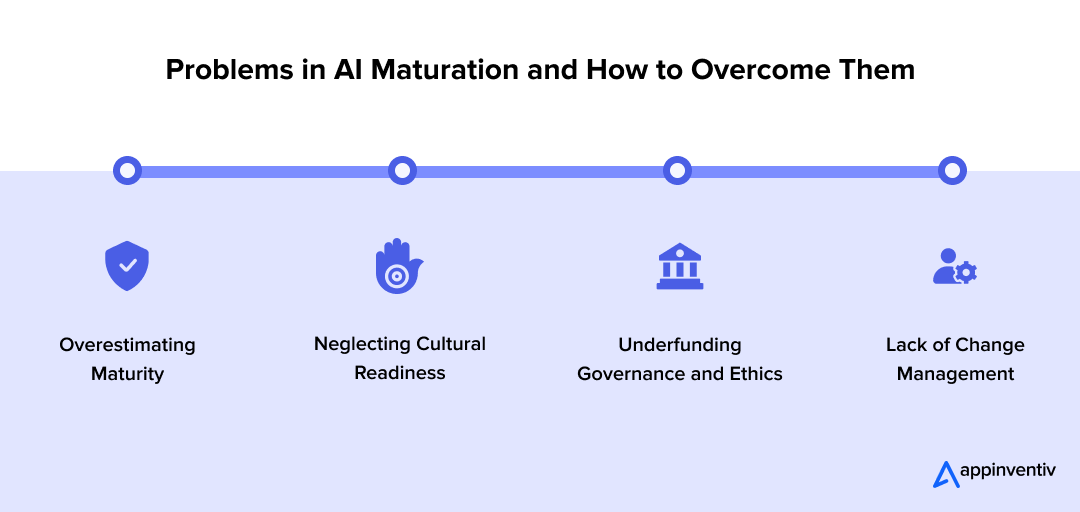
Overestimating Maturity
- The Problem: Bosses get excited after a few successful tests and think the whole company is ready for AI everywhere.
- The Fix: Base your AI maturity assessment on real facts, not wishful thinking. Use proven frameworks and ask people from different departments what’s actually happening on the ground.
Neglecting Cultural Readiness
- The Problem: You’ve got an amazing AI tech stack and perfect data, but your workers hate or fear AI changes.
- The Fix: Make people management a huge part of your AI plan. Spend serious money on training and explaining things. Show employees how AI helps them work better, not how it’ll replace them.
Underfunding Governance and Ethics
- The Problem: Everyone rushes to build cool AI stuff while ignoring governance and ethics, creating massive legal and reputation risks.
- The Fix: Build your AI governance maturity model from the very beginning. Get legal, compliance, and HR involved early. Set aside real budget and people for responsible AI work.
Lack of Change Management
- The Problem: Your data science team creates intelligent AI models that sit unused because they don’t fit how your employees actually work or solve their real problems.
- The Fix: Build AI solutions together with the employees who’ll use them. Put business experts on your AI teams and use flexible development that includes constant user feedback.
How to Future-Proof Your AI Strategy for Enterprises
AI moves fast. What looks cutting-edge today becomes standard tomorrow. A real AI maturity model isn’t a one-and-done check – it’s a flexible system that changes with the times.
Keeping Pace with New AI Tech
AI changes constantly, with fresh technologies and capabilities popping up all the time. Companies need AI maturity checks that stay useful even when everything shifts.
- Generative AI Changes: GenAI completely rewrote what enterprise AI can do. It’s hitting reality now as companies figure out what they can and can’t handle. Organizations need to check if they’re ready for generative AI while keeping their basic AI skills solid.
- Autonomous AI Agents: Future AI will work more independently, needing new rules, risk controls, and ways for humans and AI to work together. Maturity checks must look at whether companies can handle these advanced AI abilities.
- Quantum Computing Effects: When quantum computing becomes practical, it’ll supercharge AI while demanding new infrastructure, skills, and security methods. Smart organizations should think about quantum readiness in their long-term AI planning.
Creating a Flexible Assessment System
Your AI maturity framework needs to stay fresh. Plan to review and update your assessment yearly, maybe more often, considering:
- Tech Breakthroughs: How do new developments change what matters most?
- Business Direction Changes: How should your AI strategy shift when company goals change?
- What Competitors Do: How are rivals using AI, and what should that tell you about your plans?
The most advanced organizations might even use AI to check their own AI maturity, using smart systems to constantly watch capabilities, spot gaps, and suggest improvements instantly.
How Appinventiv Helps Organizations in AI Maturity Assessment and Implementation
Achieving AI maturity is a complex, continuous journey that touches every part of your organization. However, you can’t reach your destination without a trusted AI consulting company that can stand by you from assessment to adoption and beyond. That is where we come in.
At Appinventiv, we live and breathe AI. As a leader in AI Product Engineering & Digital Transformation (recognized by the Economic Times), we provide next-gen AI services and solutions that help you navigate your entire AI journey and reach the pinnacle of AI success.
Our team of 1600+ tech experts helps you conduct a deep-dive enterprise AI assessment, build a custom roadmap, and develop the secure AI models that will define your future.
Our suite of AI services includes:
- AI Consulting
- AI Strategy & Roadmap Development
- AI Development Services
- AI Model Optimization & Scaling
- AI Integration & Customization
- AI for Legacy Transformation
- AI Maturity Assessment
Our AI maturity assessment services dive deep into your organization’s unique AI challenges, enabling us to deliver a custom strategy that accelerates your AI journey. Whether you’re in finance, healthcare, or retail, we help you build a clear roadmap for scaling AI within your organization, so you can move from early-stage experimentation to transformative AI-driven innovation.
In our 10+ years of industry experience, we have delivered over 3000+ successful projects, including over 300 AI-Powered Solutions. Don’t just take our word for it; see for yourself how we’ve helped our clients achieve AI success. Here’s a glimpse of some of our AI-driven projects that have made a real impact:
Vyrb – Social Media App
For Vyrb, we developed a social media app with AI-powered features that help users discover personalized content tailored to their interests, improving engagement and user retention. The app utilizes advanced algorithms that allow users to create, listen to, and respond to social media posts with their voice.
Mudra – Budget Management App
Mudra is a finance app we created that uses AI for personalized budget tracking and money insights. Users can monitor their spending while getting predictions about their financial patterns, helping them make better money decisions.

Flynas – Airline App
For Flynas, we developed an airline app that uses AI to enhance the passenger experience. The app offers personalized flight recommendations and smart routing, making travel more efficient and convenient for passengers.
JobGet – Job Search App
JobGet is an AI-driven job search app we built to help job seekers find the most relevant opportunities. The app uses machine learning to match candidates with jobs based on their profiles, improving both the recruitment process and the candidate experience.
Ready to find out exactly where you stand on the AI maturity curve? Partner with us and build your roadmap together.
FAQs
Q. How can I assess my organization’s AI maturity?
A. Start with a systematic approach that examines five key areas: your strategic approach to AI, data infrastructure and quality, human capital and cultural readiness, process integration capabilities, and governance frameworks. Here’s how to do it effectively:
- Use multiple assessment methods – Combine organization-wide surveys, targeted workshops with key stakeholders, and technical audits of your current systems
- Get cross-functional input – Gather perspectives from IT, business operations, HR, legal, and executive teams, since each brings unique insights on AI readiness and challenges
- Leverage proven frameworks – Consider established models like Gartner’s AI Maturity Model or MIT CISR’s Enterprise AI Maturity Model for comprehensive coverage
- Don’t go it alone – Use external consultants or standardized tools to eliminate bias and get an objective evaluation.
Q. What are the best AI maturity frameworks for enterprises?
A. The most popular enterprise framework models include:
- Gartner AI maturity model
- Deloitte’s AI framework
- Forrester’s AI readiness model.
- MIT CISR’s Enterprise AI Maturity Model
- ServiceNow-Oxford Economics Enterprise AI Maturity Index
Q. How do I implement an AI maturity model in our company?
A. Implementation needs a structure that builds momentum while creating solid foundations:
- Secure executive backing first – Build cross-functional teams with IT, business operations, HR, and legal representatives. Start with a baseline assessment using your chosen framework to understand current capabilities.
- Create a phased roadmap balancing quick wins with foundational work. Focus on basics first: data readiness, AI literacy training, basic governance before advanced applications.
- Track progress systematically since research shows mature organizations keep AI projects operational longer. Establish success metrics and monitoring from day one.
Q. How can Appinventiv help my organization assess AI maturity and implement enterprise-ready AI strategies?
A. Appinventiv handles comprehensive AI maturity assessments that give organizations clear roadmaps for successful AI transformation. Our approach mixes proven frameworks with industry-specific knowledge to deliver actionable insights, driving real business value.
Our assessment process covers baseline evaluation across critical dimensions, gap analysis with detailed recommendations, strategic roadmap development matching your business goals, and ongoing support during implementation. We help organizations dodge common mistakes while building sustainable AI capabilities that grow with business needs.
Our team works with enterprises to develop custom AI solutions, implement governance frameworks, and build the organizational capabilities needed for long-term AI success. We focus on practical implementation strategies that deliver measurable results while preparing organizations for future AI developments.
Q. What is the most common maturity gap for large enterprises?
A. Research consistently identifies data quality and governance as the most significant maturity gaps for large enterprises. Data availability and quality problems affect 34% of low-maturity organizations and 29% of high-maturity ones, showing persistent challenges.
Beyond data challenges, many large organizations struggle with cultural change management and cross-functional coordination required for successful AI scaling. Despite having adequate technology infrastructure and financial resources, they often underestimate the organizational transformation needed to support AI adoption effectively.
Governance and risk management represent another common gap, especially as organizations try to scale AI beyond pilot projects. Many enterprises discover they lack ethical frameworks, accountability structures, and risk management processes needed to deploy AI responsibly at enterprise scale.


Fast 2-minute response, fully NDA-protected.
AI Data Integration: How to Connect, Clean and Prepare Data for AI
Key takeaways: AI initiatives fail when fragmented, poor-quality data reaches models without sufficient context, controls or ownership. AI-ready pipelines must connect, clean, enrich, govern and continuously monitor data across its lifecycle. Real-time processing matters when AI decisions depend on current transactions, events, inventory or operational conditions. Data architecture should follow the AI use case, balancing…
AI Agent Governance: How to Govern Autonomous AI Across Business Systems
Key takeaways: AI agents require controls at the action, identity, data, tool, and workflow levels. Every enterprise agent should have a registered owner, an approved purpose, and a defined risk tier. Access must be based on the agent’s task rather than inherited from a human user or shared service account. High-impact actions need real-time policy…

'I.D.E.A.S.' - The Five Pillar Framework to Ace AI-Native Enterprise Apps in 2027
Key takeaways: AI-native enterprise apps are moving beyond AI agents toward intelligent, adaptive, autonomous and context-aware digital capabilities that can operate across mobile, web, voice, wearables and emerging interfaces. The I.D.E.A.S. framework for AI enterprise apps in 2027 - Interactive Intent, Decisioning Autonomously, Experiential System Design, Adaptive Execution, and Security Layered. Context intelligence and reusable…