































 Leader in AI-First Product Engineering Read Full Article
 IT Managed & Outsourcing
 Contact Us
With 35+ industries perfected and a strong understanding of spatial computing and real-time rendering, our team applies AR frameworks and VR engines to create high-quality, interactive experiences seamlessly integrated with enterprise systems.
Our Core Capabilities



















A Decade of Engineering Success
Measured by Numbers
Software Projects Executed
Legacy Processes Transformed Efficiently
Global Awards and Honors
Client Satisfaction Rate
Industries Mastered
Countries Benefiting from Our Services







We develop AR/VR experiences on both iOS and Android that use device sensors, motion tracking, and cameras to deliver interactive, real-world augmented experiences that effectively engage users.
• AR/VR Mobile App Development
Make the virtual world come to life on mobile platforms immediately.
• Cross-Device Compatibility
Guarantees a seamless operation with smartphones, tablets, and VR headsets.

We develop full-scale AR/VR software that aligns with your business requirements, integrating high performance, interactivity, and real-time rendering.
• Bespoke AR/VR Solutions
Full-fledged solutions designed to address industry-specific problems.
• Scalable Architecture
Architectures that are able to support expansions, content updates, and users.

Our mixed reality development services combine the real world with the virtual world to train, collaborate, and visualize the product with the help of the latest spatial mapping and MR technologies.
• Interactive MR Applications
Increase productivity through mixed reality real-life simulations and overlay interactions.
• Coherent Environment Integration
Make virtual objects react to physical spaces in a natural manner to enhance smooth user experiences.

We integrate augmented and virtual reality with IoT and provide interconnected experiences among the devices. Our team combines IoT sensors and AR/VR technologies to offer real-time monitoring, control, and visualization.
• Connected Device Integration
Connected IoT sensors and devices to AR/VR apps in order to make them more interactive.
• Real-Time Data Visualization
Visualize real-time IoT data in immersive AR VR worlds to act on it.

Leverage our VR game development services to craft interactive AR/VR gaming solutions that are highly immersive, feature-rich and responsive control over consoles, PCs and mobile devices.
• Interactive Design
Develop a gameplay that is user-friendly, VR-friendly, and does not make users uncomfortable.
• Real-Time 3D Rendering
Keep graphics, physics and interactions flowing to create immersive and realistic gaming experiences.

We create apps that are specific to your brand, audience and workflow, with immersive experiences of specific interactivity and usability.
• Innovative UX/UI Design
Design interfaces that are intuitive and easy to use to interact with AR/VR applications without difficulty.
• Rich Feature Applications
Add gesture tracking, spatial mapping and object recognition to provide interactive experiences.

We create high-quality 3D resources for metaverse, AR, VR, and MR applications, with performance, realism, and seamless integration into interactive experiences.
• Immersive Environment Development
Develop detailed, realistic 3D models that are optimized to work with AR/VR applications.
• Animation and Interaction Design
Prepare assets to animate to user interaction in a natural way without losing visual fidelity.

We provide consulting services to enterprises on how AR/VR may revolutionize operations, marketing, and training, including roadmap and practical feasibility advisory.
• Technology Roadmap Planning
Suggest equipment, platforms and structures that can support your business objectives.
• Feasibility Assessment
Review technical, operational, and budget considerations to make sure the development is successful.

We keep AR/VR apps stable, secure, and cross-device compatible and keep them updated and performance monitored.
• Ongoing Updates and Bug Fixes
Keep applications safe, updated, and performing optimally after release.
• Performance Monitoring
Stabilize performance and responsiveness, and the overall user experience to ensure high-quality delivery.
Engineer AR/VR applications that deliver
measurable impact and greater RoI.
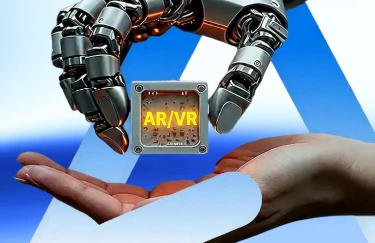
Some ideas look good in a demo but fall apart in daily use. We help you build what will hold up in the real world.
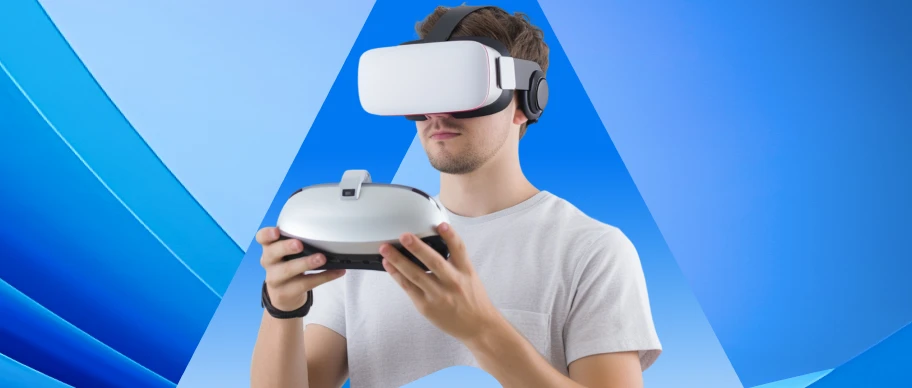












With extensive experience in building intuitive applications, our core team of AR VR developers delivers rewarding services while keeping you constantly updated, from planning to delivery, prioritizing clear communication and transparency throughout every stage of the project.
We employ the best secure coding practices, such as error handling and input validation, and regularly update your AR VR software development solutions to address security vulnerabilities, device-level risks, and integration gaps that can affect system stability over time.
We pay great attention to UI/UX designs since we are aware of how an intuitive design can attract more users to your AR/VR app. First impressions carry weight, and our goal is to help your product stand apart through design that feels natural from the start.
Being one of the leading AR VR app development services providers, we also offer 24*7 assistance and support for any app-related issues. We have a strong reputation for completing our projects before the deadline with 100% client satisfaction post-launch.
We design systems that stay stable under pressure, so your team can focus on results, not troubleshooting.

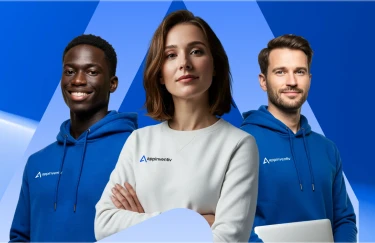

The India's Fastest-Growing Companies 2026 Recognised by TIME and Statista

Statista High Growth Companies APAC - 2026

Statista India's Growth Champions 2023





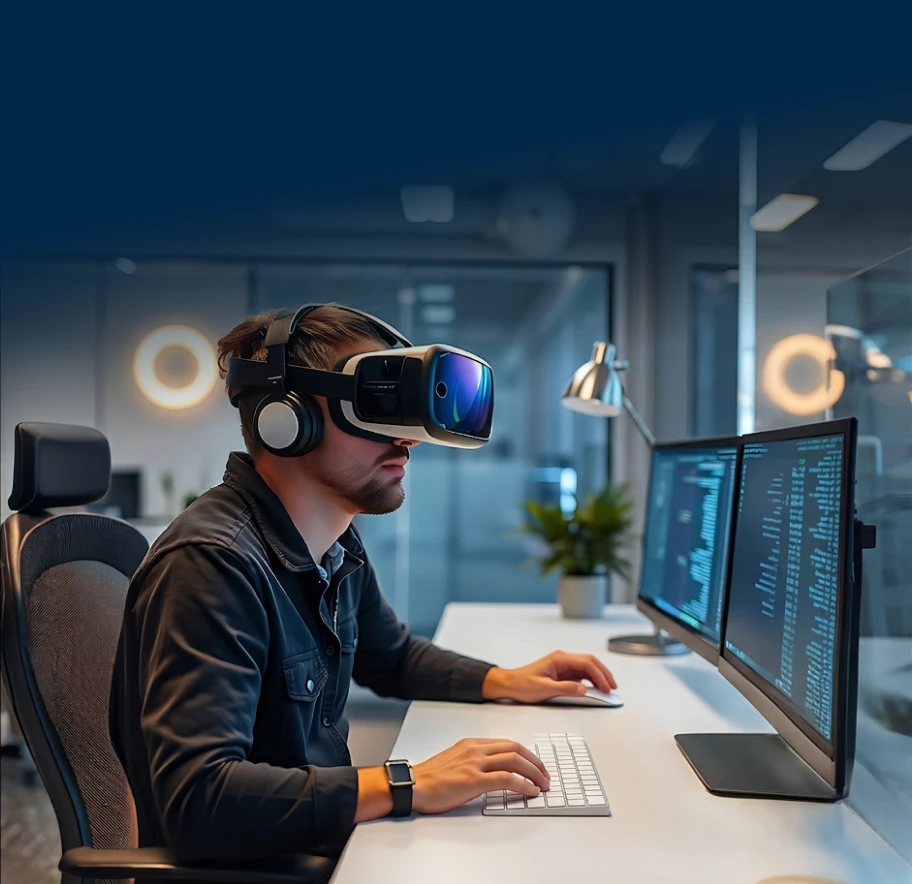
Our 3D engines have been used to control rendering, physics, and interactions, ensuring scenes are stable and responsive even when numerous elements are running simultaneously.
OpenXR minimizes reliance on a single-device ecosystem, enabling AR/VR applications to run on a variety of headsets with minimal modifications during development and post-release.
Spatial mapping scans surfaces, depth, and layout to make virtual objects positioned naturally in physical spaces, enhancing the precision and perception of users in AR environments.
SLAM allows position tracking in real time, maintaining AR experiences consistent and grounded as users navigate dynamic or novel locations.
Our VR application developer embraces gesture, voice, and controller inputs, choosing the appropriate interaction model depending upon the application, device, and the user environment.
We control models, textures and lighting to minimize load, and they perform well without visual loss on all devices through 3D asset optimization.
WebAR and WebVR are used when speed of access is a priority. These are run through the browser, thus eliminating the need to install and reducing the barrier to entry by the user.
Our augmented reality consultants optimize device performance by offloading processing to the cloud, preserving high visual quality while keeping local hardware responsive.
With platform-specific SDKs, we can reach sensors, cameras and tracking capabilities, and have the same behavior across compatible AR/VR devices.












Process spatial and visual data as users interact
Adjust workflows based on user decisions
Improve accuracy in object and scene recognition
Enable hands-free interaction through voice inputs
Track outcomes to improve future sessions
Support dynamic adjustments within immersive tasks
We begin by examining the place of AR or VR in your current process. This includes the examination of user movement, physical surroundings and device constraints, whereby the idea can be implemented without friction in the future.
This is where the flow of interaction, spatial layout and system structure are determined. As part of our AR app development services, we map user navigation and responses within the environment and establish a structure that facilitates consistent performance.
Development is done in short agile cycles, and at every stage, usable builds are reviewed. This assists in early detection of problems with tracking, interaction, and rendering before it has an impact on the entire system.
Being a reliable AR development company, we consider how applications will perform on various devices and environments. Headset, mobile and real-world testing are conducted to maintain consistency in tracking and responsiveness.
Frame rate, latency and system load are closely monitored in this tuning and testing phase. These elements are adjusted to maintain a smooth experience even in longer sessions, including assets and interactions.
Once the application has stabilized, it is ready for release. This involves build configuration, dependency management and compatibility assurance across the chosen platforms as part of our virtual reality software development work.
Once it is launched, we will still keep checking the performance of the application under real situations. Updates are provided to fix problems, optimize interactions and make the system in line with evolving needs.
The cost of building AR VR apps depends on a number of variables like complexity of the application, compatibility with the device, interactivity and integrations with the backend. The basic AR functionality will be less expensive, whereas a more intensive VR system with high-quality graphics and live interaction will be more expensive.
To obtain an accurate cost estimate tailored to your specifics and application, connect with an AR app development company like Appinventiv.
The development schedules are different depending on the scope, features, and platforms. As part of our AR VR app development services, simple AR or VR implementations can be completed within 3–6 weeks, and complex systems for personal interactions, integrations, and testing can be developed over several months. Design iterations, device testing and performance tuning before launching also affect time.
Here are some of the key challenges in AR VR development, and here’s how we overcome them with the right solutions:
Challenge: Device Fragmentation and Compatibility A VR app development company like ours often works across multiple headsets and mobile devices, each with different capabilities. Solution: We apply cross-platform standards such as OpenXR and are early in doing device-level testing so that behavior is consistent across environments.
Challenge: Performance and Latency Limitations Reduced frame rate or excessive latency may disrupt immersion and be uncomfortable. Solution: We streamline 3D resources, keep rendering pipelines lean, and check performance indicators to ensure stability in frame rates.
Challenge: Complexity of User Interaction Design It can be challenging to develop user-friendly interactions without traditional screens or input methods. Solution: Our virtual reality consulting services guide businesses in using natural input techniques such as gestures, gaze, and voice, and test interaction flows through iterative testing.
Challenge: Environment and Tracking Limitations Light, surfaces, and movement in real environments can influence the accuracy of tracking. Solution: To enhance stability and alignment, we use robust tracking techniques such as SLAM and conduct experiments under varying real-world conditions.
Here’s a list of common technology stacks that are generally used in building AR/VR applications:
We follow a practical, agile roadmap to develop an intuitive AR VR app that delivers peak performance:
Use Case Assessment and Planning: Being a reputed virtual reality app development company, we will evaluate the role of AR/VR in your business processes.
Design and Development: We deal with interaction design, development and system architecture of stable applications.
Testing and Device Optimization: Testing is done on devices to guarantee uniform performance.
Post-Launch Support: Once the application is deployed, we keep on refining and supporting it.
The first step to an AR/VR launch is having a well-defined use case that is associated with a business requirement. Our virtual reality software developers ensure that the software is tested in real conditions, not in a controlled environment.
Constant performance, particularly frame rate and responsiveness, will also be important to adoption by users. The compatibility planning process ensures the expansion of accessibility, whereas constant control and on-site updates can ensure stability, and the experience will become even better as it goes.