



































 Leader in AI-First Product Engineering Read Full Article
 IT Managed & Outsourcing
 Contact Us
Modern logistics operations generate large volumes of movement data, yet many teams still depend on fragmented systems and manual coordination. Our part as a reliable logistics software development company is building connected logistics platforms that support faster planning, accurate tracking, and more efficient workflow.
Our Core Capabilities





















Operational Gains from
AI-Enabled Logistics Systems
Logistics and supply chain platforms deployed
Customer satisfaction across logistics applications
Improvement in route planning and dispatch efficiency
Cost savings achieved through AI-based route optimization
Weeks Average deployment cycle for enterprise logistics platforms
SLA-backed availability for logistics operations







We develop shipping logistics platforms that manage freight movement, carrier coordination, and shipment planning across distributed transportation ecosystems.
AI-assisted logistics shipment orchestration designed for live visibility and delivery optimization.
shipment events coordinated daily
Across enterprise freight and shipping operations

Our experts build fleet management solutions that enable companies to track fleet performance, schedule fleets efficiently, and enhance the effectiveness of their operations.
Telemetry and fleet intelligence systems are used to power connected fleets.
reduction in unplanned fleet downtime
Across commercial transportation operations

We develop smart asset-tracking solutions to track cargo, warehouse stock, containers and field equipment throughout the logistics process.
IoT technology utilized for continuous monitoring of assets and operational decision-making.
logistics assets tracked monthly
Across freight, warehouse, and fulfillment environments.

Our transportation management platforms streamline route execution, carrier coordination, and shipment scheduling across enterprise logistics systems.
AI-supported transportation workflows designed for dispatch efficiency and route optimization.
faster dispatch planning cycles
Across high-volume transportation networks

We develop last-mile delivery platforms that streamline dispatch operations, route allocation, driver coordination, and real-time order tracking across high-volume delivery networks.
Intelligent delivery orchestration designed to improve route efficiency, delivery accuracy, and customer communication in fast-moving logistics environments.
faster delivery, dispatch and route execution workflows
Across retail fulfillment, hyperlocal delivery, and multi-city distribution operations.

We develop order management systems that integrate various logistics processes and operations, such as fulfillment, inventory management, shipping, and customer operations.
Intelligent order orchestration systems that enable visibility of orders to be processed on a high-volume basis.
orders synchronized monthly
Across retail and distribution chains.

Our experts build warehouse management systems to enhance inventory flow, automate fulfillment processes and boost real-time warehouse visibility.
AI-powered warehouse processes for inventory insights and productivity.
reduction in manual warehouse handling effort
Across large-scale fulfillment operations.

We design traffic management systems that analyse traffic flow, enable adaptive routing and decrease traffic-related delivery disruptions.
Operational decision making and dynamic routing with real-time traffic intelligence.
improvement in route efficiency
Supporting high-frequency urban logistics workflows.

We develop inventory control systems that automate stock monitoring, replenishment planning, and inventory synchronization across various logistics operations.
Predictive inventory intelligence designed for high-volume warehouse and distribution ecosystems.
faster inventory reconciliation workflows
Across multi-location storage and fulfillment systems.

We engineer connected logistics ecosystems that capture live data from vehicles, driver apps, onboard devices, and transport infrastructure for faster operational decisions.
Intelligent monitoring systems built to improve route efficiency, fleet utilization, driver safety, and asset visibility in motion-heavy environments.
faster fleet response and dispatch coordination across logistics operations
Supporting connected transportation networks, cold chain logistics, and multi-region distribution workflows.
Deploy AI-enabled logistics systems built for faster execution and live operational insights
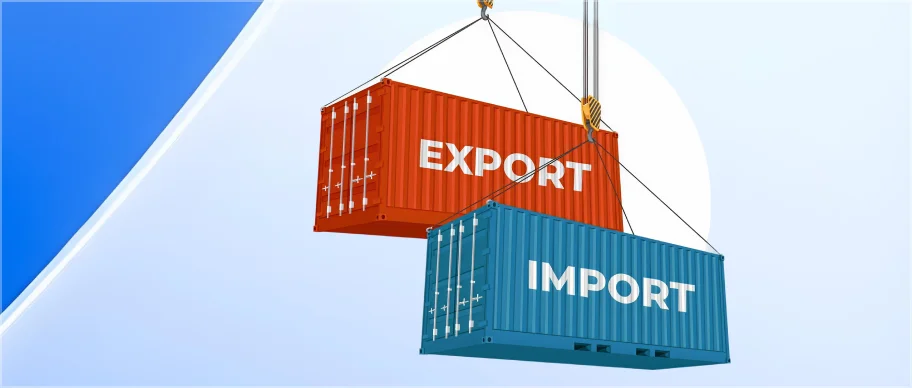

Americana Restaurants faced operational bottlenecks due to fragmented logistics data and disconnected last-mile delivery workflows, limiting visibility and slowing execution across delivery operations.

We developed a real-time logistics intelligence platform that unified operational data, automated dispatch workflows, and replaced fragmented processes with centralized, insight-driven coordination.




CEO, ReelMedia
From carrier coordination to inventory tracking and fulfillment pressure, we build systems around real daily workflows.


FMCSA

ELD Mandate

DOT

C-TPAT (Customs Trade Partnership Against Terrorism)

AEO (Authorized Economic Operator)

SOLAS VGM

IMO Regulations

IATA Cargo Regulations

TAPA TSR

TAPA FSR

ISO 28000

GS1 Standards

HACCP Compliance for Cold Chain Logistics

HOS (Hours of Service) Compliance

Dangerous Goods Regulations (DGR) Compliance
FMCSA
ELD Mandate
DOT
C-TPAT (Customs Trade Partnership Against Terrorism)
AEO (Authorized Economic Operator)
SOLAS VGM
IMO Regulations
IATA Cargo Regulations
TAPA TSR
TAPA FSR
ISO 28000
GS1 Standards
HACCP Compliance for Cold Chain Logistics
HOS (Hours of Service) Compliance
Dangerous Goods Regulations (DGR) Compliance
We develop logistics solutions using AI algorithms that analyze traffic flow, delivery windows, fuel consumption, and route usage to minimize delivery delays and enhance fleet efficiency.
Our warehouse systems are designed to facilitate automated inventory management, barcode scanning, smart allocation and quicker order movement between DCs.
Integration is central to our custom logistics software development services. We connect TMS, WMS, ERP, GPS, telematics, payment systems, and carrier platforms into a unified operational environment.
AI-powered route optimization and automated fleet management have been seen to reduce fuel consumption by up to 20% and speed up delivery turnaround times for logistics companies in transportation operations.
With AI-driven logistics software solutions, teams can achieve better predictions by as much as 30%, helping them plan their inventory, transportation, and delivery processes.
Our team builds logistics platforms designed for high-volume operations, real-time visibility, and connected transportation ecosystems.

The India's Fastest-Growing Companies 2026 Recognised by TIME and Statista

Statista High Growth Companies APAC - 2026

Statista India's Growth Champions 2023




























From transportation planning to warehouse coordination, AI helps logistics teams manage operations with better speed and visibility.
Bring fleet, cargo, and warehouse data into one platform
Automate shipment updates and operational reporting
Improve dispatch planning and route management
Predict disruptions across supply chain operations
We start our logistics software solution development process by analyzing the transportation process, shipment cycles, warehouse processes, fleet movements and the existing dependencies on other systems.
Our team designs scalable logistics architectures that support high-volume shipment data, distributed operations, live tracking, and multi-system integrations.
We build logistics software in iterative cycles, allowing faster feature validation across transportation, fleet, warehouse, and operational workflows.
As a logistics management software development company, we integrate GPS, telematics, IoT systems, barcode workflows, and operational analytics into logistics platforms for better shipment visibility and operational control.
Validating your system against discrepancies is something that we vouch for as a custom logistics software development firm. We test logistics workflows, transportation processes, integrations, and operational security before production rollout.
Using monitored release workflows, the logistics platform is deployed to ensure operational stability, system scalability and minimal downtime.
Once deployed, we monitor shipments, infrastructure and system performance and conduct fleet operations and behaviour analysis to optimize operational efficiency over time.
The typical price of logistics software development spans between $30,000 and $300,000 or even higher, with the precise cost contingent on the platform's size, integrations, AI features, and complexity of operation.
Simple logistics software with basic tracking capabilities is more affordable, whereas enterprise-level solutions that integrate real-time fleet monitoring, warehouse management, telematics, and AI automation come with a higher price tag.
The time to develop will vary based on the platform size, features, integrations, and customizations. Basic logistics software solutions can take between 3-5 months to develop, and larger logistics systems can take up to 9 months or longer.
Timelines also depend on the AI features, warehouse processes, fleet management capabilities, and third-party integration, like ERP, GPS, or TMS.
Here’s a step-by-step process of integrating AI into logistics software:
An industry-leading transportation and logistics software development agency like ours create transportation management systems (TMS), warehouse management systems (WMS), fleet management software, freight management platforms, route optimization software, shipment tracking platforms, logistics analytics dashboards, inventory management systems and AI-powered logistics apps.
Our team also develops custom software for logistics companies, carriers, 3PLs, warehouse companies and other businesses.
Yes, we do offer post-launch support and maintenance for logistics platforms. Performance monitoring, security updates, infrastructure support, feature enhancements and bug fixes, API maintenance, and operational optimizations are all part of our transportation software development services.
We also assist businesses in scaling their logistics software with their changing needs, integrations, and users as time goes on. Hire logistics software developers of Appinventiv to get an in-depth understanding of our post-launch services.
Yes, we integrate logistics software with existing ERP, TMS, WMS, CRM, telematics, GPS and third-party supply chain systems. We have the expertise to support your existing integrations and legacy systems, ensuring seamless data flow throughout your logistics processes.
This facilitates businesses to manage shipment tracking, warehouse management, inventory movement, billing, reporting and transportation processes in a connected operational environment.
Here are some of the business benefits of logistics management software:
As an illustrious logistics and transportation software development company use enterprise-grade security, scalable cloud infrastructure and operationally compliant controls to build our logistics software solutions.
We deploy to AWS, Microsoft Azure, and Google Cloud, as well as implement data encryption, role-based access control, audit logging and secure API frameworks. We also have systems that enable compliance with GDPR and other relevant requirements for both logistics and transportation, warehouse and fleet management.