





















 Leader in AI-First Product Engineering Read Full Article
 IT Managed & Outsourcing
 Contact Us
Healthcare enterprises often manage fragmented patient records and disconnected operational systems. We build integrated healthcare platforms that enable up to 45% faster access to clinical and operational information across care delivery networks.
Our Core Capabilities




















Our HealthTech Impact in Numbers
Virtual consultations facilitated every month
Patient appointment attendance rate
Healthcare data points processed annually
Reduction in care coordination delays
Access to digital healthcare services
Faster patient onboarding and registration




Our Services


We create patient engagement solutions that enable healthcare organizations to remain in touch with patients between appointments, during treatment plans, during follow-ups and throughout the treatment journey.

Our role as a mental health app development company is to create apps that improve and track mental well-being, while providing a pathway to therapy access and self-care through simple, accessible digital experiences.

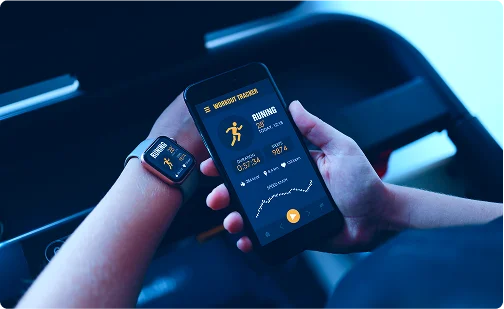
As an esteemed wearable app development company, we build connected platforms that bring together wearable devices, biometric tracking tools, and remote monitoring systems to support continuous care and health visibility.

Being an illustrious fitness app development services partner, we build platforms that support coaching programs, subscription-based services, personalized health guidance, and performance-focused user experiences.

We build healthcare platforms that help providers manage clinical information, hospital operations, diagnostic workflows, and patient coordination across connected care environments.

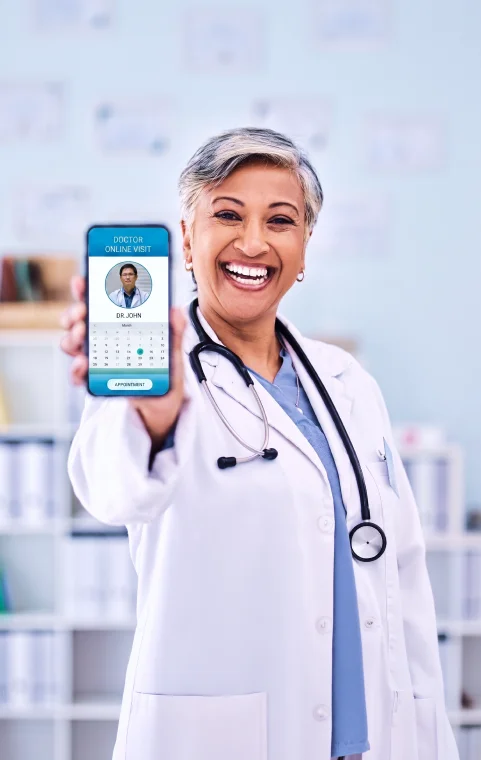
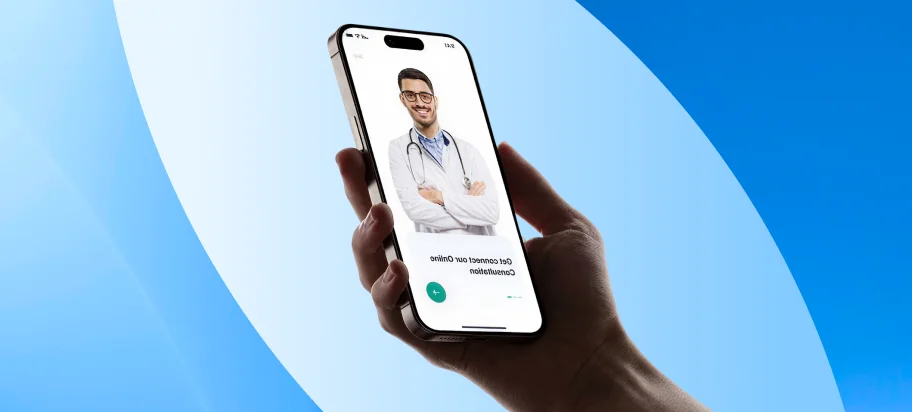
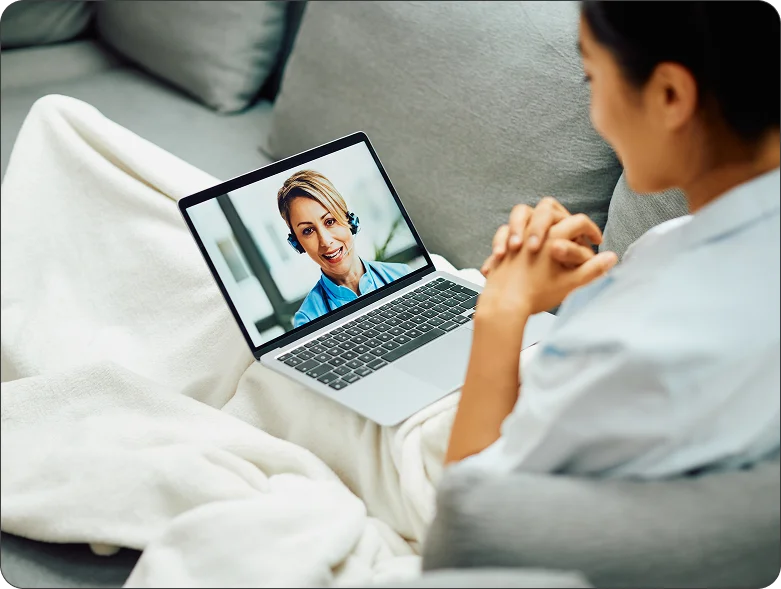
Through our telemedicine app development services, we engineer platforms that enable healthcare providers to deliver consultations, follow-ups, prescriptions, and patient support via secure digital care environments.


Streamline care delivery with integrated healthcare applications and data visibility
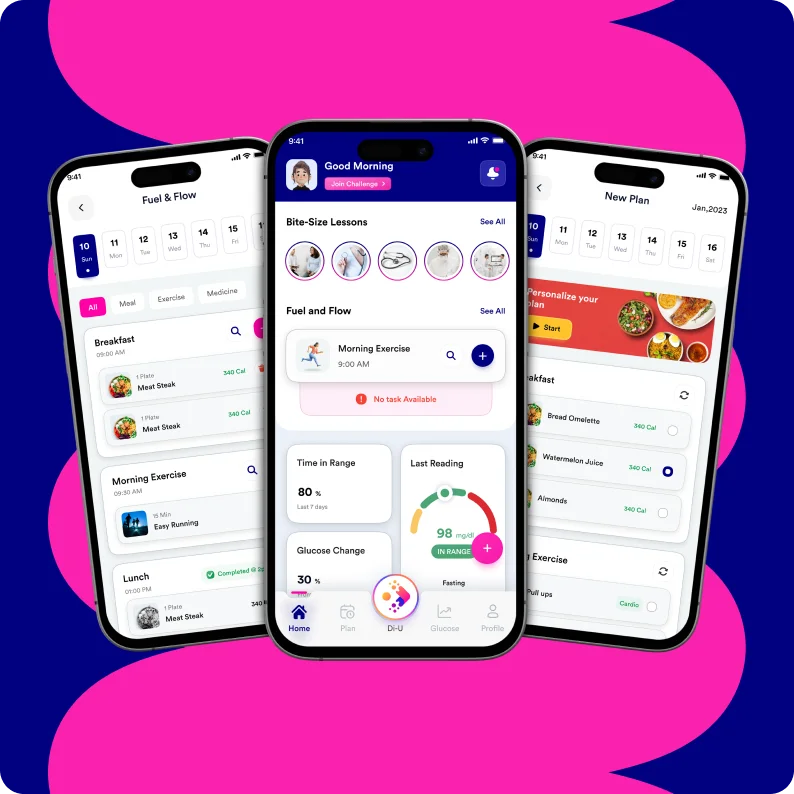
Personalizing Diabetes Care with AI

DiabeticU needed more than a generic tracker. They wanted real-time, personalized support for people managing Type 2 diabetes.

We built a custom healthcare app with AI and natural language processing. Features included a chatbot for tailored guidance and tracking for glucose levels, medication, and daily activity.

Bringing 200+ Data Sources Together
Users lacked a single platform to manage health data from devices, apps, and caregivers, and share it with research teams.
Our experts developed a healthcare platform that integrates multi-source data, generates predictive insights, and enables collaboration between patients, caregivers, and researchers.
Voice-Based Health Monitoring
Soniphi wanted to launch a voice diagnostic tool that accurately detects biomarkers, even with background noise.
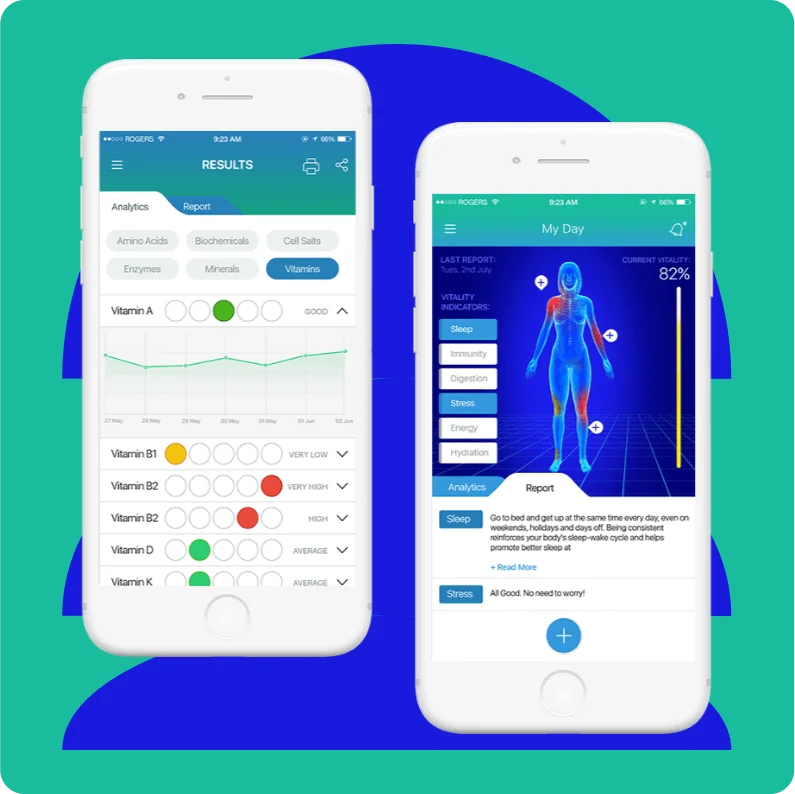
We built a wellness app using bioacoustic technology to analyze voice patterns in real time and generate personalized vitality reports.
Modernizing Patient-to-Staff Communication
YouCOMM needed to replace their outdated hospital call bells for patients with mobility or speech difficulties.
Our experts developed a mobile app allowing patients to send requests via touch, voice, or motion, directly linked to hospital systems for quick response.




Manager, IT Division, TokiApp
From telehealth to remote monitoring, our team knows what clinicians and patients need to make apps practical and reliable.

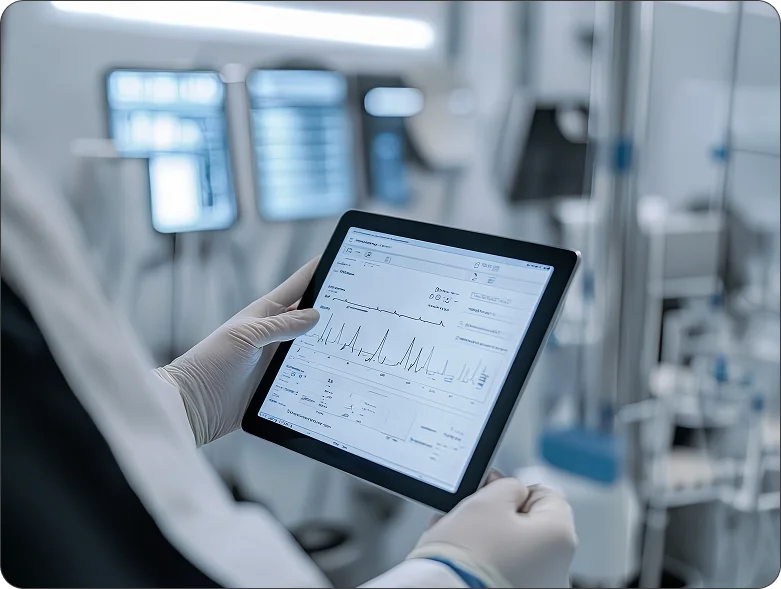
We use AI-supported healthcare workflow analysis and validation systems to identify operational bottlenecks and reduce coordination overhead, helping healthcare providers improve workflow response efficiency by up to 34% across connected care environments.
Our healthcare platforms are designed around HL7, FHIR, DICOM, and API-first architectures to support uninterrupted data exchange between EHRs, laboratories, telehealth systems, and connected devices.
We engineer healthcare applications capable of handling high patient interaction volumes, real-time clinical data exchange, and distributed care operations without disrupting system responsiveness.
Our healthcare AI services include AI-assisted monitoring and anomaly detection to help healthcare organizations identify issues earlier, simplify application validation, and reduce manual review cycles from 14 days to nearly 5 days.
We implement structured healthcare data architectures that support controlled access, audit visibility, and synchronized patient information across connected healthcare ecosystems.
From YouCOMM’s patient-staff communication to DiabeticU’s AI care support and Soniphi’s voice monitoring, our apps perform where it matters most.

The India's Fastest-Growing Companies 2026 Recognised by TIME and Statista

Statista High Growth Companies APAC - 2026

Statista India's Growth Champions 2023
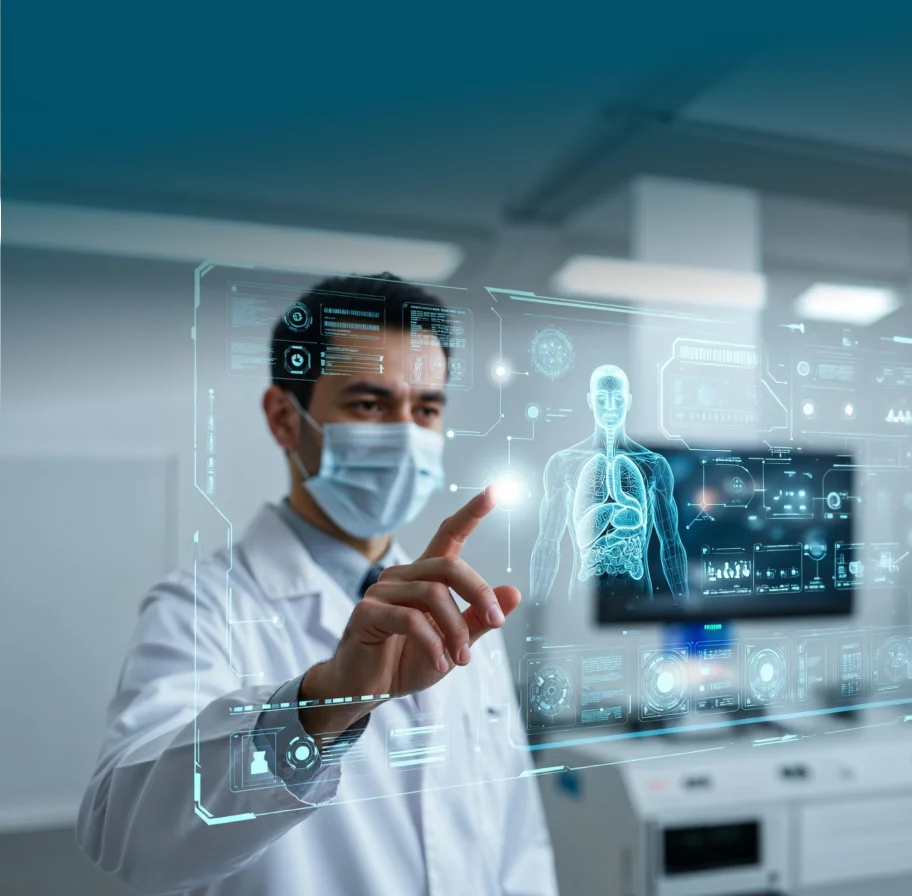
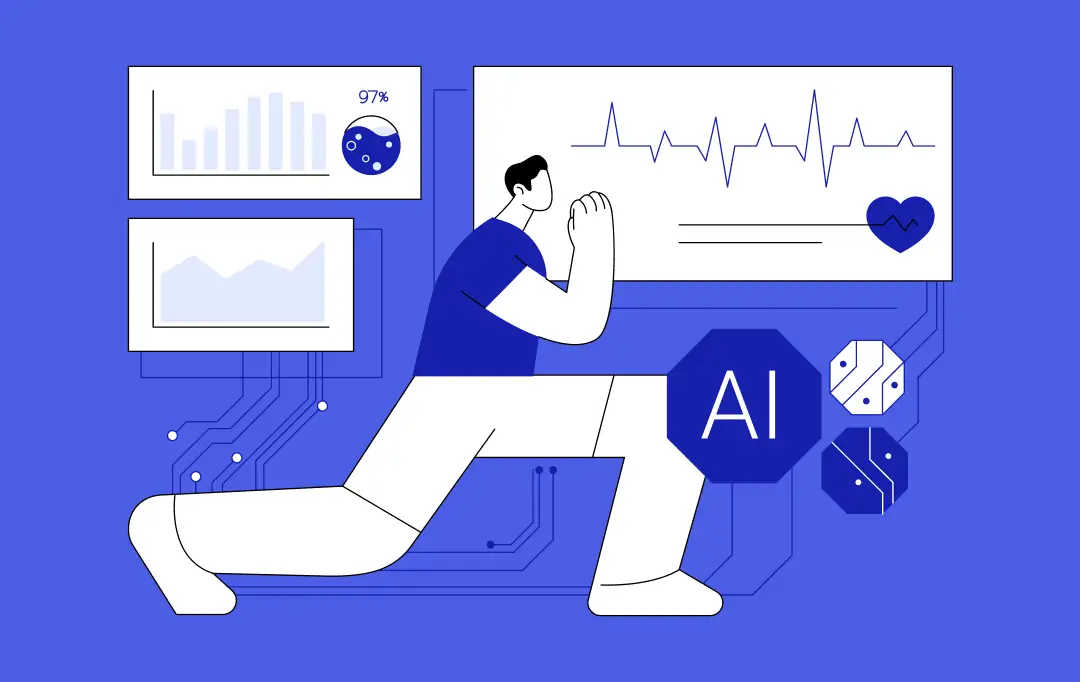
AI in healthcare apps speeds up diagnostics, automates routine tasks, and supports predictive decision-making, from symptom triage to spotting early signs of chronic conditions.
Our healthcare app development solutions use ML to personalize care, forecast patient outcomes, and improve hospital operations, with algorithms that keep learning from real-time data.
GenAI supports healthcare research, simulates treatment responses, and creates tailored care plans. It can also generate clinical content or synthetic datasets to cut time-to-deployment.
Our position as a hospital app development company allows us to apply Agentic AI for automating complex workflows, coordinating multi-step processes, and enabling real-time decisions, improving speed and accuracy in patient care.
Data connectors that integrate a variety of IoT wearable devices, remote monitoring and hospital systems into a continuous stream of patient data.
AI systems that provide real-time access to relevant clinical guidelines, patient records, and medical knowledge through retrieval.
Blockchain ensures secure, transparent health data exchange, reduces tampering risks, and enables decentralized access, boosting trust and compliance.
Cloud-native architecture in our healthcare app development services supports scalability, real-time data sharing, and remote team access, all with HIPAA-compliant infrastructure.
CV in healthcare apps speeds up medical image analysis, from radiology scans to wound checks, reducing manual work and improving diagnostic accuracy.
We design apps that process and analyze large datasets, helping providers find patterns, measure outcomes, and improve care quality.
We integrate AR and VR for medical training, rehabilitation, and surgical planning, from immersive learning for students to real-time overlays for surgeons.















AI transforms scattered patient data into clear, actionable insights, helping clinicians and care teams deliver personalized, timely care.
Monitor vitals, symptoms, and medication adherence in real time
Identify high-risk patients early with predictive modeling
Track outcomes to continuously improve clinical decisions
Integrate data from wearables, EHRs, and mobile apps
Phase 1
We review clinical workflow, patient flows, device information flows and hospital operations to establish system requirements and integration needs prior to development.
Phase 2
We build interoperable healthcare ecosystems that scale and leverage cloud-native foundations for EHR/EMR systems, medical devices, and AI-driven decision layers, drawing on our dedicated emr/ehr software development services.
Phase 3
We develop secure healthcare applications that support diagnostics, care delivery, patient engagement, scheduling, remote monitoring, and clinical decision support based on your business requirements.
Phase 4
We integrate clinical safety validation, bias control, and governance frameworks into healthcare systems, ensuring reliable decision-making in regulated healthcare environments.
Phase 5
We validate healthcare systems by means of real-world clinical simulations and workflow testing and validate with the help of multi-modal AI validation over devices, apps and APIs.
Phase 6
We deploy healthcare systems into production environments that integrate across hospital systems, devices and patient-facing applications.
Phase 7
Healthcare systems are constantly improved through real-world clinical data, feedback loops, and adaptive learning models to enhance accuracy and system performance.
As a reliable healthcare application development company, we develop apps keeping security and compliance as our first priorities:
Honestly, the healthcare app development timeline depends entirely on what you're trying to build. Basic healthcare applications might wrap up in a couple of months, but complicated projects can drag on for several months to over a year. Every project brings its own challenges and requirements. Your best move is connecting with our experts - they'll look at what you actually need and give you a straight answer on timing.
Healthcare mobile app development services pricing is all over the map, depending on your needs. Basic applications with standard features might cost $40,000 to $100,000, but if you want complex solutions packed with AI, real-time analytics, and tons of integrations, it can cost up to $400,000 or even more.
Connect with our skilled healthcare mobile app developers. They'll dig into your specific requirements during the initial consultation and tell you what it'll actually cost to build a healthcare app.
Of course. As a healthcare app development company, we always build detailed prototypes first to test how everything works, how users interact with it, and whether the workflows make sense. This lets you see if the app actually matches what you had in mind before we start building the real thing. Catching problems early beats fixing them later.
Absolutely. As a healthcare application development company, Appinventiv has knocked out plenty of solid custom healthcare solutions that actually improve patient care, make operations run smoother, and boost overall healthcare quality. Some examples of our custom healthcare app development services work include stuff like YouComm, Soniphi, Health-ePeople and DiabeticU.
Here are the top healthcare application development services that we offer to healthcare enterprises:
Definitely. As a healthcare mobile app development company, we let you bring on dedicated healthcare medical app developers who really understand medtech platforms, patient management, and clinical systems. This flexible approach means quicker scaling, tighter collaboration, and steady delivery of features that actually match what you need.
Real-time analytics is baked into our healthcare application development services. We help healthcare providers get useful insights through embedded dashboards that track vitals, treatment outcomes, bed occupancy, staff performance, and tons more. This stuff actually boosts operational efficiency and helps with clinical decision-making.
Sure can. Our custom healthcare app development services include fixing up old applications. Whether that means moving to the cloud, cleaning up the UI/UX, or adding smart features like AI triage or voice assistants, we turn legacy systems into modern, secure, high-performing healthcare apps that work in today's digital world.
Here’s how we resolve a few common healthcare app development challenges:
1. Regulations are strict and often shift: Healthcare apps sit under constant scrutiny. Requirements such as HIPAA or GDPR are not background formalities. They shape the build.
Solution: We account for regulatory obligations at the outset. Data access rules, logging, consent handling, and encryption are planned early and reviewed throughout development, not appended near release.
2. Systems rarely speak the same language: Hospitals and clinics run on mixed software environments. EHRs, lab tools, billing systems, and third-party platforms may operate in isolation.
Solution: We examine the data structure in each system, then connect them through structured interfaces aligned with accepted healthcare standards. The objective is straightforward. Accurate data, visible where it is needed.
3. Patient data carries real risk: A breach affects more than compliance metrics. It affects trust.
Solution: Access is limited by role. Data is encrypted both in storage and during transfer. Activity logs are maintained so actions remain traceable. Security reviews continue after deployment.
4. Clinical workflows are not generic: A feature that looks clear on paper can disrupt daily routines inside a hospital.
Solution: We study how clinicians document, review charts, and coordinate care. The application reflects those patterns. If a workflow is already working, we respect it.