




































 Leader in AI-First Product Engineering Read Full Article
 IT Managed & Outsourcing
 Contact Us
Moving freight across Australia means handling vast distances, spotty regional reception, and razor-thin margins. We build custom software designed to solve these exact bottlenecks, connecting your drivers, depots, and legacy databases into one clean system.
Our Core Logistic Software Engineering Capabilities


















Legacy Processes Transformed into Digital-First Workflows
SLA-backed Availability for Logistics Operations
Improvement in Route Planning and Dispatch Efficiency
Cost Savings Achieved through AI-based Route Optimisation
Customer Satisfaction Across Logistics Applications


We build TMS platforms that help transport teams manage the full movement of freight, from planning and carrier allocation to dispatch, tracking, and delivery confirmation.
Typical capabilities include:

We build custom WMS and YMS solutions that give warehouse teams full control over stock movements, storage space, dock doors, and yard traffic.
Typical capabilities include:

Our logistics software developers engineer last-mile delivery platforms that help logistics providers navigate busy urban routes, improve first-time delivery rates, and keep customers informed.
Typical capabilities include:

We build fleet monitoring platforms that pull data from GPS devices and IoT sensors to give fleet managers complete visibility over vehicle health and driver activity.
Typical capabilities include:

Our tech experts build secure integration layers and reporting dashboards that connect isolated logistics tools directly into your main enterprise software.
Typical capabilities include:


Appinventiv Software is an approved ICTSupplier to the Australian Digital Transformation Agency (DTA)

Appinventiv is approved for the QLD Government ICT Supplier List ICTSS.2601

Appinventiv Software is a Local Buy LGA LB308 Arrangement ICT Solutions, Products, Services & New Technologies
Appinventiv Software is an approved ICTSupplier to the Australian Digital Transformation Agency (DTA)
Appinventiv is approved for the QLD Government ICT Supplier List ICTSS.2601
Appinventiv Software is a Local Buy LGA LB308 Arrangement ICT Solutions, Products, Services & New Technologies
Eliminate Operational Bottlenecks
Across Your Supply Chain
Stop letting manual dispatch, siloed data, and legacy tools drain your margins. Let's build custom software tailored specifically to your fleet and warehouse workflows.
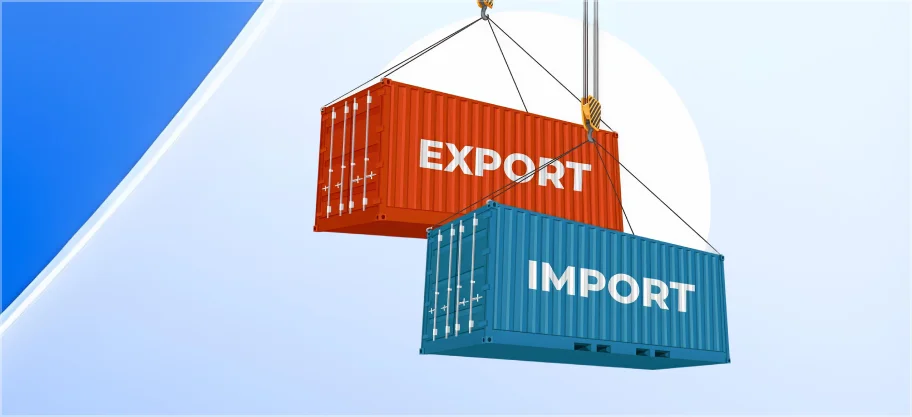

Heavy vehicle telemetry (OT) was completely disconnected from corporate supply chain software (IT). This siloed approach caused blind spots across remote sites, reactive maintenance, and severely delayed reporting.

We built a unified OT-IT integration platform that unified disconnected operational and corporate technology across nine remote mining sites without disrupting live production.


A global manufacturing firm faced coordination issues as each region ran its own system. With no unified shipment visibility, delays increased and transport costs stayed high.
We developed a unified logistics dashboard that connected all regional systems, giving real-time visibility into inventory, shipping, and delivery. A forecasting module was added to help the operations team plan accurately around demand.

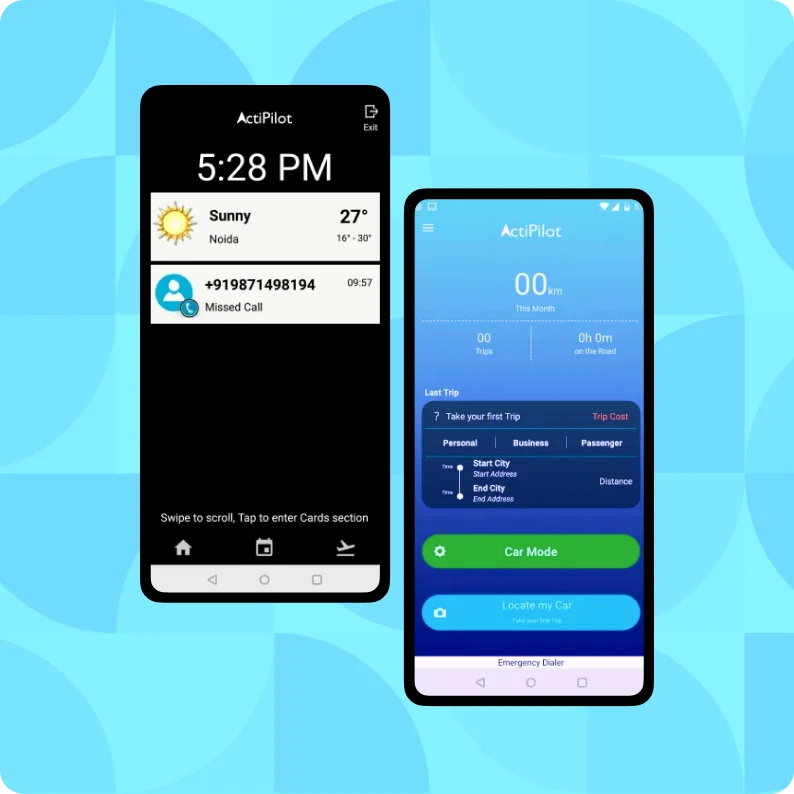
A national fleet operator needed an easy way for drivers to stay safe, prevent fatigue-related violations, and report vehicle issues using their own phones.
We built a voice-enabled mobile app with simple gestures for hands-free use. It guided routes, tracked driving hours, and logged vehicle checks, sending updates directly to managers without added paperwork.
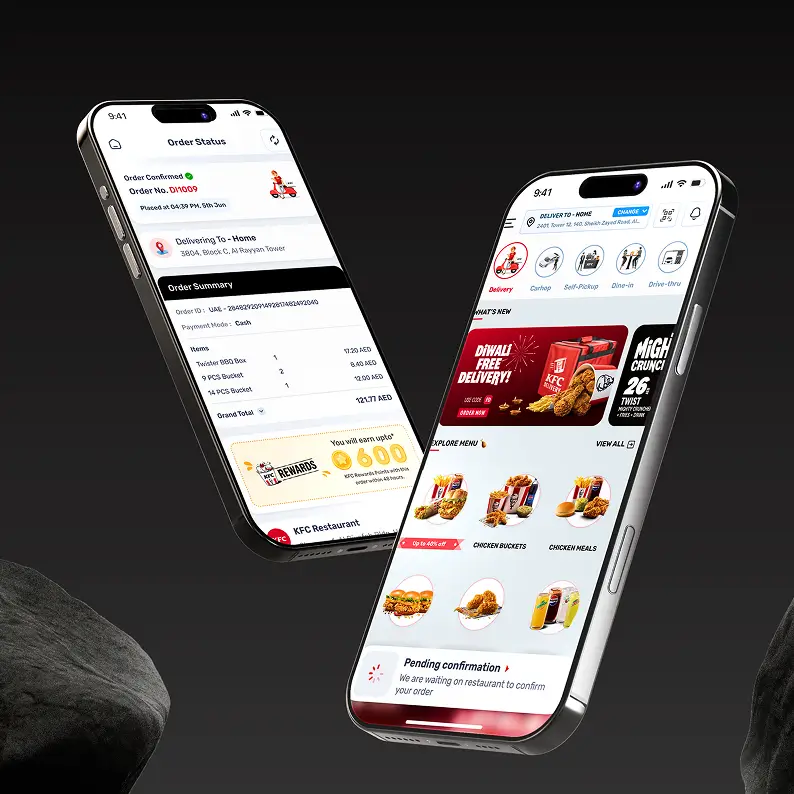
With 2,100+ outlets, Americana struggled with fragmented last-mile delivery. Data was siloed, driver assignments were manual, and geofencing violations caused costly delays.
We built the Americana Last Mile Platform (ALMP), a single system that automated driver assignments, enforced geofencing, and gave real-time delivery insights.



Manager, IT Division, TokiApp
To support high-density delivery networks across cities like Sydney and Melbourne, we build systems that handle:
For long-distance runs and lower-density delivery corridors, the software focus shifts to fuel efficiency and driver management:
For mining, agriculture, and outback freight operations, your software cannot crash just because a truck loses 4G. We design true offline-capable mobile architecture featuring:
Heavy Vehicle National Law (HVNL)
Notifiable Data Breaches (NDB) Scheme
Chain of Responsibility (CoR)

National Heavy Vehicle Regulator (NHVR) Compliance Electronic Work Diary (EWD) Standards

DAFF Biosecurity Reporting Standards

National Greenhouse and Energy Reporting (NGER) Scheme
Modern Slavery Act 2018 (Cth) Supply Chain Reporting

Transport Certification Australia (TCA) Telematics Standards

Work Health and Safety Act 2011 (WHS)

Australian Code for the Transport of Dangerous Goods by Road & Rail (ADG Code)

Australian Border Force (ABF) Integrated Cargo System (ICS) Requirements
Australian Cyber Security Centre (ACSC) Essential Eight

ISO/IEC 27001 (Information Security Management)
Heavy Vehicle National Law (HVNL)
Notifiable Data Breaches (NDB) Scheme
Chain of Responsibility (CoR)
National Heavy Vehicle Regulator (NHVR) Compliance Electronic Work Diary (EWD) Standards
DAFF Biosecurity Reporting Standards
National Greenhouse and Energy Reporting (NGER) Scheme
Modern Slavery Act 2018 (Cth) Supply Chain Reporting
Transport Certification Australia (TCA) Telematics Standards
Work Health and Safety Act 2011 (WHS)
Australian Code for the Transport of Dangerous Goods by Road & Rail (ADG Code)
Australian Border Force (ABF) Integrated Cargo System (ICS) Requirements
Australian Cyber Security Centre (ACSC) Essential Eight
ISO/IEC 27001 (Information Security Management)




From B-double linehaul runs along the Hume Highway to last-mile deliveries navigating Melbourne's hook turns, we build tools that reflect actual road conditions. Our engineering teams design for local realities, including offline mobile caching for outback blackspots and automated state-border compliance switches (HVNL vs WA/NT regulations).
Appinventiv is listed as an approved supplier on the Federal Australian Government Digital Transformation Agency (DTA) Software and ERP Marketplace under WoAG arrangements. Additionally, we are an approved QLD Government ICTSS.1303B Panel Member (Q-7218) and listed on the ICTSS.2403 ICT Professional Services arrangement. These credentials confirm our engineering standards are thoroughly vetted for mission-critical sectors.
With over 11 years of delivery experience across the APAC region, a deep bench of 1,700+ tech experts, and 3,000+ digital assets deployed, we have the resources to scale your project rapidly. We maintain an average deployment cycle of just 5 to 10 weeks for core enterprise logistics platforms.
Our custom systems are built to handle serious load. Right now, platforms we've engineered are tracking 950k+ logistics assets monthly, coordinating 120k+ daily shipment events, and synchronising 1.2M+ orders every month, all backed by a 99.90% SLA-backed availability guarantee.
Replacing your core software shouldn't bring your fleet to a standstill. We build bi-directional APIs that hook directly into your existing enterprise ERP (SAP, Oracle) and WMS. We keep your ongoing operations running smoothly while modernising the underlying tech, resulting in a 95% customer satisfaction rate across our logistics applications.
We don't sell buzzwords. Our machine learning modules are trained on practical supply chain data to deliver immediate cost reductions. Across our logistics portfolio, clients see on average 20-38% improvement in dispatch efficiency, a 40% reduction in unplanned fleet downtime, and up to 40% cost savings through AI-based logistic software and route optimisation.
From predictive route planning to automated warehouse control, our custom logistics software development service helps Australian businesses reduce waste, speed up operations, and improve supply chain visibility.


The India's Fastest-Growing Companies 2026 Recognised by TIME and Statista

Statista High Growth Companies APAC - 2026

Statista India's Growth Champions 2023






We connect devices like vehicle trackers and cold chain sensors directly to your logistics system. This helps you know where your assets are, how they’re doing, and what needs attention.
We use AI to automate everyday logistics tasks like route planning, document sorting, and delivery updates. It saves time and keeps your team focused on what matters.
Our machine learning models help predict demand, identify repeat bottlenecks, and reduce waste in your transport network. The more you use the system, the smarter it gets.
We use generative AI to simulate delivery scenarios, create dynamic route plans, and auto-generate reports or summaries from large logistics datasets. It helps decision-makers see options faster and act with greater confidence.
We build cloud-based transport software that your teams can access from anywhere. It keeps your data secure, updates in real time, and works across your warehouses and delivery hubs.
We add blockchain to help you manage records that shouldn’t be touched, like delivery logs, customs paperwork, and audit trails. It’s simple, secure, and easy to track.

















Ready to Modernise Your
Logistics Operations?
Whether you're replacing a legacy TMS, connecting fragmented warehouse systems, improving fleet visibility, or building a new logistics platform, we'll help you define the right architecture, scope, and roadmap.

Before writing a single line of script, we map out your real-world freight flows, trace manual handoffs, and pin down the exact operational bottlenecks draining your daily profitability.
After the discovery phase, we audit your legacy ERPs, WMS, telematics devices, and carrier APIs to identify deep system dependencies, database limits, and integration risks.
Next, we evaluate your current data pipelines to verify whether your route histories, fuel records, and telemetry logs are clean enough to train ML models for predictive dispatching and fleet maintenance.
Our expert designing team crafts high-contrast, intuitive interfaces built for fast data entry, ensuring drivers in the field and depot staff can complete check-ins and log compliance in just a few taps.
We build your software in fast, 2-week agile development cycles. You get functional code demos at the end of every sprint, giving your leadership team early visibility into high-value modules.
We connect your new software to your core operational systems while embedding local regulatory checks. Our engineers run automated compliance audits to enforce CoR tracking, electronic work diaries, and strict data encryption.
We battle-test software against simulated peak freight traffic and poor regional cellular connectivity before securing final user sign-off.
After going live, we execute controlled, staged rollouts, often running pilot routes alongside legacy tools to transition your operations safely with zero downtime to active freight schedules.
Once deployed, we provide 24/7 SLA-backed system monitoring, continuously tuning route algorithms and deploying performance updates as your network scales.
The cost of developing custom software in Australia for logistics typically ranges between AUD 70,000 and AUD 700,000. A focused logistics MVP may start around AUD 70,000–200,000, while integrated fleet, TMS, WMS or enterprise logistics platforms can range from AUD 200,000 to AUD 700,000+, depending on scope.
The main cost drivers are integrations, real-time tracking, mobile apps, data migration, IoT, AI, security, compliance, user volume and deployment complexity.
The development timeline generally ranges from 4 to 12+ months depending on project complexity. Standard tracking or driver apps take 4 to 6 months, whereas full-scale Transport Management Systems (TMS) or Warehouse Management Systems (WMS) featuring real-time AI dispatch and legacy integrations require 6 - 12+ months.
Choose a transportation software development company with proven transport domain experience, strong portfolio case studies, and native expertise in Australian compliance frameworks like NHVR, HVNL, and Chain of Responsibility (CoR). Verify their system integration capabilities with ERPs like SAP and Oracle, and ensure they offer SLA-backed post-launch support.
Appinventiv combines 11+ years of APAC supply chain expertise with pre-approved government supplier status on the Federal DTA Marketplace and QLD ICTSS Panel. Supported by 1,700+ tech experts and a portfolio of 3,000+ deployed digital assets, we deliver custom logistics systems that drive a 20-38% gain in dispatch efficiency and a 40% drop in fleet downtime.
Yes. Integration can be designed around APIs, EDI, event-driven architecture, databases or other supported interfaces. The objective is to connect the new platform to the existing technology ecosystem while minimising unnecessary duplication and manual data entry.
Yes. A phased modernisation strategy can introduce APIs, new services, data layers or user interfaces around existing systems before individual legacy components are replaced.
This can reduce transformation risk and allow the business to validate each stage before scaling.
Yes. For environments with unreliable connectivity, applications can be designed with offline capability, local caching, queued transactions and synchronisation mechanisms.
This can be particularly useful for mining, agriculture, regional transport and remote field operations.
AI can support logistics through route optimisation, ETA prediction, demand forecasting, predictive maintenance, inventory optimisation, load matching and automated document processing. The value depends on the quality and availability of operational data and how well the AI capability fits into the existing workflow.
Appinventiv engineers a full suite of enterprise logistics software tailored to modern supply chains. Our engineers build custom transportation management systems, warehouse and yard control platforms, fleet management tools, and AI-driven last-mile delivery software.
For logistics providers and enterprises, we build 3PL management portals, supply chain control towers, freight shipping platforms, and cold-chain tracking systems.
Additionally, our team crafts real-time inventory management software, predictive analytics dashboards, and dedicated mobile applications for drivers, warehouse personnel, and end customers.
There is no single compliance checklist for every logistics platform. Depending on the business and operating model, local transport software must comply with the Privacy Act 1988, APPs, Notifiable Data Breaches scheme, Heavy Vehicle National Law, NHVR requirements, Chain of Responsibility and jurisdiction-specific transport rules.
The HVNL currently operates in the ACT, NSW, Queensland, South Australia, Tasmania and Victoria, with different arrangements applying in WA and the NT.
A TMS manages transportation activities such as planning, carrier allocation, dispatch, freight tracking and delivery.
A WMS manages warehouse activities including receiving, inventory, picking, packing and fulfilment.
A supply chain control tower provides a broader operational view across orders, inventory, suppliers, warehouses and transportation, helping leadership teams identify and respond to exceptions.
Custom development can make sense when your workflows, integrations, data models or operating requirements differ significantly from standard software.
If your requirements are standard, an existing platform may be more cost-effective. A good logistics software company should help you determine which approach makes commercial and operational sense.