
































Appinventiv Call Button
Customer Data Platform Development Company for enterprise customer data Customer Data Platform Development Services for mobile and enterprise experiences

Customer Data Platform Development That Turns Disconnected Data into AI-Driven Excellence

Every customer interaction generates valuable data, but when it's scattered across CRMs, websites, mobile apps, contact centres, and legacy systems, it creates more complexity than insight. Appinventiv develops enterprise Customer Data Platforms that unify customer data, enable real-time Customer 360 profiles, and power AI-driven personalisation, all while helping businesses strengthen data privacy and long-term growth.

RetainIQ+ Multinail Lite n' Easy RAPID Teachers

QLD Government ICTSS.2403 ICT Professional Services Arrangement – final approval stage.

Appinventiv Software is a Local Buy LGA LB308 Arrangement ICT Solutions, Products, Services & New Technologies

Appinventiv Software is an approved ICT Supplier to the Australian Digital Transformation Agency (DTA)

Fragmented Customer Data Is
Costing Enterprises More
Than They Realise

Three pressures are converging on enterprises at the same time, and most customer data architectures were built for a world in which only one of them existed.
[ 1 ]

The Cookie-Based Measurement Model Is Unwinding

Apple and Mozilla removed third-party cookie support from Safari and Firefox years ago, and although Google has repeatedly delayed a full Chrome phase-out, it has shifted cookie control into user-facing privacy settings rather than reversing course. The practical effect for marketers is the same either way: cross-site tracking is degrading, and businesses that have not built first-party data infrastructure are losing visibility into the customer journey in real time.

This is unfolding in Australia alongside a parallel regulatory shift. The Privacy Act reforms and Chrome's cookie changes are converging in the same period, which means marketers are simultaneously losing their existing targeting infrastructure and gaining new legal obligations for whatever replaces it.

[ 2 ]

Customer Expectations Have Reset Permanently

McKinsey's research into personalisation shows that companies excelling at it generate a meaningful revenue lift, typically 5 to 15%, and can improve marketing ROI by 10 to 30%, while fast-growing companies draw around 40% more of their revenue from personalisation activity than slower-growing peers.

None of this is achievable without a unified, real-time customer profile behind it.

[ 3 ]

Data Fragmentation Is Now A Governance Liability

Under the Privacy and Other Legislation Amendment Act 2024, serious or repeated breaches of the Privacy Act can now attract penalties of up to the greater of AUD 50 million, three times the benefit obtained, or 30% of adjusted turnover.

The OAIC can also issue infringement notices for lower-tier breaches without going to the Federal Court. Australian Clinical Labs' AUD 5.8 million civil penalty in October 2025, the first of its kind, confirmed the regulator is prepared to use these powers.

  • Fragmented customer data, held in inconsistent formats across systems nobody fully inventories, is precisely the condition that produces these breaches: organisations cannot protect, disclose or delete data they cannot locate.
  • A custom CDP addresses the commercial problem (poor personalisation, inflated CAC) and the compliance problem (ungoverned personal information) with the same underlying architecture.
0 Digital Products
Delivered
0 Tech Experts
0 Industries Mastered
0 Legacy Systems
Transformed
Customer Data Platform Development Services for reducing data fragmentation

Not sure where your data fragmentation is costing you the most?

Appinventiv's data engineering team can map your current customer data landscape across CRM, POS, ERP and marketing systems through a focused diagnostic.

From Data Silos to Customer 360: How a Modern Customer Data Platform Works

A CDP's value is entirely dependent on how well it ingests, resolves
and governs data before a single dashboard or campaign ever sees it
. The 6-step process below outlines how Appinventiv typically
architects that pipeline.
01

Data Collection

Continuously captures customer interactions from online and offline channels.

02

Integration Layer

Connects enterprise systems through APIs, event streams, and batch processing to eliminate data silos.

03

Identity Resolution

Matches customer identities across multiple channels to create a single, accurate Customer 360 profile.

04

Customer Profile

Builds a real-time, unified view of every customer using behavioural, transactional, demographic, and engagement data.

05

AI & Analytics

Generates predictive insights such as churn risk, customer lifetime value, next-best actions, and audience segmentation.

06

Activation Layer

Delivers consistent, personalised experiences across marketing, sales, customer support, and digital channels.

Why Businesses Invest in
Customer Data Platforms

Enterprise buyers evaluating a CDP deployment within the local market
should model impact across four distinct localised levers.
Market Reality: The benchmarks above are highly accelerated by local market concentration. In banking, retail, and healthcare sectors, where a few major players hold significant market share, the enterprise that masters localised first-party identity resolution stands to capture disproportionate competitive value.
Customer data platform development services for data unification

Ready to map the ROI of your data unification strategy?

Engage our data architects to build a custom business case and ROI projection for your composable CDP.

Which Type of Customer Data Platform Is Right for
Your Business?

Not every customer data platform solution follows the same architectural model. The right choice depends on your existing technology investments, data maturity, governance requirements, and long-term digital strategy.

Packaged CDP

BEST FOR

Organisations seeking rapid deployment

KEY ADVANTAGES

Faster implementation and built-in capabilities

KEY CONSIDERATIONS

Limited customisation and higher vendor dependency

Composable CDP

BEST FOR

Enterprises with modern cloud-native architectures

KEY ADVANTAGES

Modular, scalable and API-first

KEY CONSIDERATIONS

Requires experienced data engineering teams

Warehouse-Native CDP

BEST FOR

Businesses using Snowflake, Databricks or BigQuery

KEY ADVANTAGES

Eliminates data duplication while leveraging existing warehouse investments

KEY CONSIDERATIONS

Dependent on data warehouse maturity

Custom Customer Data Platform

BEST FOR

Enterprises with complex workflows and governance requirements

KEY ADVANTAGES

Complete flexibility, stronger integration capabilities,
full ownership of data and architecture

KEY CONSIDERATIONS

Higher initial implementation effort but greater long-term value

1/4 WHAT WE BUILD

What Are the Key Customer Data Platform Use Cases Industries?

A unified data architecture serves different strategic purposes depending on the sector. We engineer industry-specific workflows to solve precise operational challenges.

1. Retail and eCommerce

Unified Inventory And Loyalty Personalisation

A national retailer with in-store POS, an eCommerce platform and a loyalty app can use a CDP to trigger real-time offers based on combined online browsing and in-store purchase history, rather than treating the two channels as separate customers.

2. Banking and Finance

Consent-Aware Cross-Sell Under Apra Obligations

Banks and insurers can build next-best-product models on unified account and transaction data while keeping consent, marketing suppression and CPS 230-relevant operational risk controls attached directly to the customer record. This satisfies both commercial and prudential requirements.

3. Travel and Hospitality

Guest Journey Stitching Across Booking Channels

Airlines, hotel groups and travel platforms can resolve identity across direct bookings, OTAs, loyalty programs and contact centre interactions to personalise the guest journey from search through to post-stay follow-up.

4. Healthcare and Pharmaceuticals

Governed Patient Engagement Data

Healthcare providers unify patient interactions across telehealth platforms, physical clinics, and digital health apps. This holistic view improves patient care coordination, automates appointment reminders, and ensures all communication adheres to strict privacy and health data regulations.

Choosing the Right Customer Data Platform Strategy

Not every organisation requires the same type of customer data platform software. The right approach depends on your existing technology investments, integration requirements, scalability goals, and long-term digital strategy.
The table below compares the most common enterprise options to help decision-makers evaluate which approach best aligns with their business needs.
Evaluation CriteriaCustom / Composable CDP (Build)Salesforce Data Cloud (Extend)Adobe RTCDP (Extend)Segment (Buy)
Best ForEnterprises with complex customer journeys, proprietary workflows, and long-term digital transformation goalsOrganisations already invested in Salesforce CRM and Marketing CloudEnterprises using Adobe Experience Cloud for marketing and personalisationMid-market businesses seeking rapid deployment with minimal engineering
Cost StructureHigh upfront investment, lower long-term ownership costsSubscription and usage-based licensingPremium enterprise licensingVolume-based SaaS pricing
Implementation SpeedModerate to LongModerateModerateFast
Data FlexibilityUnlimited, schema-agnosticCRM-centricAdobe ecosystem-centricAPI-first with moderate flexibility
AI CapabilityBring your own AI models (Databricks, MLflow, Vertex AI, Azure AI)Einstein AIAdobe SenseiPartner integrations
Vendor Lock-inNone – complete ownershipHighHighModerate
Data SovereigntyFull control over hosting and data residencyDependent on Salesforce regionsDependent on Adobe regionsDependent on vendor infrastructure
ScalabilityDesigned around enterprise growthExcellent within Salesforce ecosystemExcellent within Adobe ecosystemGood for growing businesses
Long-term FlexibilityExcellentModerateModerateModerate
Ideal DecisionWhen customer data is a long-term strategic assetWhen Salesforce already drives most customer operationsWhen Adobe Experience Cloud is the primary MarTech platformWhen speed to market is the highest priority

Which Option Is Right for Your Business?

Rather than asking "Which platform is best?", enterprise leaders should ask "Which approach best supports our business strategy over the years?" As a general guideline:
Appinventiv Insight: The most successful CDP strategy isn't necessarily the one with the most features. It's the one that aligns with your business objectives, technology ecosystem, and future growth plans.

Why Some Customer Data Platform Projects Succeed While
Others Stall

Building a Customer Data Platform is only part of the challenge. Delivering measurable business value depends on how well the platform is planned, governed, and adopted across the organisation. Many CDP initiatives fail not because of technology limitations, but because foundational data, governance, and business alignment are overlooked.
Below are some of the most common pitfalls enterprises encounter and how they can be avoided.

AI Capabilities That Turn Customer Data into Business Intelligence

  • Predictive Segmentation: Identifying high-propensity segments before a campaign is built, not after.

  • GenAI Insight Generation: summarising customer segment behaviour in plain language for non-technical stakeholders

  • Churn Prediction: surfacing at-risk customers for retention teams before cancellation signals become explicit

  • Next-best-offer Models: recommending the most relevant product or message per customer, updated in real time

What Does Customer Data Platform Development Cost

AI-powered customer data platform development requires transparent, modular pricing. The table below reflects the typical CDP software development cost, along with an estimated timeline.

Where Does Your Investment Go?

Every Customer Data Platform consists of multiple engineering workstreams. Understanding these components provides greater visibility into business project scope and helps organisations prioritise investment based on goals.
ModuleDescriptionEstimated Engineering Hours
Data ingestion pipelines Source connectors, landing zone, change-data-capture 400 – 900
Identity resolution engine Deterministic + probabilistic matching, survivorship logic 350 – 800
Customer 360 data model Golden record schema, profile API layer 250 – 500
UI / analytics dashboard Segment builder, profile explorer, reporting layer 200 – 450
Security and compliance layer Consent management, encryption, audit logging, access controls 300 – 700
Machine learning models Predictive segmentation, churn, next-best-offer 300 – 750
Customer data platform development

Get an architectural estimate
for your CDP development

Share your current data sources and priority use cases, and our tech architects will get back to you with a scoped work-package estimate tailored to your needs.

Compliance, Security & Data
Sovereignty: Building Customer Trust into Every Data Interaction

Data privacy is not just a customer data platform feature for enterprises; it is the foundational architecture. We engineer platforms that align with governance and data sovereignty requirements.

APPs

Australian Privacy Principles

APRA CPS 234

Information Security (for APRA-regulated entities).

ASIC Governance Expectations

Governance expectations for regulated and reporting entities.

APRA CPS 230

Operational Risk Management (where applicable).

Essential Eight

Australian Cyber Security Centre (ACSC) maturity model.

ISM

Information Security Manual (Australian Government systems).

SOCI Act

Security of Critical Infrastructure Act 2018 (relevant to energy, utilities, transport, and communications).

State Records Act (WA)

Recordkeeping and data retention obligations.

Digital Service Standard (DSS)

Australian Government digital services.

Is Your Organisation Ready for a Customer Data Platform?

Many organisations begin exploring Customer Data Platforms only after customer data challenges start affecting revenue, customer experience, or operational efficiency. The checklist below can help determine whether now is the right time to invest.

Your organisation may benefit from the components of a customer data platform if you:

Store customer information across multiple disconnected systems.

Struggle with duplicate or inconsistent customer records.

Want to deliver personalised experiences across multiple channels.

Are investing in AI or advanced customer analytics.

Need stronger governance over customer consent and privacy.

Operate multiple brands, business units, or customer touchpoints.

Depend heavily on first-party customer data.

Need a real-time Customer 360 across marketing, sales, and customer service.

Awards and Recognitions That Reflect Our Excellence in Delivering Enterprise Customer Data Platform Development Services in Australia

Appinventiv's commitment to excellence in custom software development in Perth has been recognised through independent industry awards and long-standing technology partnerships. These acknowledgements reflect our ability to deliver secure, scalable software platforms across complex, regulated enterprise environments, including organisations operating.

How to Build a Customer Data Platform

We transition enterprises from fragmented data to intelligent activation through a proven, agile methodology.

We map your source systems, audit data quality, and define the business use cases that will drive initial ROI.

Real-World Enterprise Solutions That Demonstrate Our Expertise

Our experience extends beyond building software; we engineer intelligent digital ecosystems that connect data, improve customer experiences, and enable AI-driven decision-making.

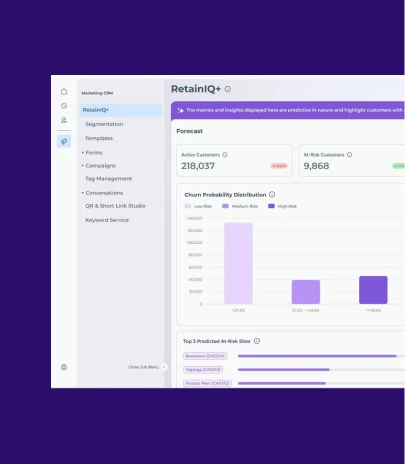
To help Sonny's improve membership retention, Appinventiv engineered RetainIQ+—a platform that combines machine learning-based churn prediction with AI-powered marketing automation. The solution enables operators to identify churn risks in advance and launch targeted interventions that preserve recurring revenue. 

RetainIQ+ platform for membership retention
Zayne Rendell
Zayne Rendell
Founder/CEO, Rapid Teachers
Watch Reel
Robert Atkinson

Bankruptcy Lawyer, DebtBlaster

Build a Future-Ready Customer Data Platform with Appinventiv

Building a Customer Data Platform is a complex architectural challenge, not just a software integration. Appinventiv, as an experienced Customer Data Platform Development Company, brings over 1,700 technology specialists to the table, deploying dedicated data squads that combine cloud architects, machine learning engineers, and privacy compliance experts.

These specialists work as an extension of your internal team from the initial data audit through to post-launch optimisation, ensuring your platform is built for immediate activation, not just passive storage.

Whether your immediate goal is to unify a few core marketing channels to validate a first-party data strategy, or to architect a fully composable, APRA-compliant data ecosystem on Snowflake or AWS, our engagement model is built for enterprise reality.

Every partnership begins the same way: a deep-dive architectural consultation, a signed NDA, and a transparent, line-item delivery plan within days.

Frequently Asked Questions

How does a CDP handle real-time data streaming latency for high-volume retail or banking transactions?

Enterprise CDP architectures typically separate the real-time event stream (via Kafka or equivalent) from the batch-resolved Customer 360 profile. Time-sensitive triggers like cart abandonment, fraud signals, etc., act on the raw event stream directly, while identity resolution and profile updates run on a near-real-time cadence measured in seconds to minutes rather than milliseconds, which is sufficient for the overwhelming majority of enterprise activation use cases.

How is complex identity stitching logic managed when customers use multiple emails, devices and loyalty accounts?

A layered approach is used: deterministic matching resolves records with a shared verified identifier first, probabilistic matching scores partial matches second, and a survivorship rule set determines which source record takes precedence when conflicts occur. This logic must run continuously, not as a one-time migration step, to prevent duplicate profiles re-accumulating over time.

Who owns the data once it sits inside the CDP - the enterprise or the technology vendor?

With a custom-built or warehouse-native CDP, the enterprise retains full data ownership and IP, since the architecture sits inside the business's own cloud environment. Packaged CDPs from major vendors typically retain some degree of platform dependency, which enterprise buyers should clarify contractually before committing.

What is a realistic migration timeline from a legacy CRM-only view to a full Customer 360 platform?

For a single-domain foundational build, three to five months is typical. Enterprises adding multi-source ingestion, probabilistic identity resolution and multiple activation channels should plan for five to nine months, and regulated enterprises requiring full compliance layering should plan for nine to twelve months or more.

How is a Customer Data Platform different from a CRM or a Data Warehouse?

While all three manage data, they serve different business purposes.

PlatformPrimary Purpose
CRMManages customer relationships, sales activities, and service interactions.
Data WarehouseStores large volumes of structured data for reporting and business intelligence.
Customer Data Platform (CDP)Unifies customer data from multiple sources to create a real-time Customer 360, enabling personalisation, analytics, and AI-driven engagement.

Rather than replacing your CRM or Data Warehouse, a Customer Data Platform connects them to create a single, trusted view of every customer.

Can a Customer Data Platform integrate with our existing technology stack?

Yes. A modern CDP is designed to complement, not replace, your existing enterprise systems. Depending on your environment, integrations can include:

  • Salesforce
  • Microsoft Dynamics 365
  • SAP
  • Oracle
  • Snowflake
  • Databricks
  • Adobe Experience Cloud
  • Shopify Plus
  • Braze
  • HubSpot
  • Contact centre platforms
  • ERP and POS systems
  • Custom business applications

The objective is to create a unified customer data ecosystem while minimising disruption to existing operations.

How do you ensure customer data remains secure and compliant?

Security and governance are integrated throughout the development lifecycle rather than being added after implementation. Depending on industry requirements, Customer Data Platforms can be engineered to support:

  • Australian Privacy Principles (APPs)
  • Privacy Act 1988
  • Consumer Data Right (where applicable)
  • APRA CPS 230 and CPS 234
  • ISO/IEC 27001
  • SOC 2
  • Role-based access controls
  • Encryption at rest and in transit
  • Comprehensive audit logging
  • Consent and preference management
  • Australian data residency strategies