

































A Comprehensive Guide on White Label App Development

 Share -



- 01Step-by-Step White-Label App Development Process
- 02Technical Architecture Behind White Label Apps
- 03When Should Businesses Consider White Label Solutions?
- 04How Does White Label Solutions Differ from Custom Apps?
- 05Benefits of White Label App Development
- 06Industries Benefiting from White-Label Apps
- 07White Label App Development Cost vs ROI
- 08How to Choose a Reliable White Label App Development Partner
- 09Common Challenges in White Label App Development and How to Overcome Them
- 10Partner With Appinventiv For Your Next White Label App Development Project
- 11FAQs

Key takeaways:
- A successful white label app development process starts with clear requirement mapping aligned to business goals and user needs.
- Strong branding and UI customization help differentiate your product on top of a shared backend.
- Backend configuration should support scalability and future flexibility from the start.
- Rigorous testing and quality assurance are critical to avoid performance or integration issues post-launch.
- A well-planned deployment strategy ensures smooth onboarding, analytics setup, and system integrations.
- Ongoing maintenance and updates keep your white label app secure, stable, and aligned with evolving business needs.
When Walmart set out to expand its digital services, it didn’t rebuild everything from scratch. It used white-label solutions to launch multiple apps under its own brand, quickly and without heavy upfront investment. That kind of decision is becoming more common than you might expect.
According to Gartner, in 2026, 50% of enterprise software leaders are shifting toward faster, product-focused delivery models, up from 15% in 2020. In simple terms, getting products to market faster is now a real competitive edge.
That’s where white label app development comes in. It gives you a way to launch quickly, keep costs under control, and stay focused on your core business. At the same time, it’s not a perfect fit for everyone. Limited customization and reliance on vendors can slow you down later if you don’t plan carefully.
In this blog, we’ll walk through where white label makes sense, where it can fall short, and how to decide if it aligns with your business goals.
White label apps can cut development time by up to 60%. Get a faster route to market without the heavy build.

Step-by-Step White-Label App Development Process
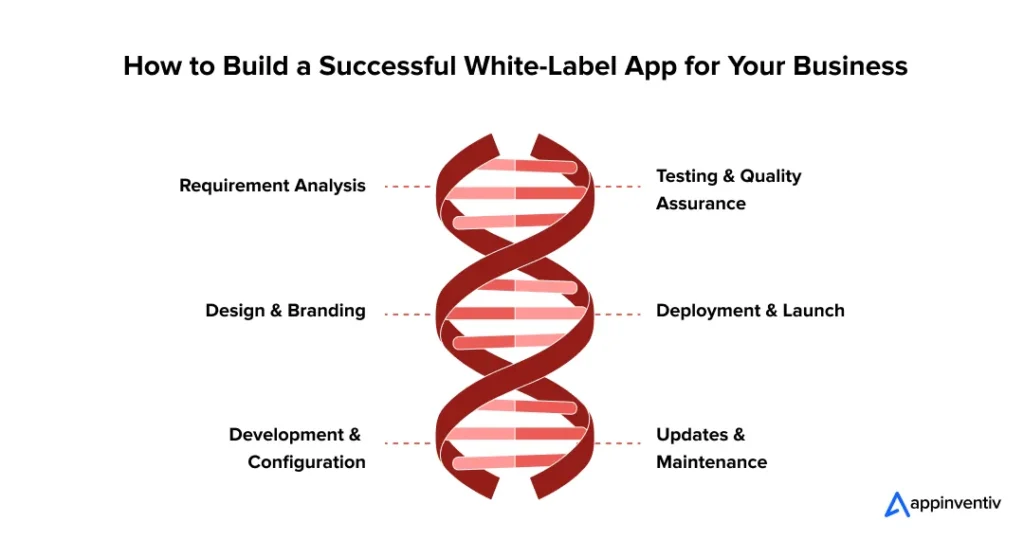
White-label apps help businesses launch faster by using ready-made software that can be branded, configured, and adapted to specific business needs. Instead of building every layer from scratch, the process focuses on choosing the right model, customizing the experience, configuring the backend, and preparing the app for launch.
Here’s how to create a successful white-label app that works for your brand and business goals.
Requirement Analysis
The first step is to understand the client’s business goals, target users, brand requirements, and key features. At this stage, the team also selects the right white label development model, either frontend customization on a reused backend or a feature-based multi-client setup, depending on how much branding, flexibility, and rollout speed the business needs. Getting this right ensures the final product aligns with both user expectations and long-term growth plans.
Design & Branding
Once the requirements are clear, designers create a UI/UX that reflects the client’s brand identity. This includes logos, color schemes, layouts, and navigation. While the backend remains consistent across apps, the frontend is customized heavily to give each product a distinct look and feel that matches the brand.
Development & Configuration
During this phase, backend systems are configured using ready-made frameworks and reusable components to handle core functions like user management, payments, analytics, and integrations. Frontend elements are adjusted to match branding needs, and feature toggles are implemented in multi-client setups. This approach ensures faster deployment while keeping the system stable and scalable.
Testing & Quality Assurance
The app is tested across devices, platforms, and real-world scenarios to ensure smooth performance. QA teams verify features, integrations, branding consistency, and security, fixing issues before launch. This step ensures the app delivers a reliable and consistent user experience.
Deployment & Launch
After testing, the app is published under the client’s brand on app stores or enterprise platforms. The launch also includes onboarding flows, push notifications, analytics setup, payment configurations, and system integrations. A well-executed launch helps the app reach users smoothly and start delivering value immediately.
Updates & Maintenance
Once live, the app requires ongoing updates, security patches, performance monitoring, and feature improvements. Continuous maintenance ensures the app stays secure, stable, and aligned with evolving business needs and user expectations over time.
This structured approach helps businesses move fast without losing control, ensuring the app not only launches quickly but also evolves smoothly as requirements grow.
Technical Architecture Behind White Label Apps
At a basic level, white label apps are designed to serve multiple businesses using a single core system. That’s what makes them fast to launch and cost-efficient early on. But the same structure also defines how far you can stretch them later.
Here’s a clear breakdown:
| Component | What It Means for You | Where It Helps | Where It Can Limit |
|---|---|---|---|
| Shared Backend (Multi-Tenant) | One core system runs multiple apps with separate data layers | Faster launch, no heavy backend build | Limited control as product logic evolves |
| API Integrations | Connects payments, CRM, analytics via APIs | Quick plug-and-play integrations | Complex workflows can feel restrictive |
| Frontend Customization | Branding through UI changes like colors, layouts | Looks like your product, not generic | Bound by predefined structures |
| Data Security Layer | Access controls and encryption per tenant | Built-in security, less overhead | Less flexibility for strict compliance needs |
| Central Updates | Vendor handles fixes and upgrades | No maintenance burden | No control over timing or changes |
| Cloud Scaling | Infrastructure scales automatically | Handles early growth easily | Performance can dip with complex usage |
| Feature Toggles | Turn features on or off as needed | Faster rollout, minimal dev effort | New features often need deeper changes |
What this looks like in real scenarios
Many teams start here because it helps them launch quickly without overinvesting early on. It’s a practical choice when you’re validating an idea or entering a market fast.
But after some time, usually when integrations grow or workflows become more specific, the same setup can start pushing back a little. That’s when teams either extend the system or begin moving toward a more custom architecture. It’s not a flaw. It’s just how the trade-off plays out.
When Should Businesses Consider White Label Solutions?
White-label solutions are ready-made products or services that one company builds and another company puts their own brand on to sell. They provide a smart way to enhance how customers perceive your brand, foster loyalty, and increase revenue. When businesses use white-label platforms, they can focus on their core competencies while entrusting experts to build and maintain complex software.
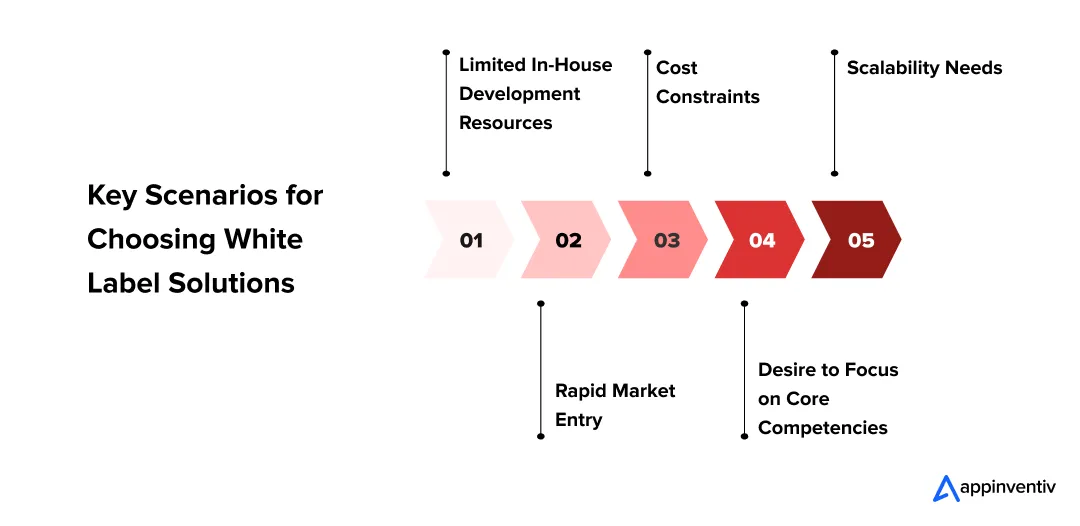
Limited In-House Development Resources
Building a product from the ground up takes tons of time, know-how, and money. For businesses that don’t have those skills on their team, white-label solutions give you something that’s already finished. You can offer new products to customers without dealing with all the headaches that come with creating software.
Rapid Market Entry
In industries that move fast, getting there first can give you a real advantage over competitors. White-label solutions enable businesses to quickly launch their products by leveraging existing and well-functioning platforms.
Cost Constraints
Building custom solutions costs a fortune. White-label products offer a cost-effective option that reduces development and operational costs, which is particularly beneficial for startups and smaller companies that need to manage their budgets effectively.
Desire to Focus on Core Competencies
When businesses use white-label solutions, they can focus their energy on what they’re actually good at, such as marketing and customer care, rather than getting bogged down in building and maintaining products.
Scalability Needs
White-label solutions usually come with systems that scale with you, so businesses can expand and handle changing customer needs without rebuilding everything from scratch.
That said, this approach isn’t always the right fit. In some cases, the limitations can outweigh the speed and cost advantages, especially as your product and requirements evolve.
How Does White Label Solutions Differ from Custom Apps?
When businesses evaluate mobile app approaches, the two primary choices are white label app development and custom app development.. Clearing the confusion to make the right choice is critical. This custom app vs white label app development comparison illustrates the differences between the two, in terms of catering to different business needs – white label apps ensure speed and cost-effectiveness, while custom apps offer flexibility and complete control of the application.
Here’s a side-by-side comparison that highlights the key differences:
| White Label Apps vs Custom Apps | ||
|---|---|---|
| Factor | White Label Apps | Custom Apps |
| Customisation | Limited, mostly branding tweaks. | Fully tailored to business needs. |
| Design | Generic, reused templates. | Unique, brand-specific UI/UX. |
| Cost | Lower, ready-made solution. | Higher, built from scratch. |
| Scalability | Dependent on vendor updates. | Flexible, grows with your business. |
| Maintenance | Stable but vendor-controlled. | Requires effort, but on your terms. |
| Security | Vendor-managed, less control. | Full control, stronger safeguards. |
Is There a Middle Ground? (Hybrid Approach)
In practice, it’s rarely a straight choice between white label and fully custom. Most teams start with a white-label setup to get to market quickly and see what works.
Once there’s traction, they begin adding custom features where it actually matters. This way, you move fast at the beginning without getting stuck later, and gradually shape the product around your needs rather than forcing your business to fit the tool.
Try our custom apps designed specifically for your business requirements.

Benefits of White Label App Development
White-label mobile app development has become increasingly popular among businesses seeking fast, affordable, and reliable digital solutions. By utilizing ready-made applications that can be rebranded and tweaked, companies gain numerous advantages over starting an app project from scratch. Let’s examine the primary benefits.
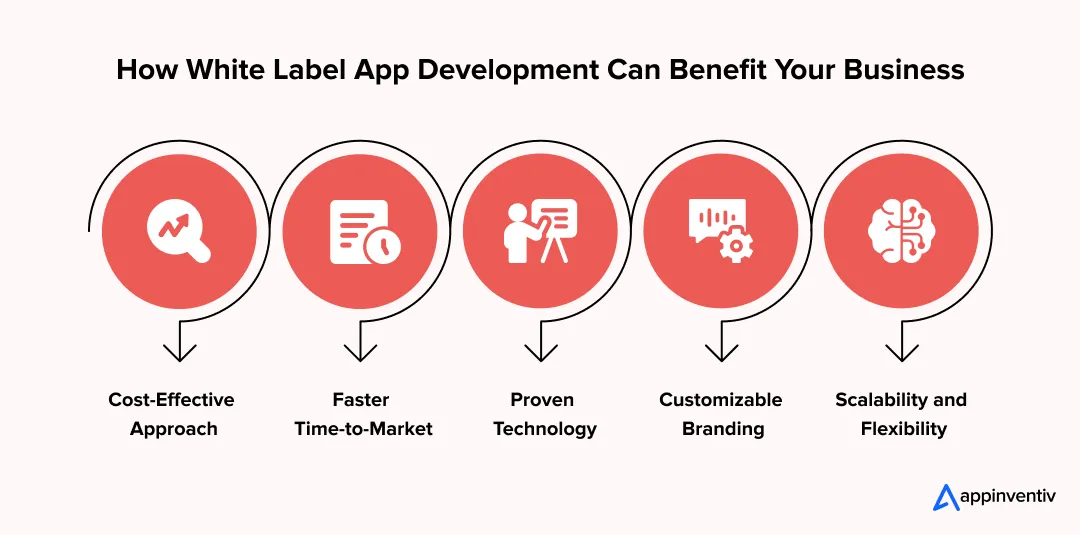
Cost-Effective Approach
This is the primary reason why businesses love white label mobile app development, as it allows them to save on costs. Designing a fully customized app from scratch can get expensive fast and can incur a lot of investment in design, development, and testing. White label apps are pre-made, so businesses can buy a finished solution and just stick their brand on it. This process greatly lowers the development costs while still providing a quality, professional product.
More revenue is generated due to faster development. Since core functionality is already in place, businesses can eliminate the weeks of design and coding, freeing up budget and team time for marketing, identifying new customers, and other business priorities.
Faster Time-to-Market
In today’s busy digital world, time is of the essence. White label on-demand app development is a feature that ensures businesses can put their products out in a much shorter time than if they had to create something from the ground up. Since the main features and basic structure are already in place, companies can focus on branding, small tweaks, and going live.
Getting your product out faster is not only about satisfying customer demand faster; it gives you a true competitive edge over others. You can respond to what’s happening in the market, grab new opportunities, and get your position before competitors even realise what hit them.
Proven Technology
White label solutions use reliable, well-tested systems that actually work. Unlike new experimental apps or freshly written code, these solutions have been through tons of development and testing, so you get fewer headaches with bugs or things breaking down.
Many white label apps also come with security already built in, keeping user data safe from day one. The original developers handle regular updates and fixes, so your app stays protected and runs smoothly over time. This gives businesses real peace of mind about their platform working properly.
Customizable Branding
Even though these apps are already built, white label app development gives you plenty of room to make changes. Companies are able to rebrand the whole experience according to their identity, such as logos, colors, design elements, and customer communication. This flexibility means that the app somehow feels yours totally while still offering the power of a robust, working platform.
The branding options also cover the users’ interactions with the app, in terms of navigation, content layout, feature presentation, and so on. When you personalize these elements for your specific audience, you can provide a more personalized experience that resonates with your brand’s values and keeps users more engaged.
Scalability and Flexibility
Another important benefit of white label app development is that it can scale with you. Most white-label solutions are designed to be easily scalable, meaning they can grow to accommodate a larger user base, more transactions, or expanded content without significant changes. It’s easy to start with the basics and add more features along the way as your business needs evolve.
Many companies have benefited from their white label solutions in terms of growth. Take food delivery startups and retail chains, for instance. Some of these businesses had begun with white-label apps to simply test their ideas in the market. Gradually, they grew the app to include additional services, reach new locations, and integrate with other systems, all without making changes from the ground up.
Industries Benefiting from White-Label Apps
White label apps have emerged as a game-changing solution for businesses looking to roll out digital products fast without the hefty price tag of building from scratch. These ready-made applications let companies put their own spin on existing technology, tweaking features and branding to match what their customers actually want.
The result? Lower costs, faster launches, and solutions that work right out of the gate. Everyone, from scrappy startups to major corporations, is jumping on this trend to improve how they serve customers, streamline operations, and stay ahead of the competition.
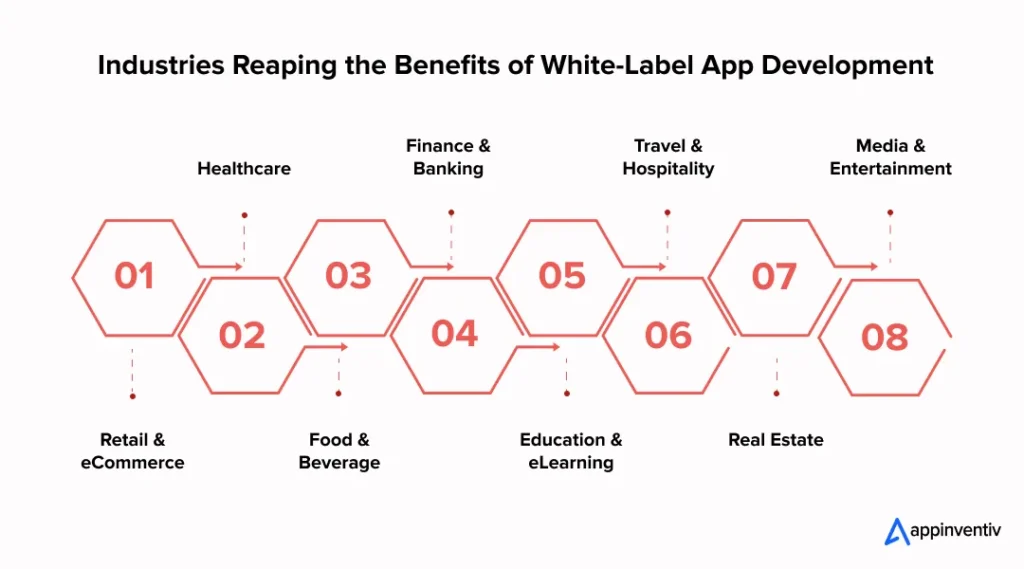
Retail & eCommerce
Online retailers are using white label apps to create shopping experiences that actually convert. These platforms are pre-loaded with everything you need: product galleries, customer-trusted payment processing tools, and reward programs that keep people coming back. The magic really happens with features such as personalized product recommendations and targeted email notifications that drive sales and keep shoppers engaged with your brand.
In practice, many retailers rely on white label apps during seasonal spikes where launching even a few weeks earlier can directly impact revenue. Platforms like Shopify Plus enable businesses to build white-label storefront ecosystems, helping brands launch and scale quickly without building infrastructure from scratch.
Healthcare
The healthcare industry has been able to utilize white label apps to provide virtual consultations, appointment scheduling, patient health tracking, and medical record management. Hospitals and clinics use these solutions because they need to ensure that their patients have easy, secure access to care – while preserving their professional reputation and satisfying stringent privacy standards.
For healthcare providers, speed isn’t just convenience. It often means rolling out compliant digital services quickly without long development and certification cycles. Platforms like Teladoc Health demonstrate how white-label virtual care infrastructure enables faster deployment of digital healthcare services.
Also Read: White-Label Telemedicine Platform Development
Food & Beverage
White label applications are utilized in restaurants, coffee shops, and food delivery businesses to facilitate online meal orders, coordinate delivery, and reserve a table. White label business app development within the food sector opens up possibilities for hassle-free experiences of making personalized orders that would make the customers revisit over and over again.
In highly competitive markets, faster rollout of ordering and delivery apps often becomes the difference between retaining customers and losing them to competitors. Solutions like GloriaFood allow restaurants to deploy ready-made ordering systems under their own brand with minimal setup.
Finance & Banking
Banks and financial companies utilize white label platforms for mobile banking services, digital payment wallets, money transfers between users, and portfolio management tools. These solutions enable financial organizations to deliver effective, user-friendly services while complying with stringent customer regulations and security standards.
Financial institutions typically use white label solutions to introduce digital services faster, especially when time-to-market matters more than building everything in-house. Platforms like Mambu and Backbase provide modular digital banking infrastructure that can be branded and launched quickly.
Education & eLearning
Online learning platforms, virtual classrooms, and skill development courses are being developed using white label solutions in schools, colleges, and training institutes. Such devices facilitate remote learning access for students and enable educational institutions to diversify their offerings without incurring significant expenses.
Many institutions use white label platforms to launch new programs quickly without waiting for long development timelines. Tools like LearnWorlds offer white-label LMS platforms that help educators create branded learning experiences with minimal technical effort.
Real Estate
Property companies use white label solutions to display home listings, provide virtual tours, match buyers with agents, and include mortgage calculators. These apps make the home-buying and rental process much easier, letting customers look at properties anytime they want from anywhere.
At Appinventiv, we partnered on projects like Ility, a white-label SaaS platform we developed to empower real estate companies.
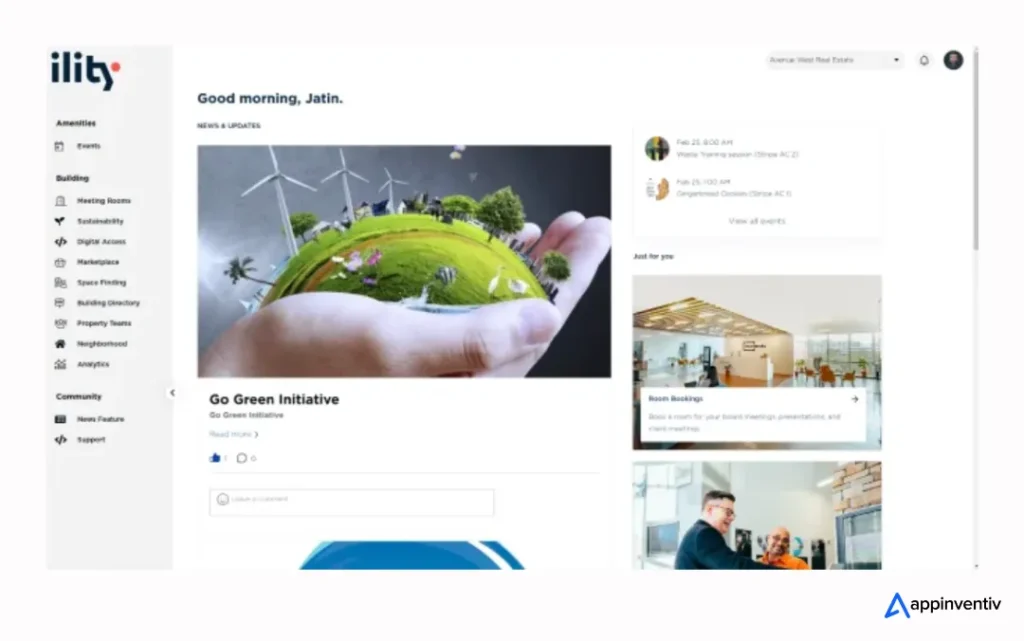
By giving commercial property owners a flexible platform that can grow with them, Ility brought a 40% increase in occupancy and a 2% improvement in landlord ROI, showing how good white label solutions can actually deliver measurable business results.
Speed plays a key role here, especially when platforms need to adapt quickly to market demand and property listing cycles.
Travel & Hospitality
Travel agencies and hotels are adopting these ready-made apps for booking systems, ticket sales, trip organization, and customer service. These platforms provide travel companies with a way to create unique experiences for their guests while enhancing their business operations to run more efficiently and effectively.
Travel businesses often use white label apps to quickly adapt to seasonal demand changes and shifting customer expectations. Platforms like Travelopro help businesses launch branded travel booking solutions without building systems from scratch.
Media & Entertainment
Video streaming services, event planners, and online publishers rely on these customizable platforms for music and video content, ticket sales, live show management, and media distribution. These apps help entertainment brands generate more revenue from their content.
In this space, faster deployment allows platforms to capitalize on trends and content demand without delay. Solutions like Uscreen enable businesses to launch white-label streaming platforms with full branding control.
White Label App Development Cost vs ROI
When evaluating white label solutions, it’s not just about upfront cost. It’s about how efficiently that investment translates into speed, scalability, and long-term control.
Investment vs Business Impact:
| Area | What It Looks Like | Business Value |
|---|---|---|
| Typical Cost Range | $40,000–$150,000 for standard apps $150,000–$400,000 for advanced builds with integrations and multi-platform support | Lower upfront investment compared to custom builds, making it easier to validate ideas without heavy capital risk |
| Time to Market | Pre-built architecture, reusable components, minimal development cycles | Faster launches mean earlier revenue capture and quicker market validation |
| Architecture Efficiency | Shared backend (multi-tenant), API-driven integrations, configurable frontends | Reduces engineering complexity while maintaining stability and performance |
| Customization Overhead | Limited deep customization, but supports branding and modular feature additions | Avoids over-engineering early, while still allowing targeted differentiation where needed |
| Operational Cost | Vendor-managed updates, hosting, and maintenance | Lower ongoing engineering effort, freeing internal teams to focus on growth and product strategy |
| Scalability Readiness | Built on scalable infrastructure, but depends on the provider capabilities | Supports early growth efficiently, though may require transition planning at scale |
In simple terms, you’re trading heavy upfront investment for speed and operational efficiency early on. The key is knowing when that trade-off continues to work in your favor and when it starts holding you back.
Appinventiv Insights:
From 300+ product builds, the tipping point is usually clear:
- Workarounds creep into 2–3 key workflows
- Integrations need deeper control beyond APIs
- Small changes take 2x longer to ship
- Data control becomes a blocker
Most teams don’t rebuild. They move 20–30% of critical logic out first, then expand from there.
How to Choose a Reliable White Label App Development Partner
Selecting the right white label app development partner makes all the difference in building high-quality, scalable apps efficiently. Hiring the best tech partner helps businesses save time, cut expenses, and maintain a consistent brand look while leveraging advanced technologies. Here’s what you should think about when choosing a partner:
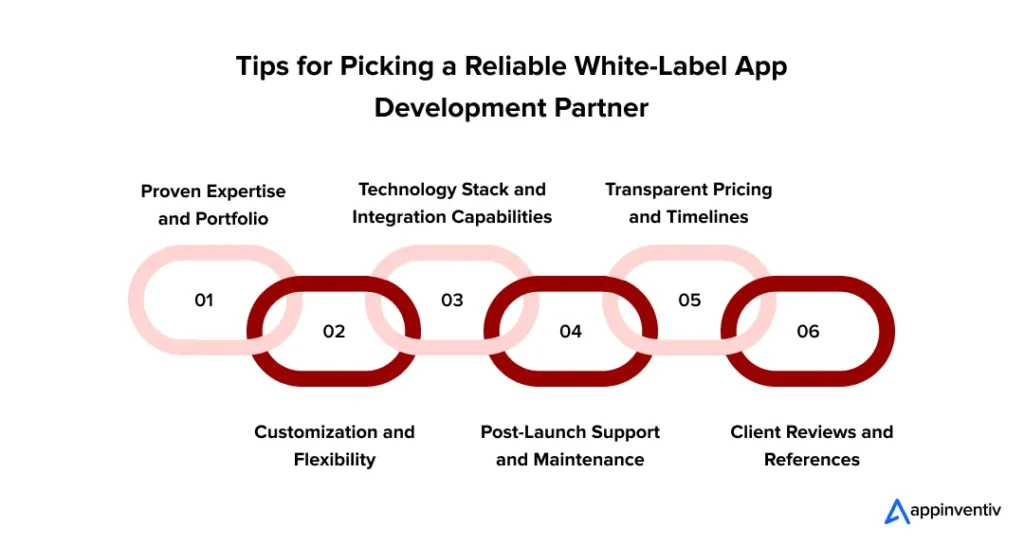
Proven Expertise and Portfolio
Find a partner who has real experience in white label app development for business, especially if they’ve worked in your field before. Examining their past work provides actual examples of apps that demonstrate solid features, smooth design, and room for improvement.
Companies need to focus on projects that demonstrate their ability to adapt to local market needs and what customers here actually want. A good portfolio tells you the partner can deliver reliable, top-notch results every time.
Customization and Flexibility
A good partner should offer a white-label mobile app builder that lets you completely customize everything to match your brand and work style. Ensure the app’s features, design, and sections can be modified without compromising its performance or stability.
Look for modular architecture or feature-level configuration instead of rigid templates, so you’re not locked into limitations as your product evolves.
Flexibility means the solution can grow with your business needs, handle special sales periods, and work with how users actually behave. This matters significantly for companies that want to stand out in a crowded marketplace.
Technology Stack and Integration Capabilities
Ensure the platform supports an API-first architecture and integrates cleanly with your existing systems, such as CRMs, payment gateways, and analytics tools, without extensive custom work.
This helps you run things smoothly while giving your users an experience that just works. A skilled white label app developer ensures the seamless integration with payment gateways such as BPAY, Afterpay, and other preferred payment options among locals.
Post-Launch Support and Maintenance
A reliable partner provides ongoing support, updates, and troubleshooting after your app launches. Regular support helps prevent crashes, keeps everything running smoothly, and ensures that your app stays up to date as technology and market changes.
For businesses, it’s crucial to select a partner who is familiar with local regulations, app store policies, and compliance requirements. This means you can concentrate on expanding your business while they handle the technicalities of the back end.
Check how updates are handled in a shared environment, especially their impact on your custom configurations and integrations.
Transparent Pricing and Timelines
Opt for a partner that provides transparent pricing structures and realistic project timelines to eliminate the risk of unexpected costs or delays. Being transparent about white label app development costs is essential to budgeting and getting value for your business quickly.
The most effective way for businesses to capitalize on this is to integrate their local connection, features, and meeting regulations into pricing. For instance, having a clear plan also means your white-label app development for business proceeds without any pauses from idea to launch.
Client Reviews and References
Look at customer feedback, success stories, or ask for references from companies in your target market. Comments from previous clients reveal the partner’s reliability, technical expertise, and the quality of their custom solutions. Working with a partner who has strong experience as a white-label app developer means your business can launch apps with confidence, knowing they meet both local and global standards.
In most cases, the difference between a smooth rollout and long-term friction comes down to how flexible the underlying system really is, not just how quickly it gets built.
Common Challenges in White Label App Development and How to Overcome Them
White-label apps help businesses launch quickly without spending heavily on development. But as the product grows, some limitations start becoming visible. These issues usually appear when more users join, integrations increase, or business needs become more specific.
| Challenge | What Happens | What Helps |
|---|---|---|
| Limited Customization | Some platforms make it difficult to change workflows, features, or user experience beyond basic branding. | Pick a solution that allows flexible customization and feature expansion over time. |
| Dependency on the Provider | Updates, fixes, and platform changes are subject to the vendor’s timeline. | Choose a development partner with reliable support and a clear update process. |
| Scalability Issues | The app may slow down during high traffic or rapid business growth. | Use a platform built on scalable cloud infrastructure from the beginning. |
| Security & Compliance Risks | Weak security practices can create compliance and data protection concerns. | Work with providers that follow strong security standards and compliance requirements like GDPR and PCI DSS certification. |
Most businesses can avoid these problems with the right setup early in the process.
Don’t wait for performance or flexibility issues to surface. Get an expert evaluation of your architecture and next steps.

Partner With Appinventiv For Your Next White Label App Development Project
White label app development can help you move fast, but getting the structure right early on makes all the difference as your product grows. That’s where having the right mobile app development company becomes critical.
At Appinventiv, we’ve worked across 300+ digital products, helping businesses balance speed with long-term scalability so they don’t outgrow their systems too soon.
Appinventiv, as your trusted white label app development services partner, help close the gap between getting apps out quickly and making them work exactly how you want. Our experience means businesses don’t have to settle for lower quality, missing features, or losing their brand personality.
We support businesses through every part of white label app development:
- Strategic Planning: We align the white label approach with your business model, target users, and growth stage so you’re not locked into the wrong setup later.
- Customization & Branding: We go beyond surface-level changes, helping you shape the experience where it actually impacts user engagement and differentiation.
- Robust Development & Integration: From API integrations to system architecture, we ensure your app works seamlessly with your existing ecosystem.
- Ongoing Support & Growth: As your product evolves, we help you extend, optimize, or transition your system without disrupting user experience.
In the end, it’s not just about launching faster. It’s about building something that can keep up as your business grows without forcing a complete rebuild down the line.
With Appinventiv, businesses get way more than just a ready-made app. You get a partner who ensures your white label solution can scale up, stay protected, and align with where you want your company to go in the long term.
FAQs
Q. How much does it cost to build a white label app?
A. White label app prices depend on features, platforms, and technical needs. The price is usually between $40,000 and $150,000 in the case of a single-platform application with rudimentary features. When you include more advanced features and cross-platform compatibility, it may get up to $150,000 to $400,000. The main aspects on which the price depends are the features of the app, the technology stack selected, the platforms (targeted), and the location (where the development team is based).
Also Read: White Label Insurance Quoting Software Development Cost
Q. Is a white label app right for my business?
A. White label apps work great for businesses that need to get digital products out there fast without breaking the bank. They’re perfect for companies wanting solid features that already work well, rather than building everything from scratch. If your business prioritizes getting to market quickly, growing smoothly, and keeping costs reasonable over having total control over every detail, then white labeling might be exactly what you need.
Q. What are some of the top white label app examples?
A. White-label apps get used everywhere when businesses want to roll out digital products fast using stuff that already works. Here are some examples you might recognize:
Uber Direct: This service lets businesses add Uber’s delivery system right into their own websites or apps. Companies get professional delivery without having to build that whole system themselves.
MailMunch: They give businesses ready-made email marketing tools that can carry your brand name. You get automation, lead capture, and campaign management without starting from zero.
Zoho White Label Service: Zoho lets companies put their own branding on apps like CRM systems and marketing tools. You don’t need to know how to code, but you still get professional software with your logo on it.
Bizzabo: They create event apps that resemble yours completely. Whether you’re running in-person meetups, online webinars, or mixed events, the app carries your brand and does what you need.
Q. What are the key differences between white label mobile apps & custom mobile apps?
A. White label mobile apps are pre-built solutions with limited customization, allowing minor branding changes but offering faster deployment and lower costs. Custom mobile apps, on the other hand, are built from scratch to match your specific requirements, providing full control over features, design, and user experience.
While white label apps save time and money, custom apps ensure uniqueness, scalability, and flexibility, making them ideal for businesses that want a fully branded, tailor-made solution.


Fast 2-minute response, fully NDA-protected.

How Much Does It Cost to Develop a Remote Patient Monitoring App in the UAE?
Key takeaways: Feature scope and system integrations, not the app itself, determine your final development cost. DHA, DOH, and MOHAP compliance must be built into your architecture from day one. Wearables, EHRs, and health information exchanges are the biggest technical cost drivers. A successful RPM platform combines continuous monitoring, clinical workflows, and secure interoperability. Early…

How Much Does It Cost to Develop an App Like Herfy in 2026?
Key takeaways: Herfy-like app development costs SAR 150,000 to SAR 1,500,000 ($40,000 to $400,000). Costs rise with rider tracking, POS sync, kitchen displays, loyalty, and branch controls. Saudi apps need Arabic UX, Mada, STC Pay, VAT, and ZATCA-ready invoice flows. Peak loads during Ramadan, Eid, and weekends need strong backend and load testing. A phased…

Key takeaways: The operating model determines survival. The code does not. Compliance under PDPL in the UAE and SDAIA in Saudi Arabia must be engineered into architecture, not added before launch. A serious build costs between AED 147,000 and AED 1,470,000 (USD 40,000 to USD 400,000), depending on scope. The single largest cost most operators…