


























How Much Does It Cost to Build a Healthcare App Like Patient Access?


- What Makes Patient Access a Trendsetter in the World of Healthcare App Development
- A Comprehensive View of the Costs Involved in Developing a Patient-Access like App
- Factors Affecting Patient Access App Development Cost
- Hidden App Development Costs That Affect Your Budget Too
- How to Optimize Healthcare App Development Costs
- Features Involved in Developing an App-Like Patient Access
- Ways to Make an App Better than Patient Access
- Revenue Model: Monetizing Your Healthcare App
- Embark on Your Healthcare App Development Journey with Appinventiv
- FAQs

Key takeaways:
- Patient Access type app’s development cost ranges from $40,000 for an MVP to $400,000 for an enterprise-grade application.
- Often, post-launch maintenance gets overlooked. But it’s crucial. So, expect 15-25% of initial development costs annually.
- Advanced features like EHR integration, AI, and IoT increase development costs significantly. They provide competitive advantages in healthcare markets, though.
- Partner with a reputed healthcare app development company like Appinventiv to build a healthcare app like Patient Access.
Healthcare’s digital shift is unfolding rapidly worldwide, at a CAGR of 22.2% from 2025 to 2030. With this whopping growth, the healthcare app market reached the revenue of $288.55 billion in 2024 and is expected to expand to a market volume of $946.04 billion by 2030 (Source: Grand View Research).
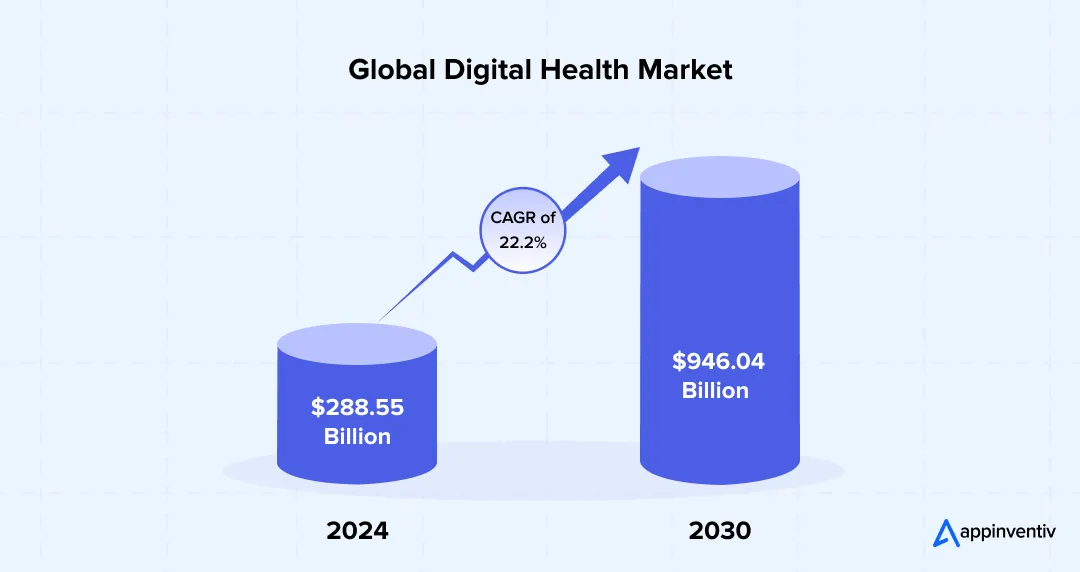
This exponential growth is backed by mobile apps, which efficiently handle multiple tasks like booking appointments and checking important medical records. Patients and healthcare providers use these tools constantly. Apps like Patient Access really raised the bar for how patients interact with their healthcare. All this digital growth has left organizations wondering: What does building a healthcare app like Patient Access actually cost?
Typically, the cost to develop a healthcare app like Patient Access ranges between $40,000 and $400,000 or more. However, various crucial components (details later) can further increase or decrease this cost estimation.
In this guide, we will walk you through the landscape of healthcare application development, highlighting Patient Access like healthcare app development cost, factors, features, and development process.

What Makes Patient Access a Trendsetter in the World of Healthcare App Development
Patient Access excels in the busy digital health space. Its integrated system simplifies patient management. Beyond booking appointments, it connects users to healthcare services. This empowers people to take charge of their health journey confidently.
Why it Stands Out in the Market: USPs:
- Comprehensive Service Integration: Patient Access covers more than typical healthcare apps. It brings all services into one platform. Book GP appointments and order prescriptions easily. Check medical records securely. Message your practice directly. This all-in-one approach simplifies interactions with healthcare providers significantly.
- Enhanced Patient Engagement: This platform transforms how patients manage healthcare. It offers control over various health aspects. Engaged patients follow treatment plans more consistently. They achieve better health outcomes. They also gain deeper knowledge about their conditions. This approach empowers users significantly.
- Unprecedented Accessibility: The app operates 24/7 for key healthcare services. It reduces paperwork for providers significantly. Patients enjoy great convenience and flexibility. Time zones and locations no longer limit access. This ensures healthcare is always within reach.
As digital transformation in healthcare advances, apps like Patient Access stand as a revolutionary force, inspiring medical professionals to offer more efficient and patient-centric care.
Market Performance and Industry Impact
These platforms show how much patient expectations have really changed, and people want digital health solutions more than ever. Take the global mHealth apps market – it was worth $36.68 billion in 2024 and experts think it’ll reach $88.70 billion by 2032. That’s an 11.8% growth rate each year. This kind of strong growth proves there’s huge potential in investing in Patient Access-style app development for healthcare.
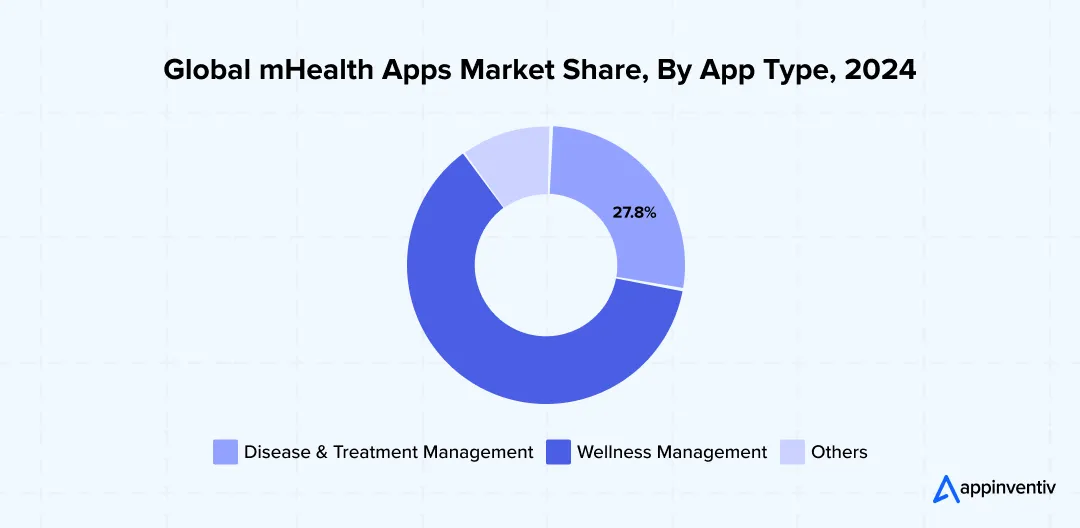
A significant portion of older adults are also embracing these digital tools. A January 2023 survey revealed that more than three in four adults aged 50–80 (78%) reported having a patient portal, a significant increase from 51% in March 2018. Over half of these users (55%) reported using it within the past month.
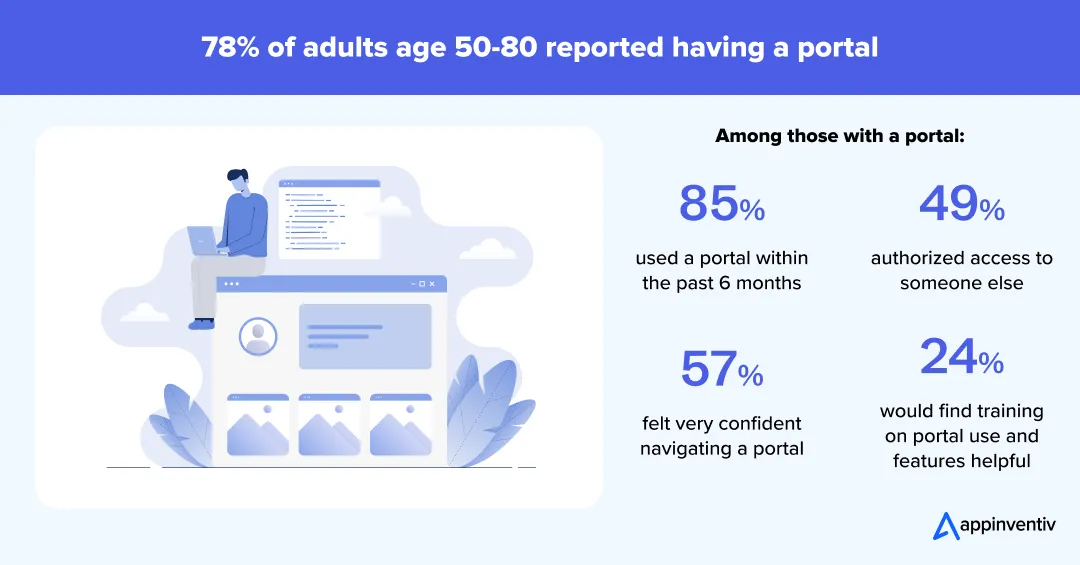
These statistics paint a clear picture: the appetite for digital health solutions is strong and growing across demographics, reinforcing the strategic imperative for hospital app development.
Now that we know the modus operandi of a successful mHealth app like Patient Access and the market dynamics of such applications, let’s evaluate the vital elements that influence healthcare app development costs.
Bonus Read: Guide on Hospital App Development
A Comprehensive View of the Costs Involved in Developing a Patient-Access like App
Estimating the Patient Access app development cost proves quite complex. Costs vary based on feature complexity and desired functionalities. Compliance needs and development stages shape expenses significantly. The development team’s fees or hourly rates impact pricing too. Let’s get a detailed look at the Patient Access app development cost based on these 3 core metrics:
Detailed Breakdown of Costs as Per Complexity Levels
The inherent complexity of a healthcare application is often the most significant driver of Patient Access like healthcare app development cost, directly influencing development hours and the expertise required.
| Complexity Level | Key Features & Functionalities | Estimated Cost (USD) | Development Time |
|---|---|---|---|
| Simple (MVP) | Core features: user registration, basic scheduling, minimal access to medical info, basic notifications. | $40,000 – $100,000 | 2-3 months |
| Moderately Complex | Adds secure messaging, basic EHR/EMR access, e-prescribing, wearable integration, basic analytics. | $100,000 – $200,000 | 3-8 months |
| Highly Complex | Full EHR integration, advanced AI/ML, remote monitoring, multi-language support, third-party integrations, high security. | $200,000 – $400,000+ | 8-12+ months |
A Brief Overview of the Time and Effort Estimates
Building sophisticated healthcare application development projects like Patient Access takes serious time and effort from skilled teams. The Patient Access like healthcare app development cost directly connects to how much time you’ll actually spend on this.
For instance, a simple MVP might get done in 2-3 months, but feature-rich applications with complex integrations and advanced functionality usually need 8-12 months or longer. This timeline covers everything from initial discovery and planning to design, development, thorough quality testing, and your first deployment.
Here is a simple formula to calculate the total cost to develop a healthcare app like Patient Access:
| Cost = (Hourly Rate of Developers) x (Total Development Hours) |
|---|
For example, if your healthcare app project spans 4-6 months and the hourly rate for developers is between $50 and $150, the total cost to develop a healthcare app like Patient Access will fall somewhere between $32,000 and $144,000.
Breakdown of the Costs as Per Development Stages
The development journey for a sophisticated healthcare application development project is typically broken down into several distinct phases, each with its own associated costs and critical deliverables.
| Phase | Cost Estimate |
|---|---|
| Planning & Discovery | $5,000 – $30,000 |
| UI/UX Design | $10,000 – $50,000 |
| Development | $15,000 – $240,000+ |
| Quality Assurance & Testing | $8,000 – $60,000 |
| Deployment & Launch | $2,000 – $20,000 |
| Post-launch Support & Maintenance | 15-25% of initial development cost annually |
1. Planning & Discovery (5-15% of total cost)
Activities: This first stage really matters because you’re doing deep market research to figure out what makes your app different, gathering all the requirements so you know exactly what features you need, and defining the scope carefully so things don’t spiral out of control later.
You’ll also analyze whether your tech choices actually work and create a solid compliance strategy to handle tricky regulations like health data compliance, Healthcare app modules and HIPAA app cost requirements. This is when you start planning your architecture for growth and security too.
Cost: Approximately $5,000 – $30,000. Investing adequately in this phase lays a solid foundation, significantly reducing the likelihood of costly reworks and scope changes in later stages.
2. UI/UX Design (10-20% of total cost)
Activities: UX/UI design becomes super important when you’re developing apps because you’re creating something that’s easy to use, accessible, and actually engaging for users. You’ll be making wireframes to map out how everything’s laid out, building prototypes so you can test how people move through different parts of the app, and designing what everything looks like. Making sure the interface works great for everyone – young, old, tech-savvy or not – becomes even more critical when you’re dealing with a medical appointment app.
Cost: Approximately $10,000 – $50,000. A thoughtfully designed UI/UX is paramount for high user adoption and overall satisfaction, especially in a sector where usability can directly impact patient safety and engagement.
3. Development (50-60% of total cost)
Activities: This is where most of the heavy lifting happens – you’re actually writing all the code. You’ll be building the frontend stuff that patients see and use (iPhone apps, Android apps, and maybe a website too). Then there’s all the backend work where you’re handling server logic, managing databases securely, and building or connecting APIs so your app can talk to other systems.
Cost: This represents the largest portion of the budget, ranging from $15,000 to $240,000 or more, heavily dependent on the chosen platforms (native vs. hybrid) and the overall complexity of the feature set.
4. Quality Assurance & Testing (10-15% of total cost)
Activities: You absolutely cannot skip thorough testing when you’re building healthcare apps because you’re dealing with really sensitive patient data. You need to test that every feature actually works the way it’s supposed to, make sure patients can navigate around easily, and do serious security testing – we’re talking vulnerability checks and penetration testing to find weak spots. Plus, you’ll need compliance testing to make sure you’re meeting HIPAA and GDPR requirements properly.
Cost: Approximately $8,000 – $60,000. Thorough testing minimizes post-launch issues and ensures the app is reliable and secure.
You Might Prefer Reading: Mobile App Quality Assurance Process
5. Deployment & Launch (2-5% of total cost)
Activities: This is when you get ready to actually launch your app to the public. You’ll be optimizing everything and submitting to the big app stores like Apple App Store and Google Play Store, setting up your production servers so they can handle real users, and getting your marketing stuff ready if you’re planning any promotion campaigns.
Cost: Approximately $2,000 – $20,000. Seemingly minor, proper deployment ensures a smooth rollout.
6. Post-launch Support & Maintenance (Ongoing)
Activities: This part never ends, and it’s important because you need your app to work well, stay secure, and compete with other competitor apps that cater to the same market. You’ll readily monitor how everything’s performing and will try to make it faster, push security updates when new threats show up, update things so they work with new iPhone and Android versions, add features that users actually ask for, and provide tech support when people run into problems.
Cost: Typically an annual expense, ranging from 15-25% of the initial development cost after the first year. This ensures the app’s longevity, security, and continued relevance.
To ensure smooth and successful healthcare application development, outsource your project to a fast-tech app development firm like Appinventiv, which has a proven track record of building similar solutions.
Also Read: Mistakes To Avoid for Successful App Development
Factors Affecting Patient Access App Development Cost
Developing a Patient Access app involves various factors that influence the healthcare app development costs. Here are some of the key elements to consider when estimating the cost to develop a healthcare app like Patient Access:
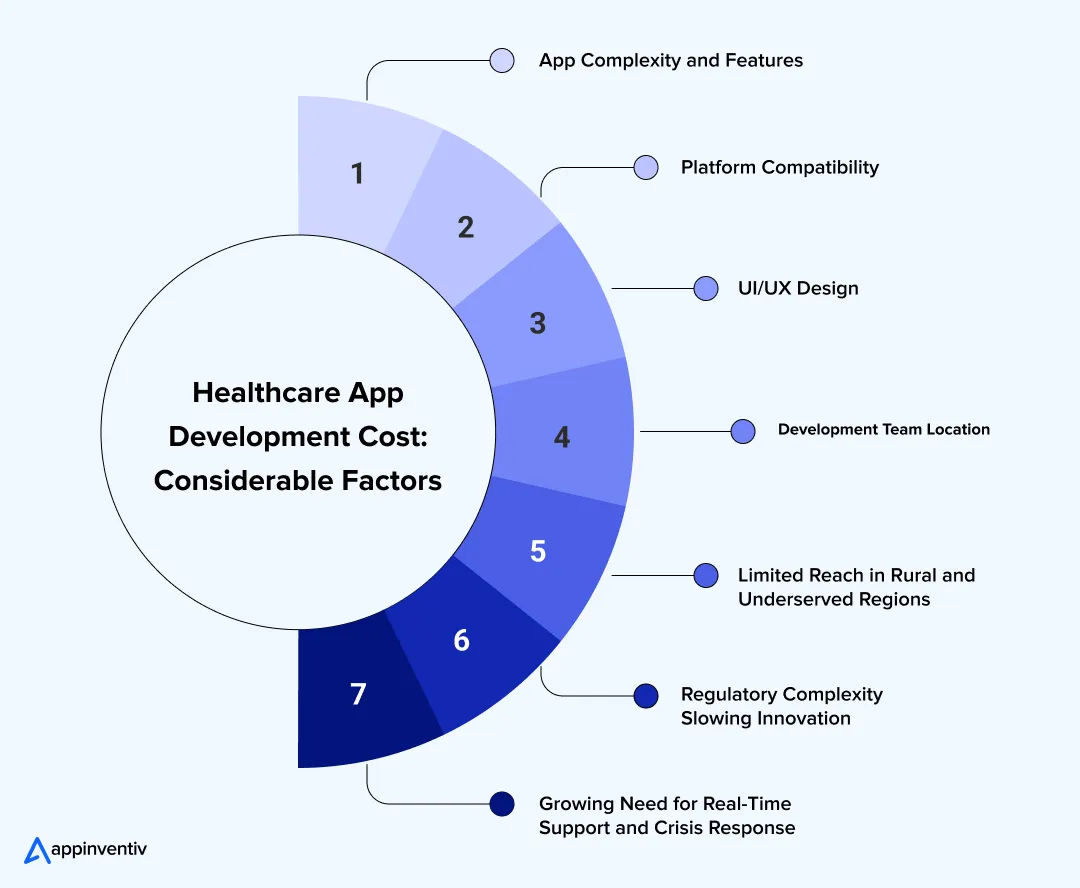
App Complexity and Features
As said above, features and functionalities are the primary determinants of healthcare app development costs. A basic app with simple features, such as appointment booking, profile creation, etc., is less expensive to develop than a complex app. Incorporating advanced functionalities like telemedicine, chatbots, integration with electronic health records (EHR), and AI-driven health monitoring substantially increases the development cost.
You may like reading: What Is the Cost to Develop a Healthcare Chatbot like Google’s AMIE?
| App Complexity | Average Duration | Cost Estimates |
| Simple app with basic features | 3-6 months | $40,000-$100,000 |
| Medium complex app with moderate features | 6-9 months | $100,000-$200,000 |
| Highly complex app with advanced features | 9+ months | $200,000-$400,000 |
Platform Compatibility
Platform and device support also play a crucial role in determining Patient Access like healthcare app development costs. Developing an app for a single platform, iOS or Android, is more cost-effective than creating a cross-platform solution that runs seamlessly on both platforms.
However, cross-platform development frameworks like React Native or Flutter offer cost-saving solutions compared to developing separate native apps. Furthermore, ensuring compatibility with various devices, including smartphones and tablets, adds to the complexity and cost.
UI/UX Design
Creating good design for healthcare apps that’s intuitive, accessible, and compliant really matters here. You need complex user flows, custom animations, personalized dashboards, and interfaces that actually work well on phones, tablets, and computers. The more unique and detailed your user experience gets, the more research and testing you’ll end up doing, and that pushes design time and costs way up. Remember, UI/UX is a critical element that enhances user engagement and cost.

Development Team Location
The geographical location and size of the healthcare software development company can significantly impact the cost. The size and location of the development team, whether freelancers, in-house developers, or an outsourced company, affect the budget.
Also, the charges of healthcare app developers can vary dramatically around the world. For example, developers in the UK, US, Australia, etc. typically charge higher rates compared to other regions like Asia.

Third-Party Integration
Integrating third-party services such as payment gateways, EHR systems, or telehealth platforms involves additional development and potentially licensing fees, resulting in increased development costs and timelines. Connecting the app with IoT-driven medical devices or wearables for data collection can further increase the cost. According to a February 2025 report, 44% of US adults used wearables or wellness devices to reach their fitness or health goals.
Security and Compliance
The healthcare industry is heavily regulated, and adhering to complex regulations such as PCI-DSS, HIPAA, HL7, and GDPR is crucial but costly. Ensuring that patient data is secure requires implementing robust security measures like encryption, multi-factor authentication etc. which can also increase the overall development cost.
A Must Read: Appinventiv Launches Fortified Development Framework to Surpass 2025 HIPAA and HITECH Standards
Teck Stack Selection
The tech stack behind these sophisticated platforms usually includes solid backend frameworks like Node.js, Python/Django, or Ruby on Rails that can handle growth. You’ll need a secure cloud infrastructure through AWS, Microsoft Azure, or Google Cloud Platform to keep data safe and available.
Advanced encryption like AES-256 protects sensitive information, and standardized APIs such as FHIR and HL7 help with smooth EHR integration so the app works well with existing Electronic Health Records systems. The more advanced the tech stack, the higher it will cost.
Hidden App Development Costs That Affect Your Budget Too
Getting your app built costs quite a bit upfront, but that’s really just the beginning of what you’ll actually spend on a digital healthcare solution. Lots of organizations don’t think about the crucial costs that come after launch, but these are absolutely necessary if you want your app to last, stay secure, and keep being successful. These hidden expenses that people often miss are actually a huge part of the whole Patient Access app development process.
| Aspects | Description | Estimated Costs/Impact | Total Cost Estimate |
|---|---|---|---|
| Bug Fixing and Performance Optimization | Continuously addressing software glitches, resolving crashes, and optimizing code as user loads change. | 15-25% of initial development cost annually. | $15,000 – $125,000 annually (for $100,000 – $500,000 initial cost) |
| Security Updates and Vulnerability Patching | Regularly implementing security patches and updating encryption protocols to safeguard sensitive patient data. | 15-25% of initial development cost annually. | $15,000 – $125,000 annually (for $100,000 – $500,000 initial cost) |
| App Hosting (Servers & Cloud Infrastructure) | Storing patient data and powering app functionalities. Costs vary based on data volume, user traffic, and cloud services. | $200 – $1,500+ per month for compliant cloud hosting (AWS, Azure, Google Cloud Platform). | $2,400 – $18,000 annually |
| App Promotion and Marketing | Budget for visibility to acquire and retain users, including ASO, digital marketing, PR, and user acquisition strategies. | Ongoing costs depending on the campaign scale and market. | $10,000 – $100,000+ annually |
| Legal and Licensing Fees | Ongoing costs for compliance audits, legal consultations, and software licenses required for the app. | Varies depending on regulatory needs. | $10,000 – $50,000 annually |
| Compliance Audits | Regular audits to ensure adherence to healthcare regulations like HIPAA and GDPR. | Varies based on scope; generally recurring costs. | Estimated $5,000 – $15,000 annually |
| Customer Support | Staffing and managing a support team to assist users with technical issues, billing discrepancies, and general inquiries. | Varies based on team size and scope of support; typically $10,000 – $50,000 annually for a small team. | $10,000 – $50,000 annually |
| Analytics and Monitoring Tools | Subscriptions for platforms like Google Analytics, Firebase, and performance monitoring tools for insights into app behavior and performance. | $500 – $5,000+ annually depending on the platform and scale. | Estimated $500 – $5,000+ annually |
How to Optimize Healthcare App Development Costs
While building a high-quality, compliant healthcare app is undoubtedly a significant investment, there are strategic approaches to optimize the cost to develop a healthcare app like Patient Access without compromising on essential quality, security, or regulatory adherence.
Developing an MVP (Minimum Viable Product)
Instead of aiming for a fully-featured, complex app from day one, prioritize a core set of essential functionalities that solve a critical patient or provider pain point. This allows for a faster launch, gathering real-world user feedback, and validating the core concept with minimal initial investment. This iterative approach reduces initial development costs and allows for a phased, data-driven strategy for adding more complex functionalities, providing clear insights into patient portal pricing factors at each stage of growth.
Prioritizing Necessary Features
Avoid the trap of “feature bloat,” where too many functionalities are included without clear demand or value. A thorough discovery phase, combined with market research and user surveys, can help define and prioritize only those features that directly address key user needs and offer significant, measurable value. This focused approach ensures resources are allocated efficiently.
Leveraging Cross-Platform Development
For applications that do not require highly specialized native features, extremely demanding graphics, or absolute peak performance, employing cross-platform frameworks like React Native or Flutter can significantly reduce development costs. By writing a single codebase that can be deployed to both iOS and Android, this approach typically saves 20-30% compared to building two separate native applications, accelerating time-to-market.
Bonus Read: Why Native App Development is A Better Solution
Outsourcing to Cost-Effective Regions
Partnering with experienced and reputable development teams in regions with competitive hourly rates, such as Eastern Europe or parts of Asia, can offer substantial cost savings due to lower operational overheads. This strategy can significantly reduce the overall healthcare app development expense, provided the chosen partner maintains a strong track record of quality, adheres to international standards, and has robust communication protocols in place to manage time zone differences and project expectations effectively.
Features Involved in Developing an App-Like Patient Access
Patient Access app development for healthcare encompasses a range of features that cumulatively enhance the patient experience, streamline administrative processes, and improve healthcare delivery. Here are some of the most notable features of a healthcare app like Patient Access:
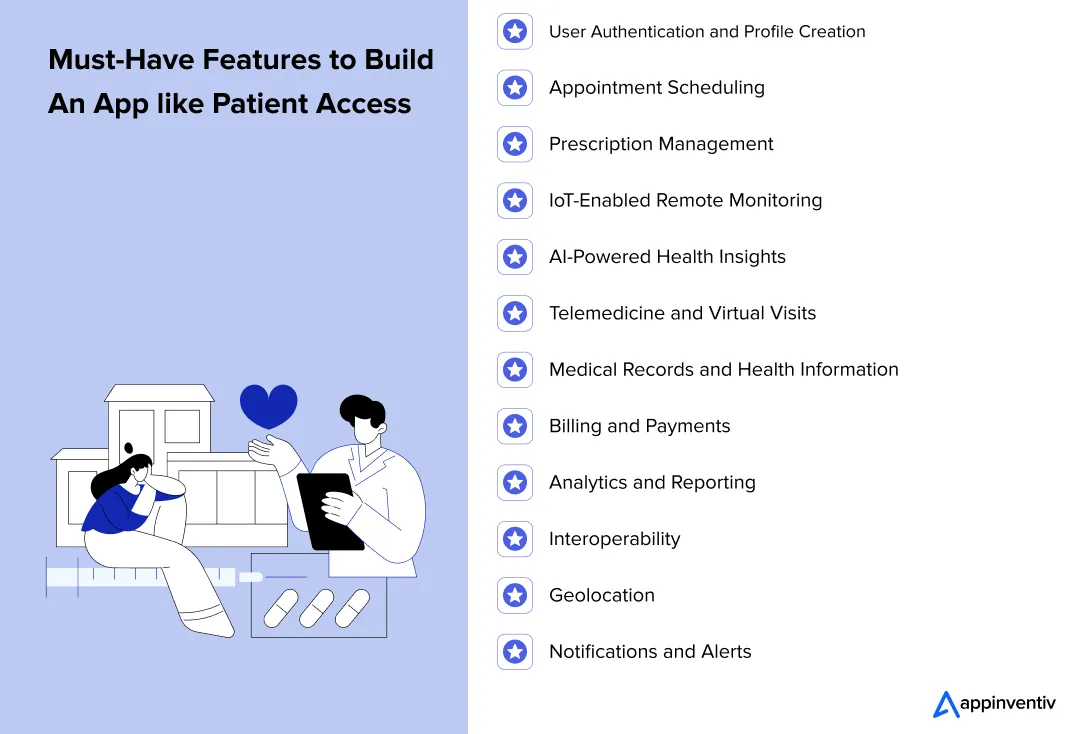
User Authentication and Profile Creation
These foundational functionalities ensure secure login through password authentication, biometric verification (fingerprint or face recognition), and two-factor authentication. This feature allows patients to create and manage their profiles, including basic information, medical history, and insurance details.
Appointment Scheduling
It is a key feature of a healthcare app, enabling patients to book, reschedule, or cancel appointments easily. For healthcare professionals, this feature helps optimize their schedules, ensuring a smooth workflow and enhancing the overall patient experience.

Prescription Management
A healthcare app like Patient Access, myAster, or Doctor-On-Demand must include features of ePrescription management, allowing providers to send prescriptions electronically to pharmacies. The app also sends medication reminders to patients to ensure adherence to prescribed treatments.
IoT-Enabled Remote Monitoring
IoT in healthcare enables continuous remote monitoring of patients through connected health devices such as smartwatches, blood pressure monitors, and glucose meters. These IoT devices collect real-time health data, which is then transmitted to healthcare providers for continuous monitoring and timely interventions. This enhances patient care and enables early detection of health anomalies.
For instance, we developed Soniphi, the first resonant frequency-based personal wellness system, which monitors patients’ vocal information and creates a detailed well-being analysis report.

AI-Powered Health Insights
AI in healthcare can analyze large volumes of health data to provide personalized health insights and recommendations. By leveraging artificial intelligence and machine learning algorithms in healthcare, the AI-driven healthcare app can predict potential health issues, examine symptoms, suggest preventive measures, and offer tailored advice based on individual health profiles and historical data.
Telemedicine and Virtual Visits
Real-time video consultations enable patients to receive medical advice remotely, while secure text-based communication supports follow-up questions and quick consultations. This feature ensures that patients can receive timely medical consultations regardless of their location, ensuring continuous support and comprehensive patient care. Collectively, it improves the convenience, accessibility, and efficiency of healthcare delivery, making it easier for patients to connect with their healthcare providers.
Also Read: Telemedicine App Development: Build a Secure & Scalable Telehealth Platform
Medical Records and Health Information
Access to electronic health records (EHR) is a vital feature, providing patients with their medical histories, lab results, imaging reports, and past consultations. The app should also allow patients to input and track personal health data, such as blood pressure and glucose levels, promoting active health management. EHR integration also ensures that healthcare providers have access to patient histories, facilitating informed and personalized care.
Related Article: EHR Optimization Guide to Make Your Healthcare Offering Efficient

Billing and Payments
It is one of the most essential features, ensuring safe and seamless transactions. Thus, your healthcare app must streamline the billing and payment process by integrating secure payment gateways and providing access to billing statements. The billing and payment options offer convenience, conduct secure transactions, and ensure timely payments.
Analytics and Reporting
Integrating data analytics and reporting tools in the app helps patients and healthcare providers monitor health trends and progress. Usage reports can offer insights into app engagement, helping businesses improve features and delivery of medical services. In a healthcare app like Patient Access, this feature leads to better diagnostics, enhanced patient care, and data-driven healthcare solutions.
Interoperability
Interoperability is an indispensable feature of healthcare applications that ensures seamless integration with existing healthcare systems to enable data exchange and collaboration between healthcare providers. This results in enhanced patient experiences and outcomes with improved continuity of care.
Geolocation
The integration of Geolocation functionality helps patients find nearby healthcare facilities, schedule appointments based on proximity, and deliver targeted health information based on the user’s location. This feature improves accessibility and convenience for patients, especially when seeking emergency care or accessing healthcare services while traveling.
Notifications and Alerts
Push notifications and alerts are the vital elements of a medical app, keeping patients informed about important updates. Automated reminders for upcoming appointments, health tips, vaccination dates, and critical health alerts help maintain patient engagement and adherence to health protocols, resulting in improved healthcare delivery.
By incorporating these essential features, a healthcare app like Patient Access can significantly improve healthcare delivery and patient outcomes, making it a valuable tool in the modern healthcare domain.

Ways to Make an App Better than Patient Access
While Patient Access serves as a formidable benchmark in the healthcare app landscape, there’s always ample room for innovation and improvement. To truly create a medical app like Patient Access that not only meets but surpasses current expectations, delivering superior patient and provider experiences, consider focusing on these key areas:
UI/UX Enhancements
An exceptional user experience is crucial for engagement and retention in healthcare.
Hyper-Personalization for Individual Needs: Go beyond standard profile settings. Customize the user experience dynamically. Adapt content to specific health conditions. Use treatment plans for personalization. Factor in user preferences and past engagement. Diabetics get dashboards showing blood sugar trends. They receive tailored dietary advice daily. Chronic pain patients access relevant resources. Appointment reminders support condition management, which ensures highly personalized experiences.
Advanced Accessibility Features: Make the app inclusive for everyone, ensuring usability across diverse abilities. Include robust voice command navigation and integrate screen readers seamlessly. Offer adjustable text sizing options, along with providing high-contrast modes for clarity. Design features for cognitive impairments. These steps expand the app’s reach and ensure fair access to healthcare information.
Intuitive Onboarding and Guided Tours: Simplify the initial user experience. Offer intuitive onboarding processes daily. These steps tend to reduce friction for new users. They highlight the app’s core value quickly. Interactive tutorials are helpful in guiding first-time users. Tutorials navigate complex sections gently, which ensures users feel confident and become capable from the start.
Features
Differentiating your app often comes down to offering more advanced and proactive functionalities.
Proactive Health Management with Predictive Analytics: Shift the focus from reactive care to proactive health. This involves integrating sophisticated predictive analytics and machine learning models that can assess individual health risks, offer personalized preventive care plans, and provide early warnings based on aggregated health data.
AI-driven Health Coaching and Virtual Assistants: Embed intelligent AI chatbots or sophisticated virtual assistants directly within the app. These can provide personalized health coaching, accurately answer common medical queries based on verified data, and even offer emotional support or mental wellness guidance.
Integrated Wellness Programs: Build a complete health ecosystem. Connect users to wellness resources seamlessly. Integrate popular fitness trackers for activity goals. Offer personalized nutrition planners for dietary needs. Provide direct access to mental health resources. Include virtual therapy sessions in the app. This promotes overall well-being.
Deeper Wearable Integration with Actionable Insights: Move beyond basic vital signs. Use advanced devices like continuous glucose monitors. Include smart inhalers and blood pressure cuffs. The app analyzes real-time data actively. It provides personalized trends for users. Proactive alerts highlight critical changes. Tailored recommendations help manage specific conditions. This approach ensures effective health monitoring.
Community Support and Peer Networks: Create secure in-app communities for patients. Ensure forums are well-moderated and safe. People with similar conditions connect easily. They share experiences and offer support. Information exchange happens privately. This empathetic environment builds trust. It fosters a strong sense of belonging and understanding.
Technologies
Leveraging the latest technologies can push the boundaries of what a healthcare application development can achieve.
Advanced AI/ML for Diagnostic Assistance: Integrate sophisticated AI and Machine Learning capabilities for assisting in preliminary diagnostic processes, such as analyzing medical images or assisting in risk stratification based on extensive clinical data, supporting clinicians.
Voice Interface/Natural Language Processing (NLP): Develop highly responsive voice user interfaces (VUIs) that allow patients to interact with the app using natural language commands. This simplifies navigation, data input and information retrieval, making the app more accessible, convenient, and truly hands-free.
Blockchain for Enhanced Data Security and Interoperability: Use blockchain technology for secure patient health records. Ensure records are immutable and auditable. This greatly improves data integrity and security. It enables consent-driven data exchange among healthcare providers. Compliance with HIPAA and GDPR is strengthened. This approach exceeds current health data standards.
Augmented Reality (AR) for Patient Education: Utilize Augmented Reality to create immersive and interactive educational experiences. This could involve visualizing anatomical structures in 3D, demonstrating proper medication administration techniques step-by-step, or explaining complex medical procedures in an engaging and easy-to-understand way.
Must Read: Role of VR in Healthcare
By thoughtfully incorporating these advanced features and cutting-edge technologies, organizations can deliver a truly next-generation healthcare application development that sets new standards in patient engagement, care delivery, and operational efficiency, offering significant benefits of Patient Access like app development.

Revenue Model: Monetizing Your Healthcare App
Even if the cost to develop a healthcare app like Patient Access is substantial, the revenue it generates far outweighs the initial investment. Here are some of the most common ways an app like Patient Access makes money.
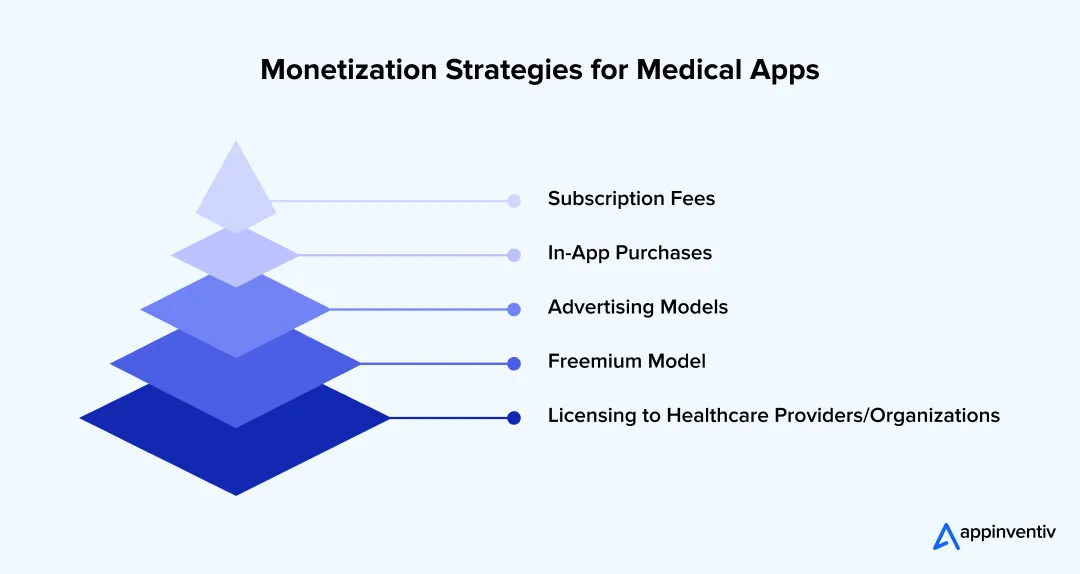
Subscription Fees
These types of apps operate on a subscription-based model where users pay a recurring fee for access to premium features and services. These can include advanced telemedicine options, detailed health analytics, or enhanced data storage.
In-App Purchases
The healthcare applications can offer additional services or medical products that users can purchase within the app. This could include specialized health reports, lab tests, personalized health plans, or on-demand virtual consultations with healthcare professionals.
Advertising Models
Generating revenue through advertising is one of the most common monetization strategies for medical apps. By displaying targeted ads within the app, app owners can earn money based on ad impressions or clicks. These ads can be from pharmaceutical companies, health insurance providers, or other health-related businesses.
Freemium Model
This approach offers a basic version of the app for free, with limited essential features, serving as an entry point for users. The primary aim is to entice users to upgrade to a paid premium version to unlock more comprehensive services, advanced functionalities, or an ad-free experience.
Licensing to Healthcare Providers
A primary and highly effective model for many successful patient portals is to be white-labeled or licensed directly to individual clinics, large hospital networks, or integrated health systems. The revenue then comes from the recurring licensing fees charged to these institutions, which can be based on user count, specific feature tiers, or the overall organizational size. This is particularly relevant for hospital app development initiatives.
It is paramount that any chosen monetization strategies for a healthcare application development consistently prioritize patient trust, data privacy, and ethical considerations. Any of these areas, when violated, would be disastrous in terms of user adoption, brand reputation, and the future existence of the app. It has to be the best revenue model that fits the value of the application proposition perfectly, needs and ability of its target audience to pay for certain, augmented services.
Embark on Your Healthcare App Development Journey with Appinventiv
Healthcare app development, like Patient Access, requires navigating a complex landscape of emerging technologies, features, and regulatory compliance, all of which influence the Patient Access app development costs. By evaluating these factors, you can plan your budget and make informed decisions to create a robust and user-friendly healthcare app.
When embarking on the Patient Access-like app development process, partnering with a reliable healthcare app development company like Appinventiv can make all the difference, making the journey smoother and more efficient.
With a proven track record of delivering 500+ innovative healthcare solutions for 450+ healthcare businesses worldwide, we bring deep industry knowledge and technical expertise. We have proven healthcare expertise that ensures innovation and efficiency every step of the way. In our 10+ years of industry experience, we’ve successfully developed next-gen solutions for renowned healthcare clients, including Soniphi, Health-e-People, YouCOMM, DiabeticU, and ShifaCare, each tailored to address specific healthcare challenges and improve patient outcomes
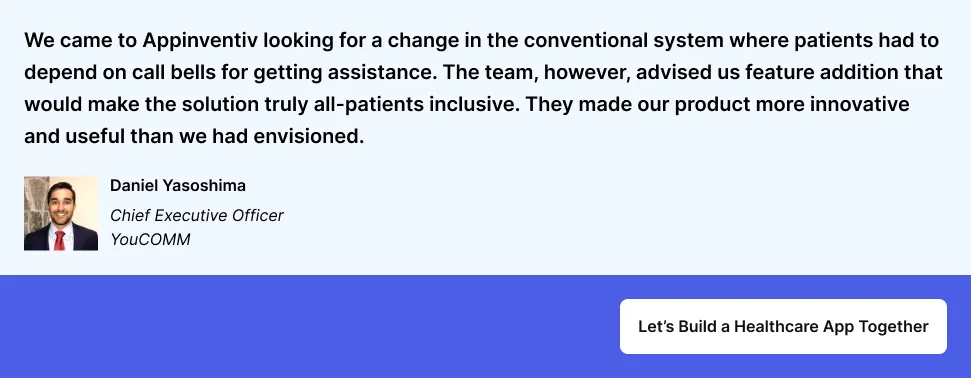
For instance, we have developed a multi-request format platform, YouCOMM, that allows in-hospital patients to get real-time access to medical help when needed. This fully customizable patient messaging system runs through the manual selection of options, including voice commands and head gestures. These advanced features keep medical staff updated on their patient’s needs and situations. The results?
- 5+ hospital chains in the US are currently utilizing the YouCOMM solution.
- 60% improvement in nurses’ real-time response time.
- 3+ hospitals are receiving high CMS reimbursement.
Our comprehensive healthcare app development services, from initial consultation to post-launch support, ensure that your app not only survives but also succeeds in today’s competitive landscape.
What’s more? Our skilled team of 1600+ tech evangelists prioritizes adherence to healthcare industry compliance and data security laws to protect all sensitive information, ensuring your healthcare app stands out in the digital landscape.
Ready to transform your business operations with a top-notch healthcare app and want to know the Patient Access like healthcare app development cost? Contact us, and we will pave the way for your healthcare application development journey.
FAQs
Q. What is the cost of developing an app like Patient Access?
A. The cost to develop a healthcare app like Patient Access typically ranges from $40,000 to $400,000 or more, depending on various factors. These factors include but are not limited to the app’s complexity, features, UI/UX design, choice of tech stack, platform compatibility, geographic location of the development team, and so on.
Discuss your project idea with us and get a detailed quotation of the Patient Access app development cost and timeline tailored to your needs.
Q. How to build an app like Patient Access?
A. The Patient Access app development process is a multi-step journey that goes through the following stages:
- Conducting thorough market research and careful planning
- Creating wireframes and prototypes to visualize the app’s layout
- Crafting intuitive and visually appealing UI/UX design
- Choosing the right tech stack.
- Incorporating features and functionalities
- Integration of third-party services
- Development and deployment
- Testing and quality assurance
- Continuous monitoring and app maintenance.
Q. How long does it take to develop an app like Patient Access?
A. The time required to develop an app like Patient Access varies significantly based on several factors, including the complexity of the features, the technology stack, integration with existing systems, the size and expertise of the development team, and so on.
Typically, the time it takes to create a medical app like Patient Access ranges from 4 months to 1 year or more, depending on your unique project requirements. Contact us to get a more precise estimate of the healthcare app development timeline and cost.
Q. What are the benefits of Patience Access like app development?
A. Developing an app like Patient Access offers numerous benefits for both healthcare providers and patients. Here are some common benefits of healthcare application development:
Cost Savings: Automating routine tasks such as appointment scheduling, prescription management, and patient communication significantly reduces administrative expenses, leading to significant cost savings for healthcare providers.
Increased Efficiency: Features like EHR integration and automated reminders help streamline workflows and improve operational efficiency. It allows businesses to allocate more resources and time to direct patient care.
Compliance and Security: Robust data privacy and security measures ensure compliance with healthcare regulations and build trust with users, safeguarding sensitive patient information.
Competitive Advantage: A healthcare app like Patient Access differentiates healthcare providers in a competitive market, attracting and retaining more patients.
Data-Driven Decision Making: Access to comprehensive patient data and analytics helps healthcare providers make informed decisions and implement evidence-based practices. It leads to better patient outcomes and personalized care plans.
Scalability: A well-designed app can scale to accommodate growing patient bases and expanding services, supporting business growth and adaptability.
Enhanced Patient Satisfaction: By providing convenient access to healthcare services, such as telemedicine, medical records, and personalized health management, the app helps improve patient experience and satisfaction.
Brand Reputation: Delivering high-quality, innovative healthcare solutions enhances the brand reputation, positioning the organization as a leader in digital healthcare delivery.

- In just 2 mins you will get a response
- Your idea is 100% protected by our Non Disclosure Agreement.

Key takeaways: Custom software engineering solves NDIS margin compression by replacing manual intake and claims workflows with automated enterprise intelligence engines. A phased methodology, from workflow discovery and private model fine-tuning to security testing, ensures smooth, risk-free enterprise deployment. Systems must satisfy NDIS Commission rules, Privacy Act APPs, ACSC Essential Eight Maturity Level 3, and…

Key takeaways: Digital transformation has become a business necessity for Australian healthcare providers as they navigate workforce shortages, rising operational costs and growing patient demand Core technologies such as AI, cloud, EMRs, telehealth, IoMT, and data analytics are enabling more connected, efficient, and patient-centric healthcare systems. A phased implementation strategy, starting with digital maturity assessment,…

Key takeaways: Australia's hospital sector is digitising fast on the back of interoperability mandates, AI adoption and persistent workforce shortages. AI-assisted documentation, predictive analytics and virtual care have moved from pilot projects to standard procurement requirements. Compliance with the Privacy Act, My Health Record rules and Essential Eight controls shapes architecture decisions from day one,…