



























 Leader in AI-First Product Engineering Read Full Article
 IT Managed & Outsourcing
 Contact Us
Drawing on our decade-long experience, deep enterprise systems knowledge and strong platform expertise, we integrate heterogeneous applications without disrupting existing workflows. Our application integration services emphasize reliability, security, and controlled system evolution.
Our Core Capabilities





















Our long-standing application integration
expertise, proven at enterprise scale
Industries integrated across complex system landscapes
Integration engineers, architects, and platform specialists
Applications designed and delivered
Legacy systems and processes seamlessly connected
Strategic federal and partnerships
Repeat clientele across long-term engagements





Our Services


We connect data sources so information stays usable across systems with our data integration services. The goal is not speed alone, but accuracy that holds up over time as volumes and formats change.
• Data Flow Alignment
Move data between systems in a controlled way that avoids gaps, overlaps, or broken records.
• Data Validation and Mapping
Maintain consistency by carefully mapping, validating, and handling exceptions.

Our API integration services focus on dependable communication between applications. Each connection is built to remain stable as usage grows or versions change.
• API Design and Implementation
Develop API interfaces that follow business logic and fit into existing application structures.
• Access and Traffic Control
Manage permissions and request loads without affecting daily operations.

We integrate cloud platforms with internal systems while keeping existing processes intact. This allows teams to work without disruption as environments shift.
• Hybrid and Multi-Cloud Connectivity
Support communication between cloud services and on-premise applications.
• Operational Stability Across Platforms
Maintain consistent performance, access, and data handling.

ESB integration helps manage environments with many connected systems. It reduces dependency between applications and brings structure to data exchange.
• Central Message Routing
Control how data moves across systems through a shared integration layer.
• Simplified Maintenance
Replace fragile direct connections with reusable integration paths.

Our SaaS integration services help new tools fit into existing workflows. The focus remains on continuity rather than forcing teams to adjust their work.
• Third-Party Platform Connections
Integrate CRM, ERP, and analytics tools with internal systems.
• Consistent Data Across Tools
Keep shared information aligned as it moves between platforms.

We integrate core business systems to improve visibility and reduce routine effort. This supports clearer coordination across teams.
• Cross-System Workflow Alignment
Link finance, operations, sales, and support applications.
• Automation of Repetitive Tasks
Reduce manual data entry through system-level connections.


Experience supporting integrations for platforms serving millions of end users globally
More than 100 million client app downloads supported through stable backend connectivity
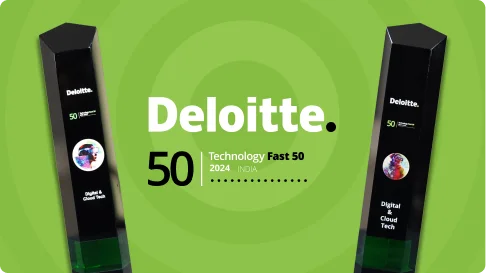
Industry recognition from Deloitte, Statista, and Financial Times for consistent growth
Trusted by businesses operating across 74+ international markets

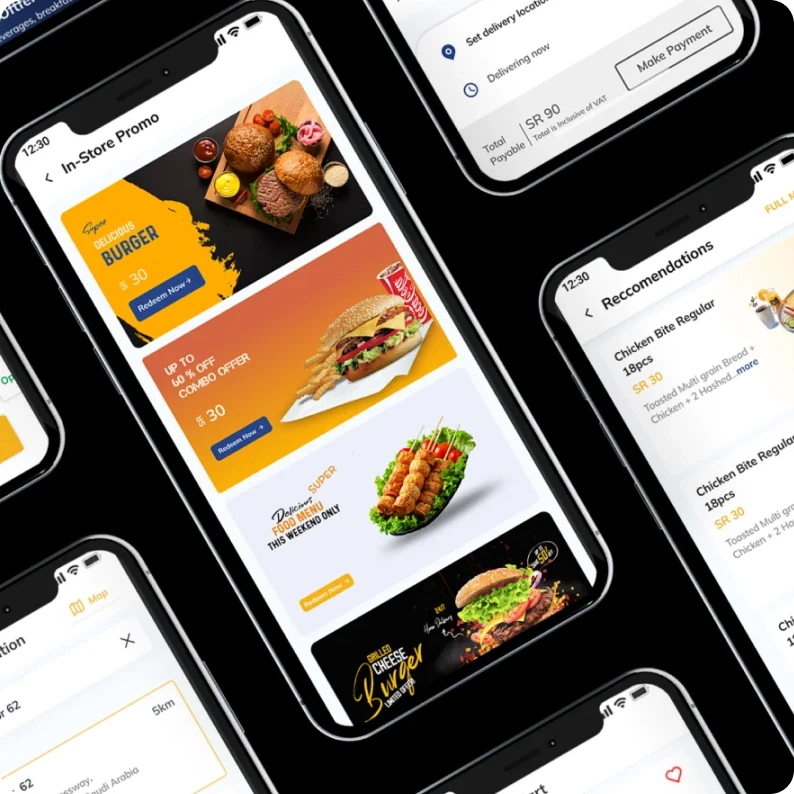
Sonny’s Alfred Car Wash app needed a way to handle multiple client APIs, including bookings, payments, and service updates. The existing setup was scattered. Data delays, mismatched updates, and inconsistent user experiences slowed operations and frustrated users.

We built a robust backend that tied all client APIs together. Bookings, payments, and service notifications moved in real time. Manual tracking was replaced by a single system that kept everything aligned, giving teams and customers a clear, consistent experience.

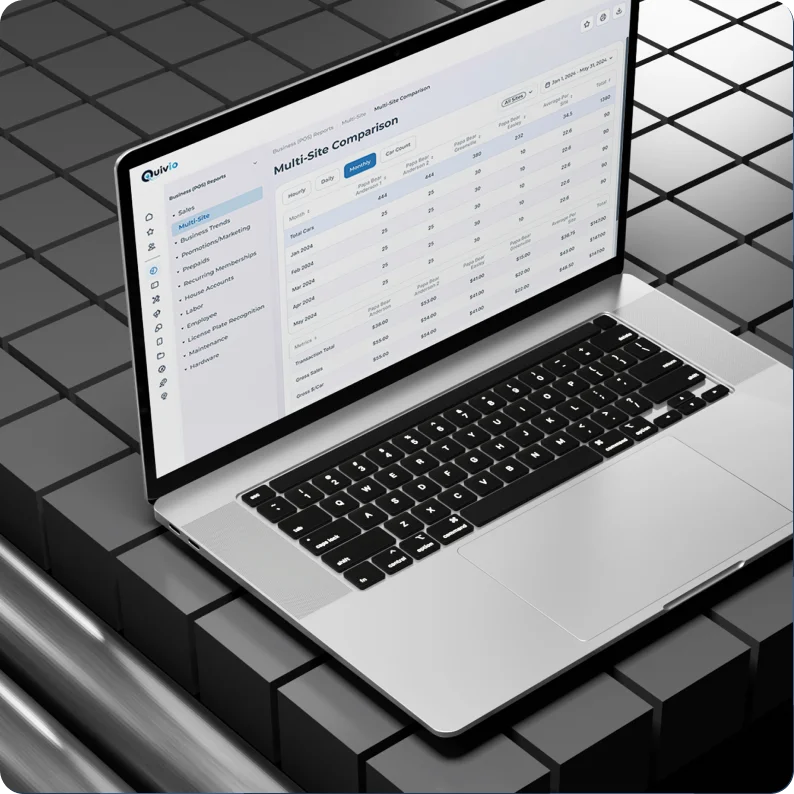
KODA Career Coaching struggled with scheduling sessions and syncing client data. Staff were juggling multiple tools, and errors in appointment times or client records slowed coaching operations.
We connected their systems with Calendly and integrated APIs across platforms. Appointments, reminders, and client information were updated automatically. Coaches could see everything in one place, while clients booked sessions smoothly. Manual coordination was replaced by a predictable, transparent workflow.

KUDU Quick Service Restaurant faced fragmented backend operations. Menu updates, inventory checks, and reporting were scattered across multiple tools. Teams had no central control, which slowed internal decisions and led to errors.
We created a backend admin panel that connected all internal systems and ran full integration tests. Teams could update menus, track inventory, and generate reports from one place. The system removed redundant steps, reduced errors, and made internal control more transparent.
Health-e-People needed to connect patient and caregiver data from multiple devices in real time. Fragmented systems slowed communication and made insights harder to act on.
We integrated a human API platform that consolidated data across devices, linking patients, caregivers, and researchers. The platform replaced scattered inputs with a unified system, making monitoring and communication seamless.




Manager, IT Division, TokiApp
Whether it’s regulated platforms, legacy software, or modern tools, we work with the systems your industry already depends on. That context shapes how we connect applications from the very start.












We connect legacy systems, cloud services, and third-party tools by mapping dependencies and data paths in detail. This approach keeps transactions predictable and avoids breakdowns when multiple systems interact under load.
Our teams manage APIs with clear versioning, contract definitions, and controlled releases. This reduces unexpected failures and helps connected applications continue working as changes are introduced.
Every integration point is designed with access controls, encryption, and logging in place. Data moves securely between systems while remaining visible and auditable for operational and compliance needs.
We design integration layers that accept new systems and workflows without major rework. As platforms evolve, connections remain stable instead of becoming technical bottlenecks.
Our integration work behind products like Koda, Kudu, Adidas, and SONNY shows how disciplined engineering keeps systems steady, even as scale and complexity grow.


We capture important events across your apps, like new entries, messages, or uploads, to kick off integration flows immediately, without waiting for manual intervention.
For smaller setups, we link systems directly using APIs, webhooks, or custom connectors. It’s simple, precise, and fast, but it works best when the number of applications is limited.
A central hub distributes information to multiple systems, which cuts down on complex direct links. This works well for growing organizations and sectors with stricter security needs.
We clean and standardize data, so every connected system can understand it correctly. This prevents errors and keeps workflows reliable.
The engine runs workflows, manages retries, and adapts to high-volume loads without interruptions.
We layer in logging, alerts, and access controls. This keeps data safe while giving visibility into how processes are running and where issues appear.
The India's Fastest-Growing Companies 2026 Recognised by TIME and Statista

Statista High Growth Companies APAC - 2026

Statista India's Growth Champions 2023






We build APIs that enable your applications to communicate reliably. This keeps data flowing and reduces errors when multiple systems are in use.
We connect on-premise systems with cloud platforms, whether it’s a single cloud or multiple clouds. The goal is smooth, secure data movement without downtime.
Our team links databases, warehouses, and analytics tools so your data can be used in real time. It helps teams make informed decisions without waiting for manual processing.
We embed AI into integrated apps, including agentic AI, for smarter process automation, predictive insights, and systems that adjust to changing conditions.
We align integration workflows with CI/CD pipelines, testing, and deployment routines. Updates and new features reach connected systems without breaking anything.
Sensors, devices, and edge platforms are connected to apps for fast data processing. Teams get timely insights while maintaining control over remote systems.
Every integration point includes encryption, identity control, and monitoring. This keeps data safe and helps meet regulatory requirements without slowing down operations.
Where transparency is key, we connect blockchain solutions for secure transactions, audit trails, and shared workflows that multiple teams can trust.
Immersive technologies are tied into your core applications for training, collaboration, and simulations. Data moves seamlessly between virtual environments and your main systems.
We employ platforms that allow various applications to connect without the need to always manually code, connecting cloud and on-site systems.
Data moves smoothly across applications, ensuring the right information reaches the right location without delays or waste.
Connectors make it easier to add new systems and standardize the manner in which applications communicate with each other.
APIs allow sharing data between software and services safely, ensuring that processes remain standardized and understandable.
Asynchronous message-handling tools such as Kafka, RabbitMQ, and ActiveMQ ensure that messages are not lost between applications.
Applications respond immediately to changes and updates, and the process runs smoothly without delays caused by manual responses.
Platforms like Camunda, Airflow, and Pega BPM automate the integration with multiple systems and maintain visibility into steps and their organization.
Adapters convert formats and serve as intermediaries between new and older applications, enabling them to interact effectively.
Tools such as Grafana, Prometheus, and the ELK Stack enable us to monitor system behavior, identify problems early, and maintain consistent performance.
















Unify your apps, platforms, and databases naturally
Identify weak links or process lags instantly
Automate updates, data transfers, and syncs
Anticipate bottlenecks before they hit production
Fine-tune task flow and resource distribution
Observe and improve integrations as your systems evolve
As an integral part of our mobile application integration services, we review existing systems, data movement, and dependencies. This step surfaces gaps and constraints early, so planning stays practical. It also helps avoid rework later, when changes cost more and slow teams down.
We shape how systems will connect to each other. APIs, middleware choices, and data formats are defined with long-term use in mind. The goal is simple communication paths that teams can understand, maintain, and extend without friction.
With API-based app integration, we build connections in small, controlled phases. Each integration point is handled on its own, tested, adjusted, and then moved forward. This keeps issues contained and progress visible, rather than piling everything into a single risky release.
Security is handled alongside development, not after. Access rules, data controls, and audit needs are addressed as integrations take shape, keeping sensitive information protected across systems that may follow different standards.
Our secure application integration services rely on careful testing under real conditions. We check data accuracy, response times, and failure scenarios. Problems are fixed early, before integrations reach live environments, where issues become harder to trace.
Once validated, integrations move into production in planned stages. Workflows are coordinated, data handoffs are monitored, and teams get visibility into how systems behave once real traffic flows through them.
Enterprise application integration solutions need regular attention. We track performance, watch data flow patterns, and make adjustments as systems change. This keeps integrations stable, even as tools, users, and business needs evolve.
The cost of mobile application integration services varies normally between $30,000 and $300,000 or even higher, depending on the complexity of the existing systems and the type of integration services required.
Expenses increase in cases of legacy systems, multiple applications, stringent security policies, or excessive testing. Continuous support and monitoring also influence end spend.
Connect with our experts to get the exact cost estimation.
Hybrid app integration services do not follow a fixed schedule. Smaller integration can be completed within a few weeks. Projects involving multiple teams and systems usually require several months.
Data quality, API readiness, testing depth, and internal approvals all affect timing. Investment of care in the present is much more likely to pay off in the future.
Application integration is about integrating particular applications in such a way that data might be transferred, workflow may be initiated, and daily life may be synchronized. System integration is of broader level. It integrates infrastructure, databases, network and legacy elements.
App integration enhances focused processes, whereas system integration restructures the functioning of the entire technology ecosystem.
Application integration eliminates those loopholes that occur when the systems are used individually. The data does not need to be re-keyboarded or reconciled later. This reduces errors, improves response time, and provides teams with a better understanding of operations. Increased integration also facilitates adding new tools without disrupting the current workflow as businesses expand.
Here are some of the major benefits of enterprise application integration services for your business:
Faster Process Flow: The API-based app integration eliminates manual handoffs and enables direct data movement, accelerating routine tasks within teams.
Consistent and Reliable Data: A linked system relies on a common data set, minimizing redundancy and ensuring consistent reports and decisions.
Lower Operational Overhead: Automation eliminates repetitive updates and allows teams to focus on judgmental work.
Enhanced Cross-System Visibility: Real-time workflow and performance tracking are easier with enterprise application integration solutions.
Flexible and Future-Proven Environment: Clean integrations enable adding or replacing tools without significant disruption.
Cloud app integration services are hosted on platforms, and hence scaling and updates are easy as the requirement varies. On-premise integration remains in the local infrastructure, giving better control of data and access. Cloud suits dynamic settings. On-prem is also frequently favored when policies, data locality, or older systems constrain cloud adoption.