






























EMR Integration in Healthcare Systems: Steps, Costs, Compliance, and More

 Share -



- 01How do you integrate an EMR, step by step?
- 02What are the main EMR integration approaches?
- 03Which technologies and standards does EMR integration use?
- 04Which workflows does EMR integration improve?
- 05How do you keep EMR integration compliant and secure?
- 06How much does EMR integration cost?
- 07How do you choose an EMR integration partner?
- 08What are the biggest EMR integration challenges, and how do you solve them?
- 09How can Appinventiv help you out?
- 10FAQs?

Key takeaways:
- EMR integration starts with workflow mapping, not coding.
- FHIR, HL7, and secure APIs decide how well systems talk.
- Bidirectional data flow prevents duplicate work and broken records.
- Compliance must sit inside the architecture from day one.
- Costs rise with systems, data volume, compliance depth, and custom connectors.
Most U.S. hospitals can send patient data out. Far fewer can pull it back in cleanly. Federal tracking from the ASTP/ONC puts roughly 22% of hospitals as unable to integrate the electronic health information they receive from outside sources. That gap is what EMR integration in healthcare systems is really about.
This guide skips the basics and gets to the work: how to integrate, the approaches and technologies involved, what it costs, and the compliance you can’t sidestep. We build secure, regulated healthcare systems, so the answers here come from delivery, not theory.
Build EMR integrations designed for secure exchange, fewer manual steps, and cleaner clinical operations.

How do you integrate an EMR, step by step?
If you already run an EMR, integration means wiring it into your labs, imaging, pharmacy, billing, scheduling, patient portals, and communication platforms, so data moves once instead of getting re-keyed three times.
A dependable process of integrating healthcare EMR systems, the backbone of any EHR implementation, moves through seven stages. Skip any of them, and that’s usually where the timeline slips.
1. Map workflows and data flows
Before any code, document how data actually moves, who touches it, and where the friction sits. Settle data ownership and clinical workflows up front. This discovery work, often the job of experts providing healthcare IT consulting, is what keeps the build from solving the wrong problem.
2. Pick the integration model and standards
Choose which systems connect first and how they’ll connect: point-to-point, an HL7 interface engine, FHIR API-led, or an iPaaS layer, all compared in the next section. Lock in the standards too: HL7 v2, FHIR R4, USCDI. Confirm the vendor-approved path for your EMR platform before you commit.
3. Design the architecture and security model
Lay out the integration layer, then build security into it: encryption, role-based access control, audit logging, and a clear compliance map. Security designed in at this stage costs far less than security bolted on later.
4. Build and map the interfaces
Develop the connectors or APIs and map every field, so a lab result lands in the right place in the chart and a medication reconciles correctly. Set the transformation and bidirectional sync rules here.
5. Test against the edge cases
Validate end-to-end in a staging environment, then push on the things that break systems: malformed messages, duplicate orders, out-of-sequence results, and order reconciliation. The unglamorous testing is what prevents a 2 a.m. incident later.
6. Pilot, then roll out in phases
Start with one site or department, train staff, watch how it behaves, fix what surfaces, then expand. A phased rollout beats a single switch-flip every time.
7. Monitor, maintain, and scale
Track performance after launch, handle platform updates, and add connections as you grow. Ongoing healthcare IT services cover the monitoring and upkeep, not just launch week.
Run those stages in order, and the EMR integration process stays predictable. Compress or skip them, and the cost resurfaces later as rework.
What are the main EMR integration approaches?
An EMR connects within one facility, while an EHR is built to span organizations, and the scope difference between EMR and EHR shapes which systems you connect first. Once that’s settled, architecture is your next decision. There’s no single correct way to integrate; the right approach follows the problem, and these four are the ones you’ll actually weigh.
| Approach | How it works | Best fit | Speed to deploy | The tradeoff |
|---|---|---|---|---|
| Point-to-point interfaces | A direct link between two systems | One or two critical connections, like a single lab or pharmacy | Quick to set up | Gets brittle and costly as connections multiply |
| HL7 v2 via an interface engine | A central engine routes and translates messages | Hospitals with many legacy systems on HL7 | Moderate | Powerful, but needs skilled upkeep |
| FHIR API-led integration | Modern APIs expose data as standardized resources | Future-facing builds, patient access, app ecosystems | Moderate, faster over time | More design upfront, lower cost later |
| iPaaS / middleware platform | A managed layer connects everything centrally | Multi-site groups that want one place to govern integrations | Moderate | Platform fees and vendor dependency |
A few principles run across all four. Comprehensive EMR system integration favors a central hub over a web of one-off links, because seamless connectivity between platforms is far easier to maintain through one governed layer. Bidirectional data exchange should be the default, not an upgrade.
And the design has to respect the platforms you connect to, along with imaging workflows in post-acute settings. Vendor-approved connections matter here, since they tend to survive the platform updates that break custom workarounds.
Most EMR integration challenges live in the edge cases: the malformed message, the order that fires twice, the field that maps to the wrong place. These clinical integration challenges rarely show up in a demo, only in production.
Good EMR software development starts well before anyone writes a connector, by mapping how data actually moves through your building. HL7 and FHIR support is no longer optional; it’s expected in any build that’s serious, especially if it falls into the category of healthcare software product development, even by a fraction.
Which technologies and standards does EMR integration use?
A small set of standards does the connecting work. Know these, and you can hold a real conversation with any integration team.
- HL7 v2 still carries a large share of clinical messages, especially in hospitals. Old, everywhere, and reliable.
- FHIR (Fast Healthcare Interoperability Resources) is the modern standard, built on web APIs, and it’s what makes EMR API integration practical at scale.
- USCDI defines the core data classes everyone agrees to exchange, so “send me the chart” means the same thing across systems.
- SMART on FHIR and OAuth 2.0 handle secure, app-based access, so third-party tools plug in without exposing the record.
- iPaaS and interface engines route and transform data between systems that were never designed to talk, which is what cloud-based EMR integration depends on.
On top of that sits the part changing fastest. EMR data analytics turns a connected record into a tool that surfaces patterns, not just stores them. And AI integration with EMR systems is moving from pilots into production, reading unstructured notes, flagging gaps, and easing the documentation load that drags clinicians down.
These EMR data integration technologies are the key components of EMR integration that decide whether your record helps people make decisions or only stores data. For a ground-up build rather than a connection project, EHR software development usually brings a wider stack into scope, from architecture and compliance to product workflows.
Where’s this heading?
Toward FHIR-first architectures, ambient AI that drafts notes in the room, and workflows that handle routine handoffs end-to-end. The future trends of EMR data integration point the same way: fewer manual steps, more standardized data and more automation.
The smart move is to treat electronic medical records integration as long-term infrastructure now, so you’re not retrofitting in two years. Specialized settings raise the bar further, where weight-based dosing and proxy consent demand more from the data layer than adult medicine does.
Which workflows does EMR integration improve?
The payoff from integration shows up at the workflow level, where it strips out the manual steps that slow a practice down. A 2024 Health Affairs study found that documentation burden directly crowds out high-value work: each extra hour a primary care physician spent documenting cut the share of patients whose outside records were even viewed by about 7%. Tighten the workflow, and clinicians get that time back.
A handful of use cases of the EMR system in healthcare show up again and again:
| Workflow | What integration enables | Outcome you can measure |
|---|---|---|
| Lab and imaging orders | Orders fire from the chart, results return to it, with order reconciliation built in | Fewer lost results, faster turnaround, cleaner data accuracy |
| Eligibility and medical necessity | Embedded eligibility checks and medical necessity validation at the point of order entry | Fewer denials, smoother reimbursement processes |
| Patient communication | Two-way texting, schedule sync, appointment reminders and automated payment reminders | Fewer no-shows, faster collections |
| Front office | Pop-up patient profiles and one source of truth | Less re-entry, fewer errors, faster check-in |
The communication layer is where patients feel the change. When your patient communication platform is wired into the record, the front desk sees a patient profile the moment a call comes in, reminders go out on schedule, and automated review request texts fire after a visit without anyone lifting a finger.
Add a VoIP phone system and AI-assisted communication tools, and engagement scales without piling on headcount. Much of this sits in the EHR CRM integration and engagement layer, where the record, the CRM, and the patient-facing app finally agree on who the patient is and what they need next.
Teams building that front door directly usually start with healthcare mobile app development focused on this kind of connected experience.
There’s a compounding payoff, too. As technology reshapes the EHR, cleaner integrated data makes every downstream tool more useful, from forecasting to population health. Those are the benefits of EMR integration in healthcare in practice: less friction, fewer errors, and an EMR experience that staff and patients can actually rely on.
How do you keep EMR integration compliant and secure?
Compliance isn’t a final step. It’s the foundation, and in healthcare, the stakes are unforgiving. Healthcare has been the costliest industry for data breaches for more than a decade running, with the average breach reaching $7.42 million in 2025 and taking longer to detect and contain than any other sector. A leak isn’t a technical footnote.
It’s a threat to the organization and to the people whose records you hold.
So security gets built in, not added later.
That means encryption in transit and at rest, role-based access control, audit logging on every connection, signed business associate agreements, and embedded compliance checks that travel with the data. For U.S. operators, the floor is HIPAA and HITECH, with extra protection for sensitive categories under 42 CFR Part 2, and GDPR applies the moment you serve patients abroad.
One deadline is worth circling.
The CMS Interoperability and Prior Authorization Final Rule (CMS-0057-F) requires impacted payers to stand up four FHIR APIs covering patient access, provider access, payer-to-payer exchange and prior authorization, with full API requirements due by January 1, 2027, and operational changes already phasing in.
CMS expects roughly $15 billion in savings over a decade as prior authorization goes digital. Even as a provider rather than a payer, this sets the interoperability bar your systems have to clear to exchange data with the rest of the market. Build to FHIR now, and you’re ready for it.
This is regulated, audit-ready work, where digital therapeutics development and medical device software development demand a compliance-first discipline, traceability, and validation from the start. Among the key aspects of EMR integration in healthcare systems, compliance is the one you don’t want to learn on the job.
Explore development expertise across EHR integration, digital health platforms, AI-driven diagnostics, and secure patient data systems.

How much does EMR integration cost?
Here’s the question leadership cares about most. EMR integration cost depends almost entirely on scope, but the real range beats a dodge.
| Scope | Typically included | Typical range | Rough timeline |
|---|---|---|---|
| Single system integration | One connection, like a lab or pharmacy, with standard mapping | $15,000 to $40,000 | 4 to 10 weeks |
| Multi-system practice integration | Several connections through an interface engine or middleware, plus testing | $50,000 to $150,000 | 3 to 6 months |
| Enterprise interoperability program | FHIR-led architecture, many systems, plus compliance and analytics layers | $150,000 to $500,000+ | 6 to 12+ months |
Treat those as starting points, not quotes. The real cost levers are the number of integrations, the approach you pick, the platforms involved, your data volume, the depth of compliance scope, and whether you lean on vendor-approved connectors or need custom lab and radiology integrations.
For the broader build economics, EMR integration costs ( tentative) can be calculated using these factors.
- Reimbursement runs on clean, complete records, so Medicare, Medicaid, and commercial payer requirements turn every gap into a denied claim, an appeal, or revenue stuck in limbo.
- Add re-keyed data, lost clinician time, and a breach that goes undetected for months, and the math shifts fast. That’s the real importance of EMR in healthcare for the budget.
- The EMR integration process is an investment that offsets a much larger, quieter loss.
How do you choose an EMR integration partner?
By now, you know what you need. The open question is who builds it, and the wrong choice here is hard to undo. Use this checklist to evaluate any integration partner.
- System compatibility. Have they shipped integrations for platforms like the ones in your existing stack? Real experience with your environment beats general expertise.
- Compliance depth. Can they speak fluently about HIPAA, FHIR conformance, audit logging, and the CMS deadline, or do they treat security as someone else’s problem?
- Integration method and speed. Do they default to brittle point-to-point links, or design for long-term scalability with an interface engine or FHIR-led layer?
- Bidirectional support. Will data truly sync both ways across labs, imaging centers, and patient engagement platforms, or only push in one direction?
- Support over time. What does post-launch support look like, and how do they handle the platform updates that break weaker integrations?
- Track record. Ask for the work, not the pitch. Case studies and references tell you more than a partner program overview.
The strongest EMR integration solutions are built around your workflows rather than forced onto them. A partner who starts by watching how your team works, then designs the connection, will outperform one who leads with a feature list. When you’re ready to scope it for real, that’s how we approach our development strategies, especially for the healthcare industry.
Let’s help you build secure EMR integrations that reduce rework, data gaps, and compliance risk.

What are the biggest EMR integration challenges, and how do you solve them?
EMR integration looks simple in a demo, but the real problems usually appear when live clinical, billing, lab, and patient data start moving between systems. The goal is not just to connect platforms, but to make sure every data exchange is accurate, secure, traceable, and usable inside the workflow.
| EMR integration challenge | Challenges | Practical solutions |
|---|---|---|
| Poor workflow mapping | Teams connect systems without understanding how clinicians, front-desk staff, billing teams, and labs actually use the data. | Find teams that know how to map clinical workflows, user roles, data owners, and handoff points before choosing the integration model. |
| Data mapping errors | Lab results, medications, allergies, claims data, or patient demographics land in the wrong field or format. | Work with specialists who can create a data dictionary, validate field-level mapping, and test with real-world sample records. |
| Duplicate or out-of-sequence records | Orders fire twice, results arrive late, or updated information overwrites the correct version. | Choose developers who understand reconciliation rules, deduplication logic, timestamp validation, and exception handling. |
| Legacy system limitations | Older systems may depend on HL7 v2, flat files, custom formats, or vendor-specific rules. | Look for integration teams with hands-on experience in HL7, FHIR, interface engines, middleware, and vendor-specific EMR constraints. |
| Weak bidirectional sync | Data moves one way, leaving departments with different versions of the same patient record. | Find a team that can define read, write, update, and override rules clearly across every connected system. |
| Compliance and audit gaps | Data moves between systems without proper access controls, logs, encryption, or consent handling. | Partner with healthcare software experts who know HIPAA-ready controls, RBAC, encryption, audit trails, BAAs, and access monitoring. |
| Too many point-to-point links | Every new system needs another custom connection, making maintenance expensive and fragile. | Choose architects who know when to use a central integration layer, FHIR-first model, or iPaaS setup for long-term scale. |
| Vendor update breakage | EMR, lab, billing, or portal updates break custom workarounds without warning. | Work with teams that use vendor-approved APIs, monitor platform changes, and keep regression testing active after launch. |
| Low user adoption | Staff bypass the integration because it adds clicks, delays, or confusing screens. | Find teams that pilot with real users, collect department-level feedback, simplify screens, and train staff around workflow change. |
How can Appinventiv help you out?
Healthcare technology is difficult to modernize because every decision touches clinical workflows, patient data, compliance, and long-term scalability. Appinventiv helps healthcare organizations navigate that complexity through custom healthcare software development services shaped by more than a decade of HealthTech delivery experience.
As EHR systems become central to connected care, healthcare providers need more than a digital record. They need secure, interoperable platforms that support clinicians, reduce operational friction, and protect patient data across every touchpoint. Appinventiv works as a technology partner for healthcare organizations looking to build, integrate, or modernize digital health systems with compliance and usability at the core.
This experience is reflected in healthcare projects such as YouComm and Soniphi.
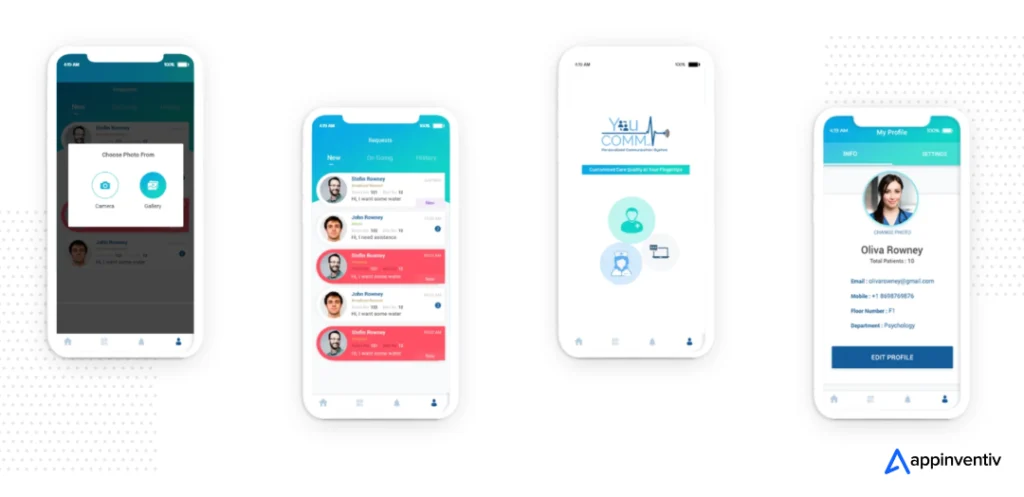
- YouComm is a multi-request platform built for in-hospital patients, allowing them to communicate with nurses through voice commands and head gestures. The solution was adopted by 5+ hospital chains in the US and helped drive a 60% growth in nurses’ real-time responses.
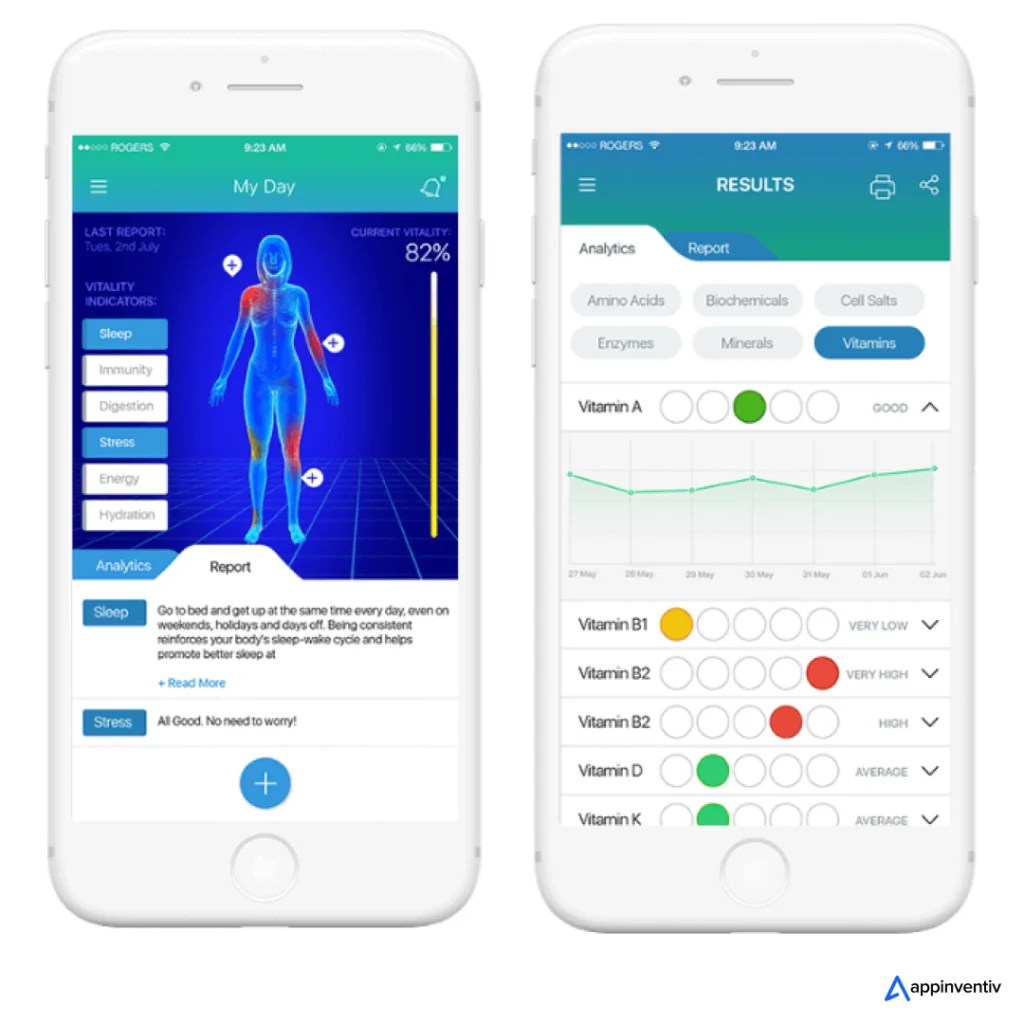
- Soniphi is a health monitoring solution designed to support real-time wellness tracking through vocal frequency analysis, helping users engage more actively with their health insights.
Appinventiv’s broader delivery strength includes 1600+ technology experts, 3000+ successful projects, and 16+ awards from leading industry platforms. This background supports its work across HIPAA-compliant applications, AI-driven diagnostics, EHR integration systems, and more.

For healthcare organizations planning a new EHR platform or modernizing an existing system, Appinventiv focuses on secure architecture, scalable development, interoperability, and regulatory alignment, so the final product supports both clinical care and operational growth.
FAQs?
Q. What are EMR systems in healthcare?
An EMR is the digital pulse of a single clinic. We use it to lock down treatment plans, clinical notes, and active diagnoses right at the source. Don’t mix it up with an EHR, which blasts data across entirely different hospital networks. An EMR? It stays strictly inside your four walls.
Q. What are examples of EMR integrated systems?
Nobody wants a siloed database. We wire them straight into lab networks so bloodwork actually lands where it should. We also plug in revenue cycle software—because practices have to get paid—alongside imaging and patient texting platforms. Hooking up pharmacy and scheduling systems kills that awful screen-toggling that doctors hate.
Q. How to use EMR integrations to improve patient experience?
It completely kills the friction. When you hook up scheduling and two-way SMS, people actually show up. Booking stops being a headache. Patients get their lab results on a portal, not after leaving three voicemails. The biggest win? Nobody has to fill out the exact same clipboard of medical history three times in a row.
Q. What are the features of an EMR system in healthcare?
The bare minimum? Charting, e-prescribing, scheduling, and getting labs ordered. But what we actually demand is airtight security, portals that don’t feel archaic, and proper HL7 or FHIR hookups. Right now, the real game-changer is AI documentation. If a feature gets a doctor out from behind a keyboard, it’s worth the investment.
Q. What is the cost of EMR systems?
The price tag is wildly unpredictable. Basic cloud setups run on a flat monthly fee per doctor. Want an enterprise build? Get ready to bleed cash upfront. Wiring just one API might hit $15,000. Full-scale interoperability easily clears half a million. It all hinges on user count, compliance demands, and how deep your connections go.
Q. How does EMR integration drive better outcomes?
Blind spots kill efficiency. When we do this right, every fragmented piece of data—past scripts, imaging, labs—smashes together exactly when the clinician needs it. They make sharper calls. Duplicate tests vanish. Manual entry errors drop off a cliff. The end result? Safer care and a lot less clinical burnout.


Fast 2-minute response, fully NDA-protected.

Diet and Nutrition App Development: Process, Features, Cost, and Technology Stack
Key Takeaways Diet and nutrition tracking app development goes past basic calorie counters with verified food databases, custom meal schedules, AI tools, wearable device links, and corporate manager tools. Structure database models around raw food items, serving portions, nutrient facts, recipes, software links, and regional diet rules. Pair computer vision models, recommendation algorithms, language engines,…

eCOA Software Development Guide: Enterprise Architecture, Tech Stack, Development Process, and Cost
Key takeaways: Build an enterprise eCOA platform using cloud servers, AI tools, and compliant system design. Map the full eCOA development process, from trial workflow analysis to live system maintenance. Connect your platform with EDC, CTMS, eConsent, HL7 FHIR, and wearables to simplify trial data sharing. Compare custom software against off-the-shelf platforms to make smart…

Pharmacy Software Development in the UAE: Cost, Features, Architecture & Compliance
Key takeaways: Pharmacy software in the UAE must support prescriptions, inventory, billing, and compliance in one system. Enterprise pharmacy platforms need secure architecture, role-based access, and audit trails. UAE-specific integrations like e-prescriptions, insurance, and health exchanges are critical. Custom pharmacy software development in the region typically costs AED 80,000 to AED 800,000+, depending on features,…