


























 Leader in AI-First Product Engineering Read Full Article
 Contact Us
Our 1,600+ specialists work across large retail environments, helping teams consolidate tools, automate manual steps, and adopt stronger engineering practices while meeting PSD2 requirements and Strong Customer Authentication standards.
Our Core Capabilities:




















Our technology delivery footprint:
Years of Technology Innovation
Tech Evangelist
Custom Software Projects Successfully
Delivered
Legacy Systems Modernized for the Digital Age
Strategic Federal Partnerships
Rating on Clutch by Global Clients







Our consultants help you assess your current retail store operations and identify practical steps to tighten processes, thus shaping a clear improvement plan.
• Operational Baseline Assessment
We map your tech landscape, review data flows, and identify constraints that hinder store performance.
• Improvement Priorities
Based on your goals, we highlight which processes should be corrected first and recommend the tools that fit those requirements.

Our team builds retail systems shaped around your operating model. Each solution is structured to simplify management tasks and help you respond faster to customer demand.
• Tailored retail workflows
We design features that match the way your staff manages orders, stock, and customer requests.
• Scalable build approach
The architecture is prepared for growing catalog sizes, new store branches, or expanded digital channels.

We create retail apps that help shoppers move from discovery to purchase with minimal friction. These apps support both store staff and end users.
• Adaptive UI patterns
Layouts adjust to different devices and usage contexts, helping users complete tasks quickly.
• Engagement-ready features
Push notification alerts, saved carts, and account-based preferences help you maintain steady communication with customers.

As a part of our custom retail software development services, we connect your systems so that data moves cleanly across all retail touchpoints. This reduces fragmentation and helps teams work with consistent information.
• Unified Data Exchange
APIs and connectors are set up to keep product info, customer records, and order status updates aligned across platforms.
• Workflow Harmonization
Cross-system processes, such as refunds or stock transfers, are simplified so they run without manual checks.

Our retail software modernization services help businesses update legacy systems, prevent performance bottlenecks, and stay ready for evolving digital demands.
• System Stabilization
We refine core components, remove outdated dependencies, and strengthen security standards.
• Modern Interface Overhaul
Older screens and workflows are redesigned to improve usability and shorten training time for teams.
Partner with us to build software platforms that streamline workflows,
enhance
customer engagement, and scale effortlessly.


Operating on legacy digital systems slowed operations and left the business exposed to data risks. They needed software that could secure their infrastructure while supporting scalable growth.

We redesigned their digital retail ecosystem with a modern architecture. Advanced security protocols were embedded to protect data and transactions, and performance improvements across departments gave managers better visibility and control.

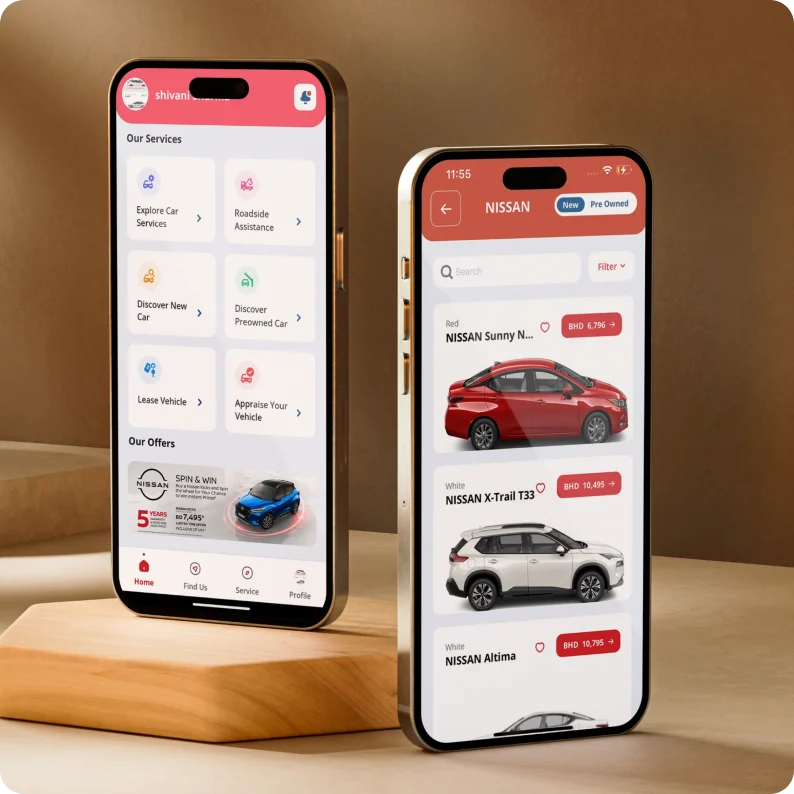
Adidas wanted a stronger digital presence for mobile-first users, especially in the Middle East. Their goal was a high-performance app that could handle regional preferences and deliver smooth shopping experiences.
We built a custom eCommerce app designed for intuitive navigation, fast performance, and an engaging interface that met the expectations of both new and existing customers.

6th Street needed a modern retail platform to boost engagement, simplify product discovery, and support rapid digital growth. Their existing systems lacked the speed and fluidity expected by fashion-savvy shoppers.
We developed a high-performance app with a clear, intuitive UI, smart filtering, fast checkout flows, and full compatibility across iOS and Android. The result was a seamless, premium shopping experience.

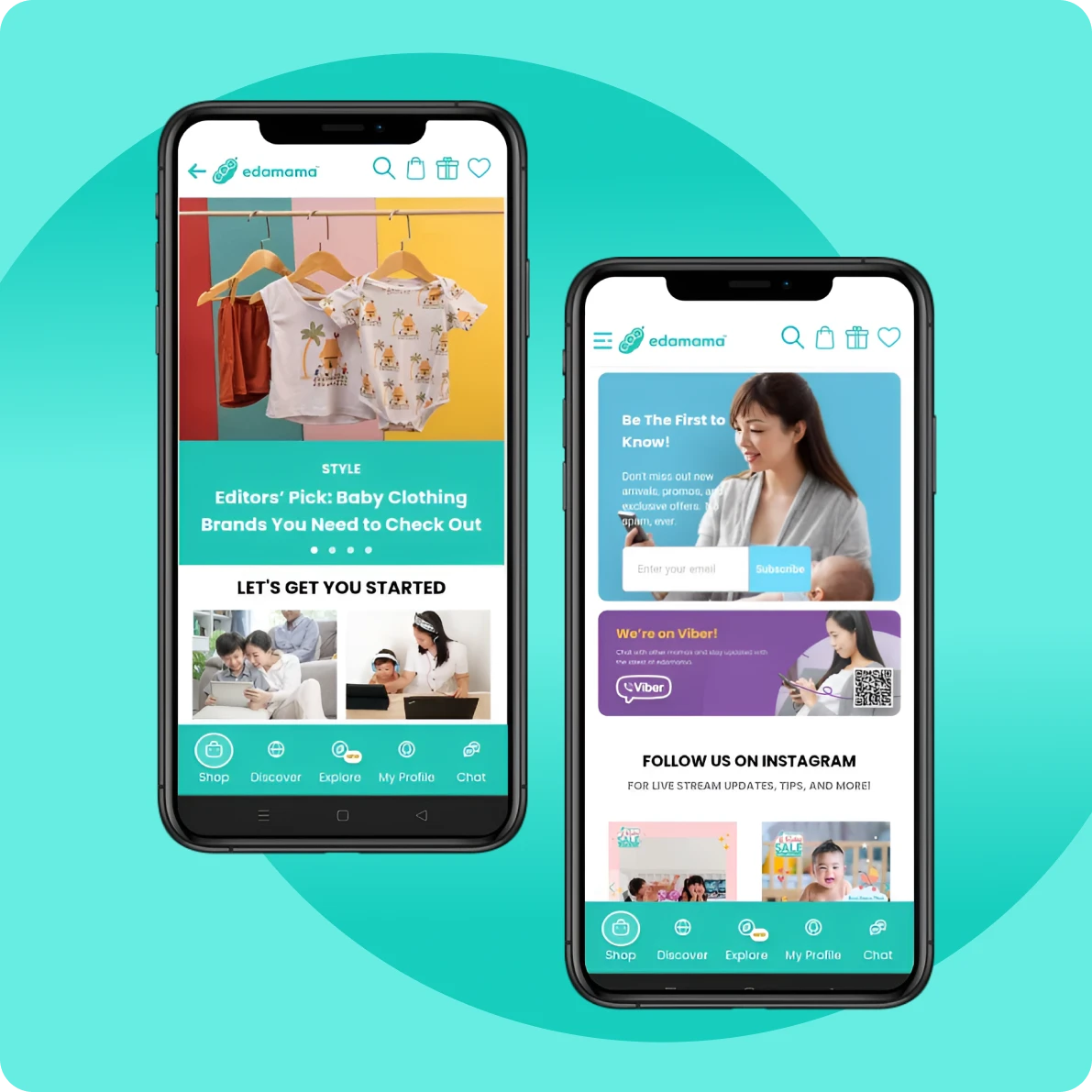
Edamama aimed to create a digital-first platform for new and expecting mothers, combining personalized recommendations with relevant parenting resources in a trust-sensitive retail segment.
We built a tailored platform using AI-based personalization to recommend products, track user preferences, and deliver a meaningful shopping journey. The app also served as a content hub for parenting advice and product discovery.
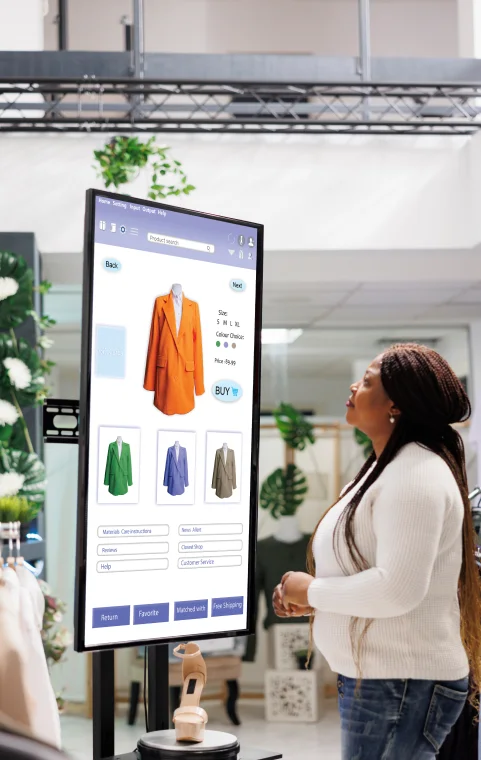
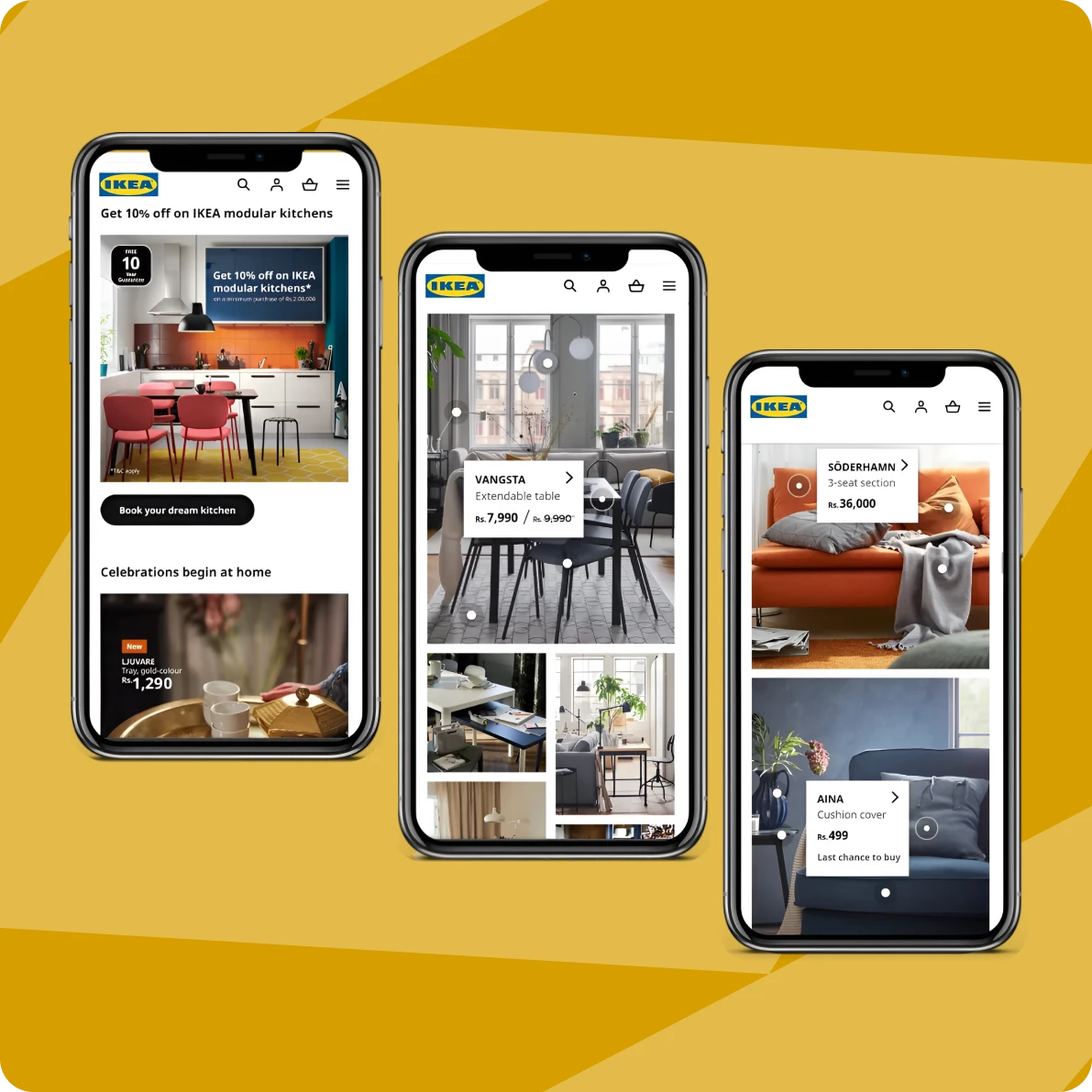
IKEA aimed to improve in-store experiences by digitizing aisle kiosks and providing smoother customer assistance through an integrated ERP system.
We built a secure, offline-first custom ERP platform to power digital kiosks across multiple outlets. The system offered real-time inventory access, order lookups, and guided navigation for shoppers.


ВА, Toki App
From POS workflows to omnichannel inventory and compliance
needs, our teams
align
with retail realities from the start.

Shopify is known to be flexible in eCommerce, which enables us to build custom online stores, improve online product management, and provide an easy online shopping experience.

Odoo’s modular ERP system lets us build retail solutions that improve inventory tracking, automate workflows, and streamline overall operations.

SAP Commerce is used to promote complex retail and omnichannel requirements. We use its business capabilities to handle product information, streamline orders, and manage multi-channel business.

Salesforce integration allows us to deliver a robust CRM and eCommerce platform that combines the sales and marketing functions and facilitates business growth.
Adobe Commerce (Magento) offers an open-source eCommerce system that enables us to create retail technology solutions that provide an engaging online shopping experience, thereby driving online sales.
Our retail software developers work across multiple retail categories, which helps us understand real operational gaps and choose the right tools and platforms for each environment.
Projects follow disciplined development routines, clear documentation, and security-first practices, making the final system stable and ready for scale.
Instead of generic templates, we shape software around each retailer’s workflow, data structure, and channel strategy.
From early consulting and UX planning to engineering, QA, and ongoing support, you have a single retail system software development partner for the full lifecycle.
Whether you use legacy POS, ERPs, loyalty engines, or eCommerce platforms, we connect these systems so data flows cleanly across channels.
Progress tracking, release planning, and risk reviews are carried out with steady communication so teams know exactly where the project stands.
Trusted by YKA Group, Adidas, and Edamama, we build retail platforms that bring
stores, inventory, and digital channels into one operational view, so
growth stays
predictable.


Statista High Growth Companies
APAC
2025 & 2024

Statista India's Growth Champions 2023

We add learning models that study buying patterns, refine product suggestions, add AI visuals, and help teams manage routine service queries. These systems improve over time and give retailers steadier control over demand and customer flow.
Our retail software developers leverage autonomous agents that take care of stock checks, order follow-ups, and basic service tickets. They lighten the operational load and keep information flowing across stores.
We apply generative tools to support merchandising work, prepare catalog content, and improve product search. This helps large inventories stay accurate and easier for shoppers to navigate.
IoT in retail stores to monitor equipment, track inventory movement, and collect real-time floor data. These insights make stock planning and store maintenance far more reliable.
We create visual tools that let shoppers preview items in their homes, explore digital displays, or try products virtually. These features support better decision-making and reduce unnecessary returns.
For categories where authenticity and traceability matter, we build blockchain-backed records that secure transactions and track goods from supplier to shelf. This adds clarity to the entire retail chain.
As an exceptional custom retail software development company, we develop cloud setups that sync data across every retail channel. This keeps orders, catalogs, and customer records consistent and allows operations to scale during peak periods.
For brands experimenting with new digital formats, we design virtual environments that act as product galleries or guided shopping spaces. These experiences help customers interact with items beyond the limits of a physical store.
Complex retail data is converted into clean charts and dashboards that managers can act on quickly. This makes it easier to compare store performance and address issues before they expand.














We start by examining your retail processes by arranging a one-to-one consultation session. This discovery stage enables us to chart out operational requirements, user expectations, and the technical foundation necessary for the new platform.
The next phase of our end-to-end retail software development services is to translate these requirements into a project plan after careful analysis. Dependency, early risks, and timelines are described in a way that the development progresses and yields anticipatory results.
Having the roadmap, we define the architecture and build the design background. The flow of work of retail teams in stores, digital channels, and distribution points is built around wireframes, process flows, and interface drafts.
Our experts implement features on a sprint basis, and this gives the opportunity to be adjusted where real-life requirements are identified. By following an agile software development process, we craft flexible, scalable, and robust software that is in line with your retail operations.
Throughout functional, performance, and stability testing, we put each component through these tests. The scenarios represent real-life conditions in a retail store, such as high traffic, cross-store operations, and mixed-device environments, to ensure the system works well.
Being a distinguished retail software development agency, we focus on following all the necessary security and retail compliance practices. For instance, payment flows follow PCI-DSS guidelines, and customer data handling aligns with GDPR and local privacy rules. This gives the final software a firm legal and security footing.
Upon software readiness, we configure it in the environment and integrate it with your POS, ERP, CRM, inventory, and analytics systems. The goal is an easy transition with information flow being as clean as possible, and with a regular work process going on.
The system is then monitored and refined after rollout. Feedback, performance metrics, and business needs drive continuous enhancement, making the platform up-to-date, stable, and prepared for the next phase of your retail development.
Major factors such as the complexity of the features, scalability of the project, and use of the technology stack can make the cost of building retail software wide-ranging. Depending on the features and characteristics of the retail software solution, the cost of developing one can range between $50,000 and $500,000. The cost depends on such factors as the degree of customization, integrations needed, and the schedule of development.
For a more precise estimate customized to your needs, consult with our retail software developers.
The deadlines for retail solutions software development projects are dependent on the complexity and the magnitude of the project. Depending on the complexity of the system, simple retail software solutions can take 3 to 6 months, whereas the more complex systems with more added features might take 6 to 12 months or more. Project plan and requirements are very important in an attempt to identify a more accurate development schedule.
Yes. We have been a front-run retail software development services provider, and we assist in transforming your business digitally by designing, modernizing your legacy systems, and delivering transformed retail business software.
Yes, we can merge the custom-built retail software with your existing systems so that it will run smoothly without disruption of data flow. We are one of the foremost retail software companies and are adept at developing integrations with existing infrastructure, including ERP systems, CRM systems, and other third-party applications, to provide a single, effective retail ecosystem.
Software development for retail industry offers numerous benefits:
An effective retail system must not only be functional but must also be automated, insightful, and offer smooth customer experiences. Key features include:
Finding a partner to build retail software, CTOs will need to look at a retail software development custom firm, technical knowledge in AI, IoT, and cloud, and the ability to build scalable, secure, and full-fledged solutions. They are expected to be knowledgeable on how to integrate the third-party and legacy systems and must have the absolute dedication to the data security and compliance regulations, including PCI-DSS and GDPR.
Long-term success is also guaranteed by Agile development processes, open communication, and post-launch support. An effective collection of results and recommendations of satisfied clients may prove that the custom retail software development company is capable of providing strategic and long-term change.
Retail operations require a number of specialized tools to operate effectively and competently:
We provide continuous support for the custom-built retail software solutions, including inventory and POS monitoring, bug fixes, and system updates. Our team ensures smooth integration with ERP, CRM, and eCommerce platforms, maintains data security, and optimizes performance so your retail operations stay efficient, compliant, and ready to adapt to changing customer and market demands.