






























Why eCommerce ERP Integration Matters for Growing Businesses

 Share -



- 01Understanding the Process of ERP eCommerce Integration
- 02Advantages of ERP and eCommerce Integration
- 03Common Methods Used for ERP eCommerce Integration
- 04Vital Features of ERP for eCommerce Businesses
- 05Most Common ERPs for eCommerce
- 06Implementation Methods to Integrate eCommerce with ERP
- 07Key Challenges in ERP eCommerce Integration with Practical Solutions
- 08eCommerce ERP Integration Best Practices
- 09How Appinventiv Simplifies ERP Integration for eCommerce Businesses
- 10FAQs

Key takeaways:
- By integrating ERP with eCommerce, businesses can streamline and modernize their operations, making them more efficient and effective.
- Integration between ERP and eCommerce systems ensures real-time data synchronization, leading to better order accuracy, visibility, and inventory management.
- Cloud-native and API-driven ERP integrations facilitate scalable commerce expansion to marketplaces, mobile apps and retail channels.
- There are various methods of integration, including middleware, iPaaS, and custom connectors, which can make integration between legacy ERP systems and modern eCommerce platforms simpler.
- Automated workflows, easy access to data, and optimized operations cut down on manual work, delays, and business inefficiencies.
Adidas was looking for cloud infrastructure to upgrade its SAP enterprise resource planning (ERP) environment to support ecommerce ERP integration and meet the demands of omnichannel commerce, and chose Amazon Web Services (AWS) for the job. To effectively manage the rapid growth in operational complexity of scaling omnichannel commerce, the company shifted to a centralized SAP S/4HANA infrastructure on AWS.
This is a challenge that quite a few expanding online businesses face sooner or later. With the growth of sales channels, through websites, mobile apps, marketplaces, and brick-and-mortar stores, systems begin to disconnect and cause issues. Over time, business performance slows due to mismatches between inventory and orders, delayed order updates, reporting inaccuracies, and manual coordination between departments.
The integration of eCommerce platforms and ERP systems provides businesses with a unified, centralized view of inventory, orders, logistics, payments, and operations, enabling more efficient day-to-day operations and quicker decision-making.
In this blog, we’ll delve into the role of ERP systems in eCommerce, the advantages they offer, integration hurdles, and the essential best practices companies should consider when deciding on an integration approach.

Understanding the Process of ERP eCommerce Integration
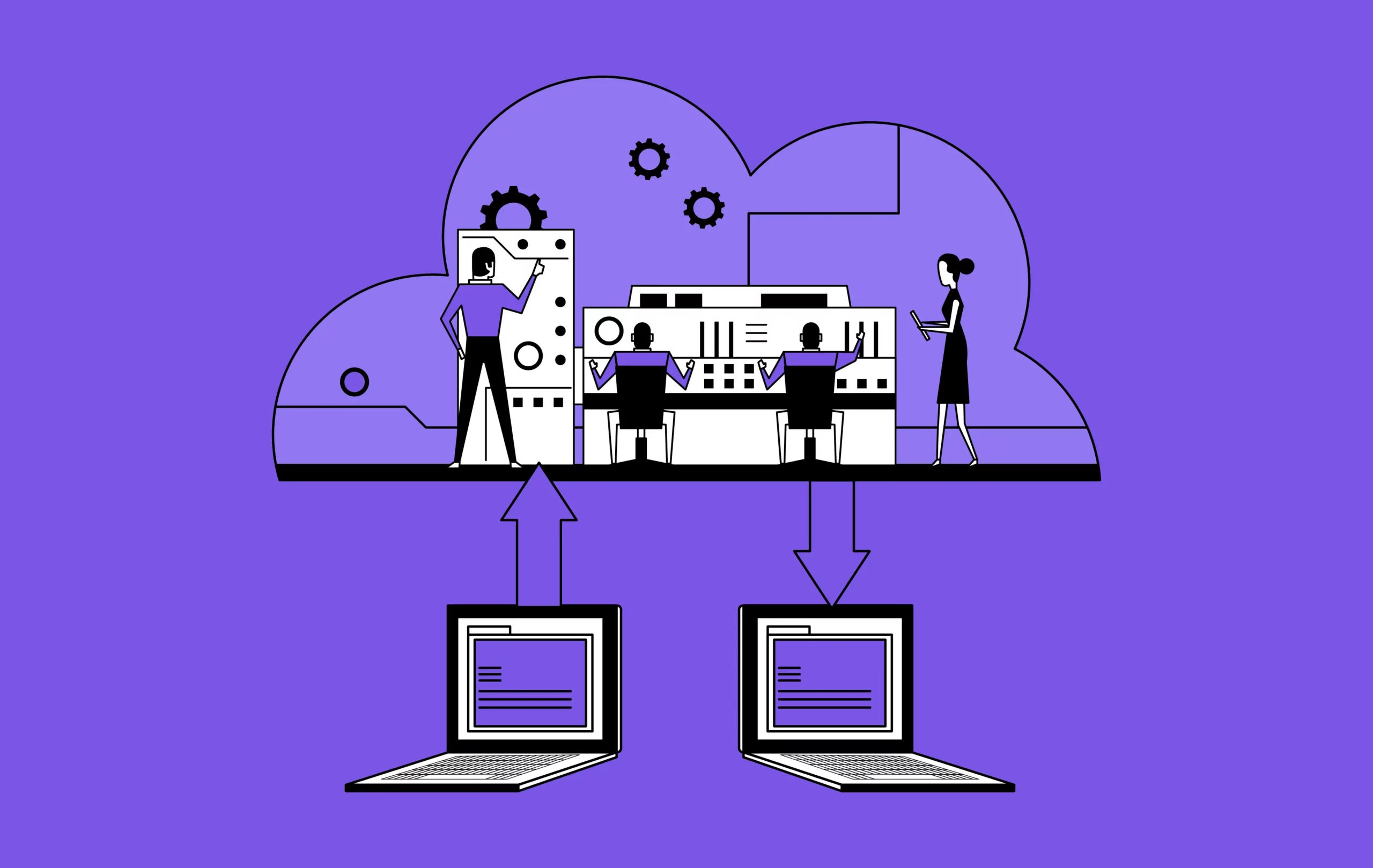
An eCommerce ERP integration is the process of joining an eCommerce store with the backend business systems, where data seamlessly flows between the two real-time. Once a customer orders a product from a platform (Shopify, Magento or BigCommerce), the order details are automatically synced to the ERP system via API or integration. Then the ERP system automates inventory updates, billing, payments, warehouse processes, shipping, and customer data without manual effort.
The ERP system is the backbone of the business and orchestrates the flow of information between different business functions, as depicted in the infographic below.
Inventory management, order processing, customer management, fulfillment and reporting are integrated in one centralized ecosystem, as opposed to disjointed teams working with information spread across the various pieces of their enterprise. This helps businesses reduce manual errors, improve order accuracy, maintain real-time operational visibility, and handle growing transaction volumes more efficiently.
Advantages of ERP and eCommerce Integration
Integrating your eCommerce platform with the right ERP setup offers comprehensive benefits to your business. Let us look at the benefits of ERP integration ecommerce in detail below:

Heightened Productivity
One of the finest benefits of ERP in eCommerce is increased productivity. By consolidating data from all corners of your business, you eliminate the time wasted in searching for information. ERPs establish a unified, centralized data system that helps in harmonizing your departments and workflows. In addition, ERPs automate certain tasks, freeing the employees to focus on other vital responsibilities.
For instance, Amazon leverages ERP systems to optimize its logistics and inventory operations. With the help of data consolidation and task automation, the eCommerce giant boosts productivity and ensures efficient order processing and timely deliveries. This integration empowers Amazon’s employees to focus on the strategic initiatives instead of manual data management.
Enhanced Customer Onboarding and Experience
In addition to increasing the overall productivity, the integration of an eCommerce website with ERP system makes way for a better customer experience. The ability to offer improved CRM integration capabilities, combined with automated payment and tracking processes, helps in creating a smoother, faster, and higher-quality experience for your customers.
A custom ERP software can also streamline and automate customer onboarding by centralizing data, simplifying the related documentation, and automating the workflows. This makes way for a faster and more efficient process. The ERP solutions can also provide real-time visibility into the onboarding status, improving the overall communication with customers and reducing errors.
Improved Data Accessibility
ERP integration not only centralizes your organization’s data but also provides real-time access to customer data. This comprehensive data accessibility makes way for smarter, quicker decision-making. Integration eliminates data separation across multiple areas and ensures that all necessary information is readily available, making activities like tax management more straightforward.
For instance, Shopify, a leading eCommerce platform, offers ERP integration options to its users, allowing seamless integration of their eCommerce operations with robust ERP systems. This integration enables real-time access to crucial customer and sales data. It empowers businesses to make informed decisions, streamline tax management, and gain a comprehensive overview of their operations.
Also Read: Shopify Plus Website Development Cost – A Complete Guide
Enhanced Process Visibility and Streamlining
eCommerce ERP integration is a powerful tool that simplifies and automates various processes, making them easier to manage. ERPs play a key role in this automation by streamlining accounting and order tracking tasks. By automating repetitive tasks, ERPs reduce the likelihood of errors and increase overall business efficiency. This leads to shorter processing times, increased conversions, and higher customer satisfaction.
For instance, Alibaba, a global eCommerce giant, relies on ERP systems for managing its complex supply chain and digital commerce operations. Through ERP integration, the organization is able to optimize accounting and order tracking processes, resulting in reduced errors and enhanced efficiency.
Cost Reduction
A well-implemented ERP system can easily identify inefficiencies within your business and assist in fixing them altogether. In addition to this, ERP eCommerce integration enables real-time inventory management, facilitating timely inventory practices that prevent overstocking. This further helps in cost savings for your business.
For instance, Walmart employs custom ERP systems to optimize its inventory management and supply chain processes. By getting real-time insights into the inventory management, they are preventing overstocking, leading to a minimization of inventory-related costs.
Common Methods Used for ERP eCommerce Integration
There are several common methods for ERP eCommerce integration. Here are a few of the most frequent approaches to ERP eCommerce integration. Depending on the complexity of operations, scalability needs, and the current ERP system setup, businesses can integrate ERP and eCommerce in several ways.
API-Based Integration
APIs are used to share data in real time between modern eCommerce platforms and cloud ERP systems. This approach helps to achieve more rapid inventory, order, payment, and customer records data syncing.
Point-to-Point Integration
The point-to-point eCommerce platform is directly linked to the ERP system. It’s great in smaller environments, but it may be challenging to scale if more systems and workflows are added.
Enterprise Service Bus (ESB)
An Enterprise Service Bus is a single repository of middleware that controls the communication between ERP platforms, eCommerce systems, logistics software, payment gateways, and third-party applications.
iPaaS Platforms
Integration Platform as a Service (iPaaS) solutions make system integration easy by providing preconfigured connectors, workflow automation, and centralized API management. Many companies are leveraging an iPaaS platform to simplify custom integration.
Cloud ERP Integration
Cloud ERP integration tend to be more popular in today’s ecommerce landscape for their ability to facilitate scalability, remote access, and quick integration with digital commerce environments.
Vital Features of ERP for eCommerce Businesses
Various key ERP features back efficient eCommerce operations, improved customer experiences, and sustained business growth. Let us look at them in detail below:

Automated Finances
It allows you to efficiently manage accounts payable and receivable by automating financial processes, reducing manual tasks, and ensuring real-time updates.
Inventory Management
This feature allows businesses to gain comprehensive control over inventory while making way for tracking quantities, locations, and costs to prevent overstocking and streamline order fulfillment for diverse products and warehouses.
[Also Read: A Smart Decision Making with an Inventory Management App for Your Business]
Consolidated CRM
It makes way for enhanced customer relationship management by standardizing practices across your organization, simplifying omni channel reporting, and facilitating better outreach to improve services and retention rates.
Shipping and Distribution
This allows businesses to simplify shipping and distribution tasks with automation, including label generation, order tracking, reducing manual errors, and enhancing efficiency. This is particularly beneficial for high-volume sellers and businesses that have multiple warehouses.
Multi-Channel Integration
This feature makes way for seamless integration of your eCommerce platform with various sales channels, such as online marketplaces, brick-and-mortar stores, and social media, to manage sales, inventory, and customer data across channels.
Real-Time Analytics
This allows businesses to access real-time analytics and reporting tools that provide insights into sales trends, customer behavior, and inventory performance, helping them make informed decisions and adapt strategies accordingly.
Returns and Refunds Processing
This makes way for streamlined returns and refunds with automated workflows, allowing for efficient handling of customer returns, exchanges, and refunds while maintaining transparency and compliance.
Security and Compliance
It is vital to prioritize data security and compliance with industry standards and regulations so as to safeguard sensitive customer information and ensure business continuity.
Most Common ERPs for eCommerce
eCommerce businesses usually rely on ERP solutions that allow them to seamlessly integrate various software applications. The most commonly used ERPs in the B2B sector include:

Microsoft Dynamics
Combines CRM, ERP, productivity apps, and AI tools to enhance business processes and customer relations.
SAP
A modular cloud ERP with real-time capabilities which AI and analytics power. It offers process automation and personalized insights.
Oracle
Oracle offers a comprehensive suite of integrated applications for finance, supply chain, HR, and CRM automation.
E2 Shop System
Tailored for machine and job-based manufacturing shops, it offers estimating, accounting, resource planning, customer management, and analytics.
Workday
A cloud-based ERP system for global businesses that specializes in HR, finance, onboarding, and accounting.
Odoo
Odoo is ideal for large enterprises as it effectively manages customer databases, HR tasks, accounting, and communication.
ERPAG Software
It is suited for small and mid-sized businesses across industries. ERPAG aids in inventory management, analytics, accounting, shipping, and reporting.
Implementation Methods to Integrate eCommerce with ERP
For crafting seamless B2B eCommerce ERP integration solutions, it is vital to follow some key steps that can help you develop your integration strategy. In addition to this, partnering with a dedicated enterprise software development company for expert guidance can help you pave the way for a seamless and efficient ERP eCommerce integration that optimizes your operations and maximizes your business’s potential.

Identify Your eCommerce Apps and Platforms
During this phase, determine the eCommerce platforms you wish to integrate with your ERP. Whether it’s a single-core platform or multiple apps, it is essential to have some clarity.
Identify Critical Data
Pinpoint the most crucial data for integration, such as orders, customer information, or financial data, that can help you ensure accuracy and prioritization. Streamlining this process can offer you much-needed efficiency and precision when it comes to ERP integration for eCommerce.
Identify Manual Processes
During this phase of eCommerce ERP cloud integration, repetitive tasks like handling invoices or manual inventory checks are executed. Identifying these manual workflows is crucial for streamlining and automating your business processes effectively.
Choose the Right ERP
Now is the time to choose the right ERP system that aligns with your needs. It is vital to decide if it should be on-site or in the cloud, considering the data volume and security requirements at your end.
Businesses can further choose to build or integrate a custom ERP solution from scratch as per their business requirements. This gives them the ability to tailor every aspect of the ERP system while ensuring seamless alignment with their unique workflows.
Determine Integration Method
Finalize how to integrate your eCommerce platform with the ERP. There are multiple options available for organizations, such as using your platform’s API, leveraging native ERP integration features, or employing third-party solutions with pre-built integration processes. Partnering with a dedicated enterprise software development company can help you navigate these options effectively.
Key Challenges in ERP eCommerce Integration with Practical Solutions
The integration of ERP systems with eCommerce platforms can create a seamless digital commerce ecosystem; however, it can also pose operational, technical, and data challenges. Here’s how you can tackle these challenges with practical solutions.
Data Synchronization Between Multiple Systems
A major ERP eCommerce integration challenge is keeping inventory, pricing, customer information, orders and fulfillment systems in sync. When there is a delay or a mismatch in synchronization, it can cause overselling, incorrect visibility of the stock, and conflict in pricing in an ERP-integrated eCommerce environment.
Solution: Use real-time API-based synchronization with central data mapping and data validation rules. Middleware and integration platforms also ensure a consistent flow of data across ERP systems, mobile apps, and eCommerce stores, supporting reliable ERP marketplace integration without data gaps or synchronization issues.
Legacy ERP Compatibility Issues
Numerous companies still run on traditional ERP systems that were not built for today’s cloud-powered business landscapes. Older systems may not be API ready, flexible in architecture or support real-time integration, which acts as a challenge in enterprise ERP integration for ecommerce.
Solution: Integrate with middleware, microservices, or custom connectors that connect legacy ERP systems with modern eCommerce solutions. The legacy software modernization approach reduces migration risk, minimizes operational disruption, and creates a more flexible foundation for long-term commerce growth.
Advanced Inventory and Order Processing
When systems are siloed, it’s tough to manage inventory throughout warehouse locations, online marketplaces, brick-and-mortar stores, third-party logistics providers, and beyond. If synchronization fails, it can lead to delayed delivery and inefficiency in operations for companies that rely on ERP for ecommerce.
Solution: Implement centralized stock management and automated order routing with real-time inventory updates. The accuracy of replenishment and the visibility of the demand can be enhanced by AI-powered forecasting and inventory planning tools, as well.
Scaling with High Loads
For example, integration systems can become overwhelmed during periods of heavy sales or other events with high transaction volumes. This may impact the checkout experience, order processing speed, and the ERP system’s responsiveness, particularly in high-volume retail ERP integration scenarios.
Solution: Implement a cloud-native ERP integration architecture that is elastic, supports load balancing and asynchronous processing. A queue-based event processing also offers increased stability when traffic peaks.
Security and Compliance Risks
ERP eCommerce integration isn’t a one-way street. Weak security controls can expose businesses to cyber threats, unauthorized access, or regulatory violations, which remain among the biggest challenges in ERP and eCommerce integration projects.
Solution: Use security and encryption mechanisms such as encrypted API calls, role-based access control, token authentication, and ongoing security checks. Where applicable, the integration should also meet relevant eCommerce and data governance compliance standards like PCI DSS, GDPR, SOC 2 and ISO 27001.
eCommerce ERP Integration Best Practices
To ensure a smooth integration process and avoid the common challenges associated with the process, it is vital to follow these best practices:

Choose the Right Integration Solution
It is recommended to avoid manual data transfers or use any complex coding. You must select an integration tool that aligns with your specific eCommerce and ERP needs.
Communicate with All Stakeholders
Keep everyone in your organization informed about the impact of the integration. Make sure to explain to the team how the ERP integration will affect sales channels, department productivity, and overall business operations. You must ensure to get a nod from the stakeholders before proceeding.
Ensure Optimal Data Security
Select an integration solution that matches your data security requirements. It is recommended to make an informed decision for your eCommerce ERP integration process. One must never assume that on-premise solutions would offer better security. Cloud-based iPaaS applications have more robust security protocols and compliance measures.
Partner with a Suitable ERP Development Firm
While integrations typically run smoothly, even minor issues can disrupt your business processes. Choose to partner with a dedicated ERP development firm that can offer access to a 24/7 support team to ensure uninterrupted operations.

How Appinventiv Simplifies ERP Integration for eCommerce Businesses
ERP and eCommerce integration is essential for both complex and simple IT systems because of their capability to enhance current services and ensure readiness for future platform advancements. For eCommerce businesses, ERP implementation significantly benefits employees, customers, and overall profitability.
Appinventiv is reputed for its ERP software development services, specializing in seamless eCommerce ERP integration for businesses of all sizes. We deeply understand the complexities of ERP integration and offer tailored solutions that align with your specific needs and IT ecosystem.
We recently developed a custom ERP solution for IKEA, the world’s finest furniture retailer, revolutionizing their customer onboarding and marketing process. The solution is now deployed on location-wise kiosks across 7+ IKEA stores in the UAE. The retail furniture outlet considers the solution as the biggest source of their ROI measurement.

Our experts help businesses identify the right integration architecture based on operational complexity, existing infrastructure, scalability goals, and security requirements. Whether it’s API integration, implementing middleware, custom workflows, or integrating with cloud ERP, we deliver efficient B2B eCommerce ERP integration solutions that ensure your inventory, procurement, order, financial, and customer operations run in sync.
The seamless data flow, visibility, and scalability are also important features, enabling businesses to grow their operations without any friction or silos blocking their sales processes.
Get in touch with our ERP and eCommerce software development services experts to future-proof your IT ecosystem one step at a time.
FAQs
Q. What is ERP ecommerce integration?
A. eCommerce ERP integration is a systematic process that streamlines communication and data exchange between an organization’s ecommerce platform and ERP system. The role of ERP in eCommerce is to eliminate manual data transfer and enable automatic synchronization of critical business information.
Q. How to integrate ERP and eCommerce?
A. Here are the multiple steps to take when integrating ERP with your eCommerce platform:
- Identify your eCommerce platforms and the critical data to be integrated.
- Evaluate your ERP requirements and choose the right solution as per them. One can simply choose between cloud-based or on-premise integration, depending on their custom needs.
- It is now time to finalize the integration method. Businesses can choose between APIs, native integration, or third-party solutions.
- Ensure data cleanliness and structure before integration.
- Communicate the integration plan with stakeholders and ensure their decisions align accordingly with the process.
- Partner with an experienced enterprise software development company like Appinventiv for expert guidance and support throughout the eCommerce integration with ERP process.
Q. What are the benefits of ERP eCommerce integration?
A. The ERP and eCommerce integration brings numerous advantages for businesses, such as heightened productivity, enhanced customer experiences, improved data accessibility, streamlined processes, cost savings, and better decision-making capabilities. This eCommerce integration with ERP optimizes business operations, benefiting employees and customers while providing valuable insights for growth and efficiency.
Q. Why integrate ERP with eCommerce?
A. When you have disconnected systems managing orders, inventory, payments, logistics, and customer records, it becomes challenging to manage in the growing world of online businesses. The addition of eCommerce to ERP seamlessly manages data across multiple departments, minimizes manual tasks, and minimizes reporting gaps.
Modern ERP software for eCommerce also provides enhanced inventory management, order accuracy, operational efficiency and overall system coordination between back-end systems and digital commerce channels.
Q. How does ERP eCommerce integration work?
A. Here’s how ERP-integrated eCommerce works:
- Customer orders are placed on eCommerce platform
- Order data is automatically transferred to the ERP system via APIs or middleware.
- Inventory, orders, invoices, payments, and shipping are updated in real-time
- The data is synced to the warehouse and logistics teams for effective operational data
- Customer order status is always up to date across all connected systems
Enterprise ERP integration for ecommerce helps centralize operations, rather than needing to coordinate manually between departments.
Q. How much does ERP integration cost?
A. The price of ERP integration typically varies based on the business size, complexity of the ERP system, number of integrations, customization needs, and deployment model. The typical range for small- to mid-sized business ERP integration is $15,000 – $80,000, and for enterprise-level projects, the cost ranges from $100,000 – $500,000 or more. The more specific the API requirements, the more legacy modernization, advanced automation, or multi-platform integrations are needed, the higher the costs will be.
You can also check out this blog to learn more about ERP implementation costs and what it takes to connect an ERP system with other software platforms.


Fast 2-minute response, fully NDA-protected.
ERP Solutions for Local Government: Features, Integrations, and Costs
Key takeaways: ERP for local councils unify isolated municipal workflows, reducing manual overhead and cross-departmental friction. It ensures regulatory alignment with state Local Government Acts and AASB standards. Modular, API-first architectures enable seamless bi-directional integration with GIS, EDRMS, and state planning portals. Phased implementation reduces operational downtime, ensuring financial transparency and sustained community trust. ERP…

Auto Spare Parts Management System Development: Complete Enterprise Guide
Key takeaways: Build an AI parts platform that links inventory, purchasing, warehouses, dealers, and ERP systems into one network. Examine system architecture, tech stacks, and software connections built for multi-site parts operations. See how AI sharpens order forecasts, stock planning, purchasing, and part lookups to cut daily delays. Compare custom code and ready-made apps to…
Aerospace ERP Software Development: Cost, Features, Timeline & Tech Stack
Key Takeaways Aerospace ERP platforms help production, procurement, maintenance, and finance teams work from the same operational records. Aircraft manufacturers use ERP systems to track serialized parts, supplier activity, maintenance history, and production schedules more accurately. Modern aerospace ERP environments now include AI forecasting, IoT telemetry, digital twins, and predictive maintenance monitoring. ERP modernization projects…