























The Role of AI in Revolutionizing Healthcare in the UAE

 Share -


- 01How AI is Transforming the UAE Healthcare Ecosystem
- 02Latest AI Innovations in Healthcare in Dubai, UAE
- 03Key Use Cases & Benefits of Artificial Intelligence in Healthcare UAE
- 04AI in Healthcare in Dubai: Real-Life Examples and Success Stories
- 05How to Implement AI in Healthcare: A Roadmap to Success
- 06The AI Technology Stack That Dubai Healthcare Providers Actually Need
- 07Overcoming the Challenges of AI Implementation in Healthcare
- 08The Cost of Implementing AI in Dubai’s Healthcare Sector
- 09Future of AI in UAE’s Sprawling Healthcare System
- 10Achieve Seamless AI Integration in Healthcare with Appinventiv Dubai
- 11FAQs

Key takeaways:
- AI in healthcare in Dubai is expanding rapidly under the UAE’s National Strategy for Artificial Intelligence 2031, with strong government backing and sector-wide adoption across diagnostics, telemedicine, and hospital operations.
- Successful AI deployment in healthcare requires regulatory alignment with DHA standards, NABIDH integration, and strict data sovereignty compliance within the UAE.
- High-impact use cases include AI-assisted diagnostics, robotic surgery, predictive analytics, remote monitoring, and automated administrative workflows.
- Implementation complexity depends on the depth of integration, infrastructure readiness, data quality, and long-term governance planning.
- Healthcare providers that align AI initiatives with operational efficiency, patient outcomes, and compliance frameworks are more likely to achieve sustainable ROI.
From detecting life-threatening diseases at their earliest stages to predicting public health threats, AI’s impact in the healthcare sector across the globe is undeniable. And in the UAE, these advances are happening at an even faster pace.
In Dubai, Medcare Hospital Al Safa is leading the charge with an AI-powered blood test that can predict coronary artery disease with 95% accuracy, even before symptoms show up. Early detection like this is crucial, as it allows doctors to intervene long before conditions like heart attacks or strokes take hold. The potential of such AI systems to save lives is staggering.
As the UAE continues its commitment to technology-driven solutions, AI is quickly becoming an essential part of the nation’s healthcare revolution. Supported by the UAE’s National Strategy for Artificial Intelligence 2031, the country is investing heavily in AI healthcare solutions.
In this blog, we will explore how AI is revolutionizing healthcare in Dubai and the UAE, delve into real-world examples, and look at the latest innovations that are shaping the future of medicine.
With AI adoption growing at 34% annually, now is the time to revolutionize your healthcare system. Stay ahead with cutting-edge innovation.
How AI is Transforming the UAE Healthcare Ecosystem
The UAE, one of the most economically advanced markets in the GCC, has been transforming its healthcare sector with a focus on digitalization and AI. The Centennial 2071 Plan, launched in 2017, aims to develop healthcare infrastructure and services that meet international standards, particularly in addressing lifestyle-related diseases. The country is also positioning itself as a leading destination for medical tourism, with strong government backing and AI initiatives playing a pivotal role in this vision.
In line with these efforts, the UAE’s National Strategy for Artificial Intelligence 2031 aims to make the country a global leader in AI, particularly in healthcare. Key projects such as the Falcon AI model developed by the Advanced Technology Research Council (ATRC) and AI-powered medical claims systems in Dubai Healthcare City are addressing critical issues like doctor shortages and chronic disease management. These innovations are streamlining healthcare operations and improving diagnostic accuracy.
Supported by the UAE’s National Strategy for Artificial Intelligence 2031, the country is investing heavily in AI healthcare solutions. With its ambitious goals and forward-thinking approach, Dubai is setting a global standard for AI-powered healthcare.
The UAE’s healthcare market is poised for significant growth, driven by AI advancements in telemedicine, personalized medicine, and AI-assisted diagnostics. Projections indicate that the UAE’s AI healthcare market will hit $1.08 million by 2030, growing at an impressive annual rate of 49.8%.
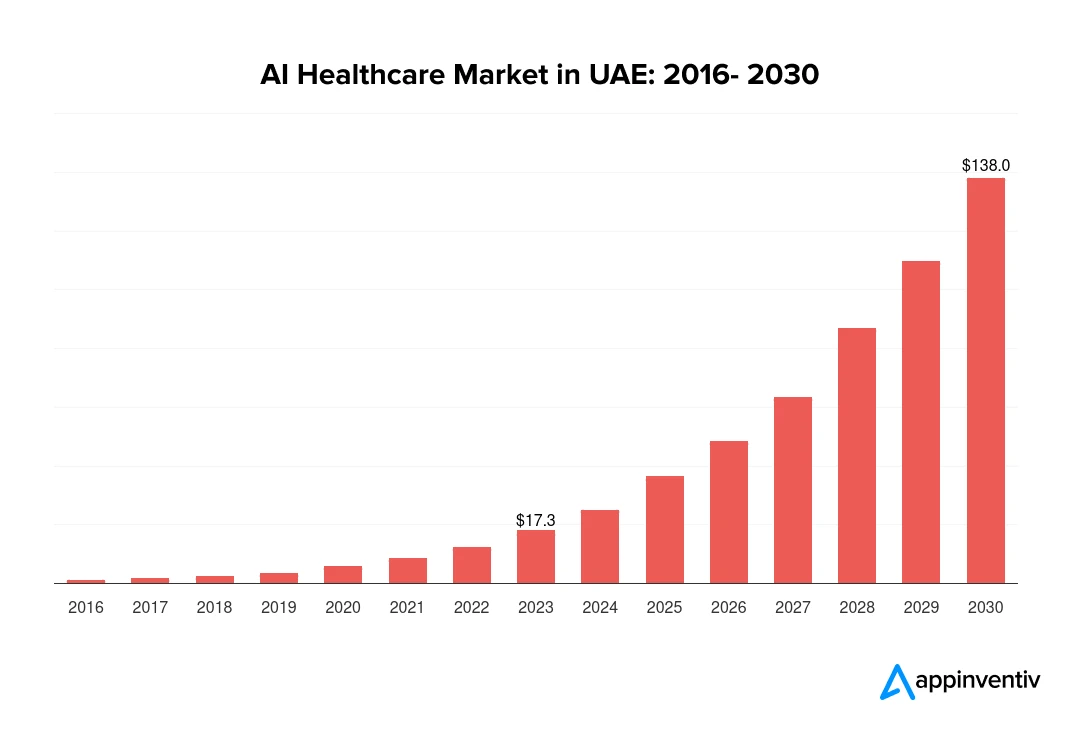
With robust investments in AI research and development and partnerships with global tech companies, the UAE is rapidly advancing toward becoming a global leader in AI-powered healthcare, offering enhanced care and operational efficiency.
Latest AI Innovations in Healthcare in Dubai, UAE
Dubai is rapidly emerging as a global leader in AI-driven healthcare solutions, with cutting-edge innovations transforming the medical landscape. From AI-powered diagnostic tools to robotic surgeries, the city is adopting advanced technologies that not only improve accuracy but also streamline patient care. These innovations are not just reshaping healthcare delivery but are setting new standards for the rest of the world to follow. Some of the latest innovations of AI in healthcare include:
Launch of Global AI Healthcare Academy
In May 2024, the Department of Health – Abu Dhabi launched the Global AI Healthcare Academy in collaboration with Mohamed bin Zayed University of Artificial Intelligence (MBZUAI) and Core42. This initiative is a significant step toward advancing artificial intelligence in healthcare in the UAE, aiming to develop a skilled AI workforce to enhance diagnostics and patient care.
The academy will support the UAE’s mission to become a leading center for AI-driven healthcare by nurturing local talent and promoting innovative solutions to address regional health challenges. It will also focus on improving clinical care by creating AI tools tailored to the needs of the UAE’s healthcare system.
Med42’s AI Clinical Language Model
Med42, a health-tech company based in Abu Dhabi, developed an open-access AI clinical language model that is comparable in performance to leading models like GPT-4 and Med-Gemini. The model has achieved high accuracy in medical examinations, including the USMLE.
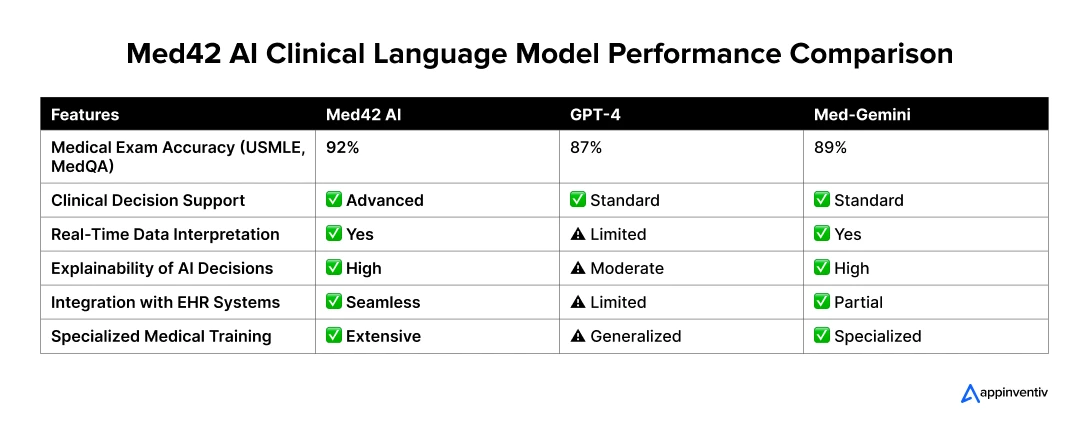
Being implemented in the UAE’s healthcare system, Med42 assists healthcare professionals by enhancing diagnostic capabilities and decision-making processes. Moreover, the model is specifically adapted to the UAE’s healthcare needs, providing more personalized and effective solutions to local healthcare providers.
M42’s Development of AIRIS-TB
AIRIS-TB, an AI-driven chest X-ray system developed by M42, is revolutionizing tuberculosis (TB) screenings in the UAE by processing up to 2,000 chest X-rays daily and reducing radiologist workload by up to 80%.
The role of AI in healthcare in Dubai is becoming increasingly vital, especially in the UAE’s efforts to combat TB. It allows for early detection, faster treatment initiation, and better resource utilization in healthcare facilities, contributing to the country’s goal of eradicating TB.
Airdoc’s AI Retinal Image Interpretation System
Although detailed information on Airdoc’s AI retinal image interpretation system in the UAE is not readily available, the country’s healthcare system is increasingly incorporating AI tools like Airdoc’s to enhance diagnostic capabilities, particularly in ophthalmology.
AI in medicine and healthcare is transforming diagnostics in the UAE by streamlining the detection of eye diseases and chronic conditions. Advanced AI systems enable healthcare professionals to quickly analyze retinal images, leading to faster, more accurate diagnoses and improved treatment outcomes. This innovation enhances patient care and reinforcing the country’s position as a leader in healthcare AI solutions in the UAE.
Appinventiv Insight
As healthcare organizations in Dubai continue to capitalize on AI advancements, partnering with an experienced AI development company can help accelerate the adoption of these transformative technologies. By collaborating with experts in AI, healthcare providers can implement custom AI solutions that enhance operational efficiency, improve patient outcomes, and keep pace with the ever-evolving AI innovation in the UAE
Key Use Cases & Benefits of Artificial Intelligence in Healthcare UAE
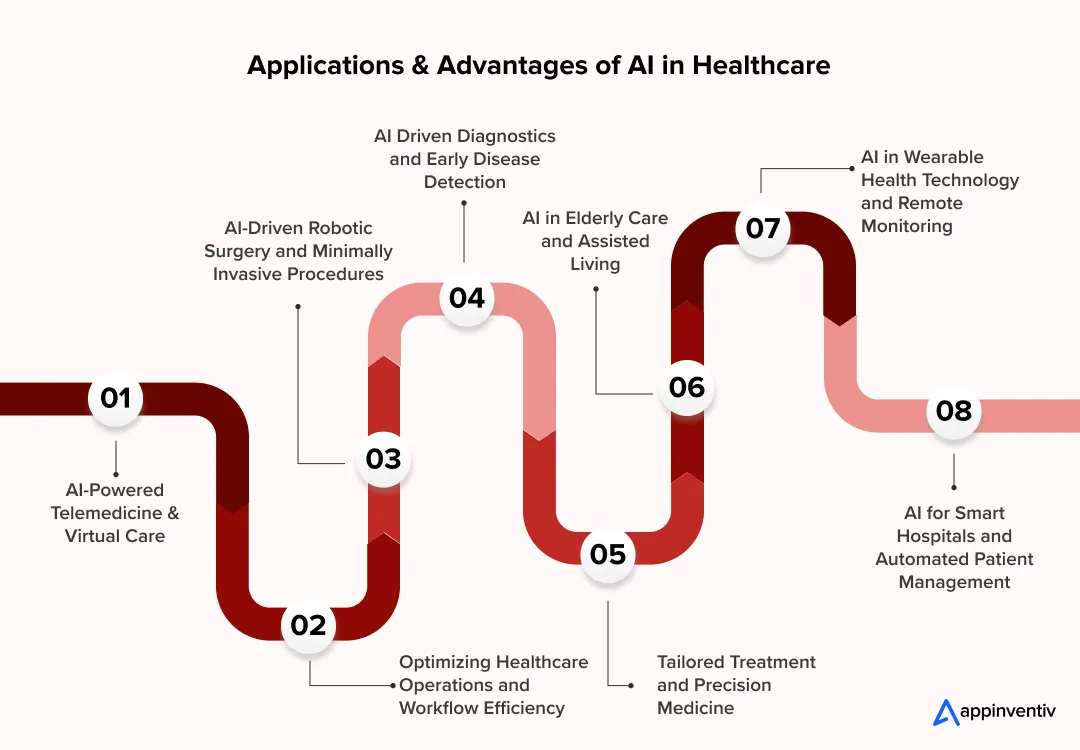
AI in healthcare in Dubai is transforming the way medical services are delivered, driving innovation and enhancing operational efficiency. With the adoption of advanced technologies, the healthcare sector is experiencing a shift towards more personalized and efficient patient care. Let’s see how AI is used in healthcare and what benefits it offers.
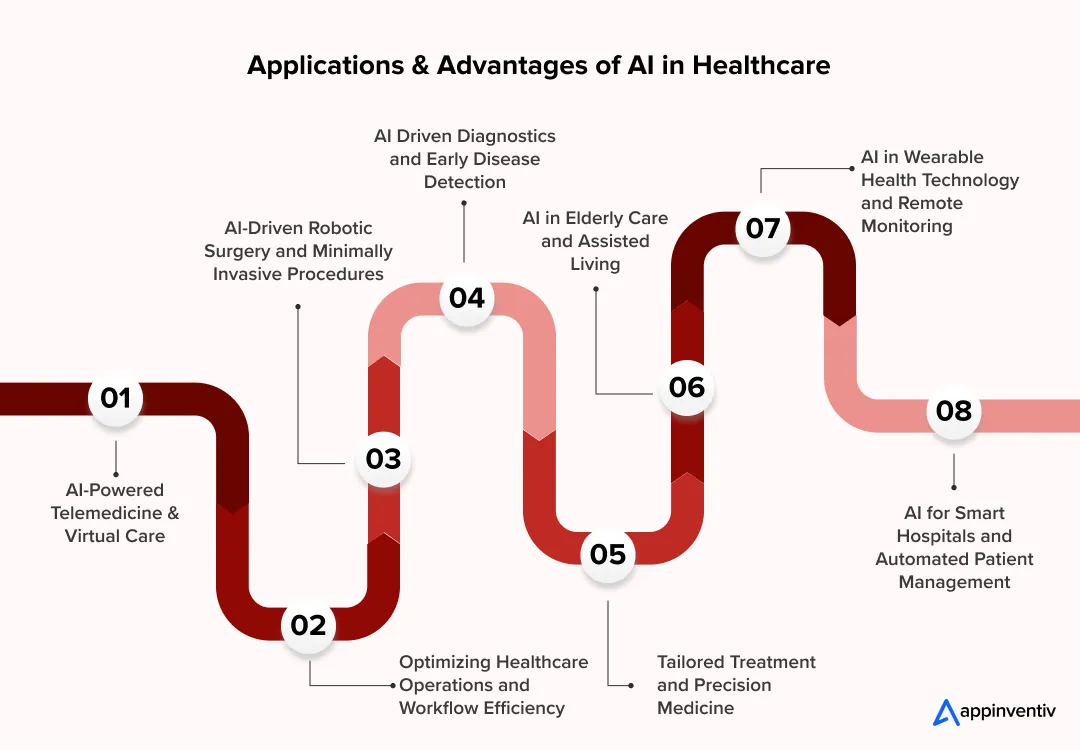
AI-Powered Telemedicine & Virtual Care
The use of AI in telemedicine and virtual care is revolutionizing the healthcare landscape by ensuring 24/7 availability of medical support, especially for individuals in remote areas or those with limited mobility.
AI-powered telemedicine in Dubai is streamlining healthcare delivery by reducing the need for unnecessary hospital visits and easing the burden on healthcare facilities. This advancement enables Dubai to create a more connected, accessible, and patient-centric healthcare system, making it a model for the future of healthcare innovation.
AI-Driven Robotic Surgery and Minimally Invasive Procedures
Robotic-assisted surgery, powered by AI, enhances surgical precision and reduces risks in complex medical procedures across hospitals in the UAE. These advanced robotic systems provide real-time insights, helping surgeons perform intricate operations with greater accuracy and control.
AI-powered surgical automation enables minimally invasive procedures, leading to faster recovery times, shorter hospital stays, and reduced post-surgical complications. Surgeons can also leverage AI-driven simulations for detailed pre-surgical planning, increasing the success rates of complex operations. By integrating AI into surgical practices, the UAE is establishing itself as a forward-thinking, technology-driven healthcare leader.
Optimizing Healthcare Operations and Workflow Efficiency
AI is revolutionizing hospital management in the UAE by automating routine administrative tasks such as appointment scheduling, medical billing, and electronic health record management. This automation reduces paperwork, streamlines workflows, and allows healthcare professionals to dedicate more time to patient care.
The utilization of artificial intelligence in healthcare in the UAE is revolutionizing resource allocation, ensuring the most effective use of medical staff, equipment, and infrastructure. This digital transformation bolsters the UAE’s healthcare system, making it more responsive, efficient, and patient-friendly.
However, automation at this level requires careful budgeting, as healthcare software development costs vary significantly based on integrations, compliance depth, and long-term operational scope.
Also Read: How much does it cost to build a healthcare app in Saudi Arabia
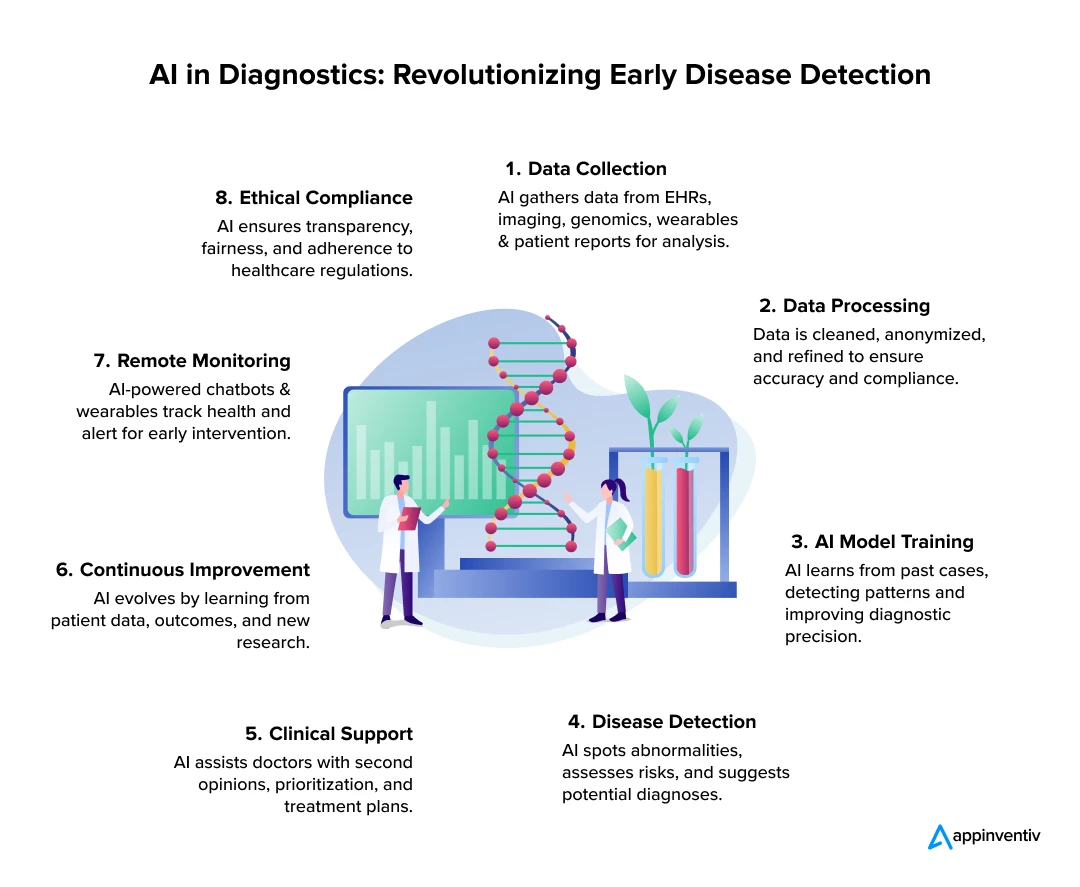
AI Driven Diagnostics and Early Disease Detection
AI-powered medical diagnostic solutions are reshaping medical imaging by accurately detecting diseases such as cancer, cardiovascular conditions, and neurological disorders. These advanced technologies support radiologists in identifying abnormalities at earlier stages, leading to improved patient outcomes and increased survival rates. AI in healthcare in Dubai plays a crucial role in reducing diagnostic errors, ensuring greater precision in medical assessments, and enhancing the overall quality of care.
In Dubai and the wider UAE, AI adoption is already delivering measurable impact. Dubai’s EJADA AI platform, for example, analyzed millions of health records to identify individuals at high risk of diabetes, significantly reducing downstream treatment costs through earlier intervention.
Clinical predictive analytics is also advancing acute care diagnostics. In 2026, healthcare providers in the UAE began using AI-based sepsis prediction systems that can identify risk up to 6 hours earlier than traditional assessment methods. Earlier detection allows faster clinical response, helping reduce complications, hospital stays, and mortality risk.
By incorporating AI into diagnostic workflows, healthcare providers in the UAE can significantly enhance efficiency while reducing the workload on specialists. Faster, AI-assisted diagnoses enable more timely medical interventions, ultimately improving the overall quality of healthcare services.
Tailored Treatment and Precision Medicine
AI empowers healthcare professionals in the UAE to deliver highly personalized treatment plans by analyzing a patient’s genetic data, medical history, and lifestyle habits. This data-driven approach ensures that treatments are tailored to individual needs, increasing effectiveness while minimizing side effects and unnecessary medical interventions.
AI-driven healthcare predictive analytics help doctors identify the most suitable patient therapies, improving treatment outcomes and enhancing recovery rates. This is particularly beneficial for managing chronic conditions such as diabetes, cardiovascular diseases, and cancer. The adoption of generative AI in healthcare in Dubai, UAE, aligns with the country’s commitment to driving an advanced, patient-focused healthcare ecosystem that prioritizes quality and efficiency.
AI in Wearable Health Technology and Remote Monitoring
AI-powered wearable devices in healthcare are revolutionizing how people in the UAE manage their health. These smart devices continuously track vital signs like heart rate, blood pressure, and glucose levels, providing instant alerts if anything seems off. AI-driven remote monitoring allows doctors to monitor patients with chronic conditions, reducing unnecessary hospital visits and ensuring timely interventions.
This is especially valuable for elderly individuals and those managing diabetes or hypertension. By promoting proactive healthcare, AI wearables align perfectly with the UAE’s vision of a tech-driven, healthier future.
At Appinventiv, we developed DiabeticU, a diabetes management app that enables users to manage their condition with accuracy through personalized tools and seamless integration with wearable devices. This same expertise in AI-powered wearables and preventive care also makes us a trusted fitness app development company in Dubai for organizations building regulated, data-secure wellness and remote monitoring platforms.
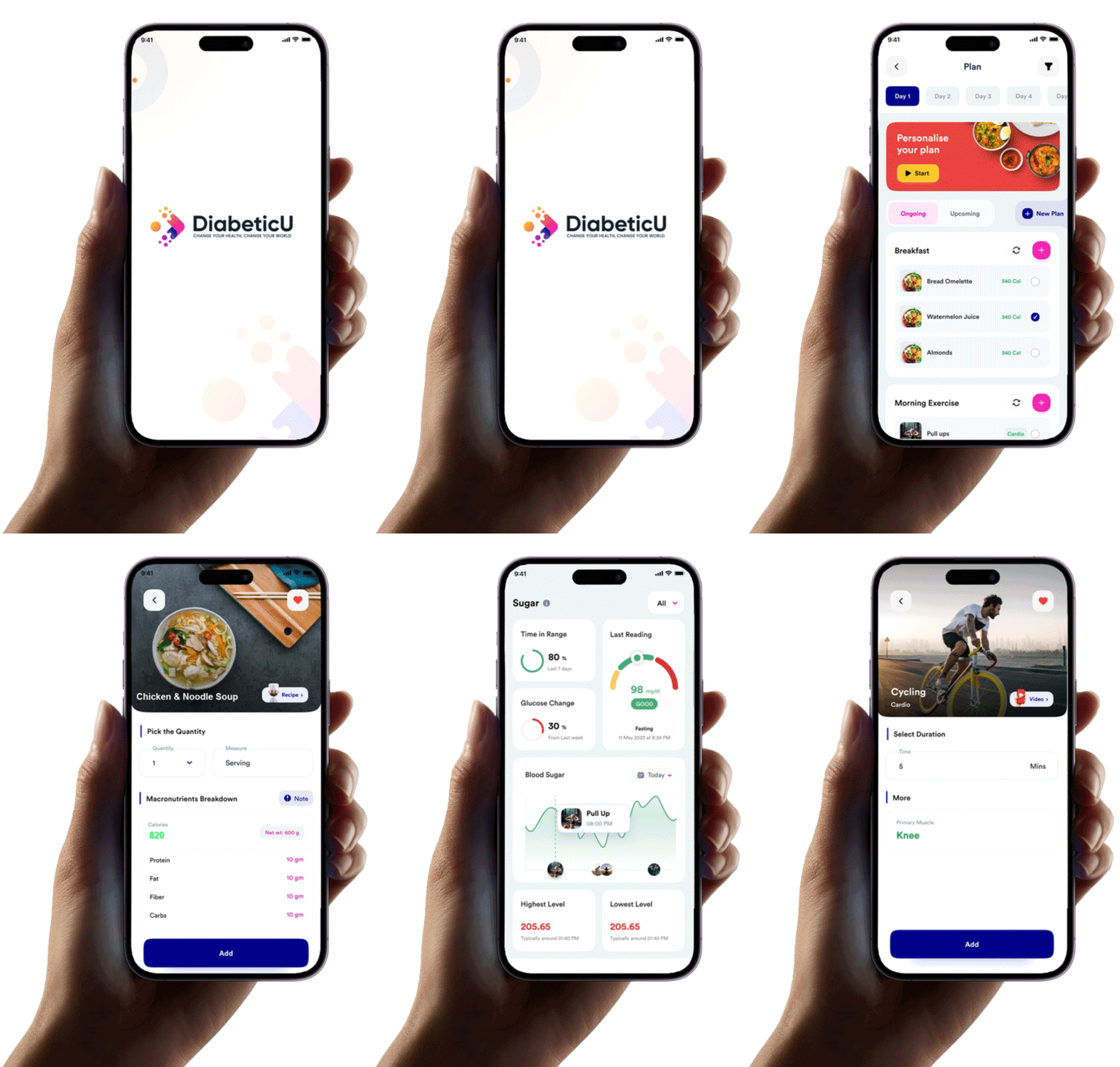
This innovation resulted in improved health outcomes for thousands of individuals dealing with diabetes, giving users the ability to monitor and manage their condition effortlessly.
AI in Elderly Care and Assisted Living
AI is making life easier and safer for senior citizens in the UAE by providing smart health monitoring and assistance. AI-powered virtual caregivers remind elderly individuals to take medications, stay hydrated, and exercise, ensuring they follow healthy routines. Advanced machine learning algorithms detect early signs of cognitive decline, helping in the early diagnosis of conditions like Alzheimer’s and dementia.
AI-powered robotic companions offer emotional support and assist with daily tasks, promoting independence and improving quality of life. With AI-driven elderly care, the UAE is creating a future where seniors receive the support they need while maintaining their dignity and autonomy.
AI for Smart Hospitals and Automated Patient Management
Hospitals in the UAE are becoming smarter and more efficient with AI-driven automation. AI helps manage patient admissions, bed availability, and discharge processes, reducing long wait times and administrative burdens. Predictive analytics ensure hospitals have the right number of doctors and nurses available when needed most.
AI-powered smart hospital systems also monitor air quality, lighting, and sanitation, creating a safer and more comfortable patient environment. By embracing AI in healthcare in Dubai, hospitals are setting new benchmarks in efficiency, patient care, and operational excellence.
AI in Healthcare in Dubai: Real-Life Examples and Success Stories
AI applications in healthcare in Dubai, UAE, are revolutionizing the medical field with innovative solutions that enhance patient care and operational efficiency. Let’s check out some of the top use cases of AI integration in healthcare with real-life examples.
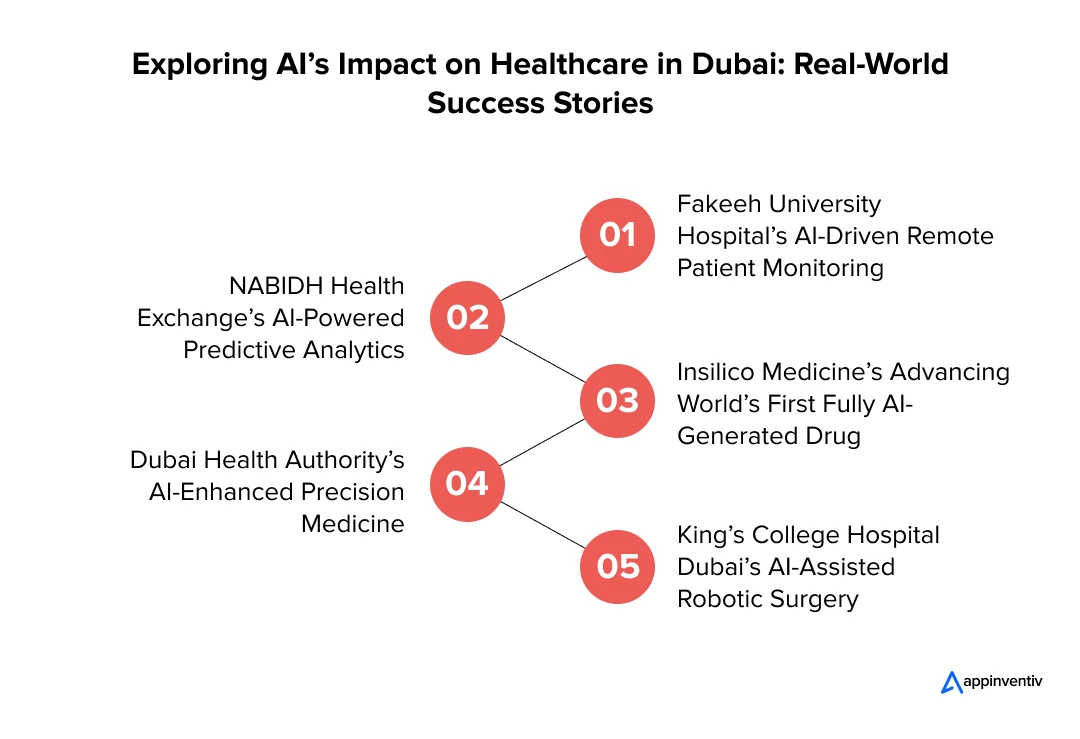
Fakeeh University Hospital’s AI-Driven Remote Patient Monitoring
AI-powered RPM systems help doctors monitor patients with chronic illnesses like diabetes, heart disease, and respiratory conditions remotely. Smart wearables and IoT-enabled devices collect real-time patient data, alerting healthcare providers to abnormalities.
Hospitals like Fakeeh University Hospital integrate AI-driven telemedicine for virtual consultations, allowing patients to receive expert care from home. This reduces hospital visits and improves healthcare accessibility for elderly and high-risk patients. AI algorithms also analyze patient trends, predicting potential health issues before they escalate.
NABIDH Health Exchange’s AI-Powered Predictive Analytics
AI-powered predictive models analyze patient data to forecast disease outbreaks and assess health risks. Dubai’s NABIDH Health Information Exchange leverages AI to track disease patterns and support public health initiatives.
By analyzing health trends, AI helps policymakers and medical institutions prepare for potential health crises. AI also assists in identifying high-risk individuals for conditions like diabetes and cardiovascular diseases. This proactive approach enhances early intervention and reduces long-term healthcare costs.
Insilico Medicine Advancing the World’s First Fully AI-Generated Drug
AI in drug discovery uses advanced algorithms to analyze complex biological data, accelerating the identification of potential drug candidates and optimizing their development.
Insilico Medicine, a pioneering biotech company based in the UAE, has made a breakthrough by advancing the world’s first fully AI-generated drug to clinical trials. Utilizing advanced machine learning algorithms, the company analyzes extensive biological data to predict the effectiveness of potential drug candidates, significantly accelerating the drug development process. This milestone reduces the time and cost of introducing new medications and sets the stage for more targeted and efficient treatments in the future.
Dubai Health Authority’s AI-Enhanced Precision Medicine
AI analyzes genetic data, medical history, and lifestyle factors to create personalized patient treatment plans. Oncology centers in Dubai Healthcare City (DHCC) use AI to tailor cancer treatments based on individual genetic profiles.
This approach enhances treatment effectiveness and minimizes side effects. AI also predicts a patient’s response to different medications, enabling doctors to select the most suitable therapy. With AI-driven precision medicine, Dubai’s healthcare system is advancing toward more targeted and efficient treatment options.
King’s College Hospital Dubai’s AI-Assisted Robotic Surgery
AI-powered robotic systems assist in performing complex surgeries with high precision. Hospitals like King’s College Hospital Dubai use robotic-assisted surgery for orthopedics, urology, and neurology procedures. These robotic systems enhance accuracy, reduce surgical errors, and improve patient recovery times.
AI in healthcare in Dubai is revolutionizing surgical procedures by providing surgeons with real-time insights, ensuring more accurate and effective outcomes. Dubai’s healthcare sector is rapidly adopting AI-driven robotic technology to enhance minimally invasive surgical techniques, improving precision and reducing patient recovery times.
Discover how YouComm revolutionized patient communication and operational efficiency with AI-powered solutions.

How to Implement AI in Healthcare: A Roadmap to Success
Implementing AI in healthcare is transformative and rewarding, but its implementation is not so easy. It requires careful planning, right collaboration, and ongoing evaluation to achieve long-term success. Here’s a step-by-step approach to successfully adopting AI in your healthcare system.
Set Clear Goals and Identify Key Areas
Don’t just chase the “AI” buzzword because it’s trending in the region. You need to identify exactly where your operations are bleeding efficiency. Are your outpatient wait times driving patients to competitors? Is the back-office drowning in insurance claim rejections? Pick a specific battle. Whether it’s automating appointment scheduling or using predictive diagnostics for chronic conditions like diabetes, the goal isn’t to “do AI”; it’s to solve a business problem that actually affects your bottom line. Start small, prove the value, and ignore the rest for now.
Partner with AI Consultants
It is tempting to think your internal IT team can handle this, but enterprise AI is a different beast. You need strategic advisors. Bring in consultants who understand both the clinical workflow and the technical architecture. They can help you distinguish between a flashy tool and a solution that actually delivers ROI. Their job is to translate your clinical frustrations into technical blueprints that engineers can actually build.
Review Your Data and Ensure Accuracy
Here is the hard truth: most hospital data is messy. If you feed an algorithm unstructured, error-prone records, you are just going to automate bad decisions. Before you spend a dirham on software, audit your archives. Are the patient files standardized? Is the historical data clean? In the UAE context, you also need to make sure your data formats play nice with future interoperability standards in healthcare. If the foundation is cracked, the house will fall. So, you need to fix the data first.
Collaborate with an AI Development Company
When vetting vendors, look past the glossy slide decks. You need a partner who understands the Middle East market, not just someone reselling a generic tool from Silicon Valley. Does the system handle Arabic dialect nuances in Natural Language Processing? Do they understand local insurance codes? You want a partner willing to get in the trenches with you for the long haul, not a vendor who disappears once the license fee clears.
Test AI with a Pilot Program
Never roll out a new system across the entire hospital network on day one. That is a recipe for operational chaos. Create a “sandbox” environment – maybe just the radiology department or a single patient triage unit. Run the system there for a quarter. This gives you a safe space to break things, find bugs, and crucially see how the staff actually interacts with it. If it fails here, you haven’t sunk the whole ship. If it works, you have a case study to show the board.
Integrate with Existing Systems
Siloed AI is useless AI. Your new solution must talk to your Electronic Health Records (EHR) and other core systems. In Dubai, this often means ensuring compatibility with platforms like Nabidh (Dubai’s Health Information Exchange). If your AI generates a diagnostic insight but doesn’t automatically log it into the patient’s file on the central exchange, you have just created more administrative work for your doctors, not less.
Invest in Strong Data Infrastructure
You cannot run Ferrari software on a tractor engine. Real-time processing, especially for medical imaging or genomic data, requires serious compute power. You’ll need to make a hard call on infrastructure: on-premise, cloud, or hybrid? For most Dubai enterprises, a hybrid model works best, balancing the raw speed needed for diagnostics with the security protocols required for sensitive data. Don’t skimp here; latency kills adoption.
Provide Training for Healthcare Teams
The biggest barrier isn’t the code; it’s the culture. The best algorithm will fail if your doctors and nurses refuse to use it. Show your clinical staff that the AI is there to handle the mundane tasks like transcription or data entry so they can spend more time caring for the patient. When staff see AI as a “co-pilot” rather than a replacement, adoption rates soar.
Keep Monitoring and Improving
Go-live is just the starting line. AI models drift. Over time, as patient demographics shift or operational habits change, the algorithm’s accuracy can degrade. You need a governance team that reviews performance metrics quarterly. Is the prediction still sharp? Is the ROI still there? Treat the AI like a new employee; it needs regular reviews and feedback to keep performing at a high level.
Ensure Compliance with Regulations & Ethics
This is where you protect the business. In Dubai, the regulatory landscape is strict and evolving. You must align with the DHA’s standards and the UAE’s Federal Decree-Law on Personal Data Protection. Data sovereignty is key here. Ensure patient data stays within the UAE borders unless explicitly authorized otherwise. Your implementation plan must have compliance baked in from day one, not bolted on as an afterthought. One privacy breach can destroy your reputation. Also, ethical considerations, such as transparency, accountability, and patient consent, should be woven into the implementation process to avoid misuse or biased AI outcomes.
Expand AI Use Across Your Organization
Once the pilot holds up and the bugs are squashed, hit the accelerator. Take the wins from your test department and roll them out to other units. If the scheduling AI worked for radiology, adapt it for oncology. This is where the economies of scale kick in. You stop being a hospital that “tries” AI and become a smart, data-driven enterprise.
Let’s discuss how we can guide you through every step of the process, from strategy to execution.

The AI Technology Stack That Dubai Healthcare Providers Actually Need
If you want to build an AI capability that survives a DHA audit and actually integrates with Nabidh or Malaffi, you can’t just stitch together some open-source libraries. You need an “engine room” that is robust, compliant, and capable of handling massive throughput without crashing your EHR.
For a Dubai-based enterprise, your AI tech stack has to solve three specific problems: Data Sovereignty (keeping patient records inside the UAE), Interoperability (talking to government exchanges), and Latency (processing data fast enough for clinical use).
Keeping this in consideration, here is the straightforward architecture that successful healthcare groups deploy in the region:
| Component Layer | Recommended Technologies | Why It Matters for Dubai Healthcare |
|---|---|---|
| Cloud Infrastructure (Data Residency) | Microsoft Azure (UAE North) or AWS Middle East (UAE Region) | You cannot host sensitive patient data on servers in Europe or the US. You need local hyperscalers to ensure you comply with UAE data sovereignty laws while getting low-latency performance. |
| Data Management (The “Lake”) | Snowflake or Databricks | Medical data is messy – images, PDFs, and doctor’s notes. These platforms allow you to dump unstructured data, clean it up, and make it usable for algorithms without breaking your legacy SQL databases. |
| Machine Learning Frameworks | PyTorch or TensorFlow | These are the industry standards for building the actual models. Whether you are doing image recognition for radiology or predictive analytics for patient churn, this is where the math happens. |
| Deployment & MLOps | Kubeflow or Docker/Kubernetes | Once you build a model, how do you keep it running? These tools containerize your AI, making it easy to update and manage without taking down your whole system. |
| Security & Governance | Palo Alto Networks & Azure Sentinel | Cybersecurity is non-negotiable. These tools monitor for anomalies in real-time, ensuring that your AI access points don’t become backdoors for hackers trying to steal patient IDs. |
| Core AI Models (Vision & Text) | Computer Vision for Radiology & Clinical NLP | This is the “eyes and ears” of the system. You need specialized models to scan X-rays for anomalies and NLP to parse messy, unstructured doctor notes (often in mixed English/Arabic) into usable data. |
| GenAI & Decision Support | LLM-based Doctor Assistants & Predictive Modeling | Move beyond chatbots. Use LLMs to draft discharge summaries or insurance appeals. Use predictive modeling to flag at-risk diabetic patients before they end up in the ER. |
| Privacy-Preserving Learning | Federated Learning Frameworks (e.g., NVIDIA FLARE) | This is critical for research. It allows you to train AI models across different hospitals without ever moving the actual patient data, keeping privacy 100% intact while getting smarter insights. |
| Integration & Interoperability | Mirth Connect or Intersystems Iris | The plumbing. These tools translate AI insights into HL7 FHIR standards, which is the language required to sync with the Nabidh exchange. Without this, your AI is an island. |
| MLOps & Governance | MLOps + Monitoring for Compliance (e.g., Kubeflow, weights & biases) | Models break. Data drifts. You need an MLOps pipeline that not only deploys the code but actively monitors it for bias or errors, generating the audit trails DHA inspectors will ask for. |
Overcoming the Challenges of AI Implementation in Healthcare
Implementing AI in healthcare brings significant advancements but its implementation comes with some serious challenges. For healthcare providers and decision makers, it is imperative to overcome these obstacles to unlocking AI’s full potential in improving patient care and operational efficiency. Here are some of the most common pitfalls that hospitals and clinics often face when implementing AI in UAE’s healthcare sector and share the strategies to overcome them:
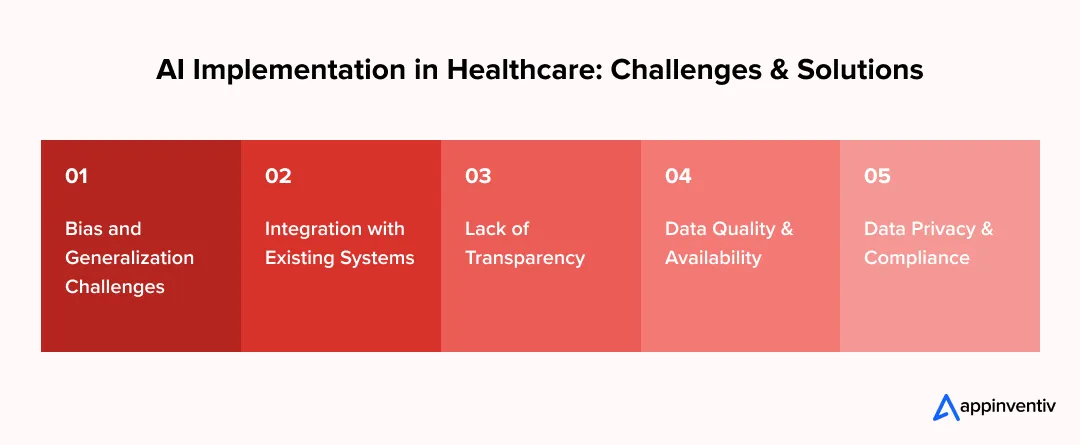
Bias and Generalization Challenges
Limitation: AI systems may face challenges in generalizing across the UAE’s diverse population. This can lead to biased or inaccurate outcomes, especially if training datasets lack sufficient representation of various demographics.
Solution: To address this issue, AI models must be trained on diverse, representative datasets that reflect the full spectrum of patient demographics, ensuring that the technology delivers more accurate and inclusive predictions.
Integration with Existing Systems
Limitation: Many healthcare institutions in the UAE still rely on legacy systems, which can create barriers to effectively integrating AI technologies and optimizing healthcare operations.
Solution: Modernizing the country’s healthcare infrastructure by upgrading legacy systems with AI and ensuring AI compatibility will facilitate smoother integration. This will enable healthcare providers to leverage AI’s full potential and deliver more efficient care.
Lack of Transparency
Limitation: Many AI algorithms used in healthcare systems, particularly deep learning models, operate as “black boxes,” which makes it difficult for healthcare providers to understand how decisions are made or trust AI recommendations.
Solution: By investing in explainable AI (XAI) technologies, Dubai can ensure that healthcare professionals gain insight into AI decision-making processes. This approach will help improve transparency, trust, and the effective application of AI in clinical environments.
Data Quality and Availability
Limitation: In the UAE’s healthcare sector, AI technologies depend on large, high-quality datasets. But data across various healthcare systems can be fragmented, incomplete, or unstructured, which can limit the effectiveness of AI models.
Solution: To enhance AI accuracy, the UAE needs to standardize healthcare data and improve interoperability between different systems, allowing for seamless data sharing and better utilization of AI technologies.
Data Privacy and Compliance
Limitation: Data privacy and compliance are critical concerns in healthcare, particularly when implementing AI. With stringent regulations like HIPAA and the UAE’s local data protection laws, ensuring that AI systems comply with these standards is a complex challenge, especially when handling sensitive patient information.
Solution: To address this, healthcare providers must work closely with an experienced healthcare software development company that is efficient in developing fully compliant healthcare products with the power of AI.
The Cost of Implementing AI in Dubai’s Healthcare Sector
There is no single price tag for “AI”; the cost of AI implementation in healthcare in Dubai depends entirely on your compliance burden and integration depth. A standalone pilot is a relatively cost-effective choice, but once you need to integrate with Nabidh, host data locally on Azure UAE North or G42, and pass a DHA security audit, the investment scales significantly. You aren’t just paying for development; you are paying for the data governance and security infrastructure required to operate legally in the UAE.
Here is the estimated capital requirement for different tiers of AI implementation in healthcare:
| App Complexity / Type | Estimated Cost Range in USD | Estimated Cost Range in AED |
|---|---|---|
| Simple Healthcare App | $40,000 – $100,000 | ~AED 146,800 – AED 367,000 |
| Medium Complex App | $100,000 – $200,000 | ~AED 367,000 – AED 734,000 |
| Advanced App | $200,000 – $300,000 | ~AED 734,000 – AED 1,101,000 |
| Enterprise‑Grade App | $300,000 – $400,000+ | ~AED 1,101,000 – AED 1,468,000+ |
Future of AI in UAE’s Sprawling Healthcare System
UAE’s healthcare system is poised for a transformative shift, with AI technologies pivotal in reshaping medical services. The future of AI in healthcare in Dubai, UAE, will be defined by innovations such as generative AI, large language models (LLMs), and digital twins, revolutionizing diagnostics, personalized treatment, and medical research. Here is what that actually looks like on the ground:
Generative AI & LLMs: The End of Admin Burnout
The real value of Generative AI in healthcare in Dubai, UAE, isn’t in replacing doctors; it’s in saving them from paperwork. In Dubai’s high-volume facilities, LLMs will act as the “always-on” scribe, drafting insurance pre-authorizations and summarizing complex patient histories in seconds. This shifts the metric from “patients seen per hour” to “quality time per patient.”
Digital Twins: Simulating Before Spending
Before we build a new wing or change an ER workflow, we will test it digitally first. Digital twins in healthcare allow Dubai’s hospital operators to create exact virtual replicas of their facilities. We can simulate a massive influx of medical tourists or a sudden pandemic spike to see where the bottlenecks break before they happen in real life. It is the ultimate tool for operational de-risking.
The “Metaverse” as a Clinical Tool
Forget the gaming hype. For the UAE, immersive virtual environments mean expanding the borders. It allows a specialist in Dubai Healthcare City to consult continuously with a patient in Riyadh or London in a 3D space that feels like a physical room. It also revolutionizes training, allowing junior surgeons to practice complex procedures in a risk-free virtual theater before ever touching a scalpel.
The future of AI in healthcare is not just about cool tech. It is about cementing Dubai’s status as a global medical tourism destination. International patients don’t just travel for doctors anymore; they travel for efficiency, safety, and speed. By embedding these technologies, UAE healthcare providers stop competing on price and start competing on outcomes.
Achieve Seamless AI Integration in Healthcare with Appinventiv Dubai
The UAE isn’t just adopting AI; it is regulating it. With strict mandates from the DHA and MOHAP, and local innovations like Med42’s clinical language model and AIRIS-TB setting the pace, the bar for entry is high. You cannot just deploy generic AI in healthcare in Dubai. You need Arabic-language capabilities, robust data residency protocols, and a trusted AI development company in Dubai that knows how to navigate the local red tape.
This is where Appinventiv Dubai operates. We aren’t just a healthcare app development company; we are a local fixture with 10+ years of experience in the region. We operate out of 5+ international offices, including a dedicated hub right here in Dubai. We understand that in this market, “compliance” is just as important as “code.”
We maintain a 95% client satisfaction rate because we focus on outcomes. Whether it is deploying Clinical NLP that understands regional dialects or setting up secure cloud environments that respect local sovereignty, we build systems that work. Our team of 1600+ tech experts builds hybrid deployment models that respect local compliance expertise while delivering global-grade performance.
- Look at Health-e-People: We didn’t just build an app; we overhauled their entire record management flow, connecting patients and caregivers in a way that actually made sense to the users.
- For Soniphi, we engineered platforms that turned raw data into patient care, securely and efficiently.
The Metrics That Matter: We have spent a decade modernizing legacy enterprise workflows and executing 12+ government & compliance programs. We don’t guess; we execute.
Our Regional Impact at a Glance:
- 35+ Industries Served in the Middle East
- 20+ Strategic Partnerships in the UAE
- 3+ Regional Excellence Centers established
- Zero compromise on data sovereignty or compliance
If you want to move beyond the hype and actually deploy intelligent solutions that work with your existing infrastructure, let’s talk. We have the regulatory knowledge, the tech stack, and the track record to get you there.
FAQs
Q. How is AI transforming the UAE healthcare ecosystem?
A. Here’s how advanced technologies like Artificial intelligence in UAE’s healthcare industry play a significant role:
- Telemedicine: AI-powered virtual assistants and telemedicine apps enable remote consultations, making healthcare more accessible.
- Disease Surveillance: AI monitors and predicts disease outbreaks, supporting quicker and more effective public health responses.
- Operational Efficiency: AI automates administrative processes, allowing healthcare professionals to focus more on patient care.
- Improved Diagnostics: AI tools like Med42’s Clinical Language Model and AIRIS-TB enhance the accuracy and speed of diagnoses.
- Pharmacy: Pharmacy software development in the UAE uses AI to support demand forecasting, inventory management, prescription processing, personalized medicine reminders, and patient support.
- Personalized Treatment: AI assists in customizing treatment plans and identifying potential health risks for better prevention.
- Radiology & Imaging: AI automates radiology tasks, such as interpreting X-rays, easing the workload on radiologists and increasing efficiency.
- Accelerated Medical Research: AI analyzes extensive datasets to speed up drug discovery and research advancements.
- Quality Control: AI helps maintain healthcare quality and regulatory compliance, as demonstrated by the Honey Quality Laboratory.
Q. What is the cost of implementing Artificial Intelligence in healthcare in the UAE ?
A. The cost of implementing Artificial Intelligence in healthcare in the UAE can range from $40,000 to $400,000 (AED 146,800 to AED 1,468,00+). For instance:
Smaller-scale projects, such as AI-powered diagnostic tools, may cost around $40,000 to $100,000 (AED 367,000 – AED 734,000), while larger-scale implementations, including hospital-wide AI systems, can range from $300,000 – $400,000+ (AED 1,101,000 to AED 1,468,000+). Ongoing maintenance and compliance may add another $10,000 to $50,000 (AED 36,700 to AED 183,500) annually.
To know more about the cost of implementing AI in healthcare in Dubai, connect with our experts today!
Q. What are the benefits of AI in healthcare?
A. Here are some of the key benefits of implementing AI in healthcare systems:
- Faster Drug Development
- Operational Efficiency
- Improved Diagnosis
- Predictive Capabilities
- Cost Efficiency
- Continuous Monitoring
- Telemedicine Support


Fast 2-minute response, fully NDA-protected.
AI in Fuel Distribution: Costs, Compliance, Rollout
Key takeaways: Fuel accounted for $0.482 of the $2.336 it cost to run a Class 8 truck a mile in 2025, which makes every distribution decision a margin decision. Sequence by payback, not ambition. Tank-level runout prediction and wet stock anomaly detection return in 3 to 8 months. Predictive maintenance takes 8 to 14. Budget…
AI Coding Agent Development Cost: Enterprise Pricing, Architecture & ROI Guide (2026)
Key takeaways: Custom AI coding tools cost between $50K and $500K. Internal system design and software links drive the total price. Future running fees stem from token bills, server hardware, company rules, and tool tracking, not just initial construction. Multiple coordinated agents, data-search tools, and operational links deliver superior financial returns. These advanced features require…
Key takeaways: Regional hosting alone does not guarantee sovereign control over AI processing, logs, backups, encryption keys, or administrative access. Sovereign infrastructure creates the most value for regulated data, critical operations, proprietary knowledge, and AI agents connected to enterprise systems. Geopatriation brings sensitive AI workloads closer to their country of origin, reducing regulatory and geopolitical…