























English-Arabic App Development: Key Business Challenges and How to Solve Them


- The MENA Market Reality: Why English-Arabic App Development Is Booming
- Overcoming the Hidden Challenges in English-Arabic App Development
- Best Practices for Building Next Gen English-Arabic Apps
- Core Arabic-First Feature Set That Defines a Next-Gen English–Arabic App
- Optimizing Arabic App Development with the Right Technical Tools
- The Enterprise ROI: Understanding the Cost of English–Arabic App Development
- The Long-Term Strategy for Monetizing Arabic Apps
- Key Actions to Ensure Your Arabic App Success in the MENA Region
- Real World Examples of Applications That Prove the Power of Authentic Arabic Localization
- How Businesses Should Approach English–Arabic App Development
- Why Global Brands Choose Appinventiv for Arabic App Development Success
- FAQs

Key takeaways:
- Localization is More Than Translation: Success in MENA requires adapting to RTL design, regional dialects, and cultural nuances, not just translating text.
- Strategic Localization is Key: Tailoring the app experience for MENA means choosing the right dialects, optimizing RTL navigation, and ensuring cultural relevance.
- Real-World Success Stories: Companies like Careem and Anghami succeeded by focusing on cultural intelligence and localizing their user experiences.
- High Cost and Time Investment: Developing Arabic apps involves higher costs and extended timelines due to design complexity and rigorous testing.
In today’s Middle East market, one of the most frustrating problems for enterprise app owners is this: you build a great digital product, polished UI, seamless flows, robust features, but it still underperforms in the Arabic‑speaking world. Why? Because many apps simply don’t speak the language of the user. Not just literally, but culturally, visually and functionally, which creates some of the most common Arabic app localization challenges in the region.
When an app offers only an English interface (or a poorly localized Arabic version), it fails to engage the Arabic‑first majority. That leaves huge opportunities on the table: higher churn, lower conversion, weaker loyalty, and ultimately a lower ROI.
Consider your own app usage – how long do poorly translated, clunky apps stay on your phone? Minutes, maybe hours. Users delete apps quickly when experiences feel obviously foreign. They look for local alternatives that understand the market.
Opting for English-Arabic app development changes that. A professionally built bilingual app development approach isn’t just about offering two languages; it’s about giving each user the experience they expect: seamless switching between English and Arabic, proper right‑to‑left (RTL) UI, culturally‑aligned copy, region‑specific workflows, and local market optimisation.
The Arabic‑language segment has been a business imperative today. For decision‑makers in the region, the message is clear: if you want your app to succeed, you have to consider both English & Arabic users from Day 0. The choice? Invest wisely in authentic bilingual app development now, or join the expensive trial-and-error club later.
In this blog, we’ll explore how to build a high‑performing English‑Arabic app, highlight the core business challenges you’re likely to face, offer proven solutions tailored to the Middle East, and help you understand the features, cost‑drivers and ROI that bilingual apps deliver.
The MENA Market Reality: Why English-Arabic App Development Is Booming
While other companies move fast to capture MENA opportunities, many executives underestimate how quickly this market is expanding. Saudi Arabia’s mobile app development sector hit $1.99 billion in 2024 and forecasts show it reaching $5.70 billion by 2033 – that’s 11.10% annual growth. These numbers indicate the kind of market shift that creates lasting competitive advantages for early movers.
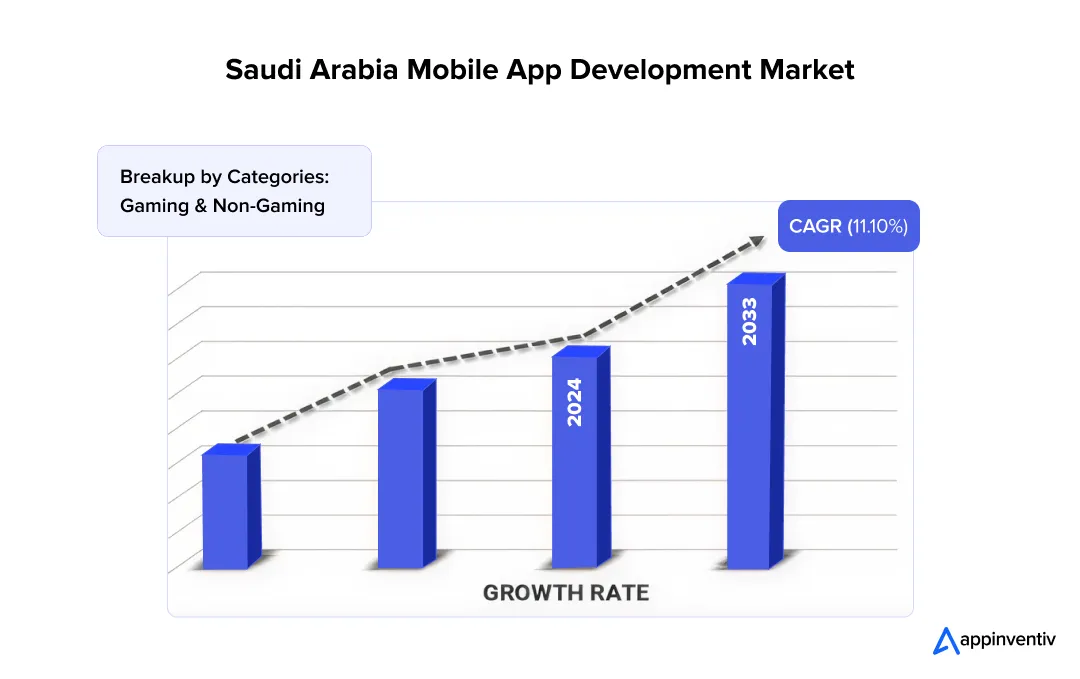
The numbers driving this growth should inform your strategic planning:
- User Engagement: Saudi users spend nearly 5.5 hours daily on mobile apps, with 13.8 billion new apps and games downloaded across MENA in 2022.
- Market Sophistication: These aren’t users who accept substandard localization; they demand authentic bilingual experiences
- Strategic Timing: Early movers in English-Arabic development are establishing sustainable competitive advantages
English-Arabic app development, when approached as bilingual app development rather than basic translation — goes beyond entering new markets; it creates real competitive advantages. Due to several challenges in developing multilingual applications including common Arabic app localization challenges, it takes careful planning that affects your whole development process, from how designers work to how teams manage projects. Most companies see this complexity as a problem, but smart executives understand it protects them from competition.
Here’s the opportunity: while other companies struggle with right-to-left layouts and cultural adaptation, you can build bilingual experiences that users actually want to use. Companies that figure out English-Arabic development don’t just enter markets; they dominate them because the technical challenges keep most competitors out.
Overcoming the Hidden Challenges in English-Arabic App Development
Let’s have an honest conversation about what you’re really signing up for. Most executives walk into Arabic expansion thinking it’s just another localization checkbox on their roadmap. But it is not that easy. The challenges in Arabic app development, especially in bilingual app development, will test every assumption you have about app development timelines, budgets, and user experience.
But here’s the thing – every challenge we’re about to explore has already been overcome by companies just like yours. The difference? They approached it as a strategic business initiative, not a technical afterthought. Let’s explore some of the key challenges that businesses face during English–Arabic app development and how you can overcome them:
| Challenge Area | Core Problem | Strategic Solution | Timeline | Success Indicator |
|---|---|---|---|---|
| Language Strategy | MSA vs regional dialect dilemma | Start with MSA, then layer regional expressions | 6-8 weeks research + phased rollout | Increased user engagement in target regions |
| RTL UX Implementation | Arabic flow impacts user journey & navigation | Build RTL-first design system during architecture phase | 8-12 weeks design + dev | Lower bounce rates, smoother user flow |
| Testing & QA | Standard QA misses cultural nuances and Arabic-specific issues | Set up Arabic-specific QA workflows with native expertise | 4-6 weeks setup + ongoing | No cultural issues post-launch |
| Governance & Localization | No ownership causes delays & inconsistencies | Centralize localization ops with a program manager | 2-4 weeks setup + ongoing | Faster content updates (days vs weeks) |
| Compliance & Culture | Varying MENA regulatory and cultural requirements | Partner with local consultants + integrate review checkpoints | 4-6 weeks consultation + workflow | Zero regulatory issues, positive cultural feedback |
| Budget & Cost Control | Localization costs 40-60% higher than expected | Budget realistically and treat as strategic investment | Immediate adjustments | On-budget delivery, sustainable advantage |
Language Strategy
Challenge: You’re sitting in a boardroom right now, and someone just asked, “Do we go with Modern Standard Arabic or regional dialects?” This isn’t just a linguistic decision, it’s a market positioning choice that will define how 411 million users perceive your brand.
Choose MSA (Modern Standard Arabic ), and you get broad understanding but potentially lose emotional connection. Go with Egyptian or Gulf Arabic, and you create deeper bonds but risk alienating other regions.
Solution: Start with comprehensive user research in your target markets, and we mean real research, not just surveys. The smartest companies begin with MSA for universal understanding, then layer in regional expressions for key emotional touchpoints like onboarding and notifications.
This phased approach lets you test actual user preferences rather than making million-dollar guesses. Think of it as building a linguistic bridge that gets stronger with each regional layer you add.
Related: How to Build a Push Notification Strategy For Higher Conversions
Right-to-Left (RTL) UX Platform Implementation
Challenge: This is where your development team is going to look at you like you’ve asked them to rebuild the app from scratch, because in many ways, you have. Arabic’s right-to-left flow doesn’t just flip text; it transforms how users expect to navigate, where they look for buttons, how progress flows, and even the direction they swipe.
Your beautifully crafted left-to-right user journey becomes confusing and counterintuitive overnight.
Solution: Build RTL considerations into your mobile app design system from day one, not as a post-launch scramble. Leading companies create RTL-first prototypes during the initial design phase, treating this as core architecture rather than a feature add-on.
Yes, this extends your design timeline, but it actually reduces overall development time and prevents those expensive “we need to redesign everything” conversations six months later. Your designers might resist initially, but they’ll thank you when they’re not rebuilding interfaces under deadline pressure.
Testing and Quality Assurance
Challenge: Your current QA team can catch bugs, but can they spot when your app accidentally displays content that’s culturally inappropriate during Ramadan? Can they identify when your Arabic text expansion breaks your carefully designed interface layouts?
Standard testing protocols miss the nuanced issues that can frustrate your Arabic users and make them delete apps within minutes of download.
Solution: Establish dedicated Arabic QA workflows with native speakers who understand both technical requirements and cultural context. This isn’t just about hiring Arabic-speaking testers; it’s about building cultural intelligence into your quality process.
The importance of market-specific localization becomes your secret weapon when users choose your culturally-aware app over technically perfect but culturally clueless competitors. Budget for extended testing cycles, because catching these issues pre-launch costs a fraction of fixing them after angry user reviews start flooding in.
Governance and Localization Ops
Challenge: Right now, you’re probably thinking, “Who’s going to own this process?” Without clear ownership, your Arabic content becomes an orphan; updates get delayed, consistency disappears, and different teams start making conflicting decisions about terminology and cultural appropriateness.
In such a situation, you might find yourself in endless coordination meetings while your launch dates delay and your competitors gain ground.
Solution: Create a centralized localization operations framework with defined roles, approval workflows, and development of content management systems that handle bilingual updates seamlessly.
Assign a dedicated localization program manager who owns the entire workflow from initial translation to post-launch content updates. This professional becomes your cultural guardian and operational coordinator. Trust us, this role pays for itself within the first quarter when you’re not scrambling to coordinate updates across multiple time zones and departments.
Compliance and Culture
Challenge: Every MENA country has different data privacy laws, cultural sensitivities, and regulatory requirements. Use the wrong imagery in Saudi Arabia, mishandle data in the UAE, or ignore cultural norms during religious periods, and you’re not just losing users; you’re potentially facing regulatory scrutiny and brand damage that takes years to repair.
Solution: Partner with legal experts and a localized mobile app development company in Dubai, UAE, early in your planning phase. Build cultural review checkpoints into your development process at every stage.
This proactive approach prevents those “Oh no, we need to pull the entire campaign” moments that keep executives awake at night. Think of cultural compliance as brand insurance; you’re not just avoiding mistakes, you’re building authentic trust that becomes a sustainable competitive advantage.
Estimation and Cost Control
Challenge: Here’s the conversation nobody wants to have but everyone needs to. The real cost to localize an app into Arabic is going to be 40-60% higher than whatever number you’re looking at right now.
That’s not a developer’s fee; that’s the reality of design rework, extended QA cycles, specialized development resources, cultural consultants, and ongoing operational overhead that nobody factored into the original budget.
Solution: Budget realistically from the start and build in iteration cycles based on user feedback. The companies succeeding in MENA markets treat this as a strategic investment in market leadership, not a cost to minimize.
Frame it this way to your board: you’re not just localizing an app, you’re building sustainable competitive advantage in a 411 million-user market. The alternative is watching competitors capture market share while you’re stuck in budget revision meetings and scope reduction discussions.
Must Read: Redefining Mobile App Development Success in the Middle East – 6 Business Case Studies
Best Practices for Building Next Gen English-Arabic Apps
Navigating the complexities of bilingual app development for English and Arabic requires a proactive and meticulous approach. Moving from challenge to solution means embedding best practices into every stage of the product development, from initial concept to post-launch support. Here is how you can cover this journey successfully:
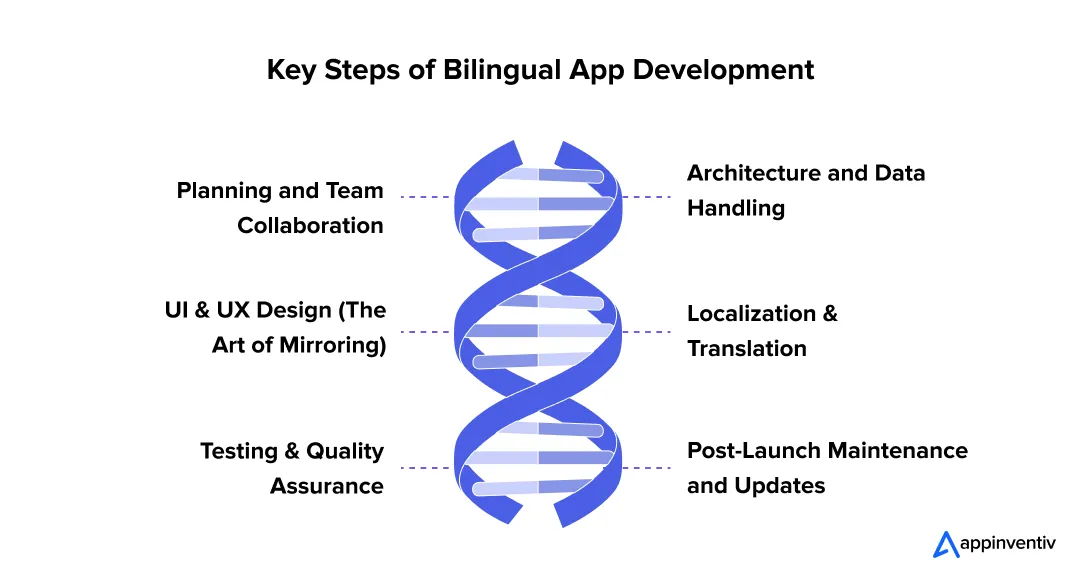
1. Planning and Team Collaboration
Successful Arabic app development starts way before developers write any code. The projects that work best treat localization like a fundamental product requirement instead of something you add later. The key actions at this stage include:
- Know Your Audience: Figure out whether your users are primarily Arabic-first, English-first, or bilingual. This initial step will help you make informed decisions about app content, layout, and even cultural nuances.
- Early Decision-Making: Critical choices happen during initial planning phases. You need to identify which Arabic-speaking markets you’re targeting, pick the right dialects for those regions, and create a consistent vocabulary that everyone on your team uses throughout development.
- Involve Native Expertise: Having fluent Arabic speakers and cultural experts on your team from the beginning makes a huge difference. These people should work directly with your designers, developers, and testers to give ongoing feedback on everything from button placement to how your marketing messages sound to native speakers.
2. Architecture and Data Handling
Building a solid technical foundation makes bilingual apps work smoothly. Your app’s design structure needs to handle both languages from the ground up. Key considerations of this phase include:
- Structure for Seamless Switching: Users should be able to switch between English and Arabic anywhere in the app without losing their place or data. This means careful planning of how the app stores information and keeping content separate from interface design.
- Database and Property File Management: Set up all databases with UTF-8 encoding so Arabic characters display correctly. Put all user-facing text in separate resource files (like .strings files for iOS or strings.xml for Android) so translators can work on the language without touching your actual code.
3. UI & UX Design (The Art of Mirroring)
This stage determines whether Arabic users actually want to use your app. Creating a truly native experience requires understanding LTR and RTL app development best practices beyond simple translation. Key elements of UI/UX design at this phase are:
- Mirroring Layouts: Everything flips – navigation menus open from the right side, back arrows point right instead of left, and list items put icons on the right with text flowing left. Your entire interface hierarchy reverses.
- Mastering Margins and Padding: Spacing that looks good in English needs adjustment for Arabic. If you added extra padding on the left side for English layouts, that same padding goes on the right side for Arabic versions.
- Choosing Appropriate Fonts: Arabic script needs specific fonts that work well on mobile screens. Pick Arabic fonts for mobile apps that stay readable at different sizes since Arabic text often looks denser than English text.
- Adapting Visuals for Cultural Relevance: Images and icons mean different things in different cultures. A thumbs-up might offend users in certain Middle Eastern regions. Review all visual elements to make sure they work positively with your target audience.
4. Localization & Translation
Quality translation drives successful Arabic mobile app localization. This process focuses on conveying meaning and cultural context, not just converting words. Key considerations of this phase are:
- Manual vs. Automated Translation: Machine translation works for rough drafts but never for content users actually see. Automated tools miss context, tone, and cultural meaning that human translators catch. Professional human translators are essential for quality results.
- Handling Dialects: When supporting regional variations, your translation team needs expertise in those specific dialects. Words common in Egypt might confuse Saudi users, so regional knowledge matters.
- Ensuring Context-Aware Translations: Translators need to understand how text gets used. Give them screenshots, design mockups, and explanations of where each piece of text appears. The word “Play” translates differently for videos, games, or music, so context determines accuracy.
5. Testing & Quality Assurance
Quality assurance becomes your final protection against user experience problems. Your team needs to verify that every screen works properly in both languages and layout directions. Key action steps of this phase include:
- Comprehensive Device Testing: Test on actual devices popular in MENA markets. Different operating system versions handle RTL layouts differently, so check for inconsistencies across iOS Arabic support / Android Arabic support implementations.
- Pseudo-Localization: Before translating, use pseudo-localization tools that replace normal text with longer, accented characters. This reveals UI elements that might break, overflow, or fail with non-Latin scripts before translation costs pile up.
- Involving Native Speakers: Native Arabic speakers must handle final quality checks. They spot subtle layout problems, awkward phrasing, and cultural issues that automated tests and non-native speakers miss. This step proves critical for successful English–Arabic app development.
6. Post-Launch Maintenance and Updates
Once your app is live, continuous maintenance is essential to ensure it remains functional and relevant in both languages. The actions you need to perform at this stage include:
Monitor User Feedback: Stay proactive by gathering feedback from both Arabic and English users. Address any issues that were missed during testing and make improvements based on their input to enhance the localized experience.
Ongoing Updates and Adaptation: As trends and user expectations evolve, your app’s features, design, and language may need to be updated. Regular maintenance with Arabic mobile app localization adjustments ensures your app remains relevant and performs optimally over time.
App Store Optimization (ASO) for Arabic Markets: Regularly review and update your app store listing to make sure it’s optimized for Arabic-speaking audiences. Adjust your keywords, descriptions, and visuals to effectively target the MENA region and attract the right users.
Must Read: Cost To Develop an App like DeepL

Core Arabic-First Feature Set That Defines a Next-Gen English–Arabic App
To successfully compete with regional giants like Careem and Anghami, your app must transcend simple dual-language capability. This section outlines some essential and advanced, conversion-driving features that transform a localized app into a dominant one.
| Feature Category | Description | Business Impact (Why it Matters) |
|---|---|---|
| Local Payment Gateways | Direct integration with dominant regional bank and debit systems such as Mada (KSA), KNET (Kuwait), and Fawry (Egypt), alongside robust cash-on-delivery support. | Drives Conversion: Eliminates critical checkout friction for the majority of local consumers who use regional payment methods. |
| Bidirectional Text (BiDi) Integrity | Seamlessly manages mixed-language strings (e.g., an English email address embedded within an Arabic sentence) without corrupting text flow. | Enhances Professionalism: Ensures a highly polished, trustworthy user experience during critical inputs like form submission. |
| Dynamic Number and Calendar Formatting | Automatic switching between Western (1, 2, 3) and Eastern Arabic (١, ٢, ٣) numerals, and strict adherence to localized date/time/calendar formats. | Improves Usability: Essential for all high-stakes applications (financial, e-commerce, scheduling) where data representation must feel inherently natural. |
| Dialect-Aware Search | The search algorithm can accurately interpret and retrieve results even when the user employs regional slang or dialectal variations of a core word. | Increases Engagement: Proven to boost user retention and content discovery in sophisticated content and e-commerce platforms. |
| Culturally Aligned ASO | Optimizing App Store listings with native Arabic keywords, culturally appropriate screenshots, and region-specific promotional text. | Boosts Organic Downloads: Ensures the app is highly discoverable by native speakers searching exclusively in Arabic. |
The Must-Have Technical Component: The RTL Design System
Top-tier Arabic applications treat the Right-to-Left (RTL) mandate as a core, proprietary design system element, not a simple translation adjustment.
- Visual Flipping Perfection: Every directional element is mirrored. This includes:
- Navigation: Hamburger menus are anchored to the right.
- Progress Indicators: Timelines and steps track from right-to-left.
- Data Visualization: Graphs and charts are reversed to follow the RTL axis direction.
- Font and Text Handling: Selecting specialized, high-quality Arabic fonts that correctly render the complex cursive script and ensuring that Arabic text is allocated a slightly larger point size than Latin text to maintain optimal legibility on various mobile screens.
These advanced features collectively serve as a powerful signal of cultural intelligence—the non-negotiable prerequisite for enterprise market success in the highly competitive MENA digital landscape.
Optimizing Arabic App Development with the Right Technical Tools
While strategy and process are paramount, having the right technical tools can significantly streamline development and reduce friction. The modern app development ecosystem offers powerful resources for building bilingual applications.
Frameworks and Their Strengths:
- Flutter: Google’s toolkit handles RTL layouts automatically based on device language settings, which saves development time. The widget-based structure works well for managing complex interfaces that need to work in both languages.
- React Native: This framework provides solid RTL support through the I18nManager API that detects language and adjusts styles accordingly. Additionally, its large developer community provides access to plenty of localization libraries.
- Native (Swift/Kotlin): Building natively gives you complete control over implementation. Apple and Google both provide detailed documentation and tools for localization and RTL design. Apple’s Auto Layout and Google’s ConstraintLayout handle adaptive interfaces that work smoothly in both directions.
Related: Why Developers Use Kotlin for Android App
Useful Libraries and Resources:
- Localization Management Platforms: Tools like Lokalise, Phrase, or Crowdin streamline translation workflows, manage different versions, and give translators context about how text appears in your app.
- RTL Styling Tools: For web-based or hybrid apps, RTLCSS automatically converts left-to-right CSS styles to right-to-left equivalents, which cuts down development time significantly.
Handling Input Methods:
- Arabic keyboards need to work seamlessly in your app, including different keyboard layouts and special characters with diacritics. Form fields and input validation must handle Arabic text and numerals correctly.
- Bidirectional text (bidi) handling becomes essential for forms mixing English and Arabic content, like email addresses or usernames combined with Arabic personal names. Understanding these text input fundamentals answers much of how to build a bilingual English‑Arabic app effectively.
| Focus Area | Tools/Technologies | Benefits | Considerations | Cost Estimation (USD) |
|---|---|---|---|---|
| Frameworks for RTL Support | Flutter, React Native, Native (Swift/Kotlin) | Auto RTL support, large dev community, complete control in native | Additional setup for advanced RTL customization | $10,000 – $100,000 |
| Localization Management | Lokalise, Phrase, Crowdin | Streamlines translation, version control, translator context | Integration with development environment | $5,000 – $20,000 |
| RTL Styling Tools | RTLCSS | Automatically converts LTR to RTL styles, saves dev time | Primarily for web/hybrid apps | $3,000 – $10,000 |
| Handling Text Input | Arabic Keyboards, Bidi Text Handling | Supports Arabic text input, ensures correct form validation | Proper validation for mixed language inputs | $2,000 – $8,000 |
The Enterprise ROI: Understanding the Cost of English–Arabic App Development
For executive leadership, the financial commitment to localization must be framed as a strategic investment with a quantifiable ROI. The cost of English–Arabic app development is driven by complexity, not just volume, due to factors unique to the Arabic language sphere.
Key Cost Drivers Unique to Bilingual Development
While the fundamental phases of app development remain (Discovery, Design, Dev, QA), high-quality Arabic localization introduces cost multipliers at specific strategic points:
| Cost Driver | Description | Cost Multiplier | ROI Justification (The Strategic Payoff) |
|---|---|---|---|
| RTL-First UX/UI Design | Complete mirroring of interface components and workflows; requires specialized design system architecture and expertise. | +20-30% on the Design Phase | Drastically reduces costly post-launch technical debt and prevents the primary cause of early app abandonment (clunky interfaces). |
| Specialized Localization QA | Mandatory use of native Arabic speakers with cultural intelligence to test complex rendering, font integrity, and cultural safety across diverse MENA devices. | +40-60% on the QA Phase | Eliminates catastrophic brand and regulatory exposure; ensures zero tolerance for cultural mistakes that lead to PR disasters. |
| Localization Management & Ops | Implementing and maintaining enterprise-grade tools (Lokalise, Phrase) and a dedicated Localization Program Manager. | +10-15% on Ongoing Maintenance | Enables Simultaneous Launch (Day 0 Parity) for English and Arabic content, securing competitive first-mover advantage and consistency. |
On average, a simple app for MVP version or startups typiaclly ranges between 150,000 and AED 1,100,000 ($40,000 to $300,000). While a complex, high-feature enterprise application development cost in the UAE typically start from AED 1,100,000 to AED 2,200,000+ ($300,000 to $600,000+) to build.
Integrating a truly robust, Arabic-first experience, encompassing the specialized design and rigorous QA required, will typically add an increment of 40% to 60% to the initial development budget. This is not a negotiable expense, but a calculated mandate for achieving market success.
Strategies to Mitigate English–Arabic App Development Cost and Maximize ROI
To secure maximum return on this investment, executive teams must focus on these mitigation strategies:
- Architectural Efficiency: Prioritize cross-platform technologies like Flutter or React Native which offer built-in, efficient RTL support, dramatically reducing the complexity and cost associated with maintaining parallel native codebases.
- Phased Dialect Approach: Initiate with Modern Standard Arabic (MSA) as the foundational language for the MVP, then strategically and iteratively introduce high-impact regional dialects (e.g., Gulf Arabic) for highly visible, conversion-driving microcopy.
- Workflow Automation: Mandate the use of Localization Management Platforms (LMPs) to integrate translation directly into the CI/CD pipeline. This significantly reduces manual QA costs and eliminates content deployment lag time.
The Long-Term Strategy for Monetizing Arabic Apps
A successful launch is merely the first step. The true measure of success in any market is long-term user adoption, engagement, and profitability. This requires a post-launch strategy that is just as localized and culturally aware as the initial development plan. For business leaders, this is where the return on investment from your English–Arabic app development is truly realized. Here is how you can generate lucrative ROI from your bilingual app development for English and Arabic
1. Localizing Your Monetization Model
Excellent user experience means nothing if payment processes don’t match local consumer habits and economic conditions. Universal revenue models typically fail in diverse markets.
- Freemium with Culturally-Tuned IAPs: Freemium models work well regionally. Successful in-app purchases require cultural relevance – special Eid avatar designs, localized game content packs, or virtual gifts that match regional customs.
- Flexible and Localized Subscription Tiers: Single pricing across MENA regions guarantees failure. Implement localized pricing reflecting different purchasing power between the UAE and Egypt. Weekly or quarterly plans often appeal more than annual commitments.
- Embrace Hyper-Local Payment Methods: Global credit cards aren’t enough – integrate dominant local payment gateways. This includes Mada in Saudi Arabia, KNET in Kuwait, and Fawry in Egypt. Reducing payment friction drives conversion rates.
2. Ongoing Operations: Support and Community Engagement
User relationships extend beyond app downloads. Bilingual environments make ongoing communication critical for building loyalty.
- Unified Bilingual Customer Support: Hiring Arabic-speaking agents isn’t sufficient – your systems must support them properly. Ticketing platforms like Zendesk or Intercom need flawless RTL text handling, and automated responses plus knowledge base articles require complete localization.
- Proactive Community Management: Engage users on their preferred platforms – Twitter, Snapchat, or local forums. This requires native-speaking community managers who understand regional slang, humor, and cultural etiquette to develop authentic brand voice.
- Synchronized Content Updates: Apps where English versions get new features while Arabic versions lag behind create inferior experiences. Robust workflows ensure all updates – major features to push notifications – get planned, translated, and deployed simultaneously across both languages.
Must Read: 11 Post Launch App Mistakes to Avoid At All Costs
Key Actions to Ensure Your Arabic App Success in the MENA Region
Successful MENA app launches require understanding the market environment beyond technical implementation. Many well-built apps fail because they focus only on code without adapting their business approach. To make your app a big hit in the MENA region, you must perform the following activities:
- Adhering to Cultural Sensitivities: Research cultural norms in your target countries thoroughly. This affects user avatar design, promotional campaigns, and feature inclusion like prayer times or Islamic calendar integration during Ramadan.
- Local Regulations on Data and Payments: Regulatory requirements keep evolving. Data sovereignty laws may require storing user data within the region. Local payment gateway integration matters since credit card usage varies across areas, while local debit systems and cash-on-delivery options remain popular.
- App Store Optimization (ASO): Marketing needs localization evolve too. Conduct Arabic keyword research to understand user search behavior. Effective app store optimization in Arabic requires localizing app titles, descriptions, keywords, and screenshots to create compelling, culturally relevant store listings that drive downloads.
Though there are several elements accountable to make your app rise or fall, but understanding some key nuances, given above, is a key part of answering the broader question, why make a bilingual or multilingual app and how to make it successful? The goal is market resonance, not just market presence.
Real World Examples of Applications That Prove the Power of Authentic Arabic Localization
Let’s examine how industry leaders have successfully navigated bilingual app development for English and Arabic, with remarkable results. These companies didn’t just translate their apps; they fundamentally reimagined their user experiences for Arabic-speaking markets, and the results speak volumes.
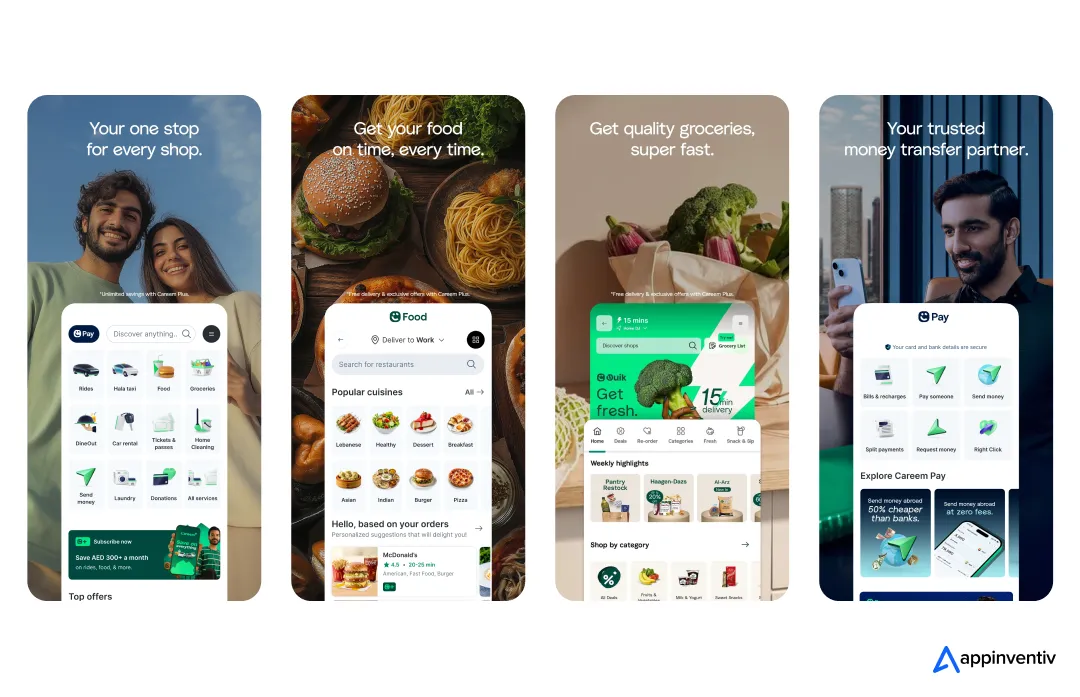
Careem: The Super App Success Story
When Careem built its mobile first platform, they understood that Arabic users don’t just need different text; they need different experiences. In 2024 alone, one prolific customer placed 1,531 Careem Food orders totaling more than $9,600, while their grocery service achieved delivery times as fast as 1.03 minutes in Abu Dhabi.
What made this possible? Their app is a masterclass in RTL design and cultural localization, integrating local payment options like cash-on-delivery from day one and tailoring services to individual cities rather than treating the Middle East as a single market.
Their Strategic Edge: Careem implemented city-specific customization within their bilingual framework, different pricing models for Dubai versus Riyadh, localized promotional campaigns during Ramadan, and culturally appropriate driver-passenger interaction protocols. They didn’t build one Arabic app; they built dozens of culturally intelligent experiences within a single platform architecture.
Must Read: How To Build A Succesfull On-Demand Delivery App
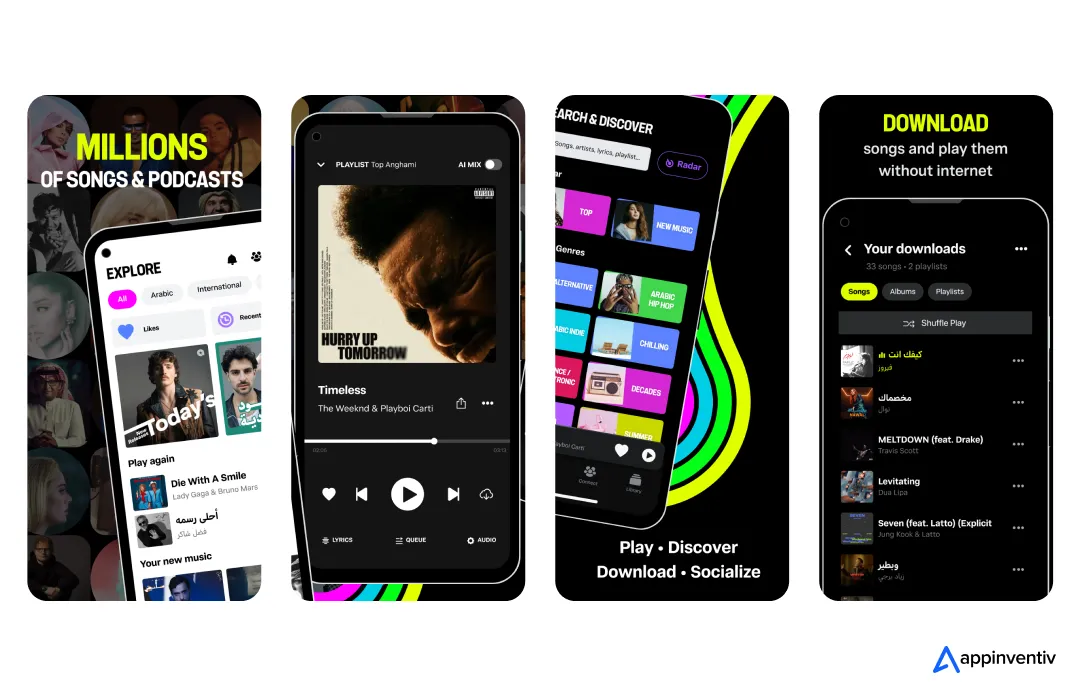
Anghami: Beating Global Giants Through Authentic Localization
While Spotify and Apple Music entered MENA with global strategies, Anghami won by thinking locally. The platform now boasts over 120 million registered users and 2.5 million paid subscribers, with video streaming engagement showing exceptional momentum with total hours watched surging by 28% during January-September 2024.
Their secret wasn’t just supporting Arabic, it was curating massive libraries of Arabic music and creating recommendation algorithms that understood regional preferences, cultural nuances, and listening habits that global platforms missed.
Their Strategic Edge: Anghami developed dialect-aware search functionality that could understand when users searched for “أغاني” in Egyptian Arabic versus Gulf Arabic, then served region-specific results. They also built social features around Arabic music culture; allowing users to share songs during religious holidays and creating playlists that respected cultural sensitivities during different seasons.
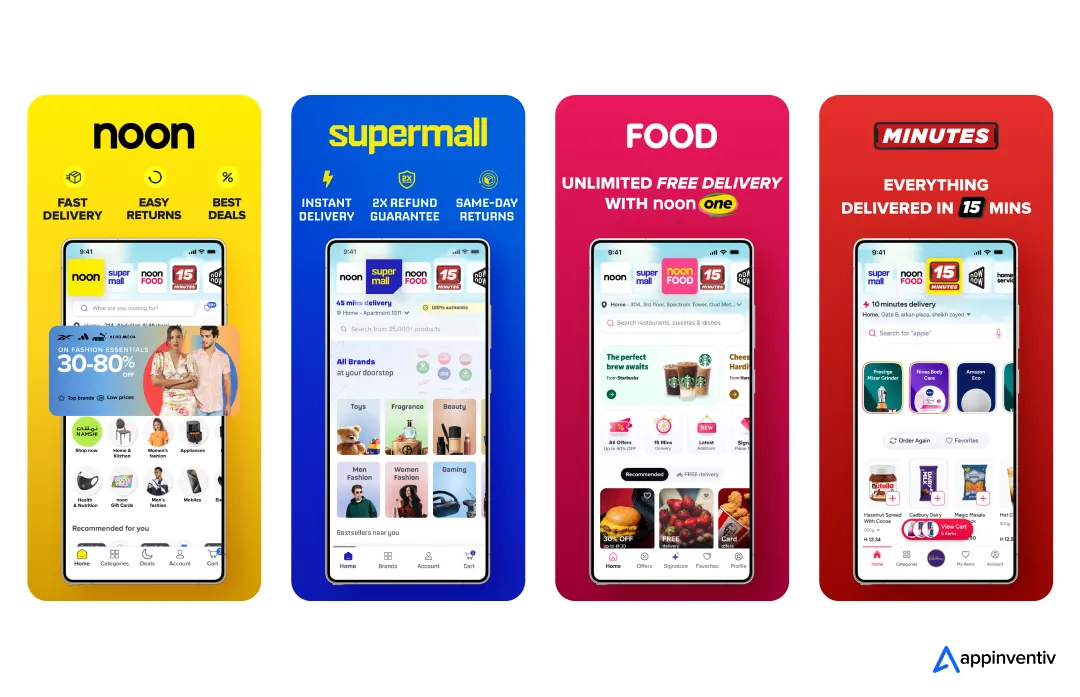
Noon: E-commerce App for Arabic Users
Rather than adapting an existing platform, Noon built their e-commerce experience specifically for MENA markets from the ground up. The company secured $169 million revenue in 2024, with Noon’s new $2 billion funding signaling intent to widen assortment and revamp same-day logistics.
Their success stems from understanding local consumer behavior, offering cash-on-delivery options, building product catalogs that reflect regional tastes, and creating Arabic user interfaces that feel natural rather than translated.
Their Strategic Edge: Noon implemented dynamic Arabic text expansion algorithms that automatically adjusted product page layouts based on Arabic description lengths, preventing the UI breaks that plague most translated e-commerce sites. They also built culturally intelligent recommendation engines that understood Arabic shopping patterns like increased electronics purchases before Eid and different color preferences in traditional versus modern markets.
Related Read: Cost To Develop an Ecommerce App like Noon
These success stories highlight something important about English–Arabic app development: cultural understanding matters more than perfect translation. These companies didn’t just convert text to Arabic – they built cultural knowledge into every business decision. The hardest part of challenges in Arabic app development isn’t RTL layouts or Arabic fonts – it’s creating authentic cultural experiences while keeping code manageable and scalable.
The takeaway for business leaders: successful LTR and RTL app development for English and Arabic means treating Arabic localization as a fundamental business strategy, not something you add later. Companies winning MENA markets created experiences that feel purpose-built for Arabic users from the start, and that authenticity drives user loyalty and market dominance.
The complexity that stops your competitors is the advantage that will secure your market share. We excel in building culturally-intelligent app required to achieve $100M+ ARR in the region.

How Businesses Should Approach English–Arabic App Development
For enterprises targeting the Middle East, English–Arabic app development is not a UX enhancement. It is a strategic product decision that affects adoption, compliance, and long-term scalability. Moving beyond awareness requires a shift in thinking: from “how do we localize” to “how do we build systems that operate natively in bilingual, RTL-first markets.” The following considerations help decision-makers evaluate readiness, risk, and execution strategy before committing resources.
Business Impact of Poor Localization
Poor localization is rarely a language issue. It is a systems issue that quietly erodes performance.
When RTL is implemented late, navigation logic breaks, CTAs fall out of natural attention paths, and mixed-language inputs fail under real user behavior. These are not cosmetic issues; they directly affect funnel metrics.
Typical enterprise impact includes:
- Higher churn due to broken RTL navigation and misaligned visual hierarchy
- Lower conversion from form errors, number formatting issues, and BiDi text failures
- Increased post-launch costs from QA gaps, hotfixes, and negative store reviews
At scale, poor localization translates into lost trust and delayed market traction.
Market Opportunities (e.g., UAE & GCC User Bases)
UAE and GCC users operate in a bilingual environment, but expectations are decisively Arabic-first when it comes to usability and credibility.
A well-built English–Arabic app allows enterprises to serve local nationals and expatriate users within a single product architecture, without compromising experience on either side.
Where opportunity becomes advantage:
- High mobile engagement across fintech, retail, logistics, and public services
- Strong conversion lift when RTL UX, Arabic microcopy, and local payment flows align
- Faster trust-building in KSA and UAE compared to global apps that rely on surface-level translation
Execution quality, not market entry, determines who wins.
What Enterprise Buyers Should Evaluate Before Building
Before design or development begins, leadership teams need clarity on structural readiness.
Language scope should be defined early. Most successful products anchor on Modern Standard Arabic, then layer dialects selectively where they influence emotion or conversion.
Key evaluation areas include:
- RTL compatibility of design systems, charts, maps, and custom UI components
- Proper separation of content from code using UTF-8 compliant resource files
- Release parity rules to prevent Arabic features from lagging behind English updates
- Arabic-specific QA workflows covering layout expansion and cultural context
Skipping this evaluation almost always results in rework.
When to Consider a Specialist Development Partner
Generalist teams can translate interfaces. Specialist teams engineer bilingual systems.
If your product involves complex flows, regulated data, or aggressive timelines, late-stage RTL fixes quickly become expensive and risky. The same applies when long-term content and feature parity matter.
A specialist partner becomes critical when:
- RTL must be treated as a first-class design system, not a mirrored layout
- Localization needs to integrate with CI/CD pipelines and content operations
- Cultural and regulatory reviews must run alongside technical QA
- Scalability across multiple MENA markets is part of the roadmap
At enterprise scale, specialization reduces risk and accelerates sustainable growth.
Why Global Brands Choose Appinventiv for Arabic App Development Success
When you need authentic English-Arabic app development that goes beyond basic translation, Appinventiv stands as a trusted partner that understands both the technical complexities and cultural nuances of MENA markets. With a proven track record of transforming global brands’ digital presence in the region, we’ve helped industry leaders navigate the exact challenges you’re facing.
Our expertise speaks through our impressive client portfolio, which includes globally recognized brands such as KFC, Adidas, Pizza Hut, 6th Street, and IKEA in the Middle East, each of whom has benefited significantly from our tailored development services. These partnerships demonstrate our ability to handle complex bilingual app requirements while maintaining brand consistency and user experience excellence across Arabic and English interfaces.
Why Industry Leaders Choose Appinventiv:
- Proven Excellence: With 3+ Regional Excellence Centers in the Middle East and 20+ strategic partnerships in UAE, we’ve helped 35+ in the region to elevate their digital presence in the MENA region and globally.
- Recognition & Awards: Recognized as the Fastest-Growing AI Development Company by MobileAppDaily, and Tech Fast 50 Award winner in 2023 and 2024 by Deloitte
- Quality Assurance: Our development processes follow international standards, ensuring your Arabic app meets both technical requirements and cultural expectations
- MENA Market Leadership: Successfully delivered innovative solutions for major brands across the Middle East, understanding the unique market dynamics and user preferences of the region
Our 1600+ technology experts have delivered over 3000+ successful digital products, helping startups secure $950+ million in funding while enabling Fortune 500 companies to establish dominant positions in MENA markets.
Ready to transform your MENA market entry strategy with authentic Arabic app development? Contact Appinventiv today and let’s build your competitive advantage together.
FAQs
Q. How to support right-to-left (RTL) in React Native / Flutter / Swift / Kotlin?
A. Supporting RTL in these frameworks requires different approaches. For instance:
- React Native offers built-in RTL support through I18nManager – just enable it and use flexDirection: ‘row-reverse’ for layouts.
- Flutter handles RTL automatically with Directionality widget and TextDirection properties.
- For Swift, use semantic content attributes and leading/trailing constraints instead of left/right.
- Kotlin requires RTL-aware layouts with start/end attributes rather than left/right, plus proper manifest configuration.
Each platform has native RTL handling, but you’ll need framework-specific implementations for seamless Arabic text flow.
Q. What are the common RTL pitfalls when localizing apps into Arabic?
A. The biggest RTL pitfalls happen with custom UI components that don’t automatically flip – think progress bars, carousels, or custom navigation flows. Icons and images often need manual flipping, especially directional ones like arrows. Text alignment gets tricky when mixing Arabic with English numbers or usernames.
Many developers forget about RTL-specific animations and transitions that should reverse direction. Another major issue is hardcoded margins and padding that break layouts. Testing is crucial because what looks perfect in English can completely break in Arabic, especially with longer text strings.
Q. How much does it cost to build an Arabic version of an app?
A. Cost breakdown typically follows our structured approach: Discovery and planning (15-20% of total budget), translation and content localization ($0.12-0.20 per word), RTL development implementation (25-35% of original dev cost), UI/UX redesign and testing (20-25% additional).
For enterprise apps, expect AED 1,100,000 to AED 2,200,000+ ($300,000 to $600,000 USD+) total investment depending on complexity.
We recommend phased delivery – core RTL functionality first, then advanced features. This reduces risk and allows budget flexibility. Our Arabic localization projects typically span 8-12 weeks with dedicated teams. Fixed-price contracts available for well-defined scope, while complex integrations work better on time-and-material basis.
Q. How long does it take to localize an app to Arabic?
A. Timeline varies based on app complexity and team size. Simple apps with basic content typically take 4-6 weeks, while complex enterprise applications can require 3-4 months.
The process breaks down into phases: content extraction and translation (1-2 weeks), RTL implementation and UI adjustments (2-4 weeks), testing and bug fixes (1-2 weeks), and final optimization (1 week).
Apps with heavy custom components, animations, or integrations need longer. Having dedicated Arabic-speaking QA testers speeds things up significantly. We recommend starting with core features first, then expanding – this parallel approach can cut timeline by 30-40% compared to complete localization.
Q. Do I need a separate Arabic UX or just translate text?
A. You definitely need more than just text translation. Arabic users have different reading patterns, cultural preferences, and interaction habits that require UX adjustments.
- Visual hierarchy changes completely with RTL – your primary actions might need repositioning. Cultural colors matter too – green has different meanings in Arab cultures.
- Typography needs serious attention since Arabic fonts affect readability and spacing differently.
- Navigation flows often require rethinking, especially for onboarding sequences.
However, you don’t always need a complete redesign – many successful apps adapt existing UX thoughtfully. User testing with native Arabic speakers reveals issues you’ll never catch otherwise.
Q. Which technical stacks make RTL easier: React Native, Flutter, or Native?
A. Flutter leads in RTL ease with automatic text direction handling and built-in localization widgets. Its Directionality widget makes RTL switching seamless, and Material Design components adapt automatically. React Native comes second – decent RTL support but requires more manual configuration, especially for custom components. Native development (Swift/Kotlin) gives you maximum control but demands more work upfront. iOS handles RTL better than Android out of the box.
Cross-platform frameworks save time initially, but complex apps eventually hit limitations requiring native code anyway. Flutter’s growing Arabic developer community also means better resources and third-party packages for Arabic-specific needs.
Q. How long does it take to develop a fully bilingual English–Arabic app?
A. Timelines depend on app complexity and how early Arabic support is planned. A simple app with standard UI components typically takes 6 to 8 weeks for bilingual enablement. Complex enterprise apps with custom UI, advanced workflows, and RTL-first design systems usually require 10 to 16 weeks. Projects that plan RTL, localization files, and Arabic QA from day one move faster than those retrofitting later.
Q. What impacts the cost of English–Arabic mobile app development?
A. Cost is driven by complexity. Major factors include RTL-first UX design, custom component mirroring, Arabic-specific QA cycles, and localization operations tooling. Apps with heavy forms, dashboards, charts, or mixed-language inputs require additional development and testing. Ongoing costs also rise when dialect support, release parity, and continuous content updates are part of the roadmap.
Q. Should I hire a specialized localization partner or an in-house team?
A. In-house teams work well for long-term content ownership and minor updates, but they often lack deep RTL and Arabic UX expertise. Specialized partners are better suited for initial architecture, RTL design systems, and enterprise-grade localization workflows. Many successful teams use a hybrid model, relying on specialists for build and scale, then transitioning knowledge to internal teams for maintenance.

- In just 2 mins you will get a response
- Your idea is 100% protected by our Non Disclosure Agreement.
How Much Does It Cost to Build a Calorie Counting App Like Cronometer in Australia
Key takeaways: Building a calorie counting app with Cronometer-level accuracy in Australia typically costs between AUD 70,000 and AUD 700,000+, depending on data depth, compliance posture, and analytics sophistication. Underestimating compliance, data licensing, and post-launch governance is the most common cause of budget overruns for Australian nutrition platforms. The hard cost driver is not screens.…

MVP to Market: Realistic Cost, Timelines & Tech Stack for MVP App Development in Australia
Key takeaways: MVP development costs in Australia typically land between AUD 50,000 and AUD 200,000+, driven by integration depth, security, and delivery shape. Time-to-market can vary from 8 to 20 weeks, influenced by integrations, compliance, and feature scope. Choosing the architecture and best tech stack for building mvp app early reduces rebuild risk when traction…
Step-by-Step Guide to Digital Tipping Platform Development for Australia: Features, Costs & ROI
Key takeaways: Digital tipping is now a system-level decision Once tips move through digital payments, they intersect with payroll, reporting, and workforce trust. Informal handling does not scale. Sector-specific design determines success Cafés, restaurants, hotels, delivery services, and franchises each require different allocation logic and operational controls to reflect how work is delivered. Cost reflects…