




























 Leader in AI-First Product Engineering Read Full Article
 IT Managed & Outsourcing
 Contact Us
With over 10+ years of enterprise delivery experience, our CRM development services help organizations reduce delivery friction and operational overhead. Clients achieve up to 10x faster time-to-market and 40% average cost reduction by deploying CRM systems built for integration, governance, and real-world adoption.
Core Capabilities of Our CRM Development Services





















Numbers That Reflect Our
Decade of Experience
Industries Mastered
Legacy Processes Transformed
Global Recognitions and Awards
Tech Evangelists
Solutions Designed And Delivered
Industry Certifications







We assess how customer data, sales processes, and service workflows operate today, then define a CRM roadmap aligned to revenue goals, integration needs, and governance constraints rather than vendor-driven features.
• CRM roadmap aligned to revenue operations, service workflows, and reporting needs
• Platform and architecture selection based on scale, integrations, and long-term operability

Our custom CRM development services focus on building platforms tailored to enterprise workflows, ownership models, and reporting structures, avoiding rigid templates that limit adoption or break under scale.
• Custom data models reflecting real customer journeys and account hierarchies
• CRM interfaces designed to improve adoption across sales, service, and leadership teams

As part of our CRM software development services, we integrate CRM platforms with ERP, finance, marketing, and analytics systems to eliminate manual work and inconsistent customer records.
• API-based integrations with ERP, billing, and marketing automation tools
• Real-time data synchronization with validation to maintain reporting accuracy

We migrate data to the cloud from legacy tools while resolving duplication, ownership gaps, and outdated records that reduce trust in dashboards and downstream reports.
• Structured data migration with validation and rollback planning
• Data cleanup to improve accuracy across forecasts, pipelines, and reports

We manage CRM implementation programs end to end, configuring workflows, permissions, and automation to reflect how teams actually work across regions and business units.
• Workflow configuration aligned to operating and approval models
• Role-based access, permissions, and escalation structures

We build mobile CRM solutions that give sales and service teams secure, reliable access to customer data in the field. CRM mobile app features we design are aligned with the governance or data control requirements.
• Secure mobile access with role-based controls, session handling, and device-level security enforcement
• Offline data capture with controlled sync, conflict resolution, and audit-safe update reconciliation

We automate CRM workflows to reduce manual effort while preserving approvals, escalation paths, and control points required in enterprise operating models.
• Sales, service, and support workflow automation with rule-based logic
• Approval flows and notifications aligned to operational governance
Review your current CRM challenges around data quality, integrations, and
adoption
with specialists who build CRM systems for enterprise scale.


A sales CRM centralizes omnichannel lead capture, manages
multi-stage pipelines, enables activity-driven
forecasting,
and
automates CPQ and billing workflows across complex,
compliance-heavy enterprise sales cycles.

Marketing data often breaks before sales ever see it. We design
CRM marketing capabilities that
track lead sources,
campaign
performance, and account engagement without losing attribution
or ownership as data moves across tools.

Support teams struggle when customer history is fragmented. We
build service capabilities that
give agents a clear view of
interactions, open issues, and past resolutions across channels.

Field teams need systems that work outside ideal conditions. We
design CRM capabilities that
support scheduling, task
execution,
and updates from the field without compromising data
accuracy.

Well-designed self-service reduces load on support teams. We
build customer-facing CRM
capabilities that allow users to
resolve issues, submit requests, and share feedback without
friction.

CRM data only matters if leadership trusts it. We design
reporting layers that reflect real
performance, not inflated
metrics, and hold up under scrutiny.
India Power Products

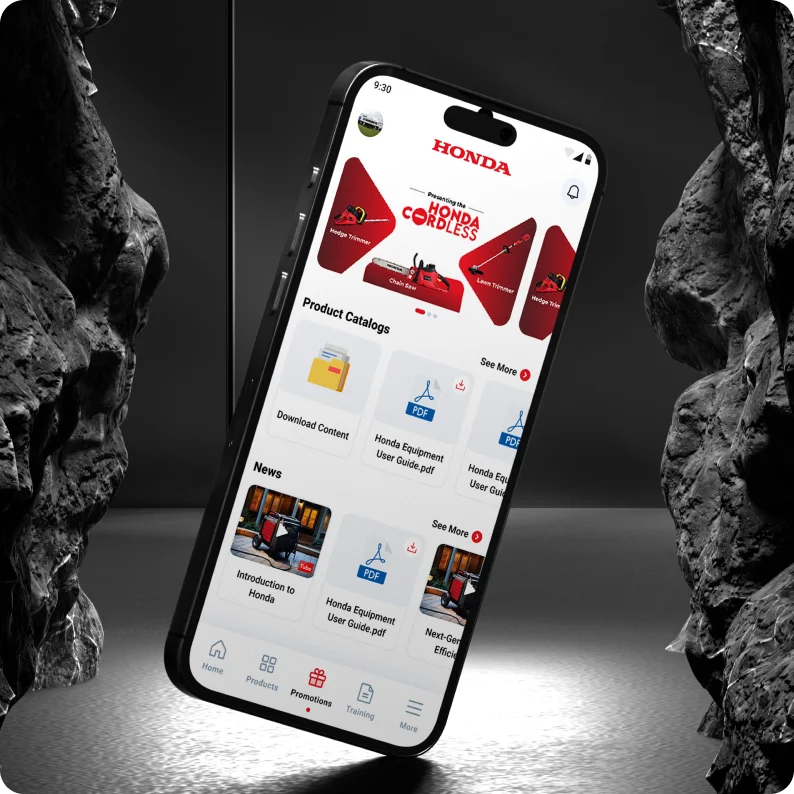
Honda HIPP needed a unified platform to connect customers, dealers, retailers, and internal teams, replacing fragmented communication and engagement channels.

We built a centralized digital ecosystem with role-based access and shared data layers supporting consistent engagement across stakeholders.

Group Retail & Distribution Platform
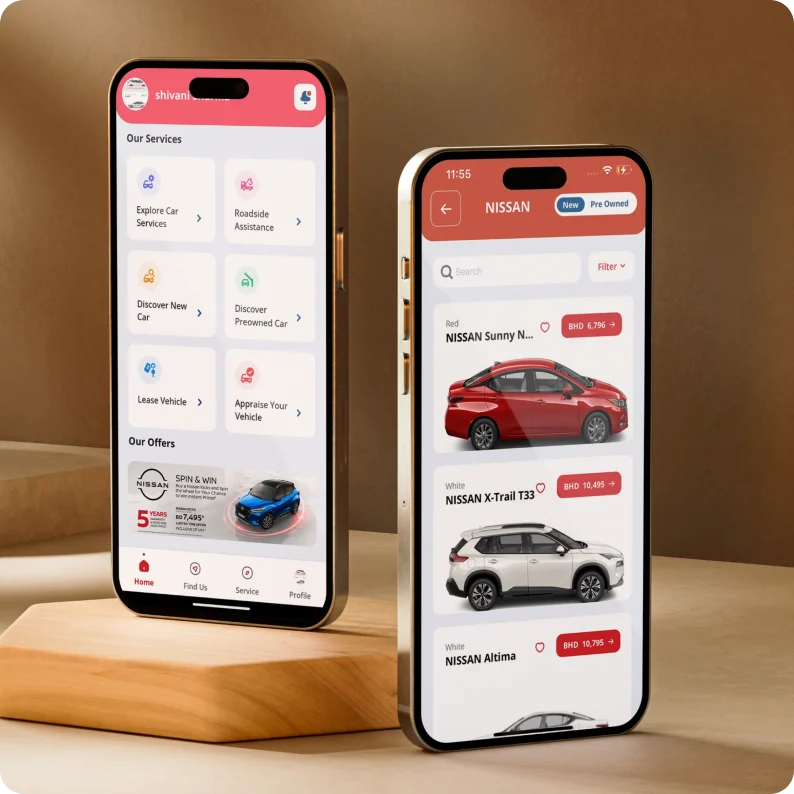
YK Almoayyed needed a unified retail and distribution platform to replace disconnected systems that caused inventory, order, and customer data inconsistencies across outlets.
We developed a centralized platform with shared data models and real-time syncing, ensuring accurate inventory, orders, and customer records across channels.
Review how your customer data, workflows, and integrations can be unified
through
CRM systems designed for your industry’s operational realities.


SOX ITGCs

SOC 2 Type II

SOC 1 Type II

ISO 27001

ISO 22301

GDPR

CCPA

LGPD

HIPAA

HITECH

ISO 27701

PCI DSS

NIST

NIST CSF

FedRAMP
SOX ITGCs
SOC 2 Type II
SOC 1 Type II
ISO 27001
ISO 22301
GDPR
CCPA
LGPD
HIPAA
HITECH
ISO 27701
PCI DSS
NIST
NIST CSF
FedRAMP
With 3,000+ solutions designed and delivered, we have seen how CRM systems behave once users scale, integrations grow, and reporting pressure increases. As a seasoned CRM development services provider, we design platforms that hold up under daily operational load.
Working across 35+ industries, exposed us to very different customer lifecycles, regulatory pressures, and operating models. That experience matters. It allows us to operate as a CRM development company that adapts systems to industry realities instead of forcing generic patterns.
Most CRM problems are not technical. They are behavioral. Sales teams bypass fields, service teams duplicate records, and leadership stops trusting reports. Our custom CRM development services focus on workflows and interfaces that match how teams already work, reducing resistance over time.
CRM platforms rarely live in isolation. As a CRM software development company, we build systems that integrate cleanly with ERP, finance, analytics, and marketing tools. This prevents the slow data drift that eventually breaks forecasting and reporting.
Permissions, approvals, ownership, and audit logs are part of the system, not documentation add-ons. Our CRM system development services account for internal reviews, security checks, and compliance needs before data ever moves into production.
CRM systems evolve as businesses do. As a custom CRM software development company, we stay involved after go-live, helping teams adjust workflows, integrations, and performance so the platform does not become obsolete within a few years.
Talk through adoption issues, data gaps, and integration constraints with
teams
who
build CRM systems that hold up in real enterprise environments.

The India's Fastest-Growing Companies 2026 Recognised by TIME and Statista

Statista High Growth Companies APAC - 2026
Statista India's Growth Champions 2023






Through AI development services, we embed intelligence into CRM workflows for lead prioritization, churn prediction, and service routing. Models are designed with explainability, ownership, and fallback logic so decisions remain reviewable in enterprise settings.
Using machine learning development services, we build models that learn from CRM interaction data to forecast pipeline movement, customer behavior, and service demand. Versioning and monitoring ensure models evolve without breaking reporting or workflows.
Our computer vision development services connect visual inputs to CRM records, such as document verification, image-based inspections, or media analysis. Visual data is structured and mapped to customer entities teams can act on.
With data science and analytics services, we design CRM analytics layers that handle high-volume customer data without slowing production systems. This supports segmentation, performance tracking, and leadership reporting across large datasets.
Through cloud services, we design CRM platforms that scale across users, regions, and integrations. Architectures support peak loads, high availability, and controlled updates without disrupting ongoing sales or service operations.
Using blockchain application development services, we introduce traceability into CRM workflows where auditability matters. This supports tamper-resistant records, transparent transactions, and trusted customer interactions in regulated environments.
With IoT app development services, we integrate device and sensor data into CRM systems to inform service actions, usage-based engagement, and customer status tracking. Data pipelines are secured and normalized before entering CRM workflows.
Our cybersecurity services are applied across CRM architecture, covering access control, threat modeling, logging, and continuous monitoring. Security is engineered early so customer data remains protected as integrations expand.
Through AR and VR development services, we support CRM-linked training, onboarding, and guided workflows. These experiences are built to be measurable, maintainable, and aligned with real operational use cases.














Assess where system complexity, manual work, and
poor integrations are driving
avoidable costs.

We begin by studying how customer data actually moves across sales, service, and operations teams. This includes reviewing workflows, integrations, reports, and shadow processes that many CRM development agencies overlook.
Our CRM software development services are built around existing ERP, finance, analytics, and marketing platforms. Data models and APIs are designed to scale as users, regions, and customer touchpoints expand.
As a custom CRM development company, we embed access control, approvals, ownership models, and audit logging into CRM architecture from day one, reducing friction during security reviews and internal audits.
Using proven CRM system development services, we roll out CRM capabilities in phases. This allows teams to validate usability, data quality, and performance before wider adoption.
Our teams test CRM systems under real enterprise conditions, including high data volumes, concurrent users, and integration failures, the scenarios that typically break trust after launch.
As a long-term CRM development company, we stay involved after go-live, refining workflows, tuning performance, and adapting the system as business priorities and customer strategies evolve.
Most CRM builds land somewhere between $40K and $400K, but the number only makes sense once you look at what the system needs to support. Cost increases when CRM connects to ERP, billing, identity systems, or data warehouses. Migration complexity, workflow automation, audit logging, and performance tuning usually matter more than UI scope.
Appinventiv offers flexible engagement models designed to match how enterprises plan, fund, and govern delivery. Depending on scope and certainty, teams work with us through fixed-scope delivery, dedicated development teams, or long-term managed engagement models. Each approach is structured to support predictable outcomes, clear ownership, and controlled change as requirements evolve.
It depends on how deeply the CRM is embedded in daily operations. A focused CRM supporting one function can be delivered in a few months. Once CRM touches sales, service, finance, and reporting across regions, timelines extend. Most enterprises we work with avoid single launches and instead roll out CRM capabilities in phases to reduce risk and validate adoption early.
At Appinventiv customization starts at the data layer, not the interface. We define how customer records are structured, who owns updates, how approvals flow, and where integrations sit. Only after workflows, permissions, and reporting logic are stable do we adjust screens and layouts. This order matters. When teams reverse it, CRMs look polished but fail operationally.
CRM improves service when it removes guesswork for support teams. That means a single, reliable view of customer history, open cases, past resolutions, orders, and commitments. The real gains appear when CRM is integrated with telephony, ticketing, and fulfillment systems, so agents are not switching tools or relying on incomplete information.
CRM manages customer-facing activity such as sales, engagement, and service. ERP runs internal operations like finance, procurement, and inventory. In practice, they overlap constantly.
Contracts, billing, and fulfillment depend on both. Most issues we see arise when CRM and ERP are not integrated cleanly, leading to reconciliation problems and mistrusted reports.
AI in CRM is rarely a standalone feature. It supports tasks like prioritizing leads, forecasting pipeline movement, routing service requests, or identifying churn risk. The harder part is governance. In enterprise environments, AI models must be explainable, monitored, and owned. Without that discipline, AI recommendations are ignored or create risk.