
























 Leader in AI-First Product Engineering Read Full Article
 Contact Us
Our SaaS development services center on stable tenancy models, resilient cloud foundations, and predictable data handling. Systems are built for teams that need audit clarity and operational discipline, with controls aligned with ISO/IEC 27001 and SOC 2 monitoring practices.
Our Core Capabilities





















Our Global Impact in Numbers
Tech Evangelists Driving Innovation
Global Recognitions and Awards
Legacy Processes Transformed
Industries Mastered
Strategic Federal Partnerships Built and
Sustained
Solutions Designed and Delivered





Our SaaS development consulting services help businesses with architecture, strategy, and scalability planning for SaaS success.
• Strategy and Architecture Design
Software development consulting helps define roadmaps, multi-tenant configurations, and growth plans.
• Operational Guidance
Recommendation on cloud adoption, security practices, compliance, as well as performance optimization practices.

We develop scalable, robust SaaS software that addresses the changing demands of modern business and is compatible across platforms.
• Custom SaaS Applications
Custom applications are developed to address specific business issues and meet diverse user expectations.
• Easy System Interaction
Ease of integration with other software, CRMs, ERPs and other third parties.

Our team develops unique SaaS solutions that completely fit your business objectives and operations.
• Flexible Software
Build SaaS applications with scalability in mind, as your user base and feature set increase, becoming more sophisticated.
• Scalable Architecture
Design systems that are flexible so that they may be easily extended with new modules, APIs, and other services.

Through our SaaS MVP development services, we help companies quickly create MVPs to test ideas, find initial users, and optimize the iterative process.
• Rapid Market Entry
Build MVPs with critical features to test early and gather useful user feedback.
• Iterative Improvement
Take the feedback of the first movers and build on it to optimize features and keep enhancing the product.

We allow integration of your SaaS applications and third-party systems with other internal systems through our integration services.
• API & Third-Party Integrations
Integrate software products smoothly with ERPs, CRMs, and other critical software applications.
• Streamlined Data Movement
Ensure real-time information interchange and interoperability through your entire software ecosystem.

Our enterprise SaaS development services team turns your ideas into fully built SaaS products, managing the journey from early concept through development and all the way to launch.
• End-to-End Development
Development of cover design, coding, testing, and deployment, as well as post-launch support to provide an entire product.
• Performance & Maintenance
Ongoing software product development support, updates, and improvements that ensure long-term product success.

Through our cloud migration services, your SaaS applications will leverage the benefits of the cloud, such as scalability, reliability, and cost-effectiveness.
• Cloud Architecture Design
Re-architect SaaS solutions that will enhance performance, security and management of resources in the cloud.
• Secure and Efficient Migration
Migrate applications and data with safety, minimal downtime and guarantee operations are not interrupted.
Hands-on experience
Built-in compliance with


Trusted partnerships with


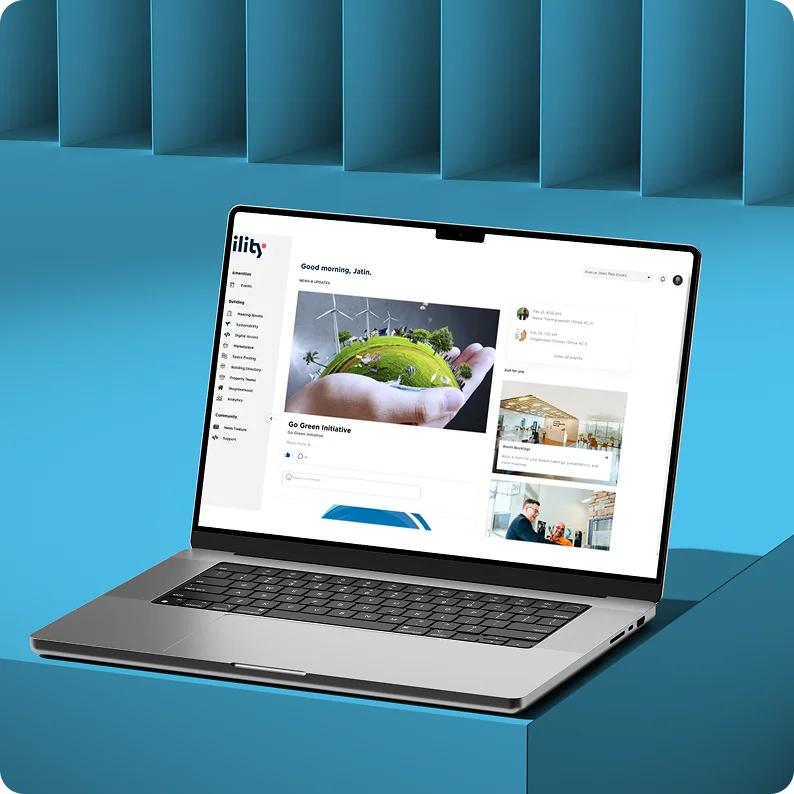
Fast-Tracking a Real Estate SaaS Platform Launch

A real estate startup wanted a scalable, white-label SaaS platform built on microservices. They needed to cut the typical 4–5 month launch timeline down to just 45 days.

We created a cloud-ready, white-label SaaS platform for real estate with automated infrastructure. Using agile and DevOps practices, our team delivered a rapid rollout of core features without compromising reliability.

From subscription models to multi-tenant systems, our teams
start with how SaaS
products actually run in production.

SOC 2 Type II System and Organization Controls Type II
ISO/IEC 27001 Information Security Management System Standard
ISO/IEC 27701 Privacy Information Management System Extension

HITECH Act Health Information Technology for Economic and Clinical Health Act

FedRAMP Federal Risk and Authorization Management Program
FISMA Federal Information Security Modernization Act

NIST CSF National Institute of Standards and Technology

CCPA California Consumer Privacy Act

CPRA California Privacy Rights Act

PIPEDA Personal Information Protection and Electronic Documents Act

LGPD Lei Geral de Proteção de Dados

FERPA Family Educational Rights and Privacy Act
ADA Americans with Disabilities Act

SOX Sarbanes-Oxley Act
GLBA Gramm-Leach-Bliley Act

GxP Good Practice Guidelines for Regulated Industries
SOC 2 Type II System and Organization Controls Type II
ISO/IEC 27001 Information Security Management System Standard
ISO/IEC 27701 Privacy Information Management System Extension
HITECH Act Health Information Technology for Economic and Clinical Health Act
FedRAMP Federal Risk and Authorization Management Program
FISMA Federal Information Security Modernization Act
NIST CSF National Institute of Standards and Technology
CCPA California Consumer Privacy Act
CPRA California Privacy Rights Act
PIPEDA Personal Information Protection and Electronic Documents Act
LGPD Lei Geral de Proteção de Dados
FERPA Family Educational Rights and Privacy Act
ADA Americans with Disabilities Act
SOX Sarbanes-Oxley Act
GLBA Gramm-Leach-Bliley Act
GxP Good Practice Guidelines for Regulated Industries
Our teams have spent years building SaaS products that run in live markets, not demos. The work spans early MVPs to mature platforms with paying users, audits, and upgrades. Lessons come from release failures, scale pain, and long-term maintenance, not theory.
Being a reputed SaaS app development company, we build every product with outward connectivity in mind. APIs, event hooks, and data layers are structured early, so that integrations with CRMs, ERPs, analytics tools, and future systems can plug in without rewrites.
Multi-tenancy is treated as a base requirement, not a later refactor. Our teams plan data isolation, tenant-level controls, and shared resource logic from day one. This keeps onboarding fast, operating costs predictable, and platform behavior consistent as users grow.
Regulatory needs shape architecture choices early, especially around data access, logs, retention, and identity. The result is SaaS software that supports audits and regional requirements without last-minute fixes.
AI features are added where work actually happens, not as separate dashboards. Our SaaS platform developers build models that support decision-making, automate repetitive steps, or surface risks within existing flows. This keeps AI useful, explainable, and tied to daily product usage.
Security controls sit inside the product logic, not just at the perimeter. Access rules, encryption, and monitoring are treated as part of normal feature work. This approach limits exposure and keeps security aligned with how users actually interact.
As a part of our SaaS app development services, we stay involved beyond launch. Product health, technical debt, and roadmap tradeoffs are reviewed over time, not ignored. This ownership mindset supports SaaS products that evolve steadily.
We help SaaS products remain reliable as users, data, and operational demands
increase, ensuring the platform is engineered for sustained, real-world use.


Statista High Growth Companies
APAC
2025 & 2024

Statista India's Growth Champions 2023






SaaS operates in AI mode, automating actions, identifying patterns, and offering predictive data to adaptive and intelligent systems.
Agentic AI in SaaS platforms enables software to act independently, complete tasks efficiently, and adapt to changing conditions with minimal human intervention.
Generative AI generates novel content, simulations and models based on data, and makes it possible to generate personal experiences and transform workflows.
ML helps SaaS applications improve over time with use, thus enhancing superior decision-making and minimizing manual labor in the long run.
Big data services assist software as a service platforms in working with massive, unstructured data, thereby helping teams make more informed decisions.
Cloud consulting focuses on the behavior of SaaS products as usage increases, thus maintaining stability in performance amidst change.
Blockchain facilitates secure data management on the SaaS platform by tracing transactions and maintaining audit records, boosting transparency and increasing data reliability.
IoT links physical devices to SaaS applications, with sensors and equipment feeding data to teams and giving them clearer insight into operations.
AR and VR add a visual dimension to SaaS applications, as complex processes get simplified through the interactive views, guided walkthroughs and training scenarios.










We embed AI into SaaS workflows from day one, following OECD AI Principles and
the
EU AI Act, powering insights, operational efficiency, and personalized
experiences
while ensuring responsible, compliant AI use.

This step is dedicated to knowing the business, product, and operational facts of the SaaS concept. Our priorities, constraints and long-term expectations allow us to start with a clear product, rather than assumptions and hasty technical decisions.
Design work focuses on the user's actual use of the product. Our SaaS product development services team creates interfaces and flows that are intuitive, less frictional and contribute to actual workflows, without introducing visual or functional clutter into the experience.
The SaaS engineering execution is done at scale, with resiliency and long-term ownership. The platform is designed to accommodate growth, integrations, and data movement, but not strict dependencies that frequently slow down the teams as the product develops.
Rigorous testing is conducted alongside development to identify functional, performance, and security bugs early. Through continuous quality checks, the SaaS product will be implemented to ensure it is reliable in all situations, can operate under load, and provides a smooth experience to end users.
Releases follow a gradual, phased approach, allowing the product to stabilize in real-world use. At each stage, our custom SaaS development services handle testing, refinement, and performance checks, ensuring the platform remains stable as features and user demand grow.
After launch, we track the performance of our platforms, fix arising bugs and improve features where necessary. Maintenance makes the SaaS product reliable, secure, and compatible with changing technologies, as well as supporting user growth and operational efficiency.
SaaS products can support a large number of users in various fields of application. By adopting tailor-made software, businesses can have a tool specifically tailored to their business requirements.
This does not require modifying current processes or bringing together several applications, resulting in an efficient, simplified workflow. A dedicated SaaS development company with experience in the space and expertise in SaaS solutions can assist you in achieving optimal returns on your investment.
The cost of developing a SaaS application can vary between $40,000 to $300,000. Several factors that impact the overall development budget include the hourly rates of developers, the location of the SaaS application development services company, the UI/UX design of the app, its underlying platform, etc.
For an exact cost estimation for your SaaS project, contact our experts.
Also Read: How much does it cost to build a SaaS application on AWS?
The timeframe to develop a custom SaaS solution varies according to the overall complexity of the app as well as the scope of the project. To give you a brief idea, developing a simple SaaS product with minimum features will take around 3 to 4 months. On the other hand, a highly complex product will require around 10 to 12 months for development.
Yes. Software as a service application can be scaled both horizontally and vertically to handle more users, increased workload, and new features without affecting performance. Our SaaS application development services ensure this scalability is built in from the start.
Absolutely. Our SaaS app developers are responsible for offering a high level of security for cloud applications. This includes securing the platform, network, operating system, applications, and physical infrastructure. Thus, it is recommended to hire a dedicated tech partner like Appinventiv so as to get a highly secure SaaS product that resonates with your user base.
These are some of the main issues and challenges that we assist companies to overcome using SaaS:
Yes. We provide SaaS development and consulting services, assisting in the architecture design and feature planning, scalability, and integration plans to help businesses make sure that their SaaS products are robust, efficient, and capable of growth.