


























What Are Some SaaS Product Ideas To Boom In The Coming Years?

 Share -


- 01How Emerging Enterprise Trends Are Creating New SaaS Opportunities
- 0210 SaaS Product Ideas Worth Investing in Over the Next Decade
- 03Types of SaaS Software Driving Enterprise Growth
- 04Key Factors That Define Successful Enterprise SaaS Products
- 05How to Evaluate a SaaS Product Idea Before Development
- 06The Future of SaaS Product Development
- 07Why Custom SaaS Development Is Becoming the Enterprise Choice
- 08Build the Next Generation of SaaS Products with Appinventiv
- 09Frequently Asked Questions

Key takeaways:
- AI-native and vertical SaaS platforms and tools offer the best opportunities in corporate software. These tools serve heavily regulated and complex markets.
- Winning tools fix one clear business problem. They do not succeed by offering the longest list of features.
- Corporate executives now choose custom software development. Custom builds give them full ownership of artificial intelligence. The tools connect deeply with core data and build a lasting market advantage.
- Check buyer demand and technical needs before you write code. You must analyze the potential for regular subscription revenue. This review reduces financial risk before development starts.
- Next-generation software will focus on independent systems and private intelligence tools. Large corporations will measure value by actual business outcomes.
Buyers now hold SaaS business ideas to a much higher standard when evaluating enterprise software. They no longer look for basic dashboards or long feature lists. Corporate buyers invest in tools for one clear business problem.
The new software must connect cleanly with all existing corporate systems. Every piece of software must show clear and measurable financial returns. The fastest-growing applications now target specific industries and unique workflows.
This market shift creates excellent opportunities for new product creation. The SaaS market is projected to exceed $1.48 trillion by 2034. Buyers in healthcare, finance, and logistics want industry-focused automation tools.
Many enterprise leaders choose custom software development over off-the-shelf products. Custom builds give leaders full control of the product roadmap. They can support complex business processes without vendor restrictions.
This article reviews software-as-a-service ideas with the highest growth rates. We analyze the top platforms in these specific markets today. We outline the financial value of custom software development.
The global SaaS market is racing toward unprecedented growth. Build your enterprise SaaS product before competitors capture the opportunity.
How Emerging Enterprise Trends Are Creating New SaaS Opportunities
Enterprise buyers need more than cloud access and subscription pricing from their SaaS platforms. They look for software that automates manual work. The tools must integrate with existing systems and solve industry problems.
This shift is closely tied to broader cloud application development trends shaping enterprise software today. Four market shifts drive the demand for new software.
- AI-native applications are replacing AI add-ons. Enterprise AI adoption is growing by nearly 20% each year. Older software platforms added artificial intelligence features later. New products place artificial intelligence at the center of the user experience. These tools use large language models and smart agents to automate daily tasks. They generate content and support quick business decisions.
- Vertical SaaS continues to gain ground. Companies want software built for their specific industry. Many vertical SaaS companies achieve 108-120% net revenue retention. Generic tools no longer fit. Healthcare, banking, manufacturing, and logistics require distinct workflows. Leaders need unique compliance controls and specialized data models.
- Automation now drives software buying decisions. Businesses want software that connects all major departments through APIs. The software must integrate resource planning, customer data, and supply chain management. This connection removes repetitive manual work. Data moves smoothly across the entire company.
- Security and customization have become standard expectations. Corporate buyers demand role-based access and strong encryption. They look for clear compliance support and flexible deployment options. Cloud infrastructure must align with internal governance rules.
These changes create clear space for niche SaaS startup ideas. New tools must solve specific business problems rather than broad market needs. The next section details the strongest opportunities in the market.
10 SaaS Product Ideas Worth Investing in Over the Next Decade
The examples of SaaS products below show a software market that favors tools solving specific business problems. Buyers reject broad feature sets built for every industry. Artificial intelligence and cloud automation open doors for new product categories.
These tools offer high commercial potential. This list highlights the strongest SaaS startup ideas in demand today. We show current market leaders and explain where custom development creates real corporate value.
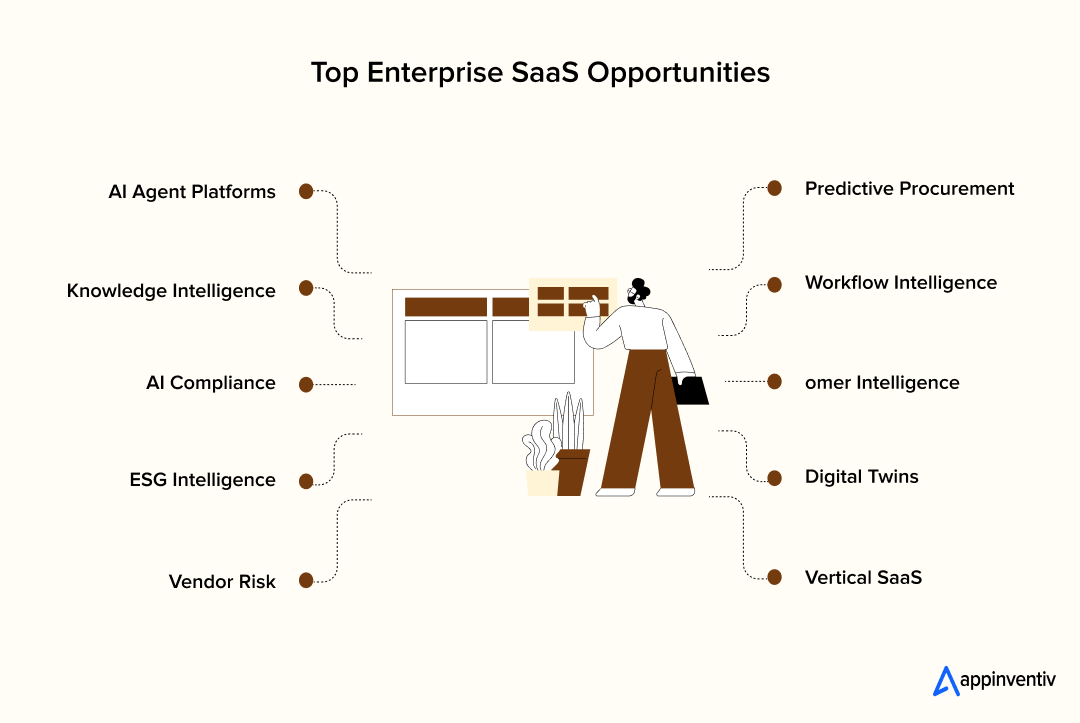
AI Agent Orchestration Platforms
Smart AI agents in enterprise now handle corporate tasks in sales, human resources, and finance. Companies require software to manage these multiple agents. The software must assign tasks, track performance, and maintain data control.
Microsoft and Salesforce already offer products in this market. A custom platform gives your business tighter control over workflows and corporate data. Understanding the AI SaaS development cost involved helps you plan this investment with clarity.
Enterprise Knowledge Intelligence Platforms
Corporate data sits scattered across storage systems, chat apps, and customer databases. A knowledge platform connects these separate sources. It retrieves trusted information and delivers clear answers with citations. Custom platforms match your specific corporate terminology and internal security policies.
AI Compliance and Regulatory Monitoring Software
Rules and regulations grow every year. This is especially true as AI regulation and compliance evolve rapidly across US markets. Manual compliance reviews take too much time. Smart compliance platforms monitor policy changes and identify business risks. They automate audit reporting. Custom software aligns compliance tasks with internal governance and regional rules.
ESG and Sustainability Intelligence Platforms
Companies face pressure to measure emissions and supplier practices with accurate data. Sustainability platforms gather information from multiple systems. The software converts this data into clear reports. Custom platforms capture industry metrics and connect directly with current operational tools.
Also Read: Green AI Applications: How to Future-Proof Your Architecture Against ESG Mandates
Vendor Risk Management SaaS
Large corporations depend on hundreds of third-party vendors. This reliance creates security and financial risks. Strong software risk management practices help companies stay ahead of these vulnerabilities. Risk platforms monitor suppliers continuously rather than relying on annual reviews. A custom tool scores vendors against your own corporate policies and procurement rules.
Predictive Procurement Platforms
Purchasing teams use predictive analytics to forecast demand. They identify supply chain problems before disruptions happen. A custom purchasing platform combines internal data with market signals. This combination supports fast and accurate purchasing decisions.
AI Meeting and Workflow Intelligence Software
Meeting assistants do more than write transcripts. They identify decisions and automatically assign action items. They update corporate tracking systems and summarize long discussions. Microsoft shows the growth of this category. Custom tools integrate directly with your internal project management software.
Customer Health and Revenue Intelligence Platforms
Subscription businesses rely on health scores to retain customers. These platforms combine product usage data, support history, and billing records. Custom platforms let your business define health metrics. These metrics match your specific customer lifecycle and revenue model.
Digital Twin Operations Platforms
Digital twins build virtual models of factories, warehouses, and logistics networks. Executives test operational changes before spending capital. Siemens and Microsoft expand this market. Custom platforms model unique physical assets and production processes. Generic software cannot match this accuracy.
Industry-Specific Vertical SaaS Solutions
Corporations have outgrown software built for generic business use. Industry products support specific workflows and strict compliance rules. These tools serve sectors like healthcare, banking, and manufacturing. Custom development gives you software built around your exact business model. You avoid changing operations to fit generic tools.
Also Read: Top SaaS Business Ideas for the Coming Years
Every successful SaaS category starts with early movers. Turn your product idea into a competitive advantage today.
Types of SaaS Software Driving Enterprise Growth
Modern software does more than run broad business tasks. New platforms focus on tight business functions and distinct operational challenges. The fastest-growing tools combine intelligence and automation to improve corporate decisions. They do not just copy manual work into a computer.
The table below highlights the different types of SaaS software with rising investment and high commercial potential.
| SaaS Category | Enterprise Examples | Emerging Opportunity |
|---|---|---|
| AI Productivity SaaS | Microsoft Copilot | AI Agent Platforms |
| Collaboration SaaS | Slack | Intelligent Workflow Automation |
| Security SaaS | CrowdStrike | AI Compliance Platforms |
| Customer Success SaaS | Gainsight | Customer Intelligence Platforms |
| Procurement SaaS | Coupa | Predictive Procurement |
| Industry SaaS | Veeva, Procore | Vertical AI SaaS |
Key Factors That Define Successful Enterprise SaaS Products
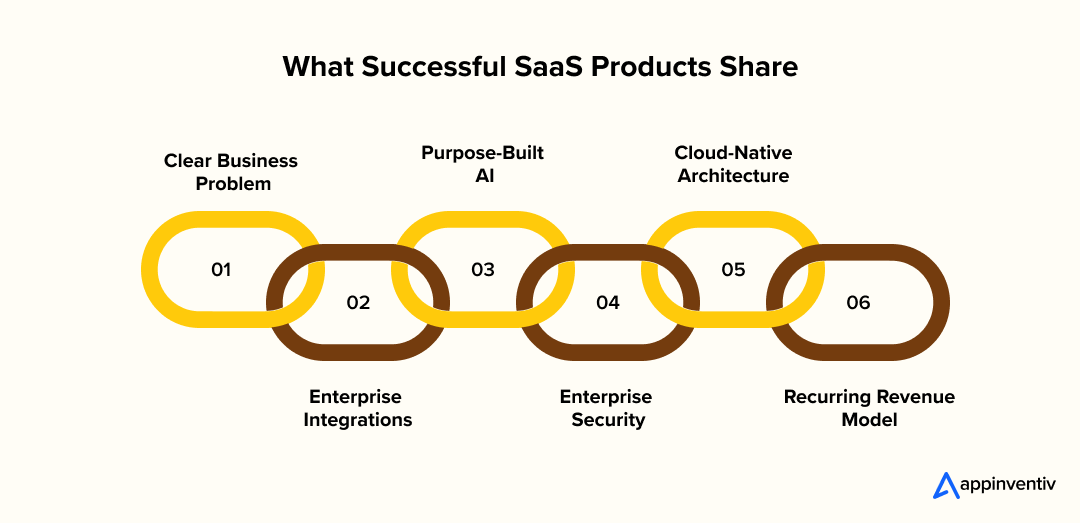
Successful SaaS business ideas rarely win on features alone. Winning products solve real operational problems. They connect cleanly with current corporate systems. They deliver lasting financial value as customer needs change. The best software-as-a-service ideas share specific traits that make them successful.
Solve a Specific Business Problem
The strongest products focus on one clear challenge. They do not try to serve every corporate use case. A focused tool targets reducing procurement delays or improving compliance. This strict focus drives high user adoption. It secures long-term customer retention.
Fit Into Existing Enterprise Systems
Enterprise software must work with the tools businesses already use. Corporate buyers look for an API-first architecture and prebuilt connections. The new software must connect with resource planning and customer data systems. This prevents isolated data silos. The tool becomes a natural part of daily operations.
Build AI Around Business Value
Artificial intelligence delivers the greatest impact when it improves daily tasks. Features like predictive analytics and smart agents reduce manual effort. Intelligent document processing speeds up operational workflows. These capabilities help corporate teams make faster choices.
Meet Enterprise Security Requirements
Security plays a central role when leaders select software. Buyers expect role-based access control and single sign-on from day one. The software must include data encryption and detailed audit logs. It must comply with global standards like ISO 27001, SOC 2, and GDPR.
Build for Long-Term Growth
Modern SaaS platforms require a cloud-native architecture. Today, 54% of enterprise workloads already run in the public cloud. Businesses exploring this shift often start by reviewing AWS SaaS costs before committing to a cloud-native build.
Microservices and containers allow platforms to support more users. The infrastructure handles larger workloads and new markets without major changes. A subscription revenue model combines with these foundations. This combination supports steady growth over time.
How to Evaluate a SaaS Product Idea Before Development
Few software-as-a-service ideas deserve immediate funding. Corporate leaders must check the market value before spending capital on engineering and servers. A thorough review reduces technical risks and accurately ranks your investments. This process guides you in building software that addresses a clear operational struggle.
| Evaluation Area | Questions to Ask |
|---|---|
| Business Problem | Does the tool fix a regular struggle that corporate buyers will pay to solve? |
| Market Demand | Is market demand rising, and does your tool fix flaws in current products? |
| Technical Feasibility | Can smart tools, cloud servers, and data connections support your product goals? |
| Revenue Potential | Does the software support regular subscriptions and upgrades for large buyers? |
| Competitive Advantage | Does the application stand out through custom automation and specialized data? |
Winning software beats current alternatives by fixing specific problems faster. Checking these metrics early accurately directs your engineering team. This upfront work prevents waste and builds a product with higher commercial success.
The Future of SaaS Product Development
The next phase of SaaS business ideas growth belongs to platforms that analyze data and execute tasks. Future systems will do more than store and display information. Corporate investment over the coming years will focus on specific new technologies.
- Autonomous business systems. These platforms execute complete corporate workflows with minimal human intervention.
- Smart agent networks. Groups of artificial intelligence agents will collaborate across resource planning, customer data, and finance tools.
- Private intelligence models. Companies will train custom models on proprietary data to improve accuracy, enhance security, and strengthen regulatory compliance.
- Operational digital twins. These virtual models simulate corporate decisions and predict outcomes before changes are implemented in actual operations.
- Outcome-driven software. Corporate buyers will measure software value by clear financial results rather than overall feature counts.
The largest software opportunities lie in products that integrate intelligent tools, corporate data, and industry knowledge. These systems solve complex business problems for the entire enterprise.
Build proprietary SaaS that supports long-term growth rather than adapting your business to generic platforms.

Why Custom SaaS Development Is Becoming the Enterprise Choice
Off-the-shelf software-as-a-service works well for basic business needs. Standard tools eventually limit growth and the ability to perform unique operations. Custom software development gives leaders full control over features and technical choices. Many leaders extend this control by learning how to take SaaS to mobile as part of their growth strategy.
It helps companies adapt tools to their exact needs. The decision comes down to business value, especially for new SaaS startup ideas. Top companies want software that creates a true competitive edge.
| Off-the-Shelf SaaS | Custom SaaS Development |
|---|---|
| Standard workflows for broad markets | Workflows built around internal corporate operations |
| Limited modification choices | Features tailored to specific business requirements |
| Generic artificial intelligence tools | Custom intelligence models trained for industry use cases |
| Vendor-controlled product plans | Full corporate ownership of features and releases |
| Fixed connections to external tools | Direct links to resource planning, databases, and core systems |
Building corporate software requires much more than basic engineering. Leaders must establish a robust cloud infrastructure and intelligent tools. The project demands secure data connections and strict compliance planning. Expandable servers must support long-term corporate growth.
Many companies choose custom software development today. Modern applications create a true competitive edge instead of just running daily operations.
Launching a complete platform requires great technical skills. Engineering teams must master product strategy and modern cloud systems. Appinventiv designs and builds secure, AI-driven software. These tools expand cleanly to match changing business requirements.
Build the Next Generation of SaaS Products with Appinventiv
The demand for AI-powered SaaS development services is growing fast. The companies that invest today will have more time to refine their platforms, build customer loyalty, and establish a stronger market position. Waiting often means entering a market where expectations and competition have already moved ahead.
Why enterprises choose Appinventiv
| Enterprise SaaS Delivery at Appinventiv | |
|---|---|
| Software products delivered | 2,000+ |
| Industries served | 35+ |
| Years of experience | 10+ |
| On-time delivery | 95% |
| Uptime SLA | 99.90% |
| Faster deployment | Up to 2x |
Our teams help enterprises:
- Validate SaaS product ideas before development begins.
- Design scalable cloud-native architectures.
- Build AI-powered features and enterprise integrations.
- Develop industry-specific SaaS platforms with enterprise-grade security.
- Scale products through continuous engineering and platform improvements.
Consider Ility, a white-label software platform built for the commercial real estate industry. The system runs on Amazon cloud networks and uses Microsoft Azure for emergency data backup. The software connects directly with Stripe payment tools and DocuSign contract systems.
This platform boosted property occupancy rates by 40 percent. It raised the landlord’s return on investment by 2 percent. Modern development methods also shortened software update cycles. New feature releases dropped from five months down to just 45 days.
Every quarter, new SaaS business ideas enter the market, raising customer expectations. If your product idea can create a competitive edge, now is the time to turn it into a market-ready platform.
Let’s connect and build the saas platform your industry needs next.
Frequently Asked Questions
How do you validate a SaaS product idea before investing in development?
Confirm that your SaaS business ideas solve a real business problem first. Interview potential users and analyze current market alternatives. Find market gaps and test demand with a minimum viable product. This work confirms market fit and gathers direct user feedback. It reduces the financial risk before you spend capital.
What are the most profitable SaaS product ideas?
The most profitable SaaS ideas address common corporate challenges and create steady subscription revenue. Buyers invest heavily in smart agent platforms and industry automation. Compliance tools, security software, and purchasing systems attract strong funding. These tools deliver clear financial returns and keep clients in the long term.
Should enterprises build a custom SaaS platform or buy an existing one?
Standard SaaS platforms work well for common business tasks. Custom development becomes necessary when you need unique workflows. Choose a custom build for advanced intelligence tools and deep system connections. It serves specialized compliance rules. A custom tool gives your company full ownership of data and the product plan.
What features should every enterprise SaaS platform include?
Corporate software must combine strong features with absolute reliability. Every tool needs clear API connections and role-based access controls. Include single sign-on, multi-factor authentication, and data audit logs. The system must use modern cloud design and smart automation. It must meet strict standards like ISO 27001, SOC 2, and GDPR.
Why choose Appinventiv for custom SaaS product development?
Appinventiv designs and builds smart software tailored to exact corporate needs. We have delivered more than 2,000 products across 35 industries. Our teams combine product strategy, cloud engineering, and intelligence expertise. We build secure software that supports long-term commercial growth.


Fast 2-minute response, fully NDA-protected.

How to Build a SaaS Platform Like Canva: Costs and Development Strategies
The recent surge in remote work and digital content creation has significantly boosted the demand for SaaS design platforms like Canva, used widely by individuals and businesses alike. These platforms are not just tools for creating engaging visual content but have become essential in various professional contexts, including presentations, graphic design, and more. Serving a…

A Comprehensive Guide on Getting Your SaaS Business on Mobile App
There are a number of benefits that come entailed with the integration of SaaS mobile app development within an enterprise solution, benefits ranging from low cost, easy maintenance, zero space invasion, and the freedom from worrying about system upgrades, amongst others. While these are the customer/enterprise side benefits, for the SaaS vendors, the benefits are…