




































IoT in Logistics: Benefits, Use Cases & Challenges

 Share -



- 01How IoT Is Reshaping the Logistics Industry
- 02Strategic Benefits of IoT in the Logistics Industry
- 03IoT Connectivity Technologies Used in Logistics and Transportation
- 04Core Applications and Use Cases of IoT in Logistics with Real-World Examples
- 05Overcoming IoT Adoption Challenges in Logistics
- 06Steps to Implement Internet of Things in Logistics & Transportation Industry
- 07Transform Your Logistics Operations with Appinventiv’s IoT Expertise
- 08FAQs

Key takeaways:
- IoT gives logistics teams real-time visibility into shipments, vehicles, inventory, and cargo conditions.
- Connected devices help reduce delays, lower costs, and improve operational efficiency.
- Common use cases include fleet tracking, predictive maintenance, warehouse automation, and cold chain monitoring.
- IoT adoption brings challenges such as security risks, integration issues, and data storage complexity.
- A successful IoT strategy starts with clear goals, the right use cases, and secure integration with existing systems.
Moving products is only one part of logistics. The real challenge lies in maintaining complete visibility and control across every stage of the journey. Inconsistent data, fragmented systems, and manual tracking processes can lead to delays, inefficiencies, and poor customer experiences.
The domino effect can occur when an error, over/under delivery, vehicle breakdown or stockout happens in the supply chain and leads to increased costs, delays and loss of customer confidence.
The growth of complexity has been propelling the usage of IoT in Logistics. Connected devices provide real-time visibility into vehicle location, vehicle performance, inventory status, cargo condition, and warehouse activities. Logistics providers can identify risk, manage resources, and make more timely and informed logistics decisions before the issue escalates.
By implementing IoT in various logistics applications like fleet management, asset tracking, warehouse automation, and predictive maintenance, enterprises have created smarter and more interconnected logistics systems that can match market dynamics.
In this blog, we will see how IoT is changing the way logistics businesses operate, its benefits, use cases with real-life applications, implementation steps, and its core challenges. Let’s have a deeper look at those.
Transform fleet operations, asset tracking, and warehouse management with custom IoT solutions designed for modern logistics networks.
How IoT Is Reshaping the Logistics Industry
The impact of IoT on logistics is much deeper than real-time tracking and fleet management. Advanced connected sensors, smart devices, and data-driven platforms provide companies with full visibility of operations, automate repetitive tasks, maximize asset use, and enhance decision making in the transportation, warehousing and distribution functions.
This means businesses can lower their operating expenses, decrease downtime, maintain better stock levels and provide a more consistent customer experience.
The IoT in logistics market continues to rapidly expand, mirroring the use of IoT and related connected technologies within the sector. The Global Internet of Things in Logistics Market is projected to reach $161.17 billion by 2032, growing at a CAGR of 15.1% (Source: Research and Markets).
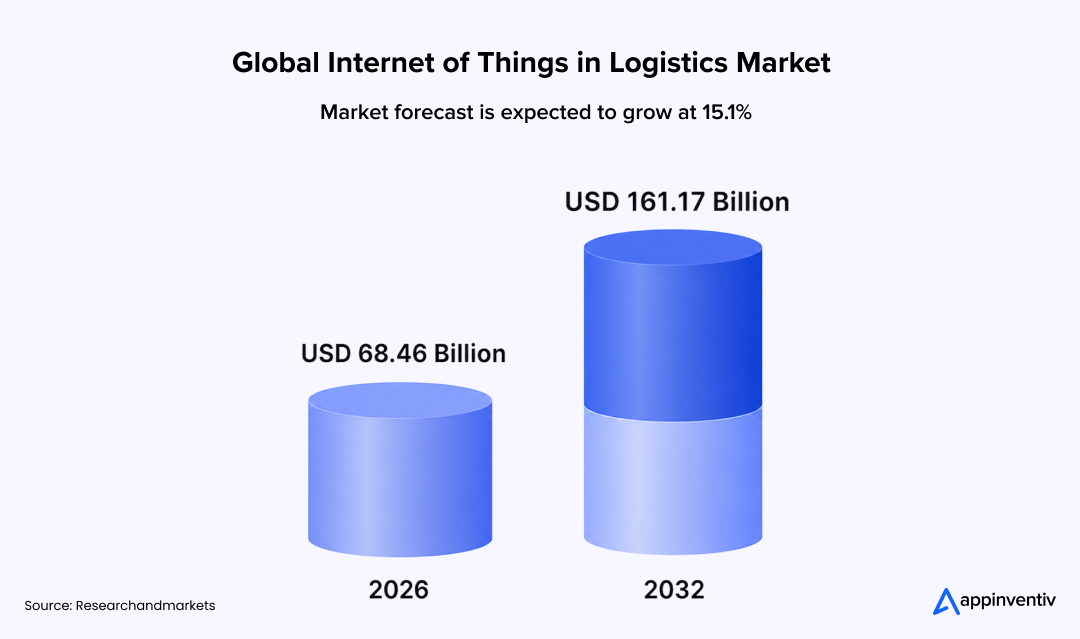
This growth is due to the emerging need for real-time visibility, predictive maintenance, intelligent fleet management, and automated logistics operations. In times of digital transformation, IoT will remain a key component to enhance logistics industry efficiency, scalability, and operational resilience.
Strategic Benefits of IoT in the Logistics Industry
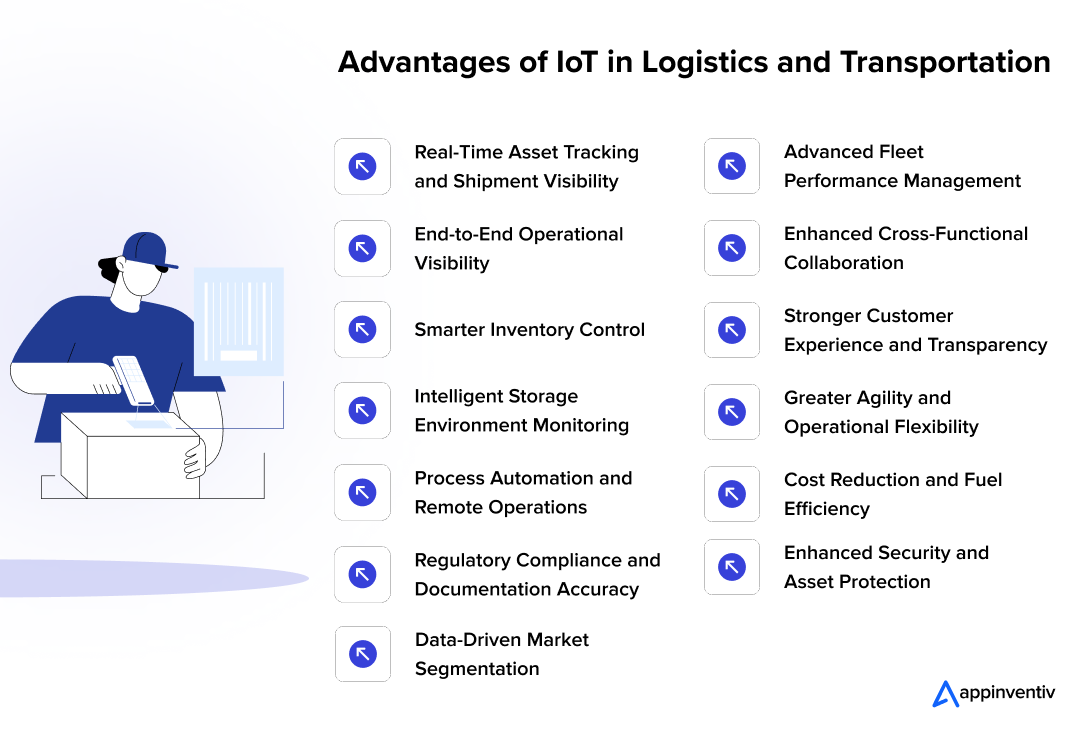
IoT is transforming logistics into a connected ecosystem by enabling real-time data collection, visibility, and operational control. Let’s explore the key benefits of IoT in logistics.
Real-Time Asset Tracking and Shipment Visibility
One of the most advantageous aspects of Internet of Things systems is the ability to collect, transmit, and analyze data in real time using specialized sensors. Since you receive the data instantly, these advantages make the movement and transportation of goods simple to oversee and organize.
IoT in logistics enables professionals to promptly assess in-stock products and their condition, react quickly to changes in order status, etc.
End-to-End Operational Visibility
Every phase of logistics operations is affected by IoT. Raw material suppliers use IoT devices to collect data on variables affecting timely, high-quality availability.
Additionally, they gain from keeping track of products across different shelves to improve inventory control and from tracking customer activity to improve display and space usage. These are among the most valuable IoT applications in logistics industry environments.
Smarter Inventory Control
Inventory must be tracked and controlled to effectively manage a warehouse and distribution network. With the help of connected devices, organizations can collect and analyze stock levels and inventory positions to manage inventory more efficiently.
IoT in transportation and logistics enables businesses to monitor supply levels in real time, gain visibility into inventory status, make informed decisions, and prevent product shortages.
Intelligent Storage Environment Monitoring
Environmental sensor tools developed through IoT transportation solutions allow management to monitor cargo conditions and take immediate action when something changes.
For instance, connected systems collect information on pressure, humidity, and vehicle interior temperature, as well as other variables that could compromise the integrity of the goods, and automatically adjust the environment accordingly.
Process Automation and Remote Operations
Modern organizations depend heavily on automation to reduce the amount of physical labor required, labor costs, the risk of human error, the speed at which resources are delivered, and other factors.
Connected devices and IoT-powered robotics help automate logistics workflows, reducing manual effort and improving operational efficiency. Drones can be used as IoT tools for managing warehouses, or you can build an entire infrastructure that can be operated remotely to track logistics status.
Regulatory Compliance and Documentation Accuracy
Businesses must adhere to all local legal and regulatory obligations. In terms of managing required documentation and abiding by the law, IoT assists organizations in maintaining regulatory compliance and litigation prevention.
An IoT application in the logistics industry framework provides a digital audit trail with precise timestamps and quick and accurate reports. This is one of the most significant uses of IoT in logistics.
Data-Driven Market Segmentation
Retailers may establish effective strategies by combining connected technologies and operational data to better understand their products, consumers, and demand. Data gathered during the product cycle aids market research and allows for product segmentation with the target market in mind. This is another practical advantage of IoT in transportation and logistics.
Advanced Fleet Performance Management
These kinds of IoT transportation solutions demonstrate the impact of connected technologies on fleet operations. They are frequently incorporated into more intricate systems.
Businesses need to gather a lot of real-time data regarding the availability and condition of each vehicle because they can run many vehicles. Tools for fleet management assist businesses in streamlining their overall workflow.
Enhanced Cross-Functional Collaboration
Complex operational networks frequently degenerate into numerous data silos. Bottlenecks develop as teams use different sources of information and do not communicate effectively. This is particularly true for businesses using outdated systems with little data analytics capabilities.
IoT in logistics solutions breaks down data silos by utilizing cloud and data analytics services, providing one version of the truth to all teams. It improves teamwork and, as a result, makes problems easier to resolve quickly.
Stronger Customer Experience and Transparency
Software platforms powered by IoT applications in logistics industry use cases are helpful for customers and management alike. Many businesses offer specialized customer-facing apps that allow users to track deliveries through GPS and monitor order status in real time.
It helps build trust and organize the accounts of completed orders, so customers can track the delivery progress of their goods to their homes.
Greater Agility and Operational Flexibility
IoT in transportation and logistics provides managers with an in-depth understanding of the movement of goods, which aids merchants and operations managers in deciding how many units of each product to order.
The Internet of Things also decreases the effect of human error by improving shipping, asset tracking, and on-road navigation with high precision, making IoT transportation systems essential for flexible and responsive operations.
Cost Reduction and Fuel Efficiency
One of the major advantages of IoT in the transportation industry is that it helps reduce operational costs and enhance resource utilization. Real-time data of fuel utilization, vehicle performance, routing efficiency, idle time, etc., is available from connected sensors and telematics systems.
By optimizing fleet operations, businesses can cut down on fuel costs, maintenance expenses and transportation efficiency by identifying inefficiencies and making the necessary adjustments.
Enhanced Security and Asset Protection
The security of vehicles, cargo and high-value assets is a major concern for logistics providers. The use of IoT tracking devices, smart sensors, and geofencing technology provides real-time asset tracking and asset movement.
Organizations can get instant notification of unauthorized access, route deviation or suspicious activity, which can help minimize asset theft and loss and better protect assets throughout the logistics chain.
IoT Connectivity Technologies Used in Logistics and Transportation
Each logistics application has particular needs in terms of coverage, bandwidth, power consumption, mobility, and costs for deployment. The following table highlights some of the most popular IoT connectivity technologies and their key applications in today’s logistics and transportation industry.
| Connectivity Technology | Typical Logistics Use Cases | Coverage |
|---|---|---|
| 5G/LTE Cellular | Fleet tracking, connected vehicles, video monitoring | Wide |
| NB-IoT | Remote sensors, asset monitoring | Wide |
| LoRaWAN | Smart warehouses, yard management, asset tracking | Long Range |
| Bluetooth Low Energy (BLE) | Indoor tracking, worker safety, warehouse assets | Short |
| Wi-Fi | Warehouse automation, robotics, inventory management | Local |
| Satellite IoT | Ocean freight, remote transportation routes | Global |
| RFID | Inventory management, pallet tracking, package identification | Short |
| Zigbee | Warehouse monitoring, smart lighting | Short-Medium |
| Z-Wave | Facility monitoring and building automation | Short |
| LTE-M (Cat-M1) | Mobile asset tracking, fleet monitoring | Wide |
| UWB (Ultra-Wideband) | High-precision indoor location tracking | Short |
| Private 5G Networks | Smart logistics hubs, ports, distribution centers | Campus-wide |
| Mesh Networks | Large warehouses and industrial facilities | Medium |
| Ethernet/Industrial Ethernet | Fixed industrial equipment and automation systems | Local |
Core Applications and Use Cases of IoT in Logistics with Real-World Examples
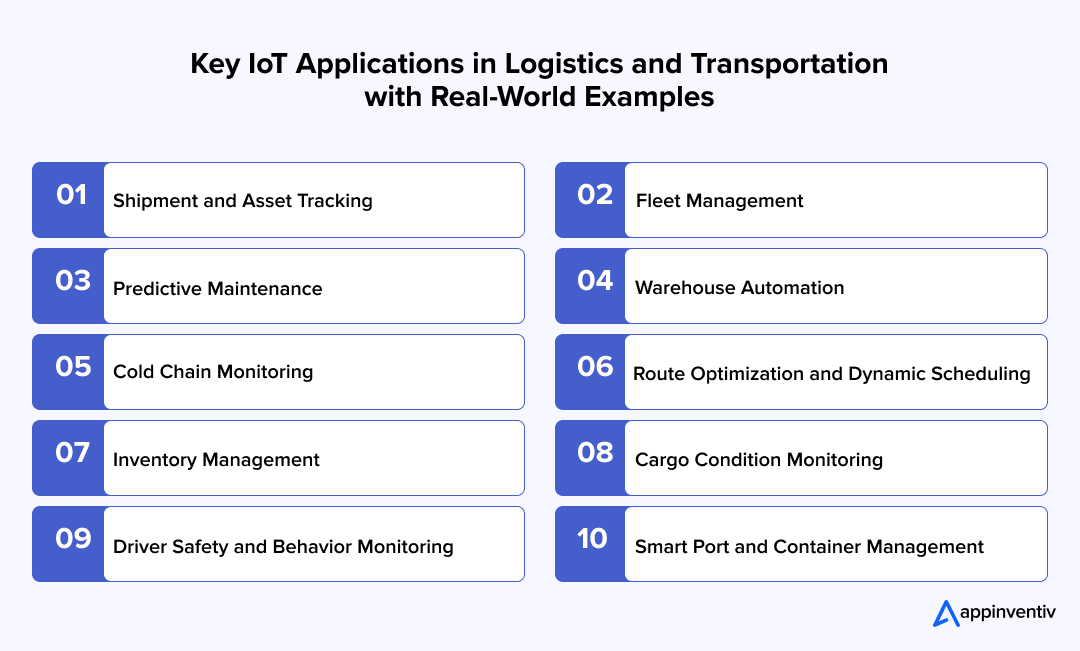
As logistics networks become more complex, businesses are increasingly relying on IoT to improve visibility, efficiency, and operational control. The following IoT use cases in logistics illustrate how leading organizations are leveraging connected technologies to streamline operations and improve customer service.
Shipment and Asset Tracking
One of the most frequent IoT applications in logistics industry’s operations is real-time shipment tracking. GPS tracking, the use of RFID tags and connected sensors aid companies in tracking the location, condition, and status of goods on their way. This helps increase transparency, minimise losses and allow quicker reactions to disruption.
Real-Life Example:
In order to offer end-to-end visibility throughout the DHL global logistics network, the company is using smart tracking technologies and solutions with Internet of Things (IoT) capabilities. It monitors the environment in real-time for temperature-sensitive products, ensuring product quality and compliance with regulations.
Fleet Management
Connected vehicles have a constant flow of operational data, such as fuel consumption, route efficiency, vehicle location, driver behaviour and engine health. The insights gained by businesses through IoT in transportation and logistics can help them to optimize their routes, enhance safety, and reduce transportation expenses.
Real-Life Example:
In the United Parcel Service (UPS) extensive transportation network, telematics and connected vehicle technologies are being used to optimize delivery routes, minimize idle time, and maximize fleet utilization.
Predictive Maintenance
Instead of waiting for equipment failures, organizations can continuously track the status of vehicles and assets using IoT sensors and detect potential problems early. This can help maintenance personnel to solve problems early to prevent costly disruption.
Real-Life Example:
By using connected monitoring systems and analytics, FedEx can gain insights into fleet performance and proactively identify maintenance needs, which helps minimize downtime and service disruptions.
Warehouse Automation
IoT technology is increasingly used in modern warehouses, including the use of interconnected inventory systems, smart shelves, autonomous agents, and sensors. These technologies help keep inventory accurate, speed up order processing and reduce manual work.
Real-Life Example:
At Amazon’s fulfillment centers, connected robotics and warehouse intelligence technologies are used throughout to manage inventory movement, inventory picking, and inventory storage.
Cold Chain Monitoring
Pharmaceutical, food and beverage and healthcare products must be transported and stored in a controlled temperature. IoT sensors monitor environmental conditions at all times, notifying the stakeholders if environmental limits are breached.
Real-Life Example:
Maersk implements connected refrigerated container solutions which offer the visibility of the temperature, humidity and cargo status in real time during international shipping.
Route Optimization and Dynamic Scheduling
Reliability of deliveries can be affected by traffic jams, the weather, and any other unforeseen events. Advanced IoT transportation systems or automotive IoT constantly monitor the route and adjust to the route dynamically.
Real-Life Example:
XPO Logistics leverages cutting-edge telematics and real-time operating data to optimize the routing of its logistics network and transportation performance.
Inventory Management
Conveyorized inventory systems automatically monitor stock rotation, availability and storage. This will help to minimize stockouts, prevent overstocking, and increase forecasting accuracy.
Real-Life Example:
Walmart has adopted the RFID technology and inventory solutions based on IoT to get better visibility and streamline replenishment in its distribution and retail operations.
Cargo Condition Monitoring
Some products must be continually monitored during transit. IoT-based sensors can monitor vibration, shock, humidity, pressure, and temperature, guaranteeing the safety of goods during transportation.
Real-Life Example:
With smart sensor technology, DB Schenker keeps track of valuable and sensitive goods, thus helping customers minimize losses due to product damage.
Driver Safety and Behavior Monitoring
Connected vehicle systems can monitor speeding, hard braking, driver fatigue and unsafe driving behavior. This information is used to enhance driver performance and reduce the risks of accidents for logistics providers.
Real-Life Example:
J.B. Hunt Transport Services (JBHT) leverages telematics and connected fleet solutions to drive a safer driver program and better fleet performance.
Smart Port and Container Management
Major ports and shipping companies are leveraging IoT technologies to enhance container tracking, cargo handling, equipment utilization, and vessel coordination. These deployments represent some of the most advanced examples of IoT in logistics and transportation industry currently operating at a global scale.
Real-Life Example:
A.P. Moller-Maersk has made a significant investment in connected container innovations and digital logistics platforms to enhance visibility in global shipping.
Overcoming IoT Adoption Challenges in Logistics
Many businesses continue to manage deliveries and track assets using traditional legacy systems despite the growing demand for digital transformation. Having said that, the shifts in business operation methodology bring along some of their challenges. Listed below are some of the challenges you might face while implementing IoT.
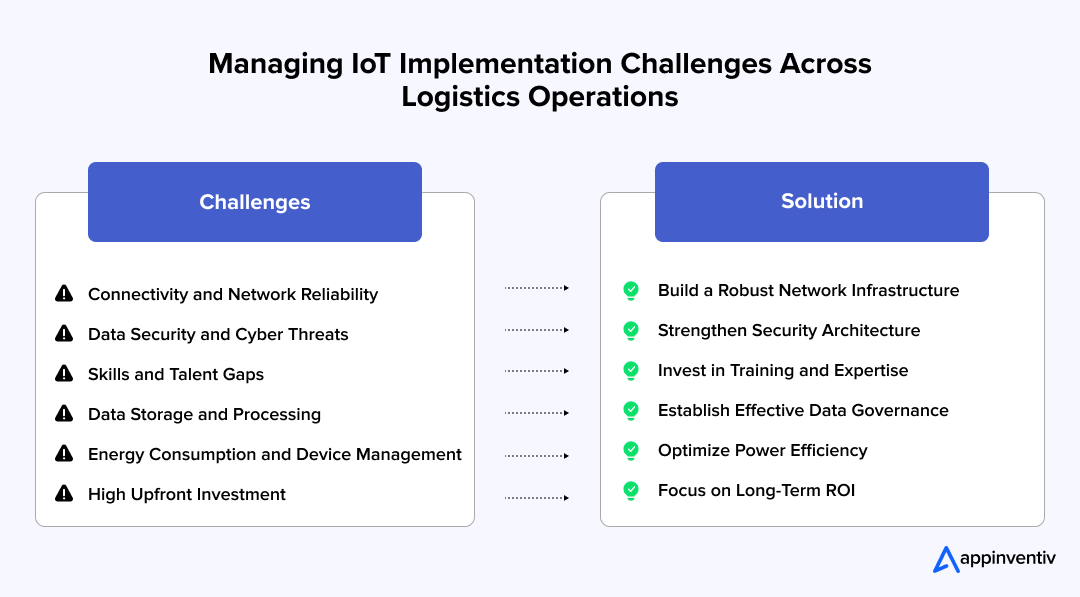
Sustainable Connectivity and Network Reliability
Internet service disruption appears to be one of the main dangers to the effectiveness of the Internet of Things in logistics. This is because having optimum bandwidth is of utmost importance during deployment.
Solution: In order to function properly, connected platforms typically demand a large amount of bandwidth and a powerful server farm. You must set up a reliable network connection with enough speed to enable continuous data collection and transfer to fully utilize all IoT features.
Data Security and Cyber Threats
Logistics managers must concentrate on creating a secure architecture before fully switching all processes to connected platforms. Hacker assaults, breaches, and data processing and storage weaknesses can harm a company’s reputation and increase the likelihood of failure.
Solution: The good news is that by utilizing the concepts of machine learning and cryptographic hardware monitoring, company management can lessen outside security concerns of IoT in logistics while still having secure access to all stored data.
Lack of Relevant Skills and Expertise
Warehouse employees and truck drivers will need extensive training to adjust to managing networked systems. It takes a lot of effort to describe the security procedures and the rules for utilizing company platforms.
Solution: Given the absence of specialized IoT training, finding a team with the necessary skills to create a solution tailored to the business is a challenge in and of itself. Logistics managers should be aware of the fact that recruiting and employing talented workers might take a lot of time, given the global talent shortage in technology.
Data Storage and Management Complexity
With effective IoT implementation in logistics, the amount of data that sensors collect will increase in a geometric progression, growing by a factor of 10 every working hour. You will therefore need sufficient server power to store and process the given data.
Solution: Company management will need to develop AI-powered data governance policies and look for data scientists and analysts to ensure that they draw the appropriate conclusions from IoT-based insights.
Energy Consumption and Device Efficiency
IoT devices are gadgets designed to function continuously for an extended period. It is very important in industrial IoT systems with thousands of tiny IoT devices. If the battery life of every IoT device is not particularly long, maintaining such a massive IoT system can be extremely time- and money-consuming.
Solution: Long battery life, low-energy communication within systems, and low energy consumption are crucial problems to resolve.
High Initial Implementation Costs
Even though one of the objectives of deploying IoT apps is to lower operational expenses, doing so takes significant investments during the initial phase that can be difficult, particularly for young businesses just starting.
Solution: While the initial investment can be substantial, the long-term benefits of improved operational efficiency, reduced manual effort, enhanced visibility, and lower recurring costs can help organizations realize a positive return on investment over time.
Build secure, scalable, and future-ready IoT ecosystems with Appinventiv’s end-to-end expertise.

Steps to Implement Internet of Things in Logistics & Transportation Industry
Implementing IoT solutions in logistics and transportation is not an easy task, and just placing a connected device isn’t enough. The next steps are a practical guide for putting IoT solutions into action in logistics operations.
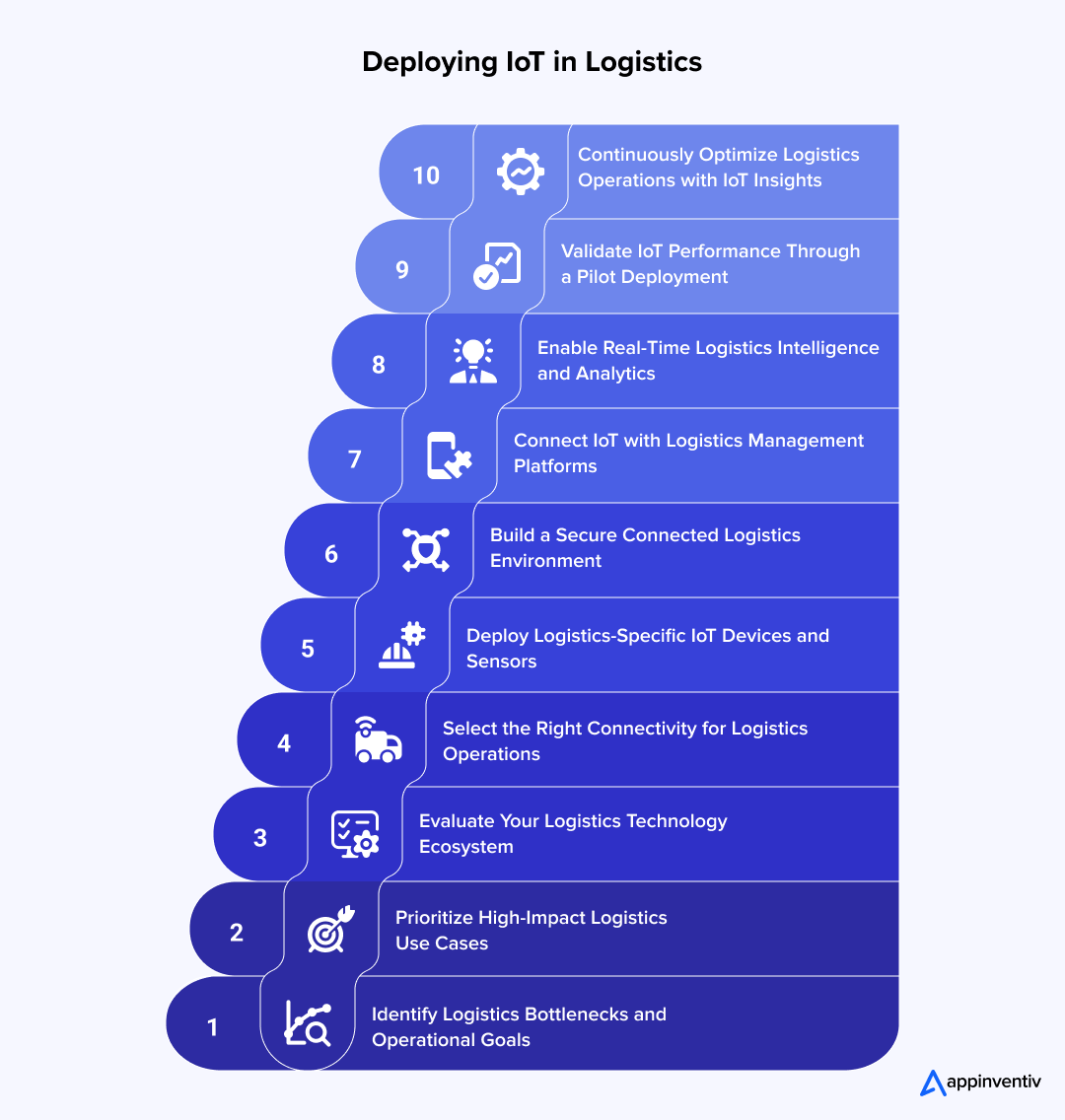
Identify Logistics Bottlenecks and Operational Goals
The first step is to identify the organization’s problem(s) to solve. This can be due to restricted visibility into the shipment, poor fleet management, inaccurate inventory records, high fuel expenses, or slow warehouse processes. Well-defined goals enable organizations to prioritize IoT projects and effectively gauge their success.
Prioritize High-Impact Logistics Use Cases
After business goals are set, determine the use cases that can be best addressed through the use of IoT. The most frequently mentioned use cases are fleet management, asset tracking, cold chain monitoring, predictive maintenance, route optimization, supply chain automation, and inventory management.
An IoT logistics case study can provide the essential insight to understand that there are compelling use cases to leverage and how similar companies have done so.
Evaluate Your Logistics Technology Ecosystem
Assess the organization’s existing logistics, Transportation Management Systems (TMS), warehouse management, network infrastructure and data management systems. Understanding technology gaps helps ensure smooth integration and supports the successful deployment of IoT applications in logistics industry environments.
Choose the Right Connectivity Technology
The various logistics environments need various connectivity options. The selection of the technology used should be based on coverage needs, mobility requirements, data volumes, and power consumption, among other factors, such as 5G, LTE-M, NB-IoT, LoRaWAN, Wi-Fi, BLE, RFID, or Satellite IoT.
Deploy Logistics-Specific IoT Devices and Sensors
Choose sensors and devices for the application. GPS trackers, RFID tags, environmental sensors, telematics devices, smart cameras and vehicle monitoring systems are frequently used in logistics and transportation systems.
Construct a Secure IoT Architecture
Security needs to be taken into account from the outset of implementation. To mitigate the potential risk of cyber threats, organizations must implement various cyber security measures to ensure that their sensitive operational data remains secure, including secure device authentication, data encryption, access controls, and monitoring systems.
Connect IoT with Logistics Management Platforms
IoT platforms should be integrated with existing enterprise applications such as Transportation Management Systems (TMS), Warehouse Management Systems (WMS), Enterprise Resource Planning (ERP) software, and analytics platforms. This enables seamless data sharing across departments.
Put in Place Data Collection and Analytics
The key to the value of IoT is its ability to provide insights that can be acted on. To enable the effective use of data from connected devices for making decisions and improving operations, businesses need to put processes in place to gather, store, analyse and visualise the data.
Validate IoT Performance Through a Pilot Deployment
Organizations should test a project on a smaller scale in a certain operational area before it is fully rolled out. Prototyping IoT solutions on a smaller scale validates performance, challenges and estimates potential return on investment.
Monitor, Optimize and Continuously Improve
The implementation of IoT is not a project, but a process. To ensure that the devices are optimized and can be improved in the future, organizations should continually monitor their performance, reliability of the network, quality of data, and business outcomes.
Transform Your Logistics Operations with Appinventiv’s IoT Expertise
By embedding more data into logistics processes, the future of IoT in logistics goes beyond just tracking assets to predictive maintenance, autonomous fleet operations, intelligent warehouses and AI-driven decision-making. Businesses that deploy connected technologies in the here and now will be better equipped to enhance visibility, optimise resources and create more resilient logistics networks that can adjust to changing market needs.
Appinventiv, as a reliable logistics software development company, has an industry-wide, global reputation for designing, building and scaling new digital ecosystems to meet the operational requirements of enterprises.
Our experts built Ility, a cloud-based SaaS platform integrated with smart access systems and connected infrastructure technologies, enabling seamless management of modern digital environments.

Additionally, we have also developed ActiDrive, an IoT-powered connected mobility platform that enables real-time driver monitoring, trip analytics, and enhanced driving experiences through connected technologies.
Building on this experience, we help enterprises modernize operations and accelerate digital transformation through scalable, secure, and custom-built IoT solutions for logistics & transportation industry needs.
Get in touch with our team of experts right away!
FAQs
Q. How much time does it take to implement IoT in logistics?
A. Implementation periods are subject to the complexity of the project, the need for infrastructure and the extent of integration. A simple single warehouse, fleet or asset deployment can be done in 2-4 months, and enterprise deployments that include multiple warehouses, fleet and analytics systems can take up to 6-12 months or longer.
Q. How much does it cost to implement IoT in logistics?
A. The cost of deploying IoT solutions ranges from $30,000 to $150,000+ for small and mid-size deployments. Custom software, connected devices, cloud infrastructure, analytics platforms and system integrations can cost more than $250,000 to $1 million+ for large-scale enterprise solutions, depending on business needs.
Q. What are the biggest challenges of IoT in the transport and logistics industry?
A. The main issue of implementing IoT in logistics is data security and privacy because many IoT device manufacturers ignore even the most fundamental security requirements for IoT systems. High maintenance expenses, energy consumption by IoT technology, a lack of IoT implementation skills, connection problems, etc., are some additional difficulties of IoT in the logistics industry.
Q. What IoT devices are commonly used in logistics operations?
A. Logistics also features the following common IoT devices:
- GPS tracking devices
- RFID tags and readers
- Telematics systems
- Temperature sensors and humidity sensors.
- Fuel monitoring sensors
- Vehicle diagnostics sensors
- Bluetooth Low Energy (BLE) beacons
- Micro-nano cameras and vision systems
- Cargo condition monitoring sensors.
- Asset tracking devices
- Smart warehouse scanners
- Edge devices & gateways connected
Q. What is the ROI of implementing IoT in logistics?
A. The ROI of IoT in logistics will depend on the specific application, but it can typically be measured within 12-24 months. They generally lead to fuel savings, decreased asset utilization, lower maintenance expenses, fewer lost shipments, better inventory accuracy and improved operational efficiency and can often save 10–30% on major logistics costs.


Fast 2-minute response, fully NDA-protected.

How AI Is Transforming the Logistics Industry: Use Cases & AI Adoption Challenges in 2026
Key takeaways: Use Cases: High-impact use cases of AI in logistics in Australia are concentrated in routing, warehousing, and demand forecasting, where decisions are frequent and cost-sensitive. Implementation: Successful adoption depends on sequencing—data readiness, integration with legacy systems, and embedding AI into real workflows. Cost: The cost to implement AI in logistics in Australia typically…

How to Build a Warehouse Management System: A CIO's Guide for Australian Enterprises
Key takeaways: A WMS is now a boardroom decision, not an ops line item with AU online retail hit $82.6B in 2025, up ~14% year-on-year. Success depends on integration and data quality first; AI, robotics, and automation only pay off once that foundation is solid. WMS development cost ranges between AUD 70,000 and 700,000 or…
Computer vision is no longer a futuristic concept confined to sci-fi books and movies. The technology is everywhere, subtly reshaping the way users interact with technology. From facial recognition on smartphones to quality inspections on factory floors, computer vision helps machines interpret and understand images, videos, and other visual inputs. This powerful technology has proven…