



























 Leader in AI-First Product Engineering Read Full Article
 IT Managed & Outsourcing
 Contact Us
With more than a decade of hands-on delivery, we build IoT systems that run inside factories, hospitals, retail networks, and global supply chains. These aren’t lab projects but live platforms managing thousands of devices, processing high-volume telemetry, and supporting operations where downtime is not an option.
Our Core Capabilities





















A decade of consistent delivery,
measured in outcomes
Digital solutions executed from concept to production
Industry verticals served
Operational processes restructured
Technical specialists across global teams
Recognitions and awards earned internationally
Client retention and satisfaction rate





Our Services


We provide structured IoT consulting services that help enterprises clarify their connected strategy, assess technical readiness, and align device ecosystems with operational priorities and regulatory obligations.
• IoT Strategy and Roadmap Development
Define the plans for phase adoption, linking investments in devices to quantifiable business results.
• Architecture and Governance Planning
Plan communication models, data ownership structures and adherence to standards like GDPR, HIPAA, and ISO/IEC 27001.

We create IoT applications that seamlessly integrate with devices, cloud platforms, and business systems within a managed, robust app framework designed for real-world operating environments.
• Custom IoT Application Engineering
Develop industry-specific use-case applications tailored to operational requirements.
• Enterprise System Integration
Combine IoT applications with CRM, ERP, analytics systems, and legacy systems to maintain data continuity.

We design wearable IoT solutions that ensure the smooth transfer of device data to mobile and cloud environments and maintain performance consistency and regulatory compliance.
• Customized Health and Wellness Apps
Build patient monitoring, biometric tracking, and lifestyle analytics on the basis of structured data exchange.
• Flexible Wearable Integration
Connect workforce and field wearables with enterprise dashboards for real-time insights on day-to-day activities.

We build IoT platforms with disciplined validation and lifecycle management so that systems are not affected by changes in device unit volume, firmware versions, or regulatory requirements.
• System Validation and Performance Testing
Test the application on devices to verify that the system is resilient to connectivity issues.
• Lifecycle Support and Optimization
Control firmware, compliance updates, and performance optimization to ensure IoT environments keep pace with business needs.

Our systems combine artificial intelligence models with IoT systems to transform the continuous data provided by devices into organized decisions that drive operations.
• Web Plus Telemetry Intelligence Processing
Model data analytics and ML on real-time device streams in order to detect anomalies and predict patterns.
• Automated Operational Workflows
Automation of operations to enhance responsiveness and control costs.

Our Industrial IoT systems are designed to connect production equipment, monitoring and enterprise controls in manufacturing and energy processes.
• Machine-to-Machine Coordination
Enable direct equipment interaction supported by analytics that reduce downtime and improve asset utilization.
• Scalable Industrial Deployment
Design IIoT systems in a way that they can be deployed in top industry facilities while complying with regulations.

We develop Internet of Medical Things applications that link clinical devices with secure analytics platforms and hospital systems.
• Integrated Clinical Surveillance
Integrate medical devices with cloud computing to support continuous monitoring and informed medical decision-making.
• Healthcare Workflow Optimization
Integrate IoMT solutions into clinical workflows by facilitating data availability and overall patient care procedures.

We assist organizations in understanding data from devices by using structured analytics models that convert raw telemetry into operational insights.
• Live Operational Visibility
Push data from stream devices to dashboards and alerts to enable timely, informed action.
• Predictive Analysis and Forecasting
Identify patterns in past and current data to predict equipment failures, demand changes, and process inefficiencies.
From connected devices to cloud dashboards, we deliver IoT applications built to handle scale, compliance, and future growth.


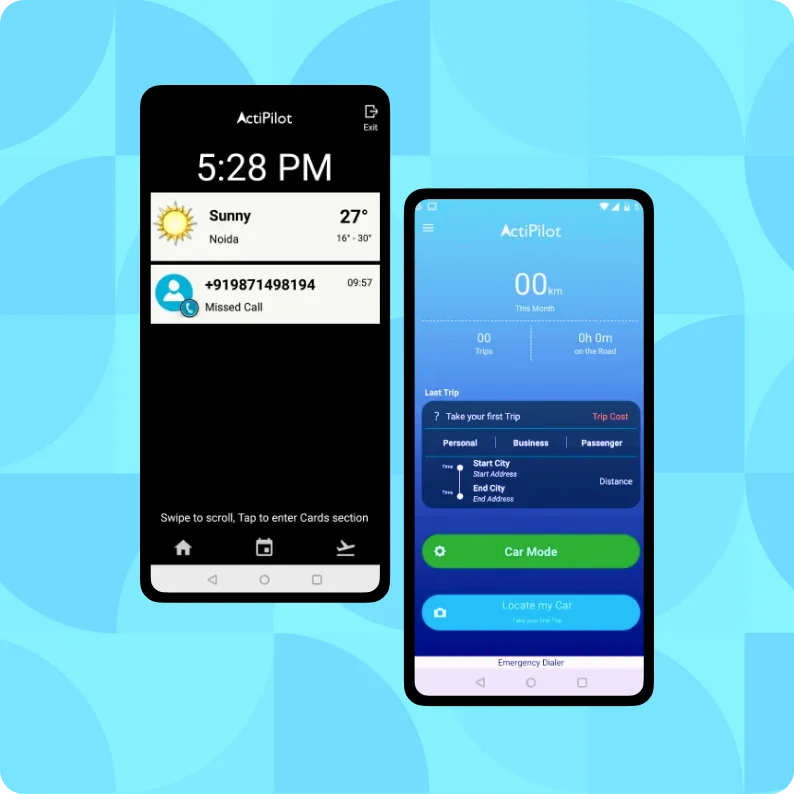
Smarter Driver Assistance App

GPS trails alone could not explain real driving behaviour. ActiDrive needed live pattern analysis, risk detection, and timely feedback without distracting the driver.

We built a mobile app that connects to vehicle sensors and interprets driving data in real time. It evaluates braking, speed, and cornering in context, then provides measured feedback, trip summaries, and driver scores.

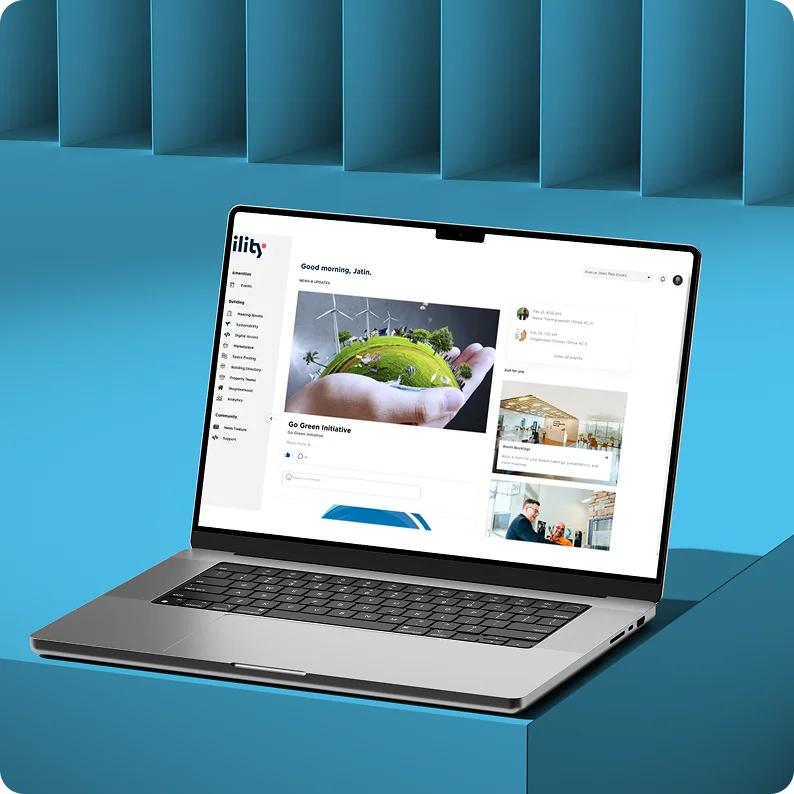
Connected SaaS for Property Management
Property managers needed a scalable platform to manage leases, payments, and tenant engagement while drawing insight from building-level IoT data.
We developed ILITY as a white-label SaaS platform built on cloud infrastructure with integrated IoT inputs. The system centralizes lease workflows, digital agreements, tenant communication, and smart access integrations such as HID and Openpath, creating one controlled operating environment.



CEO, ReelMedia
Let’s review your device strategy, integration model, and operational risks before you commit further resources.



IEC 62443 Security for Industrial Automation and IoT control systems

NIST IoT Cybersecurity Guidelines U.S. standards for securing connected devices

ETSI EN 303 645 European IoT security baseline for consumer IoT products

OWASP IoT Top 10 Global best practices for IoT security vulnerabilities

IEEE 2413 Standard for IoT architecture and interoperability

ISO/IEC 30141 International IoT Reference Architecture
ISO/IEC 29147 & 30111 Guidelines for IoT vulnerability disclosure and handling

HIPAA Health data security for connected medical devices

FDA Guidance (USA) Cybersecurity and safety standards for medical IoT

ISO 13485 Medical devices quality management system

GDPR (EU) Data privacy frameworks applied to IoMT

PIPEDA (Canada) Data privacy frameworks applied to IoMT

PCI DSS Payment Card Industry Data Security Standard

3DS Transaction security protocols relevant for IoT payment devices

EMV Transaction security protocols relevant for IoT payment devices
IEC 62443 Security for Industrial Automation and IoT control systems
NIST IoT Cybersecurity Guidelines U.S. standards for securing connected devices
ETSI EN 303 645 European IoT security baseline for consumer IoT products
OWASP IoT Top 10 Global best practices for IoT security vulnerabilities
IEEE 2413 Standard for IoT architecture and interoperability
ISO/IEC 30141 International IoT Reference Architecture
ISO/IEC 29147 & 30111 Guidelines for IoT vulnerability disclosure and handling
HIPAA Health data security for connected medical devices
FDA Guidance (USA) Cybersecurity and safety standards for medical IoT
ISO 13485 Medical devices quality management system
GDPR (EU) Data privacy frameworks applied to IoMT
PIPEDA (Canada) Data privacy frameworks applied to IoMT
PCI DSS Payment Card Industry Data Security Standard
3DS Transaction security protocols relevant for IoT payment devices
EMV Transaction security protocols relevant for IoT payment devices
Enterprise leaders would select Appinventiv because risk cannot be handled halfway. We consider regulatory controls, audit trails and data governance under the initial design discourse. This minimizes future exposure, where systems have already come online, and the business continuity is involved.
We also integrate IoT ecosystems with existing ERP, CRM, SCADA, and industry platforms that govern business operations. This alignment is important to leaders because it ensures device intelligence remains part of current processes rather than splitting visibility across tools that are not related.
Processing strategy requires discipline. Some workloads must remain close to the device to manage latency and bandwidth constraints. Others benefit from centralized cloud orchestration. Our teams define this balance based on operational requirements, ensuring performance consistency without overextending infrastructure.
In large-scale environments, downtime carries a direct financial impact. A globally renowned IoT app development company like ours builds resilience into communication layers and backend services so enterprise IoT systems continue functioning under stress conditions that would interrupt less robust architectures.
The foundations behind Ility and ActiDrive were built for long-term growth and operational pressure. Let’s apply that same approach to your enterprise IoT application.


The India's Fastest-Growing Companies 2026 Recognised by TIME and Statista

Statista High Growth Companies APAC - 2026

Statista India's Growth Champions 2023





The issue
Connected devices push out huge amounts of raw data. Without smart filters or pipelines, it quickly turns into noise, slowing down analysis and delaying decisions.

Our fix
We design custom IoT solutions that use edge computing, stream processors, and data filters to turn non-stop feeds into clear, usable insights.



AI converts ongoing sensor data into interactive systems that identify abnormalities, streamline operations, and enable faster decision-making.
The agentic AI enables devices to take autonomous actions and can notify IoT systems to initiate actions, change parameters, or increase alerts without human control.
Generative AI understands the trends in the telemetry and generates situational summaries, predictive maintenance, and adaptive system proposals.
The use of ML optimizes the functionality of the IoT by recognizing the patterns of its usage, predicting equipment breakdown, and enhancing its efficiency in the long run.
Edge computing brings data processing closer to the device, eliminating latency, reducing bandwidth constraints, and enabling real-time control in distributed systems.
Superior analytics systems handle IoT metrics at scale, filtering out noise and transforming raw data into ordered operational data.
Scalable storage, orchestration, and centralized control are provided by cloud environments as device fleets and data volumes grow.
Cybersecurity guards IoT ecosystems against intrusion, data breach, and service failure through security controls in the firmware, networks and the backend systems.
















Our Key AI-Enabled IoT Capabilities Include
AI-Optimized IoT Platform Engineering
Secure Intelligent Communication Protocols
Predictive Remote Monitoring Frameworks
Advanced AI-Powered Operational Analytics
ERP and SCADA Integration
AI-Driven Edge-to-Cloud Data Pipelines
We start by reviewing your goals, compliance requirements, and technical feasibility. This step helps define the right approach and ensures the IoT initiative is set up for success.
We map business goals, device types, and compliance needs, then set roadmaps for pilots and scale.
Sensors and devices are chosen while GPS, BLE, RFID, PLCs are tested for precision, energy use, and compatibility.
Protocols like MQTT, CoAP, LoRaWAN, NB-IoT, and 5G are matched to bandwidth, range, and security needs.
We deploy AWS IoT Core, Azure IoT Hub, or GCP IoT Core with microservices and containerized backends.
Pipelines with Kafka or Spark filter noise, AI/ML models predict outcomes, dashboards give ready insights.
TLS/SSL, IAM, and anomaly detection are embedded, aligned with GDPR, HIPAA, ISO/IEC 27001, IEC 62443.
Mobile (Flutter, React Native) and web (React.js, Angular) dashboards deliver role-based, real-time views.
Simulations validate thousands of devices, stress test protocols, and ensure secure, fail-safe performance.
Phased rollouts connect IoT data with ERP, CRM, and SCADA systems, CI/CD pipelines speed releases.
Our IoT app developers track uptime, latency, and data accuracy, adding updates and predictive fixes.
It is not just a single tool; IoT only works when multiple layers are compatible. It is supported by platforms such as AWS IoT, Azure IoT Hub, or Google Cloud IoT. Procedures are also important: MQTT, CoAP, HTTP/ HTTPS.
In addition, equipment also introduces sensors, actuators, and microcontrollers like Arduino or Raspberry Pi.
Scale can also be added to businesses using edge computing, and user interfaces can be added using React Native or Flutter frameworks. The combination of the said makes custom IoT solutions usable and enterprise-ready.
An IoT application with simple features takes approximately 3-6 months. Much advanced development of the IoT app that involves implementation of advanced features, or deploying it in many regions, typically takes 6 to 12 months. Though pilots are often suggested as the first step by our IoT app developers, followed by scaling up.
The cost to build an IoT app with basic features typically begins at approximately $40,000 and may reach up to $300,000 with custom hardware and/or AI and massive integrations. What drives the number up:
This is why no two IoT app projects would cost the same, as complexity determines the cost. Contact a reputed IoT app development company like ours, and receive a final project quote according to your business needs.
Security is paramount, even more than in the other digital projects. IoT applications work with sensitive data and also with devices, which is why they are ideal targets. End-to-end encryption and secure APIs are the initial protection measures before OAuth 2.0, MFA, and role-based access are included.
As a reliable IoT application development company, we ensure that the cycle includes regular firmware patching and updates. Other than this, compliance with GDPR, HIPAA, ISO/IEC 27001, and IEC 62443 is also an issue, as non-compliance leaves custom IoT solutions vulnerable.
Enterprises see ROI in three main ways:
That’s why many businesses choose an Internet of Things application development services partner not just based on the technology they follow but also their promise for better business efficiency, enhanced customer experience, and growth.
Security in IoT is never just one feature but comes in layers, which usually include:
When we follow this layered approach, IoT app development becomes both resilient and regulation-ready.
A wide variety of devices can connect within IoT, and the main categories are:
Through our IoT app development services, all these devices are unified into one ecosystem that works together.