

























 Leader in AI-First Product Engineering Read Full Article
 Contact Us
Our integration specialists design and implement solutions that are resilient, audit-ready, and tested to ensure seamless interoperability across complex healthcare systems.
Our Core Capabilities




















Years in HealthTech Projects
Digital Health Platforms Delivered
Healthcare Clients Served
Global Awards and Recognitions
Integration starts with clarity. Our EHR/EMR integration consulting service experts review your current infrastructure, evaluate compliance needs, and set a practical roadmap for secure interoperability.
We map specialties, patient journeys, and governance models to define how integration should support your clinical and operational needs.
We assess HIPAA, HL7, FHIR, GDPR, and NHS frameworks to ensure the integration approach is secure, compliant, and future-ready.
Connecting digital tools with existing record systems through EHR integration solutions often makes or breaks efficiency. We ensure the EMR integration of your apps, software, and hospital systems work as one connected environment.
We integrate EHRs with CRMs, telehealth apps, lab and pharmacy systems, and more to create a single, reliable data source.
APIs and secure connectors are configured so data moves cleanly between systems without duplication or compliance gaps.
Access to health records must be secure and traceable. Our EHR/EMR integration solutions are capable of strengthening identity management in healthcare to protect sensitive PHI.
OAuth 2.0, OpenID Connect, and MFA are built into access flows to enforce HIPAA-compliant EHR integration services.
We define role-based access, consent rules, and detailed audit logs to make every record exchange both safe and traceable.
Healthcare interoperability needs oversight to stay reliable. Our EHR/EMR software solutions integration services include proactive monitoring and SLA governance to safeguard uptime and data accuracy.
Dashboards, latency alerts, and throughput monitoring give visibility into live interfaces across the system pipelines.
SLA-backed incident response and predictive testing safeguard uptime and support ongoing EMR integration solutions.
Integrations expand digital risk. We embed compliance-first security controls so your EHR/EMR software integration services pass audits without disruption.
TLS 1.3, AES-256, and PKI-based signing secure every data transfer, keeping sensitive records protected in motion.
Centralized logging, strict policy enforcement, and automated reporting make regulatory reviews straightforward and reliable.
Legacy platforms don’t have to hold you back. Our electronic medical record integration services connect older systems with modern applications through EHR integration solutions while preserving data integrity..
We build custom EHR integration software solutions for proprietary or non-standard systems where plug-and-play options don't exist.
We use staged cutovers, parallel runs, and rollback plans to avoid downtime during transitions.
Data has no value until it is actionable. We extend our EHR/EMR data integration services into analytics platforms that inform decisions and regulatory reporting.
Unified records feed BI tools, predictive models, and population health programs for evidence-driven care.
Dashboards aligned with CMS, NHS, and other regulators simplify compliance and streamline external reporting.
Every healthcare organization runs differently, so the system should fit the workflow, not the other way around. Our EMR or EHR software development experts build solutions that are practical, compliant, and ready for long-term use.
We create modules and interfaces that match how your teams actually work, from charting and billing to reporting.
We shape data flows around clinical and administrative needs to make sure information moves smoothly across departments.

From clinics to global hospital networks, our EMR/EHR integration services ensure consistent, HIPAA-compliant data flow, helping healthcare teams collaborate and patients receive continuous care.
Aggregating Health Data for Smarter Care

Health-e-People needed to bring together fragmented data from 200+ devices and wearables into one platform to support coordinated care and research.

We built a secure ecosystem that pulled in data from devices, added predictive analytics, and made caregiver–patient communication easier. The setup followed HIPAA and GDPR from the start and kept all systems connected without disruption.


Redefining Preventive Health with Bioacoustics
Soniphi wanted to create a new wellness model using voice data to detect health insights, but struggled with accurate bioacoustic capture and real-time processing.
We built an AI-driven bioacoustic platform that could process 94% of voice information accurately while keeping the user experience simple. It was designed for scale, stayed compliant, and fit smoothly into existing healthcare workflows.
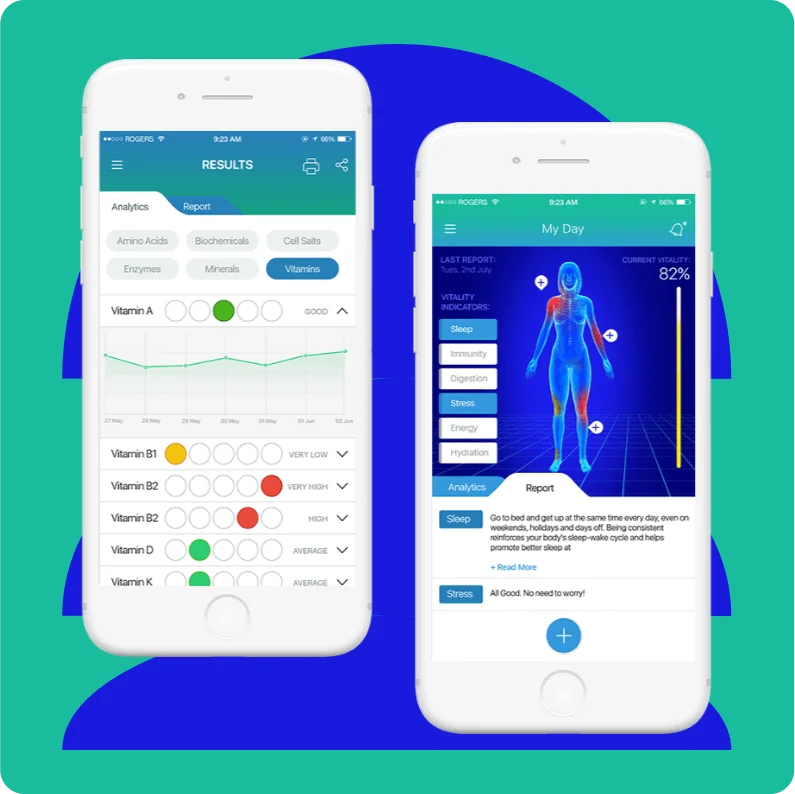
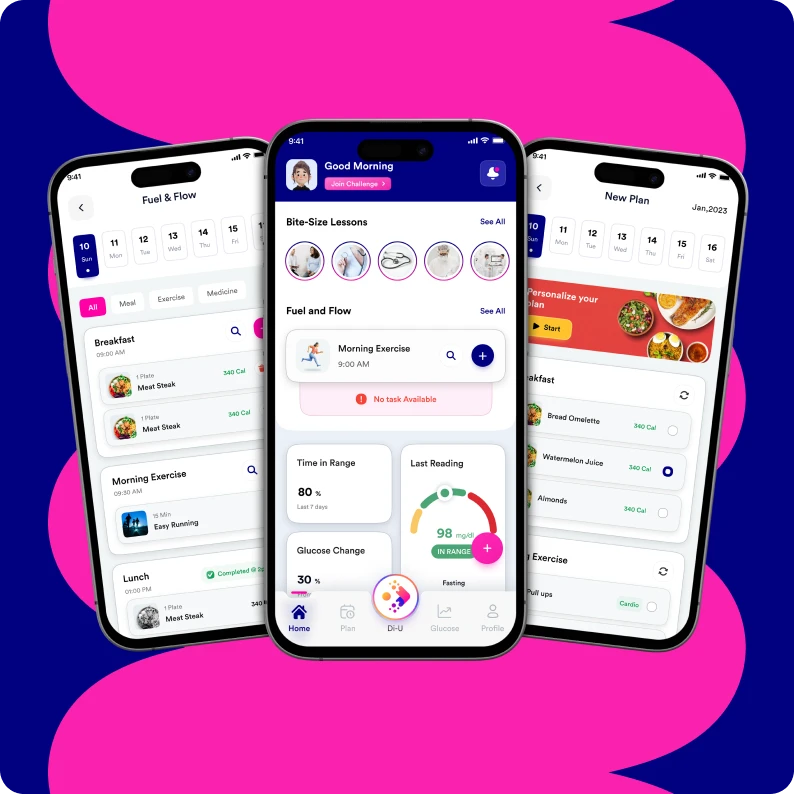
Personalizing Diabetes Care Beyond Generic Tools
DiabeticU, a fast-growing healthtech startup, wanted to give Type 2 diabetes patients real-time personalized support, something generic apps could not deliver.
We created an AI and NLP-based platform, paired with a chatbot, to track glucose, medications, and activity. The system was built on compliance-first principles and connected seamlessly with other health data, offering patients adaptive and useful guidance every day.
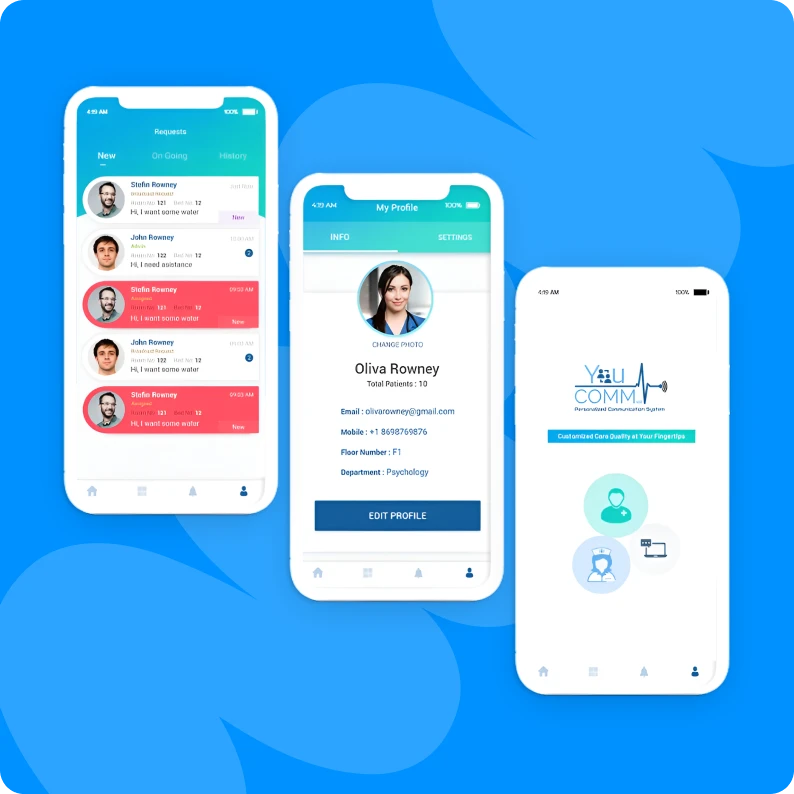
Reinventing Patient–Provider Communication
YouCOMM set out to replace outdated call bell systems in hospitals with something inclusive, especially for patients who had mobility or speech limitations.
We developed a bedside tool that let patients easily connect with staff, request services, and communicate in real time. It was integrated directly into hospital IT systems so staff could continue using their existing infrastructure without gaps.




We were looking for an agency that would understand the direness of the hourly worker job search cycle situation when we came across Appinventiv. What we liked about the team is how they did not just understand what we were looking for but also gave us ideas on how we could make the process more efficient and simplified for the jobseekers through their empathy mapping skillset.

We approached Appinventiv with a clear vision to build a robust and future-ready platform that could seamlessly integrate with the busy lifestyle of our customers while uplifting their overall experience and giving us a competitive edge. The Appinventiv team not only understood our vision but also enhanced the overall solution with their expertise. The end results exceeded our expectations with massive improvements in the user base and digital revenue for different brands.


Web systems are quick to roll out, but on their own they don’t always talk well with external partners. Through our electronic health record integration services, we link browser-based platforms with labs, pharmacies, and telehealth tools, making sure every exchange stays secure.

Hospitals and health networks often choose the cloud for reach and flexibility. Our integration services keep those cloud records in sync across all branches, giving providers consistent data and confidence that regulatory rules are being met.

Organizations with strict governance prefer on-premise systems. We extend their reach through custom EHR integration software solutions, allowing selective external connectivity without losing internal control.

Each specialty requires unique record structures. Our EHR/EMR software solutions integration aligns specialty workflows with enterprise platforms so cardiology, pediatrics, and oncology teams can share data without friction.

Running records and admin systems separately slows down care. With end-to-end EHR/EMR integration solutions, we connect billing, scheduling, and medical records into one workflow, reducing delays and errors.

Mobile access is vital for clinicians in the field. We extend EHR software integration services to mobile apps, giving doctors and nurses real-time access to records on tablets and phones.

Many providers use a mix of cloud and on-premise systems. We deliver EHR integration services that unify these hybrid environments, ensuring data flows consistently between local servers and cloud platforms.

Some organizations prefer open-source systems for cost and flexibility. As an EHR integration company, we ensure to make these platforms interoperable with enterprise networks while maintaining security and compliance.

Large health systems often run multiple platforms acquired over time. We provide electronic integration solutions that consolidate these systems into one connected ecosystem for better collaboration.

Tell us the industry you belong to, and we’ll craft a tailored strategy that fits your unique goals.

HITECH Act Health Information Technology for Economic and Clinical Health Act (USA)

UK GDPR & Data Protection Act 2018 (United Kingdom)
NHS DSPT (Data Security and Protection Toolkit for Healthcare & AI Systems)

PHIPA Personal Health Information Protection Act (Ontario, Canada)

Quebec Law 25 Act Respecting the Protection of Personal Information (Canada)

PIPEDA Personal Information Protection and Electronic Documents Act (Canada)

SDAIA Regulations Saudi Data & Artificial Intelligence Authority (Saudi Arabia)

PDPL Personal Data Protection Law (Saudi Arabia)

APRA CPS 234 Information Security Standard (Australia)

ACSC Essential Eight Cyber Security Controls (Australia)

Privacy Act 1988 (Australia)
HITECH Act Health Information Technology for Economic and Clinical Health Act (USA)
UK GDPR & Data Protection Act 2018 (United Kingdom)
NHS DSPT (Data Security and Protection Toolkit for Healthcare & AI Systems)
PHIPA Personal Health Information Protection Act (Ontario, Canada)
Quebec Law 25 Act Respecting the Protection of Personal Information (Canada)
PIPEDA Personal Information Protection and Electronic Documents Act (Canada)
SDAIA Regulations Saudi Data & Artificial Intelligence Authority (Saudi Arabia)
PDPL Personal Data Protection Law (Saudi Arabia)
APRA CPS 234 Information Security Standard (Australia)
ACSC Essential Eight Cyber Security Controls (Australia)
Privacy Act 1988 (Australia)
Integration only works if it respects the rules. We design connections that align with HIPAA, GDPR, PHIPA, and NHS DSPT from the start. Access rights, encryption, and audit trails are built in so that data moves safely between systems and is trusted by regulators.
Whether it’s linking a small clinic’s web platform with a regional lab or connecting a hospital network across borders, we create integrations that scale. By working with HL7, FHIR, DICOM, and other global standards, as an EMR integration company, we make sure your EHR/EMR systems can exchange information reliably with partners and third-party platforms.
Our work goes beyond simply moving data. We enable smoother patient journeys by connecting scheduling, billing, telehealth, labs, and pharmacies into one ecosystem. For providers, that means fewer errors and faster workflows. For patients, it means better care without the delays caused by disconnected systems.
AI brings more value when records truly connect. Integrated systems with built-in intelligence deliver faster insights, cleaner workflows, and safer care.



Statista High Growth Companies
APAC
2025 & 2024

Statista India's Growth Champions 2023





AI in EHR/EMR solutions isn’t there to replace clinicians, but it does the background work. When records are linked across hospitals, labs, and pharmacies, AI can highlight risk factors, cut down repetitive data entry, and surface information at the point of care. That saves time and reduces mistakes.
Doctors don’t need a 40-page history every time. Generative AI technology in healthcare can condense integrated data into a summary, draft discharge instructions, or put complex terms into plain language. For patients, that means clearer communication; for staff, it means less paperwork.
Integrations don't fail all at once but break quietly in the background. Employing the use of Agentic AI technology in healthcare systems like EHR or EMRs can help keep watch in real time, flagging when a drug interaction is missed or a data feed stops syncing. They step in early so issues don't snowball into clinical risks.
When multiple organizations exchange records, trust becomes the issue. Blockchain in healthcare provides a tamper-proof trail of every exchange, making it obvious if something has been altered. It reassures providers and regulators that the data is both accurate and auditable.
Wearables and home devices are only useful if their data ends up in the record. By feeding glucose levels, heart rates, or blood pressure directly into an EMR, clinicians can see problems sooner and intervene before a hospital visit is needed.
Data from integrations is often overwhelming. Healthcare analytics gives it shape, showing population health trends, resource bottlenecks, or clinical outcomes. It turns a flood of numbers into evidence that can support both strategy and frontline care.
Cloud computing in healthcare systems keeps records consistent across multiple sites. They also allow hospitals to add new facilities without starting from scratch. During spikes in demand, cloud scaling keeps performance stable so clinicians don’t get locked out of the information they need.
Training and patient engagement both benefit from AR and VR. Surgeons can rehearse a complex procedure virtually, while patients can see what their treatment will involve. Because these tools tie back to the record, the experience is personalized, not generic.
The metaverse may still sound experimental, but it’s already being used for remote consultations and group therapy. When linked with health records, these sessions move beyond novelty and become part of the care pathway.
Turn these technologies into a competitive edge!





























The cost of integration isn’t just about connectors or APIs. Compliance, interoperability, and the ability to scale across hospitals, clinics, and partner systems define the real return on investment.
When records move between systems, weak encryption or access gaps expose providers to breaches and penalties.

THE SOLUTION
We deliver HIPAA-compliant EHR integration services with end-to-end encryption, MFA, and audit trails that protect patient data during every exchange.
Spikes in patient visits or multi-site rollouts can overwhelm poorly integrated systems.
THE SOLUTION
Our end-to-end EHR/EMR system integration solutions use cloud-native scaling, load balancing, and tuned databases to handle demand without downtime.
If integrations ignore how clinicians work, adoption drops fast.
THE SOLUTION
We design enterprise-grade EHR integration services around specialty templates, role-based screens, and usability testing with real medical staff.
Switching systems often leads to broken records, lost codes, and downtime.
THE SOLUTION
Our electronic health record integration services use ETL pipelines, staged runs, and reconciliation tools to keep records accurate and accessible.
Hospitals want predictive tools, but integration can add friction or bias.
THE SOLUTION
We embed explainable AI directly into dashboards so insights flow naturally within the solution.
Every project starts with understanding what needs to be connected and why. We map the applications, EHR/EMR platforms, and data flows that must work together. Regulations like HIPAA, GDPR, and the 21st Century Cures Act are built into the plan from day one. This stage gives clarity on risks, required standards such as HL7 or FHIR, and what success will look like.
Once the scope is clear, the focus shifts to how systems will communicate. Depending on the environment, the approach may involve APIs, data mediation tools, or common data layers. We also handle mappings for ICD-10, CPT, LOINC, or SNOMED CT so information is consistent across platforms. This step shapes the technical backbone of our integration services.
With the framework in place, the integrations are built and tested. This includes linking with existing LIS, RIS, PACS, payer, or telehealth systems, followed by end-to-end validation. Security testing is critical here, ensuring easy integration powered by encryption, access controls, and audit-ready logging.
Integration is never "done." As user volumes grow or new applications need to connect, systems must adapt. We provide ongoing monitoring, performance checks, and compliance updates so EHR/EMR system integration solutions remain stable, scalable, and aligned with changing regulations.
Because your teams already use a stack of systems, and the gaps slow everyone down. When data lines up, people stop re-typing, hunting for files, and guessing. Here’s what that looks like on the floor:
As an EHR/EMR integration company, we help you move from silos to one connected record.
Care moves faster when the right info appears in the right place. Ops improve too and there is less swivel-chair work, more time with patients. Day to day, that means:
Our EHR integration services focus on the handoffs that slow you down.
You feel it first in daily work. For instance, smoother days, cleaner data, fewer surprises. In addition to this, finance and compliance feel it too. Most providers see:
For multi-site networks, we develop end-to-end EHR/EMR system integration solutions to support growth without disruption.
Start by mapping what truly needs to talk, including systems, datasets, standards, security. Then pick the lightest approach that meets the goal. The usual path looks like this:
When off-the-shelf isn’t enough, we can help you develop custom EHR integration solutions that will close the gaps.
AI only works if the inputs are clean and connected. Plug it into integrated records, not islands.
To keep it safe and useful:
We add AI after the plumbing is right and only where it helps - starting small, proving value with real users, setting guardrails, measuring impact, then rolling it out.
First, check how you exchange data today; then validate against the spec you need. Version details matter- HL7 v2 vs. FHIR R4.
Your quick checklist must have:
We wrap standards and security together to deliver integration solutions that ensure interoperability, maintain regulatory compliance, and protect patient data without disrupting clinical workflows.
We plan together, prove it small, then scale with guardrails. After you go-live, we ensure proper maintenance, continuous monitoring, and timely updates so your EHR/EMR environment stays secure, interoperable, and future-ready. At a glance, the flow is:
With our electronic health record integration services, you also get monitoring and updates baked in, not bolted on.
The overall cost of integration depends on scope: how many systems, how much data, how strict the rules, how fast you need it. We estimate after a short discovery and there is no guesswork.
Here are some typical cost ranges for EMR/EHR integration:
These estimates cover development, testing, deployment, and post-integration support.
We price transparently so your EMR integration services investment tracks outcomes, not surprises. Get in touch with our experts to get a complete cost breakdown per your business requirements.
We help connect EHRs with the systems your teams rely on every day, so data moves where it should and people stop chasing information from one screen to another. Here are some of the healthcare systems we commonly integrate with EHR/EMR platforms: