


































Digital Transformation in Logistics Industry: Technologies, Use Cases, and Implementation Roadmap

 Share -


- 01How Digital Transformation Is Becoming a Strategic Priority for the Logistics Industry
- 02Enterprise Use Cases of Digital Transformation in the Logistics Industry
- 03Core Business Benefits of Digital Transformation in Logistics
- 04Technologies and Architecture Powering Digital Transformation in the Logistics Industry
- 05AI and Intelligent Automation in Logistics Operations
- 06A Step-by-Step Implementation Roadmap for Digital Transformation in Logistics
- 07Cost of Digital Transformation in Logistics
- 08Key Challenges Enterprises Face During Logistics Transformation
- 09Measuring the ROI of Digital Transformation in Logistics
- 10Future Trends Shaping the Digital Transformation of the Logistics Industry
- 11How Does Appinventiv Solve the Biggest Challenges in Logistics Digital Transformation?
- 12FAQs

Key takeaways:
- Logistics leaders replace disconnected software with AI tools. These new platforms make tracking clear and protect operations from sudden shocks.
- Modern technology cuts transit costs. It improves how teams use trucks and equipment. Live data helps executives make fast choices.
- Modern systems help companies handle delays fast. Upgraded tools protect the supply chain. They build trust with buyers through steady service.
- AI, IoT, and cloud networks form the core of logistics today. Control dashboards give managers full control over daily shipping tasks.
- Software updates need more than code. True success requires clean data, good worker training, and clear corporate rules.
Digital transformation in the logistics industry has moved from a competitive advantage to a business requirement. One late shipment harms more than one delivery route. Delays cause immediate issues with operations and stock availability.
They disrupt production schedules and carrier utilisation. This damage breaks customer commitments in various regions. Logistics leaders experience this disruption too often. Global chains face constant pressure today. Customer expectations rise every year. Businesses demand visibility of shipments and quick turnaround.
They want precise delivery time and continuous service. The shortage of labour and fluctuating fuel prices add difficulty. Geopolitical events and supplier disruptions make logistics operations hard to manage.
Many organisations use disconnected internal systems. Teams rely on spreadsheets, manual planning processes, and multiple data sources. These tools hinder critical decision-making. They introduce blind spots in transportation, warehousing, and distribution networks.
This change drives digital transformation. The shift marks a new business priority. The global digital logistics market is projected to grow from $43.89 billion in 2026 to $155.29 billion by 2032.
This reflects the rising investments in AI, IoT, cloud platforms, robotics, blockchain, and logistics control towers. Executives gain access to real-time data. These systems reduce repetitive tasks and strengthen supply chain resilience.
This article explores technologies, applications, and use cases of digital transformation for logistics companies, along with implementation details and future prospects.
Technology alone is not enough. Align systems, data, and teams before modernization stalls.

How Digital Transformation Is Becoming a Strategic Priority for the Logistics Industry
Logistics companies can’t simply implement digital transformation in the logistics industry as a tech upgrade. It’s a business issue. It has a relationship with cost containment, operational efficiency, customer satisfaction, and supply chain resilience. Logistics leaders are network managers.
They gather information from the customer, distribution centres, ports, suppliers, fleets and warehouses on a minute-by-minute basis. Collecting data is easy now. The real challenge is making quicker decisions using that data.
Modern Logistics Networks
Digital transformation in transportation and logistics is responding to this complexity; one shipment now traverses several carriers, warehouses, customs checkpoints, and transportation methods. Customers expect timely and correct delivery information. They need to be updated constantly about their progress.
This system makes thousands of choices every day. Delivery performance is affected by route changes, inventory shortages, vehicle breakdowns, weather disruptions and shifting demand.
These items can’t be well managed manually. Businesses are now purchasing AI in logistics forecasting and asset tracking with IoT technology. They deploy transportation management systems (TMS), warehouse management systems (WMS) and logistics control towers.
Traditional vs Digital Logistics
A quick comparison table
| Traditional Logistics | Digital Logistics |
|---|---|
| Manual planning | AI-assisted planning |
| Siloed systems | Connected ecosystems |
| Reactive operations | Predictive operations |
| Limited visibility | Real-time visibility |
| Static routing | Dynamic optimization |
Digital transformation for logistics companies creates a connected operating model. Data moves across the supply chain. Teams see issues and act quickly.
Legacy Logistics Systems
Many organizations use disconnected software, spreadsheets, and manual workflows. These old tools lack API connectivity, real-time analytics, and automated decision support. Expanding networks suffer from these weak tools.
They create data silos and slow response times. They cause poor visibility across operations. Digital transformation fixes these issues at the foundation level, and logistics is no exception, building a clear base for planning and execution.
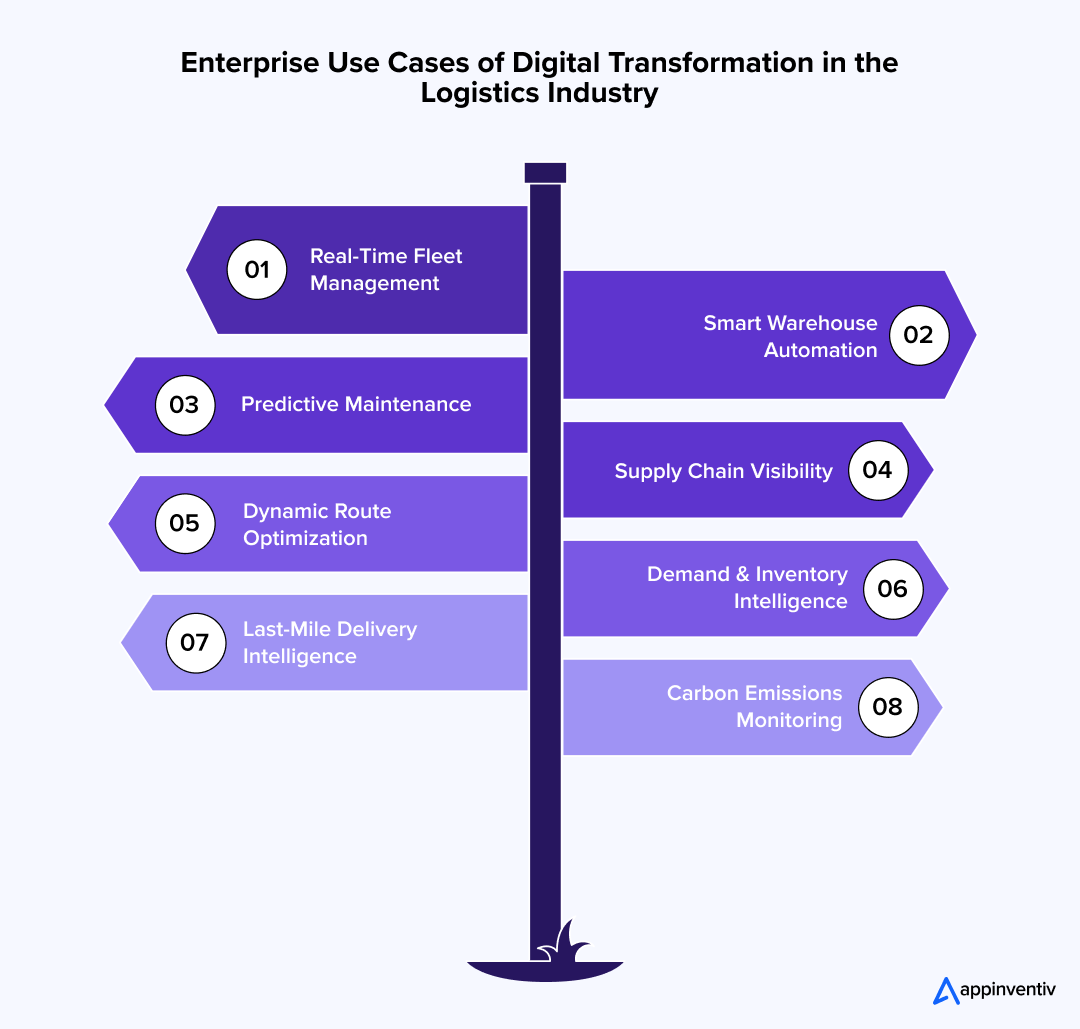
Enterprise Use Cases of Digital Transformation in the Logistics Industry
Digital transformation in the logistics industry affects various aspects of logistics operations. It changes how you plan travels and perform warehouse operations. It resolves the inventory management & last mile delivery issues.
These digital transformation use cases in the logistics industry demonstrate how AI, IoT, cloud platforms, analytics, and automation are applied at the enterprise level. These tools are implemented by companies to create operational performance and customer outcomes.
Real-Time Fleet and Transportation Management
There is so much data generated from the vehicles, drivers, shipments and routes of a fleet. Live transportation management enables logistics teams to track and control moving assets 24/7.
How It Works
GPS trackers, telematics devices, IoT sensors, and transportation systems gather location, speed, fuel use, and vehicle health data. This information flows into centralized dashboards. They provide live operational visibility.
Business Impact
Organizations cut idle time and increase fleet use. They drop fuel costs and respond faster to sudden transportation disruptions.
Enterprise Example
UPS uses its ORION platform to analyze route data. The software finds better delivery paths. This choice cuts fuel use and builds stronger delivery performance.
Warehouse Automation and Smart Fulfillment
The increase in orders puts significant strain on warehouses. Manual processes have trouble meeting customer demands and tight fulfillment requirements.
How It Works
Warehouse management software connects with robotics, barcode scanners, RFID setups, and automated storage systems. Systems track inventory shifts in real time. They assign picking tasks automatically to workers.
Business Impact
Companies boost order accuracy and increase total throughput. They lower labor dependency and shorten fulfillment cycles.
Enterprise Example
Amazon runs automated fulfillment centers. Autonomous mobile robots move inventory shelves right to picking stations. This tech cuts travel time across warehouse floors.
Predictive Maintenance for Logistics Assets
Equipment failures disrupt transportation schedules and warehouse work. Predictive maintenance lets organizations spot problems right before breakdowns happen.
How It Works
Sensors on vehicles, conveyor belts, forklifts, and warehouse gear gather operational facts. They measure temperature, vibration, and pressure. This is where predictive analytics in supply chain operations becomes critical, as machine learning models identify patterns linked to future equipment failures.
Business Impact
Maintenance costs go down quickly. Equipment availability gets better. Unplanned downtime happens less often across the company.
Enterprise Example
DHL deploys predictive maintenance practices across its logistics network. This method builds equipment reliability and cuts sudden operational interruptions.
Supply Chain Visibility and Logistics Control Towers
Many enterprises struggle to get a unified view of shipments, inventory, suppliers, and transport partners. Control towers fix this challenge via centralized monitoring.
How It Works
Data from ERP, TMS, WMS, supplier portals, and IoT tools combine into one visibility layer. Smart analytics track shipment paths, inventory counts, and supply chain risks in real time.
Business Impact
Organizations spot problems earlier. They boost decision-making speed. Teams coordinate answers across multiple external stakeholders.
Enterprise Example
Unilever puts capital into control tower systems. They get clear visibility across global supply chain operations. This setup improves reactions to demand and supply shifts.
Route Optimization and Dynamic Dispatching
Static route planning struggles to track traffic conditions, bad weather, delivery choices, and shifting customer demands.
How It Works
AI algorithms check delivery schedules, traffic trends, driver availability, and customer spots to build ideal routes. Dispatch plans refresh automatically when operating conditions shift.
Business Impact
Companies cut total mileage. They drop transportation costs. They build better delivery accuracy and boost driver productivity.
Enterprise Example
FedEx runs smart route optimization systems. These tools guide delivery planning. The software increases operational results across large transportation networks.
Demand Forecasting and Inventory Optimization
Weak demand forecasts cause excess stock, product stockouts, and poor capital spend.
How It Works
AI for demand forecasting uses machine learning models that study past sales facts, market shifts, seasonal trends, promo plans, and outside factors to predict future demand.
Business Impact
Organizations build better inventory turnover. They drop storage costs and keep higher product availability.
Enterprise Example
Walmart deploys AI forecasting systems. These tools manage inventory across thousands of physical stores and distribution centers. They align stock levels with customer demand.
Last-Mile Delivery Intelligence
The last mile remains the most expensive and complex step in logistics work, and the rise of on-demand logistics has made meeting customer delivery expectations even more critical.
How It Works
Delivery platforms mix route analytics, GPS tracking, customer chat tools, and predictive ETA models to boost delivery execution.
Business Impact
Companies lift on-time delivery rates. They cut failed deliveries. They give better customer experiences.
Enterprise Example
Maersk runs e-commerce logistics operations with smart tracking tools. These tools build delivery predictability and clear customer communication.
Sustainability and Carbon Emissions Monitoring
Green reporting rules and sustainability targets stand as big goals for modern logistics enterprises.
How It Works
IoT sensors, fleet software, and emissions tracking platforms gather facts on fuel use, transit tasks, and power use, while AI in sustainability initiatives translates this data into actionable carbon reduction strategies. Analytics tools turn this data into clear carbon metrics.
Business Impact
Organizations find operational waste. They cut carbon emissions, bring back ESG reports, and lower daily operating costs.
Enterprise Example
DB Schenker runs emissions monitoring tools and transport analytics. The firm tracks carbon output across logistics steps to back green initiatives.
Core Business Benefits of Digital Transformation in Logistics
Digital transformation for logistics companies is more than just purchasing new tools. It delivers concrete benefits like reduced operating expenses and quicker decision-making processes. Companies improve their supply chains and achieve improved customer results.
Cost Reduction Through Process Automation
Supply chain automation eliminates manual work in transportation planning, warehouses, inventory management, and order processing. By optimizing routes and reducing unnecessary driving time, AI route planning significantly lowers transportation costs. Telematics tools help improve fuel use in a fleet. Automated workflows increase warehouse productivity without burdening the workforce.
End-to-End Visibility Across Logistics Operations
One of the key benefits of digital transformation in the logistics sector is end-to-end visibility, linking fleets, warehouses, suppliers, and distribution centers into a single coherent view. This clear view helps teams keep an eye on shipments and manage assets. In real-time, workers monitor stock and identify bottlenecks.
Stronger Supply Chain Resilience
Supply chain digital transformation helps organizations detect risks early, even as disruptions from supplier issues, adverse weather, labor shortages, and geopolitical instability continue to grow. Organizations can detect risks early through the use of analytics and digital control towers. Teams demonstrate various options and take action before issues escalate.
Improved Customer Experience and Service Levels
Consumers rely on accurate delivery time frames and transparency. Real-time tracking and scheduling flexibility come in handy. This improves delivery accuracy with automated notifications. These tools reduce fulfillment time and enhance customer satisfaction.
Better Decision-Making Through Data Intelligence
Many logistics organizations create massive amounts of operational data. Teams struggle to use this data well. Digital transformation turns raw numbers into useful facts. Executives get performance metrics and forecasting models. They study capacity data and operational trends to make fast business choices.
Technologies and Architecture Powering Digital Transformation in the Logistics Industry
Realizing the full value of digital transformation use cases in the logistics industry requires more than individual tools. You build real value when you connect your systems. A shared architecture lets data move across transportation, warehousing, and inventory channels. This setup replaces isolated choices with live operational facts.
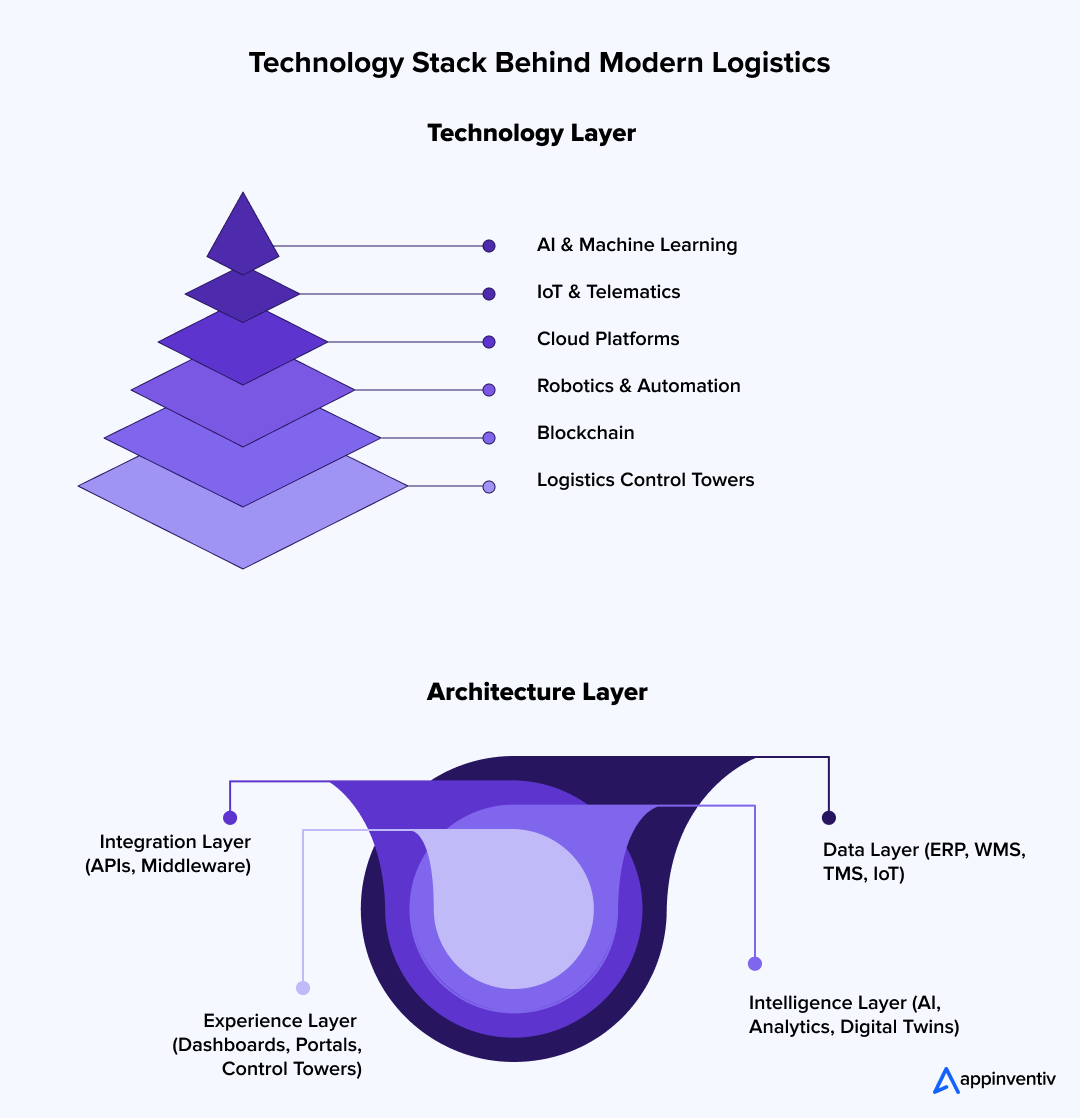
Internet of Things (IoT)
A constant stream of information from vehicles, containers and heavy equipment is generated by IoT in logistics devices. Widely used in fleet management, telematics sensors monitor vehicle health, fuel consumption, and location.
RFID tags and intelligent sensors are used to monitor inventory movement within warehouses. The temperature and humidity are also monitored by these sensors. Protection of sensitive cold chain products such as fresh food and pharmaceuticals.
Artificial Intelligence (AI) and Machine Learning
AI helps logistics teams make fast, accurate choices. Machine learning algorithms study past facts and live data to forecast product demand. They predict exact shipment arrival times. They also estimate transportation capacity needs and manage workforce scheduling. These models learn from daily operational patterns. Planning becomes more accurate over time.
Cloud Computing
Modern logistics networks create massive amounts of data across multiple facilities, carriers, and global regions, making cloud computing for businesses a foundational enabler of scalable logistics operations.
A specialized logistics software development company designs these cloud platforms to store and process operational data at scale, supporting multi-region deployments and real-time system connections.
They support operations across different time zones. They make system connections simple. They create a single source of operational data for the entire enterprise.
Robotics and Automation
The use of automation tools improves efficiency and reliability in logistics processes. In large warehouses, Autonomous Mobile Robots carry goods around. Automated picking systems accelerate order picking, with computer vision in logistics further improving accuracy in item identification and sorting. The repetitive administrative tasks are performed by RPA. Software bots read shipment paperwork, review the invoices and verify orders.
Blockchain
Logistics tasks involve multiple partners trading facts across different systems. Blockchain creates a shared, permanent record of transactions. This permanent ledger improves shipment tracking. It adds clear transparency to supply chain networks. It runs smart contracts that execute business rules automatically when specific conditions happen.
Logistics Control Towers and Real-Time Visibility Platforms
Control towers are the nerve hubs of distribution activities. They collect information from transportation systems, warehouse platforms and ERP software. They extract facts from suppliers, carriers, and tools for the IoT. The software creates a single operational view. Teams track shipments, identify delays and manage inventory from a single dashboard.
Also Read: How to Build a Logistics Management System
How Modern Logistics Architecture Connects These Technologies
A successful logistics change depends on a clear architecture.
- Data Layer: ERP systems, WMS platforms, TMS applications, and IoT sensors create operational data.
- Integration Layer: AI API integration, alongside middleware platforms and event-driven architecture, connects these systems to enable real-time data exchange.
- Intelligence Layer: AI engines, forecasting models, and digital twins turn raw data into predictive facts.
- Experience Layer: Control towers, executive dashboards, and customer portals send information directly to decision-makers.
This architecture builds a connected network. Data moves constantly across the organization. This flow supports fast decisions and strong operations.
Modern logistics ecosystems eliminate data silos that slow execution and decision-making.
AI and Intelligent Automation in Logistics Operations
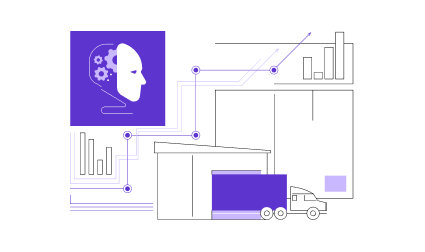
Artificial intelligence is reshaping digital transformation across logistics teams, moving beyond reporting past events to predicting future outcomes.
- AI-Powered Decision Intelligence: Artificial intelligence is reshaping decision-making at every level, and in logistics, AI models study transportation, inventory, and customer demand data to help leaders make fast, accurate choices across entire networks.
- Agentic AI for Logistics Execution: Evaluates shipment delays and inventory shortages. The software tracks route problems and triggers automatic corrections based on clear business rules.
- Logistics Copilots for Operations Teams: AI copilots help dispatchers and warehouse managers. Their success depends on user adoption as much as technology deployment. Planners use them to find facts, spot risks, and complete daily tasks using simple text commands.
- Autonomous Supply Chain Planning: AI systems track demand patterns and inventory counts constantly. They review transportation capacity and supplier performance to build new plans automatically with minimal human input.
A Step-by-Step Implementation Roadmap for Digital Transformation in Logistics
Big software launches rarely fix logistics problems. A successful logistics digital transformation requires a steady rollout matched with clear business goals. You must match your technology spend with clear business goals. Your operations need specific tools to hit long-term growth targets.
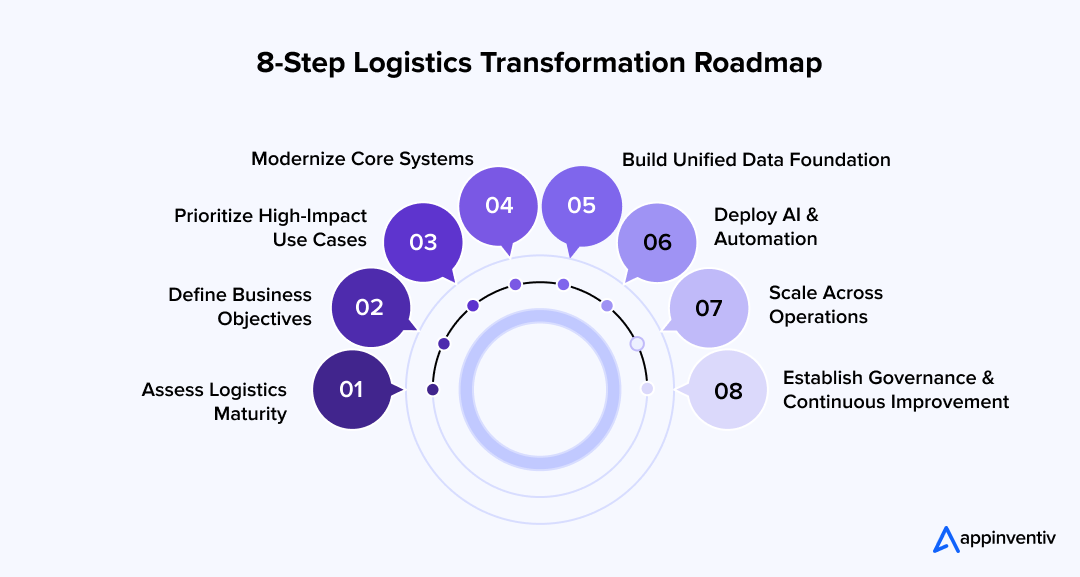
Step 1: Assess Logistics Maturity
The steps to implement digital technologies in logistics begin with an honest assessment of your current processes and technology stacks. Check your data quality. Measure how fast your operations run right now. This review highlights system gaps. It builds a realistic starting point for your project.
Step 2: Define Strategic Business Objectives
Defining the right digital transformation strategies is essential before setting goals tied to actual business results. Target lower transportation costs and higher inventory accuracy. Track delivery speed and warehouse productivity. Better customer service remains a top priority.
Step 3: Prioritize High-Value Use Cases
Focus on projects that deliver measurable returns fast. Good targets include route planning and warehouse automation. You can also start with fleet visibility or demand forecasting. These choices build early momentum.
Step 4: Modernize Core Logistics Systems
Replace old platforms that block your visibility. Outdated software slows down your entire network. You must upgrade your ERP, WMS, and TMS software. Supply chain management tools need modern architecture.
Step 5: Build a Unified Data Foundation
Create one central hub for your facts. Gather data from warehouses, transportation fleets, and external partners. Standardize this information so your internal teams can share it easily.
Step 6: Deploy AI and Automation Solutions
Bring AI and robotics into your daily workflows. Add analytics and automation tools to the warehouse floor, leveraging machine learning algorithms that sharpen planning accuracy and speed up executive choices. They speed up executive choices and increase daily output.
Step 7: Scale Across Enterprise Operations
Expand your successful projects. Push these new tools into other facilities and business units. Roll them out across transportation networks and global regions. A broad rollout extracts the highest value from your software investment.
Step 8: Establish Governance and Continuous Improvement
Write clear governance rules for your teams. Build frameworks to track daily performance. Prosci research found that organizations with strong change management practices are seven times more likely to achieve project objectives, making governance and continuous improvement critical for long-term success.
Cost of Digital Transformation in Logistics
Your total spend depends on your update choices. It changes with your system count and tech needs. Small updates cost less. Large programs require a higher investment. These big setups tie together transportation, warehousing, inventory, and supply chain work.
| Transformation Initiative | Estimated Investment Range |
|---|---|
| Fleet tracking and visibility platform | $50,000 – $100,000+ |
| Warehouse automation and WMS modernization | $75,000 – $150,000+ |
| AI-powered route optimization system | $100,000 – $200,000+ |
| Logistics control tower and visibility platform | $150,000 – $300,000+ |
| Supply chain analytics and forecasting platform | $150,000 – $350,000+ |
| End-to-end logistics transformation program | $250,000 – $500,000+ |
Many elements shift the cost of digital transformation in logistics. ERP, WMS, and TMS software connections change the price. Cloud migration choices and AI tools alter budgets. IoT setups, data moves, and security rules also affect your spending.
Understanding the full cost of digital transformation helps many firms start with smaller projects, such as route optimization or warehouse automation, before scaling further.
Some choose live visibility tools. A stepped plan shows clear returns fast. This method cuts project risk. It builds a clear path for larger updates.
Also Read: Cost of Logistics App Development
Key Challenges Enterprises Face During Logistics Transformation
New software setups provide great financial returns. Still, pursuing digital transformation for logistics companies at scale brings operational challenges that require careful planning. You must plan for tech friction.
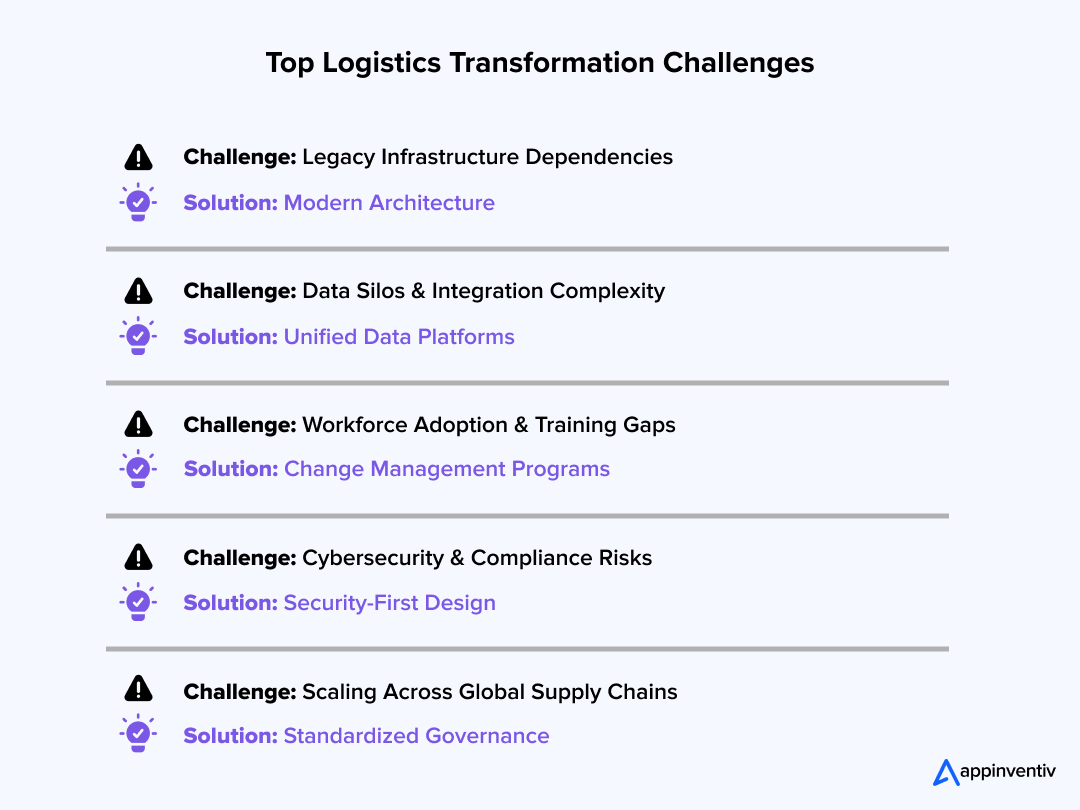
Legacy Infrastructure Dependencies
Many logistics firms rely on old ERP tools, custom apps, and isolated programs. These old setups block live data sharing and automated workflows. A slow, stepped rollout reduces friction and is a proven way to handle digital transformation without downtime, keeping your core operations running throughout the upgrade.
Data Silos and Integration Complexity
Operations data sits trapped in transport, warehouse, purchasing, and supplier systems. This split creates blind spots and messy reports. Corporate teams fix this issue with API connections, middleware hubs, and central data systems. These tools tie your whole supply chain together.
Workforce Adoption and Change Management
New software fails when workers stick to old manual habits, and digital transformation challenges around workforce adoption remain among the hardest to solve. Prosci research shows that nearly 40% of AI adoption challenges stem from workforce proficiency and training gaps. Clear training plans, leader involvement, and simple workflows increase adoption and help organizations realize greater value from digital investments.
Cybersecurity and Compliance Risks
Connected logistics networks bring fresh digital threats. IoT gear, cloud setups, vendor channels, and mobile apps give hackers more targets. Strict login rules, encryption, constant tracking, and compliance audits always protect your operational and customer data.
Scaling Across Global Supply Chains
One tool that works well in a single warehouse can fail across global hubs. Varying laws, weak infrastructure, local vendors, and different regional business setups stall expansion. Unified systems, cloud platforms, and clear rules help teams scale your updates smoothly across international borders.
Measuring the ROI of Digital Transformation in Logistics
Track your digital transformation logistics upgrades through real corporate results, not tool adoption alone. Leadership teams that follow clear financial metrics judge gains fast. They justify every single dollar spent on these software updates.
| Measurement Area | Key Metrics |
|---|---|
| Operational Speed | Transportation cost per shipment, fleet use, warehouse productivity, order fulfillment cycle time and inventory turnover |
| Customer Experience | On-time delivery rate, delivery accuracy, customer satisfaction score (CSAT), order tracking accuracy and client retention |
| Financial Performance | Logistics operating costs, revenue growth, profit margins, cash savings from automation and return on technology investments |
| Supply Chain Resilience | Disruption response time, supplier reliability, stock availability, forecast accuracy, supply chain risk exposure |
Build AI-powered operations before rising complexity impacts service levels and profitability.
Future Trends Shaping the Digital Transformation of the Logistics Industry
The next big phase of digital transformation in transportation and logistics centers on self-running tools, smart software, and tight links across global supply chains. New technologies drive this change today.
Autonomous Logistics Networks
Self-running networks mix AI, automation, robotics, and paired software to finish daily warehouse jobs with little human help. These systems react to delays, change workflows, and fix asset placement in real time.
AI-Driven Supply Chain Orchestration
Firms drop single AI tools for complete system control. AI programs check stock, truck capacity, vendor speed, and buyer demand at once, and purpose-built demand forecasting software is what makes this orchestration possible at scale.
Enterprise Digital Twins
Digital twins build virtual models of logistics work. Corporate teams test warehouse setups, transit lanes, stock movements, and delay points before making changes in the real world.
Hyperconnected Logistics Ecosystems
Modern operations require tighter links among shippers, carriers, vendors, warehouses, and buyers. Common data hubs back fast group communication and open a clear view of daily work.
Sustainable and Green Logistics Technologies
Enterprises buy route software, electric trucks, low-energy warehouses, and carbon tracking programs. These tools lower environmental harm and help teams meet corporate green targets.
Multi-Agent Logistics Operations
Multi-agent AI systems handle specific jobs across corporate networks. Separate software tools control transit planning, stock placement, vendor talks, or error management. They always work together to hit large corporate goals.
How Does Appinventiv Solve the Biggest Challenges in Logistics Digital Transformation?
Success in logistics modernization requires more than software implementation. Research shows that nearly 70% of digital transformation initiatives fail, often because organizations struggle with data readiness, workforce adoption, and execution.
As a top logistics software development company, Appinventiv delivers digital transformation services that help enterprises overcome these challenges through deep operational expertise, modern data architecture, and cloud engineering capabilities.
Many companies face disconnected systems, weak fleet visibility, and manual planning workflows. Our engineering teams build modern networks for long-term growth.
We deploy the following:
- Custom transportation management systems (TMS)
- Corporate warehouse management software (WMS)
- Central Logistics Control Towers
Our field work spans secure API links, IoT asset tracking, predictive analytics, and automated decision tools.
Our project work delivers clear, measurable corporate results:
- Deployed over 250 supply chain platforms.
- Earned a 95% customer satisfaction score.
- Raised dispatch planning speed by 20% to 38%.
- Cut operational costs by 40% via route planning.
- Reduced unplanned fleet downtime by 40%.
- Tracked 950k assets and synchronized 1.2 million monthly orders.
We replace old infrastructure and link your enterprise programs. Our teams deploy automation software and real-time tracking dashboards. Appinventiv helps your firm navigate digital transformation in the logistics industry to build connected operations that lift daily performance, protect global supply chains, and drive actual business growth.
Let’s connect and future-proof your logistics operations today.
FAQs
Q. How much does digital transformation in logistics cost?
A. The cost of digital transformation in the logistics industry typically ranges between $50,000 and $500,000. Your final budget depends on project scope and system links. Technical complexity and company scale change the total price. AI choices and warehouse automation push costs higher. Cloud migration, IoT tools, and system updates alter the final investment.
Q. Why is digital transformation important in the logistics industry?
A. The benefits of digital transformation in the logistics sector are clear: companies run faster, have lower transit costs, and gain real-time supply chain visibility. They protect operations against unexpected disruptions. These upgrades help teams meet rising buyer demands. Companies replace slow manual tasks with live data. This shift speeds up executive choices. It improves asset use and lifts overall service performance.
Q. What are the biggest challenges in transportation digital transformation?
A. Firms often struggle with old infrastructure and scattered data points. Complex software connections and slow employee adoption create big roadblocks. Cybersecurity issues introduce fresh threats. Scaling these projects across multiple locations adds difficulty. Teams find it hard to link transit software and warehouse platforms. They struggle to tie partner networks into one unified space.
Q. How do companies implement a digital transformation strategy in logistics?
A. The steps to implement digital technologies in logistics start with assessing current operational speed and setting clear business goals. Next, leaders pick projects that bring quick financial returns. They update weak core logistics systems. Teams build a central data hub to share facts. They deploy automation and AI tools. Managers expand successful setups across transit, warehouse, and supply chain operations.
Q. What is the ROI of digital transformation in logistics operations?
A. Firms measure returns through actual cost drops. They track transit spend and warehouse productivity. Managers watch inventory turnover and delivery speed. Better client satisfaction and stronger risk protection prove value. Companies save cash by reducing manual labor. They gain from smart route planning and better asset use.
Q. What technologies are used in logistics digital transformation?
A. Companies use artificial intelligence and machine learning. They deploy IoT sensors and cloud computing platforms. Modern networks run on robotics and blockchain. Teams use predictive analytics, digital twins, and logistics control towers. These tools open a clear view of your operations. They automate daily workflows. They back accurate forecasting and sharpen executive choices.
Q. What should a logistics company prioritize first when starting digital transformation?
A. Firms must find their worst operational bottlenecks first. Leaders evaluate current technology maturity. High-value projects deliver the fastest business impact. Start with fleet tracking or smart route planning. Warehouse updates and supply chain analytics work well. These choices build a strong foundation for larger company updates.
Q. How does digital transformation impact the workforce and organizational culture in logistics?
A. Digital transformation requires more than technology adoption. Organizations must build a change-ready culture through effective communication and collaboration, coaching, skills training, and employee engagement. A structured change management role roster, digital adoption platform, support mechanisms, and ongoing training programs help improve digital proficiency and support upskilling employees during cultural transformation initiatives.


Fast 2-minute response, fully NDA-protected.

How AI Is Transforming the Logistics Industry: Use Cases & AI Adoption Challenges in 2026
Key takeaways: Use Cases: High-impact use cases of AI in logistics in Australia are concentrated in routing, warehousing, and demand forecasting, where decisions are frequent and cost-sensitive. Implementation: Successful adoption depends on sequencing—data readiness, integration with legacy systems, and embedding AI into real workflows. Cost: The cost to implement AI in logistics in Australia typically…

How to Build a Warehouse Management System: A CIO's Guide for Australian Enterprises
Key takeaways: A WMS is now a boardroom decision, not an ops line item with AU online retail hit $82.6B in 2025, up ~14% year-on-year. Success depends on integration and data quality first; AI, robotics, and automation only pay off once that foundation is solid. WMS development cost ranges between AUD 70,000 and 700,000 or…
Computer vision is no longer a futuristic concept confined to sci-fi books and movies. The technology is everywhere, subtly reshaping the way users interact with technology. From facial recognition on smartphones to quality inspections on factory floors, computer vision helps machines interpret and understand images, videos, and other visual inputs. This powerful technology has proven…