






















Melbourne’s AI Reality Check: 13 Industries That Chose Evolution

- The AI Business Landscape in Melbourne: Market Momentum and Investment Trends
- 13 Transformative AI Use Cases Reshaping Melbourne's Business Landscape
- Understanding the Economic Impact of AI Use Cases in Melbourne
- Navigating AI Adoption Challenges in Melbourne's Key Industries
- Looking Ahead: The Next Wave of AI Innovation in Melbourne
- Partner with Appinventiv to Transform Your Business with Proven AI Expertise
- Frequently Asked Questions (FAQs)

Key takeaways:
- 68% of Australian companies already use AI. Early adopters gain 12-18 months of competitive advantage before AI becomes a baseline expectation
- 48% see positive returns within year one. Average returns hit 3.5X, with top performers reaching 8X. Basic automation pays off in 3-6 months
- Winners treat AI as a business transformation, not tech projects. Success requires workforce development and system integration, not just software
- With AI adoption, Royal Melbourne Hospital detects cancer faster. Commonwealth Bank processes thousands of fraud checks per second. Real applications deliver measurable outcomes.
Picture this: A Melbourne hospital radiologist detects cancer weeks earlier than traditional methods allowed. A fintech startup automates fraud detection that would have taken months for a team of analysts to identify. A retail chain predicts inventory needs with substantial accuracy, eliminating millions in waste. These aren’t isolated success stories; they’re the new reality of artificial intelligence in Melbourne, and they’re happening right now, across every major industry in the city.
The numbers tell a compelling story such as 40% of Australian SMEs are currently adopting AI, with Victoria maintaining a steady 27% adoption rate. What’s even more impressive? 68% of Australian companies have already integrated AI technologies into their operations while 48% of businesses report positive ROI within the first year of implementation.
But here’s what the statistics don’t capture: “the widening gap” between organizations that embrace AI strategically and those still treating AI as a future consideration. While some Melbourne businesses are already rewriting industry playbooks with AI-driven innovations, others remain locked in analysis paralysis, watching their competitive advantages erode in real-time.
The change isn’t coming, it’s already here. The use cases of AI in Melbourne span across healthcare, fintech, retail, education, manufacturing, and other industries, proving how artificial intelligence reshapes the city’s varied business scene. In this blog, we will provide you with a closer look at how AI is revolutionizing industries in Melbourne and what the future holds for this ever-growing field.
Must Read: 6 Business Case Studies on How AI-Based Development is Driving Innovation Across Industries
Join the 68% of Australian companies already integrating AI and start reaping the benefits today. Learn how AI can drive your business growth.
The AI Business Landscape in Melbourne: Market Momentum and Investment Trends
Australia’s AI market is experiencing explosive growth that’s reshaping the business landscape across every sector. The numbers paint a picture of unprecedented opportunity and rapid transformation that decision-makers can no longer afford to ignore.
Market Growth & Economic Impact:
- Market valuation: Valued at AUD 4.80 billion in 2024, AI adoption in Australia is projected to reach AUD 295.81 billion by 2034, with a compound annual growth rate of 51%
- Government investment: The Australian Government allocated $124 million toward AI research and development to accelerate nationwide adoption
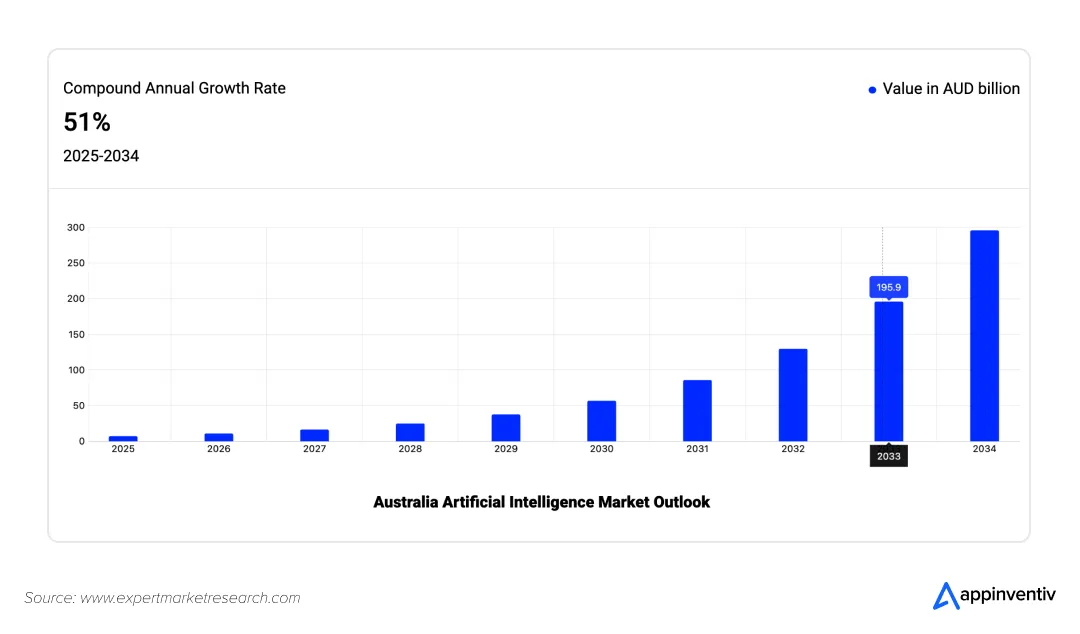
This trajectory positions Australia as a significant player in the global AI ecosystem, with unique opportunities emerging across diverse industry verticals.
Industry & Business Size Breakdown
Adoption patterns show clear leadership from certain sectors and company sizes. Technology, manufacturing, and financial services companies are ahead in AI and automation use, with bigger firms (500+ employees) hitting 60% adoption versus 20% for small-to-medium businesses. This gap creates both problems and chances. SMEs that move fast can gain competitive edges before AI becomes standard across industries.
Must Read: Harnessing AI for Enterprise
13 Transformative AI Use Cases Reshaping Melbourne’s Business Landscape
AI use cases in Melbourne are fundamentally transforming how the key industries here operate, compete, and create value. These AI use cases in Melbourne represent real-world applications delivering measurable results today, not theoretical possibilities for tomorrow.
What These Use Cases Reveal:
- Business results that matter: lower costs, better customer experiences, improved safety, and lasting competitive advantages
- Technical abilities turning directly into market leadership spots
- Tested strategies that smart companies are using right now
- The growing gap between early users and companies still in planning mode
From healthcare diagnostics that save lives to fintech innovations that open up financial services, each industry example listed below shows both AI’s power to change things and the need for quick action. Understanding these AI use cases in Melbourne matters for any decision-maker wanting to use Melbourne AI business opportunities in today’s AI-focused market. So, without further ado, let’s unveil the 13 transformative AI use cases in Melbourne:
Healthcare: Diagnostic Precision Meets Patient-Centered Care
Australia’s healthcare sector uses AI to stand at the front of change, particularly across Melbourne’s fast-evolving health ecosystem, where even a millisecond delay in diagnosis can mean the difference between life and death. Adding machine learning to medical imaging analysis has completely changed how doctors identify critical conditions.
The Use Case: AI in medical diagnosis analyze medical imaging, and they’re incredibly accurate at detecting early-stage cancers, fractures, and cardiovascular issues. These systems can process thousands of data points simultaneously while cross-referencing massive medical databases, identifying patterns that would be impossible for human eyes to catch.
Beyond diagnostic applications, predictive AI models are revolutionizing patient care management. These systems analyze patient histories, vital signs, and demographic data to forecast deterioration risks, enabling preemptive interventions.
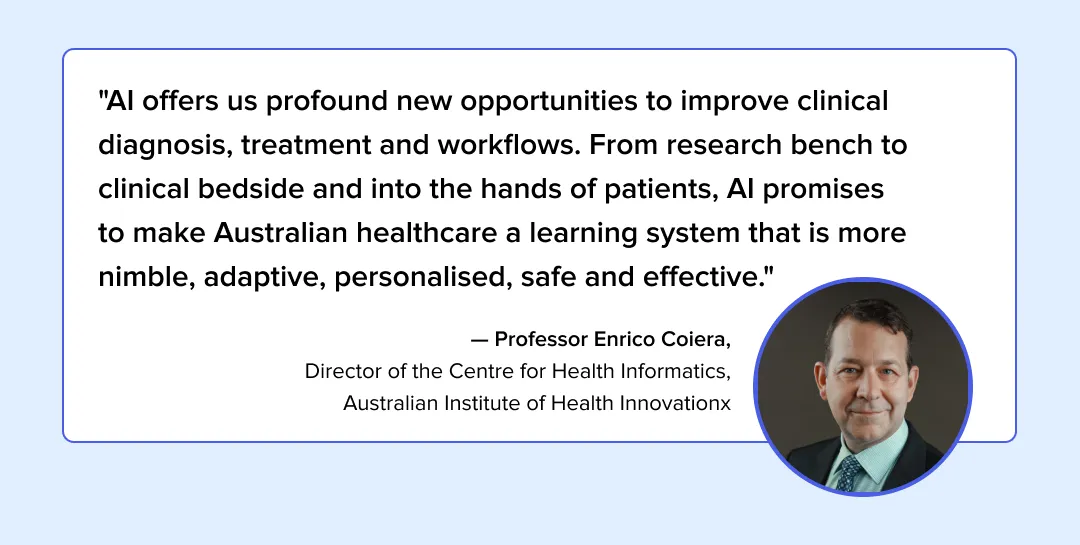
Real-World Implementation: Royal Melbourne Hospital actually rolled out AI diagnostic tools that work alongside radiologists to catch early-stage cancers. The results? They’ve dramatically cut down on diagnostic mistakes and patient outcomes have gotten much better. What’s really impressive is how much faster they can diagnose critical conditions now, which obviously makes a huge difference when every minute counts.
Retail & E-commerce: Hyper-Personalization Meets Intelligent Inventory
Melbourne’s retail and e-commerce landscape has evolved beyond traditional merchandising into a data-driven science where AI personalizes consumer behavior with remarkable precision. The convergence of online and offline channels demands intelligence that adapts instantaneously.
Retailers leveraging AI report significant reductions in waste, improved inventory turnover, and enhanced customer satisfaction. The benefits of AI for Melbourne’s key industries in retail and e-commerce extend beyond operational efficiency; they create competitive advantages that traditional approaches simply cannot match.
The Use Case: AI systems in Australia’s retail sector study shopping patterns, browsing habits, inventory levels, and outside factors to improve stock management and create really personalized customer experiences. Since 83% of shoppers now start buying online, AI helps marketers reach customers right at that first moment with offers that actually matter to them. Pricing algorithms change on the spot, while predictive tools forecast demand incredibly well. Computer vision tracks how people move through stores to figure out better product placement.
The technology extends to omnichannel integration, where AI unifies inventory data across digital and physical touchpoints, enabling accurate click-and-collect functionality.
Real-World Implementation: David Jones has put in place AI-powered interactive displays that give customers product suggestions based on what they like and how they browse. Retail companies are really pushing ahead with AI adoption; over 45% of SMEs are actively using it now.
Freedom Furniture jumped on AI-driven search and personalization for their online store, so customers get product recommendations that make more sense. And Woolworths? They’ve got AI systems in their fresh food sections that check product quality and figure out the best time to mark things down, so less food gets wasted.
Related Article: How Headless Commerce Enables Omnichannel Retail for Australian Businesses
Banking and Finance: Risk Intelligence and Fraud Prevention
Melbourne’s financial sector faces an escalating arms race against increasingly sophisticated fraud schemes. Traditional rule-based systems can no longer keep pace with the evolving threat landscape. This is where AI and ML for financial fraud detection emerge as a great savior.
The Use Case: AI and Machine learning algorithms look at transaction patterns, unusual behavior, and past data to catch fraud as it happens. These systems keep learning all the time, adjusting to new fraud tricks way faster than human analysts could keep up.
Beyond fraud detection, financial institutions are deploying AI for customer service automation, credit risk assessment, and personalized financial advice.
Real-World Implementation: Commonwealth Bank has made customers safer by getting an early start with generative AI; they’re processing thousands of transactions every second while catching suspicious stuff.
Manufacturing: Predictive Maintenance and Quality Control
Manufacturing operations across Melbourne are finding that reactive maintenance strategies are a thing of the past. Today’s production environments need predictive analytics that stops failures before they happen.
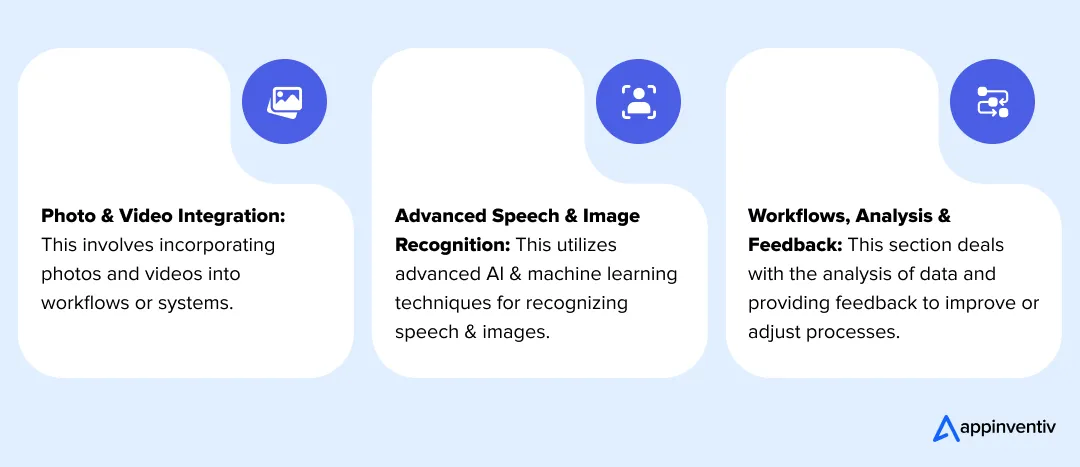
The Use Case: AI-powered sensors watch equipment performance in real-time, looking at vibration patterns, temperature changes, and operational metrics to predict maintenance needs. Computer vision systems check products at speeds and accuracy levels impossible for human quality control teams.
Along with predictive maintenance, the use cases of AI for Melbourne’s manufacturing industry range from reduced operational costs to improved product quality. These are one of the most compelling AI applications for businesses seeking immediate, measurable returns on technology investments.
Real-World Implementation: One chemical company cut their demand forecasting costs by 90% and sped up how fast people could find information; we’re talking answers in seconds instead of days. Their production lines now have AI quality control that spots defects right away, which means less waste and more consistent products coming off the line.
Must Read: 10 Use Cases of Computer Vision in Manufacturing
Construction: Project Management and Safety Monitoring
Melbourne’s construction sector operates where delays and safety incidents carry enormous costs. Traditional project management approaches struggle to coordinate complex variables.
Construction companies going for AI adoption in Melbourne in 2026 report reduced project delays, improved safety records, and enhanced profitability. The Melbourne AI implementation challenges in construction include integrating AI with existing systems, but organizations that overcome these barriers gain substantial competitive advantages.
The Use Case: AI in construction analyzes project schedules, resource availability, and weather forecasts to optimize construction sequencing. Computer vision monitors jobsites for safety compliance, identifying potential hazards before accidents occur.
Real-World Implementation: Buildots uses helmet-mounted 360° cameras and AI to compare site imagery with BIM models, helping contractors like NCC increase task completion by 230% and reduce reporting time by 70%. Skanska deployed Smartvid.io’s machine learning platform integrated with Autodesk BIM 360 to automatically tag jobsite images for safety hazards like missing PPE, and implemented Spillard Safety Systems’ AI-powered Human Detection System on heavy machinery that pauses equipment when workers enter exclusion zones.
Logistics and Supply Chain: Route Optimization and Demand Forecasting
Melbourne’s logistics sector operates where margins are razor-thin and delays are catastrophic. Traditional routing and forecasting methods cannot adapt quickly enough to conditions that change by the hour.
Logistics companies implementing AI for business growth in Melbourne report substantial reductions in fuel costs, improved on-time delivery rates, and enhanced customer satisfaction.
The Use Case: AI in Australia’s logistics sector programs study traffic patterns, weather forecasts, delivery windows, and past data to find the best routes as things change. AI based demand forecasting looks at economic signals, seasonal trends, and buying patterns to guess what inventory you’ll need.
The AI applications in Melbourne for logistics and supply chain management are becoming increasingly sophisticated, with AI systems now capable of predicting disruptions and automatically rerouting shipments to maintain service levels even during unexpected challenges.
Real-World Implementation: Toll Group uses AI software to improve delivery routes and handle fleet operations, plus they’ve got automated robots in warehouses that make sorting and delivery work better, which really bumps up productivity. When transportation costs jump or demand suddenly spikes, their AI logistics setup adjusts right away.
Education: Personalized Learning and Administrative Automation
Melbourne’s educational institutions face a dual challenge: delivering personalized learning experiences at scale while managing increasingly complex administrative requirements. Educational institutions implementing AI applications in Melbourne report improved student outcomes, enhanced resource utilization, and more effective interventions for at-risk students.
The Use Case: AI learning platforms change how they deliver content based on how students are doing, how fast they learn, and how engaged they are. These systems spot struggling students early on, suggest what to do about it, and tailor learning paths to get better results
As AI adoption in Melbourne, Australia, accelerates in education, institutions that invest now in these technologies will be better positioned to attract students and deliver superior learning outcomes.
Real-World Implementation: Catholic College Wodonga and Islamic College of Melbourne have started using AI networking to make digital learning better and keep internet connections solid across their campuses. Universities are putting AI to work for processing admissions, helping students, and figuring out better curricula.
Legal Firms: Knowledge Management and Client Intelligence
Melbourne’s legal services firms face an information management challenge on a huge scale. Old knowledge management systems can’t keep up with the fast growth of client data and market intelligence. Legal services firms leveraging AI report increased billable hours, improved client satisfaction, and enhanced competitive positioning.
The Use Case: AI-powered knowledge management systems organize big repositories of client information, case precedents, and market research, bringing relevant insights right away. Natural language processing lets professionals search databases conversationally.
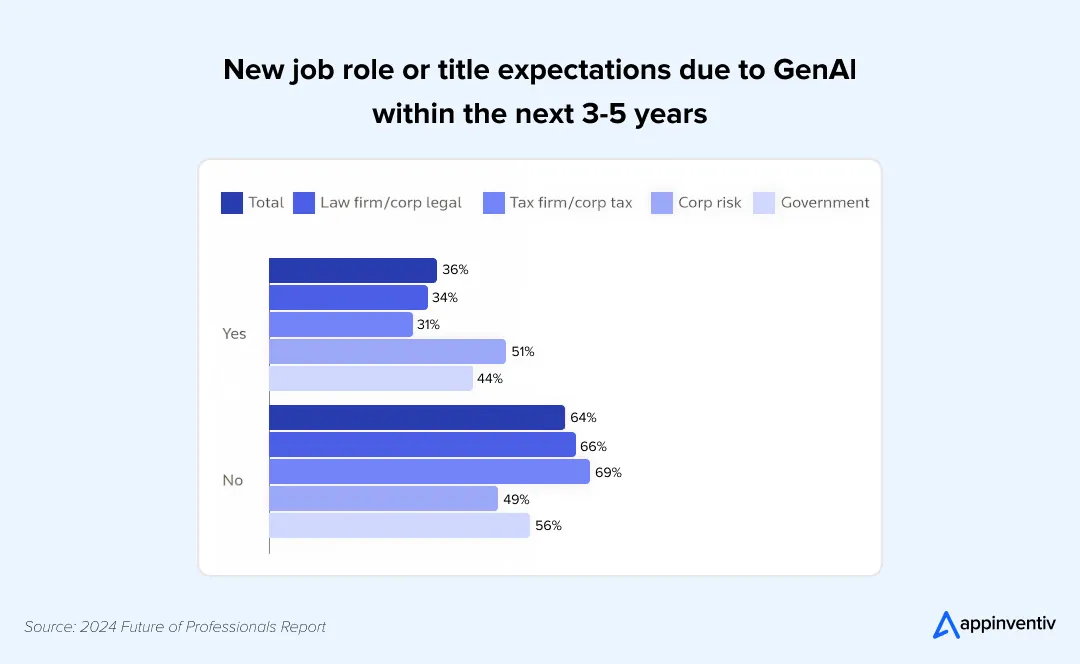
Real-World Implementation: Law firms are deploying AI for contract analysis, legal research, and document review, tasks that once consumed hundreds of billable hours. 77% use it for document review, 74% use it for legal research, 74% of them use it to summarize documents, and around 59% use it to draft briefs or memos.
These AI Melbourne use cases in legal services demonstrate how knowledge-intensive industries can harness AI to amplify human expertise rather than replace it.
Insurance: Risk Assessment and Claims Processing
Melbourne’s insurance sector faces mounting pressure to process claims faster while managing risk more accurately. Traditional actuarial models cannot incorporate real-time data streams that define modern insurance markets. Insurance companies implementing an AI strategy for Melbourne enterprises report faster claims processing, more accurate risk assessment, and reduced fraud losses.
The Use Case: AI models analyze vast datasets from IoT sensor data to climate patterns to assess risk with unprecedented granularity. Claims processing automation handles routine cases instantly while flagging complex situations for human review.
The AI in Melbourne based businesses within insurance is transforming how risk is quantified and managed, creating opportunities for innovative products and services that were previously impossible to deliver profitably.
Real-World Implementation: Suncorp Group has integrated geospatial imagery and AI, leveraging high-resolution aerial imagery to streamline the insurance purchasing process, resulting in shorter call times and more efficient digital sales.
Hospitality: Demand Forecasting and Guest Experience Personalization
Melbourne’s hospitality sector operates where occupancy rates and guest satisfaction can fluctuate dramatically. Traditional booking systems cannot adapt quickly enough to market dynamics. Hospitality businesses leveraging AI in Melbourne-based businesses report improved occupancy rates, enhanced guest satisfaction scores, and optimized operational costs.
The Use Case: AI systems look at booking patterns, local events, weather forecasts, and market trends to adjust pricing and staffing as things happen. Understanding what guests like helps hotels deliver personalized service to lots of people at once.
Real-World Implementation: Tons of hotels in Melbourne now have AI concierge systems to make guest experiences better. Hilton’s Connie tells guests about amenities, dining, and local spots, and it gets smarter from talking to people. The Cosmopolitan’s Rose in Las Vegas helps with things like reservations and city tips through text, but it also plays games with guests, which adds some fun to their visit.
Mining: Autonomous Operations and Predictive Resource Management
While Melbourne’s urban core drives much economic activity, Victoria’s mining sector and Australia’s broader mining industry remain crucial to the national economy. Modern mining operations demand precision, safety, and sustainability that traditional methods cannot deliver at scale.
Australia’s Mining companies implementing AI-driven innovation in Melbourne businesses and across Australia report reduced accidents, improved equipment utilization, and enhanced environmental compliance.
The Use Case: AI-powered self-driving vehicles move around mining sites without human drivers, while predictive maintenance systems look at equipment data to predict failures before they happen. Computer vision watches safety compliance in real-time, spotting potential dangers. Machine learning models handle geological data to find mineral-rich spots faster and cheaper than old exploration methods. AI improves extraction processes, cutting waste and environmental impact.
Considering the instances of real examples of AI in Melbourne industries, mining demonstrates how AI transforms dangerous, capital-intensive operations into safer, more efficient enterprises. The Melbourne AI business opportunities in mining extend beyond operational improvements to include new business models around predictive services and AI-enabled exploration technologies.
Real-World Implementation: Rio Tinto has implemented autonomous trucks and predictive maintenance systems powered by AI, becoming a game-changer for operational efficiency and safety. BHP’s WA Iron Ore uses AI as a decision support system at its mines, with thousands of touchpoints controlled through remote operations centers.
Up to 60% of Australian mines are projected to implement AI solutions by the end of 2025, with companies reporting operational productivity boosts of up to 25%. South32 is deploying AI-driven systems at its Australian Manganese operations to optimize recovery rates.
The technology extends to exploration, where AI analyzes satellite imagery, seismic data, and historical drilling results to identify promising locations. Does your mining operation still rely on traditional exploration methods when AI could reduce costs by 30% while increasing discovery rates by 20%?
Government and Public Services: Resource Allocation and Citizen Engagement
Melbourne’s public sector faces increasing demands for services amid constrained budgets and growing population pressures. Traditional resource allocation methods cannot optimize across complex variables.
Therefore, the implementation of ethical AI in Melbourne industries is particularly critical in government applications, where algorithmic decisions must be transparent, fair, and accountable to the public they serve.
The Use Case: AI systems analyze service utilization patterns, demographic data, and infrastructure conditions to optimize resource allocation. Predictive models forecast demand for public services, enabling proactive planning. The AI use cases in Melbourne government sector demonstrate how AI can improve public services while maintaining the trust and transparency that citizens demand.
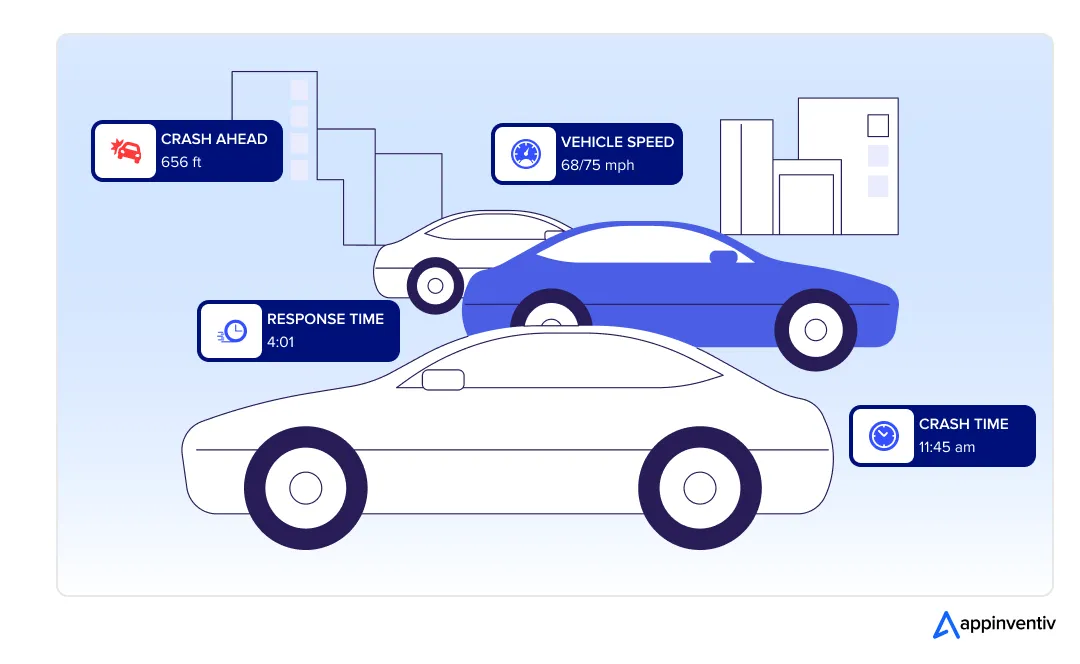
Real-World Implementation: North Carolina Department of Transportation deployed Flow Labs’ AI-powered traffic signal management software to 2,500 intersections across the state in July 2025, using GPS data from connected vehicles and machine learning to optimize signal timing. In December 2024, Kapsch TrafficCom implemented an Intelligent Transportation System in Ribeirão Preto, Brazil, improving traffic flow and public safety.
Energy and Utilities: Grid Optimization and Consumption Forecasting
Melbourne’s energy sector faces a complex balancing act: meeting fluctuating demand while integrating renewable sources and maintaining grid stability. Energy companies implementing AI-driven innovation in Melbourne businesses report reduced outages, improved efficiency, and enhanced integration of renewable sources.
The Use Case: AI programs predict how much energy people will use based on weather forecasts, past usage, and what’s happening with the grid right now. These systems figure out the best way to distribute power, work renewable energy sources into the mix smoothly, and spot maintenance problems before stuff breaks down.
Real-World Implementation: National Grid put AiDASH’s satellite AI system to work in Massachusetts to keep an eye on infrastructure all the time, and it has cut outages by 30% since they started using it by finding dangerous trees near power lines. Back in January 2025, Cisco built digital solutions for electricity grids using cybersecurity, AI, and IoT tech to make things more resilient and help with renewable energy integration.
Seeing how Melbourne’s leading industries are adopting AI may spark ideas for your own roadmap. To take that idea further, explore our comprehensive breakdown on How to Build an AI App, covering features, budget ranges, and the development workflow.

Understanding the Economic Impact of AI Use Cases in Melbourne
The change across Melbourne’s industries isn’t theoretical; it’s bringing real economic impact that’s reshaping competitive dynamics across every sector. Companies that have moved past pilot projects to full-scale rollout are seeing results that prove the strategic need for AI adoption.
Global & Local Adoption Metrics
- 66% of people globally use AI regularly, with 83% believing AI will deliver wide-ranging benefits
- Victoria maintained a stable AI adoption rate of 27% among businesses
- Melbourne shows particularly strong integration across retail, healthcare, and financial services sectors
- AI usage has become as common as daily smartphone use; embedded in operations, most businesses don’t even recognize it as AI-powered
What Separates AI Leaders from Laggards?
Winning companies don’t treat AI as a tech project; they see it as business change. Key differences include:
- Strategic vs. tactical approach: Matching AI projects with core business goals
- Complete vs. siloed integration: Linking AI systems across the whole company
- Workforce development: Putting money into training alongside tech rollout
- Continuous improvement: Treating AI adoption in business as an ongoing process, not a one-time project
The True Cost of AI Implementation in Business
Think about the costs involved with AI integration in Melbourne. AI development costs in Australia usually range from $40,000 to $400,000+ (AUD $60,000 – $600,000+), based on how complex and big the project is.
But this spending must be weighed against the missed chances of not adopting AI. When competitors use AI to serve customers faster and cheaper, the question isn’t whether you can afford to add AI; it’s whether you can afford not to.
The AI integration consulting in Melbourne market has grown a lot, with skilled providers now offering tested setup frameworks that speed up rollout and cut risk. Companies looking into the services of AI integration consulting in Melbourne find that expert help can cut setup times by 30-40% while avoiding expensive mistakes that hurt self-run projects.
Related Read: 9 Reasons Your Business Needs AI Integration Consulting
Navigating AI Adoption Challenges in Melbourne’s Key Industries
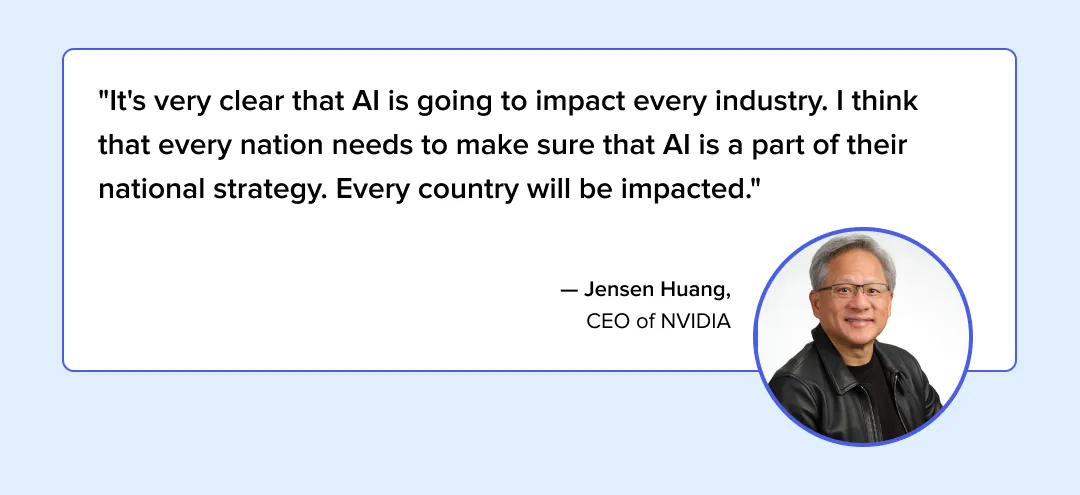
While the benefits of AI are compelling, Melbourne organizations face real barriers to successful implementation. Understanding these challenges and their solutions is critical for decision-makers planning their AI strategy for Melbourne enterprises.
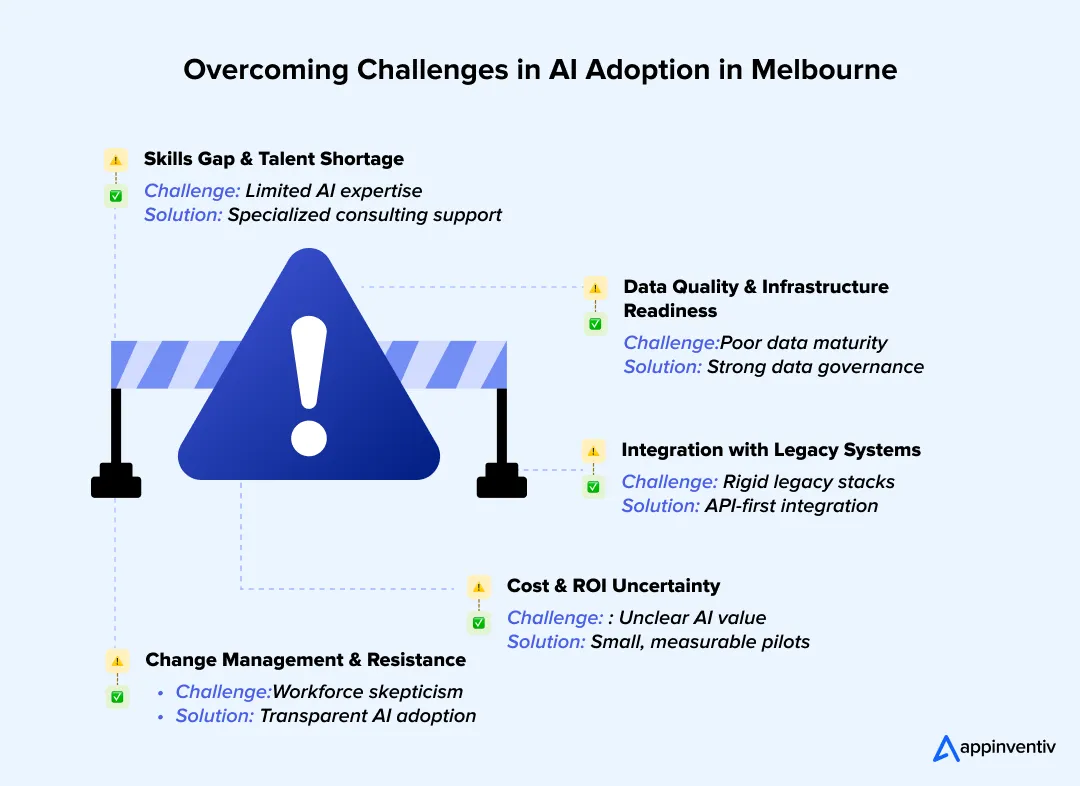
Challenge 1: Skills Gap and Talent Shortage
Finding qualified AI professionals stays one of the biggest barriers. Melbourne’s need for data scientists, machine learning engineers, and AI specialists is much higher than supply, pushing up costs and slowing down projects.
Solution: Work with specialized AI consulting firms that know AI consulting use cases for Melbourne’s industries. These providers offer both technology setup and knowledge transfer, helping build internal skills while bringing results. Put money into training current teams through structured learning programs rather than depending only on outside hiring. Many companies successfully mix offshore development for technical work with local talent for strategic oversight and business knowledge.
Challenge 2: Data Quality and Infrastructure Readiness
AI systems are only as good as the data they learn from. Many Melbourne companies find their data is separated, inconsistent, or not enough for AI uses. Old infrastructure often can’t handle the computing needs of today’s AI systems.
Solution: Start with a full data review before starting AI projects. Put in place data management rules that set quality standards, ownership, and access. Think about cloud-based infrastructure that grows with AI needs rather than huge upfront money investments in on-site systems. The AI integration consulting services in Melbourne offer specialized services for data readiness checks.
Challenge 3: Integration with Legacy Systems
Melbourne businesses, especially in older industries like manufacturing and finance, run complex old systems that weren’t built for AI integration. Adding AI capabilities without breaking critical operations creates big technical and operational challenges.
Solution: Use an API-first integration approach that builds middleware layers between AI systems and old infrastructure. This allows slow modernization without needing complete system replacements. Focus on use cases that can work alongside current systems rather than requiring total replacement.
Must Read: AI in Legacy Application Modernization
Challenge 4: Cost and ROI Uncertainty
Understanding the costs involved with AI integration in Melbourne and projecting realistic returns remains challenging. Organizations struggle to quantify benefits that span multiple departments and manifest over different timeframes.
Solution: Start with test projects that have clear, trackable KPIs and short timeframes (3-6 months). Use these tests to build internal business cases based on real results rather than projected numbers. The AI for business growth approach focuses on quick wins that fund bigger projects, building momentum and proving value step by step.
Challenge 5: Change Management and Organizational Resistance
Employee concerns about job displacement, lack of AI literacy among leadership, and resistance to changing established workflows can derail even technically sound AI initiatives.
Solution: Present AI as help rather than a replacement. Get employees involved in finding automation chances and give clear communication about how AI changes their jobs rather than removes them. Set up executive support that shows AI’s strategic importance and gives resources for complete change management programs.
Looking Ahead: The Next Wave of AI Innovation in Melbourne
The future of AI in Melbourne businesses continues evolving at a remarkable pace, with capabilities emerging that will fundamentally reshape how organizations create value. Decision-makers must prepare for several transformative trends that represent the next frontier of competitive advantage.
Agentic AI: From Reactive to Proactive Intelligence
Agentic AI shows the next big step forward, moving past simple question-answering to independent action and decision-making. These systems won’t just give recommendations, they’ll run complex workflows on their own.
Key abilities include:
- Independent task completion across multiple systems and platforms
- Self-directed problem-solving without human help for routine decisions
- Real-time adjustment to changing business conditions
- Coordination between multiple AI agents to handle company-wide processes
Related: Role of Agentic AI for Business Growth in Australia
For Melbourne businesses, this means AI systems that can run entire business functions in Australia, from procurement to customer service, letting human workers focus on strategic and creative challenges.
Multimodal AI: Understanding Context Across All Media
Multimodal AI applications combine text, image, video, and audio processing seamlessly, creating systems that understand context more deeply than current single-mode applications.
Applications for Melbourne industries:
- Retail: Analyzing customer behavior through visual, verbal, and digital interactions simultaneously
- Healthcare: Processing patient data from medical images, voice recordings, and written records in unified analysis
- Manufacturing: Monitoring production lines through multiple sensor types and formats
- Professional services: Analyzing documents, presentations, and meeting recordings to extract comprehensive insights
This multimodal AI use cases in Melbourne will revolutionize customer service, content creation, and analysis across virtually every industry operating in that region.
Edge AI: Real-Time Intelligence Without Cloud Dependency
Edge AI processes data locally on devices rather than in centralized clouds, enabling real-time decision-making even in connectivity-challenged environments.
Benefits for Melbourne operations:
- Instant response times for time-critical applications
- Enhanced data privacy by processing sensitive information locally
- Reduced bandwidth costs and cloud computing expenses
- Continued operation during network disruptions
For Melbourne’s industries, from manufacturing to agriculture, edge AI will enable applications that simply aren’t feasible with cloud-dependent systems, from autonomous vehicles operating in remote mining sites to real-time quality control in high-speed production lines.
Quantum AI: Exponential Computational Power
While still emerging, quantum computing combined with AI promises to solve problems currently beyond the reach of classical computers, from drug discovery to financial modeling.
These emerging capabilities will create new opportunities for differentiation, but they’ll also raise the stakes for organizations falling behind. The AI leaders of 2030 will be those who establish strong foundations today while remaining adaptable enough to embrace innovations as they emerge.
Generative AI: Content Creation and Process Automation
Generative AI use cases for Melbourne’s industries represent a distinct category, fundamentally different from predictive applications. This technology doesn’t just analyze data, it creates entirely new content.
Additionally, Generative AI models create text, images, code, and other content based on natural language prompts. These systems automate content production for marketing, generate code for software development, and draft documents from brief descriptions.
Organizations leveraging generative AI use cases for Melbourne report dramatic productivity increases and reduced content production costs. However, successful implementation requires governance frameworks that ensure quality and brand consistency.
For instance, Unifonic’s sales team uses Microsoft Copilot to look at conversations across platforms, leading to a 20% jump in sales outreach, while the tool cut research and documentation time by up to 40% company-wide. KPMG put GitHub Copilot in place at a major state government agency in 2025, getting a 35% boost in developer performance through less error fixing, better unit test coverage, and faster documentation creation.
Related Read: Using Generative AI for Business to Solve Complex Problems

Partner with Appinventiv to Transform Your Business with Proven AI Expertise
While knowing AI use cases helps, actually putting them to work needs an experienced AI partner with real technical skills and a solid track record. Appinventiv, a top provider of AI development services in Australia, brings more than ten years of experience changing businesses across industries through smart technology solutions.
Why Industry Leaders Choose Appinventiv
Our portfolio is a testament to our AI excellence, demonstrating how efficiently we can handle AI projects with varied complexities across industries. For instance, we’ve built 300+ game-changing AI solutions for global brands, including YouComm, Mudra, Verb, JobGet, Flynas, MyExec and so on.
The business impact of these projects?
- 50% Manual Process Reduction
- 90%+ Agent Task Accuracy
- 2X Scalability Increase
- 75% Faster Decision-Making Enabled
- 98% AI Prediction Accuracy
- 10X Faster Time-to-Market
- 40+ Average Reduction in Costs
Recognition and Trust:
- Consecutive Deloitte Tech Fast 50 Awards winner (2023 & 2024), ranking #1 in Digital & Cloud Tech category
- Named Leader in AI Product Engineering & Digital Transformation by Economic Times (2025)
- Tech Company of the Year at Times Business Awards (2023)
- Clutch Global Awards recipient (Spring 2025) for Chatbot Development and Android App Development
- ISO 9001:2008 certified, ensuring quality management standards across all deliverables
Our Approach to AI Implementation:
We don’t just implement AI use cases in Melbourne; we build AI systems that work smoothly with your current setup, bring real ROI, and grow with your business. Our team of 1,600+ tech experts includes 200+ data scientists & AI engineers with solid industry knowledge to create solutions that tackle your specific problems, whether you want to automate operations, improve customer experiences, or find new revenue sources.
As a trusted mobile app development company in Melbourne, we work with you at every step, from early strategy and planning through development, launch, and ongoing improvements, to make sure your AI projects bring the business results that matter most.
Ready to lead Melbourne’s AI transformation? Connect with our team today to discover how Appinventiv can turn your AI vision into measurable business results.
Frequently Asked Questions (FAQs)
Q. Are Melbourne companies investing heavily in AI?
A. Yes, Melbourne companies are boosting their AI spending by a lot. For instance, Victoria kept a 27% AI adoption rate among businesses, with strong performance in retail, healthcare, and financial services. The spending trend goes beyond big companies, with 40% of Australian SMEs now using AI, and adoption numbers rising each quarter. Melbourne’s spot as a tech and financial center puts it in a great place to lead AI adoption across different industries.
Q. Why is AI adoption critical for Melbourne’s industries right now?
A. AI adoption has hit a key turning point where competitive benefits available to early users will soon become basic requirements for staying in the market. Companies implementing AI use cases in Melbourne now get 12 to 18 months of learning benefits over competitors, build market spots based on better service delivery, and grab talent before skills shortages get worse. The window for first-mover advantage is closing as adoption speeds up.
Q. How AI is transforming Melbourne businesses?
A. AI changes Melbourne businesses in several ways: better efficiency by automating routine tasks, smarter decisions through data insights, better customer experiences through personalization at scale, new revenue chances through AI-powered services, and less risk through predictive analytics.
The change goes beyond just adding technology to company culture, with successful users building AI knowledge across all levels and creating rules that ensure responsible use.
Q. How much does it cost to implement AI in a Melbourne-based business?
A. Implementation costs change a lot based on project size, how complex things are, and what your industry needs. Basic AI apps using current platforms can start at $40,000/AUD $60,000, while full custom solutions cost around $400,000/ $600,000+.
But cost planning must include the R&D Tax Incentive offering up to 43.5% refundable tax offsets for qualifying AI projects. The real cost math should also factor in missed chances from waiting too long, competitive gaps from skipping AI, and the ROI most companies get within 12 to 18 months after launch.
Q. How quickly can businesses see ROI from AI adoption?
A. ROI timelines vary based on project size and how ready your organization is. Basic automation projects often pay off within 3 to 6 months. Bigger projects usually show positive ROI within 12 months, with 48% of businesses seeing good returns in the first year.
Companies that think about AI carefully, connect systems well, and focus on managing change tend to see faster and better returns than those doing random, separate projects. The key is starting with big-impact cases that give quick wins while working toward complete change.

- In just 2 mins you will get a response
- Your idea is 100% protected by our Non Disclosure Agreement.

Simple Steps to Hire AI Governance Consultants in 2026
Key Takeaways Define AI risk tolerance and compliance goals before hiring consultants. Look for multidisciplinary teams combining governance, ML auditing, and MLOps expertise. Ensure consultants understand frameworks like the EU AI Act, NIST RMF, and ISO 42001. Prioritize experts who can operationalize governance inside ML pipelines. Embed responsible AI practices directly into CI/CD and model…
AI in Smart Homes in Australia: Use Cases, Cost & Real-World Impact
Key takeaways: The adoption of AI in Australian smart homes is primarily dictated by energy economics, insurance risk mitigation, and the evolving needs of an ageing population. AI development costs in smart homes range from AUD 70,000 to AUD 700,000+, depending on grid integrations, compliance engineering, and AI model complexity. Adherence to the Privacy Act…

Enterprise AI Integration in the Middle East: Scaling with Expert Architects
Key takeaways: Middle Eastern enterprises lead in AI adoption, driven by strong government support and investment in digital infrastructure. Successful AI integration requires robust data governance, compliance with local regulations, and tailored architectural design. Addressing talent gaps, localization needs, and legacy system challenges is crucial for scalable AI deployments. Systems integrators and big data architects…