











































 Leader in AI-First Product Engineering Read Full Article
 IT Managed & Outsourcing
 Contact Us
We navigate the complexities of modern fintech with over a decade of high-volume financial engineering expertise. By building secure, scalable payment roadmaps, we provide the architectural stability enterprises need for a frictionless customer experience.
Our Core Capabilities:





















Our strategic payment orchestration,
validated by global performance metrics:
Successful Payment Projects Delivered
Experience Transforming Payments Systems
Countries Use our Solutions
Data Breaches in 10+ Years of Operation
Real-Time Fraud Detection Accuracy
Reduction in Deployment Time via CI/CD Automation
Our Services


We create advanced payment processing software solutions that easily handle high volumes of transactions.
• Systems running with the highest accuracy that process millions of transactions with low latency and 99.99% uptime.
• Scalability scope planned in systems to handle peak-season transaction loads without failure.

We design mobile payment apps focused on user experience across different devices and operating systems. Beyond simple transfers, our payment processing developers help build:
• Intuitive, cross-platform applications for iOS and Android, engineered to support P2P payment apps and contactless payments.
• Intelligent payment orchestration layers that automatically route transactions to the most cost-effective provider based on currency, card type, or geography.

We specialize in custom payment gateway software development services. We have worked for clients across the globe as a reliable payment gateway software development company, bridging legacy systems with modern fintech architecture.
• PCI-DSS, GDPR compliant payment gateway integration services for secure, real-time transaction processing.
• Integration of existing gateways like Stripe, PayPal, or Adyen with any web or mobile application.

We build AI-driven intelligence layers into your payment stack that go beyond static rules — learning from transaction behavior to improve authorization rates, personalize the payment experience, and surface risk before it becomes loss.
• Adaptive Authorization: AI models that learn approval/decline patterns per issuer and route transactions to maximize success rates in real time.
• Predictive Customer Insights: Behavioral and spend-pattern analysis that powers smarter checkout recommendations, retention offers, and lifetime-value forecasting.

We build powerful analytics tools that make it easy to see spending patterns, track financial KPIs, and make informed decisions to improve your payment strategies.
• You can track key financial KPIs, user spending patterns, and transaction success rates on a unified dashboard.
• Use data to optimize transaction routing, reduce processing costs, and identify new revenue opportunities.

Our experts develop advanced payment security systems that use machine learning to detect fraud. We leverage behavioral and velocity analytics to analyze device fingerprints and transaction patterns and neutralize sophisticated "zero-day" threats and coordinated fraud rings.
• AI and machine learning models customized as per your use cases that score transaction risk in real-time.
• Detect and block fraudulent activity automatically, reduce chargebacks, and prevent account takeovers.

It is time to upgrade your operations with our tailored POS software services that are designed to improve transaction speed and ensure data accuracy. Get detailed sales analytics to make informed business decisions.
• Optimize your store (on location) and online operations with a unified, omnichannel-ready transaction system.
• Use real-time sales analytics and inventory management data to make accurate, informed decisions.

Our billing software development services simplify your processes, helping you reduce errors and save time by automating your financial workflows. We engineer revenue recognition engines that comply with ASC 606/IFRS 15 standards while handling multi-currency invoicing, tax calculation across jurisdictions, and real-time accounts receivable aging analysis.
• Through automated payment software development, we configure systems that handle the entire invoicing and accounts receivable process without manual intervention.
• Easily manage complex subscriptions, metered usage, recurring payments, and dunning workflows.

Efficient and secure ACH (Automated Clearing House) payment processing is vital for businesses that need to handle direct deposits and recurring billing. Our systems include NACHA file validation, duplicate detection, return code handling, and automated reconciliation that matches settlement reports against expected transactions within your ERP.
• Secure systems for direct debit, direct deposits, and low-cost B2B payments. Automate recurring billing and employee payroll straight from bank accounts.
• We integrate Real-Time Payment (RTP) rails and FedNow protocols to enable instant, 24/7 fund settlement for payroll, vendor payouts, and gig-economy disbursements.

Our developers engineer custom subscription engines that automate recurring billing and simplify life-cycle management for your customers. We build revenue optimization engines that analyze churn patterns, test pricing strategies through A/B experimentation, and automatically apply retention offers based on customer lifetime value calculations.
• Complete subscriber lifecycle, including free trials, upgrades to downgrades and dunning can be easily managed.
• Complex models like metered billing, prorations, and custom promotional pricing are supported.

Create innovative Buy Now, Pay Later (BNPL) apps that offer flexible payment solutions to your customers with custom payment software companies like ours. Our capabilities include credit decisioning APIs that evaluate applicants in real-time, installment ledger systems tracking payment schedules, and merchant-funded discount configurations that determine your true cost of capital.
• Offer flexible, point-of-sale financing options to increase customer conversions and average order value.
• Integrate custom BNPL logic directly into your e-commerce checkout or mobile app.

Our mobile wallet development services are focused on advanced security features to protect users' financial data and ensure smooth transactions. We implement card-on-file tokenization that updates automatically when cards expire or get reissued, peer-to-peer transfer capabilities, and QR code payment generation compatible with merchant acceptance infrastructure.
• Banking standard security with tokenization and biometric authentication to keep user data safe.
• Secure storage of credit/debit cards, loyalty points, digital IDs, and event tickets.

For businesses looking to become a payment gateway software provider themselves, we offer white-label solutions that let you go to market fast. Perfect for SaaS platforms that want to monetize payments for their users.
• Payment Gateway as a Service: We handle the technical heavy lifting like maintenance, updates, and security patches, while you focus on sales and customer relationships.
• Scalable Architecture: Our payment gateway software development services ensure your platform can handle Black Friday spikes.

Future-proof your transaction capability by accepting more than just fiat.
• Crypto Payment Gateway Development: Our payment gateway developers build secure rails for accepting Bitcoin, Ethereum, and stablecoins, automatically converting them to fiat to protect your balance sheet from volatility.
• High-Risk Processing: For industries that traditional banks shun, we architect resilient payment gateway services that mitigate risk and keep your MID (Merchant ID) healthy.
From multi-gateway payment orchestration software development to cross-border payment gateway solutions and high-volume processing systems, our team handles the heavy lifting. Let's simplify your payments.

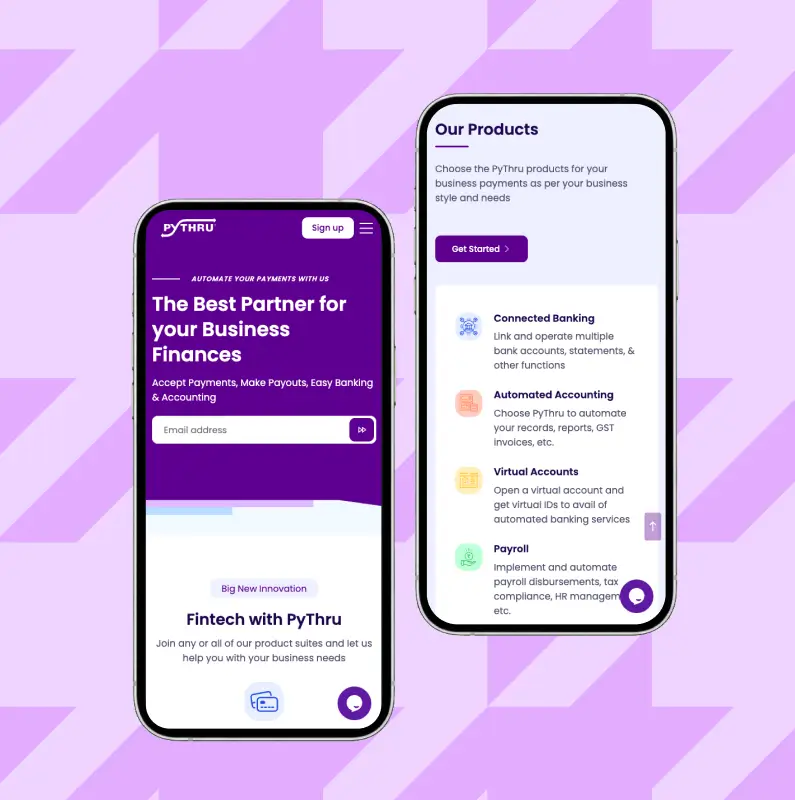
We built a unified FinTech platform for PyThru, bringing payments, banking, accounting, and reporting together into a single dashboard for growing businesses. The results?
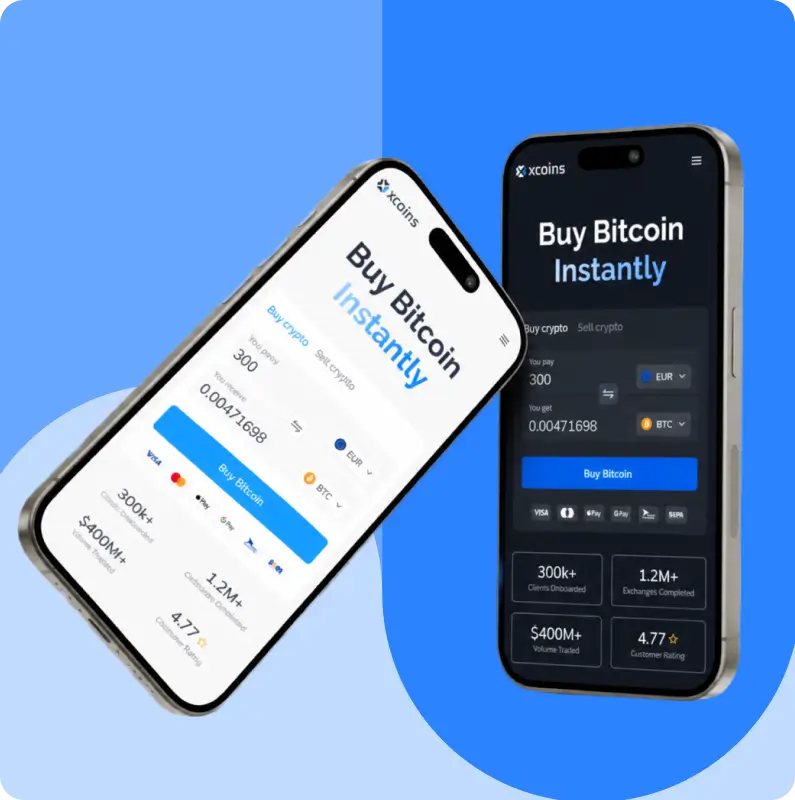
We built a non-custodial crypto wallet and trading platform for XCoins, giving users secure wallet management, real-time transaction tracking, and simple trading in one place. The results?
We developed an AI-powered budget management solution for millennials, helping them to keep a tab on their daily expenses. The results?
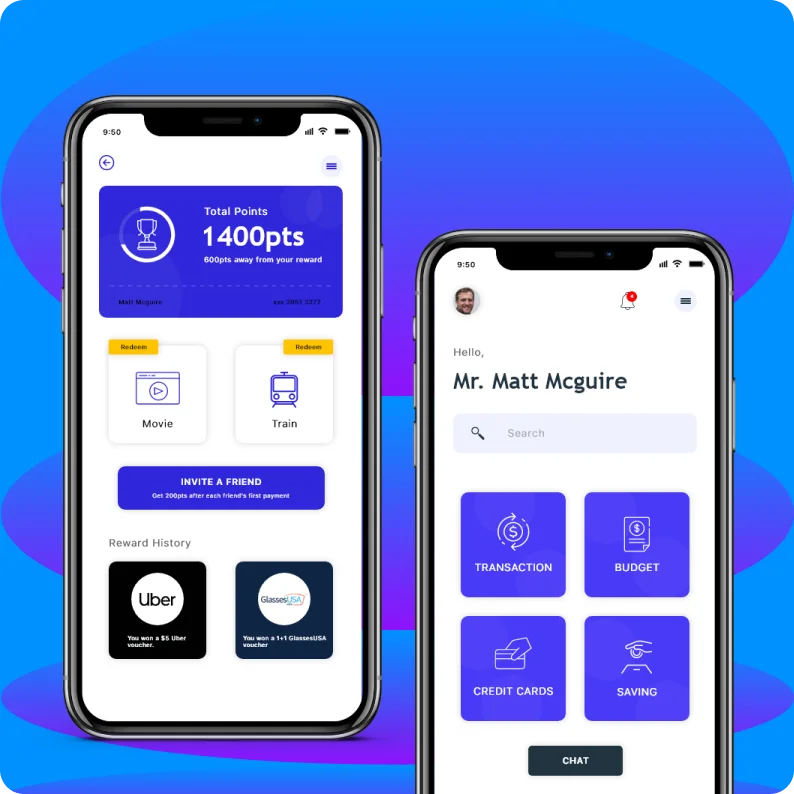
We collaborated with a leading European bank to develop an AI-based solution that resolves customer queries in real-time. The results?

Our experts created EdFundo, a financial literacy and money management platform that helps children learn finance management from an early age. The results?
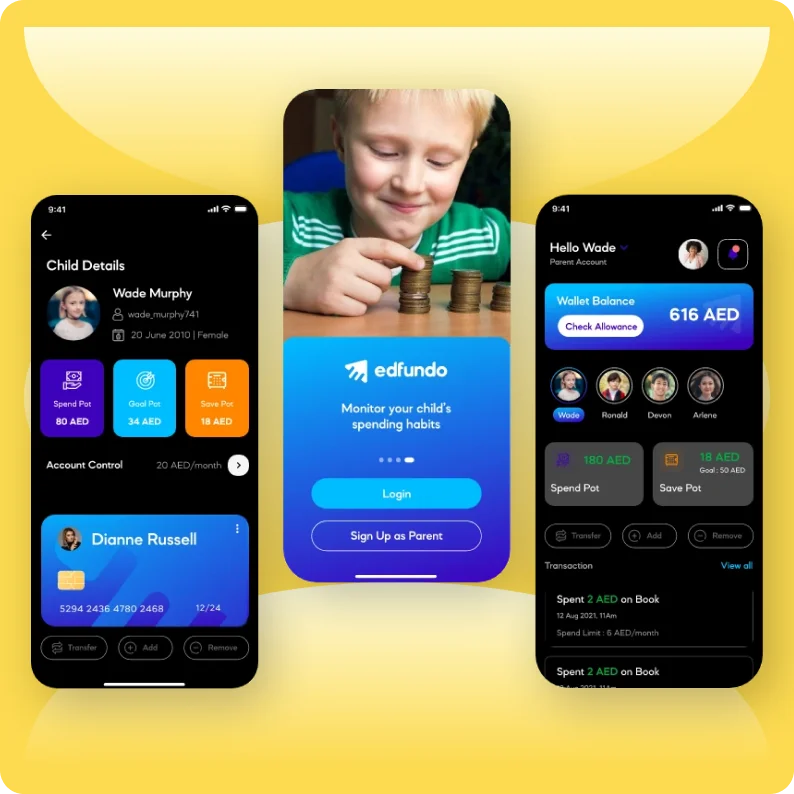
We engineered the mission-critical financial core for Slice, a fractional real estate investment platform, to automate property ownership and dividend management in the UAE market. The results?
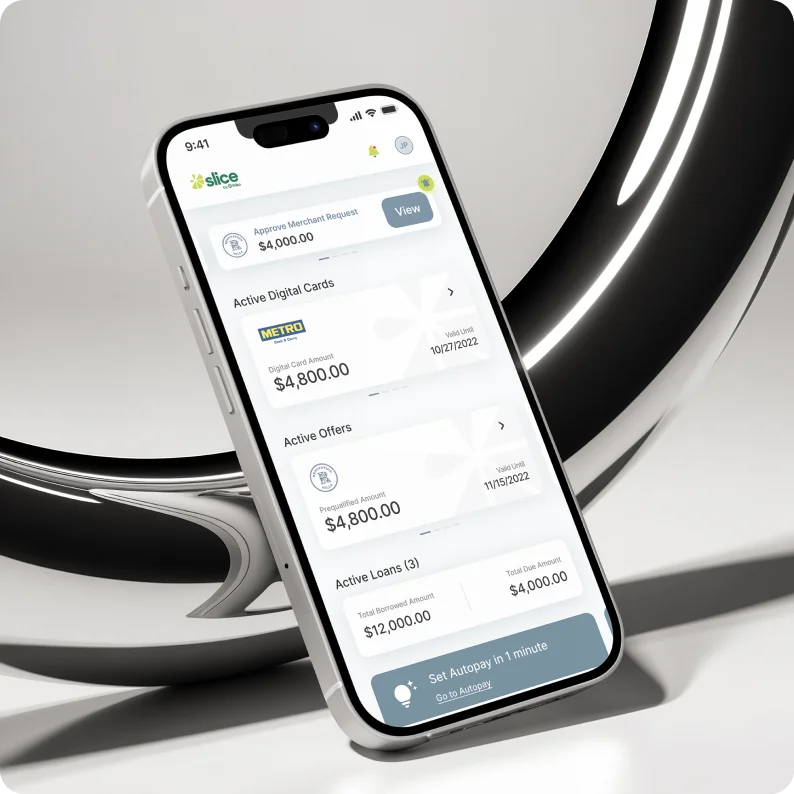


From fraud checks to routing and reconciliation, automate the heavy lifting on an intelligent, cloud-native payment platform.


PCI DSS (Level 1)

ISO 20022
Universal financial industry message scheme

SOC 1 & SOC 2 (Type II)
Service Organization Controls for security and privacy

FIPS 140-2/140-3
Federal Information Processing Standards for cryptography

EMVCo
Global technical specifications for chip-based payments and 3-D Secure

IFRS
International Financial Reporting Standards

GAAP
Generally Accepted Accounting Principles

GDPR

PSD2 / PSD3
Payment Services Directive (Open Banking & SCA)

DORA
Digital Operational Resilience Act

eIDAS
Electronic Identification, Authentication, and Trust Services

MiFID II
Markets in Financial Instruments Directive

SEPA
Single Euro Payments Area Regulations

UK Finance
FCA (Financial Conduct Authority) Regulations
BSA / USA PATRIOT Act
Bank Secrecy Act / Anti-Money Laundering

Dodd-Frank Act
Consumer Protection and Financial Stability

GLBA
Gramm-Leach-Bliley Act

CCPA / CPRA
California Consumer Privacy Act

NACHA
Operating Rules for the ACH Network

SOX
Sarbanes-Oxley Act

FATCA
Foreign Account Tax Compliance Act

FINRA / SEC
Securities and Exchange Commission Regulations

FATF
Financial Action Task Force (AML/KYC standards)

KYC / KYB
Know Your Customer and Know Your Business mandates

SCA
Strong Customer Authentication protocols

OFAC
Office of Foreign Assets Control (Sanctions screening)

HIPAA
Health Insurance Portability and Accountability Act (Healthcare payments)

SAMA
Saudi Central Bank Cybersecurity Framework

ADGM
Abu Dhabi Global Market Financial Regulations

AP Directives
Dutch Autoriteit Persoonsgegevens (Privacy)
PCI DSS (Level 1)
ISO 20022
Universal financial industry message scheme
SOC 1 & SOC 2 (Type II)
Service Organization Controls for security and privacy
FIPS 140-2/140-3
Federal Information Processing Standards for cryptography
EMVCo
Global technical specifications for chip-based payments and 3-D Secure
IFRS
International Financial Reporting Standards
GAAP
Generally Accepted Accounting Principles
GDPR
PSD2 / PSD3
Payment Services Directive (Open Banking & SCA)
DORA
Digital Operational Resilience Act
eIDAS
Electronic Identification, Authentication, and Trust Services
MiFID II
Markets in Financial Instruments Directive
SEPA
Single Euro Payments Area Regulations
UK Finance
FCA (Financial Conduct Authority) Regulations
BSA / USA PATRIOT Act
Bank Secrecy Act / Anti-Money Laundering
Dodd-Frank Act
Consumer Protection and Financial Stability
GLBA
Gramm-Leach-Bliley Act
CCPA / CPRA
California Consumer Privacy Act
NACHA
Operating Rules for the ACH Network
SOX
Sarbanes-Oxley Act
FATCA
Foreign Account Tax Compliance Act
FINRA / SEC
Securities and Exchange Commission Regulations
FATF
Financial Action Task Force (AML/KYC standards)
KYC / KYB
Know Your Customer and Know Your Business mandates
SCA
Strong Customer Authentication protocols
OFAC
Office of Foreign Assets Control (Sanctions screening)
HIPAA
Health Insurance Portability and Accountability Act (Healthcare payments)
SAMA
Saudi Central Bank Cybersecurity Framework
ADGM
Abu Dhabi Global Market Financial Regulations
AP Directives
Dutch Autoriteit Persoonsgegevens (Privacy)
First and foremost, payment software is about security. We implement advanced encryption standards and tokenization, mapped to industry standards. Your sensitive financial information remains secure.
We offload your compliance burden. Using Tokenization-as-a-Service and Hardware Security Module (HSM) integration, we ensure raw sensitive data never touches your core servers, keeping your main infrastructure out of PCI scope.
Our team excels at integrating payment software with already existing systems: third-party payment gateways, CRM systems, and internal databases-you name it. Smooth user experience guaranteed, no hassle.
We don't just code; we lower your operational costs. By implementing Level 2 and Level 3 data processing, we configure your payment flows to pass enhanced data (tax IDs, line items) to card networks, significantly reducing interchange fees.
In payments, "eventual consistency" isn't enough. We build double-entry ledger systems that ensure every cent is accounted for across your database, preventing balance drift and simplifying audits.
Cut the compliance headaches. We guarantee PCI DSS integrity with Compliance as Code and HSM integration, keeping your business audit-ready, always.




The India's Fastest-Growing Companies 2026 Recognised by TIME and Statista

Statista High Growth Companies APAC - 2026

Statista India's Growth Champions 2023

AI services enable quicker, safer, and smarter transactions: automated operations, real-time fraud detection, and personalized customer experiences by analyzing user behavior and preferences. Our neural networks process transaction context - device signals, behavioral patterns, merchant category - to flag anomalies before funds move.
Machine learning continuously improves our payment development services. ML analyzes transaction patterns and behaviors to optimize payment processes and strengthen risk management. Models retrain automatically on new fraud tactics, adjusting risk thresholds without manual rule updates while reducing false declines that hurt legitimate customers.
Cloud computing gives scalability and flexibility. We build cloud-native architectures designed to handle high-velocity transaction volumes during peak seasons. High availability and compelling security reduce risks of operational downtime, thereby enhancing data protection. Our containerized services auto-scale authorization handlers independently from settlement processors, maintaining consistent latency regardless of load.
We move beyond basic firewalls to a "Zero Trust" model, verifying every request, whether it comes from outside or inside the network. This approach is central to our broader cybersecurity services, uses Hardware Security Modules (HSM) and tokenization to ensure raw card data never actually sits on your core servers. This drastically limits your risk exposure and makes meeting PCI compliance standards much easier to manage.
Blockchain provides solid security and complete transparency. Payment software solutions, whether it be blockchain payment networks or crypto payment processing software, remain secure against fraud, reduce transaction costs, and provide clear records of transactions. Smart contracts automate cross-border settlement and eliminate reconciliation discrepancies through distributed ledger consensus.
Big data analytics draws valuable insights from transaction data, leading to more engagement with customers and increased security. With big data, businesses make informed decisions and increase operational efficiency. Streaming pipelines analyze approval rates by card type, identify interchange optimization opportunities, and surface decline patterns requiring processor routing adjustments - all in real time.
Security for transactions can be improved using fingerprint scans and facial identification. This makes user authentication easier and provides them with a seamless, secure user experience that conveys trust and efficiency. We implement FIDO2 standards enabling passwordless authentication with device-based biometrics, eliminating credential theft while meeting Strong Customer Authentication mandates.
AR and VR technologies create immersive and interactive shopping experiences. Payment processes become engaging and intuitive. Virtual try-before-you-buy environments integrate payment authorization within 3D spaces, while AR product visualization connects directly to one-tap checkout flows that reduce cart abandonment.









Build on a secure foundation. Our experts deploy high-performance PostgreSQL and MongoDB architectures, fortified by AES encryption, to drive seamless data synchronization across your global payment ecosystem.















We initiate the process of payment software development by aligning your business objectives with a risk-appetite assessment. Instead of generic analysis, we conduct a deep audit of your transactional ecosystem to define the specific security posture and performance benchmarks required to support your projected volume and global footprint.
We plan system architecture with defense-in-depth principles. Define encryption boundaries (field-level vs. full payload), tokenization strategies to minimize PCI scope, network segmentation isolating cardholder data environments, and HSM integration for cryptographic key management. Our designs specify authentication mechanisms (OAuth 2.0, FIDO2 biometrics), authorization models (RBAC with fine-grained permissions), and audit logging capturing every state change for forensic analysis and compliance reporting.
Our development teams implement the planned design following OWASP secure coding standards with automated SAST (Static Application Security Testing) scanning each commit. We enforce input validation to prevent injection attacks, implement rate limiting to protect against credential stuffing, and build idempotency handlers to ensure network failures don't duplicate charges. Every API endpoint undergoes security peer review before merging, with particular scrutiny on authentication bypass attempts and authorization boundary violations.
Rigorous testing validates both functionality and security posture. Our approach includes unit tests for business logic, integration tests with processor sandboxes simulating decline scenarios, penetration testing by certified ethical hackers identifying exploitable vulnerabilities, and compliance validation against PCI DSS Self-Assessment Questionnaires. We conduct chaos engineering experiments—simulating processor outages, database failures, network partitions—verifying your system maintains transaction integrity under adverse conditions without exposing sensitive data.
We deploy to production environments configured with security controls active from day one: WAF rules blocking common attack patterns, DDoS protection, TLS 1.3 with perfect forward secrecy, database encryption at rest, and secrets management via dedicated vaults. Before processing live transactions, we coordinate with your QSA (Qualified Security Assessor) to validate PCI DSS controls, document network diagrams for Attestations of Compliance, and implement any findings from vulnerability scans or penetration tests.
Ongoing monitoring tracks both performance and security indicators. We implement SIEM tools aggregating security events, anomaly detection flagging unusual transaction patterns suggesting fraud or compromise, quarterly ASV (Approved Scanning Vendor) scans identifying new vulnerabilities, and automated alerts for failed authentication attempts exceeding thresholds. Our incident response playbooks define escalation paths for suspected breaches, data exposure scenarios, and processor connectivity failures—ensuring you meet breach notification timelines required by regulations.
We actively monitor regulatory changes—new PCI DSS requirements, evolving card network rules, state licensing amendments—and proactively update your platform to maintain compliance. Security patches deploy within SLA windows based on CVSS severity scores. We conduct annual penetration tests as PCI mandates require, implement new authentication standards like EMV 3DS 2.0 when card networks mandate them, and continuously harden infrastructure against emerging attack techniques identified in threat intelligence feeds.
The cost for payment software development services would vary in accordance with the complexity of the features, integration requirements, security measures, scalability needs and more.
The cost generally ranges from $40,000 to $300,000. We develop a custom payment gateway tailored to clients' security & efficiency needs. Reach out to our experts in payment software development services with your custom business requirements for clear cost estimates.
On a broader level, the timeline generally depends on the payment platform software development company you choose and the engagement models they offer.
Let’s help you with some clarity. We decide the timelines of the project based on the project scope, complexity of the features, needs of payment platform integration, and testing requirements. It usually takes anywhere from 3-6 months for an MVP and to get a detailed proposal with timelines; contact us with your requirements.
We develop a wide range of payment software solutions according to client needs. Be it payment gateways, mobile application payment, point-of-sale systems, subscription billing platforms, among others. Our specialty is customization as per your needs and industry. We offer payment platforms software development services that align with your business goals and requirements.
Certainly, we do provide upgrade and enhancement services for already existing payment software solutions. Are you looking to add innovative features, upgrade security, enhance the user experience, or simply make it compliant with the latest industry standards?
Our experienced payment gateway development team can help. We will analyze your current system, discuss your upgrade objectives, and come up with a tailored plan to elevate your payment software.
The best company to build offshore payment software is chosen after researching deeply.
Steps to be followed for this informed decision are:
The steps above guide you in choosing the best payment software development company.
Building your own payment processor means establishing direct relationships with acquiring banks and card networks - a path requiring significant capital, compliance infrastructure, and regulatory licensing.
The Processor Route involves:
The Gateway Route is more accessible: You build software that connects merchants to existing processors, handling encryption, routing, and transaction management without touching funds directly. This still requires PCI DSS Level 1 validation but avoids money transmitter licensing complexity.
PCI DSS compliance isn't a final checklist - it's embedded throughout our development process:
Enterprise payment gateways differ fundamentally from SMB solutions both in capability and cost structure.
Base Development: $150,000 - $500,000 This covers core gateway functionality: transaction processing, multi-processor routing, tokenization, basic fraud rules, merchant portal, and API infrastructure.
Enterprise Additions That Increase Cost:
Total implementation for a comprehensive enterprise gateway typically ranges $300,000 - $800,000, with annual maintenance around $150,000 - $400,000, depending on transaction volume and feature depth.
Speed depends on your current architecture and how much control you need over the payment experience.
Fastest: Hosted Payment Pages (1-2 weeks)- Your customer gets redirected to a processor-hosted page for payment collection, then returns to your site. You're integrating via simple API calls without handling sensitive data directly. This minimizes PCI scope dramatically but offers limited customization.
Best for: MVPs, businesses wanting payments quickly without heavy compliance burden.
Balanced: Payment APIs with Client-Side Tokenization (4-8 weeks)- Use a processor SDK that tokenizes payment data in the customer's browser before it touches your servers. Your backend sends tokens to the processor for charging. You control the UX while avoiding sensitive data handling.
Requires: Basic API integration, testing across payment methods, error handling for declined transactions, and webhook implementation for asynchronous events.
Full Control: Direct API Integration (8-16 weeks)- You handle payment data collection, send it directly to processors via their APIs, and manage the complete transaction lifecycle. This provides maximum control but increases your PCI scope and development complexity.
Requires: Encryption infrastructure, PCI compliance validation, comprehensive testing, fraud prevention integration, and robust error handling.
Payment development requires specialized knowledge beyond standard software engineering:
Red Flags to Avoid:
The cheapest bid often becomes the most expensive choice when you're rebuilding after compliance failures or production incidents.
"Best" depends on your transaction volume, team expertise, and specific requirements—but certain patterns work reliably at scale:
Security Tooling