
























1,700+ specialists
Data scientists, ML engineers, conversation designers, and QA who work as one pod on your build.


 Leader in AI-First Product Engineering Read Full Article
 IT Managed & Outsourcing
 Contact Us

We build production-grade AI agents that resolve customer issues from first message to closed ticket across chat, email, and voice in your existing CRM and helpdesk. Fewer tickets, faster answers, better margins.
The math has shifted. Grand View Research valued the AI for customer service market at $13.01 billion in 2024 and expects it to reach $83.85 billion by 2033, a 23.2% annual growth rate, with North America holding the largest regional share at 37.2%. MarketsandMarkets pegs the same segment at $47.82 billion by 2030. Inside U.S. contact centers, AI-driven customer service has moved from pilot to line item.
The operational case is just as direct. Gartner expects agentic AI to autonomously resolve 80% of common customer service issues by 2029 and cut service operating costs by 30%. McKinsey estimates generative AI can raise customer-care productivity by 30–45% of current function costs while deflecting up to half of human-handled contacts. For a service leader, funding AI customer support agent development now is a hedge against rising labor costs and a bet on faster resolution.
Customers are ready for it when it's done well. In Zendesk's 2025 CX Trends research, 61% of consumers said they expect AI to deliver more personalized service, and 64% said they trust an AI agent more when it shows warmth and empathy. The distance between a scripted bot and a genuinely useful AI customer support agent is now the distance between loyalty and churn.
Share your top 20 ticket types, and we'll identify which ones an agent can resolve without human involvement, and what that containment is worth to you each year.
An intelligent virtual agent handles a “where's my refund” thread end-to-end pulls the order, confirms identity, issues the credit, and posts a summary back to the ticket.
An AI copilot for customer support suggests a grounded reply, cites the policy it used, and lets a human agent approve or edit in one click no blank-box guessing.
A real-time board shows containment rate, CSAT, escalations, and cost per contact, so leaders can prove the agent is earning its keep.

A demo can't show how an agent
handles your own traffic
We'll stand up a scoped prototype on a slice of your real tickets, so you can
see containment on your actual volume before committing to a full build.
For more than a decade, Appinventiv has built and scaled software for brands including IKEA, Domino’s, KFC, and Honda, and our AI group ships custom AI agent development work across regulated U.S. industries.
When you engage us to build an AI customer service platform, you get a team that has already put agentic systems into production, not a template with your logo dropped on top.
Explore our AI agent development services or the broader AI development services practice to see how the pieces fit.
Data scientists, ML engineers, conversation designers, and QA who work as one pod on your build.
Every agent ships with observability, guardrails, and a human-escalation path from day one not bolted on later.
We build on Salesforce, Zendesk, HubSpot, Freshdesk, and ServiceNow rather than forcing a rip-and-replace.
A generic bot answers FAQs. A purpose-built AI agent for customer support closes tickets, and the gains compound as it learns your traffic.
Automated customer support absorbs the repetitive 60–80% of contacts—status, returns, resets—so humans keep only the work that needs judgment.
Answers arrive in seconds, at 2 a.m. or during a Black Friday spike, with no queue and no hold music.
An AI support agent that never sleeps gives you 24/7/365 service without a night shift or an offshore handoff.
AI customer service automation applies the same approved policy every time, with a full audit trail for every decision.
Shift cost per contact from dollars to cents on contained tickets, and reinvest headcount in retention and upsell.
An AI customer experience platform turns every conversation into structured data—intents, friction points, and product signals.
The core build is the same; the knowledge, integrations, and compliance posture change by vertical. Four of the most common U.S. builds:

Turn a legacy queue into an AI-powered call center that handles balance checks, card servicing, disputes, and payment questions, with strict authentication and GLBA-aligned handling. The same AI customer service platform routes anything sensitive to a licensed human with full context attached. Pair it with our banking software development team for core integrations.

The agent-versus-chatbot decision is too costly to make on instinct
We'll map your ticket data against both approaches and show the containment and cost difference before you spend a dollar on the build.
Core Capabilities
MOST POPULAR
Core Capabilities
Core Capabilities
| Module | What it covers | Indicative |
|---|
| Discovery and design | Intent mining, conversation design, success metrics | $8K–$18K |
| Core agent and NLU | The reasoning engine, prompts, and RAG pipeline | $25K–$60K |
| Integrations | CRM, helpdesk, order/billing, and auth | $15K–$45K |
| Copilot and console | Agent-assist UI and supervisor analytics | $12K–$30K |
| Guardrails and security | PII handling, escalation, audit, compliance | $10K–$28K |
| Tuning and support | Post-launch optimization, retraining, SLAs | From $4K/mo |
Ongoing costs to plan for. Beyond the build, budget for model/API usage that scales with conversation volume, hosting and monitoring, and a monthly tuning retainer. As Gartner notes, integrating conversational AI runs roughly $1,000–$1,500 per agent, and mature customer service automation software keeps paying that back as containment rises.
A worked example for a mid-sized U.S. operation. Adjust the inputs to your own numbers:
The research backs the model. McKinsey documented a 5,000-agent operation where generative AI raised issues resolved per hour by 14% and cut handle time by 9%, while reducing agent attrition and manager escalations by 25%.
That is the compounding logic of an AI-driven customer service build: every contained contact is a cost removed, a wait eliminated, and a signal captured in your AI customer experience platform. Priced against outcomes, a well-built AI customer service agent and the AI customer service software behind it pay for themselves well inside year one.
AI that plans and executes multi-step tasks on its own, not just generates text.
Retrieval-augmented generation grounds answers in your documents so they’re accurate and current.
The share of contacts fully resolved without a human. Your primary ROI lever.
What the customer actually wants (“reset password,” “track order”)—the unit an agent is trained on.
A design where people approve or take over sensitive or low-confidence actions.
The policy, safety, and PII limits that constrain what an agent may say or do.
Five phases, each ending in something concrete you can review, not a status update. You always know what just shipped and what comes next.
We mine your ticket data, pick the highest-value intents, and agree on success metrics. Deliverable: a scoped plan with a containment target.
We connect knowledge sources, clean and structure them, and stand up the RAG pipeline. Deliverable: a grounded knowledge base.
Conversation flows, guardrails, escalation rules, and system architecture. Deliverable: approved designs and an integration map.
We build the agent, the copilot, and every integration, then test against real transcripts. Deliverable: a working agent in staging.
Controlled rollout, live monitoring, and weekly tuning. Deliverable: a production agent with a rising containment curve.




SOC 2 Type II
Independently audited controls for security, availability, and confidentiality.

HIPAA
PHI-safe handling and BAAs for healthcare and payer/provider builds.

PCI DSS
Cardholder-data discipline for any payment-adjacent conversation.

CCPA / CPRA
California consumer-privacy rights are honored in data handling and retention.

ISO/IEC 27001 & 42001
Certified information-security management plus the ISO standard for AI management systems, backed by CMMI Level 3.

TCPA-aware
Consent and outreach rules are respected across voice and messaging.
An AI-powered intelligent agent built to understand natural requests and act on them, the same agentic pattern behind modern support builds.
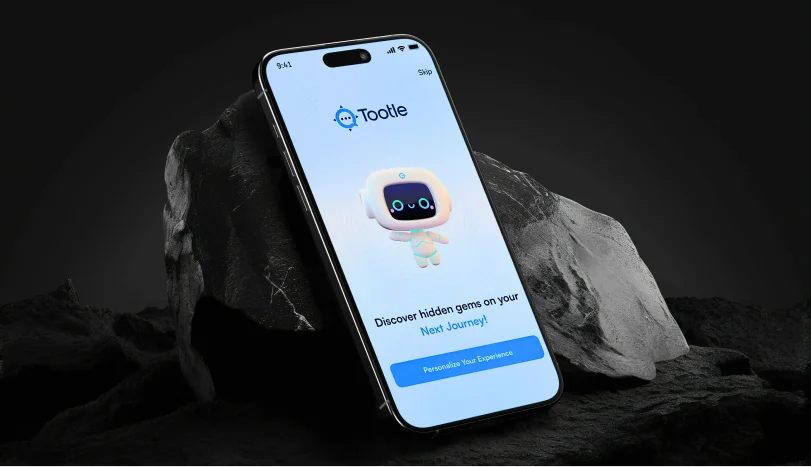
An AI business consultant that handles multi-step, context-heavy conversations proof of reliable reasoning under real use.

A chatbot matches a message to a scripted reply and stops there. An AI customer support agent reasons across steps and takes action it verifies a customer, looks up an order, issues a refund, and updates the ticket. Where an AI customer service chatbot answers, an agent resolves. That shift from talking to doing is the whole point of the build.
Most U.S. builds run from about $40K for a scoped single-channel pilot to $200K+ for a multilingual, multi-channel enterprise agent, with a mid-sized build typically $90K–$180K. Cost tracks channels, integrations, languages, and autonomy. A scoping session turns the range into a fixed number tied to your ticket data.
Yes, that's exactly what agentic design is for. Agentic AI customer support plans a task, calls your systems to execute each step, checks its own confidence, and hands off to a human when something falls outside policy. Simple FAQs and multi-step workflows like returns, claims, or account changes are both in scope.
Through APIs and native connectors. We build on Salesforce, Zendesk, HubSpot, Freshdesk, and ServiceNow so the agent reads and writes the same records your team does. Deeper order or billing links are handled in the integration phase, often alongside our custom CRM development work.

Rising cost to serve deserves a fixed scope, price, and timeline
Bring your top ticket types and current cost to serve. In one scoping session, we'll return a containment target, a fixed price, and a timeline, built for the U.S. market and ready to ship.








 One channel (chat or email)