






























How Much Does It Cost to Build An App in The UK?

 Share -


- 01UK Mobile App Cost Structure Explained for Business Leaders
- 02Should You Start With an MVP or a Full-Scale App?
- 03Factors Influencing App Development Cost in the UK
- 04Hidden Costs Most UK Startups Overlook
- 05Cost Optimization Strategies to Build an App in the UK
- 06Unraveling the Steps to Build a Robust Mobile App
- 07How to Choose a Reliable App Development Company in the UK?
- 08Appinventiv’s Expertise in Mobile App Development
- 09Why Investing in Professional App Development Maximizes ROI
- 10How to Earn Money From Your Mobile App: Monetization Strategies
- 11How Appinventiv Excels in Guiding Your App Development Journey
- 12FAQs

Key Takeaways
- UK app development costs range from £23,780 to £198,180+, with security, compliance, and integrations driving the largest budget increases.
- An MVP launch reduces upfront spend, tests demand early, and provides leadership teams with clearer data for future investment decisions.
- Maintenance, hosting, compliance, and support can add 25% to 40% to total ownership costs after launch.
- Enterprise apps require governance, audit trails, access controls, and data protection standards from the start.
- Strong returns come from disciplined scope control, phased delivery, and mobile products tied to measurable business outcomes.
In this competitive era of technological advancement, businesses encounter various challenges, including attracting the right audience, developing robust marketing strategies, improving operational efficiency, and delivering engaging customer experiences. Developing robust mobile apps serves as a solution to this conundrum, driving positive ROI.
With its strategic geographical location and robust international connections, the United Kingdom stands out as a global leader in app development, reshaping various industries.
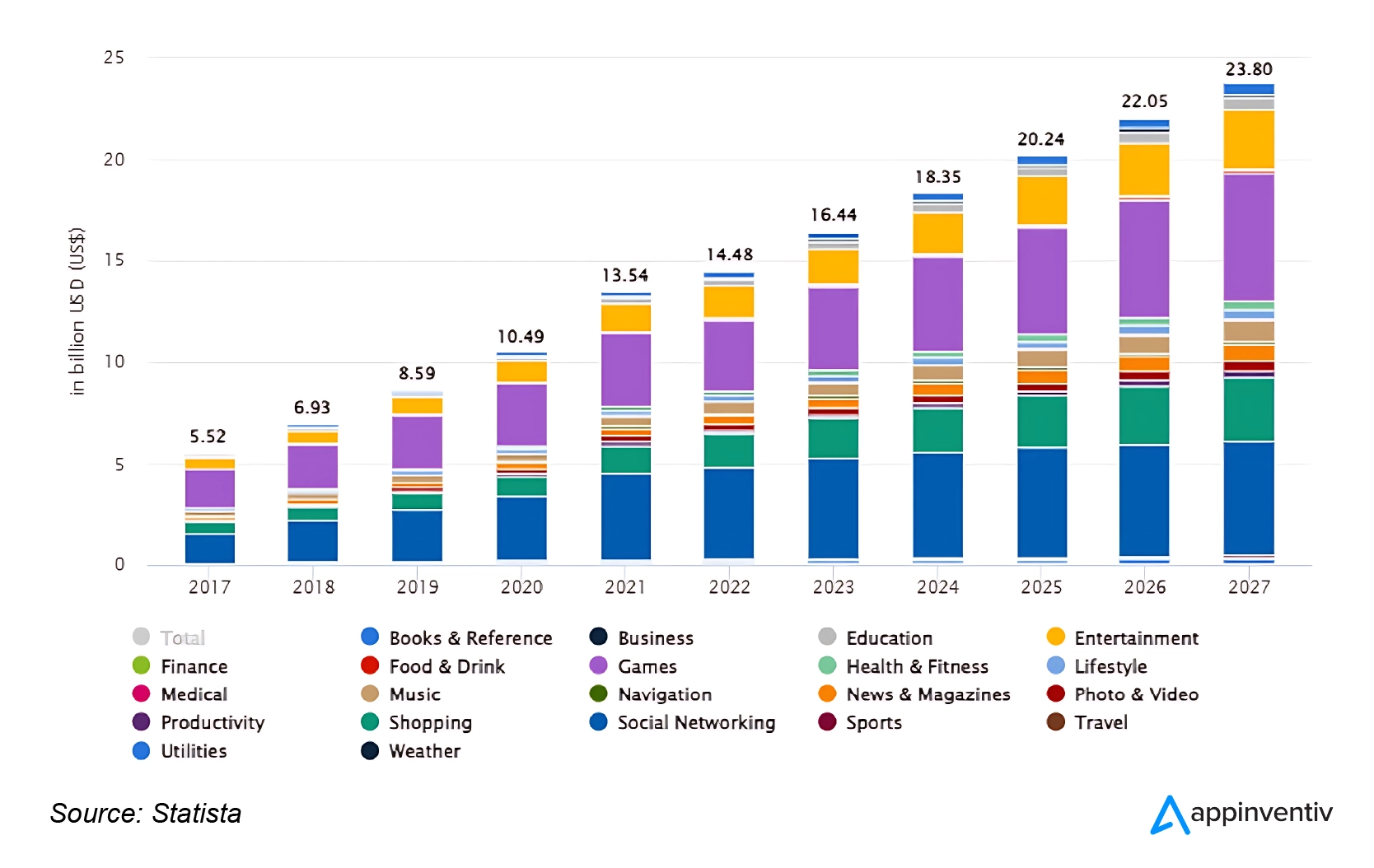
However, navigating the landscape of app development in the UK requires understanding what drives your specific investment. Your project complexity, essential features, and development partner’s proficiency directly determine your mobile app development cost in the UK.
This blog will help you understand app development costs in the UK and how our experts can create a customized budget strategy for your specific project. Let’s begin!
Get a stage-wise cost model mapped to your scope, timeline, and rollout risk.

UK Mobile App Cost Structure Explained for Business Leaders
Your mobile app investment in the UK typically ranges from £23,780 to £198,180 ($30,000 to $250,000), though your specific budget depends on several key decisions: your app type, complexity level, required features, platform preferences (iOS, Android, or both), design sophistication, and your development partner’s expertise.
Understanding how complexity, features, and timelines impact your investment helps you make informed decisions about the average cost of app development in the UK, and where to allocate your budget for maximum impact.
App Development Cost Breakdown by Complexity in the UK
App development costs usually become clearer once you step back and look at what the app actually needs to do. A basic app covers essential functions with standard features. More advanced platforms support real-time data, deeper integrations, and enterprise requirements, which naturally raises the level of investment.
| Complexity Level | Cost Range (UK) | Key Features |
|---|---|---|
| Basic | £23,780 – £47,560 ($30,000 – $60,000) | Simple UI/UX, basic navigation, limited functionality, standard security, single platform (iOS or Android) |
| Moderate | £47,560 – £95,130 ($60,000 – $120,000) | Enhanced UI/UX, cross-platform compatibility, API integrations, social login, offline functionality, push notifications |
| Complex | £95,130 – £158,550 ($120,000 – $200,000) | Advanced UI/UX, real-time updates, third-party integrations, analytics dashboard, multi-language support, robust security |
| Enterprise | £158,550 – £198,180+ ($200,000 – $250,000+) | AI/ML integration, AR/VR features, blockchain, IoT connectivity, biometric security, predictive analytics, complex data visualization |
UK App Development Cost Breakdown by Stage
Each phase plays a role in the final budget. Discovery aligns the project around the right goals. Design shapes how users experience the app. Development brings the functionality to life. Testing and launch focus on stability, and maintenance keeps everything running once people rely on it.
| Development Stage | Cost Range (UK) | Time Estimate | What It Includes |
|---|---|---|---|
| Discovery & Planning | £3,972 – £7,927 | 2 to 4 weeks | Market research, requirements gathering, technical feasibility, and project roadmap |
| UI/UX Design | £7,927 – £23,780 | 3 to 6 weeks | Wireframes, mockups, prototypes, user flow design, branding integration |
| Development | £39,634 – £158,550 | 3 to 9 months | Frontend and backend coding, database setup, API development, feature implementation |
| Testing & QA | £3,972 – £11,890 | 2 to 4 weeks | Functional testing, security audits, performance testing, bug fixes, and device compatibility |
| Launch & Deployment | £1,585 – £3,972 | 1 to 2 weeks | App store submission, final testing, deployment setup, launch preparation |
| Maintenance | 15% to 20% of the total cost | Ongoing | Updates, bug fixes, OS compatibility, security patches, feature enhancements |
This cost-based view provides clearer visibility into resource allocation across each development phase. It enables leadership teams to plan budgets with greater accuracy, evaluate delivery partners objectively, and maintain financial and operational control throughout the build lifecycle.
Overview: How to Estimate UK App Development Costs
One practical way to estimate costs is to break the project into stages and calculate the effort for each part.
Total Cost = (Hourly Rate × Hours Per Stage) + Maintenance + Platform Fees
Example:
If your UK development partner charges £79 per hour and a stage takes around 600 hours, that phase costs £47,400. From there, add ongoing maintenance, usually 15 to 20 percent per year, plus platform fees of about £80 to £100.
Here’s what your investment looks like for a moderate-complexity app:
- Development: £79 per hour × 1,200 hours = £94,800
- Maintenance (Year 1): 20% of £94,800 = £18,960
- Platform Fees: £100
Total First Year: £113,860
These figures provide a general framework, but every app is unique. Connect with our cost estimation experts to receive a detailed breakdown tailored to your specific requirements and business goals.
Should You Start With an MVP or a Full-Scale App?
When teams start planning an app in the UK, this choice comes up early. Do you test the idea first, or do you build everything at once? An MVP focuses on the essentials so you can see how users respond without a large upfront spend.
A full-scale app takes the opposite route, launching with every planned feature and a refined interface from the start.
MVP vs Full-Scale App: Key Comparison
| Criteria | MVP | Full-Scale App |
|---|---|---|
| Cost (UK) | £23,780 to £59,450 ($30,000 to $75,000) | £79,267 to £198,180+ ($100,000 to $250,000+) |
| Timeline | 3 to 6 months | 6 to 12+ months |
| Features | Core functionality only | Complete feature set |
| Primary Goal | Validate concept & gather feedback | Launch market-ready product |
| Risk Level | Lower financial risk | Higher upfront investment |
| Best For | Startups, unvalidated ideas | Established businesses, proven concepts |
Which Approach Should You Choose?
Your choice between MVP and full-scale development depends on your specific business context, market position, and strategic objectives.
| Choose MVP | Choose Full-Scale App |
|---|---|
| You need to validate your business idea with real users | You have validated market demand through research |
| You have budget constraints and limited resources | You have sufficient budget for comprehensive development |
| You want a quick market entry to test demand | You operate in competitive markets requiring feature parity |
| You’re seeking investor funding and need a working prototype | Your industry requires complete functionality from launch (fintech, healthcare) |
| You’re launching an innovative, untested concept | You’re expanding an existing successful business to mobile |
The Hybrid Approach: Phased Development Strategy
A practical way to build an app that balances speed with long-term goals. You start small, learn from real users, and expand in steps rather than guessing everything up front.
How It Works:
- MVP Launch: Release only the core features to get real usage quickly (£23,780 to £47,561 | $30,000 to $60,000 | 3 to 4 months)
- Learn & Analyze: Watch how users actually behave, collect feedback, and decide what matters next
(1 to 2 months) - Iterative Expansion: Add features that users have already validated, one phase at a time (£15,853 to £39,634 | $20,000 to $50,000 per phase)
- Scale & Optimize: Refine performance, usability, and costs as adoption grows
Pro Tip: Even at the MVP stage, invest in a clean technical foundation. It saves you from painful rebuilds later and makes scaling smoother as new features roll in.
Factors Influencing App Development Cost in the UK
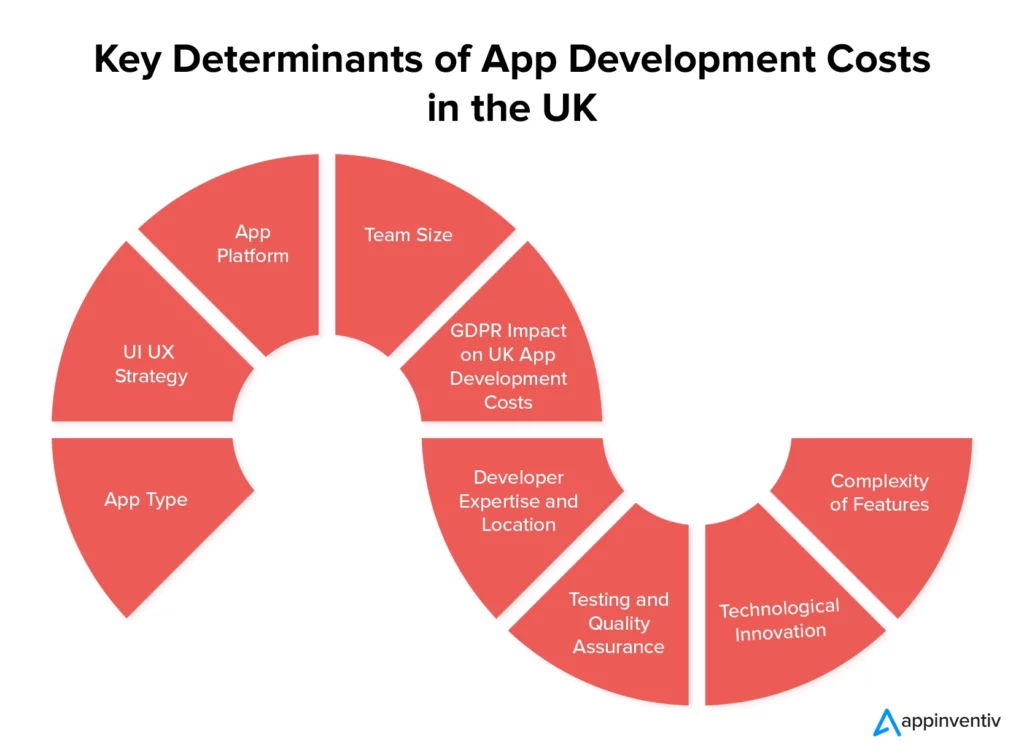
There are several interconnected factors that affect the cost of mobile app development in the UK. You must understand these factors to make informed decisions that will help you optimize costs and outcomes.
Let’s explore the key factors influencing the cost of app development in the UK and how they are revolutionizing businesses in various ways.
App Type
The type of app you build has a direct impact on cost. Simple informational apps are quicker and cheaper to develop, while feature-rich or enterprise apps require more time and investment.
Cost typically increases with:
- More features and complex user flows
- Advanced UI/UX design
- Third-party integrations and security needs
For example, an e-commerce app with payments and user accounts costs more than a basic content-only app.
UI/UX Strategy
A strong UI/UX strategy helps ensure the app is intuitive, accessible, and well-received in the UK market. This often involves testing, feedback, and design refinements, which add time and cost but improve overall quality.
UI/UX factors that affect cost include:
- Multiple rounds of user testing and design iteration
- Fixing usability gaps based on real user feedback
- Accessibility features and compliance with WCAG standards
Investing in inclusive, well-tested design increases development effort but results in a better, more compliant app.
App Platform
Choosing the right platform has a major impact on mobile app development costs in the UK. Building for iOS, Android, or both affects timelines, tools, and overall effort.
Platform-related cost factors include:
- iOS development using Swift and Android development using Java or Kotlin
- Separate design and development guidelines for iOS and Android
- Device fragmentation, testing scope, and app store requirements
Developing for both platforms increases cost compared to targeting a single platform.
Team Size
The size and skill diversity within the development team enhance project costs. A robust team encompassing a spectrum of expertise, including designers, developers, QA testers, and project managers, is indispensable for tackling complex projects or meeting strict deadlines. However, it’s crucial to acknowledge that a larger team inherently entails higher labor expenses.
| App Development Team | Hourly Rates (Approx) |
|---|---|
| Project Manager | $25 to $30 (£20 – £23) |
| Tech Lead (Backend / Frontend) | $28 to $30 (£22 – £24) |
| Sr. Mobile App Developer | $24 to $30 (£19 – £24) |
| Sr. Web & Backend Developer | $24 to $30 (£19 – £24) |
| DevOps | $25 to $30 (£20 – £24) |
| Business Analyst | $20 to $25 (£16 – £20) |
| UX/UI | $20 to $25 (£16 – £20) |
| QA | $20 to $25 (£16 – £20) |
Compliance
Compliance is a core cost and technical consideration for app development in the UK. Organizations must align applications with UK GDPR, the Data Protection Act 2018, and ICO regulatory requirements, which govern how user data is collected, stored, processed, and shared.
Meeting these standards requires privacy and security controls to be built into both application architecture and infrastructure from the start, along with continuous oversight after launch.
Key UK compliance cost drivers include:
- Privacy-by-design and privacy-by-default application architecture
- Encrypted data storage and transmission aligned with UK security guidance
- Role-based access controls and secure identity management
- Granular consent management and transparent data usage workflows
- User data access, portability, and deletion request handling
- Audit logs to demonstrate accountability during ICO inspections
- Data Protection Impact Assessments (DPIAs) for high-risk processing
- Breach detection and reporting are aligned with the ICO’s 72-hour rule
- Breach detection and reporting are aligned with the ICO’s 72-hour rule
- Legal review of privacy policies and cross-border data transfer safeguards
These requirements increase development effort, but they are essential for regulatory compliance, procurement approval, and long-term user trust in the UK market.
Developer Expertise and Location
App development costs in regions such as the UK, Europe and the US are generally higher compared to regions like Asia. This is primarily due to higher living costs and greater demand for tech talent in major cities such as London, Manchester, and Edinburgh.
Here is the estimated hourly development rate as per multiple regions.
| Region | Hourly Rates of Development |
|---|---|
| UAE | $60 to $65 (£48 – £52) |
| US | $95 to $100 (£75 – £80) |
| Western Europe | $80 to $90 (£55 – £72) |
| Australia | $70 to $90 (£63 – £72) |
| Eastern Europe | $50 to $55 (£40 – £43) |
| Asia | $25 to $40 (£20 – £32) |
Testing and Quality Assurance
Testing and quality assurance play a critical role in delivering a reliable and compliant app in the UK market. Broader test coverage requires more time and resources, which increases development costs.
QA-related cost factors include:
- Unit, integration, regression, and user acceptance testing
- Compliance and regulatory testing
- Bug fixing and performance validation
Although QA adds upfront cost, it improves app stability, reduces future fixes, and lowers long-term maintenance expenses.
Technological Innovation
Integrating new and emerging technologies can enhance app performance and differentiation, but it often increases development costs due to added complexity and expertise requirements.
Innovation-related cost drivers include:
- Custom development and technical complexity
- Hiring or training specialists in new technologies
- R&D efforts for AI, blockchain, or metaverse use cases
While innovation raises upfront costs, a strategic approach leads to higher-quality apps and long-term value in the UK market.
Complexity of Features
Feature complexity has a direct impact on app development costs in the UK. More advanced features require careful architecture planning to maintain performance and scalability as usage grows.
Complex features that increase cost include:
- Machine learning and AI-driven functionality
- Multi-language and localization support
- Live chat and real-time interactions
- Offline access and data syncing
- Geolocation and mapping services
Planning feature scope early helps balance performance needs with budget constraints.
Hidden Costs Most UK Startups Overlook
Once the app is built, the spending does not stop. In the first year alone, hidden costs can add another 25% to 40% to the budget. Items like maintenance, compliance work, and ongoing support are easy to overlook early on, but they play a big role in long-term success and should be planned for from the start.
| Cost Category | What It Covers | Annual Cost (UK) |
|---|---|---|
| App Maintenance | Bug fixes, OS updates, performance optimization, security patches | 15-20% of development cost |
| App Store Fees | Apple Developer Program (£79/year), Google Play Store (£25 one-time) | £80 – £100/year |
| Cloud Hosting | Server costs, database, storage, bandwidth (scales with users) | £19,000 – £48,000 |
| Third-Party Services | Payment gateways, Google Maps, analytics, SMS, push notifications | £10,000 – £48,000 |
| Security & Compliance | GDPR audits, penetration testing, FCA compliance (fintech apps) | £4,000 – £16,000 |
| Marketing & ASO | App Store Optimization, paid ads, and user acquisition campaigns | 50-100% of the development cost |
| Legal Compliance | Privacy policies, T&Cs, IP protection, GDPR legal counsel | £2,000 – £8,000 |
| Customer Support | Help desk tools, chatbots, support team resources | £19,000 – £95,000 |
| Monitoring Tools | Analytics, crash reporting, performance tracking | £5,000 – £19,000 |
Cost Optimization Strategies to Build an App in the UK
The overall mobile app development cost includes various components, such as initial consultation and planning, design and user interface development, coding and programming, integration of features and functionalities, quality assurance and testing, etc.
Different factors enhance the development of the application, but by taking a strategic and analytical approach, businesses can save money and time, building result-driven applications. Let us look at multiple cost optimization strategies for building a robust app in the UK market.
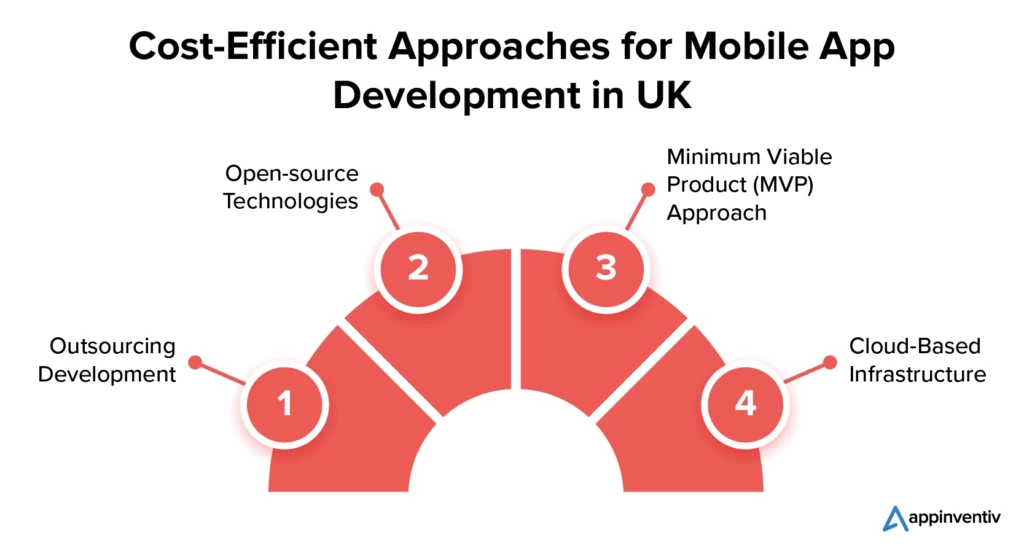
Outsourcing Development
Outsourcing development can be an effective strategy, offering advantages such as lower labor costs, access to specialized expertise, and streamlined resource allocation. Additionally, it facilitates accelerating time-to-market, reducing infrastructure expenses, and enabling a focus on core competencies.
Using Open-source Technologies
Using open-source technology can help reduce app development costs in the UK by lowering licensing expenses and increasing flexibility.
How open-source lowers costs:
- No licensing fees for frameworks or tools
- Ongoing updates and security fixes from the community
- High customization and easier integration
- Reduced vendor lock-in and long-term ownership costs
When used correctly, open-source solutions support scalability and innovation while keeping development budgets under control.
Taking the MVP Approach
An MVP (minimum viable product) approach helps reduce mobile app development costs in the UK by focusing on what’s essential and avoiding early overbuild.
How an MVP controls cost:
- Prioritizes core features over nice-to-haves
- Reduces upfront development effort and spend
- Validates market demand with real user feedback
This approach supports faster launches, smarter iteration, and data-driven decisions with minimal initial investment.
Adopting Cloud-Based Infrastructure
Cloud-based infrastructure helps control mobile app development costs in the UK by replacing large upfront investments with flexible, usage-based pricing.
How cloud infrastructure reduces cost:
- Pay-as-you-go pricing instead of fixed hardware spend
- Easy scalability to handle changing demand
- Lower maintenance through managed services and automation
- Faster deployment and improved reliability
This approach supports cost efficiency while enabling faster time-to-market and long-term scalability.
We’ll pinpoint savings levers in scope, architecture, and rollout, then share a tighter plan.

[Also Read: Cloud-based app development: Benefits, development process and costs explained]
Unraveling the Steps to Build a Robust Mobile App
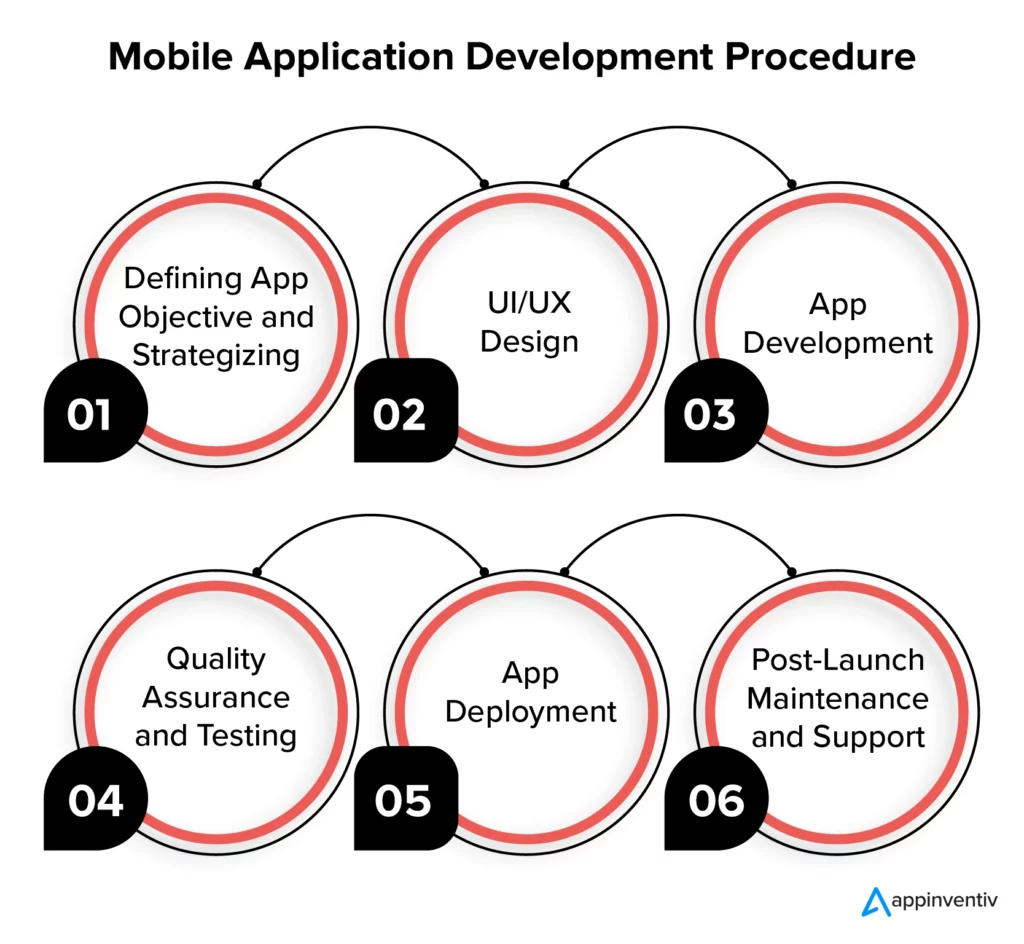
The app development process in the UK typically follows a structured and iterative approach to ensure the creation of high-quality and effective mobile applications. Let’s understand it!
Defining App Objectives and Strategizing
One of the first steps in building an app is comprehending client requirements, desired features, and the target audience. Additionally, businesses should concentrate on understanding competitors’ methodologies and market trends, which can help them in defining the project scope, goals, and deliverables clearly.
UI/UX Design
In this phase, businesses should prioritize establishing interactive prototypes as a valuable step in the UI/UX design process while developing an application in the UK. Interactive prototypes serve as crucial tools to visualize the app’s flow and functionality, allowing businesses to iterate and refine their design concepts effectively.
App Development
Frontend and backend development are essential steps to creating a functional application. Companies should implement the user interface design by building server-side logic, databases, and APIs to support the app’s functionality.
Quality Assurance and Testing
During this phase, the development team focuses on conducting thorough testing to identify and rectify bugs and performance issues within the app. Gathering feedback from real users to ensure the app meets their expectations.
App Deployment
During deployment, the team is responsible for meticulously preparing and submitting the app to relevant stores, including the Apple App Store or Google Play Store. Simultaneously, they strategically plan the app’s release, carefully considering aspects of marketing and promotion to optimize its launch.
Post-Launch Maintenance and Support
Following the app’s launch, the team is dedicated to providing ongoing support, addressing issues, and releasing updates as needed. Additionally, they actively monitor performance, analyzing user feedback and app analytics to inform and enhance future versions.
It is vital to understand that selecting the right app development company is crucial for success. An experienced firm can guide you through essential app development steps like conceptualization, design, development, and maintenance, resulting in streamlined communication and timely delivery.
How to Choose a Reliable App Development Company in the UK?
Selecting a trustworthy and suitable app development company in the UK requires thorough consideration. Let’s delve into the various factors that hold significance when choosing a reliable app development partner.
- Consider Portfolio and Expertise: When choosing an app development company in the UK, it’s essential to thoroughly examine their portfolio and expertise. This allows you to ensure their past projects align with your needs and demonstrate proficiency in the required technology and industry.
- Assess Quality Assurance Processes: Evaluate the company’s quality assurance processes to ensure the app’s performance, security, and user experience meet industry standards. This step is crucial for guaranteeing the reliability and effectiveness of the final product.
- Obtain Client References: Requesting client references from the company provides valuable insights into their reliability and customer satisfaction levels. Hearing about previous clients’ experiences firsthand can help validate the company’s capabilities and reputation.
- Evaluate Pricing Structure: It’s important to assess the company’s pricing structure to ensure it fits your budget while maintaining quality expectations. This ensures transparency and helps avoid unexpected costs or compromises in the development process.
Let us help guide you through your app’s success

Appinventiv’s Expertise in Mobile App Development
Appinventiv’s experts have been instrumental in propelling the app development efforts of major industry players. Let’s explore the impact of their significant contributions!
KFC
We significantly expanded KFC’s digital presence by launching seven mobile apps across global markets. Our strategic UI/UX enhancements led to a remarkable 22% increase in conversion rates, with over 50% of total orders now originating from the apps.
JobGet
Appinventiv’s collaboration with JobGet led to the client securing $52 million in funding, establishing it as the top choice app for blue-collar workers. Custom innovative features, including AI and GPS integration, transformed the job-seeking process, resulting in 2 million+ app downloads and connections between 50,000+ companies and 150,000+ jobseekers.
YouCOMM
Appinventiv significantly contributed to the development of YouCOMM, a healthcare platform revolutionizing patient-caregiver communication efficiency by connecting in-hospital patients with nurses through a multi-request format app. This collaboration led to remarkable outcomes, including a 60% growth in nurses’ response time and high CMS reimbursement for hospitals, underscoring the impact of our expertise in healthcare technology.
Vyrb
Appinventiv played a key role in developing the social media app, Vyrb. Leveraging our expertise, we created a cutting-edge platform enabling seamless interaction via audio commands and Bluetooth wearables. Vyrb gained 50,000+ downloads and secured $1M+ funding, highlighting our successful partnership in innovation.
Appinventiv has also partnered with businesses across the UK and Europe to deliver secure, compliant, and scalable mobile applications. From aligning with UK GDPR requirements to building enterprise-ready architectures, we help regional organizations launch apps that meet regulatory expectations and perform reliably at scale.
Why Investing in Professional App Development Maximizes ROI
Most teams look at app development costs first. What matters even more is what you get back. Working with professional developers is less about spending money and more about setting the app up to earn it back.
Here is how experienced development teams typically improve return on investment.
Faster Time to Market
Experienced UK app development teams move more quickly because they have done this before. Proven processes and clear roles cut months off timelines. Launching even six months earlier can open the door to £100,000 or more in added revenue, while giving you a head start before competitors show up.
Higher User Retention Rates
Many apps lose users immediately. About one in four gets abandoned after a single use. Professional teams focus on usability, performance, and stability, which keeps people coming back. UK businesses often see customer lifetime value rise with well-built apps, leading to three to five times ROI in the first year.
Reduced Long-Term Costs
Cheap builds usually cost more later. An app that starts at £15,853 can quickly rack up rebuild and maintenance costs that exceed £50,000. Professional development costs more upfront, but strong architecture and scalable design often save £40,000 to £55,000 over three years.
Built-In Compliance and Security
Regulations like GDPR and FCA guidelines are not optional. Professional developers bake compliance into the product from day one. That approach helps avoid ICO fines that can reach £17.5 million or 4% of annual turnover, as well as legal trouble and reputational damage. Fixing compliance issues later can cost three to five times more.
Professional development leads to better user experiences, stronger security, and systems that scale. Instead of becoming a cost centre, your app becomes an asset that drives revenue and growth.
Get a build plan that covers governance, security, and scale, so ROI survives rollout.

How to Earn Money From Your Mobile App: Monetization Strategies
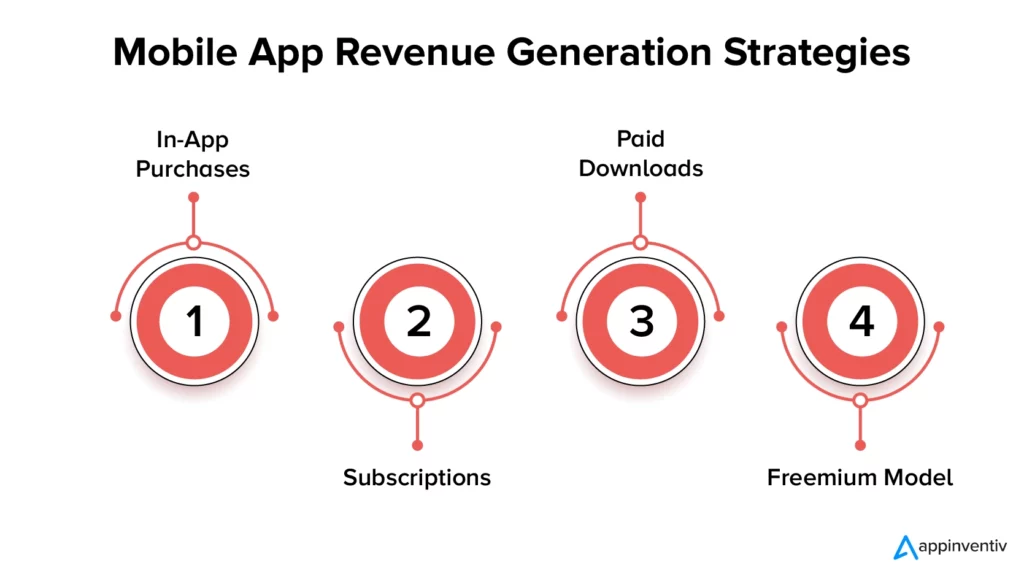
While we have discussed nearly everything related to app development costs in the UK, it is also essential to look at its RoI. Here are multiple ways businesses generate revenue by pioneering innovation and augmenting customer experiences through app development.
In-App Purchases
In-app purchases represent a dynamic monetization strategy employed by countless mobile applications, enabling users to seamlessly purchase digital goods, upgrades, or access premium features directly within the app ecosystem.
Subscriptions
Subscriptions provide users with ongoing access to premium content, features, or services in exchange for a recurring fee. This model is common among content streaming apps, news publications, fitness apps, software-as-a-service (SaaS) platforms, etc.
Paid Downloads
Paid downloads involve charging users a one-time fee to download the app from app stores like the Apple App Store or Google Play Store. Users pay upfront to access the app, and no additional charges or in-app purchases are required. Paid downloads can effectively monetize premium apps with high perceived value, niche audiences, or unique features that justify the upfront cost.
Freemium Model
The freemium model provides a basic version of the app for free while allowing users to upgrade to a premium version for additional features or content.
How Appinventiv Excels in Guiding Your App Development Journey
As a premier app development company in the UK, Appinventiv brings hands-on regional delivery experience shaped by large-scale enterprise transformation engagements across Europe. With a decade of delivery excellence, we have successfully deployed over 300 high-impact projects, earning a 97% satisfaction rating from our European clientele across 35+ diverse industry verticals.
With innovation hubs established in London, Berlin, and Amsterdam, our teams remain closely aligned with regional enterprise technology standards and compliance expectations.
This regional execution depth translates into tangible business outcomes. Enterprises partnering with us for their app development services needs, achieve up to 45% operational efficiency gains through automation-driven platforms and workflow modernization.
Connect with our experts to design mobile platforms built for long-term operational value.
FAQs
Q. How much does it cost to build an app in the UK?
A. The average app development cost in the UK varies significantly, typically falling between $30,000 and $250,000 or more (£23,780 – £198,180+), contingent upon the complexity of the project and its features. The range is influenced by factors such as the intricacy of design, level of customization, integration of advanced technologies like AI or AR/VR, and backend infrastructure requirements. Get in touch with our experts to get clear cost estimates based on your business requirements.
Q. How long does it take to develop a mobile app in the UK?
A. The app development timeline in the UK varies based on the overall app complexity. Simple apps with minimal features may take a few months, while more complex ones with an extensive feature set can extend to a timeframe of 9 to 12 months or even more. The duration is influenced by factors such as features, design intricacies, and the overall scope of the project.
Q. How does UK regulation affect app development?
A. The UK’s regulatory environment significantly influences app development, as businesses must adhere to strict data privacy regulations such as GDPR (General Data Protection Regulation) and ensure compliance with cybersecurity standards. Additionally, regulations related to accessibility and consumer rights also shape app development practices in the UK.
Q. What is the typical development process for a mobile app in the UK?
A. The UK mobile app development process usually moves through six clear stages:
- Discovery & Planning (requirements gathering, market research)
- Design (wireframing, UI/UX creation)
- Development (frontend and backend coding)
- Testing (QA, bug fixes, security checks)
- Deployment (App Store/Play Store launch)
- Maintenance (ongoing updates, performance monitoring)
The full journey typically takes 3–12 months, depending on complexity, with agile methodology allowing flexibility and steady improvements across each phase.
Q. What factors affect the cost of building a mobile app in the UK?
A. Key cost drivers include:
- App complexity (simple, moderate, or complex features)
- Platform choice (iOS, Android, or cross-platform)
- Design depth (standard versus custom UI/UX)
- Backend infrastructure (cloud services, databases, APIs)
- Third-party integrations (payment gateways, analytics, CRM)
- Development team location and expertise, security and compliance requirements (GDPR, FCA),
- Ongoing maintenance needs
Apps with richer features and advanced capabilities naturally require higher development investment.
Q. How does GDPR or UK data regulations impact app development?
A. UK GDPR and data protection rules shape app development by requiring clear user consent for data collection, secure storage with encryption, transparent privacy policies, support for user rights (data access, deletion, portability), routine security audits, and breach reporting within 72 hours.
Non-compliance risks ICO fines up to £17,500,000 or 4% of annual turnover. Professional UK developers build these protections early, supporting compliance and strengthening user trust.
Q. Do you provide industry-specific solutions for FinTech, Healthcare, or eCommerce in the UK?
A. Yes, we deliver industry-specific app development for UK in FinTech (FCA-compliant payment solutions, banking apps, investment platforms), Healthcare (NHS-integrated apps, telemedicine, patient management systems aligned with CQC standards), and eCommerce (mobile shopping experiences, inventory management, omnichannel retail solutions).
Our experience covers regulatory compliance, security practices, and industry standards tailored to each sector’s needs, ensuring your app meets user expectations and UK regulations.


Fast 2-minute response, fully NDA-protected.

How Much Does It Cost To Build a Chat App Like Arattai?
Key takeaways: Creating a chat app like Arattai will cost you anywhere from $40,000 to $400,000, depending on how complex you want it to be. The essential features you need are real-time messaging, multimedia sending, and user authentication. Layering advanced features such as voice/video calls, group messaging, AI-driven bots, and end-to-end encryption takes the app…

How Much Does It Cost to Build a Car Rental App like Hertz?
Key takeaways: The cost to build a Hertz-like app ranges roughly $40,000–$300,000+. Complexity, automation, and scale matter more than just the number of features. Real costs continue after launch: infra, maintenance, support, and compliance. Smart planning and MVP-first approach help keep budgets under control. Revenue comes from rentals, add-ons, subscriptions, partnerships, and fleet sales. You…

How Much Does It Cost to Build a Route Planning App Like Komoot
Europe doesn’t just love the outdoors- it thrives on it. From the Alps to Amsterdam’s bike lanes, cycling and hiking fuel an industry worth $53.3 billion in 2024, projected to grow at nearly 11% CAGR through 2033, as reported by GrandViewResearch. And leading this charge is Komoot, the route-planning app trusted by 40+ million users.…