
































How Cloud Computing in Logistics Powers Real-Time, Intelligent Supply Chains

 Share -



- 01How Corporate Logistics Uses the Cloud?
- 02Core Components of a Modern Cloud Logistics Ecosystem
- 03Key Benefits of Cloud Computing in Logistics
- 04How Is Cloud Computing Transforming Logistics Operations Across the Supply Chain?
- 05AI + Cloud Computing in Logistics: Building Intelligent Supply Chains
- 06Enterprise Cloud Architecture for Logistics Platforms
- 07Challenges of Adopting Cloud Computing in Logistics and How to Overcome Them
- 08Cloud Migration Roadmap for Logistics Enterprises
- 09How Much Does Cloud Logistics Transformation Cost?
- 10Measuring Returns on Investment
- 11The Future of Cloud Computing in Logistics
- 12How Can Appinventiv Help Enterprises Build Cloud-Native Logistics Solutions?
- 13Frequently Asked Questions

Key takeaways:
- Cloud networks link isolated software to show your truck, warehouse, and stock data instantly.
- Flexible cloud setups grow with your company without requiring expensive new hardware or stopping daily work.
- Smart AI tools calculate precise sales forecasts, plan faster routes, and provide better data for corporate decisions.
- Cloud networks consolidate your shipping software, sensor tools, databases, and company accounts into a single central screen.
- Businesses lower their technology bills, adapt fast to sudden market shifts, and prepare for automated trucking lines.
A shipment leaves the dock on time, and the warehouse updates inventory. The carrier reports a delay, so a new event creates data. Many companies scatter this data across spreadsheets and old software. Managers cannot see the whole operation.
Data collection is no longer the problem for logistics leaders. The real struggle is making decisions fast enough to keep goods moving.
Cloud coupling in logistics networks fixes this problem by linking your disconnected systems. Industry investment reflects this shift. The global cloud logistics market is projected to reach $82 billion by 2035.
The benefits of cloud computing in logistics are clear: connected inventory software, real-time tracking tools, and unified finance records. Teams see where products are right now, then they make better choices. They no longer waste time checking multiple databases.
This operational shift does more than replace your old technology. It helps businesses respond to sudden market shifts and customer demands. Your teams build closer ties with shipping partners. Centralized data allows companies to deploy automation and tracking sensors.
This article covers cloud software within corporate logistics systems. We examine the core technology and the financial returns for your supply chain.
Modernize logistics infrastructure now before fragmented systems limit visibility, scalability, and operational agility.

How Corporate Logistics Uses the Cloud?
Logistics supply chains generate data everywhere. Scanners track warehouse stock. GPS tools send fleet locations. Finance systems manage customer orders.
Many companies still run these jobs on isolated local servers. Information moves slowly between departments. Growing your business requires buying expensive hardware. Managers read old reports to find out what happened yesterday.
Cloud solutions for logistics industry teams address these problems through shared servers and fast connections. Your team integrates all software systems into a single network. Data flows faster, and the system grows as you grow.
Comparing Old Tech and Cloud Tech
| Old Logistics Tech | Cloud Logistics Tech |
|---|---|
| Local servers | Flexible cloud servers |
| Delayed data updates | Instant data updates |
| Isolated programs | Linked networks |
| Manual hardware upgrades | Automatic software growth |
| High maintenance costs | Pay for what you use |
| Operational blind spots | Complete tracking |
This change is not just about moving your data files. It replaces isolated software with linked tools. Your business gets real-time updates and more accurate data for daily decisions.
If you are still evaluating your options, a deeper look at on-premise vs cloud can help your team make a more informed decision.
Core Components of a Modern Cloud Logistics Ecosystem
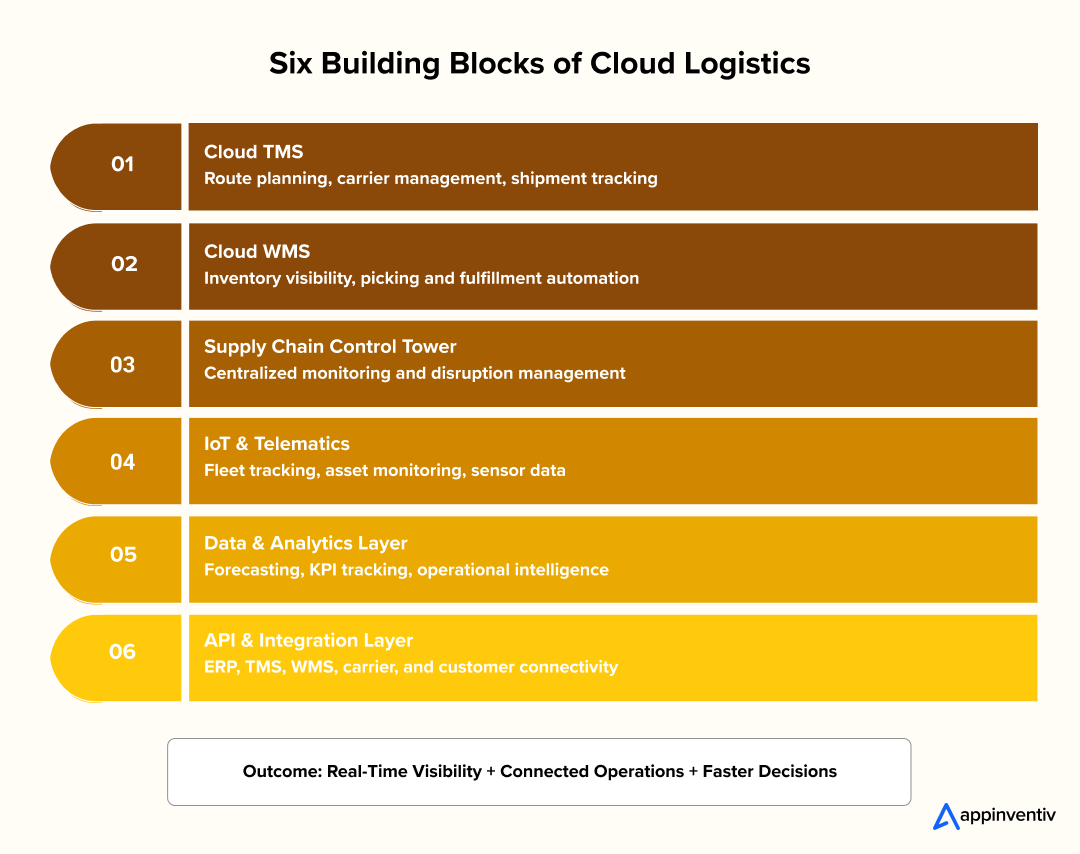
Effective cloud logistics management does not rely on one program. They use connected systems to share operational data across trucks, warehouses, inventory logs, and customer desks. A modern ecosystem combines specialized tools, connection layers, and reporting software into one system. Each tool tracks shipments and controls costs.
Cloud Transportation Management Systems
A transportation system coordinates shipping plans and carrier choices. It monitors routes, checks freight bills, and tracks deliveries. Cloud platforms give teams real-time access to shipping facts across different states and supplier networks. They handle live GPS updates and road traffic through code connections.
For companies with high shipping volumes, cloud systems eliminate hardware limitations. Your team expands server capacity during busy holidays without buying physical hardware. This speed protects your delivery deadlines.
Cloud Warehouse Management Systems
Warehouse software governs stock movement and order completion. It manages receiving tasks, item picking, packing, and dispatch operations. Cloud warehouse tools connect floor activities with inventory logs and company accounts.
This link creates a clear view of available stock across supply hubs and retail stores. Many warehouse tools connect with barcode scanners and automated racks. Stock records update immediately, so digital numbers match physical boxes. Workers find items faster.
Supply Chain Control Towers
Control towers provide centralized tracking for all shipping operations. They consolidate data from warehouse software, company ledgers, and carrier groups into a single dashboard.
Cloud logistics management tools let staff monitor order completion rates, stock levels, and transport delays from this single spot. Smart control towers use predictive models to find risks early. They spot traffic delays and stock shortages. This early warning stops problems from hurting your profits.
IoT and Telematics Platforms
Connected tracking devices manage modern shipping operations. The combination of IoT and cloud computing allows machine sensors to collect data from trucks, cargo boxes, and storage floors in real time. Telematics tools collect truck locations, fuel tallies, and driver patterns.
Cloud servers process this continuous stream of data points for fleet upkeep and safety checks. For cold transport, live temperature sensors prevent food spoilage. They protect high-value cargo during long trips. Dispatchers know the condition of every container on the road.
Data Platforms and Analytics
Logistics operations produce millions of data points every day. Cloud databases gather these facts from shipping logs, warehouse records, and customer requests. They put everything into central storage pools. Reporting tools built on cloud business intelligence sit atop these pools to build charts and predict demand.
Many companies use machine learning inside these networks to calculate exact arrival times and plan future cargo capacity. This math helps executives buy the right amount of fuel and space.
API and Integration Middleware
Logistics systems require constant data sharing to work well. Connection codes and streaming tools bridge gaps between software programs that used to stay separate. They help warehouse software, dispatch tools, and customer portals communicate with each other without human intervention.
Tools like web connections and data queues keep data matched across the entire corporate network. This automation removes typing errors and protects accuracy. Your systems communicate with suppliers’ computers in seconds.
Key Benefits of Cloud Computing in Logistics
Logistics leaders choose cloud solutions for logistics industry operations to fix operational problems, not just to update technology. Late deliveries, split records, and shifting demand strain daily operations. Cloud platforms fix these issues. They connect your systems, open up your data, and adapt to changing company needs.
Complete Operational Tracking
Tracking items across a supply chain is difficult. Shipment updates, warehouse actions, and carrier notes live in separate software programs. Cloud platforms combine these data streams into a single dashboard. Your staff can easily track products and spot delays. They act immediately instead of waiting for daily reports.
Shared Network Information
Supply chains include makers, warehouses, drivers, and buyers. Separate records cause operational mistakes. Cloud software creates shared portals for every partner. Everyone views identical tracking statuses and shipping schedules. This shared view cuts out manual phone calls and tracking errors.
Flexible Computer Power
Logistics workloads shift constantly. Holiday rushes and market swings create sudden surges in orders. Cloud servers adjust capacity based on current volume. Your order and inventory software handles extreme traffic spikes. The system stays fast without expensive hardware upgrades.
Lower Technology Expenses
Old computer setups require constant spending on local servers, storage gear, and software updates. This is one of the core cloud managed services benefits: your business cuts capital spending and pays only for active usage. This shift frees your technology staff to improve field operations.
Stronger Business Protection
System crashes halt truck scheduling, warehouse picking, and client updates. Cloud networks protect your records through automated backups across multiple data centers. This safety setup keeps your software running during power cuts or computer breakdowns. Your business recovers in minutes.
Clearer Metrics for Executives
Logistics operations generate vast amounts of data daily. Finding facts is hard without a central repository. Cloud tools combine data from trucks, warehouses, and client orders. Leaders monitor performance metrics and find operational delays. You forecast future buying habits using live corporate facts.
How Is Cloud Computing Transforming Logistics Operations Across the Supply Chain?
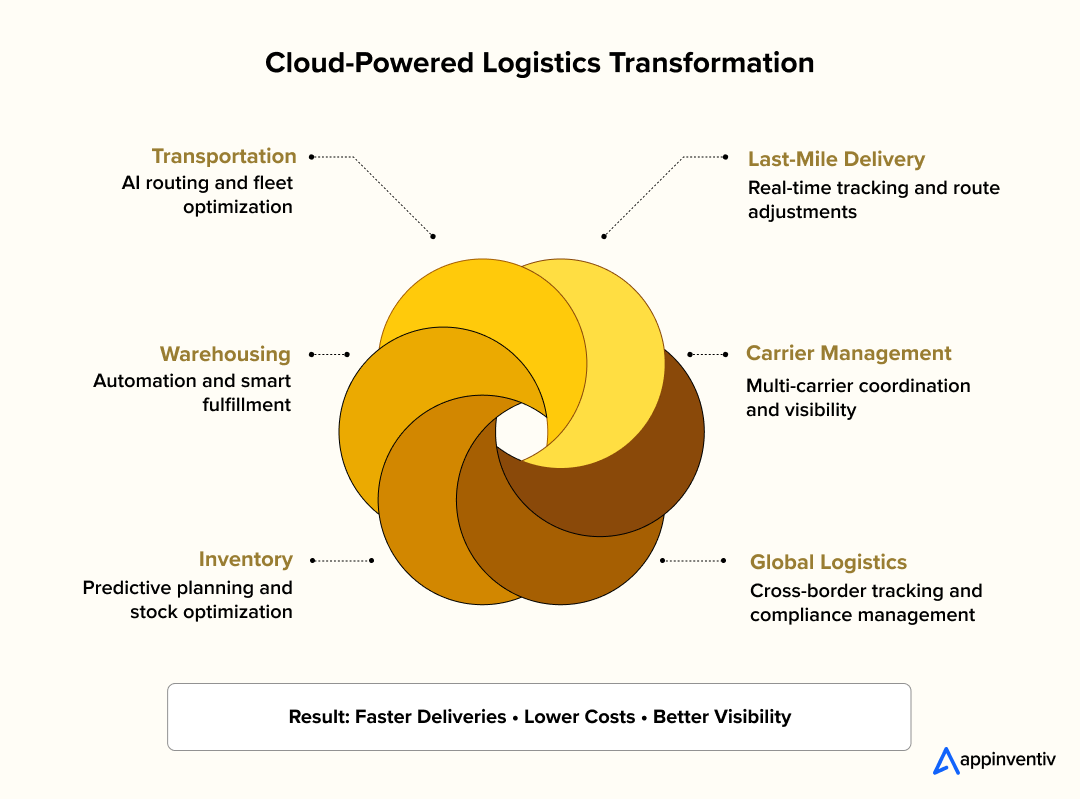
Cloud-based logistics software development does more than update your servers. They serve as the central backbone linking trucks, warehouses, suppliers, and customers. The software processes live data and links systems using APIs and event streams. This connectivity helps corporate leaders make faster choices across the supply chain.
Transportation and Fleet Tracking
Trucking fleets create endless data. GPS units, Electronic Logging Devices (ELDs), telematics tools, and fuel monitors constantly send information. Old batch systems process this slowly, leaving blind spots.
Cloud platforms intake this telemetry data instantly. Mapping engines combine truck locations, traffic feeds, weather, schedules, and fuel tallies. This data guides dispatch choices. Many operations run machine learning models to build better routes, monitor drivers, and track vehicle wear.
Example: A global carrier monitors engine health via cloud-based telematics. The system flags part wear early. Mechanics fix the truck before an engine breakdown stalls customer deliveries.
Warehouse Automation and Smart Fulfillment
Modern stockrooms run many machines at once. Barcode tools, RFID readers, Autonomous Mobile Robots (AMRs), and Automated Storage and Retrieval Systems (AS/RS) send text alerts. Warehouse Management Systems (WMS) gather this operational data.
Cloud setups enable these machines to communicate via APIs and messaging networks. Stock shifts, picking lines, and packing stations stay matched across building networks. This setup benefits brands with hubs in multiple states.
Example: A retailer runs five fulfillment hubs. A cloud WMS shifts incoming orders automatically based on local stock levels, floor space, and delivery promises. This step avoids shipping delays during peak shopping weeks.
Inventory Planning and Demand Management
Stock planning requires clean demand metrics from stores, suppliers, and procurement teams. Separated storage files block your view of the total network stock.
Cloud repositories collect inventory records into data lakes and central storage through cloud data warehousing, giving planners a complete picture across the network. Data math models evaluate past sales habits, seasonal trends, vendor delivery times, and stock turn rates. Planners calculate better forecasts and hold balanced inventory levels.
This visibility matters because inventory carrying costs often account for 20% to 30% of inventory value annually. Better forecasting and inventory planning help organizations reduce excess stock while maintaining service levels.
Example: A consumer goods firm blends ERP logs, warehouse counts, and register sales into a cloud system. The system spots an upcoming product shortage weeks before it hurts buyer orders.
Final-Mile Delivery Adjustments
The final mile requires non-stop teamwork between dispatchers, drivers, and buyers. Minor road delays damage drop-off windows and harm customer trust.
The stakes are high because last-mile delivery can account for up to 53% of total shipping costs. This makes route optimization, delivery intelligence, and real-time fleet visibility critical investments for logistics organizations.
Cloud networks handle variable routing, map math, digital receipts, and live driver tracking. Facts from mobile apps, GPS units, and traffic feeds stream through cloud systems to refresh delivery schedules. Teams use AI models to narrow down arrival times and cut down missed drops.
Example: An e-commerce brand runs cloud routing software to change driver paths mid-day. The program shifts paths based on traffic jams and new order requests to meet delivery deadlines.
Multi-Carrier Logistics Coordination
Enterprises hire dozens of freight vendors across different regions. Managing these partners with phone calls creates errors and limits tracking.
Cloud networks connect directly to carrier systems via REST APIs, EDI lines, and event streams. Milestones, shipping fees, and risk alerts are automatically shared between companies. Centralized oversight improves how you divide shipments and score carrier performance.
Example: A factory setup simultaneously compares shipping rates, speeds, and available truck space among 20 carriers. The system assigns the load based on real-time data to speed up dispatch choices.
Global Logistics and Cross-Border Trade
Global shipping introduces complex steps such as customs paperwork, trade regulations, and localized trucking networks. Cloud tools collect border filings, customs notes, and transit waybills into one location.
Connections with customs agents, freight brokers, ports, and local drivers lift tracking blind spots across borders. Teams monitor freight movement between continents without checking separate regional files.
Example: A drug company ships temperature-managed medicine through four countries. The manager tracks truck locations, customs paperwork, and fridge sensor metrics on a single cloud dashboard throughout the entire trip.
Real-World Cloud Logistics Transformation in Action by Appinventiv
A practical example of this approach comes from Appinventiv’s work in logistics technology modernization. By building a centralized logistics intelligence platform that unified operational data, tracking workflows, and dispatch operations.
The solution helped achieve an 82% improvement in dispatch efficiency, 4x gains in operational performance, and 90% faster logistics decision-making. The project demonstrates how cloud-based visibility, automation, and data-driven operations can translate into measurable business outcomes.
AI + Cloud Computing in Logistics: Building Intelligent Supply Chains
Artificial intelligence requires data, computer power, and non-stop processing. Cloud servers provide all three resources.
To understand how AI in logistics uses this data, it helps to see how cloud servers provide the compute power that feeds machine learning models across TMS, WMS, and ERP tools.
They pull data from IoT sensors, carrier lines, and customer files into a single central space. This data pool feeds machine learning models. These models improve your forecasting, transport setups, drop-off speeds, and daily choices.
Predictive Demand Forecasting
Old forecasting methods look mostly at past sales patterns. This is where machine learning in logistics goes beyond old forecasting methods, analyzing inventory counts, sales patterns, vendor timelines, and market trends simultaneously. This analysis helps your business make smarter choices about stock and purchases. You cut down on empty shelves and warehouse clutter.
Example: A retail chain spots local demand surges weeks before a major holiday. Managers shift stock between distribution hubs to meet the rush.
Flexible Route Management
Road conditions shift by the minute. Accidents, bad weather, missing trucks, and urgent orders alter your planned delivery paths. Cloud AI engines constantly inspect these shifts. They suggest real-time route changes so your fleet stays busy and your fuel bills drop.
Example: A shipping company instantly reroutes trucks when a major highway closes. This step reduces delays and keeps delivery promises.
Accurate Arrival Predictions
Providing buyers with precise arrival times is difficult for many freight companies. AI models combine GPS positions, past shipment logs, carrier metrics, and live traffic feeds to calculate precise arrival times. This math improves client updates. Your staff spots delayed cargo before problems grow.
Example: A freight firm sends a client an alert about a weather delay before the delivery window closes. This action preserves trust.
Smart Supply Chain Control Towers
Modern control screens do more than show charts on a wall. AI models spot data errors, find upcoming business risks, and suggest quick fixes. The software reads data from trucks, warehouses, inventory logs, and vendor notes, so your team acts fast.
Example: A factory manager gets an automated alert about a supplier part shortage. The team shifts assembly schedules before the factory floor stops.
Also Read: Cloud Manufacturing Software: Benefits, Types and Development Process
Digital Twins for Network Simulation
Digital twins build virtual replicas of your shipping networks using real corporate records. Companies test warehouse layouts, shipping delays, stock plans, and truck shortages before spending money. This testing lowers investment risks.
Example: A global distributor simulates how a new warehouse will change shipping costs. Executives review the numbers before signing the lease.
Digital twins and predictive intelligence require cloud-native foundations built for enterprise scale.

Enterprise Cloud Architecture for Logistics Platforms
Moving files to the cloud does not automatically modernize your shipping setup; true cloud computing in logistics means rebuilding systems with scalability at the core. Enterprises need systems that handle shipment events, stock counts, and buyer orders instantly. Modern logistics platforms use cloud-native rules to support rapid scaling and system links across your supply chain.
Microservices for Logistics Applications
Old software setups combine transportation, warehouse tracking, and accounting tools into one massive program. Microservices separate these features into standalone parts. Your technology staff updates, expands, or fixes a single feature without crashing your entire shipping operation, which is a core principle of cloud product development.
Event-Driven Architectures
Supply chains create a steady stream of updates from truck dispatches to stock adjustments. Event-driven frameworks use tools like Apache Kafka to spread these updates across linked systems in real time. This mechanism keeps your delivery software, warehouse tracking, and client platforms matched perfectly.
Also Read:How Cloud and DevOps Work Together to Accelerate Digital Transformation
Containers and Kubernetes Setup
Building on a solid cloud native platform, container tools like Docker package software features into portable units that run reliably on any server. Kubernetes software manages these packs by automatically scaling computing resources. This automation protects your platform’s performance during holiday shipping rushes and periods of business growth.
Hybrid and Multi-Cloud Deployment
Large enterprises often combine legacy local hardware with modern cloud services. Hybrid structures bridge old databases with cloud tools. Multi-cloud strategies distribute workloads across vendors offering cloud services & solutions such as AWS, Azure, and Google Cloud. This setup spreads out your business risks and avoids single-vendor lock-in.
Edge Computing for Warehouses and Fleets
Fast operations require data processing right where the work happens. Edge computing allows warehouse scanners, factory robots, and delivery trucks to process data locally before syncing with the central cloud. This setup eliminates delays and enables fast decisions on the warehouse floor.
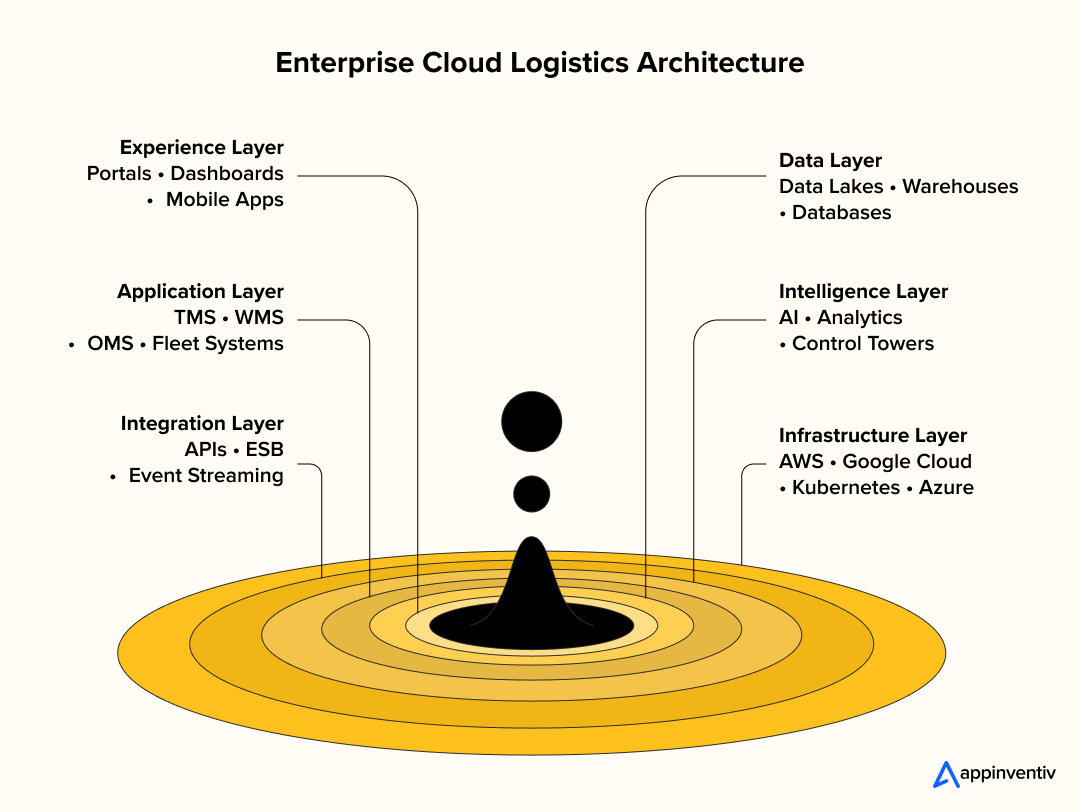
Enterprise Cloud Logistics Reference Architecture
| Layer | Purpose |
|---|---|
| Experience Layer | Customer portals, driver apps, operator dashboards |
| Application Layer | Tracking software, warehouse management, order books, fleet systems |
| Integration Layer | API tools, enterprise service buses, data streams |
| Data Layer | Data lakes, storage warehouses and working databases |
| Intelligence Layer | AI modules, predictive analytics, control centers |
| Infrastructure Layer | Cloud servers, container units, Kubernetes clusters |
Tech Stack in Logistics Cloud Software
| Layer | Common Technologies |
|---|---|
| Frontend | React, Angular, Next.js |
| Backend | Java Spring Boot, .NET, Node.js |
| APIs | REST, GraphQL |
| Event Streaming | Apache Kafka, Amazon Kinesis |
| Containers | Docker |
| Orchestration | Kubernetes |
| Databases | PostgreSQL, MongoDB |
| Analytics | Databricks, Snowflake |
| Monitoring | Prometheus, Grafana |
| Cloud Providers | AWS, Azure, Google Cloud |
Challenges of Adopting Cloud Computing in Logistics and How to Overcome Them
Adopting cloud for logistics helps companies track freight and scale operations. Many corporate projects face hurdles that go beyond tech tools. Old software, data rules, and rising costs alter your progress. Spotting these problems early helps executives plan a safer migration.
Old Software Integration
Many shipping firms run their work on old ERP systems and warehouse databases, and planning a structured legacy systems migration is often the safest path forward. Swapping out your entire tech stack at once stalls your daily operations and risks data loss.
The Solution:
Leaders can deploy a stepped rollout plan. Code links and connection software tie your old programs to new cloud features. This choice keeps your core business running while tech teams update parts of the system one piece at a time.
Data Security and Border Rules
Logistics systems store sensitive data such as customer lists, bills, and shipping logs. Cloud networks invite security risks if you do not lock down access. Global operators must also comply with strict local privacy laws regarding data storage.
The Solution:
Build strict identity checks and data-scrambling codes directly into your system design from day one. Do not add security features as an afterthought. Regular audits keep your records safe and keep your firm aligned with international laws.
Single Vendor Dependence
Tying your business to one cloud provider creates long-term operational traps. The vendor can raise fees over time. Moving your files and tools to a different platform later becomes expensive and difficult.
The Solution:
Tech teams can pack tools into standard container environments and use open-source tech. Spreading your workloads across two or three cloud vendors keeps your options open. This flexibility protects your company from sudden fee hikes.
Runaway Software Costs
Cloud bills grow rapidly if your team leaves servers running without oversight. Dead files, unneeded storage, and duplicate tasks drain cash from your technology budget.
The Solution:
Adopt a structured cloud cost optimization approach to monitor server usage weekly and keep your technology bills under tight control. Appoint a team to match cloud fees directly with department budgets. Regular checks eliminate waste and keep your technology bills under tight control.
Team Resistance to New Tools
New software changes how your tech teams build tools and how warehouse crews track cargo. Staff members often resist new habits if they do not understand the system. This friction slows down your corporate timeline.
The Solution:
Understanding the steps to implement cloud computing in logistics helps. Invest heavily in hands-on training programs before the software launch. Bring department heads together to share progress updates. Clear communication and skill-building clear away fear and help your team master the new tools quickly.
Cloud Migration Roadmap for Logistics Enterprises
Deploying cloud solutions for the logistics industry requires more than copying files. Your business runs on tracking software, warehouse logs, ledger systems, and carrier networks built over decades. Following clear steps to implement cloud computing in logistics reduces business risks and protects daily sales. It balances your budget while you change tools.
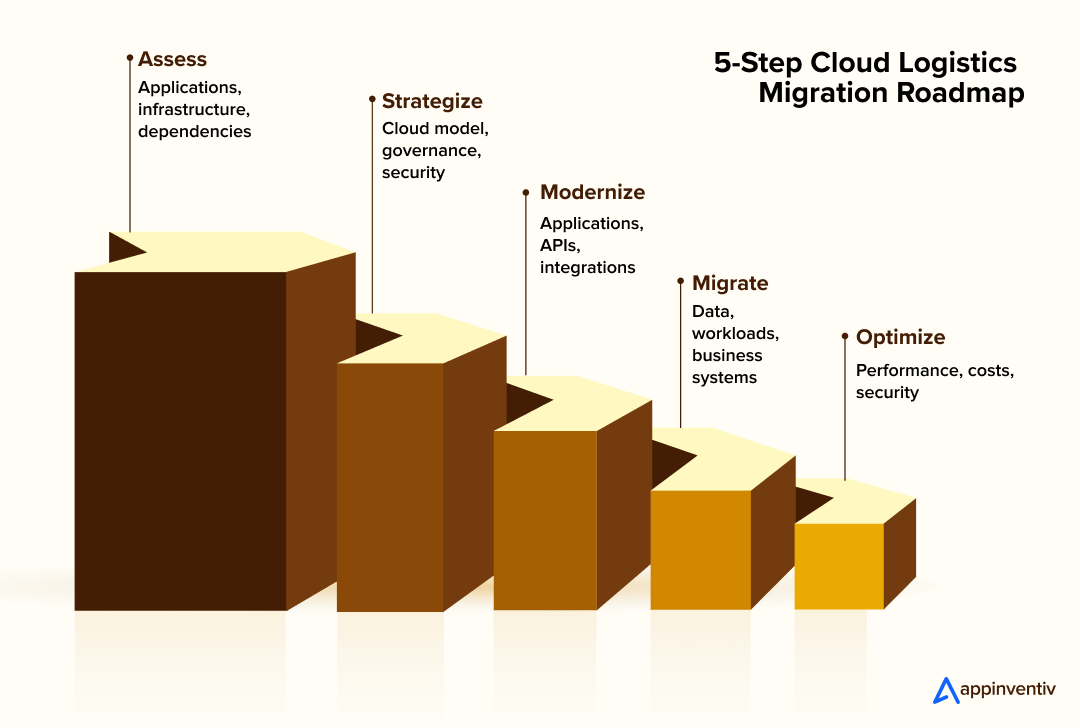
Step 1 – Inspect Current Logistics Systems
First, you must look at your current software tools. Teams check your database hooks, shipping records, and physical workflows. This review spots which systems can move instantly. It reveals which old programs need to be rewritten first. A full inventory highlights code flaws and security holes before you start.
Step 2 – Choose Your Cloud Model
Different tech tasks require different clouds for logistics server setups. Leaders decide among public, private, hybrid and multi-cloud systems to align with the company’s targets. This phase sets company safety standards, budget rules, and team tasks. It matches your tech needs with daily operations.
Step 3 – Update Software and Connections
Old logistics tools fail on cloud networks. Tech teams break large programs into smaller, standalone services. They replace messy point-to-point wires with clean web connections. Live data loops instantly keep your trucks, warehouses, and customer portals linked. This step builds a stable foundation for the company’s growth.
Step 4 – Move and Protect Corporate Records
Moving files is the hardest part of the project. Your staff gathers facts from accounting books, truck metrics, and vendor lines. Check data accuracy and entry rules before shifting files. Strict ownership protocols keep your facts clean and matched across new systems.
Step 5 – Track Results and Control Spending
The work continues after the files move. Cloud platforms need constant checking to stay fast, safe, and cheap. Managers track server usage and business metrics on central dashboard screens. Frequent checks show where to cut wasteful spending and protect sensitive company files.
Step-by-step changes protect your daily sales. Companies modernize their shipping tools without halting operations.
Also Read:How to Build a Logistics Management System in 2026
How Much Does Cloud Logistics Transformation Cost?
The cost to build cloud-based logistics solutions depends on your current software, data size, and security needs. Most corporations invest between $50,000 and $500,000 to complete this shift. The total price depends on the number of tools you link together.
Cost Breakdown by Component
| Project Task | Typical Cost Range (USD) |
|---|---|
| Moving Server Files | $10,000 – $75,000 |
| Updating Shipping and Warehouse Tools | $20,000 – $150,000+ |
| Code Connections and Links | $10,000 – $50,000 |
| Moving and Checking Records | $5,000 – $50,000 |
| AI and Reporting Features | $15,000 – $100,000+ |
| Safety and Regulation Controls | $5,000 – $50,000 |
| System Testing and Launch | $5,000 – $25,000 |
Project Cost by Scope
| Project Scope | Estimated Cost (USD) |
|---|---|
| Simple File Moving | $50,000 – $100,000 |
| File Moving with Main System Links | $100,000 – $250,000 |
| Full Corporate System Overhaul | $250,000 – $500,000+ |
The largest budget drivers are software updates and complex system connections. Shifting massive databases and adding automated AI tracking will also raise your final spend.
Measuring Returns on Investment
Track your cloud solutions for logistics industry investment by financial returns, not just by installing new software. Executives check metrics across field speed, cargo tracking, tech spend, and client happiness.
Performance Categories and Targets
| Area of Focus | Numbers to Track |
|---|---|
| Daily Performance | Order completion times, truck usage, warehouse output |
| Cargo Tracking | Stock count accuracy, transit precision and delay response speeds |
| Technology Expenses | Server bills, system upkeep fees and computer usage |
| Client Happiness | On-time delivery rates, drop-off precision, and satisfaction scores |
Many corporations achieve the highest financial returns from lower server costs and exact stock counts. They speed up order delivery, keep vehicles busy, and reliably meet drop-off deadlines.
Replace operational bottlenecks with cloud-native platforms built for growth and resilience.
The Future of Cloud Computing in Logistics
This evolution reflects the broader role of cloud in digital transformation, where platforms no longer just store records but analyze data and make smart choices. The next phase of digital transformation and digital innovation uses software that acts with very little human help, helping businesses adapt to market uncertainty and changing demand fluctuations.
- Autonomous AI Agents: Old AI tools just give advice. New AI agents complete tasks on their own. These tools buy truck space and reroute cargo. They balance your warehouse stock based on your exact corporate rules.
- Self-Adjusting Supply Chains: Cloud software builds networks that fix their own problems. The system responds to sudden spikes in buying and traffic jams. It orders parts when shelves run empty without waiting for a manager. These capabilities are becoming a core part of modern cloud supply chain management.
- Complete Digital Models: Virtual testing now covers more than just single warehouses. Large firms build digital copies of their entire supply network. They test new shipping paths and model delays before spending corporate capital. These simulations improve planning accuracy and strengthen the external validity of operational decisions.
- Local and Cloud Processing: Trucks, factory robots, and scanners generate large volumes of data. Systems now process data simultaneously on the warehouse floor and in the cloud. This dual setup cuts out system delays.
- Private 5G Connections: Major shipping ports and distribution hubs are now installing private 5G networks. These fast wireless lines run yard robots and factory cameras. They track every asset inside your facility instantly.
- Carbon Tracking Software: Cloud reporting tools help businesses calculate fuel usage and emissions. The software plans shorter routes to save gas. This data supports corporate sustainability goals and broader decarbonisation initiatives across supply chains.
Companies across every business lifecycle stage, regardless of industry classification, are investing in these technologies. Adoption is also accelerating in developing markets, where cloud infrastructure is helping organizations modernize logistics operations faster.
Companies that buy cloud networks today will use these tools easily when they become standard. Early choices protect your future operations.
How Can Appinventiv Help Enterprises Build Cloud-Native Logistics Solutions?
Delivering best-rated cloud logistics services requires more than copying old files onto internet servers. Corporate leaders must rebuild aging software, integrate disparate systems, secure field data, and build frameworks that enable automation and future technologies.
Appinventiv guides companies through these changes using strategic planning, software assembly, and ongoing platform management.
Our work includes:
- Server strategy, transitions, and upgrades
- Cloud-based logistics software development for tailored tracking tools, warehouse systems, and central hub software
- Corporate links across company ledgers, drivers, and tracking tools platforms
- Smart software for sales predictions, traffic routing, arrival metrics, and network models tools
- Data management, reporting, safety setups, and audits
As a trusted logistics software development company, our technical experience includes these metrics:
| Verified Metrics | Our Numbers |
|---|---|
| Server Transitions Finished | 500+ |
| System Launches Completed | 2,000+ |
| Mixed Setups Completed | 20+ |
| Technical Specialists Available | 50+ |
| Main Provider Alliances | 5+ |
| Sectors Served | 35+ |
| System Activity Watching | 24/7 |
| Operational Value Generated | Results |
|---|---|
| Server Expense Reductions | Up to 30% |
| System Uptime | 99.90% |
| Hardware Output Improvements | Up to 2x |
From server shifts and transport system updates to smart network overhauls, Appinventiv helps large corporate businesses apply cloud computing in logistics to construct flexible frameworks built for lasting operational success.
Let’s connect and build an AI-ready logistics ecosystem before demand surges again.
Frequently Asked Questions
Q. How much does it cost to build cloud-based logistics software?
A. Building this software costs between $50,000 and over $500,000. Your total depends on how deeply cloud computing in logistics is integrated with system integration, security needs, and machine learning tools, all of which affect the final figure. Tailored dispatch systems, warehouse tracking tools, and live data dashboards cost more than simple tracking apps. This spending always scales directly with your total corporate network size.
Q. How long does it take to develop a cloud-based logistics platform?
A. Software assembly takes three to twelve months. Simple tools with basic tracking features finish fast. Large corporate frameworks require ledger links, data shifts, smart AI models, and global network connections. These setups take many more months to complete and launch safely.
Q. How does cloud logistics TMS integrate with ERP systems?
A. Cloud routing tools connect with company ledgers using web links and streaming codes. This setup lets freight data, stock tallies, orders, bills, driver notes, and drop updates flow automatically between systems. Your team tracks operations easily and stops wasting time manually typing numbers.
Q. What are the main problems when installing corporate cloud logistics systems?
A. The main hurdles include integrating legacy software, migrating records, ensuring file security, and managing rising server costs. Teams fix these issues using step-by-step rollout plans, web code links, clear data rules, and structured corporate employee training programs.
Q. How do you measure returns from cloud logistics systems?
A. Returns come from lower server bills, exact stock tallies, faster packing times, and better truck utilization. You track freight clearly and hit drop deadlines. Corporate leaders scale operations smoothly and use real-time data to make faster decisions across their entire supply chain.
Q. How will cloud computing shape the future of logistics?
A. Cloud computing will play a central role in the next phase of digital transformation across logistics and supply chain operations. As organizations face demand fluctuations, market uncertainty, and growing sustainability goals, cloud-based platforms will enable advanced supply chain management, real-time data integration, AI-driven decision-making, and network-wide visibility.
Cloud technologies will also accelerate digital innovation, support decarbonisation initiatives, and help businesses scale efficiently across both mature and developing markets throughout every stage of the business lifecycle.


Fast 2-minute response, fully NDA-protected.

How to Build a DESC-Compliant Azure Architecture in the UAE Without Data Residency Risks
Key takeaways: Azure UAE data residency compliance is not just about choosing UAE North or Central; logs, backups, APIs, identity flows, and monitoring paths also need control. DESC-aligned Azure architecture should be planned before deployment or migration to avoid audit issues, delayed approvals, and expensive rework. Enterprises must map the full data journey across storage,…

How Cloud Services Accelerate Product Development for Businesses
Key takeaways: Cloud product development changes the speed, cost, and risk profile of modern software delivery. The cost of cloud product development ranges between $40,000 and $400,000 or more. Cloud platforms give you instant access to AI/ML, edge computing, and advanced analytics without dropping tons of money upfront. Appinventiv supports enterprise cloud product development through…

Green Cloud - How Cloud Adoption Helps Improve Sustainability/ESG Goals of Enterprises
Key takeaways: Adopting green cloud solutions lowers energy consumption, cuts emissions, and reduces operational costs. Companies like UEM Edgenta and Bharti Airtel have seen measurable improvements in sustainability and efficiency. AI Enhances Green Cloud Efficiency. AI optimizes energy use, predicts demand, and minimizes waste in cloud infrastructure. Your Green Cloud Roadmap. Start with an infrastructure…