





















Top Healthcare Trends That Will Redefine The Industry in 2026

 Share -


- 019 Best Healthcare Mobile App Global Healthcare Technology Trends in 2026
- 02How Artificial Intelligence Trends in Healthcare Are Powering the Next Wave of Digital Health Transformation?
- 03Benefits of Mobile Technology Trends in Healthcare
- 04Challenges Slowing Down Digital Healthcare Adoption
- 05Future Outlook: Emerging Healthcare Technologies Beyond 2026
- 06How Appinventiv is Driving the Future of Healthcare with Innovation?
- 07FAQs

Key Takeaways
- Healthcare technology trends are shifting enterprises from reactive to predictive care models.
- AI and IoT automation are optimizing clinical workflows and operational efficiency at scale.
- Interoperable health data platforms are eliminating silos and improving executive decision-making.
- Cloud modernization enables scalable healthcare systems while maintaining regulatory compliance.
- AI-driven precision medicine is creating new enterprise revenue and service differentiation opportunities.
- Cybersecurity and ethical AI governance are becoming critical board-level healthcare priorities.
Healthcare is changing a lot faster than we thought it would. COVID-19 exposed flaws and limitations in current healthcare technology and systems. It forced hospitals and clinics to adopt new medical technology just to keep the people safe and treated.
What started off as a necessity has now grown into something much bigger and fundamental in the healthcare industry. It is changing how hospitals and clinics deliver care to patients.
Today, healthcare app trends like AI, IoT, blockchain, and wearables are making healthcare feel both smarter and more personal. Doctors can catch problems earlier, create treatment plans that actually fit each person, and patients finally have a real say over their medical information.
For professionals in healthcare, it means freedom from endless paperwork, information at your fingertips, and choices backed by meaningful data.
Going into 2026, the latest trends in healthcare technology continue to rewrite the rulebook. This blog explores how the latest healthcare technology trends are improving patient experiences, driving digital transformation, and setting new standards for care worldwide.
Appinventiv has helped over 450 healthcare brands achieve smarter care delivery through innovation and technology.

9 Best Healthcare Mobile App Global Healthcare Technology Trends in 2026
Mobile technology continues to redefine how healthcare is delivered, managed, and experienced. In 2026, the focus is on creating smarter, more connected, and patient-centric apps that bridge the gap between users and providers.
As healthcare technology trends evolve, they are driving innovation in mobile solutions that make care more accessible, efficient, and data-driven.
This section will highlight the critical healthcare app trends and how they play a vital role in redefining this sector and enhancing customer experience.
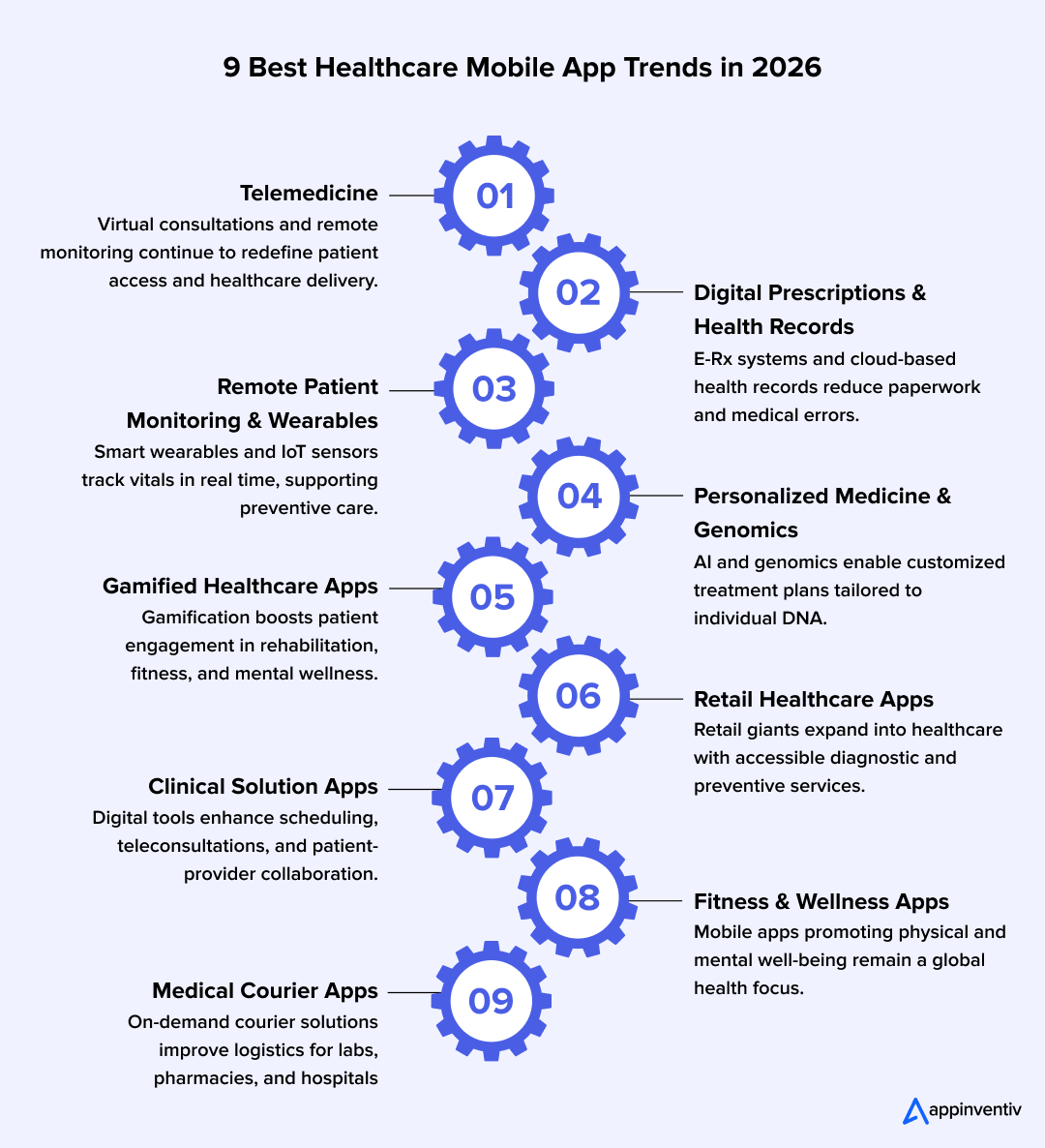
1. Telemedicine
Telemedicine has revolutionized the healthcare industry to a massive extent by covering the gap between patients and their doctors/caregivers, and its adoption will continue to grow with time. It remains one of the leading current technology trends in healthcare in 2026 and a crucial technology impacting home healthcare.
The implementation of this health app trend will aim at providing real-time patient and doctor access in a way that prevention is taken before a medical emergency occurs. As per the telehealth trends, the facility, known to reduce the overall cost incurred by the hospital structure, will see many new entrants in the economy.
Read our article on how much it costs to develop a telehealth application.
Technology Used: Cloud Computing and Artificial Intelligence
Telemedicine in 2026 goes beyond video consultations. It is evolving into Virtual Wards and Hospital-at-Home ecosystems, where remote monitoring, clinician collaboration, and care coordination operate as a unified digital system.
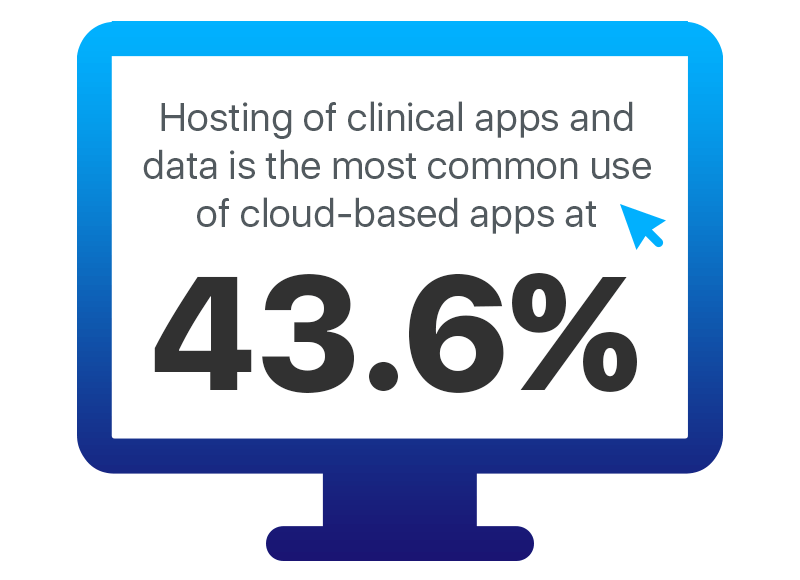
The impact of cloud computing in healthcare is central to this shift. Cloud-native architectures enable low-latency WebRTC communication for real-time virtual consultations and support integration with DICOM imaging systems so specialists can review scans and patient data during live calls. The cloud computing market in healthcare is expected to grow by 17.8% annually and reach $120.6 billion by 2029, reinforcing its role as the foundation of scalable virtual care.
AI adds an orchestration layer by automating triage, identifying risk patterns, and guiding care pathways. Together, these capabilities form Hybrid Care Orchestration, allowing enterprises to connect in-person care, remote monitoring, and virtual consultations into one seamless healthcare delivery model.
2. Digital Prescription and Health Records
Digital health is increasingly taking an important place in our daily lives, making it a vital component of ongoing healthcare app trends in 2026. For instance, E-Rx is a digital version of a prescription created by healthcare practitioners using digital software.
It has become one of the new trends in healthcare technology due to the immense benefits it offers. Also, it helps create digital health records of patients, resulting in better patient care by reducing human error in interpreting wrong medicines.
For enterprise healthcare systems, these digital records are increasingly exchanged through HL7 FHIR-based interoperability standards, allowing prescriptions, clinical notes, and lab data to move securely between EHRs, pharmacy platforms, and external care providers.
SMART on FHIR applications further enable authorized third-party tools to access patient records without disrupting core hospital systems.
This year will witness a surge in the use of digital prescriptions with the idea of reduced paperwork and longevity in storage. The US virtual care market is expected to reach a valuation of $46.3 billion by 2030, witnessing a CAGR of 30.75% from 2022 to 2030.
The rapidly increasing market share can be attributed to the growing demand for efficient healthcare delivery and the push for a more streamlined, paperless system that enhances patient care quality.
Also Read: 22 Profitable Healthcare Business Ideas Every Entrepreneur Should Consider
Technology Used: Big Data and Blockchain
The analytics of Big Data are expected to reach USD$650 billion by the year 2029 and are already the new frontier in drawing useful insights from Electronic Health Records (EHR). Blockchain adds another layer: assurance in the form of accuracy, keeping everything transparent so that sharing of patient records can be done securely, without affecting compliance or trust.
You may like reading: EMR Vs EHR Development – What Should You Choose for Your Healthcare Business?
3. Remote Patient Monitoring and Wearables
Remote patient monitoring has become one of the fastest-growing healthcare app trends. It can also have a long-term impact on healthcare services. Doctors work more efficiently by monitoring patients outside a hospital or clinic, effectively extending the healthcare system’s reach.
Treating chronic diseases like heart disease or diabetes through diabetes management apps , along with remote monitoring devices classified as SaMD (Software as a Medical Device), has now become far more convenient.
Regular real-time access to data from connected wearable devices can be used for preventive healthcare measures. For example, a wearable ECG device can alert a doctor to a possible cardiac arrest. Additionally, access to such continuous data can help manage chronic conditions by motivating changes in unhealthy lifestyles.
Wearable devices, health sensors, and trackers help keep track of every moment of patients, such as heart rate, sleep patterns, calorie intake, workout time, etc.
It can help medical professionals get a clear picture of the patient’s health and modify it accordingly. Nowadays, digital blood pressure cuffs are also used to send blood pressure and pulse readings to healthcare practitioners continuously.
Technology Used: IoT (Internet of Things)
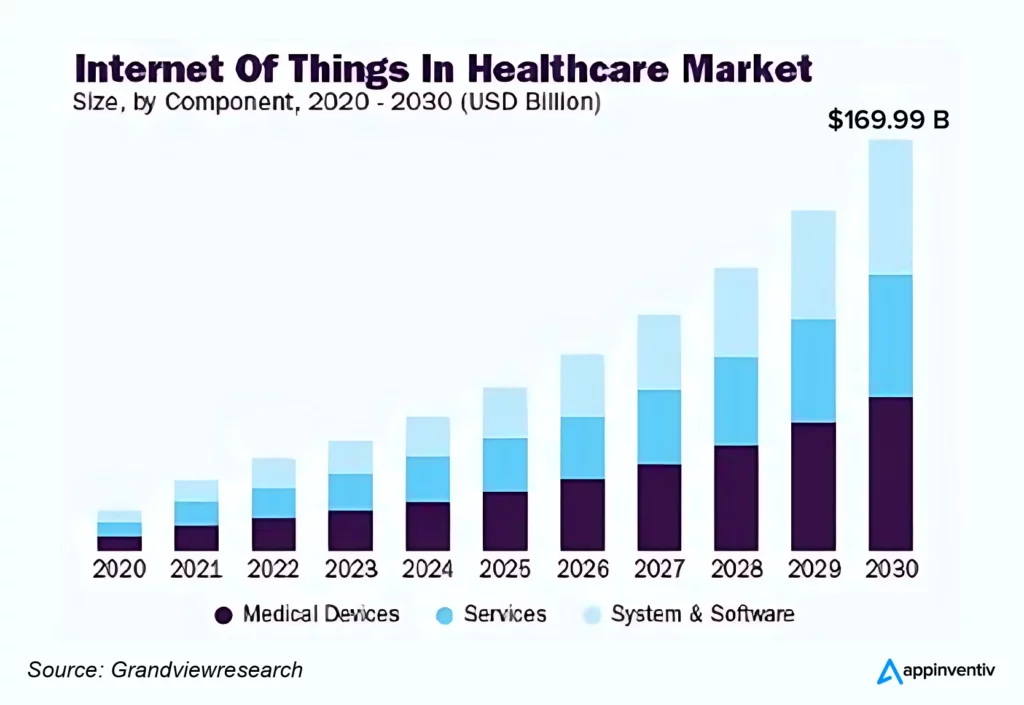
The IoT in healthcare market is projected to reach $169.9 billion by 2030. We are talking about connected inhalers, smart ECG patches, and ingestible sensors. They will keep on collecting patient data in real time and sending early warnings when something is off to give the doctor a chance for earlier intervention.
4. Personalized Medicine and Genomics
Typically, medicines are created on a “one-size-fits-all” basis, with the highest number of efficacy and the lowest number of side effects.
However, with the rise of healthcare mobile Apps trends, modern technologies like genomics (the study of genes), digital twins, and artificial intelligence trends in healthcare have allowed caregivers to take a far more personalized healthcare approach, resulting in treatments specifically tailored to the individual level.
It can be highly effective for patients with chronic pain, but can also be hazardous when taking excessively high doses.
Hospitals, clinics, and medical professionals can partner with drug companies to create personalized treatment tools and medicines. The customized treatment provides tailored recommendations for exercise, diet, and ailment management based on blood sugar readings and other specific factors.
It quickly leads to safe treatments for chronic ailments like heart attack prevention, arthritis, cancer, and Alzheimer’s disease.
Technology Used: Artificial Intelligence and Predictive Analytics
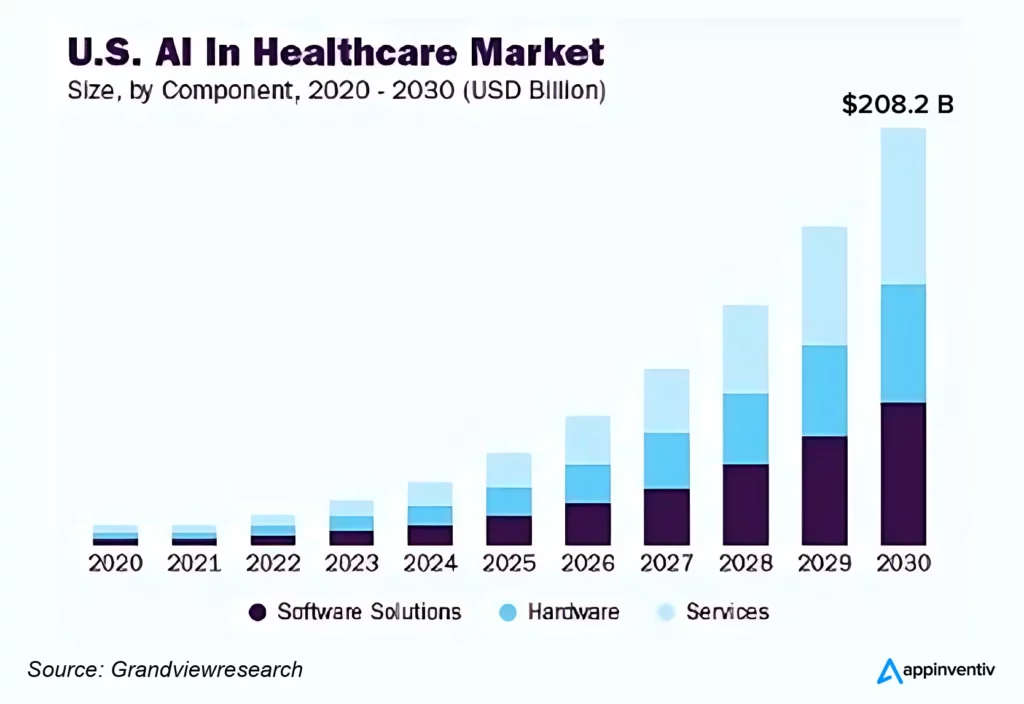
The AI in healthcare market is projected to grow by a 36.4% CAGR, reaching $208.2 billion by 2030. For instance, AI chatbots in healthcare have become instrumental in streamlining communication between patients and providers.
Emerging applications now include Ambient Clinical Intelligence, where AI automatically generates clinical notes from doctor-patient conversations, reducing documentation burden.
Predictive analytics spots disease patterns early and helps hospitals plan resources better. Predictive analytics will also enable smart technology in healthcare in many ways.
RAG (Retrieval-Augmented Generation) models are increasingly used for clinical decision support by retrieving relevant medical knowledge and combining it with patient data to assist physicians with evidence-based recommendations.
Both are driving change in healthcare away from its traditionally reactive treatment toward truly proactive care.
Also Read: What is predictive analytics? Dispelling some common myths
5. AR/VR Gamification
While the mobile app industry is not new to the concept of game-based mHealth apps, the audience has mainly been children who play basic-level surgery games for entertainment. But now, the situation is changing.
The healthcare industry is increasingly embracing healthcare mobile Apps trends like gamification to drive patient engagement and medical learning. Games are now finding their place in medical training, rehabilitation games, fitness games, participatory health games, and emotional/cognitive games.
Technology Used: AR/VR
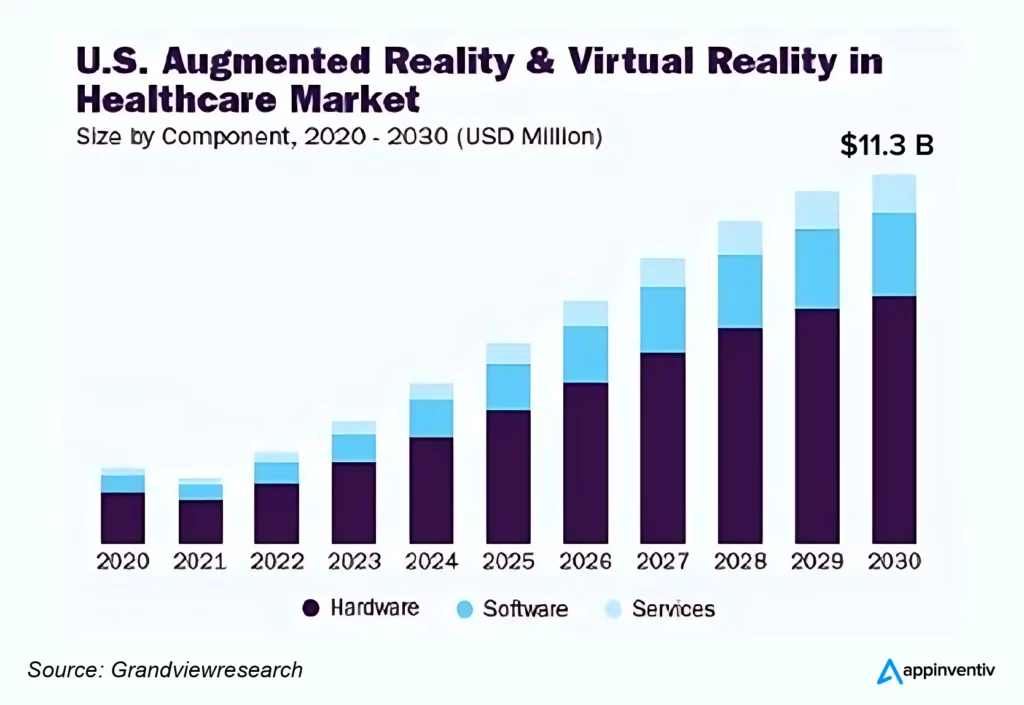
The revenue of AR/VR in healthcare will amount to $11.3 billion by 2030. The impact of AI/VR in healthcare is huge. These tools create realistic environments in which surgeons can train, support recovery therapy, and help with cognitive rehabilitation. Patients are more engaged, and outcomes are better because the experience feels interactive rather than clinical.
A growing enterprise application is the use of Medical Digital Twins, where VR environments are built as precise digital replicas of a patient’s organ or anatomy. Surgeons use these virtual models for pre-operative mapping, allowing them to simulate procedures and plan interventions before entering the operating room.
6. Retail Healthcare
Retail healthcare is gradually becoming a profitable part of healthcare mobile apps trends, as leading retailers like Amazon, Walmart, and CVS have started offering medical services such as vaccinations, blood tests, and medical checkups.
Traditionally, these services were delivered only at hospitals, clinics, and other medical units by trained practitioners, doctors, and other medical staff. Retail healthcare services are far more accessible and do not require prior appointments compared to traditional healthcare providers.
Also Read: A Comprehensive Guide to Healthcare eCommerce
Technology Used: Cloud and AI
Cloud systems give everybody the same centralized access to patient information, while AI handles the logistics: scheduling appointments and running virtual diagnostics that make sure retail and clinical systems actually talk to each other smoothly.
For enterprise-scale retail healthcare networks, cloud-native architectures enable real-time synchronization of patient records across in-store clinics, telehealth platforms, pharmacy systems, and core EHRs through API-based interoperability.
7. Clinical Solutions
Another key part of healthcare mobile apps trends is the rise of clinical solution apps, widely used by hospitals, clinics, and medical facilities. It helps patients schedule appointments, exchange information with their doctors, get answers to queries, and much more.
In addition, patients can also set reminders for their appointments, connect with the medical staff immediately when any emergencies occur, and pay their bills. Clinical solution apps will be a leading healthcare mobile app trend in 2026.
You may like reading: How much does it cost to build a healthcare app like Patient Access?
Technology Used: Cloud and AI
Cloud platforms make data sharing among diverse departments with minimal friction possible. AI does the repetitive work of chatting with patients, managing records, and sending appointment reminders, while the staff can attend to actual care rather than paperwork.
At an enterprise level, cloud-based clinical solutions increasingly use HL7 FHIR APIs to enable real-time interoperability between scheduling systems, EHRs, laboratory platforms, and billing infrastructure.
8. Fitness Solutions
Among the leading healthcare mobile apps tends, fitness apps continue to dominate with their focus on holistic well-being.
These apps focus on overall well-being, including physical fitness and mental wellness. They provide virtual sessions on Strength Training, Jumba, Yoga, Dance, meditation, and more.
Fitness apps have been the top healthcare mobile app trend during the pandemic, when people were homebound, keeping people fit during the lockdown.
Technology Used: IoT and AI
IoT devices track biometric data around the clock, while AI makes sense of those numbers in creating personalized health plans and actionable insights. This is preventive care in action: turning raw data into daily health habits that finally stick.
At scale, enterprise fitness platforms use secure IoT data ingestion pipelines to stream wearable data into cloud health data platforms. AI models then apply real-time analytics and behavioral pattern detection to personalize recommendations and trigger early wellness interventions.
9. Medical Courier Solutions
The medical courier industry is undergoing a major transformation, driven by the increasing demand for faster, safer, and more efficient transportation of healthcare supplies.
Whether delivering lab samples, prescription medications, or life-saving medical equipment, healthcare organizations are leveraging new technologies in healthcare like medicine delivery apps that streamline logistics, enhance compliance, and improve patient care.
Technology Used: IoT and Predictive Analytics
IoT enables the tracking of medical shipments in real time. Predictive analytics finds the smartest delivery routes with everything kept in compliance, especially if one is dealing with temperature-sensitive or time-critical supplies.
At an enterprise level, IoT sensors continuously stream location, temperature, and chain-of-custody data into cloud logistics platforms. Predictive analytics models process this data to forecast delays, automate route re-optimization, and trigger compliance alerts when shipment conditions deviate from required thresholds.
With these artificial intelligence trends in healthcare in mind, let’s explore how they impact the healthcare industry.
How Artificial Intelligence Trends in Healthcare Are Powering the Next Wave of Digital Health Transformation?
Newest medical technology is changing healthcare in ways that, quite honestly, seemed like science fiction not all that long ago, from helping doctors nail down diagnoses to keeping hospitals organized and compliant.
It takes that messy data and essentially converts it into something doctors and nurses can actually use to help people more quickly and effectively.
As one of the most transformative healthcare technology trends, AI continues to set new standards in medical innovation and care delivery. Where artificial intelligence trends in healthcare is really making waves:
1. Sharper Diagnosis
AI can scan through X-rays, laboratory samples, and years of patient history for much earlier signs of cancer, heart trouble, or other things. And honestly? It gets scary good at catching stuff that humans might miss.
2. Predictive Analytics
Instead of waiting for someone to show up in the ER, machine learning can flag warning signs weeks or months in advance. Doctors get a heads-up and can do something about it before things go south.
3. Personalized Medicine
AI looks into your genes, your lifestyle, even the way you go about your daily routine, and helps determine what exactly will work for you. No more trial and error with medications that aren’t going to do anything.
4. Automate Workflows
Scheduling appointments, processing insurance claims, and billing-all that just drudge-work is taken care of now by AI. Fewer screwups and less wasted time mean healthcare workers can actually spend their time caring for patients.
5. Operational Insights
Hospital executives receive analytics showing them precisely where to increase staff, beds, or other equipment. It’s a roadmap to running a hospital that doesn’t require chaos. AI in healthcare is not just the latest technology in healthcare that people are hyping up; it’s genuinely becoming the backbone of a system that works smarter, feels more human, and delivers better care when it counts.
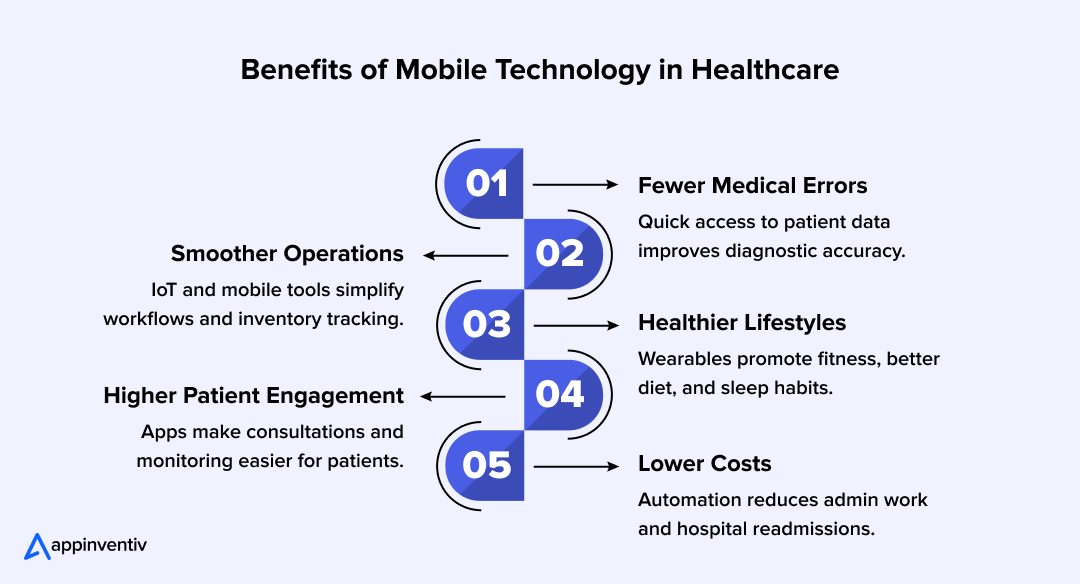
Benefits of Mobile Technology Trends in Healthcare
Trends in digital health is transforming healthcare. It’s improving access, accuracy, and efficiency. Digital Healthcare Trends allows us to do real-time monitoring, faster diagnoses, and personalized care.
New technologies in healthcare are making all this possible while reducing operational costs and enhancing patient engagement.
1. Decrease in Instances of Errors
Mobile health applications grant access to medical history, laboratory results, and practice guideline, at their physicians’ fingertips, which reduces diagnostic errors and sharpens the decision-making process. Patients receive their alerts in real-time to help avoid small issues from turning into larger issues.
2. Streamlining Clinical Processes
IoT-enabled applications offer an alleviation of effort related to inventory management, automate standard workflow, and allow medical professionals to observe their equipment and resources. The ease of working more efficiently allows healthcare organizations and medical staff to focus their energy and effort on what matters most.
3. Reinforcing Healthy Behaviors
Wearables and fitness applications assist individuals in tracking patterns, activity, sleep, and nutrition and this promotes the development of shared healthy behaviors or the retention of one’s own care, prior to the escalation of trouble.
4. Greater Patient Interaction
Mobile applications provide the ability to schedule appointments, view lab test results, or communicate directly with their provider. Access like this promotes trust and communication to ensure that providers, patients, and their families are all working from the same data.
5. Reduced Cost and Time
Digital health applications perform repetitive administrative tasks and eliminate the unprecedented work of paperwork, which enables healthcare organizations to lower their expenses and be more productive. It also allows them to divert energy into improving the quality of delivery of care.
Build HIPAA-compliant, AI-powered, and scalable healthcare apps that enhance patient outcomes and data trust.

Challenges Slowing Down Digital Healthcare Adoption
While the latest trends in healthcare technology promise better outcomes, their adoption still faces significant challenges that enterprises must navigate strategically.
Here are a few challenges of healthcare app trends:
1. Issues of Interoperability:
Most healthcare systems in the U.S. still don’t talk to each other properly. In fact, it’s messier than it sounds for EHRs, wearable devices, and old hospital systems to share information-and it slows down our ability to give patients the kind of coordinated care they actually deserve.
2. Pressure for Regulation and Compliance:
There is always pressure to remain compliant with HIPAA, GDPR, and various local rules whenever you wish to introduce anything new to healthcare. Yes, these regulations are highly important to protect the patient, yet they do have a tendency to extend development time and add more costs that perhaps were not included in the original budget.
3. Cybersecurity Risks:
Much like every other industry, Healthcare businesses are increasingly becoming the target of hackers as well. They face ransomware attacks and data breaches much too often. Strong encryption, tight access controls, and constant threat monitoring are no longer optional measures; they have become essential for survival.
4. High Implementation Costs:
But it’s going to take real money: upgrading infrastructure, cloud services, hiring a whole raft of people who actually know how it all works. A lot of smaller hospitals and clinics won’t be able to make that cost justification now or in the foreseeable future.
5. Inadequate Digital Preparedness:
While a digital transformation sounds great on paper, not every healthcare organization has the technical infrastructure or staff training to implement those changes. On top of it, you get a handful of people who are too stuck in their old ways. Then, there are the limited training issues that further slow down adoption.
6. Ethical and Transparency Issues:
If AI makes a medical recommendation and nobody can explain why, well, that is a problem. That raises very legitimate questions about fairness, who is responsible if something goes wrong, and whether the patients can truly trust what they are being told. We need algorithms that are comprehensible and medical experts overseeing how AI is used.
While these challenges continue to test digital transformation efforts, the pace of innovation isn’t slowing down. The next wave of new trends in healthcare technology is set to bring smarter automation, stronger interoperability, and patient experiences shaped by AI and predictive analytics.
Future Outlook: Emerging Healthcare Technologies Beyond 2026
New technologies in Healthcare are entering a new phase, where intelligence, automation, and personalization will not be just buzzwords, but the norm. Emerging healthcare technologies are currently changing the view of what good care is, and the experience people have with good care.
1. Predictive and Preventive Healthcare
We’re moving towards no longer simply responding to sick people. Data-driven tools and AI analytics (even digital twins that mirror our health) will help identify at-risk patients before they become at-risk. It is about identification and prevention of these at-risk conditions at the population level, rather than treatment of just the patients booking visits to the hospital.
2. Genomics and Precision Medicine
Gene sequencing is getting faster and cheaper, which means we are approaching a time when we will have customization of treatments dedicated to you, not just your diagnosis. AI will help decipher what these genes are actually telling us, leading to treatments for chronic and rare diseases with so much more precision than ever before.
3. Interoperable Digital Environments
The goal is for everything to talk to you—your health records, smart watch and your telehealth app—all able to talk to each other, seamlessly and securely with standards such as SMART on FHIR, so that you don’t have to retell your medical history to a call-center worker five times, and organizations that employ EHRs do not create systems that don’t talk to one another.
4. Ambient, Contextual Intelligence
Imagine your wearables, smart home devices, or even sensors that you are not in a constant state of awareness about, will continuously monitor your health. The devices will monitor your vital signs, sense when something isn’t right, and notify your care team in real-time. All of this will occur behind the scenes, without you doing anything.
5. Ethical, Responsible AI
As AI becomes a bigger part of healthcare delivery, its use must remain fair, transparent, explainable, and accountable. This is driving enterprise focus on Algorithmic Transparency and AI Ethics, ensuring clinical AI systems can clearly justify how decisions are made.
Healthcare organizations are taking algorithmic accountability seriously because trust determines adoption by both patients and physicians. Regulatory frameworks such as the EU AI Act and emerging US healthcare AI governance guidelines are now making ethical AI compliance an operational necessity.
6. Advanced Cybersecurity in Healthcare
Since everything is going digital, security has to adapt as well. We’re talking about quantum-safe encryption, zero-trust systems that don’t allow anyone automatic access, and immutable blockchain records. As more and more global healthcare technology trends data gets moved to the web, protecting that data is now a very critical requirement.
From EHR integrations to AI-driven telehealth, our experts design healthcare apps that drive measurable results.

How Appinventiv is Driving the Future of Healthcare with Innovation?
The healthcare industry is undergoing an incredible change, and, as we move into the year 2026, we are going to see a major transition to preventive, connected, and patient-centered care in the newest medical technology.
Emerging healthcare technologies such as artificial intelligence (AI), the internet of things (IoT), and blockchain technology are doing more than just improving efficiencies—they are completely redefining how healthcare is provided, managed, and personalized.
At Appinventiv, we have demonstrated, for healthcare enterprises across the globe, that digital health innovations directly translate to meaningful health digital products. As a medical app development company, we have built scalable and secure healthcare platforms that align with evolving healthcare app trends while ensuring compliance and interoperability.
In addition to producing 500+ digital health platforms, we have partnered with 450+ healthcare clients over the span of 10 years—all with the goal to enable interoperability for their clients and patient engagement, to serve their populations, manage burdens of compliance, and achieve better health outcomes.
Our healthcare IT consulting services have helped organizations modernize systems, integrate data-driven solutions, and create long-term digital health strategies. For enterprises exploring broader transformation opportunities, our Healthcare Development Hub offers deeper insight into the platforms, technologies, and connected care models shaping the future of healthcare.
The Appinventiv healthcare portfolio includes products like YouCOMM—a digital platform that enhances in-hospital patient communication; and Soniphi, an AI wellness application that communicates voice-based health insight.
These projects are great examples of how technology can have a good effect on experiences in healthcare. When designed thoughtfully, technology can humanize the healthcare experience.
As your digital transformation partner, we bring technical depth and domain expertise to help you leverage emerging healthcare technologies to benefit your digital transformation strategy! We are looking forward to exploring the next steps in shaping a new era of healthcare—safely, intelligently, and at scale—together.
Connect with one of our healthcare app developers →
FAQs
Q. What is the impact of healthcare trends?
A. The healthcare industry is constantly evolving and adapting to new trends. These trends have a major impact on the industry, from how healthcare is delivered to how it is paid for. Healthcare trends have the potential to reduce costs, improve the quality of care, and increase access to care for all patients. It also has the potential to create new jobs and business opportunities, as well as improve the overall health of the population.
Healthcare trends are also driving the development of new technologies, such as telemedicine and artificial intelligence, which can help improve care delivery. Ultimately, healthcare trends have the potential to make a positive impact on the healthcare industry and the overall health of the population.
Q. What do you see as the future of healthcare?
A. The future trends in healthcare technology is supposed to focus on six key areas: Data sharing, interoperability, equitable access, empowered consumers, behavior change, and scientific breakthroughs.
These new trends in healthcare technology will play a role in transforming the existing healthcare system from a treatment-based, reactionary approach to one that focuses on prevention and well-being. It will lead to improved outcomes and better quality of life for individuals and communities. With the right investments and policies, the future of healthcare can improve health and well-being for all.
Q. Why is it essential to keep pace with healthcare digital transformation trends?
A. It is essential to keep pace with healthcare digital transformation trends because it allows healthcare organizations to provide better patient care. Digital transformation can help healthcare organizations improve patient outcomes, reduce costs, and increase efficiency.
Additionally, digital transformation can help healthcare organizations manage data, improve communication, and provide better access to care. By keeping pace with the latest trends, healthcare organizations can ensure they are taking advantage of the latest technology in healthcare and staying ahead of the competition.
In straightforward terms, the latest emerging healthcare technology trends helps industry leaders understand patients’ needs and how to revolutionize their medical units to meet those needs.


Fast 2-minute response, fully NDA-protected.
Wearable Data Integration: Connecting Multiple Devices to a Unified Health Platform
Key takeaways: Device support should reflect the measurements your service needs, the people using it, and the decisions those readings inform. A unified health data platform must preserve source, timing, and measurement context while resolving duplicate records. Phone health platforms, manufacturer APIs, and direct device connections serve different integration needs. Clinical workflows require agreed review…
Sleep Tracker App Development: Features, Wearable Integration, AI, and Compliance
Key takeaways: Sleep tracking presents opportunities across consumer wellness, fitness, healthcare, employee wellness, senior care, and infant-care markets. Successful products combine actionable insights, wearable connectivity, user-friendly reports, privacy controls, and clearly differentiated experiences. HealthKit, Health Connect, and direct device APIs provide different data depths, costs, limitations, and maintenance requirements. AI supports sleep-stage estimation and personalization,…

Diet and Nutrition App Development: Process, Features, Cost, and Technology Stack
Key Takeaways Diet and nutrition tracking app development goes past basic calorie counters with verified food databases, custom meal schedules, AI tools, wearable device links, and corporate manager tools. Structure database models around raw food items, serving portions, nutrient facts, recipes, software links, and regional diet rules. Pair computer vision models, recommendation algorithms, language engines,…