




































How Much Does EHR Software Development Cost? Enterprise Pricing, Hidden Costs, and ROI Analysis

 Share -



- 01A Comprehensive View of the Costs Involved in EHR Implementation Cost
- 02Key Factors That Influence EHR Implementation Cost
- 03Hidden Cost of EHR Implementation
- 04EHR Cost-Benefit Analysis
- 05EHR Software Development Cost Explained: Scope, Complexity, and Budget
- 06Cost Behavior Across Development Lifecycle
- 07Practical Budget Ranges by System Type
- 08How to Optimize EHR Development Costs Without Compromising Quality
- 09Building an EHR System: Step-by-Step Development Framework
- 10Begin Your EHR Implementation Journey with Appinventiv
- 11FAQs

Key Takeaways
- EHR implementation costs vary widely, from $20,000 for small clinics to $900,000+ for enterprise systems, based on scope, complexity, and customization.
- Whereas EHR software development costs between $30,000 to $1M+, depending on the complexity of development, choice of technologies and advanced features.
- Hidden costs like data migration, workflow disruption, training, and compliance can add 20–40% to initial estimates, so plan accordingly.
- Cloud-based EHRs offer lower upfront costs and predictable fees, while on-premise solutions require larger initial investments but may save money long-term.
- ROI is typically realized within 12–36 months, with long-term gains in efficiency, billing accuracy, and compliance.
- A phased, well-planned rollout and early stakeholder engagement are key to controlling costs and maximizing EHR adoption.
EHR system costs remain among the initial financial concerns of healthcare organizations shifting to a digital-first clinical operation. No longer is it a software-only purchase, but is expanded to system preparedness, data migrations, interoperability configuration, and long-term operational alignment across clinical teams. In most planning discussions, the EHR implementation cost becomes the reference point for evaluating how extensive the transition will be.
Costs on the development side are typically between $30,000 and $80,000 for simple systems, between $80,000 and $200,000 for mid-level platforms and can go up to $200,000 to $1M+ or higher depending on the scope, architecture complexity and feature depth.
On the implementation side, costs typically range from $20,000–$70,000 for small-scale deployments, $70,000–$180,000 for mid-sized hospital rollouts, and can reach $180,000–$900,000+ for large-scale, multi-location or enterprise implementations, where data migration, workflow mapping, training, and interoperability efforts significantly increase effort.
The modernization of EHRs has become a priority in most hospital systems, with approximately 62% of healthcare IT leaders indicating that they currently have an active EHR implementation, migration, or replacement program as part of their data strategy (Source: Harmony Healthcare IT).
Although the use of electronic records is almost universal in developed healthcare markets, organizations still struggle with disjointed systems, increased compliance requirements, and the complexity of integration. These pressures complicate budgeting as it is not only the licensing costs, but also the deployment, migration, training, and optimization costs that are long-term.
This guide subdivides the EHR software development and implementation cost and investment areas in real practice, such as scope drivers, system complexity, and real-life budgeting focus that affect the overall ownership.
Let’s take a quick walk through.
Where does your setup stand today?

A Comprehensive View of the Costs Involved in EHR Implementation Cost
EHR implementation is less about writing software and more about deploying, configuring, and aligning systems with real clinical environments. The cost structure is driven by cloud data migration, workflow mapping, system integration, user onboarding, and regulatory validation. That is why the cost of EHR systems for hospitals is often more indicative of the depth of infrastructure and compliance maturity than of mere development effort.
Detailed Breakdown of the Costs as Per Complexity Levels
Complexity in implementation reflects how deeply the EHR must integrate into hospital operations, legacy systems, and external entities such as labs and insurers.
| Level of complexity | Description of scope | Cost estimate |
|---|---|---|
| Basic EHR System | Patient records, scheduling, basic billing, minimal integrations | $20,000 – $70,000 |
| Moderate EHR System | APIs, reporting, role-based access, third-party integrations | $70,000 – $180,000 |
| State-of-the-art EHR System | FHIR/HL7, multi-location, analytics, mobile access | $180,000 – $400,000+ |
| Enterprise Grade EHR | Distributed EHR, Artificial Intelligence, compliance-intensive, massive integrations | $400,000 – $900,000+ |
On a fundamental level, implementation effort is mainly limited to formal data capture and to basic workflows. The system introduces complexity in terms of data normalization, latency management and error recovery as the system becomes integrated with external systems. Enterprise-level systems also demand high availability, audit logging and real-time exchange of data, which increases cost and engineering effort.
Breakdown of the Costs as per Development Stages
The implementation of EHR is based on a model of gradual implementation. Unlike normal IT deployments, subsequent steps such as validation, training and support carry a significant operational risk burden.
| Implementation Phase | Scope Focus | Cost Coverage |
|---|---|---|
| Planning & Assessment | Clinical workflow mapping, infrastructure readiness, compliance gap analysis | 10% – 15% |
| System Configuration | Template configuration, role mapping, workflow alignment and interface configuration | 15% – 20% |
| Data Migration | Migration of legacy data, cleansing, mapping and validation | 15% – 25% |
| Integration & Testing | HL7/FHIR interfaces, device integrations, QA cycles, security validation | 20% – 25% |
| Training & Go-Live | Staff training, pilot runs and in-sourcing of rollout support | 10% – 15% |
| Post-Go-Live Support | Performance tuning, troubleshooting, regulatory and ongoing training | 10% – 20%/year |
This EHR implementation process can be costly at the beginning of the planning process, as it can often involve a deep involvement of the clinicians and compliance teams. Testing also does not go through as easily as general software, with systems needing to be rigorously tested to meet data protection and reliability requirements before deployment.
In the long run, EHR maintenance costs are a worthwhile investment, as regulations and system use patterns are changing.
Breakdown of the Costs as Per Regions
Prices vary across regions due to labor costs, yet in EHR projects, domain knowledge and familiarity with regulations tend to outweigh hourly rates. The balance directly impacts the total EHR implementation cost breakdown.
| Region | Average Hourly Rate | Estimated Project Cost Range |
|---|---|---|
| North America | $100 – $200/hour | $250,000 – $1M+ |
| Western Europe | $80 – $150/hour | $200,000 – $800,000+ |
| Eastern Europe | $40 – $80/hour | $120,000 – $400,000 |
| India & South Asia | $20 – $50/hour | $50,000 – $250,000 |
| Southeast Asia | $25 – $60/hour | $60,000 – $300,000 |
Offshore regions can lower initial development costs, but projects involving FHIR-based interoperability often require experienced specialists, which can offset those savings. Any misalignment at this point may result in rework, negating some savings. Regional selection will thus impact cost and delivery risk.
A Brief Overview of How to Estimate the Costs (Formula)
Mathematical Rigor (The Formulas)
EHR estimation involves uncertainty-reflecting models, integration effort-reflecting models, and compliance overhead-reflecting models. Hourly cost-per-hour computations do not reflect these variables.
Work Breakdown Structure (WBS)
EHR systems have been subdivided into clinical modules, patient records, e-prescription, billing, and interoperability layers. The estimation of each component is done separately and then added together.
Total Cost = Module Effort + Integration Effort + Validation Effort
This method entraps latent effort in data interchange and compliance testing.
Parametric Models (COCOMO II -Modified to fit EHR)
The calculation of effort is adjusted by the size of the system, but in line with the healthcare’s unique limitations, like regulatory burden and interoperability.
Example Formula:
$E = a \times (KLOC)^b \times EAF$
In this case, EAF can involve such factors as the complexity of compliance, external integrations, and the necessary levels of uptime, which are usually greater in EHRs.
Three-Point Estimation (PERT with Integration Bias Adjustment)
EHR projects have a tendency to uncertainty in integration timelines. PERT assists in leveling estimates with the weighting of realistic scenarios.
Example Formula:
$E = \frac{O + 4M + P}{6}$
In implementation, pessimistic estimates (P) are affected by integration delays, certification cycles, and data migration issues. This makes PERT especially helpful for refining the cost of large-scale EHR implementation.
A Brief Overview of Time and Effort Estimates
Implementation timelines are not only based on feature scope but also on integration readiness, data transfer, and regulatory certification.
| Type of Project | Approximate Duration | Intensity of Effort |
|---|---|---|
| Simple EHR Implementation | 3–6 months | Small team, few integrations |
| Moderate EHR Implementation | 6–12 months | Mid-size team, several modules |
| Advanced EHR Implementation | 12–18 months | Large team, interoperability and compliance work |
| Enterprise EHR Implementation | 18–36+ months | Multi-team, continuous delivery model |
The timelines in real-world deployments are lengthened by iterative testing, feedback from stakeholders, and gradual rollouts across departments. Hidden work is added to data migration and user training as well, supporting the idea that EHR software development is more of an operational change than a technical construction.
Backed by 280+ EHR platforms built and modernized, we help organizations move from planning to reliable deployment.

Key Factors That Influence EHR Implementation Cost
The cost of EHR implementation is influenced by the extent to which the system would need to integrate into clinical processes, the extent of legacy data that would need to be managed, and the number of external systems that would need to be synchronized. Here’s a detailed look at the key factors influencing EHR costs:
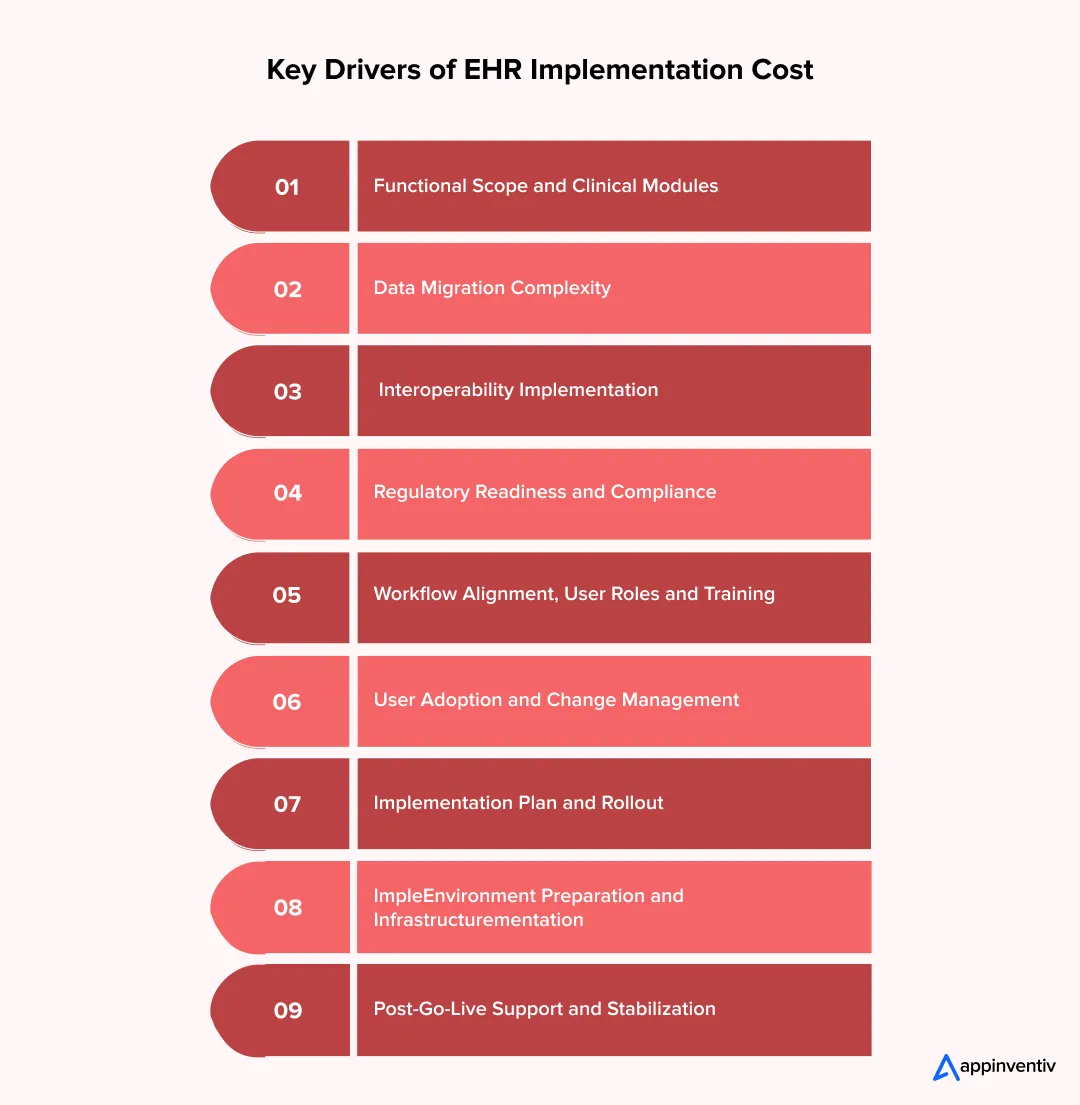
1. Functional Scope and Clinical Modules
Implementation effort depends on how many departments, workflows, and use cases must be configured and stabilized during rollout. Basic functionalities like patient records, appointment booking, and billing comprise the bottom layer, while advanced functionalities like AI-powered EHR add to the costs.
- Basic rollout (patient records, scheduling, billing setup): $20,000 – $50,000
- Mid-level rollout (e-prescriptions, lab connectivity, role-based workflows): $50,000 – $140,000
- Advanced rollout (clinical decision support setup, analytics dashboards, multi-unit workflows): $140,000 – $280,000+
Rework is a typical cost driver in this case. Scope creep during the project can raise the overall cost by 20-40%.
2. Data Migration Complexity
One of the most resource-intensive aspects of implementation is data migration. It is the process of retrieving, cleaning, mapping and authenticating older data and bringing it to a safe level to be utilized in the new system.
- Small data transfer (small records, structured data): $10,000- $25,000.
- Moderate migration (records over a period of multiple years, limited inconsistencies): $25,000 to $60,000.
- Big migration (large, unstructured or uneven data): $60,000 – $120,000+.
Cost is directly affected by data quality. Improperly formatted or incomplete legacy information may increase migration workload by requiring manual correction and verification.
3. Interoperability Implementation
In implementation, systems should be able to share information with labs, pharmacies, insurers, and medical devices. The challenge is in setting up standards-based interfaces, information exchange validation, and consistency among systems.
- Simple interoperability implementation (standard APIs): $5,000 to $15,000 per interface.
- HL7 or FHIR interface implementation and testing: $20,000- $60,000.
- Cross-system data verification and error handling configuration: $10,000 – $30,000.
Delay in integration is typical. Data exchange testing usually results in a cyclic configuration, which raises the cost and time.
4. Regulatory Readiness and Compliance
The system should be implemented in a manner that it is functioning within the healthcare regulatory requirements prior to going live. This involves setting up security controls, audit trails and validation processes.
- HIPAA-compliant configuration and validation: $10,000- $35,000 added.
- Audit log and monitoring set up: $5,000- $15,000.
- Preparation and documentation of certification: $8,000 – $25,000.
Compliance is continuous. It generally represents 15-25% of the overall implementation cost as a result of audit and validation requirements.
5. Workflow Alignment, User Roles and Training
EHR systems should be consistent with actual clinical practices in various user functions. This involves configuring role-specific interfaces and training users to operate within updated workflows.
- Entry-level role design and training: $5,000 – $15,000.
- Department-level workflow alignment and customization: $15,000- $40,000.
- Long Training and Multi-role Onboarding: $20,000- $70,000.
Adoption affects success. Ineffective workflow alignment causes resistance, further training and delays in operations.
6. User Adoption and Change Management
Implementation brings a change of operation within the organization. This transition is especially important to manage in order to prevent a decrease in productivity and the opposition of personnel.
- Simple change management (communication, initial onboarding): $5,000 – $15,000.
- Formatted adoption initiatives (staged adoption, feedback): $15,000 – $35,000.
- Multi-location coordination (enterprise-wide change), continuous support: $35,000 to $80,000 and above.
The greater the user resistance, the higher the cost. The lack of adoption can lead to prolonged support and workflow reconfiguration.
7. Implementation Plan and Rollout
The rollout approach has a direct effect on cost, risk, and time scale. Based on operational preparedness, hospitals can opt to deploy it in phases or go-live.
- Phased rollout (department-wise implementation): Less risky, longer time frame, cost can be distributed.
- Parallel run (both systems operating simultaneously): More expensive since it involves duplication, but has less risk of operation.
- Full go-live (big bang approach): Reduces short-term costs but increases the chances of disruption.
Difficult environments must be rolled out in stages. The parallel operations and pilot phases are expensive, but with less risk of failure during implementation.
8. ImpleEnvironment Preparation and Infrastructurementation
EHR implementation requires preparing production environments and ensuring system stability before go-live.
- Cloud environment setup: $5,000 – $20,000 initial, plus $1,000 – $5,000/month
- On-premise infrastructure installation: $20,000- $80,000 start-up.
- Continuous environmental maintenance and upscale: 15-20% of the implementation cost/year.
Rollout speed is influenced by infrastructure preparedness. Slow setups in the environment may trickle down into testing and deployment schedules.
9. Post-Go-Live Support and Stabilization
Once deployed, systems need to be monitored, issues fixed and adjusted to real-world use. This stage guarantees stability and performance.
- Annual support and stabilization: $10,000 – $50,000+
- Improvements and workflow changes: $5,000- $30,000 per cycle.
- Incident controls and security surveillance: $5,000- $20,000/year.
Pre-existing instability is prevalent. Poorly structured post-go-live support will result in performance problems and compliance risks in the first year.
Hidden Cost of EHR Implementation
The implementation of EHR is commonly budgeted for licensing and initial setup, yet the cost profile extends far beyond these apparent elements. An adequate EHR implementation cost breakdown analysis shows that numerous costs arise during integration, adoption and long-term system maintenance, particularly in a complex healthcare setting.
The reality of EHR systems’ costs is influenced by the cost of operations as much as it is by technology choices.
| Cost Area | What It Involves | Why It Adds up |
|---|---|---|
| Data Migration and Cleansing | Relocation of old patient records, standardization of formats and elimination of duplicates | Low data quality means that it has to be checked and corrected by people repeatedly. |
| System Integration | Linking EHR to labs, billing systems, pharmacies, and third-party applications | Interfaces, API mapping and testing consume more time and money. |
| Workflow Disruption | Clinical and administrative process changes in the course of transition | Short-term loss of productivity and process re-engineering. |
| Training and Adoption | Staff onboarding, role-based training, and ongoing support | Continuous training required due to system updates and staff turnover |
| Customization and Configuration | Tailoring EHR to clinical workflows/reporting requirements | Excessive customization makes maintenance more complex and upgrades more difficult. |
| Compliance and Security | Adherence to HIPAA, GDPR and audit rules and regulations | Recurring cost is associated with monitoring, documentation and security validation. |
| Downtime and Transition Risk | Rollout system outages or performance problems | Affects operations and can necessitate backup infrastructure. |
| Vendor Lock-in and Licensing Changes | Relying on the vendor ecosystem and pricing adjustments | Long-term contracts and upgrade expenses add to the overall cost of ownership. |
Practically, EHR implementation expenses are not restricted to deployment. They go out to integration depth, user adoption and on-going compliance. When organizations budget only on initial costs, there always tends to be a cost overrun when such hidden factors start to emerge.
EHR Cost-Benefit Analysis
The payback period of EHR investments is usually considered over a 3 to 7-year horizon, in which initial expenditures are offset by operational efficiency, readiness to comply, and revenue growth. Implementation costs may vary between $15,000 and $70,000 per provider or $100,000 to $500,000+ in the case of mid-sized hospitals, but the measurable returns will be experienced in the first 12-24 months.
| Area of Cost / Benefit | Typical Range or Impact | Measurable Outcome |
|---|---|---|
| First Implementation Cost | $100,000 – $500,000 + (mid-sized implementation) | This covers licensing, integration, and deployment. |
| Annual Maintenance and licensing | 15-25% of the initial cost | covers updates, support and system maintenance. |
| Administration Cost-cutting | 20-30% reduction | Less paperwork and simplified processes. |
| Billing Efficiency Improvement | 15-25% improvement in claim accuracy | Increased reimbursements, reduced claim denials. |
| Productivity Impact (Year 1) | 10-20% temporary productivity decrease | Learning curve and workflow changes. |
| Productivity Gain (Post Adoption) | Increase of 15-30% | faster documentation and handling of patients. |
| Compliance Cost Avoidance | Variable (may be over $50,000 per year) | Minimized penalties and audit risks. |
| Data Accessibility and Decision Speed | 30-50% quicker accessibility | Better clinical and operational choices. |
The prices of EHR systems do not decrease over time; due to operational efficiencies, the first investment is compensated. This payback is not a simple money payback but a structural payback with increased accuracy of data, better interdepartmental coordination, and enhanced alignment of compliance. Companies with longer-term plans are more likely to have realized greater value from EHR implementation.
EHR Software Development Cost Explained: Scope, Complexity, and Budget
The cost of EHR development is influenced by the level of functionality to be developed, the complexity of the system architecture, and the allocation of the budget in terms of engineering, compliance, and scalability. The overall cost of EHR systems at this stage reflects design depth rather than operational rollout.
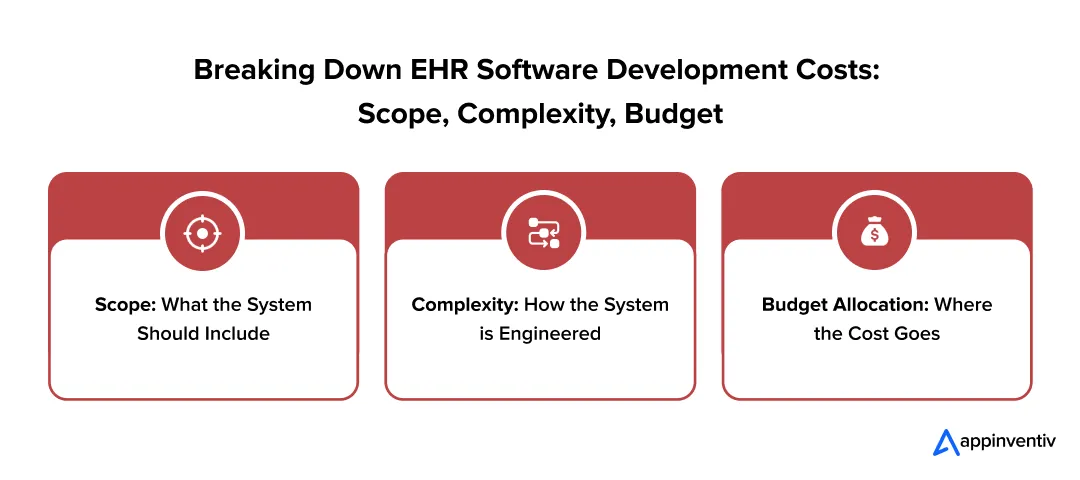
Scope: What the System Should Include
Scope determines the size of features and modules that must be developed. Any additional functionality adds to the development effort, testing cycle and system dependencies, which have a direct impact on the EHR software development cost.
- Key modules (patient records, scheduling, billing): $30,000 to $80,000.
- Increased modules (e-prescriptions, reporting, role-based access): $80,000- $180,000.
- Additional modules (clinical decision support, analytics, patient engagement): $180,000- $400,000+.
Expanded scope brings dependencies between modules. The rework and overhead of integration may add 25-50% to the cost of development due to scope creep.
Complexity: How the System is Engineered
Complexity is how the system manages data, integrations, and performance in real-world conditions. It is a major determinant of the cost of EHR software.
- Low complexity (standalone system, limited integrations): $30,000 – $100,000.
- Moderate complexity (API-driven architecture, multiple integrations): $100,000- $300,000.
- High complexity (FHIR/HL7 interoperability, distributed systems, high availability): $300,000 – $800,000+
The more complex a system is, the more validation, error management, and resilience are required. More intricate systems are more costly and risky because of more intricate testing and development cycles.
Budget Allocation: Where the Cost Goes
Development budgets are allocated at the engineering and compliance levels. This allocation aids in giving an explanation of the cost of electronic health records beyond the superficial estimates.
| Cost Element | Scope of Work | Budget Share |
|---|---|---|
| JavaScript frontends, back-end systems, APIs | Core application development across UI, backend logic, and interfaces | 35% – 45% |
| Architecture & Design | System architecture, data models, scalability planning | 10% – 15% |
| Integration Development | APIs, interoperability layers, third-party systems | 15% – 25% |
| Testing & Quality Assurance | Functional testing, security testing, performance validation | 10% – 15% |
| Security Compliance & Security | Encryption, audit trails, regulatory alignment | 10% – 20% |
Growth is not widespread. Layers of integration and compliance tend to grow larger than the initial estimates, particularly in healthcare systems.
Cost Behavior Across Development Lifecycle
EHR development cost is not linear. The initial architectural choices can impact downstream cost to a large extent and define the average cost of EHR system in the long run.
- Early decisions (architecture, technology stack) have long-term cost implications.
- Middle-range growth (addition of features, integration) accelerates the work.
- Testing, compliance checks, and adding overhead that cannot be eliminated at a late stage.
Such behavior demonstrates the two systems that have close features but may differ significantly in the way of their cost structure significantly.
Practical Budget Ranges by System Type
These ranges reflect development effort only. They do not include the EHR implementation cost, which must be planned separately for deployment, training, and operational alignment.
| System Type | Estimated Development Cost |
|---|---|
| Basic EHR | $30,000 – $80,000 |
| Mid-level EHR | $80,000 – $200,000 |
| Advanced EHR | $200,000 – $500,000+ |
| Enterprise EHR | $500,000 – $1M+ |
How to Optimize EHR Development Costs Without Compromising Quality
Optimizing EHR costs is important because healthcare organizations operate under tight regulatory, operational, and financial constraints where overspending can directly impact care delivery budgets. Here’s how you can optimize your EHR development costs:
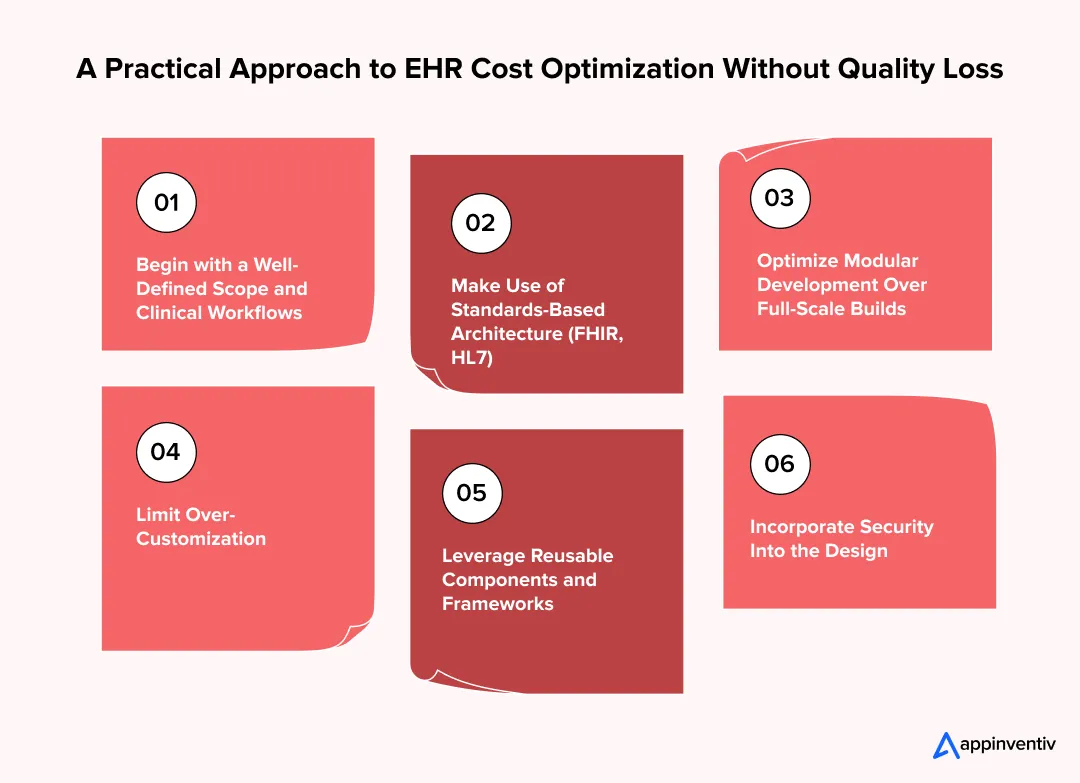
Begin with a Well-Defined Scope and Clinical Workflows
Clarity of scope will ensure that the cost of EHR systems is contained, as it eliminates unnecessary feature expansion. Early mapping of real clinical workflows minimizes rework, minimizes change requests, and aligns development effort with real hospital workflows.
Make Use of Standards-Based Architecture (FHIR, HL7)
The use of interoperability standards like HL7 and FHIR can be used to control the cost of electronic health records with a decrease in the effort of custom integration. It makes it easier to connect with labs, pharmacies, and third-party systems without having to redevelop when scaling.
Optimize Modular Development Over Full-Scale Builds
A gradual process can be used to manage the cost of implementing EHR in hospital settings. The deployment of core modules can occur initially and be expanded over time, minimizing initial investment and large-scale rework.
Limit Over-Customization
High customization increases EHR software development costs due to the complexity of development, testing and upgrades. Maintaining configurations ensures that there is long-term maintainability without affecting usability.
Leverage Reusable Components and Frameworks
Using proven modules for authentication, audit logs, and data handling reduces the cost of EHR software. It reduces development time and improves reliability by preventing unnecessary redevelopment of standard parts.
Incorporate Security Into the Design
It is recommended to include encryption, access control and audit mechanisms at an early stage to contain the cost of EHR systems by avoiding costly fixes in the future. Early security integration also facilitates compliance and minimizes long-term risk exposure.
We help you align decisions with real usage to avoid budget drift.

Building an EHR System: Step-by-Step Development Framework
An EHR system is a complex project that needs a systematic approach to maintain a balance between clinical, compliance, and long-term scalability. It is not merely a software build. It is a system that is obliged to process sensitive patient information, be integrated with several healthcare systems, and help to make real-time decisions.
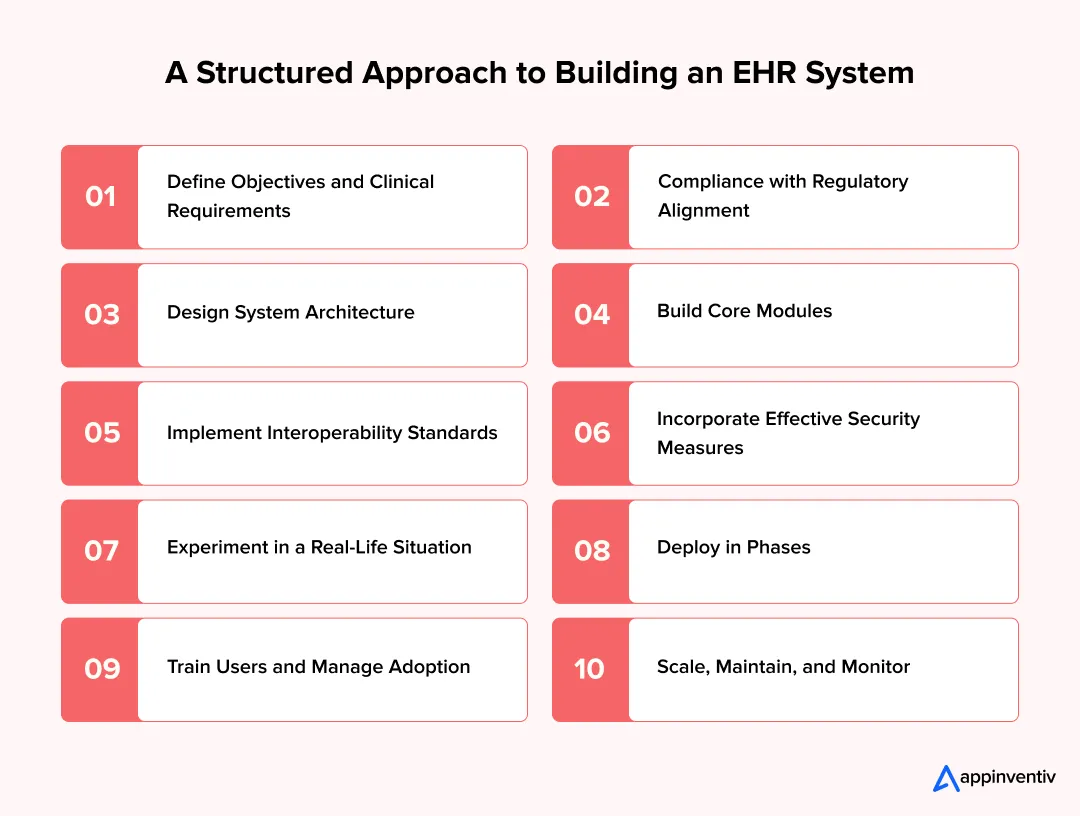
Define Objectives and Clinical Requirements: Begin by finding out the basic modules, including patient records, appointment management, billing, e-prescriptions, and reporting. Document real clinical processes, roles of users and data flow among departments to prevent misalignment in future.
Compliance with Regulatory Alignment: EHR systems should be based on standards like HIPAA, GDPR, HL7 and FHIR. Early in the design, define the data privacy, audit logging, encryption standards, and access control policies.
Design System Architecture: Select cloud-based, on-premise, or hybrid deployment. Deploy an interoperable, scalable, and secure data transfer modular architecture. The API first design assists in integrating labs, pharmacies and other third-party tools.
Build Core Modules: Create fundamental elements, such as patient data management, clinical documentation, scheduling, billing systems, and analytics dashboards. Make the UI simple and workflow-based to mitigate clinician fatigue.
Implement Interoperability Standards: HL7 and FHIR protocols to make data exchange between healthcare systems seamless. This minimizes integration complexity and enhances long-term flexibility.
Incorporate Effective Security Measures: Add role-based access control, multi-factor authentication, encryption (at rest and in transit), and audit trails. The system should be designed to be secure rather than be retrofitted with security.
Experiment in a Real-Life Situation: Perform functional testing, integration testing, security testing and compliance validation. Recreate actual clinical workflows in order to detect usability and performance gaps.
Deploy in Phases: Implement the system in stages, with a small number of users/departments. This minimizes interference and enables limited feedback prior to full implementation.
Train Users and Manage Adoption: Train doctors, nurses, and other administrative staff by role. Constant encouragement would be essential to make it adopted and minimize friction in the operations.
Scale, Maintain, and Monitor: Monitor system performance, security logs, and user behavior post-deployment. Anticipate updates, scaling, and integration increases as the organization expands.
Begin Your EHR Implementation Journey with Appinventiv
The development and implementation of EHR is a guided endeavor with regard to clinical alignment, data governance and operational preparedness. Costs vary widely based on scope, system complexity, interoperability requirements, and the scale of deployment within healthcare environments.
What looks like a technology program is, in reality, an organized change in the way care delivery is documented, retrieved and handled within departments. As a trusted EHR integration company, Appinventiv focuses on structured architecture, compliance alignment, data management, and user adoption, all of which play a critical role in controlling cost and reducing risk.
At Appinventiv, we have worked on healthcare-led digital ecosystems, where we develop scalable user-centric solutions that can work in real-life environments. These platforms are Health-e-People, Soniphi, DiabeticU, YouCOMM, which target various aspects of patient experience, wellness monitoring, diagnostics, and access to care.
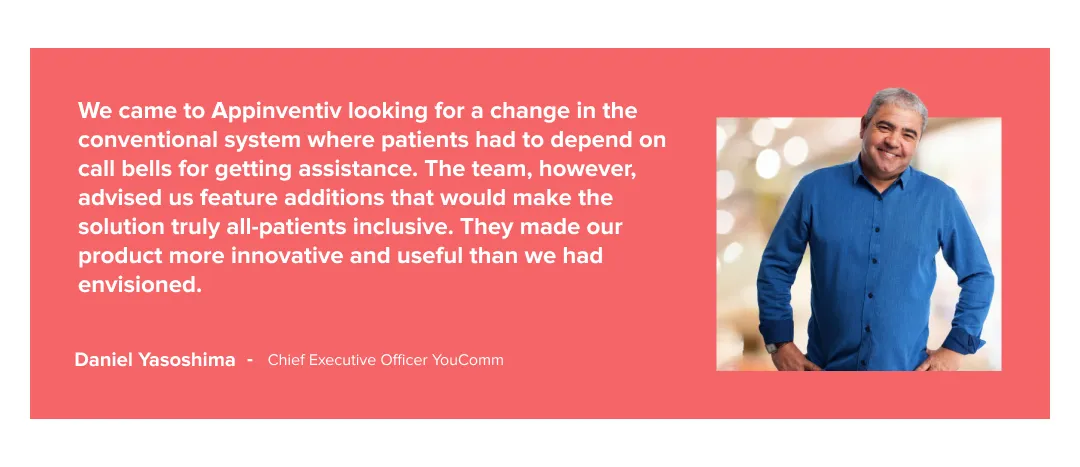
These projects are indicative of how technology can be designed to assist complex healthcare processes without undermining the user experience or dependability.
Its implementation requires the alignment of technical choices with clinical processes and long-term maintainability.
Companies investing in EHR software development services are more likely to realize stability and scale adoption. Having a clear understanding of cost drivers allows one to set realistic expectations and prevent fragmentation when implementing them.
It is high time to put your EHR vision into planning and execution. Connect with a software integration company like ours to align your system with clinical workflows, manage implementation costs, and ensure a stable, scalable rollout.
FAQs
Q. How much does an EHR system cost?
A. The cost of EHR systems depends on the scope, complexity and model of their deployment. Simple systems can begin at the lower ranges, but enterprise-grade systems with interoperability and analytics can go much higher.
The ultimate pricing will be greatly affected by factors like data migration, customization, compliance and integration depth and therefore each EHR project will be one of its own in its budget structure.
Q. How much does it cost to implement an EHR system?
A. The average cost of EHR implementation will be subject to the complexity of the process of rollout to departments, data environment and clinical workflow. The configuration, data migration, staff training and system testing are usually included as expenses prior to go-live.
Multi-site deployment, interoperability setup, and long-term support in stabilization phases following the launch are more likely to be expensive in larger healthcare organizations.
Q. How long does it take to see ROI on EHR investment?
A. The EHR implementation timeline for ROI realization typically ranges between 12 to 36 months. Small practices can get back on their feet sooner because they can be adopted more quickly, whereas bigger hospital systems require more time because of the gradual rollout, training, and workflow stabilization. Efficiency and decreased administrative workload, plus enhanced accuracy of billing, all lead to incremental returns.
Q. What are some of the top EHR pricing models?
A. Here are some of the major EHR pricing models:
- Subscription-based model – Each user or facility pays a monthly or annual fee.
- Per-provider pricing – Price per a particular number of clinicians using the system.
- Enterprise licensing model – Bulk or one-time licensing of large hospitals.
- Usage-based rate – Rate charged on the basis of transactions or system usage.
Q. How do I evaluate the cost-benefit analysis of EHR implementation?
A. Here’s how you can evaluate the cost-benefit analysis of EHR implementation:
- Determine total EHR implementation cost (deployment, training, and migration).
- Compare operational savings of less paperwork and more efficiency.
- Calculate revenue impact due to quicker billing and reduced mistakes in claims.
- Measure long-term benefits of compliance and less exposure to risks.
- Assess the ROI schedule in terms of adoption rate and workflow enhancements.


Fast 2-minute response, fully NDA-protected.

Wearable Data Integration: Connecting Multiple Devices to a Unified Health Platform
Key takeaways: Device support should reflect the measurements your service needs, the people using it, and the decisions those readings inform. A unified health data platform must preserve source, timing, and measurement context while resolving duplicate records. Phone health platforms, manufacturer APIs, and direct device connections serve different integration needs. Clinical workflows require agreed review…

Sleep Tracker App Development: Features, Wearable Integration, AI, and Compliance
Key takeaways: Sleep tracking presents opportunities across consumer wellness, fitness, healthcare, employee wellness, senior care, and infant-care markets. Successful products combine actionable insights, wearable connectivity, user-friendly reports, privacy controls, and clearly differentiated experiences. HealthKit, Health Connect, and direct device APIs provide different data depths, costs, limitations, and maintenance requirements. AI supports sleep-stage estimation and personalization,…

Diet and Nutrition App Development: Process, Features, Cost, and Technology Stack
Key Takeaways Diet and nutrition tracking app development goes past basic calorie counters with verified food databases, custom meal schedules, AI tools, wearable device links, and corporate manager tools. Structure database models around raw food items, serving portions, nutrient facts, recipes, software links, and regional diet rules. Pair computer vision models, recommendation algorithms, language engines,…