





























How Much Does It Cost to Build a Fashion Marketplace App Like Depop in the UK?

- What Is Depop and Why It Is Popular in the UK
- The UK Market Opportunity for Fashion Marketplace Apps
- Cost to Build a Fashion Marketplace App Like Depop in the UK
- Detailed Cost Breakdown
- Factors That Affect the Development Cost in the UK
- Hidden Costs To Consider In The UK While Launching Your App Like Depop
- Ways to Optimise App Development Costs in the UK
- How to Build a Depop-Like Marketplace App in the UK
- How to Build a Marketplace Better Than Depop
- Revenue Model for a Depop-Like Fashion Marketplace
- Why Partner With Appinventiv
- FAQ

- A Depop-style fashion marketplace in the UK usually costs £32,000 to £320,000, depending on how simple or advanced you want the app to be.
- The UK’s resale-fashion scene is growing quickly, so demand for social, pre-loved fashion apps is only going up.
- Costs increase when you add things like AI recommendations, logistics integrations, stronger search, or UK GDPR compliance.
- Starting with an MVP, keeping features focused, and using cross-platform development can help keep the budget under control.
- Most projects take three to nine months to build from idea to launch, depending on the scope and complexity.
As sustainability becomes more mainstream and resale becomes part of everyday shopping, the second-hand fashion market in Europe, including the UK, is on track for serious growth over the next decade. Future Market Insights projects the European second-hand apparel segment to expand from $18.6 billion in 2025 to roughly $39.1 billion by 2035. The shift isn’t just a trend. It reflects how shoppers, especially younger audiences, now prefer unique pieces over fast-fashion cycles.
For UK entrepreneurs, this creates a clear opportunity. The demand for easy-to-use, localised resale apps is rising, and people are increasingly open to exploring apps similar to Depop. Building a modern resale platform also comes with the broader benefits of building a fashion marketplace app in the UK, where sustainability, budget-conscious choices, and digital-first shopping habits blend naturally.
This brings us to the practical question every founder faces: what is the cost to build a fashion marketplace app like Depop, and how does the fashion marketplace app development cost in the UK change based on features, compliance, and scale? These factors matter even more if you are planning a socially driven concept like Depop — one that blends discovery, community, and resale — or exploring the fashion resale app development cost in the UK for a wider European rollout.
In this guide, we break down what influences Depop like app development cost in the UK, how pricing changes across complexity levels, and where considerations like design, payments, and compliance enter the picture. We also outline how founders can approach fashion marketplace app development monetization strategies, what it takes to build an AI-powered fashion marketplace app, and what to expect if you want to scale beyond the UK.
By the end, you’ll have a realistic understanding of the cost of building a modern resale marketplace and whether this is the right time to step into the growing C2C fashion segment.
Let’s build a marketplace that speaks to them.
What Is Depop and Why It Is Popular in the UK
Depop is often described as a mix between a marketplace and a social platform, which is why users treat it more like a peer-to-peer social shopping app than a traditional retail store. The experience feels familiar, closer to Instagram than classic ecommerce, and that social element is a big part of why it grew so quickly among UK Gen Z users.
For anyone exploring UK-based fashion C2C app development, Depop shows what works well in this market. The community-first approach, easy listing tools, and focus on individuality match the way British shoppers already browse for pre-loved clothing. It also highlights some of the common challenges with developing a social shopping app, like ensuring moderated content, handling high image volume, and keeping buyer–seller interactions safe.
Why Depop stands out in the UK
- Strong alignment with the UK’s growing circular-fashion culture
- A social shopping feed that feels lively and expressive
- Simple tools that help everyday sellers list items quickly
- A steady flow of vintage, Y2K, and niche fashion categories
- Lower-cost alternatives during the UK cost-of-living squeeze
Depop’s market footprint
Depop began in the UK before expanding globally, and a large share of its active community still comes from here and the wider European region. The app has a constantly updating feed of items, trends, and micro-styles created by users. It also paved the way for apps similar to Depop across Europe, influencing how newer marketplaces position themselves.
Key features that define Depop
- A social, scrollable style feed
- Seller storefronts
- Fast messaging tools
- In-app payments and payouts
- Ratings and reviews
- Trend-based categories
These features make Depop a useful reference point for anyone planning to develop an e-commerce app similar to Depop or exploring the cost of developing a C2C marketplace app for the UK. Many new ideas now layer AI to improve recommendations or pricing, which explains why the latest wave of platforms often evolves into some form of AI-powered fashion marketplace app.
The UK Market Opportunity for Fashion Marketplace Apps
The resale-fashion movement in the UK has grown quietly but steadily over the last few years. What began as a niche segment used mostly by students and vintage collectors is now part of mainstream shopping habits. You see it in London’s weekend markets, in student towns, and in the way people casually talk about buying pre-loved items online. This shift explains why so many founders are exploring UK-based fashion C2C app development today.
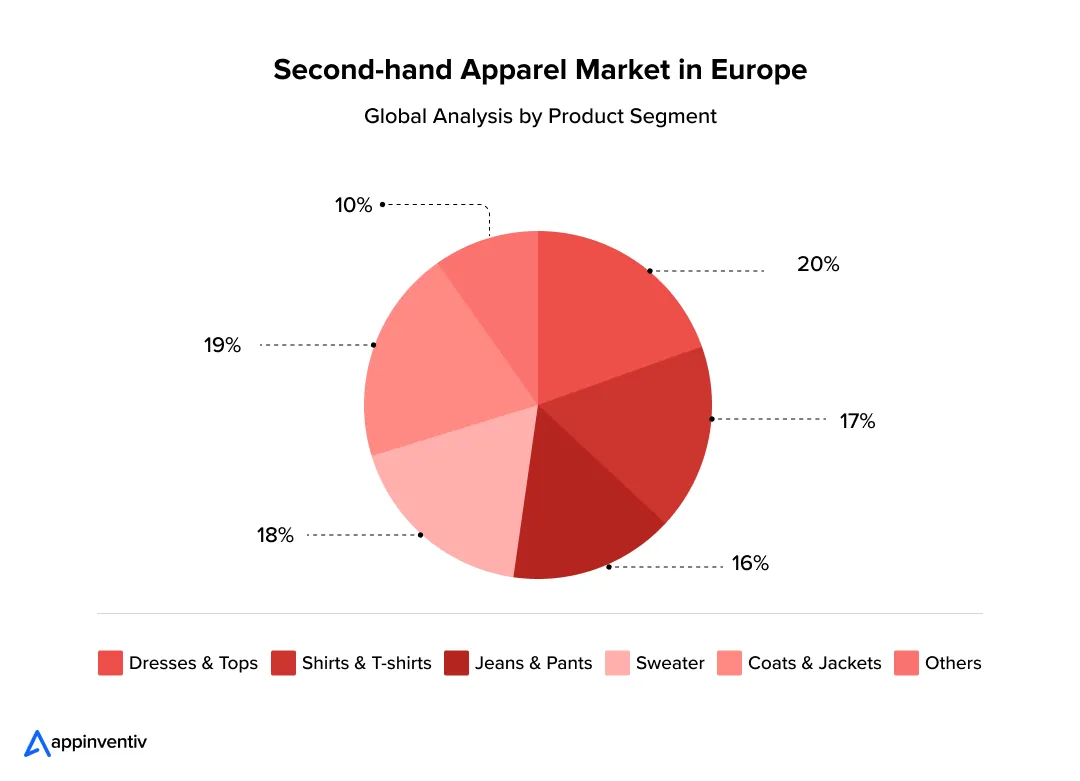
Future Market Insights highlights that women’s second-hand clothing contributes more than half of Europe’s resale volume, with dresses and tops alone making up nearly 20 percent of purchases. That means demand is both consistent and diverse, which is exactly the kind of environment where modern resale platforms thrive. For developers and businesses interested in developing a social e-commerce app like Depop for the European market, this trend signals a long-term opportunity rather than a short-lived rise.
Why this creates room for new fashion-marketplace apps
The reasons behind this growth are practical and tied to everyday behaviour — which is what makes the opportunity stable.
- Shoppers want affordable options as living costs continue to rise
- Gen Z actively prefers unique, expressive fashion rather than mass-made items
- Many individuals treat resale as a part-time income stream
- Sustainability plays a bigger role in purchase decisions every year
- Social content influences shopping, helping pre-loved items trend quickly
For founders doing early planning, this context also helps estimate the fashion resale app development cost in the UK, because user expectations shape feature depth, design complexity, and moderation needs. The more social and personalised the experience, the higher the cost. That is one reason the Cost of developing a C2C marketplace app varies so widely in the UK.
A ready audience across UK cities
Cities like London, Manchester, Bristol, Leeds, and Glasgow already have active resale communities. Local thrift events, independent sellers, and youth-driven fashion circles keep the ecosystem moving year-round. For anyone planning to make a Depop-Like Fashion App in the UK, this distribution of active users makes the UK one of the easiest markets to enter with a focused, modern resale experience.
Also Read: How Much Does It Cost To Develop An App In Australia?
Cost to Build a Fashion Marketplace App Like Depop in the UK
The first thing most founders want to know is the ballpark range. The cost to build a fashion marketplace app like Depop is not a single figure, because UK builds vary widely based on feature depth, complexity, personalisation, and how social the experience needs to be. But most fully scoped projects in the UK land somewhere between £32,000 ($42,000) and £320,000 ($420,000), covering everything from a basic resale platform to a high-performance, AI-enabled marketplace.
Understanding the fashion marketplace app development cost in the UK becomes much easier when you break the budget into layers. Visual design, backend architecture, compliance, payments, and seller features all shape the final number. Many cost variations also come from whether you’re building a simple resale tool or something closer to Depop’s community-first model, placing you in the middle of the Depop like app development cost UK range.
The estimates below reflect typical budgets that UK startups, fashion founders, and European retail brands allocate when they make a Depop-Like Fashion App in the UK or explore the fashion resale app development cost in the UK for cross-border expansion. They also help clarify the Factors Affecting the Cost of building an app like depop, which matter early in planning.
Marketplace Types and Their Cost Range
Before diving into each cost item, it helps to understand the broader categories. There are four common marketplace types, each sitting at a different level of complexity. This gives you a quick way to understand where your idea fits and what level of investment makes sense.
| Marketplace Type | What It Includes | Estimated Cost (GBP) |
|---|---|---|
| Basic marketplace | Simple UX, essential listings, basic search, simple profiles, payments | £32,000 to £65,000 ($42,000 to $85,000) |
| Mid complexity marketplace | Better discovery, reviews, messaging, seller storefronts, shipping logic | £65,000 to £140,000 ($85,000 to $185,000) |
| Advanced marketplace (AI personalisation) | AI recommendations, dynamic pricing, fraud checks, creator tools | £140,000 to £220,000 ($185,00 to $290,000) |
| Enterprise marketplace | Custom backend, multi-region setup, large-scale traffic, deep integrations | £220,000 to £320,000 ($290,000 to $420,000) |
This pricing structure also offers a realistic view of the cost of developing a C2C marketplace app, because each level changes how big the development team needs to be and how long the project takes.
Detailed Cost Breakdown
This part of the guide explains exactly how the pricing is formed. Whether you’re estimating the cost to build a fashion marketplace app like Depop or comparing options for UK-based fashion C2C app development, understanding each layer helps avoid guesswork. Marketplace apps are built in modules, and each module influences the overall fashion marketplace app development cost in the UK.
Cost by App Complexity
Complexity has the biggest influence on the final budget. Even small changes to search logic, personalisation, or social behaviour can move the app to a higher bracket. This is especially true if you’re building a peer-to-peer social shopping app with live content, seller activity, and user interactions happening constantly.
Below is a clearer view of what each complexity level includes.
Basic App Complexity
A basic marketplace is usually the first choice for founders who want to validate the idea quickly. It delivers essential marketplace flows without layered personalisation. It also helps reduce the cost of developing a C2C marketplace app for early-stage teams.
| Includes | Examples |
|---|---|
| Simple user accounts | Email or phone-based sign up |
| Basic listing flow | Upload item, add price, description |
| Basic search | Category-based or keyword |
| Simple payments | Stripe or PayPal |
| Basic reviews | Seller ratings |
Cost: £32,000 to £65,000 ($42,000 to $85,000)
Mid Range App Complexity
Mid-range apps feel closer to Depop. The UI is cleaner, discovery improves, and sellers get better tools. This level is often where founders aim when planning Depop like app development costs UK for a competitive user experience.
| Includes | Examples |
|---|---|
| Advanced filters | Size, style, brand, condition |
| Seller storefronts | Profiles showcasing inventory |
| Messaging | Buyer-seller chat |
| Shipping rules | Integrated shipping partners |
| Cleaner UI and UX | Polished flows, better visual layouts |
Cost: £65,000 to £140,000 ($85,000 to $185,000)
Advanced App Complexity
Advanced apps introduce intelligent features and community-focused behaviour. This is where the platform begins to take shape as an AI-powered fashion marketplace app, improving recommendations, pricing, and content quality. It also requires a stronger backend and more specialised skills.
| Includes | Examples |
|---|---|
| AI recommendations | Suggesting styles and products |
| Fraud detection | Detecting suspicious buyers or sellers |
| Social feed | Instagram-style discovery |
| Dynamic pricing | AI-driven market pricing guidance |
| Creator tools | Better listing tools and analytics |
Cost: £220,000 to £320,000 ($290,000 to $420,000)
Cost by Development Stages
Every marketplace is built in several stages. Each stage influences the fashion marketplace app development cost in the UK, depending on depth and team size. Information mentioned below helps founders understand where most of the investment goes.
- Planning and Discovery: This is where the product vision becomes clear. Teams map out user journeys, define feature priority, and ensure compliance with UK laws such as UK GDPR and the EU Data Protection Act. Cost: £3,000 to £10,000 ($4,000 to $13208)
- UI and UX Design: Design plays a major role in marketplaces. UK shoppers expect smooth, visually clean interfaces. This stage includes wireframes, visual design, UX flows, and design system creation. Cost: £6,000 to £40,000 ($7,925 to $52,835)
- Full Development: Most of the budget goes here. Developers build the frontend, backend, APIs, payment system, search logic, database structure, and admin dashboard. Complex marketplace logic and integrations increase cost sharply. Cost: £15,000 to £180,000 ($19,000 to $240,000)
- Testing and QA: Testing ensures the app works on different devices, screen sizes, and OS versions. It also includes security testing, performance checks, and bug fixing. Cost: £3,000 to £25,000 ($4,000 to $33,000)
- App Launch: This includes preparing the final build, setting up app store listings, meeting store guidelines, and monitoring the first week of live usage. Cost: £1,000 to £5,000 ($1,300 to $6,600)
- Maintenance: Marketplace apps require continuous updates, server monitoring, fraud control, and new feature releases. Cost: £1,500 to £15,000 ($1,900 to 19,000) per month
Estimate Formula
A straightforward way for founders to create a rough budget is using this formula. It simplifies cost planning and shows how the number of features influences development.
Total Cost = (Features × Complexity) + Development Hours + Team Rate + Compliance Cost
This formula works well because marketplace apps contain multiple moving parts, from seller tools to admin flows to discovery modules. It also helps in early planning of the technology stack to develop a fashion marketplace app like Depop, since backend choices affect cost directly.
We offer full-stack marketplace development services tailored for the UK and EU.
Factors That Affect the Development Cost in the UK
The final fashion marketplace app development cost in the UK depends on far more than the initial feature list. When founders begin planning the cost to build a fashion marketplace app like Depop, they usually realise that marketplace apps behave differently from standard ecommerce apps. They carry social features, real-time actions, and a higher volume of user-generated content. Below are the factors that make the biggest difference in cost, especially for a peer-to-peer social shopping app built for the UK market.
Complexity of Design
A marketplace is essentially a visual shopping experience, so design quality matters. Clean layouts, easy flows, and a visually engaging product feed require more design time. Simple designs cost less, but platforms with a social feel, animations, or interactive elements naturally move into a higher budget range.
Key design variables that affect cost:
- Depth of UX planning
- Number of custom screens
- Use of animations or micro-interactions
- Brand-specific visuals and design systems
- Desktop and tablet versions (if included)
Complexity of Backend Development
The backend carries most of the operational weight. Search, recommendations, payments, messaging, and listing management all sit here. When building something closer to an AI-powered fashion marketplace app, the backend becomes more complex. This is also where many challenges with developing a social shopping app appear, because the system must stay fast even as user activity increases.
What drives backend cost up:
- Real-time chat
- Advanced search and filtering
- Inventory management logic
- Recommendation systems
- Custom analytics for sellers
- Multi-region support for scaling across the UK and EU
Third-Party Integrations
Marketplace apps rely on several third-party services to function smoothly. Integrating each API takes time, testing, and in some cases, licensing fees. The more integrations you add, the more effort the development team must invest.
Common integrations include:
- Payment gateways such as Stripe, PayPal, Klarna, Clearpay
- Shipping and logistics APIs
- Push notifications services
- Social login providers
- Analytics tools for tracking user behaviour
Security Measures
Fashion marketplaces handle payments, user details, and often location information. This makes strong security essential. Implementing secure authentication, encrypted data storage, and fraud detection mechanisms adds to development cost, but it is non-negotiable in the UK market.
Typical security layers include:
- Two-step authentication
- Encrypted database storage
- Role-based access
- Fraud and abuse monitoring
- Bot detection
- Secure payment flows
Compliance Requirements in the UK
Compliance influences both design and development. UK marketplace apps must follow rules related to data privacy, user protection, and platform safety. Meeting compliance requirements takes time but prevents legal issues later.
Common UK and EU compliance points:
- UK GDPR
- Data Protection Act 2018
- Age-appropriate design code (for apps used by younger audiences)
- PCI DSS (for payment handling)
- PSD2 and Strong Customer Authentication
- Platform accessibility under the Equality Act
Ignoring compliance early often leads to costly fixes later.
Platform Selection (iOS, Android, Web)
Building for a single platform costs less. Adding iOS, Android, and Web multiplies the effort. UK audiences use a mix of iPhones and Android devices, so most businesses eventually choose cross-platform development or separate native apps.
| Platform | Impact on Cost | Notes |
|---|---|---|
| iOS only | Lower cost | Faster development, popular among UK users |
| Android only | Lower cost | Wider EU audience reach |
| Both iOS and Android | Medium to high | Doubles testing and feature adjustments |
| Web + Mobile | High | Needed for desktop sellers and admin teams |
Technologies Used
The tech stack you choose affects complexity, performance, and future scalability. AI-powered features and advanced recommendation engines take more development hours and also require cloud usage, which raises operational costs.
Areas that influence cost:
- AI algorithms for personalisation
- Advanced search engines
- Real-time analytics dashboards
- Cloud infrastructure (AWS UK region, Azure UK South)
- Microservices architecture for large-scale marketplaces
Feature Depth and Scope
The number of features and how detailed each one becomes is one of the biggest cost drivers. A basic listing flow takes only a few days to build, while an AI-powered social feed may take several weeks.
Feature categories that affect cost the most:
- Onboarding flows
- Listing creation tools
- Search and smart filters
- Feed and discovery
- Messaging or negotiation tools
- Payment and payout logic
- Seller dashboards
- Admin dashboard
- AI personalisation
The deeper each feature goes, the higher the cost.
Hidden Costs To Consider In The UK While Launching Your App Like Depop
When a marketplace app goes live, the spending does not stop. In reality, this is when new expenses begin to show up, especially for founders handling UK-based fashion C2C app development for the first time. These costs are not always large individually, but together they influence the total fashion resale app development cost in the UK over the long run. If you are planning the full cost to build a fashion marketplace app like Depop, it helps to keep these in mind early so nothing catches you by surprise.
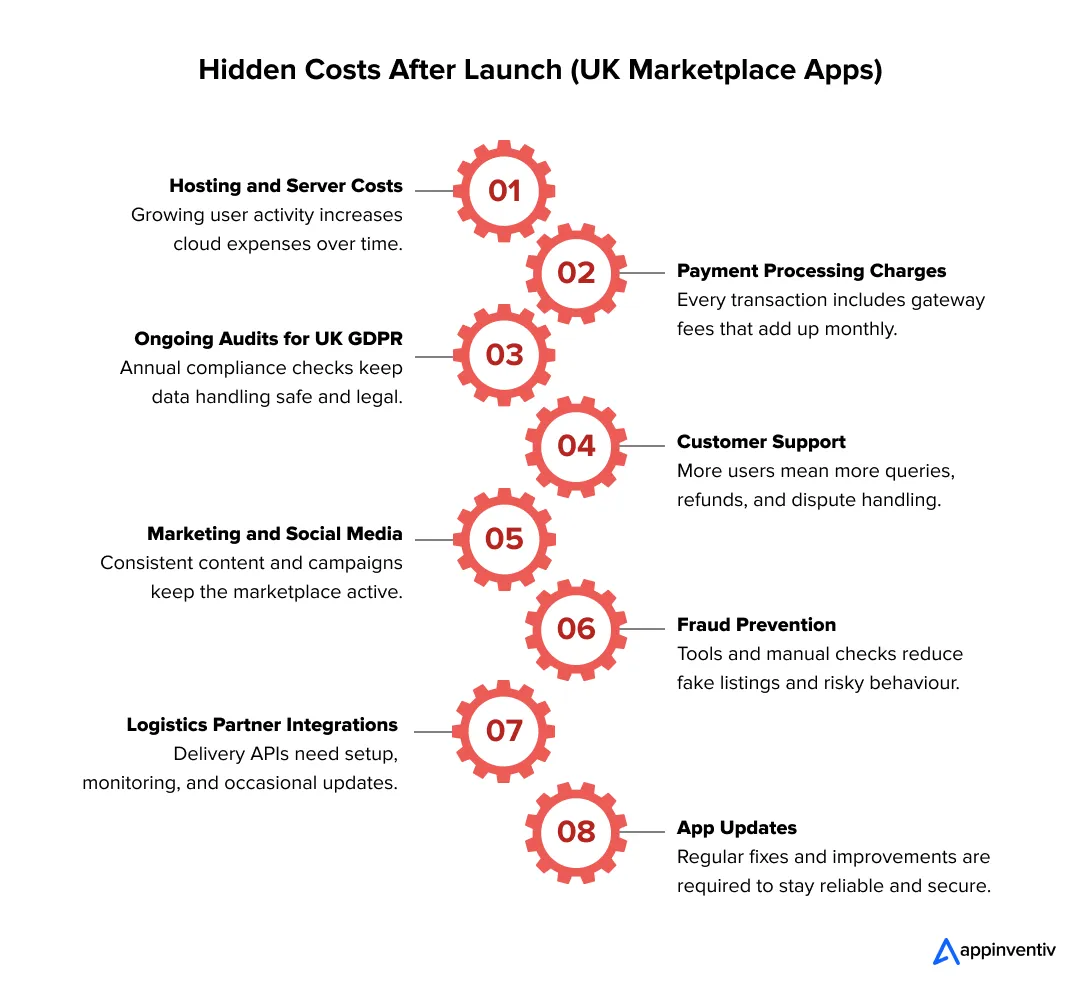
Hosting and Server Costs
Every click, message, and product photo sits on a server somewhere. As more people join the platform, those servers need to scale. The cost isn’t huge at the start, but it grows with activity. Most UK teams use AWS or Azure because they offer local regions with better speed for UK shoppers.
Monthly spending often sits somewhere between £600 and £3,500 ($800 to $4,600), depending on traffic patterns.
Payment Processing Charges
Once buyers start placing orders, each transaction carries a small fee. Stripe, PayPal, Klarna and other UK providers all take their cut. It is easy to ignore these charges early on, but once the platform becomes active, you will notice the total increasing month by month.
The usual rate is around 1.5 percent to 2.9 percent plus a fixed fee.
- Ongoing Audits for UK GDPR
Data rules in the UK are strict, and regular checks help keep everything compliant. These audits cover how user data is stored, who has access to it, and whether your platform is following the right processes. They are not optional if you want to avoid problems later.
Most audits fall in the £2,000 to £15,000 ($2,600 to $19,000) range each year.
- Customer Support
Marketplaces work only when people feel they will get help if things go wrong. Buyers may have questions about deliveries, and sellers may need support with payments or listings. A small team can handle this at the beginning, but as the platform grows, support becomes a full-time function.
Monthly cost usually starts around £1,500 ($1,900) and increases with the size of the user base.
- Marketing and Social Media
A fashion marketplace depends on movement. New listings, new sellers, style content, and community activity are what keep buyers coming back. This means social media posts, collaborations, ads, and regular campaigns. Without consistent marketing, growth slows down quickly.
Most teams set aside £2,000 to £20,000 ($2,600 to $26,000) per month, depending on how aggressively they want to grow.
- Fraud Prevention
Unfortunately, fraud is part of running any marketplace. Fake listings, suspicious accounts, and unusual payment behaviour appear sooner or later. Preventing these issues requires tools, manual checks, or both. It is an ongoing effort, not a one-time setup.
Expect monthly costs somewhere between £300 and £4,000 ($396 to $5,200).
- Logistics Partner Integrations
If your app relies on integrated shipping, there will be costs attached to those partnerships. Royal Mail, Evri, DPD, and DHL each have different rules and pricing. Integrations need setup at the start and occasional maintenance later on.
This can range from £800 to £5,000 ($1,056 to $6,600), depending on the complexity.
- App Updates
Apps do not sit still. Operating systems update, libraries change, and sometimes the market simply expects new features. Even without major redesigns, you will need to push updates to keep things smooth and secure.
Most teams budget £1,500 to £10,000 ($1,900 to $13,200)per month for ongoing updates and fixes.
Ways to Optimise App Development Costs in the UK
Building a marketplace like Depop does not always require the highest possible budget. A lot depends on the approach you take in the early stages. Many UK founders keep their spending under control by focusing on essentials first and introducing complexity only when the market validates it. The ideas below come from what teams commonly use to manage cost without compromising quality.
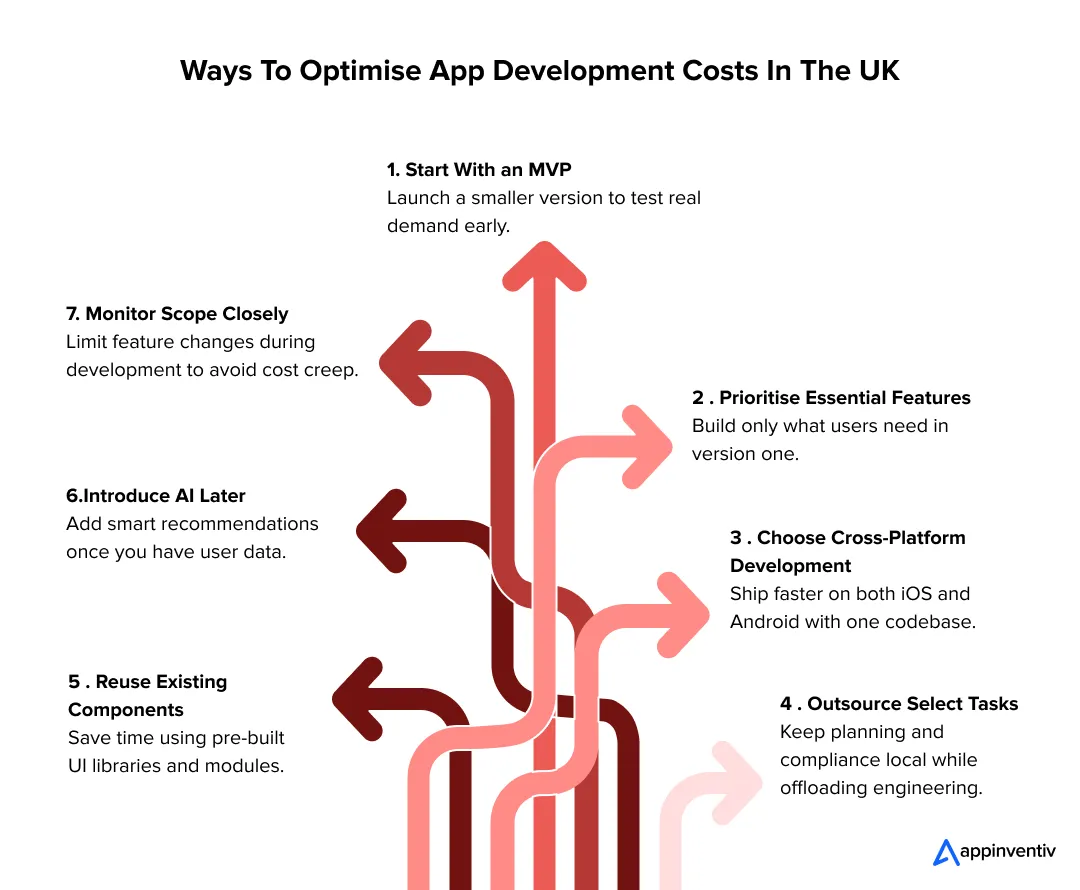 Start With an MVP
The easiest way to avoid overspending is to launch a smaller version first. An MVP helps you test demand, understand user behaviour, and learn what buyers and sellers actually want instead of assuming upfront.
What an MVP usually includes:
- Basic listing flow
- Simple search
- Essential payments
- Basic user profiles
- Minimal admin controls
Once the app gets traction, you can expand.
Prioritise the Most Important Features
Not all features pay off equally. Some take a lot of time to build but add very little value in the early months. By keeping your first release focused, you allow development to stay quick and affordable.
Useful early priorities:
- Smooth onboarding
- Clean listing creation
- Reliable search
- Core marketplace logic
- Seller dashboards
You can introduce advanced elements later based on demand.
Choose a Cross-Platform Approach
Building separately for iOS and Android doubles effort. Cross-platform frameworks like React Native or Flutter can cut development time, especially for early releases where extreme customisation is not required.
Good for:
- Faster time to market
- Lower development hours
- Easier updates across both platforms
Cross-platform is a popular choice for early-stage UK marketplaces.
Outsource Select Parts of Development
Many UK companies choose a hybrid model where strategy, UX, or compliance are handled locally while development is supported by offshore teams. This keeps costs balanced without losing visibility or control over the project.
Benefits:
- Lower hourly rates
- Access to larger engineering teams
- Faster parallel development
A mix of UK project oversight and offshore engineering often works well.
Reuse Existing Components
You do not need to create every UI element or feature from scratch. Using pre-built UI libraries, templates, or third-party modules helps speed up delivery and reduce costs.
Common areas to reuse:
- Login screens
- Product cards
- Filters
- Basic chat modules
- Notification systems
This also means fewer bugs because these components are already battle-tested.
Introduce AI Later
AI features in fashion like personalized feeds, smart pricing, or fraud detection are revolutionizing the fashion industry, however they can be expensive to add at the start. Instead of launching with a full AI engine, many apps begin with simpler logic and upgrade when the user base grows.
Early alternatives:
- Basic sorting
- Trending items
- Manual curation
- Keyword-driven recommendations
You can add AI once you have enough user data to train meaningful models.
Monitor Scope Closely
Marketplace apps tend to grow quickly in complexity. It is easy to add new requirements as the idea evolves, which increases both cost and timeline. Keeping a controlled scope during the first few releases helps avoid unnecessary spending.
How to manage scope:
- Set feature limits per release
- Document every change request
- Review priorities monthly
- Freeze scope before development cycles begin
Also Read: How Much Does it Cost to Build an eCommerce App?
How to Build a Depop-Like Marketplace App in the UK
Building a fashion marketplace is not just about writing code. It is a structured process that moves from understanding your users to shaping the product, testing it, and keeping it stable after launch. The steps below outline how most UK-based marketplace projects come together. They help founders see the full journey before committing to development.
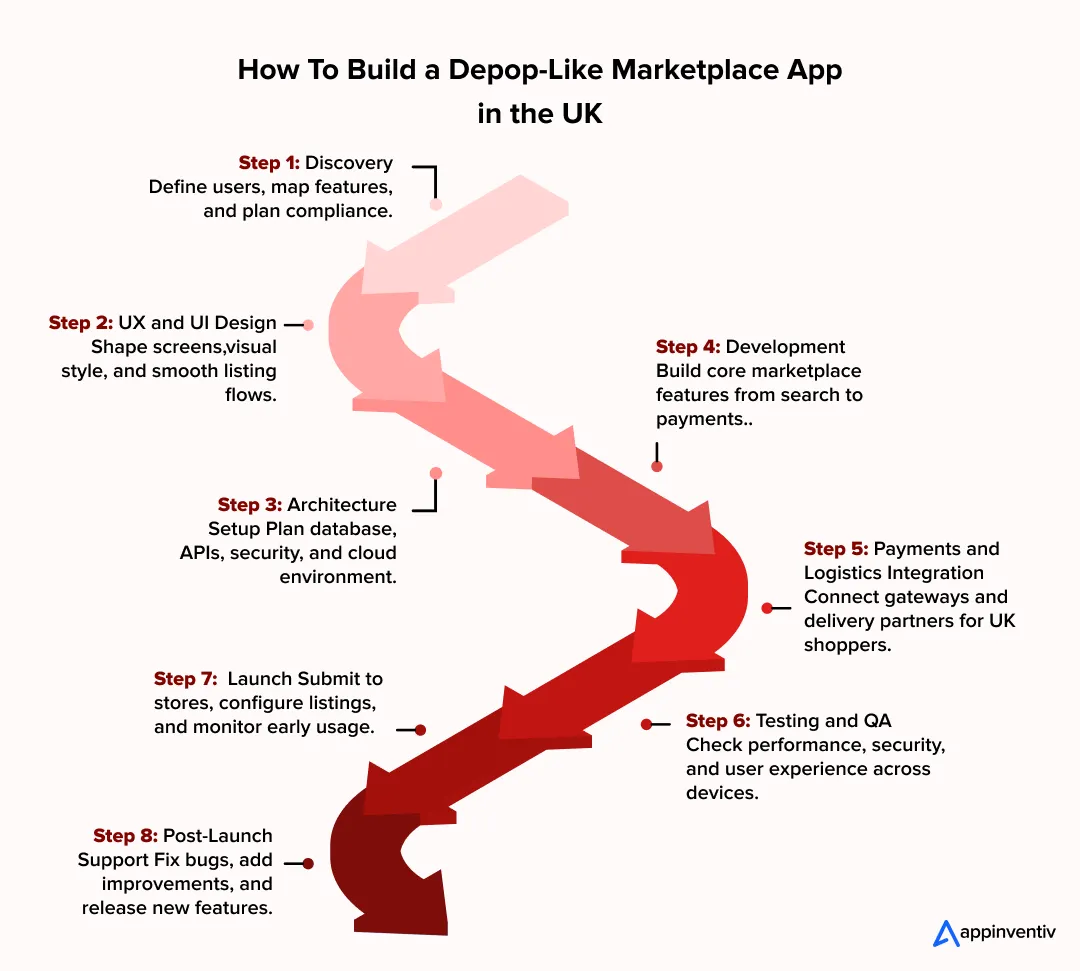 Step 1: Discovery and Requirement Mapping
This is where the core idea becomes clearer. You identify who your buyers and sellers are, how the platform should feel, and what features belong in the first version. It also includes early checks around UK GDPR, data flows, and payment safety.
Typical activities:
- Market research and competitor analysis
- User journey definition
- Feature prioritisation
- Compliance mapping
- Project roadmap creation
Step 2: UX and UI Design
Once the direction is set, the design phase builds the actual experience. Fashion marketplaces rely heavily on visual clarity. A clean product feed, smooth listing screens, and a simple flow are the foundation for everything that comes later.
Design work usually includes:
- Wireframes for each screen
- Visual layouts and style guides
- Branding elements
- Responsive variations
- Interaction patterns for mobile
Step 3: Architecture and Backend Setup
Before development starts, the team decides how the system will run behind the scenes. This includes how listings are stored, how search works, how payments will flow, and how data moves across different parts of the platform.
Setup tasks:
- Database structure
- API integration
- Third-party application integrations
- Security rules
- Cloud environment configuration (AWS or Azure UK regions)
Step 4: Frontend and Backend Development
This is the main build phase. Developers turn designs and architecture into working features. The time required depends entirely on how deep the marketplace goes. A basic listing flow might take a few days, while an AI-driven feed takes far longer.
Development tasks usually include:
- User accounts and onboarding
- Listings and categories
- Search and filtering
- Payments and payouts
- Messaging
- Seller dashboards
- Admin portal
- Any AI personalization or recommendation logic (if included)
Step 5: Integration of Payments and Logistics
For UK marketplaces, shipping and payment gateway integrations matter a lot. This step ensures that buyers can pay securely and sellers can send orders through trusted carriers.
Common integrations:
- Stripe, PayPal, Klarna, Clearpay
- Royal Mail, Evri, DPD, DHL
- Address verification
- Tax and invoice generation
Step 6: Testing and Quality Assurance
Before launch, the platform needs thorough testing. Marketplaces have many moving parts, so the testing phase helps catch bugs and ensure smooth performance across devices and operating systems.
Types of tests:
- Functional testing
- Security and penetration checks
- Performance testing
- Device and browser checks
- User acceptance testing
Step 7: Launch and Store Submission
Once the app passes testing, it moves to launch. This covers preparing the final build, creating the store listings, and sending the app to the App Store and Google Play for review.
Launch tasks:
- App store descriptions
- Screenshots and assets
- Configuration settings
- First-week monitoring
Step 8: Post-Launch Support and Iteration
After launch, the real feedback begins. User reviews, seller issues, and performance insights help decide what needs improving. The first few months usually involve fast iteration.
Post-launch priorities:
- Bug fixes
- Small design improvements
- Performance tuning
- Feature enhancements
- New integrations
How to Build a Marketplace Better Than Depop
Depop has a strong presence in the UK, but it also leaves a few gaps that new platforms can improve on. You don’t need to reinvent everything. A handful of thoughtful upgrades can make the experience feel smoother for both buyers and sellers.
- Stronger UI and UX: A lot of users complain about slow flows or cluttered screens. A cleaner layout, quicker listing steps, and a more stable feed can make your marketplace feel more up to date.
- Better Discovery and Personalisation: Depop’s recommendations are not always accurate. Adding smarter suggestions with the help of predictive analysis in retail, your app can help people find the right items faster and improve customer experience.
- Reliable Moderation and Safety: Shoppers want to know they’re dealing with real people. Better verification, clear dispute handling, and visible trust indicators give the platform a safer feel.
- Faster Payouts for Sellers: Creators and casual sellers appreciate quick payments. Shorter payout cycles or instant options make your platform more attractive than Depop for regular sellers.
- More UK-Focused Shipping Options: Automated labels, clearer delivery timelines, and direct integrations with Royal Mail or Evri create a smoother selling experience compared to arranging shipping manually.
Revenue Model for a Depop-Like Fashion Marketplace
A fashion marketplace doesn’t need a complicated business model to work. Most platforms earn through a mix of small charges that add up as the community grows. The key is to introduce revenue streams that feel fair for sellers and simple enough for buyers to accept without hesitation.
- Commission on Sales: This is the most straightforward way to earn. Every time someone sells an item, the platform keeps a small percentage. The rate doesn’t have to be high for this to work. Once you have enough active sellers, commissions become a predictable part of monthly revenue.
- Listing Boosts or Paid Visibility: Some sellers want their items to stand out, especially when there is a lot of competition. A small fee for priority placement or boosted visibility can help them reach more buyers and gives the platform an extra income channel.
- Optional Seller Subscriptions: People who sell often, like small creators or vintage sellers, usually want better tools. A paid plan with simple perks such as detailed insights, bulk upload options, or lower commission fees can make their work easier and provide recurring revenue for the platform.
- In-App Advertising: Once you build a steady user base, ads can become another source of income. These do not need to be intrusive. Even subtle placements inside the feed or category sections can perform well when thousands of people browse daily.
- Small Service or Convenience Fees: Some apps add a minor service fee to each transaction. It helps cover operational costs like support, security, and order handling. As long as the fee is transparent, most users don’t mind it.
- Partnerships With Local Shops or Creators: Resale platforms often partner with thrift stores, independent designers, or small fashion labels. These collaborations can bring in revenue through events, featured collections, or exclusive drops.
If you want to know in detail strategies in boosting revenue from your app, you can read our blog on: How do apps make money.

Why Partner With Appinventiv
Choosing a team for a marketplace project is a big decision, because it affects everything that comes after the launch. At Appinventiv, we try to build products that can handle real everyday use, not just look good in a presentation. Our work with Adidas is a good example of this. The eCommerce app we built for them crossed 2 million downloads and brought in more than 500,000 new users within the first year.
Results like that only happen when the engineering and the experience are both done with care, which is also why brands searching for an ecommerce mobile app development company often look for partners with proven, real-world outcomes.
What we bring to a marketplace project is a mix of practical thinking and long-term planning. We know how sellers behave, what buyers expect, and where a platform usually struggles as it starts growing. Whether it’s shaping smoother listing tools, dealing with payments, or handling the UK side of compliance, we try to make each part simpler for you.
Most founders appreciate that we don’t push for unnecessary features early on. We focus on the essentials first, then build up from there as the platform finds its footing. This approach works especially well for brands seeking reliable mobile app development services in the UK, where stability and compliance matter from day one.
If you’re aiming to create a Depop-like app that feels modern and dependable, we’d be happy to help you shape the roadmap and figure out what the first version should look like.
If you want to talk it through or explore ideas, we’re here whenever you’re ready.
FAQ
Q. How does Depop work?
A. Depop works as a peer-to-peer fashion resale platform where users list items, browse personalized feeds, chat with sellers, and complete purchases through in-app payments. Its mix of social features and simple listing tools makes it easy for anyone to sell pre-loved clothing. These are also the core features of a resale app like Depop that most new marketplaces aim to replicate.
Q. How much does it cost to build a Depop-like fashion marketplace app in the UK?
A. The Cost To Build a fashion marketplace app Like Depop in the UK generally falls between £32,000 and £320,000 ($42,000 to $420,000), depending on features, design depth, AI personalisation, platform choice, and compliance requirements. Costs increase when building advanced discovery features, stronger seller dashboards, or large-scale marketplace logic tailored for the UK audience.
Q. How long does it take to develop a fashion marketplace like Depop?
A. Most UK marketplace projects take three to nine months. The lower end usually covers MVPs with essential marketplace flows, while the upper range applies to platforms with AI recommendations, logistics integrations, and custom backend architecture. Time also depends on how many key steps to develop an app like Depop you plan to include in version one.
Q. How to develop an e-commerce app like Depop?
A. To develop an e-commerce app similar to Depop, teams typically follow a structured flow that starts with discovery, compliance mapping, and UX design, followed by backend setup, feature development, marketplace logic, payments, and logistics integrations. If you’re exploring how to make an app like Depop in the UK, ensure early alignment with UK GDPR, localised shipping partners, and payment preferences common among UK Gen Z shoppers.
Q. What tech stack is best for building a fashion marketplace app?
A. The right stack depends on the scale of your marketplace. Most UK teams use a mix of mobile frameworks (Flutter or React Native), backend technologies (Node.js, Python, or Java), cloud platforms (AWS UK region or Azure UK South), and search tools like Elasticsearch. If you need AI-powered recommendations or smart filtering, additional libraries and machine learning models are added later in the roadmap.
Q. What are the key steps to build a Depop-like marketplace app?
A. The key steps to develop an app like Depop usually include:
- Discovery and feature planning
- UX and UI design
- Backend and architecture setup
- Core marketplace development
- Payments, logistics, and security integrations
- Testing and compliance checks
- Launch and ongoing improvements
This sequence ensures the platform is stable, compliant, and ready for real buyer-seller activity.

- In just 2 mins you will get a response
- Your idea is 100% protected by our Non Disclosure Agreement.
How Much Does It Cost to Build an eCommerce Marketplace App Like Poshmark?
Key takeaways: Poshmark-like marketplaces enable unlocking new sources of revenue through transforming social interaction into low-capital-intensity repeat purchases. A marketplace app would cost between $40,000 and $400,000 to develop, depending on its features, platform and enterprise scalability needs. Special implementation, beginning with tests or single categories, confirms supply, demand, and monetization in 6-12 months. Trust,…
How Much Does It Cost to Develop an eCommerce Platform like The Iconic in Australia?
Key takeaways: Building an eCommerce platform like The Iconic in Australia can cost anywhere from AUD $46,500 to AUD $775,000+ depending on scale and sophistication. The real eCommerce cost drivers are backend architecture, integrations, compliance, and system reliability, not just design screens. Platforms like The Iconic succeed because they combine shopping experience, logistics, and payments…
Key takeaways: Global eCommerce fraud losses are expected to exceed $107 billion by 2029. Digital growth, Buy Now Pay Later features, and rising automation are all opening up new avenues for fraudsters to exploit. First-party abuse and refund abuse have ended up being the greatest source of pain globally, affecting nearly half of all online…









