























Healthcare CRM Software Development: A Complete Guide for 2026

 Share -


- 01Understanding the Role of CRM in Healthcare
- 02How Healthcare CRM is Different from EHR?
- 03Multiple Types of Healthcare CRM Available for Businesses
- 04Strategic Use Cases: What You Can Actually Do With a Healthcare CRM
- 05Benefits of CRM Software in Healthcare
- 06Healthcare CRM Software Development Process
- 07Common Implementation Challenges & How to De-Risk Them
- 08How Much Does It Cost to Develop a Healthcare CRM Software?
- 09What Compliance and Security Considerations Should You Address When Developing a Healthcare CRM?
- 10How Can Appinventiv Help You Streamline Your Business Operations with a Custom CRM Software?
- 11FAQs

Key Takeaways
- Healthcare CRM development follows a structured process, from planning and design to integration, deployment, and ongoing support.
- The costs typically range from $40,000 to $400,000+, depending on features, integrations, compliance, and customization.
- Building a healthcare CRM requires built-in security, regulatory compliance, and seamless interoperability with existing healthcare systems.
- A custom healthcare CRM improves patient engagement, streamlines operations, and supports long-term business growth.
In healthcare today, the real competitive edge isn’t a shiny new building or a bigger network. It’s whether you actually know your patients and show up for them in a consistent, joined-up way. Most patients today don’t see their care as separate “episodes” anymore. They expect a relationship where their history is remembered, their preferences are noted, and they’re not repeating the same details to every new person they speak to.
They also expect this relationship to work across every channel they use. Patients want to book, reschedule, and follow up through apps, portals, calls, chat, and even WhatsApp without starting from scratch each time. Meanwhile, your teams are hopping between EHR systems, telehealth tools, call center software, and random spreadsheets that don’t sync with each other. The outcome? Scattered data, missed follow-ups, and staff who spend more time hunting for information than actually helping patients.
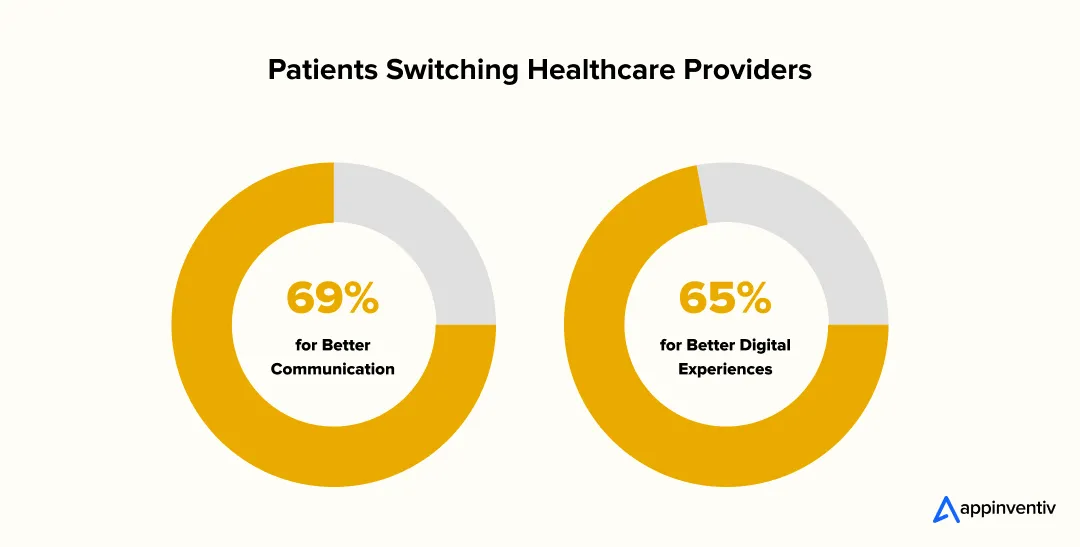
The numbers back this up. A Tebra survey found that around 65% of patients would switch providers for better digital experiences, like easier online booking and smoother communication between visits. Another study shows that roughly 69% of healthcare consumers will change providers if communication doesn’t meet their expectations. That’s a lot of revenue and trust walking out the door because the experience feels disjointed.
This is exactly where a modern healthcare CRM makes a difference. Instead of information sitting in silos, a good CRM pulls clinical, operational, and engagement data into a single, usable view. Your teams can see who needs a reminder, who’s overdue for a follow-up, which campaigns are actually working, and where care gaps are opening up. It helps you cut no-shows, close those gaps faster, and have more meaningful, timely interactions with patients.
In this guide, we’ll unpack what that looks like in 2026: how to think about custom healthcare CRM software development, which features matter, how the tech and integrations fit together, what influences healthcare CRM software development cost, and how to roll it out without disrupting day-to-day care.
The goal is simple: give you a clear path to building or modernizing a healthcare CRM that actually improves patient relationships and supports your growth goals, instead of becoming yet another system people avoid.
Research shows that 69% of healthcare consumers will change providers if communication doesn’t meet their expectations. A healthcare CRM helps you close that gap.
Understanding the Role of CRM in Healthcare
Healthcare organizations use CRM (Customer Relationship Management) software to manage interactions with patients, healthcare providers, partners, and other stakeholders but CRM meaning in healthcare goes a bit deeper than that. It’s the operating layer that connects marketing, front desk, care teams, and billing around one shared view of the patient.
In practical terms, a robust CRM for healthcare providers centralizes contact details, preferences, communication history, referrals, and service journeys. It generates data-driven insights that help you understand which patients are at risk of dropping off, which campaigns work, and where operational friction hurts experience and revenue. For leaders asking about CRM in hospital industry settings specifically, the Role of CRM software in hospitals often starts with better outreach and ends with fewer gaps in care.
This data helps organizations make decisions that improve outcomes and operational effectiveness. Additionally, CRM in hospital industry environments often automates tasks like scheduling, recalls, outreach, and follow-ups, which maximizes efficiency with healthcare CRM software and frees staff to focus on higher-value patient interactions.
When people discuss CRM meaning in healthcare, they’re usually talking about this combination of centralized data, automated workflows, and intelligent outreach that turns a hospital or clinic from a series of disconnected encounters into a coordinated, relationship-driven journey.
For instance, the Cleveland Clinic, a well-known healthcare institution, successfully integrated a healthcare CRM system to elevate patient engagement and care coordination. This initiative enabled the clinic to optimize communication channels, leading to the delivery of prompt appointment reminders, follow-up messages, and tailored healthcare guidance to patients.
Consequently, the healthcare organization was able to witness enhancements in operational efficiency, elevated patient satisfaction ratings, and a decrease in no-show occurrences, underscoring the pivotal role of CRM in refining healthcare results.
How Healthcare CRM is Different from EHR?
EHR (Electronic Health Record) systems focus on managing patient health data, while Healthcare CRM (Customer Relationship Management) systems enhance patient engagement and communication. These systems complement each other by handling clinical data and improving the overall patient experience.
When EHR and CRM are integrated, they enable a unified view of the patient journey, from diagnosis to follow-up care. This real-time data synchronization leads to better decision-making, personalized care, and improved operational efficiency.
Integrating EHR with CRM Software: Why It Matters
On paper, EHRs are the single source of truth for clinical data. In reality, they’re not built for proactive outreach, segmentation, or marketing journeys. That’s why integrating EHR with CRM software has become a core requirement for modern healthcare CRM Development projects.
A stable EHR–CRM integration lets you:
- Sync diagnoses, medications, allergies, and visit history into the CRM so outreach teams see more than just contact info.
- Trigger journeys based on clinical events. For example, automated post-discharge check-ins, care gap reminders, or chronic-disease education campaigns.
- Avoid double data entry and reduce errors when front-office staff and clinicians look at different systems for the same patient.
To better understand the differences between CRM and EHR, here’s a concise comparison of Healthcare CRM and EHR:
| Aspect | Healthcare CRM | EHR |
|---|---|---|
| Purpose | Enhances patient engagement and communication. | Manages and stores comprehensive patient health data. |
| Primary Focus | Relationship management and patient outreach. | Clinical documentation and patient care tracking. |
| Data Stored | Patient preferences, feedback, and communication history. | Medical history, treatments, diagnoses, lab results, and medications. |
| Key Functions | Appointment scheduling, personalized communication, service management. | Clinical data management, data sharing among providers. |
Multiple Types of Healthcare CRM Available for Businesses
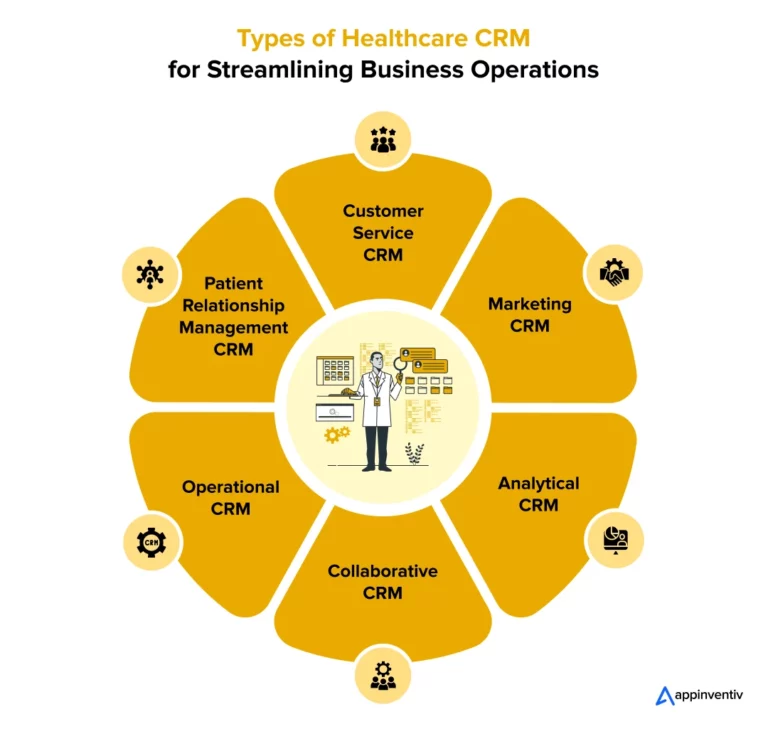
The medical industry has observed a rise in the adoption of various types of CRM systems. Each is designed to tackle specific challenges and requirements in the sector. Let’s examine the different categories of Healthcare CRM solutions.
Customer Service CRM
Customer service CRM tools enhance the healthcare experience by offering efficient, tailored support. This includes systems for service tickets, live chats, and managing feedback. Promptly addressing patient inquiries, complaints, and comments helps build solid relationships and boost satisfaction levels.
Marketing CRM
Marketing CRM software for healthcare organizations helps in attracting, engaging, and retaining patients through targeted campaigns and communication strategies. It allows segmenting patient populations, crafting personalized marketing messages, and tracking campaign performance. This aids in identifying effective marketing channels, refining messaging, and maximizing investment impact.
Analytical CRM
Analytical CRM software for healthcare organizations enhances the providers’ use of data analysis and business intelligence tools to gain valuable insights into patient behavior, treatment outcomes, and operational efficiency. By analyzing this information, healthcare associations can determine patterns, foresee patient requirements, and streamline asset distribution. This prompts more educated, dynamic and designated interventions.
Collaborative CRM
A collaborative CRM system functions efficiently, promoting good communication and information flow in a medical organization. It also extends to external associates, including patients, suppliers, and allies. This allows constant teamwork on patient care strategies, scheduling appointments, and coordinating treatments. Patient experience is generally elevated through improved care coordination.
Operational CRM
Operational CRM tools aim to streamline and automate various administrative functions in a healthcare organization. They handle scheduling appointments, registering patients, managing bills, and keeping track of inventory. By taking over these regular tasks and workflow, this CRM solution frees up healthcare personnel from time-consuming administrative duties. It allows them to focus on providing top-quality patient care and ensuring the smooth running of daily operations.
Patient Relationship Management CRM
Patient Relationship Management CRM focuses on creating and maintaining lasting relationships with patients. This type of CRM integrates medical history, treatment plans, and patient interactions to offer a personalized care pathway. It helps healthcare providers anticipate patient needs, manage follow-ups, and enhance overall patient engagement, contributing to improved health outcomes and patient loyalty.
[Also Read: How Much Does it Cost to Develop a Doctor Appointment App Like ZocDoc?]
Strategic Use Cases: What You Can Actually Do With a Healthcare CRM
Healthcare CRM software isn’t just a tool. It’s a solution to specific, recurring challenges faced by providers, payers, and care teams. From improving patient engagement to streamlining operations, these use cases show how CRM can drive measurable results in different healthcare settings.
For Hospitals & Health Systems
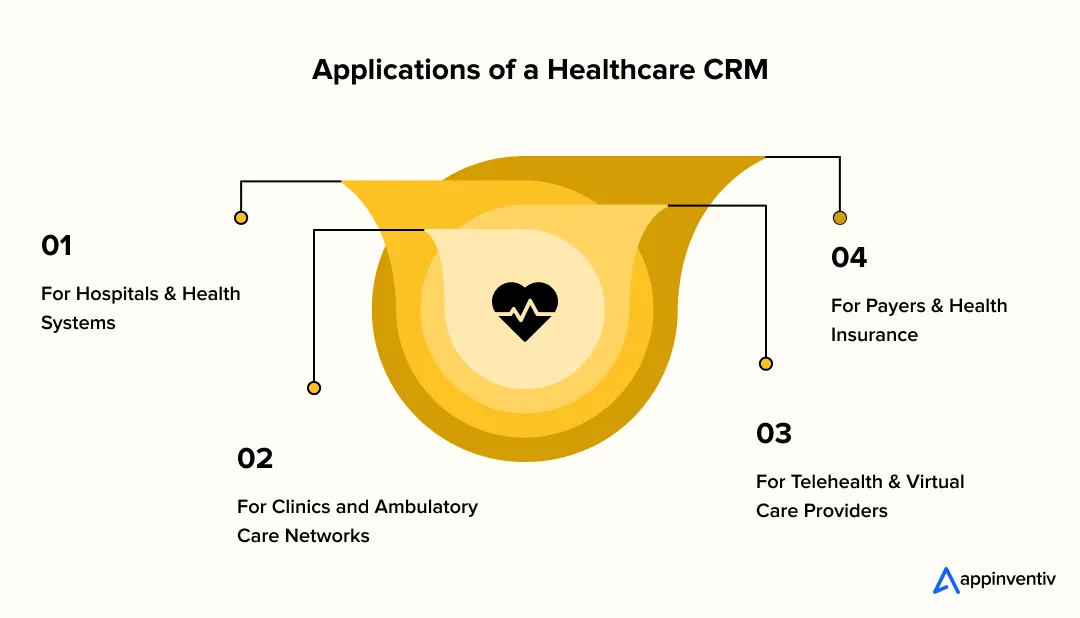
In a large hospital or network, a healthcare CRM helps track how patients discover you, move across departments, and where they silently drop off. In the CRM in hospital industry context, it centralizes referrals, post-discharge follow-ups, and service-line campaigns into one view.
Furthermore, hospitals use it to manage campaigns for high-value specialties (cardiology, oncology, orthopedics), centralize referral flows, and run structured post-discharge programs. Leaders get clear visibility into which channels and referrers drive volume, instead of relying on scattered spreadsheets.
For Clinics and Ambulatory Care Networks
Clinics and ambulatory centers use CRM for healthcare providers to keep their appointment pipeline healthy and predictable. Staff can see who’s due for follow-ups, who missed tests, and who hasn’t visited in a while, then run focused recall campaigns.
With smart CRM software development for healthcare, this all happens from one place instead of manual lists and phone marathons. Automated SMS/email reminders, reactivation campaigns for inactive patients, and post-visit check-ins all run from one place.
For Telehealth & Virtual Care Providers
Telehealth and virtual-care teams rely on custom healthcare CRM software development to connect marketing, scheduling, consults, and remote follow-ups. The CRM tracks the full digital journey, from first click to video visit to ongoing check-ins, so patients don’t feel like they’re starting over each time.
This is where digital-first providers really see the payoff of healthcare CRM Development: higher show-up rates, more structured follow-up care, and a digital experience that feels like a single, continuous relationship instead of a one-off video call.
For Payers & Health Insurance
For payers, a healthcare CRM is about managing members, risk, and programs rather than clinical notes. When you build CRM software for healthcare industry stakeholders on the payer side, it supports onboarding, renewals, wellness initiatives, and care management for high-risk groups. Member interactions, campaign responses, and program participation all sit in one place, making coordination with providers far more intentional.
For insurers trying to move from transactional interactions to long-term member relationships, healthcare CRM software development becomes a core tool to support value-based care models, improve adherence to programs, and reduce avoidable medical costs over time.
Also Read: Insurance CRM Software Development in 2026
Benefits of CRM Software in Healthcare
Healthcare organizations rely on CRM to streamline operations, enhance patient experiences, achieve superior outcomes, and more. Let us explore the remarkable business benefits offered by robust Healthcare CRM solutions.
Streamlined Operations and Cost Savings
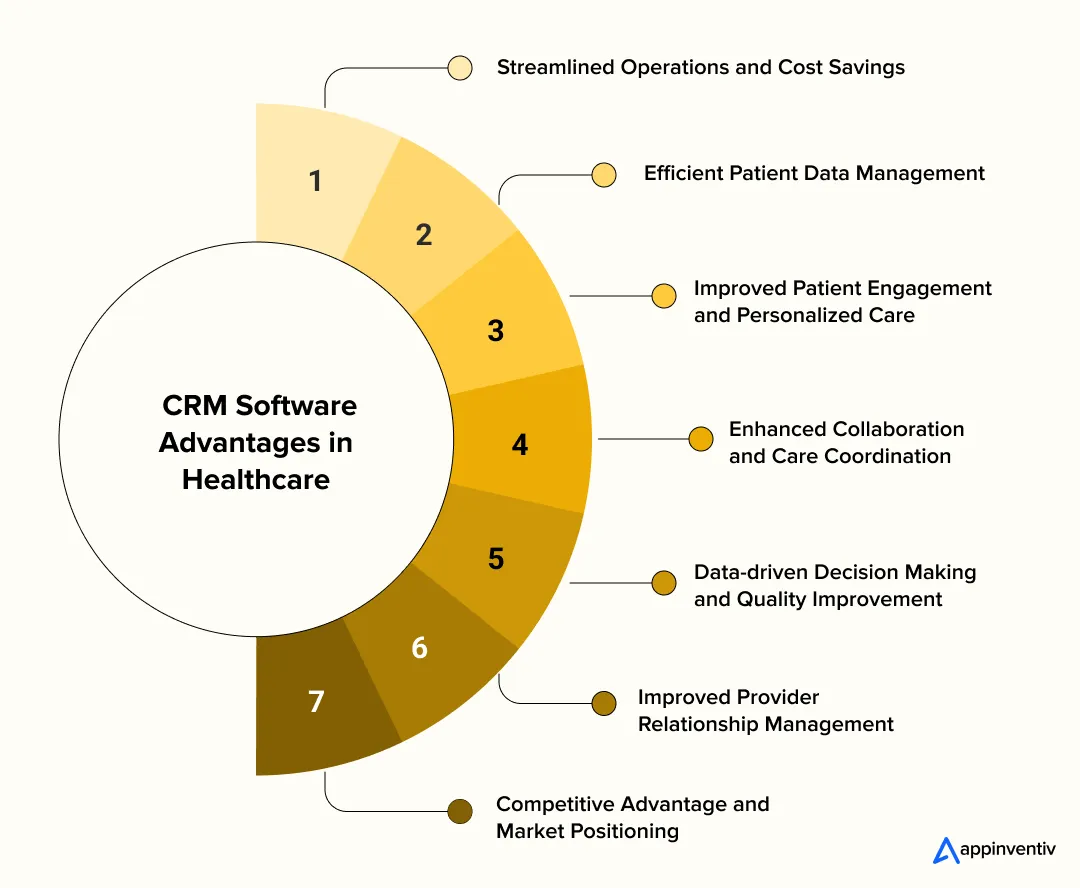
Healthcare CRM software benefits go beyond helping patients; it significantly enhances how healthcare organizations work. Healthcare CRM features like automated appointment scheduling, referral management, and inventory tracking reduce staff workload and minimize errors.
This frees up valuable staff time to focus on patient care. Also, CRM integration with EHR allows seamless data exchange and cross-departmental collaboration. This further optimizes workflows and decision-making.
Ultimately, these operational improvements convert into cost savings. This contributes to the long-term financial sustainability of healthcare providers. Additionally, increased efficiency and reduced errors can lead to better resource utilization and lower the overall cost of healthcare delivery.
Efficient Patient Data Management
Effective patient data management is essential to providing quality healthcare. CRM software for medical practices excels at centralizing patient information such as medical histories, treatment regimens, and billing details into a single, organized database.
This comprehensive view ensures healthcare providers have access to accurate, updated data, enhancing patient safety, care coordination, and clinical decision-making. Moreover, CRM’s secure storage and access controls aid compliance with stringent regulations like HIPAA, safeguarding sensitive patient data.
Improved Patient Engagement and Personalized Care
The role of CRM in hospitals is also about efficiently engaging patients and delivering personalized care, paving the way for positive health outcomes. CRM software boasts features to enrich patient interactions, from appointment reminders to telehealth services and secure patient portals. These capabilities empower patients, fostering active healthcare participation, stronger provider relationships, and better treatment adherence.
Additionally, CRM’s data analytics capability in healthcare enables providers to tailor communications and care plans to individual preferences, demographics, and medical histories, delivering truly personalized, meaningful patient experiences. This personalization can boost satisfaction, loyalty, and ultimately, overall health.
Enhanced Collaboration and Care Coordination
The best healthcare CRM software boosts collaboration among healthcare staff, doctors, and all involved in patient care. With its diverse features, you can share patient information, send secure messages, and assign tasks. This lets teams work together on treatment plans, share updates, and give continued care. Better teamwork leads to more coordinated care, avoiding repeated work, and a complete approach to assisting patients.
Data-driven Decision Making and Quality Improvement
Healthcare CRM tools give businesses substantial ways to analyze and understand business data. They provide up-to-the-date knowledge and valuable data. With these number-centric facts, healthcare stakeholders can make smarter choices. Additionally, they also facilitate identifying opportunities for enhancing care and demonstrating outcomes to payers and regulatory bodies.
CRM in healthcare can also use data analytics to anticipate future needs and prevent issues by learning from past patterns. It makes constant changes and improvements in healthcare a reality. Using facts and figures, healthcare groups can make the best use of their resources, make patient outcomes better, and raise the overall level of care.
[Also Read: How to successfully create a data-driven culture in your organization?]
Improved Provider Relationship Management
CRM in healthcare also helps manage relationships with healthcare providers, doctors, specialists, and other medical experts. CRM solutions can maintain detailed profiles, handle referrals, and simplify communication. This allows healthcare organizations to strengthen partnerships with providers. Enhanced provider relations improve care coordination, boost patient referrals, and aid in recruiting and retaining providers effectively.
Competitive Advantage and Market Positioning
Developing a robust CRM gives healthcare organizations a significant competitive advantage. By providing enhanced patient experiences, improved efficiency, and data-driven decision capabilities, organizations using CRM position themselves and emerge as industry leaders. This can attract new patients, increase patient loyalty, and ensure a strong market presence overall.
[Also Read: Telehealth trends in 2026 have moved from a growth story to a build decision
CRM software for the healthcare industry is crucial for better care, smoother operations, and legal compliance. When looking at options or opting to develop one for your business, pay attention to features that could transform healthcare and provide top-notch patient experiences. Let’s look at various features of CRM healthcare software development in detail below.

Must-Have Features of a Healthcare CRM Software
These essentials form the foundation you need before adding the more intelligent or automated layers. Think of this category as the “must work from day one” features that keep care teams aligned and patients supported.
Unified Patient 360 View
This is an essential feature that shows a patient’s background, communication history, preferences, appointments, and referral notes. When staff don’t have to jump between systems, they can focus on helping the person in front of them instead of searching for information.
Intelligent Routing
Advanced algorithms route calls based on the patient’s needs, directing them to the correct department without delay. This helps reduce transfers and queue times while supporting faster responses during urgent moments.
HIPAA Compliance
HIPAA compliance assures the highest standards of patient confidentiality and privacy. All voice and messaging interactions must comply with HIPAA regulations. This includes encryption, secure data storage, and strict access controls. These measures safeguard sensitive information. Furthermore, they mitigate the risk of data breaches or regulatory penalties.
Omnichannel Patient Communication
Patients move between SMS, email, phone calls, and app notifications without thinking twice. A CRM should keep those threads together so the experience feels consistent, no matter where the conversation starts.
Real-Time Monitoring
Healthcare leaders get instant access to analytics dashboards. This allows them to quickly track critical metrics, spot trends, and address issues. Role-based controls ensure stakeholders see only relevant data.
Regulatory Compliance
Your CRM software must have a feature to generate audit-ready reports. This helps businesses meet guidelines like MACRA/MIPS, CMS quality programs, and internal compliance reviews. Detailed audit trails also promote transparency and accountability.
[Also Read: A Complete Guide to Healthcare Compliances]
Feedback Management
This feature helps in implementing robust mechanisms for collecting and analyzing patient feedback. Feedback management further enables healthcare organizations to gain valuable insights into the patient and stakeholders data. They can assess satisfaction levels and areas for improvement. SAI powered sentiment analysis algorithms prioritize and address urgent issues. They also inform strategic initiatives to enhance the overall patient experience.
24/7 Availability
Your CRM for healthcare must ensure round-the-clock support with hospitals to promptly address patient inquiries and concerns to enhance trust and satisfaction. Support teams should be staffed across different time zones. Automated self-service options should be available for common inquiries outside business hours. Emergency support should be provided for urgent medical situations.
Workflow Optimization
Healthcare systems can introduce efficiency by adding AI capabilities to automate repetitive processes like appointment bookings, rescheduling, medication refills, and insurance verifications. This enhances operational flow while providing quality time with patients.
[Also Read: How Much Does It Cost to Build a Medical Appointment App Like Doctolib?]
Patient Outreach
Tailored reminders notify patients of upcoming appointments, refills, and screenings, fostering adherence and improved outcomes. Targeted campaigns identify populations needing timely follow-ups and preventative interventions.
Integration Capabilities
Good healthcare decisions depend on good information. The CRM should talk to EHRs, labs, billing tools, and other systems so there’s less guesswork and fewer gaps. This integration means healthcare workers have full access to up-to-date data, aiding informed choices and coordinated care across various settings.
Data Security
Robust data security features, such as encryption, access controls, and regular audits, protect sensitive patient information following regulations like GDPR and HIPAA. Data anonymization also shields privacy while permitting meaningful analysis and research.
Data Accessibility
Your CRM must allow authorized healthcare staff to access patient details anywhere, whether at the hospital, clinic, or on the move. Cloud and mobile-friendly CRM features empower timely, coordinated care even with limited connectivity. It keeps things flowing.
Advanced Features of Healthcare CRM Software
These are the capabilities that start shaping long-term patient relationships and help organizations move from reactive to proactive. They’re not always required at the start, but they quickly become valuable once the basics are solid. These features help healthcare organizations work smarter instead of simply working harder.
Predictive Analytics
Leveraging machine learning, predictive analytics forecast patient volumes, anticipate healthcare needs, and optimize resource allocation. These features support population health initiatives by identifying high-risk groups and guiding targeted interventions.
AI Insights
Integrating AI capabilities in CRMs helps teams understand which patients may need extra attention, who might skip an appointment, or where bottlenecks might appear next week. It’s not optional; it’s practical guidance, essential to stay competitive.
Personalized Care-Journey Automation
This is a feature that empowers patients to get timely nudges for pre-visit prep, medication reminders, and follow-ups. Everything feels more personal without someone manually tracking it all.
Advanced Reporting & Leadership Dashboards
Leadership needs a clear picture. Dashboards show what’s working and what’s slipping—satisfaction scores, no-show trends, and performance metrics—so action can be taken early.
Conversational AI & Virtual Assistants
Leveraging natural language processing (NLP), healthcare CRM equips conversation AI-based chatbots and virtual assistants to interact with patients in real time. This facilitates answering common queries, scheduling appointments, and providing essential medical advice. These conversational features enhance accessibility and convenience for patients. They also alleviate workload on support staff, allowing them to focus on complex patient needs.
Healthcare CRM Software Development Process
Building a healthcare CRM isn’t the same as building a generic CRM with a few “medical” labels slapped on it. The process needs a little more patience, more validation from clinical teams, and a lot more attention to compliance. Here are the key steps to develop a healthcare CRM software:
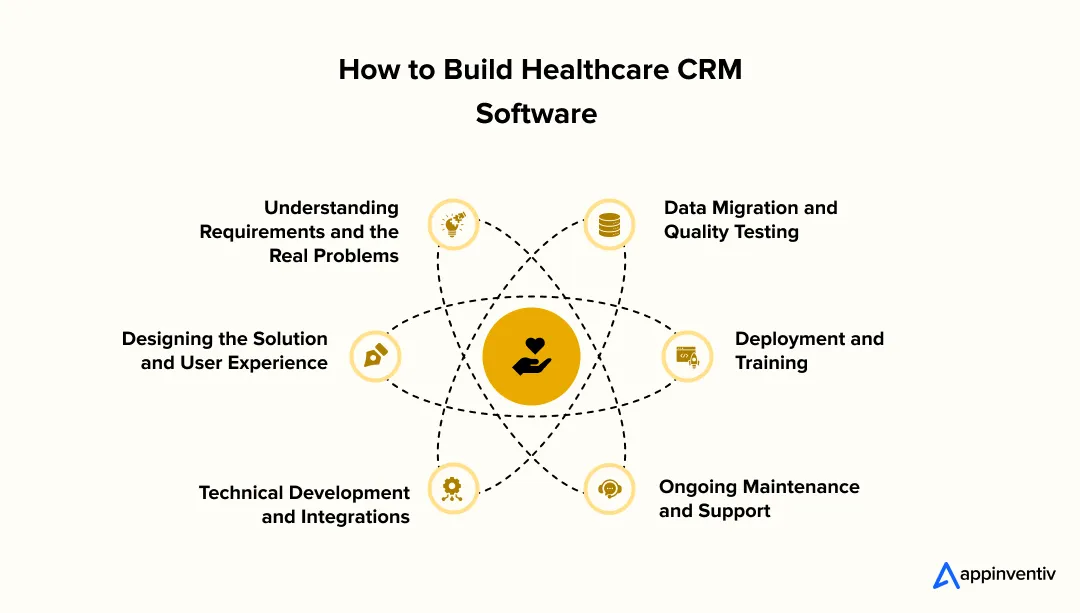
1. Understanding Requirements and the Real Problems
The first phase of CRM software development for healthcare involves gathering requirements. This means engaging key stakeholders like administrators, clinicians, and IT teams. The goal here is simple: map out the pain points and turn them into clear requirements that the development team can work with.
2. Designing the Solution and User Experience
Next phase of the healthcare CRM software development process is to design the UI/UX of the CRM. This stage defines the overall system architecture: front-end, back-end, database structure, and other healthcare IT system integration points. The ultimate aim of this step is to make the CRM intuitive, efficient, and tailored for healthcare professionals and patients.
3. Technical Development and Integrations
After the design is approved, development begins in cycles. At this stage, your CRM software developers implement core functionalities like patient data management, provider relations, appointment scheduling, and communication features.
They integrate the CRM with existing infrastructure like EHRs, billing systems, and relevant applications. In this stage of developing a CRM for medical practice, most teams use agile methodologies because healthcare workflows evolve as the project unfolds.
4. Data Migration and Quality Testing
This crucial step in CRM software development for healthcare involves transferring historical patient and provider data. The development team makes a thorough plan to securely move data from old systems to the new CRM platform.
They conduct rigorous testing, including unit, integration, and end-to-end tests, to ensure that the CRM software for the healthcare industry meets requirements and functions properly. Healthcare staff perform user acceptance testing (UAT) to validate the system’s usability, performance, and compliance.
5. Deployment and Training
The final stage of medical CRM software development is to deploy the software in production and train staff. The CRM system gets deployed in the healthcare organization’s live environment.
At this stage, your healthcare staff receive comprehensive training to effectively utilize features and functionalities. Training is a major part of the rollout because a CRM only works if teams actually use it.
6. Ongoing Maintenance and Support
Healthcare needs change fast: new compliance rules, shifting workflows, new service lines, and higher patient expectations. It means after deployment, your CRM needs regular updates to stay competitive.
At this ongoing phase, your support team continuously maintains the software to address technical issues, bug fixes, or queries after initial deployment. They handle a change management process for software updates, enhancements, and regulatory compliance as the industry develops.
Also Read: Healthcare Software Product Development – A Complete Guide
Our step-by-step approach will stand by you through each phase of healthcare CRM implementation from planning and HIPAA-compliant design to launch

Common Implementation Challenges & How to De-Risk Them
Implementing a CRM in healthcare comes with its fair share of obstacles, from data quality issues to integration headaches. Understanding these key challenges in healthcare CRM software development upfront and having a clear strategy to address them is key to ensuring a smooth deployment and achieving long-term success with your CRM investment.
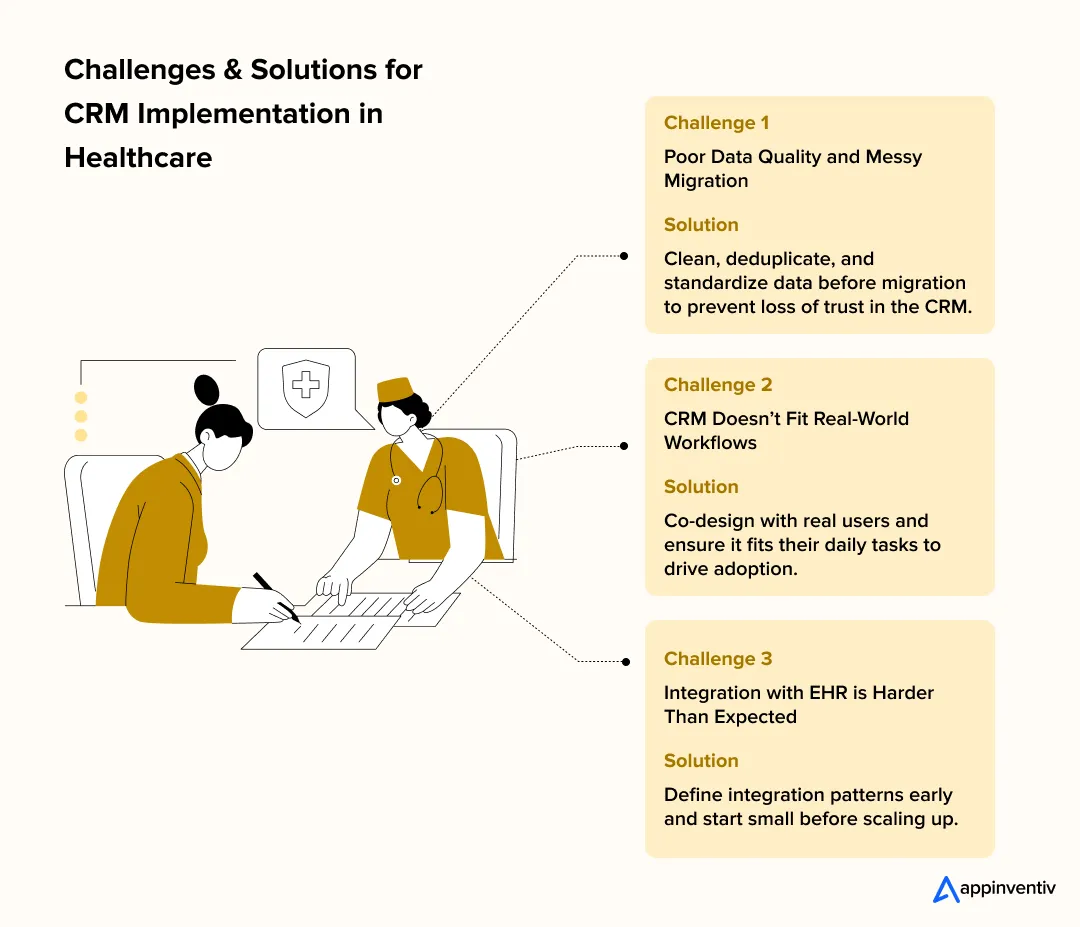
Challenge 1: Poor Data Quality and Messy Migration
Solution: Bake a data-audit into your healthcare CRM software development process: clean, deduplicate, and standardize records before a single row is migrated. A small upfront investment here prevents users from losing trust in reports and dashboards from day one.
Challenge 2: CRM Doesn’t Fit Real-World Workflows
Solution: Co-design key screens and flows with front-desk, care coordinators, and clinicians instead of only IT and leadership. Involve them in UAT so healthcare CRM Development supports how they actually work, not how a generic CRM thinks they should work.
Challenge 3: Integration with EHR is Harder Than Expected
Solution: Define integration patterns early (FHIR, HL7, middleware, iPaaS) and start with a thin slice, appointments, demographics, basic clinical flags, before syncing everything. This keeps healthcare CRM software development testable and avoids “big bang” integration failures.
How Much Does It Cost to Develop a Healthcare CRM Software?
No two healthcare CRM projects cost the same, but most serious builds fall into a fairly predictable range. If you’re evaluating healthcare CRM software development cost, it’s important to understand that custom workflows, regulatory requirements, integrations, and AI capabilities all influence the final investment. When you build CRM software for the healthcare industry’s needs with these capabilities, you’re not investing in an ordinary system; you’re building a long-term strategic platform.
As a broad range, organizations typically see healthcare CRM development costs start around $40,000 for a focused MVP and go beyond $200,000–$400,000 for large, multi-entity deployments with deep integrations and advanced analytics. The real number depends on a few key drivers:
Features and Complexity: The wide range of functionalities included substantially impacts the overall cost of medical CRM software development. Basic patient management tools cost less than enterprise-level solutions integrating advanced analytics, workflow automation, and seamless EHR connectivity.
Level of customization: Custom healthcare CRM software development gives you workflows that match how your teams really work, but it also requires more design and build time than lightly customizing an off-the-shelf CRM.
Team composition and location: Whether you work with an in-house team, a local vendor, or a global healthcare software development company will also influence the final figure. Experience with healthcare projects often costs more but reduces the risk of rework later.
Deployment Model: Cloud-based Software-as-a-Service (SaaS) solutions often have lower initial costs but recurring subscription fees. Conversely, on-prem or hybrid setups may need more investment in hardware, security, and internal IT capacity.
Number and complexity of integrations: Connecting to one EHR is very different from integrating with EHR, billing, LIS, telehealth, and an existing contact center platform. Each integration adds time, testing, and long-term maintenance effort.
It is vital to understand that actual software development costs of CRM for medical and healthcare businesses depend on your organization’s specific needs, project scope, and complexity. To get a precise estimate, it is advised to consult a reliable healthcare IT consulting company specializing in CRM solutions. They’ll assess your needs and provide a tailored cost proposal for your unique Healthcare CRM project.
From legacy modernization to new CRM development, we build secure, scalable healthcare platforms.
What Compliance and Security Considerations Should You Address When Developing a Healthcare CRM?
Healthcare CRM platforms manage highly sensitive patient information, making security and regulatory compliance foundational rather than optional. A well-designed CRM should protect patient privacy while enabling authorized teams to access accurate information whenever needed.
Key compliance and security considerations include:
HIPAA Compliance
Healthcare organizations operating in the United States must comply with the Health Insurance Portability and Accountability Act (HIPAA). This requires administrative, physical, and technical safeguards such as encryption, audit logs, role-based access controls, and secure data transmission.
GDPR Compliance
Organizations serving patients in the European Union should ensure compliance with the General Data Protection Regulation (GDPR), which emphasizes consent management, data minimization, the right to erasure, and transparent processing of personal information.
Interoperability Standards
Modern healthcare CRM platforms should support standards such as HL7 and FHIR to securely exchange information with EHRs, laboratory systems, billing software, telehealth platforms, and other healthcare applications while maintaining data integrity.
Identity and Access Management
Implement role-based permissions, multi-factor authentication (MFA), and least-privilege access policies to ensure employees only access information relevant to their responsibilities.
Encryption and Secure Data Storage
Sensitive healthcare data should be encrypted both at rest and in transit using industry-standard encryption protocols. Regular backups and disaster recovery planning further strengthen data resilience.
Continuous Security Monitoring
Healthcare organizations should perform regular vulnerability assessments, penetration testing, audit logging, and security monitoring to detect potential threats before they affect patient information or clinical operations.
Building compliance into the software architecture from the beginning significantly reduces regulatory risks, improves patient trust, and simplifies future audits as your healthcare organization grows.
How Can Appinventiv Help You Streamline Your Business Operations with a Custom CRM Software?
At Appinventiv, we don’t just create software; we craft custom CRM solutions that elevate healthcare organizations. With over 10 years of expertise in digital health and a track record of delivering 3000+ transformative projects, we understand the complexity of healthcare workflows and the importance of maintaining seamless patient relationships.
Our team of 1600+ tech experts has helped numerous organizations worldwide unlock the power of CRM to drive patient satisfaction, operational efficiency, and revenue growth. Here’s what sets us apart:
- 500+ digital health platforms delivered
- 450+ healthcare clients served, including leading names like Soniphi, YouComm, DiabeticU, and Health-e-People
- 300+ connected medical devices integrated
- 99.90% uptime for critical systems, ensuring reliability
- 45% operational efficiency gains achieved in hospitals
- 90%+ clinical data accuracy in deployed systems
- 95% patient satisfaction in apps we’ve built
From predictive analytics to secure, HIPAA-compliant integrations, our custom CRM development services are tailored to meet the unique needs of healthcare providers.
So, why wait? Contact us today for a comprehensive healthcare CRM software development that aligns with your organization’s goals and delivers tangible results.
FAQs
Q. How long does it take to develop a fully functional health CRM software?
A. The development duration of a custom healthcare CRM software varies based on several factors. These cost-driving factors include system complexity, customization needs, integration requirements, and the chosen methodology (agile or waterfall).
On average, a basic CRM can take 3-6 months, while more intricate systems may require a year or longer.
Q. How much does it cost to develop healthcare CRM software?
A. As revealed earlier, the cost to develop a custom healthcare CRM software typically varies from $40,000 to $400,000.
There are several factors that impact the development budget directly, such as the location of the hired software development team, overall software complexity, features to be integrated in the software, etc.
It is advised to partner with a dedicated healthcare software development firm to get clear cost estimates based on your custom business requirements.
Q. How can healthcare CRM software improve patient engagement & retention?
A. A well-implemented CRM for healthcare providers centralizes data and orchestrates outreach so you can move from reactive communication to proactive engagement. Think automated reminders, personalized education journeys, recall campaigns, and post-visit follow-ups that match each patient’s risk, preferences, and channel of choice.
Combining these capabilities with EHR data is one of the strongest benefits of CRM software in healthcare. It keeps patients informed, reduces friction, and makes it easy for them to come back instead of switching to another provider.
Q. How to build AI-enabled modules in healthcare CRM software?
A. AI comes into play in several layers of healthcare CRM software development: lead and risk scoring, next-best-action recommendations, intelligent routing in call centers, and personalization of content and timing.
Practically, you start by defining 2–3 clear AI use cases, then design data pipelines from EHR, CRM, and other systems. From there, your medical CRM software development partner can train and deploy models, expose the insights via dashboards or in-workflow prompts, and monitor performance over time.
Q. What major technologies do you use for developing healthcare CRM software?
A. At Appinventiv, our most healthcare CRM software development projects combine:
- Cloud platforms like AWS, Azure, or GCP for scalability and security
- Modern web and mobile stacks (React, Node.js, .NET, Kotlin/Swift, etc.)
- Integration tools and APIs (FHIR/HL7, integration engines, iPaaS platforms)
- Analytics and AI frameworks for reporting, predictive models, and automation
This stack allows us to deliver resilient CRM software development for healthcare while keeping integration and long-term maintenance manageable.
Q. What future trends are expected in healthcare CRM systems?
A. Healthcare CRM platforms are rapidly evolving beyond traditional patient relationship management into intelligent engagement ecosystems powered by AI, automation, and interoperable healthcare data.
Some of the biggest trends include:
- AI-powered predictive analytics for identifying at-risk patients and reducing care gaps.
- Hyper-personalized patient engagement through omnichannel communication.
- Greater adoption of FHIR-based interoperability for seamless healthcare data exchange.
- Integration of generative AI assistants to automate patient support and administrative workflows.
- Expansion of remote patient monitoring and wearable device integrations.
The industry outlook reflects this shift. According to Grand View Research, the global healthcare CRM market is projected to reach approximately USD $35.7 billion by 2033, growing at a CAGR of 6.2% from 2026 to 2033. Meanwhile, MarketsandMarkets projects continued growth in AI adoption across healthcare, driven by increasing demand for personalized care, workflow automation, and data-driven clinical decision-making.
As healthcare organizations continue prioritizing patient-centric care and operational efficiency, future CRM platforms will increasingly combine AI, advanced analytics, interoperability, and automation into unified digital engagement ecosystems.


Fast 2-minute response, fully NDA-protected.
Sleep Tracker App Development: Features, Wearable Integration, AI, and Compliance
Key takeaways: Sleep tracking presents opportunities across consumer wellness, fitness, healthcare, employee wellness, senior care, and infant-care markets. Successful products combine actionable insights, wearable connectivity, user-friendly reports, privacy controls, and clearly differentiated experiences. HealthKit, Health Connect, and direct device APIs provide different data depths, costs, limitations, and maintenance requirements. AI supports sleep-stage estimation and personalization,…

Diet and Nutrition App Development: Process, Features, Cost, and Technology Stack
Key Takeaways Diet and nutrition tracking app development goes past basic calorie counters with verified food databases, custom meal schedules, AI tools, wearable device links, and corporate manager tools. Structure database models around raw food items, serving portions, nutrient facts, recipes, software links, and regional diet rules. Pair computer vision models, recommendation algorithms, language engines,…
eCOA Software Development Guide: Enterprise Architecture, Tech Stack, Development Process, and Cost
Key takeaways: Build an enterprise eCOA platform using cloud servers, AI tools, and compliant system design. Map the full eCOA development process, from trial workflow analysis to live system maintenance. Connect your platform with EDC, CTMS, eConsent, HL7 FHIR, and wearables to simplify trial data sharing. Compare custom software against off-the-shelf platforms to make smart…














