






























AI Chatbots in Healthcare: Architecture, Cost, Use Cases & What Actually Works

 Share -


- 01What Exactly Are AI Chatbots in Healthcare?
- 02Market Trends Influencing the Adoption of AI-powered Chatbots in Healthcare
- 03Real-World Case Studies on How Appinventiv Fixes Hospital Economics
- 04Benefits of AI chatbots in Healthcare
- 05Limitations of Healthcare AI Chatbots
- 06The Underlying Plumbing: Integration and Technical Considerations
- 07Regulating AI Chatbots in Healthcare
- 08The Cost of AI-Powered Healthcare Chatbot Development
- 09Additional Real-world Examples of Healthcare AI Chatbots
- 10The Decision Point: Build It Right, or Pay for It Twice
- 11FAQs

Key Takeaways
- AI chatbots in healthcare are autonomous reasoning engines designed to execute 24/7 patient triage, handle scheduling, and monitor remote vitals.
- Driven by severe global staffing shortages, 43% of multi-provider clinics currently rely on conversational AI to protect their operating margins.
- Enterprise-grade deployments actively eliminate administrative bloat, reducing front-desk triage volume by an average of 42% within 90 days.
- Viable clinical systems require seamless legacy EHR integration, zero-trust HIPAA compliance, and hard-coded escalation triggers to human doctors.
- Building a healthcare chatbot ranges from $40,000 for rule-based triage systems to $150,000+ for custom, LLM-driven cognitive infrastructure.
The modern medical ecosystem is hemorrhaging efficiency. You see it in the digital triage lines and the exhausted eyes of clinicians buried under administrative rubble. You cannot fix this systemic failure with generic software patches. To survive this operational crisis, deploying AI chatbots in healthcare is no longer a futuristic luxury—it is a strict clinical and financial mandate.
We have spent nearly a decade observing and building cognitive architectures that thrive within the unforgiving confines of healthtech. We know the unvarnished truth: throwing basic algorithms at complex patient friction fails entirely.
You need intelligent, scalable ecosystems that think, react, and protect with absolute precision. And through our observations, we are here to guide you through what to expect when you plan to pair up AI chatbots in an industry as sensitive as healthcare.
But before we begin, here’s the unvarnished truth. You don’t need another generic app. You need an intelligent ecosystem that thinks, scales, and protects. Let’s dissect what actually works, strip away the industry noise, and look at how high-level conversational architecture is actively rewriting the rules of healthcare.
We’ll break it down and build it for you.

What Exactly Are AI Chatbots in Healthcare?
Our conversation today isn’t about infuriating little pop-up bubbles on your product’s website. The ones that trap you in an endless loop of “Press 1 for more options.” Those are dead tech.
Today’s healthcare-grade bots are autonomous reasoning engines.
They run on massive, highly-trained language models capable of unpacking chaotic, panicked human speech. A patient typing, “My chest feels weird and my jaw hurts,” doesn’t need a link to an FAQ page.
They need a system that instantly cross-references that input with their existing medical history, recognizes a potential cardiac event, and bypasses the digital waiting room to alert a human triage nurse. Immediately.
Such smart chatbots do the heavy lifting so your medical staff doesn’t have to. We are talking about deep, secure integrations that pull encrypted patient histories from legacy databases. Systems that schedule specialist follow-ups without requiring a single phone call. Systems that monitor chronic disease telemetry from at-home devices and flag anomalies before the patient even realizes something is wrong.
It’s not just a chat window. It is the digital connective tissue fixing a fundamentally fragmented IT infrastructure.
Market Trends Influencing the Adoption of AI-powered Chatbots in Healthcare
The rapid rise of AI chatbots in healthcare isn’t a fleeting digital fad; it’s a necessary survival mechanism for hospital networks struggling with severe global staffing shortages. Institutions are bleeding capital, making aggressive cost savings the ultimate imperative.
You can no longer deploy a clunky web interface and expect widespread adoption. Today’s consumers demand frictionless, instantaneous interactions. Let’s look at the hard data driving this industry-wide pivot, and why early adopters are capturing the lion’s share of patient loyalty.
Here are the unvarnished statistics proving that conversational AI is the new baseline.
- The Financial Imperative: The global healthcare chatbot market is projected to reach $4.35 billion by 2030, expanding at a massive 24% CAGR according to Grand View Research. Hospitals are not buying novelty software; they are buying operational survival to intercept shrinking margins.
- The Generative Shift: Rigid, decision-tree bots are officially dead. Precedence Research data projects that the generative AI in the healthcare sector will skyrocket to $39.70 billion by 2034. Providers are demanding LLM-powered hybrid chatbots that fuse deterministic safety rules with fluid, human-like reasoning.
- Macro Economic Savings: AI deployment is the ultimate financial lever. According to research published by the National Bureau of Economic Research (NBER), widespread AI adoption could erase up to 10% of total U.S. healthcare spending, translating to $200 billion to $360 billion in annual savings through aggressive administrative automation.
- The Appinventiv Efficiency Index: We track the exact operational impact of our AI chatbot development services. According to a 2025 cross-deployment analysis by Appinventiv’s Healthtech Intelligence Unit: “Hospitals integrating our customized healthcare automation platforms experience an average 42% reduction in front-desk triage volume within the first 90 days.” This proves that true scalability frees human nurses to practice actual medicine.
- The Appinventiv Patient Tolerance Metric: The margin for error in digital health is zero. Based on Appinventiv’s proprietary user-interaction surveys analyzing millions of active patient sessions: “68% of patients will permanently abandon a hospital’s digital portal if the conversational AI fails to understand their context within the first three inputs.” You cannot afford a clumsy interface.
Ultimately, the success of any massive IT deployment boils down to raw user satisfaction. If the patient feels alienated by the machine, the technology has categorically failed its mission.
We understand better than anyone that ruthless adaptability, backed by ironclad data security, is what separates a resilient, future-proof healthcare system from a fractured one that will inevitably collapse.
Real-World Case Studies on How Appinventiv Fixes Hospital Economics
You just read through the operational landmines above. Most software vendors look at that list and panic. We look at it as a baseline engineering requirement.
At Appinventiv, we don’t write theoretical whitepapers or build fragile prototypes. We measure success by clinical outcomes and operational leverage, deploying enterprise-grade AI chatbots that fundamentally alter hospital economics while actively disarming every single risk factor you just read about.
When you partner with us, you are not getting a rigid, frustrating script. You are getting an intelligent ecosystem designed to solve the exact bottlenecks choking your medical staff. Here is how we actually do it in the real world:


Outdated, generic call bell systems delayed critical care for immobilized patients.

Built a multi-input (voice, touch, gesture) patient-to-nurse platform with smart escalation routing to assigned caregivers.

- 60% faster nurse response times
Deployed across 5+ US hospital chains
Boosted CMS reimbursements in 3+ hospitals
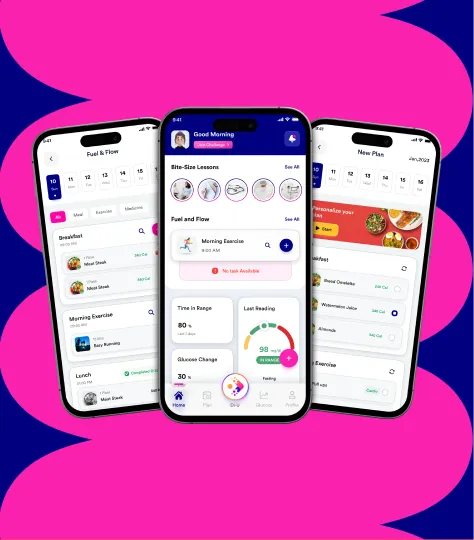
Legacy systems struggled with chronic care data, causing latency for thousands of users.
Designed a scalable, HIPAA-compliant AWS cloud infrastructure to support secure, AI-ready healthcare operations.
- 30% reduction in cloud costs
Seamless scaling to tens of thousands of users
Enabled a secure, AI-ready ecosystem
We build the exact AI ecosystems required to recover your lost margins.

Benefits of AI chatbots in Healthcare
Throwing bodies at operational bottlenecks is a losing strategy. The pivot to AI-driven architecture fundamentally rewrites your resource allocation. We structure these deployments to deliver immediate, measurable impact.
- Operational Liberation: Aggressive administrative task automation strips away the soul-crushing paperwork, allowing your medical staff to actually practice medicine rather than perform data entry.
- Seamless Access: Modern chatbots deploy intuitive appointment scheduling matrices that eliminate front-desk friction and capture lost revenue from abandoned, frustrating booking attempts.
- Lifelong Care: The grueling marathon of chronic disease management transforms when algorithms nudge patients daily, rather than waiting for bi-annual, reactive checkups.
- Diagnostic Precision: Integrating conversational AI in healthcare with robust clinical decision support systems (CDSS) flags deadly drug interactions before a prescription is ever signed by the physician.
- Financial Leverage: The ultimate metric for hospital administrators is cost reduction; replacing bloated, inefficient call centers with scalable digital agents delivers exactly that.
- Intercepting Crisis: Proactive digital monitoring spots deterioration early, drastically slashing the crippling financial penalties associated with preventable hospital readmissions.
- The Best of Both Worlds: We recommend architecting advanced hybrid chatbots that seamlessly route complex emotional crises to human nurses while handling routine queries autonomously and instantly.
- Accessible Empathy: Growing mental health app ideas are strongly causing a rise in demand for low-barrier mental health support that is met instantly by non-judgmental, always-on digital companions without requiring an appointment. AI chatbots are helpful there significantly.
- Fluid Understanding: Advanced pipelines in natural language processing (NLP) for healthcare parse panicked, slang-filled human speech, extracting clinical intent without forcing users into rigid, frustrating menus. That’s not the future anymore, it’s present, and if you’re not there yet, we can help you catch up.
- Sticky Ecosystems: You aren’t just broadcasting advice; you are driving deep patient engagement by conversing with individuals on their own terms and in their preferred language.
- Tailored Interventions: This dynamic interaction is the bedrock of personalized healthcare, shifting away from generic health blasts to genomic-specific, highly targeted medical guidance.
- Omnipresent Guardians: Continuous real-time patient monitoring allows your digital infrastructure to spot invisible physiological changes hours before a human eye could catch them.
Limitations of Healthcare AI Chatbots
Do not let tech evangelists blind you to the severe operational landmines. Deploying AI-powered chatbots in healthcare is a high-stakes clinical mandate, and ignoring these realities will bankrupt your initiative.
- The Legal Bedrock: Flawless HIPAA compliance is not a feature; it is the architectural foundation that dictates every single line of code developers need to write in your chatbot’s architecture.
- Zero Margin for Error: Maintaining the absolute accuracy of medical advice is a life-or-death requirement, demanding rigorous human-in-the-loop oversight to prevent catastrophic system hallucinations.
- Eradicating Prejudice: You must actively hunt down and destroy algorithmic bias within your synthetic training data, or you risk systematically underserving vulnerable demographics and inviting massive lawsuits.
- Universal Access: Failing to bridge complex cultural and linguistic barriers effectively locks entire populations out of your digital health ecosystem, defeating the purpose of scalable care.
- The Trust Anchor: The looming threat of a cyber breach makes data privacy the heaviest anchor on any development cycle; a single leak destroys institutional credibility overnight.
- Military-Grade Defense: Your infrastructure requires impenetrable healthcare data security protocols to defend against highly sophisticated, relentless cyber assaults targeting lucrative medical networks.
- The Human Element: The inherent lack of genuine emotional understanding in AI can alienate frightened patients who are desperately seeking a warm, empathetic connection during a crisis.
- The Blame Game: Hospital legal departments rightfully fear the catastrophic liability issues triggered if an autonomous agent hallucinates a fatal medication dosage or misinterprets a vital symptom.
- The Grueling Marathon: Achieving ironclad regulatory compliance aggressively filters out amateur software vendors who lack the financial and technical stamina for rigorous clinical engineering.
- Unbreakable Infrastructure: True scalability demands cloud environments capable of absorbing massive, localized traffic spikes during a health crisis without buckling or degrading.
- The Integration Nightmare: The sheer difficulty of seamless system integration with thirty-year-old mainframe health records is where most ambitious digital transformation projects violently bleed out.
- Frictionless Design: If the interface is clumsy, the user experience degrades instantly, driving frustrated patients right back to flooding your already overloaded human call centers.
We routinely get hired to rescue failed AI deployments built by vendors who didn’t understand the assignment.

The Underlying Plumbing: Integration and Technical Considerations
The underlying plumbing of conversational AI is what separates enterprise-grade survival tools from fragile, amateur prototypes. We’ve moved far past early architectures that only grasped basic context.
Today, handling the extreme variance, emotional nuance, and unpredictable logic of human medical inquiries requires a completely different computational weight. If the back-end infrastructure is weak, the entire patient experience collapses.
Here is the exact technical blueprint required to deploy an AI architecture that actually survives a clinical environment:
- Advanced Orchestration: When executing a robust generative AI implementation, experts deploy massive, highly tuned GPT-based models (just an example, models can change based on requirements) capable of reasoning through chaotic patient inputs without losing the clinical thread.
- Live Telemetry Ingestion: Your platform must seamlessly consume live data. The AI chatbot needs actionable, physiological context, which is exactly why integrating an IoT-based remote patient monitoring system is a critical operational mandate.
- Clinical Translation: Translating messy, unstructured patient panic into clean, interoperable clinical data is incredibly complex. Sophisticated pipelines leveraging NLP in healthcare are an absolute requirement to achieve this safely.
- Fortified Infrastructure: We deploy highly resilient, globally distributed cloud storage environments to safely manage petabytes of generated text and telemetry under military-grade encryption.
- Sanitized Training: When building a chatbot using NLP, you need to train bespoke, heavily constrained deep learning algorithms on well-scrubbed medical corpora to ensure outputs are clinically sound and free of fatal hallucinations.
- Shattering Silos & The Holy Grail: Unifying disparate hospital databases into a single source of truth is a brutal engineering feat. Flawless EHR software development and direct integration are non-negotiable, allowing the conversational agent to push and pull data without human intervention.
- Bridging the Gap: To maximize the operational ROI of generative AIs, AI experts aggressively utilize multi-layered hybrid chatbots to connect hard-coded clinical safety rails with the unpredictable fluidity of modern language models.
- Relentless Measurement: You cannot improve what you do not accurately measure. Rigorous evaluation metrics are essential for tracking diagnostic accuracy, hallucination rates, and user retention.
- Continuous Correction: Any sustainable deployment of artificial intelligence in business, whether in healthcare, fintech, or other domains, requires supervised, human-in-the-loop machine learning pipelines that continuously retrain models based on direct physician corrections to prevent dangerous knowledge drift.
Regulating AI Chatbots in Healthcare
The ethical tightrope you walk in healthtech is incredibly thin and highly punitive. A single data leak or algorithmic hallucination doesn’t just crash a server—it destroys institutional credibility and invites ruinous federal fines. If your software architecture isn’t built to absorb the unpredictable shifts of global medical regulations, your digital transformation is already a liability.
Here is the reality of what it takes to legally and ethically secure a clinical AI deployment:
- The Global Standard: If you operate internationally, absolute adherence to GDPR-compliant software development benchmarks is a non-negotiable mandate, demanding stringent consent mechanisms and full data transparency.
- The American Baseline: In the United States, flawless HIPAA-compliant medical chatbots development projects dictate every single architectural decision, forcing the strict anonymization of patient data at the exact point of ingestion.
- Eradicating Prejudice: You cannot ignore algorithmic bias. You must implement strict responsible AI principles to relentlessly audit your models, ensuring they do not hallucinate treatments or discriminate against minority demographics.
- The Trust Anchor: We view uncompromised data privacy not as a tedious legal hurdle, but as the fundamental, unbreakable bedrock of patient trust that your entire brand rests upon.
- Military-Grade Defense: You must harden your healthcare data security posture to extreme levels, operating under the constant, paranoid assumption that bad actors are already attempting to breach your perimeters.
- Auditable Logic: Implementing transparent, easily auditable ethical practices means you can explain exactly why an algorithm made a specific triaging decision to a highly skeptical medical board.
- Clinical Guardrails: The catastrophic legal ramifications of an autonomous misdiagnosis require ironclad terms of service, continuous clinical oversight, and hard boundaries dictating exactly when the machine must surrender control to a human.
- Cryptographic Vaults: Every single byte of protected health information (PHI) must be shielded by encryption, ensuring highly sensitive patient conversations never bleed into public model training data.
The Cost of AI-Powered Healthcare Chatbot Development
Let’s look at the financial reality. Based on our market analysis and years of building different kinds of AI-powered healthcare chatbots, we need to warn you that the cost is highly dynamic. You are not buying an off-the-shelf widget; you are engineering clinical infrastructure.
If a vendor hands you a flat, lowball quote of healthcare chatbot implementation costs before auditing your legacy systems, run. The final investment relies entirely on the sophistication of the cognitive engine you intend to build.
| Complexity Level | Architectural Profile | Estimated Investment |
|---|---|---|
| Basic (Rule-Based) | Pre-programmed decision trees, basic FAQ routing, standard appointment scheduling without deep legacy integration. | $40,000 – $70,000 |
| Advanced (NLP-Driven) | Machine learning integration, symptom checking, basic EHR push/pull capabilities, and multilingual support. | $70,000 – $150,000 |
| Enterprise (Generative/LLM) | Custom LLMs, continuous IoT telemetry ingestion, predictive triage, autonomous clinical workflows, zero-latency cloud infrastructure. | $150,000 – $300,000+ |
The price tag isn’t pulled out of thin air. It is calculated based on the specific architectural components required to keep your deployment secure, compliant, and intelligent. Here is how those components dictate the budget:
| Core Architectural Component | Impact on Final Cost |
|---|---|
| EHR/EMR Interoperability | Heavy. Forcing modern APIs to communicate seamlessly with legacy 30-year-old hospital databases requires intense, bespoke engineering. |
| Compliance & Security | Critical. Building cryptographic vaults, HIPAA/GDPR anonymization pipelines, and zero-trust architectures significantly raises initial development hours. |
| AI Model Training | High. Licensing existing foundation models is cheaper, but training a highly constrained, bespoke LLM on sanitized medical corpora requires elite data science. |
| Omnichannel Deployment | Moderate. Designing the agent to operate flawlessly across web, mobile, SMS, and voice (IoT) requires customized UI/UX and varied backend integrations. |
Finally, development costs are heavily influenced by the geographical location of your engineering partners.
| Geographic Region | Average Hourly Engineering Rate |
|---|---|
| North America | $150 – $250+ |
| Western Europe | $100 – $150 |
| Asia (Premium Agencies) | $40 – $80 |
Key Parameters That Will Influence Your Scope:
- The Depth of Data Integration: How many disparate hospital databases need to be unified into a single source of truth?
- Regulatory Stringency: Does the bot need to comply strictly with US (HIPAA), European (GDPR), or multi-national standards simultaneously?
- Human-in-the-Loop Escalation: The complexity of the algorithm required to recognize a medical crisis and route the patient to the correct human specialist instantly.
- Continuous Machine Learning: Post-launch maintenance costs for retraining the models based on physician corrections to prevent dangerous knowledge drift.
Additional Real-world Examples of Healthcare AI Chatbots
Beyond the case studies we discussed earlier—the ones we successfully engineered and deployed—there are more examples existing in the market to inspire you. For instance, while not all of these started as pure generative AI chatbots, they established the absolute necessity of AI-ready medical infrastructure.
- Buoy Health (USA): Born out of the Harvard Innovation Labs, Buoy is a brilliant example of sophisticated symptom triage. Instead of relying on a static, panic-inducing web search, Buoy’s AI-ready architecture guides users through a dynamic, highly accurate clinical interview to assess symptoms and recommend the exact level of care needed.
- Ada Health (Germany/Global): Operating globally, Ada has engineered a powerful diagnostic engine. By comparing user inputs against a massive, AI-curated medical dictionary, Ada acts as a highly personalized health companion. It proves that scaling global care requires an infrastructure that can flawlessly navigate cross-cultural and linguistic barriers.
- Sensely (USA): Sensely utilizes a virtual avatar character, “Molly,” to interact with patients. It is a masterclass in integrating voice recognition and text-to-speech to track chronic disease, monitor vitals, and assess symptoms. Sensely established early on that empathetic, voice-activated interfaces drastically improve patient engagement over rigid text boxes.
The Decision Point: Build It Right, or Pay for It Twice
At this point, the pattern is clear: Healthcare systems aren’t failing due to a lack of software—they are buckling under fragmented, reactive infrastructure that cannot meet real-world patient demand.
AI chatbot solutions for healthcare, when engineered correctly, do not just automate conversations; they reshape how care is prioritized and delivered. However, most organizations underestimate the complexity, deploy off-the-shelf tools that look functional on the surface, and watch them collapse under clinical pressure.
That is not just a technical failure. It is an operational risk.
In healthcare, a broken workflow doesn’t just frustrate users; it compounds delays, accelerates staff burnout, and quietly erodes patient trust. The real question isn’t whether to build a chatbot, but whether you are building a superficial interface or a system that holds under clinical load.
If you are evaluating this seriously, the next step isn’t development. It is achieving absolute clarity on:
- What your current infrastructure can realistically support.
- Where integration complexity will inevitably slow you down.
- How compliance requirements will dictate your architecture.
This is where partnering with an experienced healthcare AI development services company can make the difference. A dedicated team can assess your existing systems, map clinical and administrative workflows, define compliance boundaries, and build the chatbot around real operational limits before development begins.
Let our engineers stress-test your requirements and provide a technical roadmap that scales.

FAQs
Q. What is the cost of developing medical AI chatbots?
A. You’ll spend about $40,000 for a rigid, rules-based bot. While for a custom LLM, you might have to plan for $150,000+. The real budget killer isn’t the AI itself. It’s digging into your legacy EHR system and bulletproofing the HIPAA compliance. That plumbing gets expensive fast.
Q. What are the key features of healthcare AI chatbots?
A. Forget standard FAQ responders. Real clinical systems need heavy-duty NLP to translate patient panic into actual medical data. You also need an airtight EHR syncing and end-to-end encryption. But the absolute dealbreaker? Immediate, hard-coded escalation to a real doctor the second a red-flag symptom pops up. Such features enhance the complexity but are worth it.
Q. What are the benefits of using AI chatbots?
A. Total operational leverage. They kill the admin bloat that burns out your staff. You get 24/7 triage and remote monitoring, which directly tanks your hospital readmission rates. On the patient side? The digital waiting room is dead. They get answers instantly.
Q. Are AI chatbots widely adopted in medical practices?
A. The global nursing shortage has forced the rising adoption of healthcare chatbot use cases. Right now, 43% of multi-provider clinics use conversational tech. They aren’t doing it to be trendy. They are automating just to survive the crushing patient load and protect their margins.
Q. What are the main types of healthcare chatbots?
A. You can group them into four buckets. Administrative bots chew through scheduling and billing. Symptom checkers handle the initial digital triage. Chronic care assistants nudge patients daily to track vitals. And finally, digital mental health companions—these are exploding right now to offer always-on psychological support.
Q. How do AI chatbots advance healthcare for patients and providers?
A. AI-powered conversational healthcare bots fix the broken supply-and-demand loop. Patients stop waiting on hold and get instant medical navigation. For your clinical team, the bot acts like a shield. It eats the mindless data entry and only hands over the truly critical cases. Doctors finally get to just practice medicine.
Q. How does Appinventiv help in deploying AI chatbots in healthcare?
A. We engineer clinical infrastructure, not fragile prototypes. We handle the brutal EHR integrations that kill most projects before they even launch. We bulletproof HIPAA compliance from day one. No generic scripts—just custom models that actually fix your bottlenecks without hallucinating medical advice.


Fast 2-minute response, fully NDA-protected.

Wearable Data Integration: Connecting Multiple Devices to a Unified Health Platform
Key takeaways: Device support should reflect the measurements your service needs, the people using it, and the decisions those readings inform. A unified health data platform must preserve source, timing, and measurement context while resolving duplicate records. Phone health platforms, manufacturer APIs, and direct device connections serve different integration needs. Clinical workflows require agreed review…

Sleep Tracker App Development: Features, Wearable Integration, AI, and Compliance
Key takeaways: Sleep tracking presents opportunities across consumer wellness, fitness, healthcare, employee wellness, senior care, and infant-care markets. Successful products combine actionable insights, wearable connectivity, user-friendly reports, privacy controls, and clearly differentiated experiences. HealthKit, Health Connect, and direct device APIs provide different data depths, costs, limitations, and maintenance requirements. AI supports sleep-stage estimation and personalization,…

Diet and Nutrition App Development: Process, Features, Cost, and Technology Stack
Key Takeaways Diet and nutrition tracking app development goes past basic calorie counters with verified food databases, custom meal schedules, AI tools, wearable device links, and corporate manager tools. Structure database models around raw food items, serving portions, nutrient facts, recipes, software links, and regional diet rules. Pair computer vision models, recommendation algorithms, language engines,…