

























How AI in Healthcare Administration Cut Staff Workload by 40%

- What Can AI Do to Help Medical Administrative Assistants?
- How Healthcare Administration Automation Cut Staff Workload by 40%
- Cost of Implementing AI in Healthcare Administration
- Benefits of AI in Healthcare Administration: A Data-Backed View of Efficiency Gains
- Technology Stack Behind Healthcare Administrative Automation
- Real-World Use Cases: AI in Healthcare Administration
- How to Build an AI-Ready Healthcare Administrative System
- Why AI Initiatives Stall in Healthcare and What Corrects the Course
- The Future of AI in Healthcare Administration
- Partner with Appinventiv to Modernize Healthcare Administration Through AI
- FAQs

Key takeaways:
- AI automates claims, scheduling, intake, and documentation, cutting repetitive work and freeing staff to focus on oversight and patient coordination.
- AI validation tools flag incomplete records before submission, reduce avoidable denials by 10–20%, and improve clean-claim performance, enhancing revenue predictability.
- EHR and note-processing AI reclaim thousands of staff hours in large health systems, easing workload and improving clinician satisfaction.
- AI is now integrated into billing systems, staffing models, and administrative dashboards rather than limited to pilots.
- Hospitals that align governance, data quality, and workforce training with AI initiatives achieve sustained efficiency and measurable financial benefits.
Take an example of a mid-sized hospital that is facing an insurance claim backlog. All the claims rejected have to be reviewed manually, resubmitted and called as well. Employees waste hours cross-checking codes, filling gaps in the documentation, and monitoring payer receipts.
For health systems operating on thin margins, administrative inefficiency isn’t just operational drag; it directly impacts cash flow, compliance exposure, and workforce retention. AI in healthcare administration is increasingly becoming a strategic lever, not just a process upgrade.
The next innovation is AI-controlled claims validation. The system notifies of any incomplete records prior to submission, auto-verifies and predicts the chances of denial based on past information. Rejection rates are reduced, and processing time is drastically reduced in a few months.
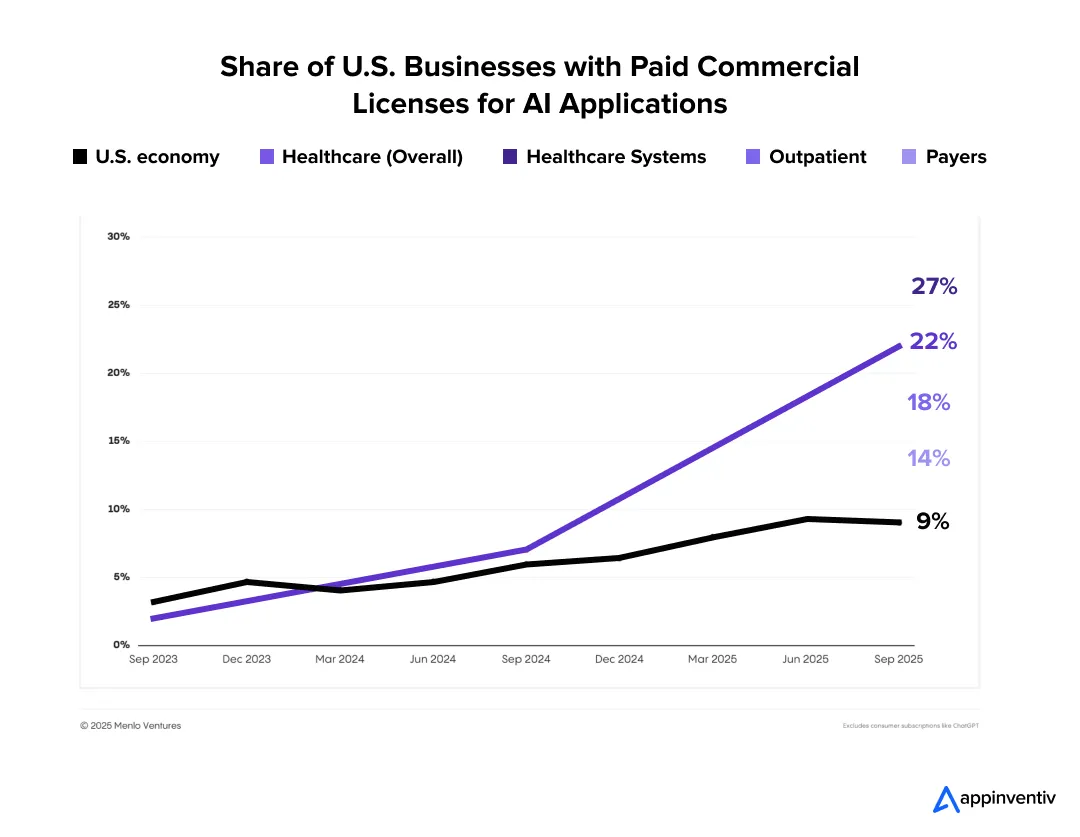
Healthcare is clearly winning the AI race. Once seen as a digital laggard, the $4.9 trillion industry, making up one-fifth of the U.S. economy but only 12% of software spending, is now adopting AI at more than twice the pace (2.2×) of the broader economy. (Source: Menlo Ventures)
Building on this rapid adoption, AI in healthcare administration is driving some of the most impactful improvements. Beyond claims management, it streamlines booking, scheduling, patient intake, prior authorizations, and billing reconciliation, eliminating redundant records and intelligently routing tasks across departments.
Such systems do not just enhance efficiency when implemented strategically. They help reduce the intangible administrative costs that contribute to personnel exhaustion. Several healthcare providers document workload cuts of nearly 40% in administrative processes, and this has left space in which teams can concentrate on organizational functions like patient coordination and quality operations instead of paperwork.
Implement AI in healthcare administration with guidance from our specialists

What Can AI Do to Help Medical Administrative Assistants?
Medical administrative assistants are overworked with scheduling, patient intake, insurance verification, follow-ups on prior authorizations, and record management. This load of operations usually leaves them incapacitated, unable to judge operations and provide direct patient care.
A 2025 Salesforce survey of 500 U.S. healthcare professionals determined that administrative employees estimated that with the help of AI agents, approximately one full workday would be regained every week, and that clinical teams believed that with the aid of agentic AI in healthcare operation, they would free up up to 36% of their paper-based work time, including care coordination, communication with patients, and other duties.
Workload pressure and administrative strain remain persistent across healthcare settings. Burnout rates in some clinical specialties range from 25% to 75%. Health systems are reassessing how to protect quality, safety, and workforce stability.
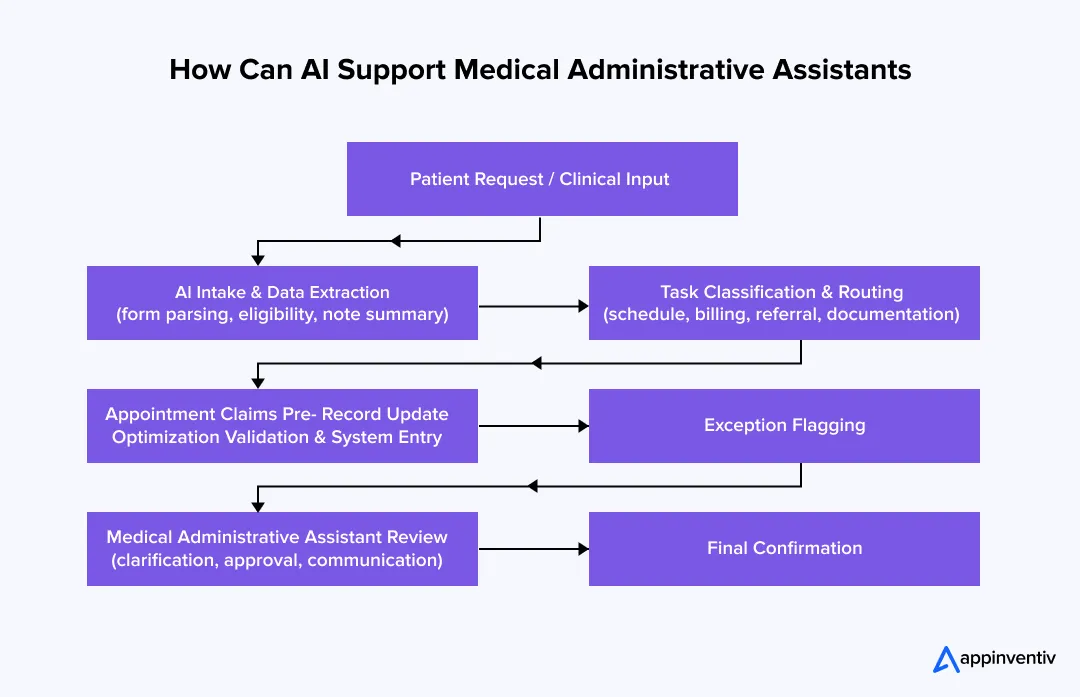
Within this context, AI in healthcare offers practical support by absorbing routine clerical tasks, allowing administrative and clinical staff to focus on patient interaction and critical oversight. It streamlines appointment coordination, eligibility checks, claims validation, and documentation routing without adding procedural friction. Administrative queues move faster, backlogs are easier to manage, and error-prone manual rework declines.
How Healthcare Administration Automation Cut Staff Workload by 40%
Structured automation across documentation, claims processing, and scheduling allows admin teams to shift rule-based tasks to intelligent systems. Based on operational assessments across high-volume departments, such workflow redesign can lower manual touchpoints by as much as 40%, particularly in claims validation and scheduling coordination.
- The AI engines identify incorrect coding, gaps in eligibility, and missing documentation before submissions to payers, minimizing the rework cycle and manual claim corrections.
- Risky claims are spotted at an early stage, which means teams can act in time before rejection, not after.
- Distribution of appointments matches the availability of physicians, the demand for the specialties, and trend patterns, thereby eliminating empty slots and last-minute changes.
- Auto coverage checks and updates are performed without human oversight, therefore reducing redundant data input.
- Automated structured summaries and intake notes lead to a reduction of staff activity in typing and validation as opposed to reviewing.
When combined and used jointly, the capabilities typically redirect 30% or 40% of clerical work out of manual processing and into oversight, quality assurance, and coordination with the patient. That can translate to thousands of staff hours diverted every year in mid-sized hospital systems, in terms of operation.
What 40% Workload Reduction Means in Practice
- 5,000–15,000 staff hours recovered annually
- 10–20% reduction in claim denials
- 1–3 day improvement in accounts receivable cycles
- 5–12% reduction in overtime costs
Cost of Implementing AI in Healthcare Administration
Implementation typically ranges from $250,000 to $2.5 million for mid-sized providers. Enterprise-scale programs across multi-hospital systems can exceed $5 million, depending on integration depth and automation scope. Here are some of the key cost drivers:
- Infrastructure maturity and cloud readiness
- Quality, consistency, and structure of historical data
- Complexity of legacy EHR and billing environments
- Scope and scale of automation across departments
- Regulatory compliance, audit readiness, and governance controls
Benefits of AI in Healthcare Administration: A Data-Backed View of Efficiency Gains
Artificial intelligence is providing quantifiable improvements in healthcare management across documentation processes and revenue cycle management. The next list of benefits is based on the fact that efficiency improvements can already be seen and how systematic automation is redefining day-to-day operations.
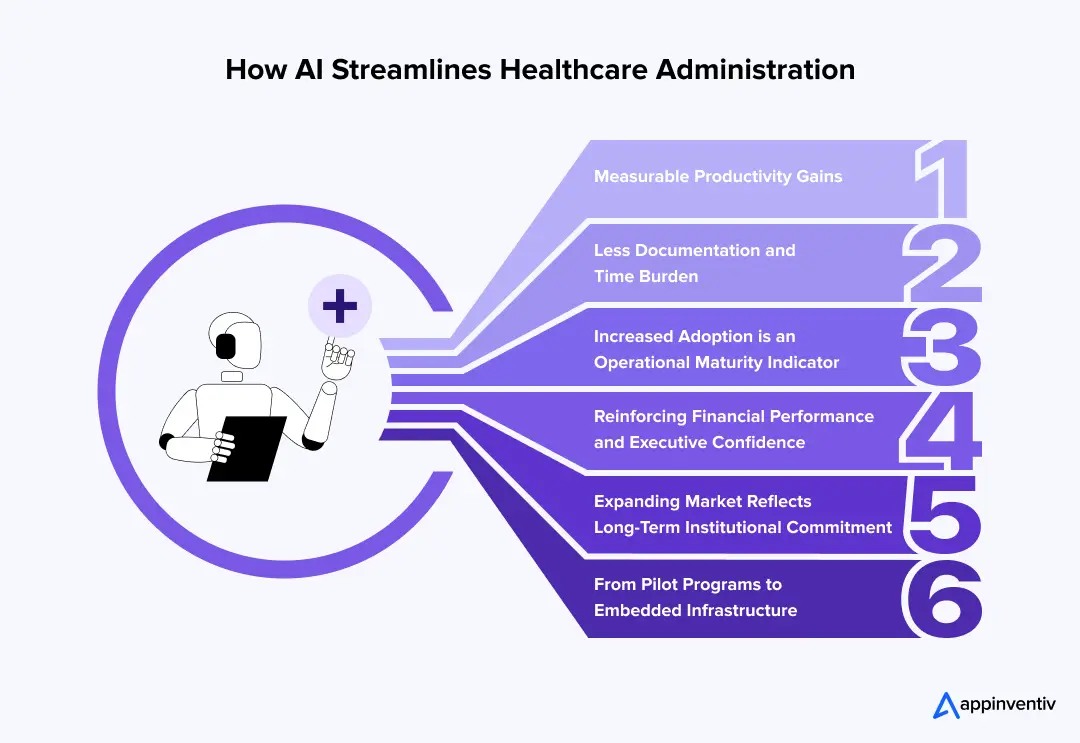
Measurable Productivity Gains
Healthcare administration automation is gradually eliminating clerical drag from scheduling, intake coordination, and claims processing. The survey of 100 healthcare technology executives at the Deloitte Center for Health Solutions was conducted in September of 2025 and included a focus group discussion with 35 industry leaders.
The results indicate that the previous obstacles to the use of AI are fewer. Half of the surveyed leaders claimed that shortages of technical talent are no longer a major constraint and that resistance to change, alignment of leadership and issues of data quality have also diminished as operational confidence is achieved.
Less Documentation and Time Burden
Hospitals and clinics are expanding healthcare administrative automation to manage documentation routing, appointment confirmations, eligibility checks, and follow-up communication. These systems address repetitive tasks in data entry and form validation tasks that would otherwise have had to be reviewed manually.
When documentation processes are planned and, to a certain extent, automated, administrative personnel have more time to focus on supervision, exception management, and face-to-face coordination with clinical units. The practical impact is maintaining consistent throughput and reducing backlog during peak operations.
Also Read: AI-powered Intelligent Document Processing in Healthcare
Increased Adoption is an Operational Maturity Indicator
The fact that the use of AI in healthcare administration has expanded beyond pilot settings indicates greater institutional commitment. In 2025, 22% of healthcare institutions reported using domain-specific AI, a significant increase from the previous year.
In August to September 2025, Menlo Ventures surveyed over 700 executives across the health care ecosystem, including over 410 technology decision-makers in hospitals and outpatient systems. The level of engagement shows that AI projects are no longer one-offs but are part and parcel of strategic practice.
Reinforcing Financial Performance and Executive Confidence
The policy, driven by attempts to reduce administrative workload in healthcare, is increasingly linked to quantifiable financial performance. An increasing consensus supports the executive surveys that AI investments are delivering measurable value, with documentation review, code reviews, and other data validation fully automated.
In a Deloitte survey, over 40% of health system leaders reported that generative AI tools for business had already delivered a quantifiable ROI. The confidence level seems to be the highest in the area where automation contributes to the stability of the revenue cycle and accuracy of documentation.
Expanding Market Reflects Long-Term Institutional Commitment
The magnitude of predicted expansion in AI automation in hospital operations is an indication of expanding applications in the administrative and operational sectors. It is predicted that the global AI healthcare market might surpass $1 trillion by the year 2034.
This trend implies a long-term investment in clinical decision support, as well as workflow coordination, operational analytics, and organized administrative systems that enhance coordination within the intricate care settings.
From Pilot Programs to Embedded Infrastructure
The trend toward healthcare back-office automation is pushing health systems past the experimental stage. A recent McKinsey study on the application of generative AI in healthcare found that 85% of leaders are researching or deploying some form of AI capabilities.
It is no longer focused on testing individual tools and instead on incorporating AI into the billing systems, documentation pipeline, and operational dashboards. The more AI is integrated, the more it will be used as infrastructure rather than an auxiliary technology.
Technology Stack Behind Healthcare Administrative Automation
The administrative automation in healthcare is based on a layered technology stack that integrates data, performs intelligent processing, and coordinates workflow. The combination of these elements enables safe information sharing, organized decision-making, and scalable automation in complex hospital settings.
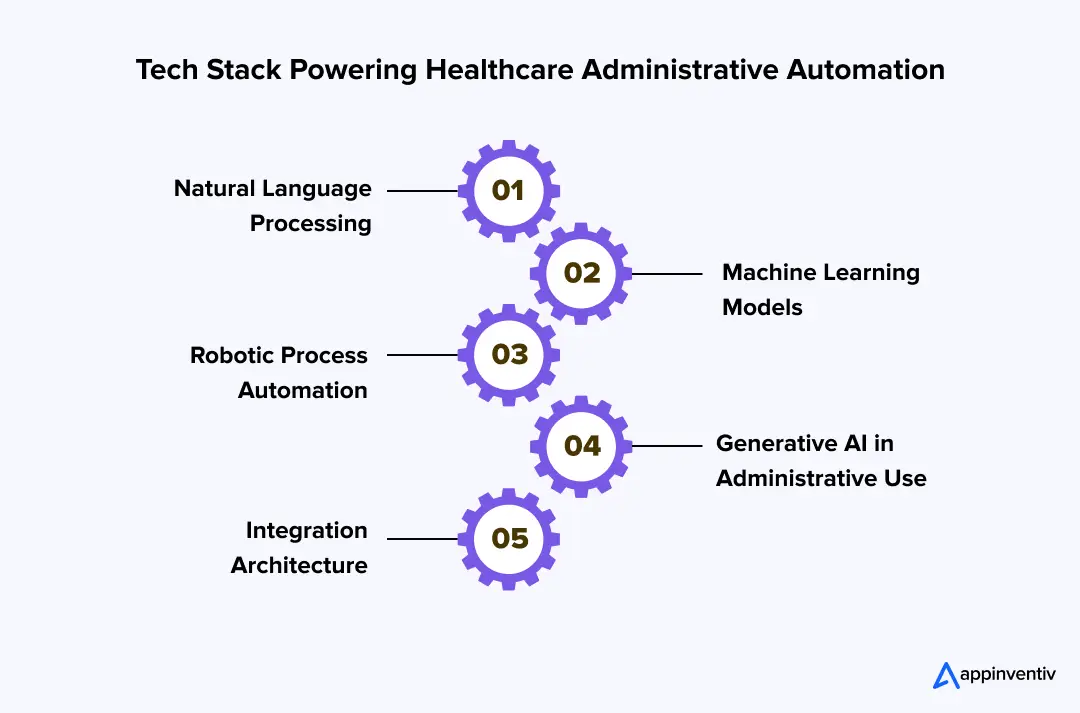
Natural Language Processing
NLP in healthcare supports clinical documentation processing by analyzing and transforming unstructured physician notes into billable, structured information. The ability enhances the AI healthcare administration, as it helps minimize the number of charts to be reviewed manually and achieves high coding accuracy.
NLP systems are also able to comprehend context, differentiating between active diagnoses and the past. The outcome is cleaner documentation with fewer errors in downstream billing.
Machine Learning Models
The predictive analytics and denial risk scoring in AI in healthcare operations management is powered by machine learning. These models examine the historical claims, payer conducts and schedules to predict results prior to submission or allocation.
Administrative teams can avoid unnecessary rework by detecting high-risk claims early through machine learning in healthcare. With time, the model’s accuracy increases as the size of the operational datasets grows.
Robotic Process Automation
The healthcare back-office automation supports robotic process automation, with automated tasks involving data transfer, status updates, and eligibility checks based on rules. RPA in healthcare does not require a complete infrastructure, as it can be integrated into existing hospital systems.
This enables repetitive administrative procedures to operate without much human involvement. It minimizes manual entry errors and improves the speed of routine work.
Generative AI in Administrative Use
Generative models enable AI for medical billing automation by generating claim summaries, creating structured justification, and summarizing patient interactions for review. These systems do not substitute control but help staff to make the documentation compliant.
Generative AI is used to make first-pass drafts, minimizing processing time and the repetition of written communication.
Integration Architecture
The adoption of AI for patient scheduling automation can be facilitated by secure integration frameworks that enable interoperability between AI engines and EHR platforms, namely API-based interoperability. Efficient data flow will ensure timely updates to the scheduling, billing, and documentation systems.
Regulatory compliance, access control and audit trails are enforced by governance layers. Administrative AI cannot safely scale between departments without a robust integration architecture.
Other Advanced AI Enhancements in Healthcare Administration
- Knowledge Graphs – Link patient data, clinical guidelines, and insurance rules for contextual decision-making.
- Reinforcement Learning – Optimizes dynamic scheduling, staffing allocation, and patient flow in real time.
- Digital Twin Simulations – Model hospital operations virtually to predict bottlenecks and test process changes before implementation.
- Explainable AI (XAI) – Ensures administrative AI decisions are transparent and auditable for compliance and trust.
This advanced stack not only streamlines workflows but also supports strategic decision-making, allowing hospitals to scale operations efficiently while maintaining high-quality patient care.
Leverage our expertise to create a cohesive data foundation for operational AI
Real-World Use Cases: AI in Healthcare Administration
In health systems, AI has already been integrated into common administrative processes, as opposed to pilot programs. These are just some of the use cases, as automation and predictive systems are enhancing accuracy, throughput, and coordination in concrete operational environments.
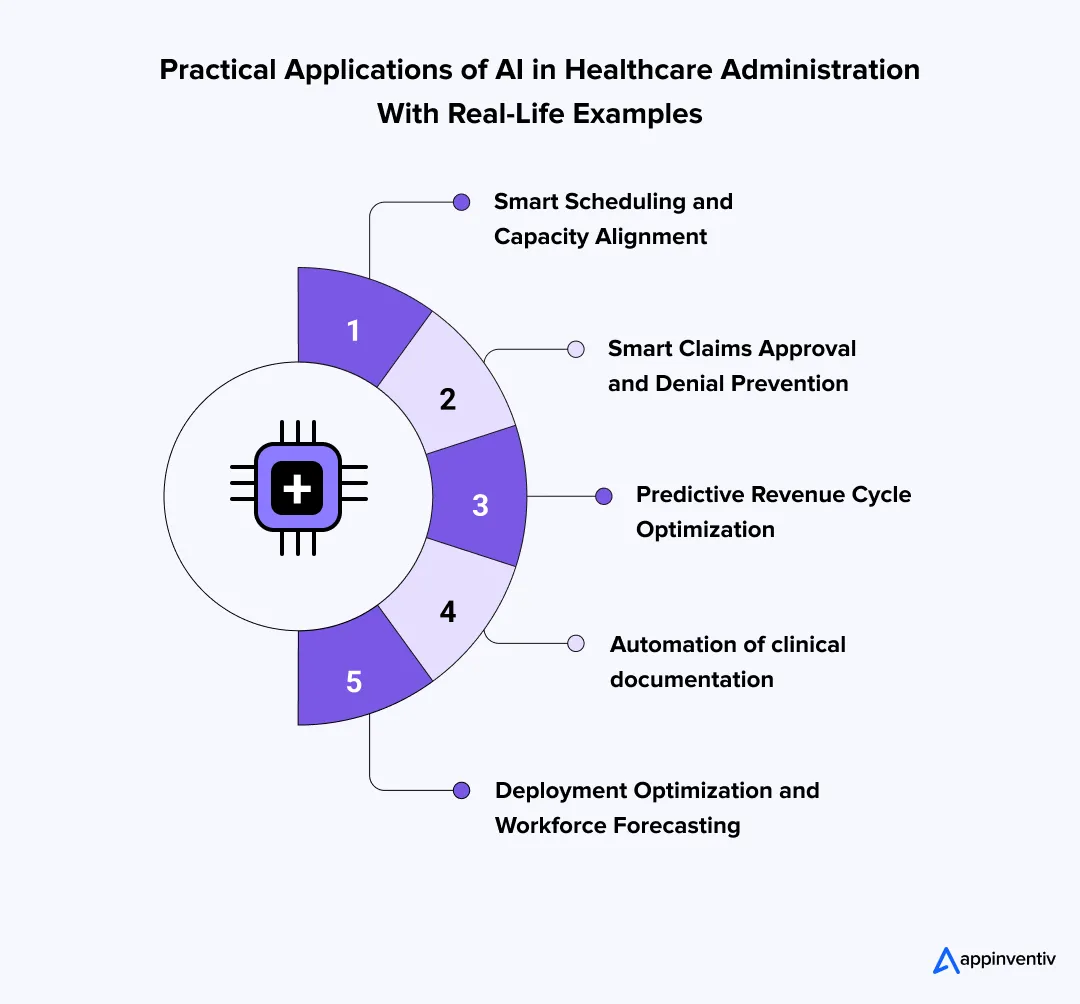
Smart Scheduling and Capacity Alignment
AI systems consider the demand for specialties, the number of available physicians, seasonal variations, and past patient flow to assign appointments and procedural slots with greater accuracy. The systematic approach will aid AI-driven healthcare productivity improvement by minimizing idle time in the operating room, reducing last-minute cancellations, and reducing manual interdepartmental coordination.
Mayo Clinic, which is investing more than $1 billion in AI initiatives across more than 200 projects that span administrative automation, diagnostics, and patient care, has been using predictive analytics in operational planning. These investments underscore how large systems are moving beyond pilots to embed AI into scheduling and resource allocation workflows.
Smart Claims Approval and Denial Prevention
Machine learning engines check the coding accuracy, payer edits, and documentation completeness and send them back. The orderly approach of using AI for medical billing or claims processing in healthcare minimizes avoidable denials, reduces rework, and enhances first-pass claim acceptance.
UnitedHealth Group has implemented AI-based claims analysis systems capable of inspecting millions of claims per day. The disclosures to the population demonstrate greater adjudication accuracy and reduced manual interference in claims operations. Industry performance standards indicate that AI-powered pre-submission validation can reduce the denial rate by 10% to 20% and shorten total reimbursement cycles in large provider networks.
Predictive Revenue Cycle Optimization
AI systems integrated into billing systems predict reimbursement delays, prioritize at-risk accounts, and automate follow-up processes. The capabilities enhance AI-powered revenue cycle management by reducing days in accounts receivable and increasing the scale of clean-claims performance.
HCA Healthcare incorporated predictive analytics in its revenue cycle processes. Improved cash flow predictability and decreased administrative escalation have been reported across its multi-state organizational network. Even one day of accounts receivable turnover can free tens of millions of dollars in working capital in large hospitals with a mix of commercial and government payers.
Automation of Clinical Documentation
NLP technologies transform handwritten or spoken clinical documentation into systematic data in the enterprise databases, enhancing automation of electronic health record (EHR) and reducing the need to perform repetitive documentation processes. These systems make sense of clinical scenario real-time and map narrative notes to structured fields of enterprise platforms.
In a large internal rollout, The Permanente Medical Group tested AI documentation tools during 2.5 million encounters. Physicians recovered 15,791 hours from routine note-taking. In practical terms, that equals nearly 1,800 workdays redirected to clinical time.
Feedback was direct. 84% of physicians reported that patient communication improved. A close 82 percent reported greater satisfaction in their work. Patients echoed that impression. 47% reported that physicians looked at the computer less often during appointments.
Also Read: AI in Clinical Decision-Making Systems
Deployment Optimization and Workforce Forecasting
Staffing platforms based on AI analyze patient acuity, seasonal demand, and past shift data, and match workforce capacity with operational requirements. This hierarchical model allows focusing on optimal utilization of the healthcare workforce and minimizing scheduling conflicts and overtime exposure.
Cleveland Clinic deployed predictive staffing analytics in a few service lines. The organization also noted a better balance between staffing and patient volume, which positively impacted the reduction of overtime dependency and the elimination of last-minute staffing crises in the high-need units. Industry research shows that predictive staffing models can cut overtime costs by 5% to 12% while maintaining labor levels during changing care volumes.
How to Build an AI-Ready Healthcare Administrative System
An AI-ready administrative system cannot be built solely through tool selection. It requires organized processes, data hygiene and horizontal integration to enable automation to scale effectively. Here’s how healthcare organizations can be ready to integrate AI sustainably in terms of infrastructure and workforce.
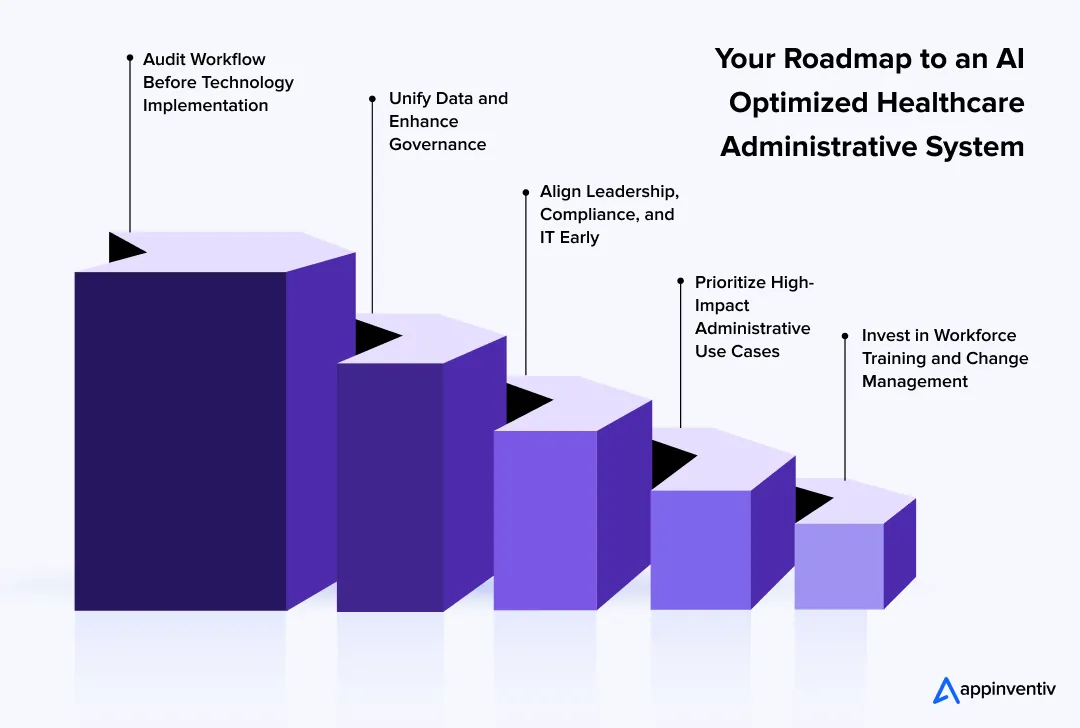
Audit Workflow Before Technology Implementation
Start with a systematic analysis of the scheduling, billing, intake, and documentation procedures. Map bottlenecks, manual touchpoints, and rework cycles before introducing tools for hospital workflow automation with AI.
Technology overlaid on inefficient processes just makes matters more confusing. The clear operational base will enable the leadership to establish the areas where automation will create a quantifiable difference.
Unify Data and Enhance Governance
AI systems depend on clean, interoperable data. Health systems preparing for AI for healthcare process optimization should invest in data normalization, clear ownership protocols, and consistent documentation standards.
Predictive models and automation engines cannot work effectively without controlled data governance. It is not unusual that preparing data infrastructure is more significant than the choice of the software itself.
Align Leadership, Compliance, and IT Early
The effective scaling of AI for healthcare administration will demand unified efforts in planning both clinical leadership, compliance teams, finance and IT. Provide obvious responsibility in supervision, risk control, and vendor analysis.
Timely alignment minimizes delays during implementation and ensures that automation activities are not subject to a regulatory scheme or an organizational strategy.
Prioritize High-Impact Administrative Use Cases
Organizations aiming at reducing administrative workload in healthcare should focus first on repetitive, rule-based processes such as eligibility verification, prior authorization routing, and documentation review.
Such areas usually generate expedited operation returns and quantifiable time benefits. Contained use cases are initiated to build confidence in the institution before moving to more complex functions.
Invest in Workforce Training and Change Management
The process of AI automation in hospital operations requires proper preparation in terms of the workforce. Administrative personnel and managers should be familiar with how AI tools work, when human control is necessary, and exception handling.
Resistance is avoided through training programs and effective communication, morale is maintained, and automation is made to improve and not destabilize operations.
Partner with our team to deploy AI across your healthcare administrative functions

Why AI Initiatives Stall in Healthcare and What Corrects the Course
A large number of AI projects do not work due to poor models, but because the reality of operations is underestimated. Here are some of the obstacles to implementing AI in healthcare administration and ways to overcome them:
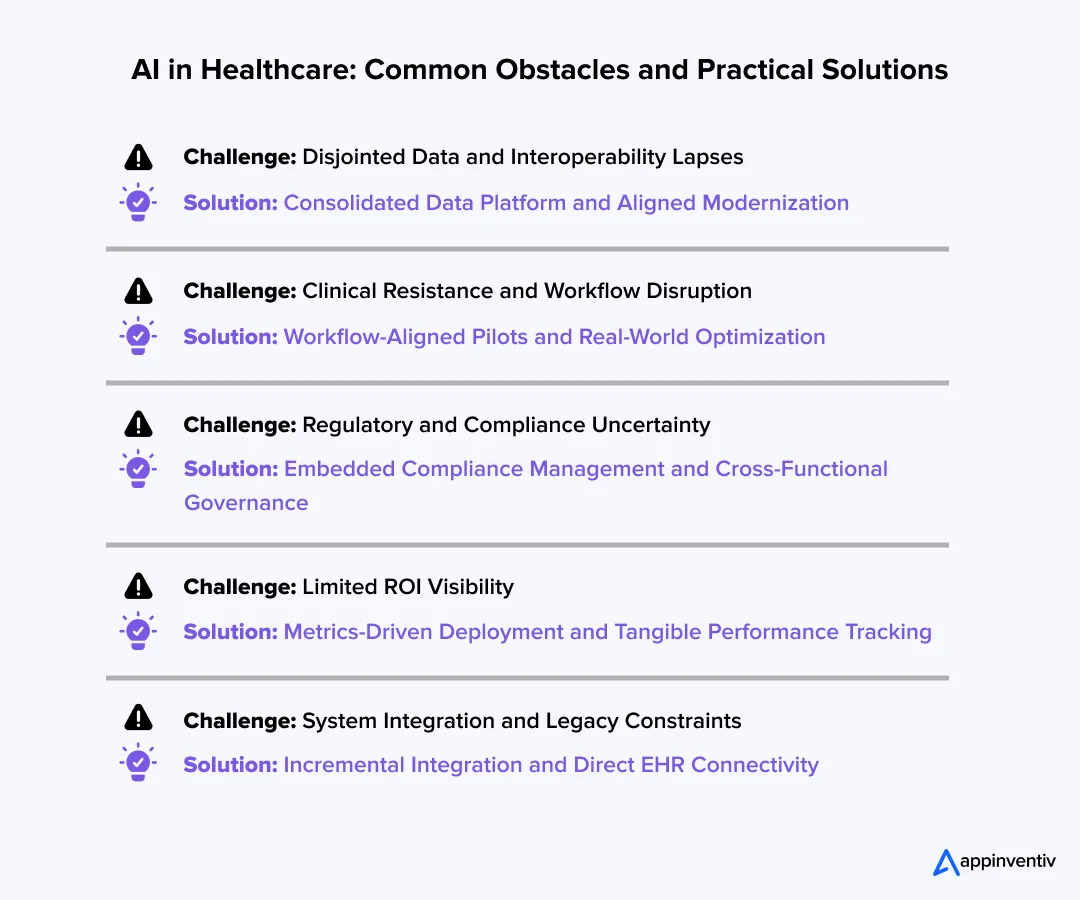
Disjointed Data and Interoperability Lapses
The existence of various systems that seek healthcare administration automation is based on disparate data environments. Clinical documentation, billing solutions, scheduling applications, and old databases often do not have a structured integration. Model results are unreliable when the datasets are inconsistent or incomplete.
Solution: Create a consolidated database before expanding AI initiatives. Organizations that integrate AI projects into broader data modernization efforts achieve faster validation and more reliable findings.
Clinical Resistance and Workflow Disruption
Healthcare administrative automation is prone to failure whenever it interferes with the existing work processes. When AI tools introduce additional procedures or repeat the paperwork, clinicians and staff lose interest. All resistance is usually based on friction, rather than ideology.
Solution: Design systems around existing routines. Test solutions within controlled departments, save time per user, and optimize based on real-world responses. Adoption is higher when the administrative staff perceives a reduction in actual workload rather than a hypothetical efficiency argument.
Uncertainty in the Regulatory and Compliance
Executives evaluating AI for healthcare administration face complex regulatory questions. The fact that algorithms are transparent, controlled, and the documentation standards and audit readiness lead to hesitation, especially when it comes to large provider networks.
Solution: Adhere to healthcare compliance and other regulatory standards during the development process. Implement cross-functional governance committees comprising legal, clinical and technical leadership to ensure the responsible implementation in the beginning.
Limited ROI Visibility
AI investments are commonly endorsed for their long-term forecasts but are often criticized for their scant short-term financial understanding. This is especially true when initiatives are positioned as AI-driven healthcare productivity improvement without measurable baselines.
Solution: Attach any deployment to specific metrics like a decrease in the denial rate, days in accounts receivable, overtime or hours saved during documentation processes. Executive confidence is reinforced when AI programs demonstrate direct performance and financial impact.
System Integration and Constraints of Legacy Infrastructure
Companies that seek to modernize their healthcare processes often lack a clear understanding of the technical challenges of integrating AI devices into foundational platforms. Low cohesiveness in EHR automation programs may delay implementation and lead to parallel systems.
Solution: Focus on incremental integration plans. Interoperability testing in the sandbox environment prior to the production rollout. Directly connect AI solutions to EHR optimization strategies so that they do not introduce redundancy and so that automation can reinforce, and not confuse, enterprise systems.
The Future of AI in Healthcare Administration
The healthcare administration is shifting to an AI stage where it is not just a one-off task automation but an operational intelligence. The progression of the next phase is as discussed below with the help of advanced technologies and well-designed implementation models.
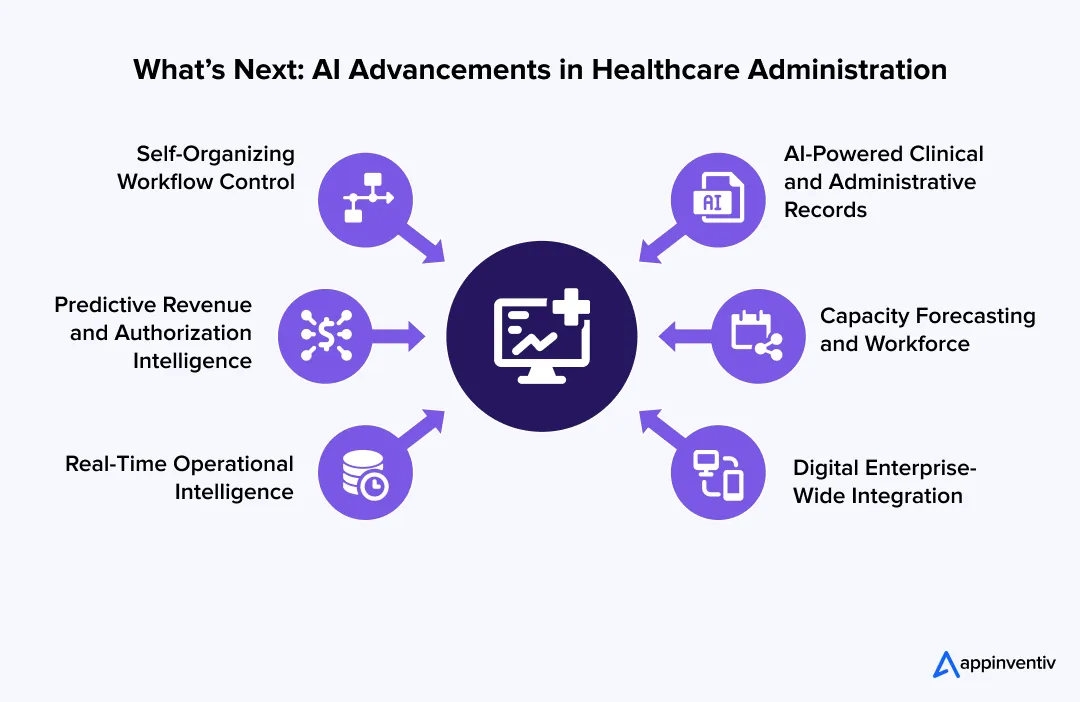
Self-Organizing Workflow Control
The future of AI in healthcare administration is a system that integrates scheduling, billing, intake, and documentation into a coordinated workflow rather than individual processes. Rather than reacting to the problem, platforms will identify friction points early and prescribe actions to resolve them within the department.
AI-Powered Clinical and Administrative Records
The following stage of AI in medical documentation will be beyond ambient scribing. Systems will write referral letters, summarize case histories, prepare authorization packets and organize the notes in enterprise records. Administrative employees will no longer be involved in creating documentation but will instead read, verify, and refine AI-generated drafts.
Predictive Revenue and Authorization Intelligence
The automation will be focused more on payer interactions. AI for prior authorization automation will screen requests in advance, compile the necessary documentation, and flag potential denials to avoid resubmissions and minimize rework. Such a strategy improves the predictability of reimbursement and reduces the time to collect revenue.
Capacity Forecasting and Workforce
Future systems will embed predictive staffing analytics into administrative dashboards, aligning workforce deployment with patient acuity, admission trends, and seasonal variation. Rather than reacting to shortages, teams will plan proactively. This minimizes reliance on overtime and normalizes the staffing processes according to the varying demand patterns.
Real-Time Operational Intelligence
The growth of hospital operations analytics will enable administrators to monitor bed occupancy, discharge rates, referral rates, and throughput in real time. AI engines will recognize bottlenecks and offer references to scheduling or routing options before delays become complex. The operation control will become proactive rather than backward-looking.
Digital Enterprise-Wide Integration
The grander narrative represents the continuous digital transformation in healthcare operations, where AI systems are part of the enterprise core platform, as opposed to being extrinsic. Mechanisms of governance, audit trails and explainability will be incorporated early on. Over time, AI will become less visible as a distinct initiative and more embedded within the administrative backbone of healthcare institutions.
Health systems that begin structured AI integration today will define operational resilience over the next decade.
Partner with Appinventiv to Modernize Healthcare Administration Through AI
Artificial intelligence will continue to transform healthcare management in viable, quantitative ways. The increasingly structured and automated routine processes will be documentation review, claims validation, scheduling coordination and prior authorization routing as systems mature.
This change has nothing to do with replacing human judgment. It focuses on eliminating clerical stress at the watershed level, enabling administrative and clinical teams to focus on the agenda, oversight, and patient interaction. In the long run, artificial intelligence will ensure revenue circles become shorter, less operational friction and greater predictability of hospital operations.
The potential needs to be translated into trusted action, which cannot be achieved without discipline. Appinventiv, as industry leaders in AI services, assists healthcare institutions in this change by adapting technology design to work realities. Its experience in its work on the digital health platforms shows practice and not theory.
DiabeticU, Soniphi, Health-e-People, and Livia Health demonstrate that well-structured data systems, smart automation, and patient-centered platforms can be used in controlled health care settings.
Appinventiv assists organizations in going beyond testing and designing sustainable AI-powered administrative infrastructure to enhance efficiency without damaging care quality by applying technical ability and familiarity with the healthcare domain.
Connect with our AI consulting services experts to evaluate and implement the right AI strategy for your healthcare organization. We help you translate practical ideas into structured deployments that streamline operations, strengthen compliance, and improve administrative efficiency.
FAQs
Q. How can AI reduce administrative burden in hospitals?
A. Healthcare administration automation delays the use of manual paperwork, reduces redundancy in data entry and unnecessary claim corrections. It automates scheduling, eligibility, documentation, and bill validation. This reduces processing cycles, eliminates rework, and allows administrative teams to concentrate on coordination but not routine work.
Q. What tasks in healthcare administration can AI automate?
A. Some of the major tasks that can be automated by the AI healthcare administration include:
- Scheduling of the appointments and reminders
- Checking eligibility and benefits insurance
- Checking of medical coding and documentation
- Denial prediction and claims processing
- Digital form data could be extracted and used to obtain patient intake data
- Inquiries and payment status communication billing
Q. How does AI improve hospital operational efficiency?
A. AI for hospital administration improves operational efficiency by forecasting admissions, outpatient volume, and staffing requirements with data-driven precision. It reduces manual schedule revisions and prevents last-minute overtime adjustments.
It also strengthens revenue accuracy by validating documentation and claims before submission, which lowers denial rates and shortens reimbursement cycles.
In addition, AI for hospital administration automates repetitive back-office workflows such as data reconciliation, referral routing, and compliance reporting. This reduces processing delays and improves coordination across clinical and administrative departments.
Q. Can AI reduce staff burnout in healthcare systems?
A. AI reduces staff burnout in hospitals by handling repetitive administrative tasks, minimizing claims rework, and automating high-volume communication. It eases the mental workload of clinicians and support staff, improving work-life balance and helping healthcare systems retain their professionals.
Q. What ROI can hospitals expect from AI automation?
A. Through AI automation, hospitals can expect a good return on investment. Here’s how:
- Lower denial rework: Healthcare administrative cost reduction decreases manual correction cycles and appeal handling.
- Quick reimbursements: AI-powered healthcare revenue cycle management improves clean-claim rates and accelerates payments.
- Reduced overtime: Healthcare administrative cost reduction lowers excess staffing and administrative hours.
- Stable cash flow: AI-powered revenue cycle management strengthens revenue predictability and billing accuracy.
Q. How does Appinventiv implement AI in healthcare administration?
A. Here’s a roadmap on how Appinventiv implements AI for healthcare administration:
- Workflow assessment: Healthcare workforce optimization begins with identifying high-burden administrative processes.
- Predictive deployment: Hospital operations analytics powers scheduling and revenue forecasting models.
- System integration: Healthcare workforce optimization embeds AI into existing hospital infrastructure.
- Performance tracking: Hospital operations analytics continuously monitors KPIs and refines automation models.

- In just 2 mins you will get a response
- Your idea is 100% protected by our Non Disclosure Agreement.

How Much Does It Cost to Build a Conversational AI Chatbot in the UAE?
Key Takeaways AI chatbot development in the UAE typically costs AED 150,000–1,470,000 ($40K–$400K), based on complexity. Backend integration and compliance drive cost more than the chatbot interface itself. Arabic NLP, UAE hosting, and PDPL requirements increase budget and engineering effort. LLM + RAG enterprise chatbots sit at the higher end due to integration and infrastructure…
AI Inventory Management in Australia: Benefits, Use Cases, and Implementation Strategies
Key takeaways: Traditional ERP planning reacts to history; AI predicts demand shifts, reallocates stock dynamically, and prevents costly stockouts across distributed Australian networks. AI in inventory management in Australia typically reduces inventory levels 20–40% while maintaining service targets, unlocking significant working capital across multi-state operations. Enterprise implementations usually range from AUD 70,000 to AUD 700,000+,…
How to Hire RAG Architects for Enterprise AI
Key takeaways: Define your RAG architecture scope to avoid misaligned hiring decisions Identify end-to-end architectural ownership across retrieval, governance, and scaling Evaluate deep technical capabilities beyond prompt engineering and tools Validate governance and compliance readiness at the retrieval layer Test system-level thinking through real-world failure scenarios Choose the right hiring model based on scale, risk,…