


















- Market Opportunity & Why It Matters for Founders
- Why This Growth Matters
- What Founders Should Think About Now
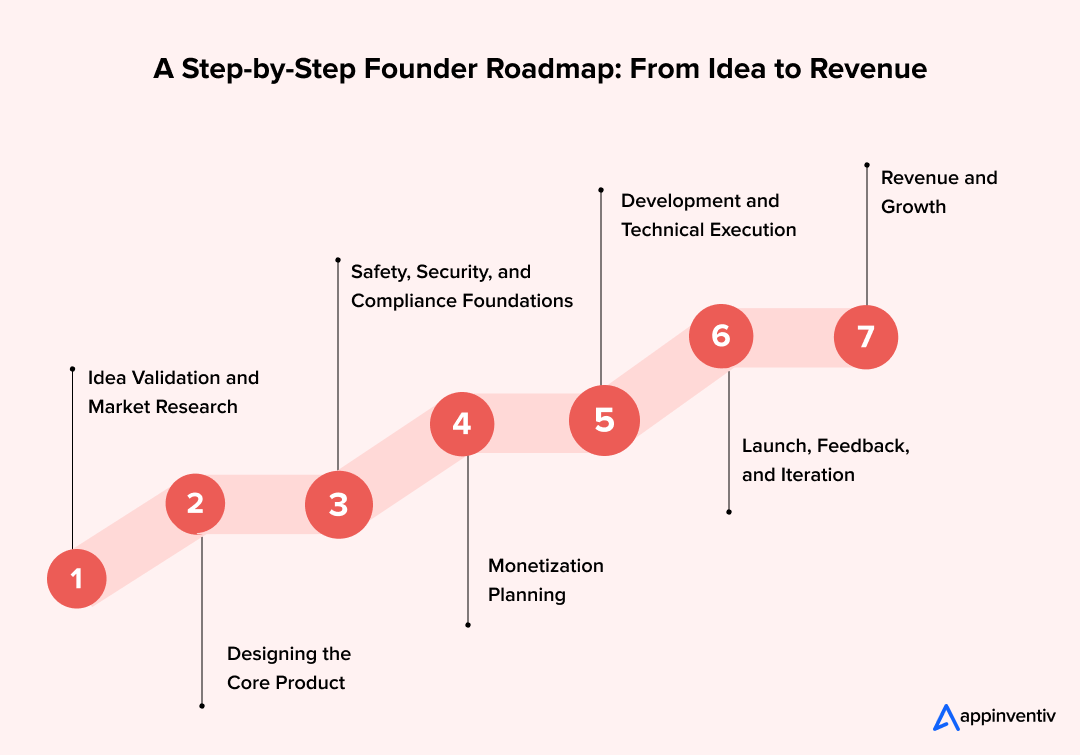
- A Step-by-Step Founder Roadmap: From Idea to Revenue
- Phase 1: Idea Validation and Market Research
- Phase 2: Designing the Core Product
- Phase 3: Safety, Security, and Compliance Foundations
- Phase 4: Monetization Planning
- Phase 5: Development and Technical Execution
- Phase 6: Launch, Feedback, and Iteration
- Phase 7: Revenue and Growth.
- Core Features and Technology Choices: What Founders Should Focus On
- Features That Actually Keep Users Around
- Features That Support Growth, Not Just Hype
- Technology Choices That Quietly Matter
- Dating App Monetization Models: Turning Engagement Into Revenue
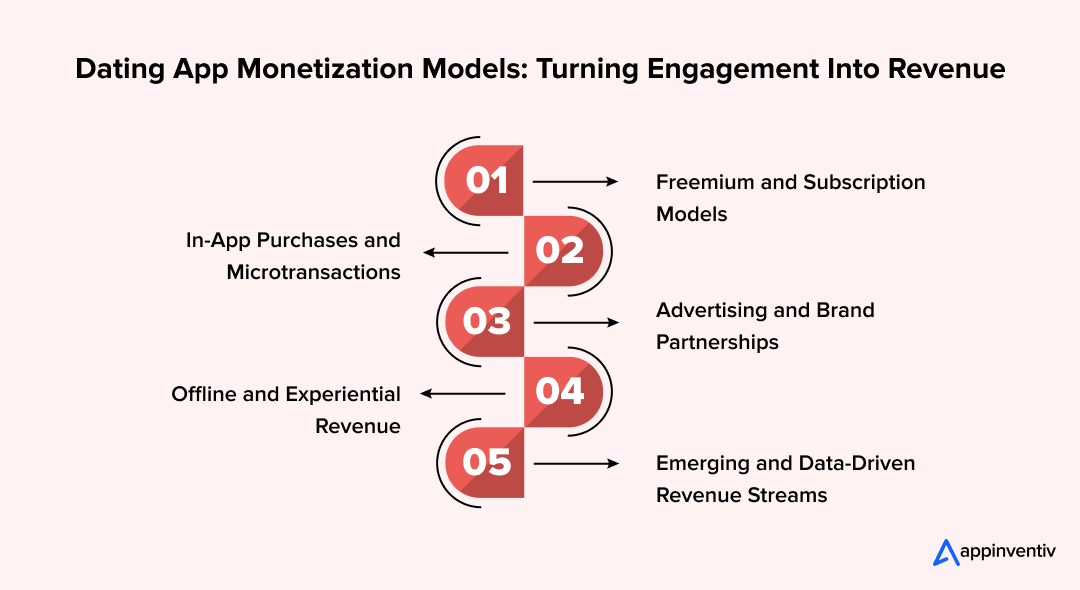
- 1. Freemium and Subscription Models
- 2. In-App Purchases and Microtransactions
- 3. Advertising and Brand Partnerships
- 4. Offline and Experiential Revenue
- 5. Emerging and Data-Driven Revenue Streams
- Dating App Development Cost: A Founder’s Reality Check
- Dating App Cost Breakdown by Stage
- What Pushes Costs Up or Down
- Types of Dating Apps and Which Monetization Model Fits Best
- 1. Swipe-Based, Mass-Market Dating Apps
- 2. Serious or Intent-Based Dating Apps
- 3. Niche or Community-Driven Dating Apps
- 4. Social Discovery and Hybrid Platforms
- 5. AI-Driven or Premium Experience Apps
- Common Monetization Mistakes Founders Make
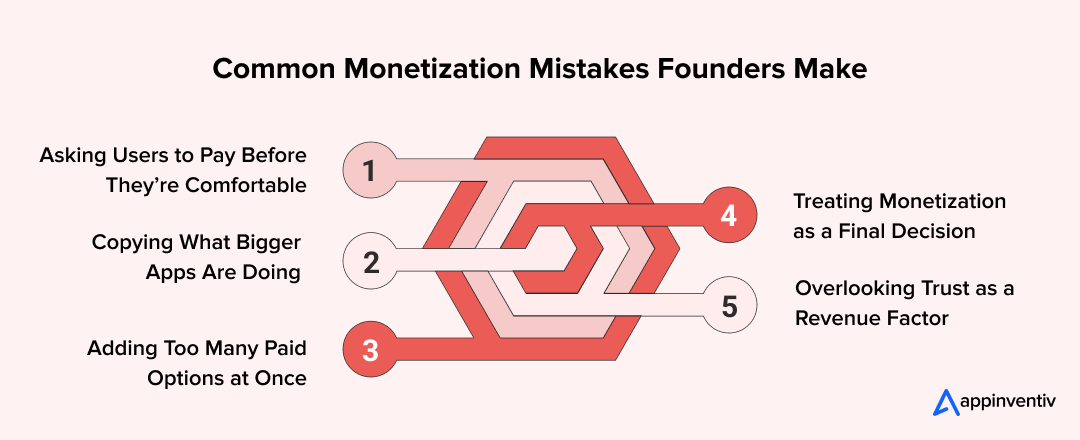
- Asking Users to Pay Before They’re Comfortable
- Copying What Bigger Apps Are Doing
- Adding Too Many Paid Options at Once
- Treating Monetization as a Final Decision
- Overlooking Trust as a Revenue Factor
- A Simple Founder Checklist Before You Monetize
- What to Consider Before Choosing a Dating App Development Company
- Partnering With Appinventiv to Build Social and Dating Apps That Last
- FAQs
Key takeaways:
- Dating app success depends more on early product decisions than flashy features or quick monetization.
- A strong MVP focuses on matching, messaging, and trust before advanced functionality.
- Monetization works best when introduced after users see real value, not at first interaction.
- Safety, privacy, and data protection directly impact retention and willingness to pay.
- Clear budgeting and phased development reduce risk and prevent costly rework later.
Spend a few minutes watching how people interact with dating apps today, and the shift becomes obvious. Users move fast, abandon apps quickly, and rarely give second chances to experiences that feel generic. What worked a few years ago no longer holds. A swipe, a match, and a chat box are now just the starting point, not the reason people stay.
From a founder’s perspective, dating app development often begins outside the tech stack. It starts with practical questions raised in planning sessions or late product reviews. How does the app feel in the first few minutes? What reassures users that profiles are real? Where does monetization fit without breaking trust? These decisions shape engagement and revenue long before any code is finalized.
If you are considering how to create a dating app or thinking through how to make a dating app stand out, simplicity tends to win. Users respond better to a focused set of features than to overloaded screens. Clear design builds confidence. Paid options work when they feel optional and fair, not restrictive. Details like when limits appear or how upgrades are introduced often influence whether users stay or leave.
This guide examines mobile app development for dating apps through a practical lens. It outlines the dating app development process and explores dating app monetization strategies based on real usage patterns. Whether you are launching a new platform or improving an existing one, the aim is straightforward. Build a dating app that people feel comfortable using and a business that grows without losing that trust.
Before you invest time and budget, it helps to pressure-test the idea, feature scope, and monetization approach.

Market Opportunity & Why It Matters for Founders
The market for dating app development isn’t static. It’s growing steadily as more people around the world embrace digital ways to meet and connect. That means more users, more engagement, and more revenue opportunities, if you build the right experience.
According to Global Growth Insights, the global dating apps market is projected to grow from around $9.33 billion in 2025 to $9.78 billion in 2026, and is expected to reach nearly $14.9 billion by 2035. That tells you two things: the space is still expanding, and mobile platforms are becoming the dominant way people connect online.
As a founder, thinking about how to build a dating app, this growth means:
- More users are open to digital matchmaking, especially on mobile.
- Premium revenue streams continue to mature, with a rising share of users willing to pay.
- Competition will increase, making differentiation essential.
Why This Growth Matters
- Smart growth beats early hype: The pace isn’t explosive, but it’s steady. That means founders need a solid product and monetization plan, not just early downloads.
- Mobile first: Nearly 70% of users prefer engaging through mobile apps, making dating mobile app development a must‑have strategy.
- Room for innovation: As traditional features become table stakes, smart use of social features, safety tools, and monetization models can make your app stand out.
What Founders Should Think About Now
To tap into this opportunity, leaders should focus on three areas:
- Differentiated product- Build more than just swipes and messages. Think of real value.
- User trust and safety- This isn’t casual play; people are sharing personal details and expect security.
- Clear monetization from the start- Monetization shouldn’t be an afterthought. It should be baked into the experience early on.
Whether you’re planning to create a niche-focused dating app or considering broader social networking app development elements, understanding the market trajectory will keep your strategy grounded in real business potential.
A Step-by-Step Founder Roadmap: From Idea to Revenue
Most founders don’t realize how messy this process is until they are already in it. One week, you feel confident about the idea, the next week, user feedback pokes holes in the assumptions you were sure about. That is normal. Building a dating app is not about following a perfect plan. It is about making steady decisions that hold up when real people start using the product. This roadmap reflects how that journey usually plays out.
Phase 1: Idea Validation and Market Research
This stage occurs outside design tools and sprint boards.
- Define your niche: Start by clearly stating who the app is for, not in marketing language, but in everyday terms. Professionals, people with shared interests, or a local crowd all behave differently. The clearer this is, the fewer wrong turns you take later.
- Analyze competitors: Use other apps like a user, not a founder. Scroll, match, hit the paywall, and read reviews. You will quickly notice patterns around what feels annoying, what feels repetitive, and what breaks trust.
- Talk to potential users: These conversations are often uncomfortable and extremely useful. Ask why they stopped using certain apps. Ask what felt like a waste of time. Ask what would actually make them pay. The answers tend to be more practical than expected.
- Set clear business goals: Decide what matters most early on. Is it a daily activity, retention, or proving that people will pay? This focus keeps the dating app development process grounded when trade-offs appear.
Founder insight: The more honest this phase is, the less backtracking you do later.
Phase 2: Designing the Core Product
This is where users, often quietly, decide whether the app is worth keeping.
- Onboarding and profiles: Signing up should not feel like filling out a form, but profiles still need enough detail to support real matches. Too little effort here usually leads to poor experiences later.
- Matching and discovery: Different audiences respond to different flows. Some enjoy fast swiping. Others prefer slower, more curated discovery. The wrong choice here shows up quickly in engagement numbers.
- Messaging and interactions: Messaging needs to feel reliable and natural. If chats lag, feel awkward, or seem unsafe, users leave without explanation.
- Trust and safety mechanisms: Visible verification and clear reporting tools matter more than most founders expect. They quietly shape how long users stay.
Founder insight: Strong UX decisions here often determine whether premium features ever feel justified.
Phase 3: Safety, Security, and Compliance Foundations
By 2026, safety isn’t a differentiator—it’s the baseline. Dating apps that treat trust as an add-on struggle with churn, while platforms that build it into the foundation retain higher-intent users.
- Stronger identity verification: Move beyond basic photo uploads. Liveness checks and biometric verification help ensure that real people are behind profiles, reducing the risk of fake accounts and impersonation.
- Proactive moderation, not reactive cleanup: Modern moderation relies on AI-assisted analysis to flag scams, abusive patterns, or harmful behavior early, with human review layered in through admin dashboards.
- Privacy-first data handling: Encrypt private messages and sensitive profile data by default. Compliance with GDPR and CCPA is expected, but enterprise-grade apps are designed to meet SOC 2 and ISO standards.
- Location safety by design: Techniques such as fuzzy geolocation protect users from being tracked precisely while still enabling relevant matches.
Founder insight: Safety isn’t a cost center. It directly reduces churn and increases willingness to pay, especially among serious, high-value users.
Phase 4: Monetization Planning
Revenue works best when it does not interrupt the experience.
- Select a monetization model: Subscriptions, boosts, one-time upgrades, or a mix. All work in different contexts. The right choice depends on how engaged users already are.
- Time premium features carefully: Showing paid options too early creates resistance. Showing them too late delays important signals.
- Test pricing approach: Small adjustments can usually tell more about big launches. Pricing is more of perception than of numbers.
- Match user value: Paid features must enhance results, not seem like a workaround.
This is the point at which the process of dating app monetization starts influencing the long-term sustainability.
Phase 5: Development and Technical Execution
A working app is easy to launch. A platform that holds up under growth is much harder. Technical decisions made early often decide whether scaling feels smooth or painful.
- Backend built for concurrency: Messaging-heavy dating apps need architectures that handle thousands of real-time interactions without lag. Microservices and event-driven systems reduce bottlenecks as usage grows.
- Smarter matching systems: Modern matching goes beyond filters. Semantic and intent-based matching allows users to connect based on compatibility signals rather than just age and distance.
- Mobile framework choices that scale: Cross-platform frameworks are fast, while native builds make sense for advanced features like video or AR. The right choice depends on the roadmap, not trends.
- Elastic infrastructure: Cloud-native setups with automated scaling ensure the app performs during traffic spikes without inflating costs during quieter periods.
- Visibility into performance and behavior: Real-time monitoring and funnel analytics help teams spot performance issues, drop-offs, and monetization friction early.
Founder insight: Many “budget” builds hit a wall once traction arrives. Designing for scale upfront prevents expensive rewrites when growth finally happens.
Dating App Tech Stack
| Layer | Recommended Technology | Why it’s the Enterprise Choice |
|---|---|---|
| Cross-Platform Frontend | Flutter / React Native | Accelerates TTM (Time-to-Market) while maintaining 60fps UI performance. |
| Real-Time Backend | Node.js (NestJS) / Go | Optimized for high-concurrency (handling thousands of concurrent swipes/chats). |
| Primary Database | PostgreSQL (with PostGIS) | Robust relational data handling + superior geospatial querying for location matching. |
| AI/Vector Database | Pinecone / Milvus | Essential for Semantic Matching—connecting users based on “vibe” and bio intent, not just keywords. |
| Real-Time Messaging | WebSockets / Socket.io | Low-latency, bi-directional communication for an “instant” chat feel. |
| Caching & Session | Redis | Sub-millisecond data retrieval for active user sessions and matching queues. |
| Safety & Moderation | AWS Rekognition / Custom LLMs | Automated image/video moderation and toxic text detection at scale. |
| Cloud & DevOps | AWS / GCP with Kubernetes | Ensures “Elastic Scaling” so the app stays up during massive traffic spikes. |
Phase 6: Launch, Feedback, and Iteration
Launching answers questions that no planning session can.
- Collect feedback early: Watch how users actually behave. Their actions usually tell a clearer story than surveys.
- Optimize monetization: Dynamically make changes to pricing and placement after actual usage patterns appear.
- Prioritize fixes: Work on the problems that have an impact on trust, engagement, or payments first.
Founder insight: Early users will tend to reveal issues and opportunities that no roadmap can ever anticipate.
Phase 7: Revenue and Growth.
After the experience is solid, development becomes more conscious.
- User acquisition: Invest in those channels that are sure to reach the right audience, not huge numbers.
- Retention loops: Retention loops are used to facilitate habits by encouraging long-term retention through incentives, referrals and in-app activity.
- Vary revenue sources: Advanced premium options, partnerships or events may lessen dependence upon a single model.
- Constant iteration: Constant advancement keeps the app relevant amid changing expectations.
Founders considering how to develop a dating app must go beyond launch at this stage. Ongoing interaction and refinement drive sustainable revenue.
It is a matter of time and discretion to transform an idea into a money-making dating application. Founders who do not sit far away in the ivory tower, make purposeful design decisions, and monetize slowly are much more likely to create what users trust and a business that grows in a realistic, slow fashion.
Also Read: A Business Guide to Build an AI-Powered Dating App
Core Features and Technology Choices: What Founders Should Focus On
When you’re in the middle of dating app development, it’s tempting to chase every feature competitors are shipping or every new tool promising faster growth. In practice, the apps that last usually do fewer things better. What matters most is whether users feel comfortable, understood, and willing to return.
That comes down to two things: the right dating app features, and technology that does not get in the way.
Features That Actually Keep Users Around
Most users decide whether to stay within the first few minutes. If that experience feels heavy or confusing, they rarely come back.
- Onboarding and profiles: Sign-up should feel quick and intentional. Profiles need enough depth to support matching, without turning into a form people abandon halfway.
- Matching experience: Whether you rely on swipes, prompts, or curated suggestions, this is where users decide if the app is worth their time. The logic does not have to be complex, but it has to feel fair and relevant.
- Messaging and interactions: Chats should feel instant and reliable. Even small delays or broken flows quietly push people away.
- Safety and trust tools: Profile verification, reporting, and moderation are not optional extras. They directly affect how safe users feel when engaging and sharing.
- Engagement nudges: Notifications work best when they feel helpful, not constant. Poor timing turns reminders into noise.
These basics are what make premium features possible later. Users only pay when the core experience already feels solid.
Features That Support Growth, Not Just Hype
Once the foundation is stable, additional features can add value and revenue without hurting trust.
- Boosts and profile highlights that feel optional, not required
- AI-driven recommendations that genuinely improve match quality
- Events or community features that take interaction beyond the screen
- Light gamification to encourage repeat visits without pressure
The goal is not to add more, but to add what makes sense. If a feature feels like work, users notice.
Technology Choices That Quietly Matter
Founders often don’t feel the impact of tech decisions until the app starts growing.
- Backend reliability keeps messaging, matches, and notifications stable under load.
- Mobile frameworks should balance performance with speed to market
- Personalization systems work best when introduced gradually and tested carefully
- Payments must be seamless and trustworthy, or users drop off instantly
- Analytics help you see what people actually use, not what you assume they value
Strong technology does not draw attention to itself. It simply lets the product work as expected, every time.
Bringing It All Together
Good features create engagement. The right technology makes that engagement dependable.
For founders figuring out how to build a dating app that scales:
- Start with features that earn trust and repeat use
- Choose technology that supports growth, not shortcuts
- Design monetization alongside the product, not after launch
The dating apps that succeed are not the loudest or the most complex. They are the ones that feel reliable, respectful, and easy to return to.
Many teams overspend on features users ignore and underinvest in what drives retention.
A quick review can help you prioritize features that justify development effort.

Dating App Monetization Models: Turning Engagement Into Revenue
A dating app can look great on the surface and still struggle to survive. What usually makes the difference is not how many people download it, but how many stay, return, and eventually see enough value to pay. That is why understanding how dating apps make money matters as much as getting matches right.
Most successful platforms don’t rely on a single revenue stream. They layer monetization carefully, so paying feels like an upgrade, not a requirement.
1. Freemium and Subscription Models
Subscriptions continue to be the most dependable foundation for dating app monetization strategies.
- Tiered access works best when free users can explore the app properly before hitting limits.
- Monthly plans feel safer for new users, while annual plans convert later, once trust is built.
- Feature gating should align with intent, such as advanced filters or visibility tools, not basic interactions.
Founder insight: When thinking through how to create a dating app, subscriptions usually carry the business. What converts users is not the price, but when and how premium features are introduced.
2. In-App Purchases and Microtransactions
One-time purchases give users flexibility and give founders steady upside.
- Boosts and super likes improve visibility at the right moment.
- Profile enhancements add personality without changing the core experience.
- Virtual items keep engagement light and optional.
Founder insight: Microtransactions work when they support momentum. If users feel pushed to pay too early, retention drops fast.
3. Advertising and Brand Partnerships
Advertising can help, but only when handled carefully.
- Native placements feel less disruptive than traditional ads.
- Brand partnerships tied to lifestyle or events feel more relevant.
- Poor targeting damages trust faster than it generates revenue.
Founder insight: Ads should never be the main pillar. In most cases, they work best as a secondary layer once engagement is stable.
4. Offline and Experiential Revenue
Some platforms extend monetization beyond the screen.
- Ticketed meetups or curated dating events
- Sponsored experiences tied to local or interest-based communities
Founder insight: These models deepen brand loyalty and work especially well for niche or location-focused apps.
5. Emerging and Data-Driven Revenue Streams
As products mature, newer options open up.
- AI-based compatibility insights or coaching tools
- Affiliate partnerships aligned with user interests
- Optional data-driven features that enhance personalization
Founder insight: These approaches make sense only after product-market fit. Rushing them can weaken trust before revenue scales.
How It Comes Together
Strong dating app revenue models are built in layers:
- Start with a genuinely useful free experience
- Introduce paid features that feel like natural upgrades
- Add microtransactions, ads, or offline revenue once users are engaged
Founders who plan monetization alongside dating app development build products that last longer and grow more predictably. When revenue respects the user experience, both sides win.
Also Read: App Monetization Guide: 7 Strategies and Models Overview
Dating App Development Cost: A Founder’s Reality Check
Most founders want a straight answer on cost. In practice, the dating app development cost usually sits between $40,000 and $400,000, depending on how much you build, how fast you plan to scale, and how serious you are about monetization.
Instead of thinking in absolutes, it helps to look at the cost by stage.
Dating App Cost Breakdown by Stage
| Product Stage | What’s Included | Estimated Cost |
|---|---|---|
| MVP Build | Core onboarding, profiles, matching, basic chat | $40k – $80k |
| Growth-Ready App | Advanced matching, safety tools, analytics, and basic monetization | $80k – $180k |
| Scalable Platform | AI features, strong moderation, multiple revenue streams, scalable backend | $180k – $400k |
Founder note: Trying to pack everything into the MVP is the fastest way to burn a budget without learning much.
What Pushes Costs Up or Down
If you’re evaluating the cost to build a dating app, these factors matter most:
- Feature depth: Real-time chat, AI matching, and video raise complexity fast
- Platform choice: iOS, Android, or both affects the dating mobile app development effort
- Design quality: Custom UX improves retention but costs more
- Backend scale: Messaging-heavy apps need stronger infrastructure
- Safety & compliance: Verification and moderation are no longer optional
Budget Beyond the Initial Build
The cost to build a dating app software is only the start. Founders should also plan for:
- Ongoing updates and feature improvements
- Server and cloud costs
- Moderation and support
- Marketing and monetization optimization
A well-planned product in the $40k–$400k range often costs less over time than a cheap build that struggles with retention, performance, or revenue.
Types of Dating Apps and Which Monetization Model Fits Best
One of the biggest mistakes founders make is assuming all dating apps earn money the same way. They don’t. The type of dating app you build shapes user expectations, behavior, and how comfortable people feel paying. When monetization fits the product, revenue grows naturally. When it doesn’t, users push back or leave.
Here’s how different dating app formats usually perform in the real world.
1. Swipe-Based, Mass-Market Dating Apps
These are fast, high-volume platforms built around discovery. Users expect to browse freely and often.
What typically works
- Paid subscriptions for unlimited swipes or advanced filters
- One-off purchases like boosts and super likes
- Minimal ads for free users
Why it works: Activity is high, so moments where paid visibility feels useful come up often. Users don’t mind paying when it helps them stand out.
2. Serious or Intent-Based Dating Apps
These apps attract users who care less about volume and more about outcomes.
What typically works
- Tiered subscriptions focused on match quality
- Paid access to deeper compatibility or verification features
- Little to no advertising
Why it works: Users are more patient and more willing to pay when they believe the app improves their chances of a meaningful connection.
3. Niche or Community-Driven Dating Apps
These platforms serve specific groups, interests, or regions.
What typically works
- Paid access to the community
- Ticketed events or curated meetups
- Select brand or lifestyle partnerships
Why it works: Belonging has value. When users feel the app understands them, paying feels reasonable rather than transactional.
4. Social Discovery and Hybrid Platforms
Some apps sit between dating and social networking app development, focusing on shared activities or communities.
What typically works
- Freemium access with paid social features
- Event-based revenue
- Sponsored experiences
Why it works: Users aren’t just paying for matches. They’re paying to participate, connect, and be part of something ongoing.
5. AI-Driven or Premium Experience Apps
These apps position themselves around insight, curation, and personalization.
What typically works
- Higher-priced subscriptions
- Paid AI-based compatibility insights
- Optional coaching or profile optimization features
Why it works: When users see clear value in better matches or time saved, they’re willing to pay more for fewer, better interactions.
Monetization works best when it feels like a natural extension of the product. Copying another app’s pricing or features without understanding your users usually backfires. The strongest dating app revenue model is the one that aligns with user intent, not trends.
When planning dating app development, it pays to decide early what users are actually willing to pay for and design around that from day one.
Common Monetization Mistakes Founders Make
Most monetization mistakes don’t look like mistakes at first. They usually feel like reasonable decisions are made under pressure. Over time, though, they show up as slow growth, poor retention, or users who never quite convert.
Asking Users to Pay Before They’re Comfortable
- New users are still figuring out if the app works for them.
- If payment shows up before real matches or conversations happen, it feels premature.
- Many users don’t complain. They just leave.
What tends to work better is patience. Once users feel the app delivers, paying doesn’t feel like a risk.
Copying What Bigger Apps Are Doing
- Successful apps make monetization look simple from the outside.
- Their scale, audience, and intent are usually very different.
- What works for casual swiping often fails in serious or niche dating.
Founders who pause and test with their own users avoid learning this the hard way.
Adding Too Many Paid Options at Once
- Too many upgrades create confusion.
- Users stop understanding what’s free and what’s not.
- Confusion rarely leads to spending.
One clear premium benefit usually outperforms several smaller, unclear ones.
Treating Monetization as a Final Decision
- Pricing that works at launch may stop working months later.
- User behavior changes as the app grows.
- Ignoring data means missing obvious improvements.
Teams that revisit monetization regularly tend to stay healthier long term.
Overlooking Trust as a Revenue Factor
- Payment decisions are emotional, not just logical.
- Intrusive prompts or weak safety signals quietly reduce confidence.
- Users are far more willing to pay when they feel respected and protected.
Strong moderation and privacy often matter more than discounts or offers.
At its core, monetization works when it grows at the same pace as trust. Founders who slow down, listen closely, and adjust over time usually build steadier revenue without pushing users away.
A Simple Founder Checklist Before You Monetize
Building a dating app rarely goes the way the first plan suggests. Things feel clear early on, then real users show up and change the picture. This checklist isn’t about doing everything right the first time. It’s about avoiding the mistakes that quietly hurt momentum later.
| Focus Area | What to Check Before Moving Ahead |
|---|---|
| Core Experience | Onboarding is quick, profiles feel easy, and messaging works without lag |
| User Trust & Safety | Verification, reporting, and moderation are visible and functional |
| Feature Scope | Core features drive retention before adding advanced or paid options |
| Technology Choices | Backend scales smoothly, analytics are in place, and payments feel secure |
| Budget Planning | MVP scope is clear, total cost fits within the $40k–$400k range |
| Monetization Fit | Revenue model matches user intent and app type |
| Timing of Paywalls | Users see value before being asked to pay |
| Data & Feedback | Retention, conversions, and feature usage are tracked regularly |
| Iteration Readiness | Team is prepared to adjust pricing, features, or flow post-launch |
If your audience, budget range, and monetization direction are clear, execution is the next step.
The right roadmap helps avoid rework and unnecessary cost.

What to Consider Before Choosing a Dating App Development Company
Most dating apps don’t struggle because of missing features. They struggle because people don’t feel comfortable staying. Trust breaks, conversations die out, or the app feels the same as every other option on the phone.
That’s why choosing a dating app development company is less about who can code fast and more about who understands how these products behave once real users arrive.
A few things are worth paying attention to early on:
- Have they built products where engagement actually matters? Dating apps behave very differently from ecommerce or utility platforms. Retention, not downloads, is the real test.
- How do they think about safety and moderation? Identity checks, reporting flows, and abuse prevention shouldn’t be an afterthought.
- Can the product scale without feeling slow or unstable? Matching, chats, and notifications grow quickly once traction starts.
- Do they understand how dating apps make money? Subscriptions, freemium limits, and in-app upgrades need to feel natural, not forced.
- Do they challenge your assumptions? A good partner will push back on features that look good on paper but don’t help users stay.
The right team helps you avoid expensive mistakes early and build something people are willing to return to, not just try once.
Partnering With Appinventiv to Build Social and Dating Apps That Last
Building a dating or social networking app usually feels straightforward at the idea stage. The complexity shows up later, when onboarding starts leaking users, engagement dips, or monetization doesn’t land the way you expected. That’s the point where execution matters more than plans. Appinventiv works with founders at that stage, helping turn early concepts into products that are stable, usable, and ready to scale. As a social networking app development company, the focus stays on what users actually experience, not just what’s on the roadmap.
You can see this approach in projects like Vyrb and Avatus. Vyrb needed real-time interactions to feel instant and reliable, even as usage grew. Avatus required a different balance, personalized, avatar-driven experiences that didn’t overwhelm users or slow the platform down. In both cases, the work wasn’t about adding features for the sake of it. It was about making sure the product felt natural to use and sustainable to run.
If you’re building a dating or social networking app and want a partner who understands both early product pressure and long-term growth, Appinventiv can help. If you already have a dating app idea, a short conversation early on can save months of rework and unnecessary development costs. Get in touch to talk through your idea and see how it can be shaped into something users come back to, and a business that holds up over time.
FAQs
Q. How to choose a dating app development company
A. Most founders don’t get this wrong because of poor research. They get it wrong because they focus too much on credentials and not enough on thinking style. A solid dating app development company should be able to talk through product trade-offs, not just timelines and tech stacks.
When you speak to potential dating app developers, notice whether they ask uncomfortable but useful questions. Do they push back on features that don’t make sense yet? Do they talk about user behavior, safety, and monetization without you prompting them? That usually tells you more than a portfolio alone.
Q. How long does it take to build a dating app?
A. There’s no single timeline, and anyone promising one upfront is oversimplifying.
If you’re testing an idea or niche, a basic version focused on core dating app features can take around three to four months. A more complete product with monetization, moderation, and analytics often takes six to nine months.
Founders thinking about how to build a dating app should expect iteration. The first launch answers some questions, but it almost always raises new ones.
Q. What compliance, privacy, and data protection regulations should be considered before building a dating app?
A. Dating apps deal with personal data, private conversations, and payment details. That means compliance needs to be part of planning, not an afterthought.
Before you create a dating app, you should account for regulations like GDPR, CCPA, and regional privacy laws, depending on where users are located. Beyond legal requirements, secure storage, encryption, and clear consent flows directly affect whether users trust the platform.
In practice, apps that take privacy seriously tend to see better retention and higher willingness to pay.
Q. How do startups and large enterprises plan dating app software development differently?
A. Startups usually approach dating app software development with speed in mind. The goal is to learn fast, validate demand, and iterate quickly, even if that means starting with fewer features.
Enterprises plan differently. They think about scale, compliance, long-term maintenance, and integration early. That slows things down, but it reduces risk later. Neither approach is better by default. What matters is aligning the plan with the organization’s size, risk tolerance, and goals.
Q. What are the most common risks in dating app development, and how can they be mitigated?
A. The biggest risks rarely come from technology alone. They usually show up as poor retention, trust issues, or monetization friction.
Weak matching logic, fake profiles, unclear pricing, and underestimated moderation costs can quietly stall growth. These risks are easier to manage when the dating app development process includes early testing, clear analytics, and a realistic plan for safety and monetization.
Q. What should organizations prepare internally before starting dating app development?
A. Before you make a dating app, internal alignment matters more than feature lists. Teams should be clear on who the app is for, what success looks like, and how much uncertainty they’re comfortable with early on.
Clarity around audience, budget, timeline, and monetization direction helps avoid rework later. When those questions are answered upfront, the entire build tends to move faster and with fewer surprises.
Q. Which important features must be considered in a dating app MVP?
A. An MVP of a dating application must revolve around the essentials of the system that will enable users to sign in, create a user profile, add photos and begin matching in minutes. The key components typically entail sign-in, swiping or mere discovery with the help of an identical algorithm and in-app messaging with the assistance of push notifications.
There are data security, relevant matches, geolocation, crucial settings, and a basic administrator panel behind the scenes that are significant. It is possible to add features of optional gamification in the future, but a robust MVP focuses on the usability, safety, and comfortable interaction rather than the volume of features.


- In just 2 mins you will get a response
- Your idea is 100% protected by our Non Disclosure Agreement.

Artificial intelligence is no longer a buzzword for businesses; it is already here, benefiting businesses in millions of ways. From automating operational processes to enhancing customer experience and driving innovation, AI can redefine the way businesses function. Unsurprisingly, artificial intelligence (AI) is the present and future of today’s technology-driven world.

Flutter has become increasingly popular, establishing itself as the go-to framework for developing cross-platform mobile apps. It can be used to create intuitive and feature-rich apps for different operating systems while achieving native performance and visual consistency on different platforms.

The global cloud computing marketplace is expected to reach US $1251.09 billion by 2028. Having emerged somewhere around the turn of the 21st century, the cloud computing marketplace has formalized into unique service and deployment models helping millions of businesses (and customers) inadvertently. Were it not for cloud computing technology, we might still be bereft…