

































Next-Gen Fitness Business Ideas: AI, Wearables, and Data-Driven Platform Opportunities

 Share -



- 01List 20+ Fitness Business Ideas
- 02Scalable Fitness Business Models and Monetization Strategies
- 03Key Challenges in Building AI-Driven Fitness Platforms and How to Overcome Them
- 04How to Choose the Right Fitness Business Idea in 2026
- 05Why Appinventiv Is the Right Partner for Fitness App Development
- 06FAQs

Key Takeaways
- AI-powered ideas such as personal trainers, habit platforms, and injury-prevention systems dominate the list.
- Connected experiences, wearables, smart equipment, and data platforms are becoming the foundation.
- Coaching is shifting to hybrid models with real-time feedback and remote scalability.
- New revenue layers are emerging through B2B SaaS, corporate wellness, and insurance-linked programs.
- Niche platforms and gamified communities are driving stronger engagement and long-term retention.
Open a fitness app after work or walk into a modern gym, and the difference is clear. Workouts aren’t fixed plans anymore. They shift based on your activity, recovery and even how you felt in the last session. A lot of that change is coming from wearables and systems that quietly track what’s working and what isn’t.
Because of this, how people think about fitness business ideas is changing as well. It’s not just about opening a gym or offering sessions. Many of today’s health and fitness business ideas are built around personalization, connected experiences, and products that can scale without adding more manual effort. The more relevant business ideas in the fitness industry now look closer to platforms than traditional services.
The growth numbers back it up. The fitness app market is expected to grow at a 13.4% annual rate through 2026 and beyond, according to Grand View Research, showing this isn’t a short-term shift.
At the same time, expectations have changed. People want fitness to feel as smooth and responsive as everything else they use. In this blog, you will explore practical opportunities, what’s driving them, and how to choose the right direction based on scale and long-term potential.
Validate faster, build smarter, and launch a fitness platform designed for long-term growth.

List 20+ Fitness Business Ideas
If you scan most lists online, they still talk about gyms, studios, and coaching. That’s useful, but it misses where things are actually moving. What we’re seeing now is a shift toward systems that learn, adapt, and remain relevant as user behavior changes.
The ideas below reflect that shift. Some are already picking up traction; others are still early, but all are grounded in how people actually use fitness products today.
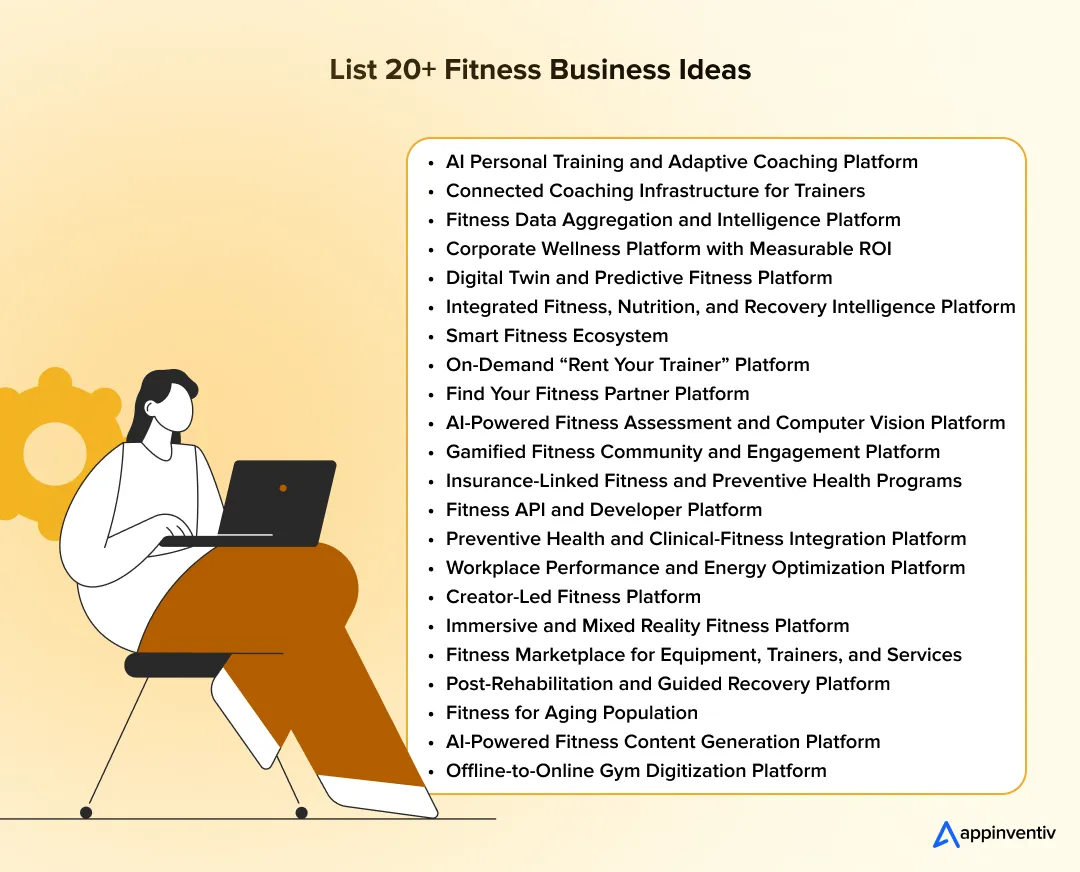
1. AI Personal Training and Adaptive Coaching Platform
Open your fitness app after a long day, and instead of a fixed plan, it adjusts based on how you actually performed yesterday. That’s the shift here. The system learns from behavior, recovery, and engagement, and keeps refining what comes next.
Why it stands out
- Direct impact on retention and LTV
- Strong subscription + premium upsell potential
- Core foundation for multiple extensions (nutrition, recovery, etc.)
2. Connected Coaching Infrastructure for Trainers (B2B + B2C)
Most coaches lose visibility once a session ends. This setup changes that. It gives trainers a continuous view of what clients are doing between sessions, so they can guide, adjust, and scale without guessing.
Why it matters
- Enables trainers to scale without losing quality
- Opens B2B SaaS opportunities
- Builds recurring revenue across both sides
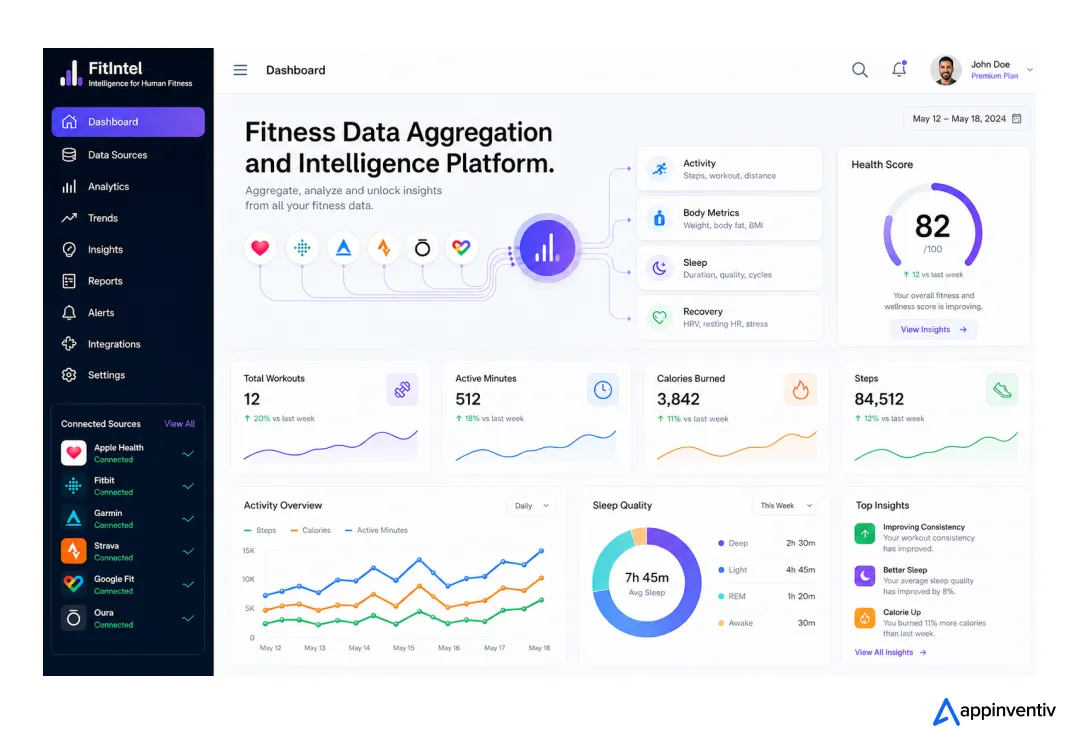
3. Fitness Data Aggregation and Intelligence Platform
Right now, fitness data sits scattered across apps, devices, and gyms. This platform brings it all together into one layer, turning disconnected inputs into something actually usable.
Where it wins
- Solves the fragmented data problem
- Creates long-term defensibility through data network effects
- Enables partnerships with healthcare, insurers, and wellness providers
4. Corporate Wellness Platform with Measurable ROI
Many companies invest in wellness but struggle to prove what’s working. This model focuses on clear, trackable outcomes like engagement, activity levels, and behavioral change, not just participation.
Why enterprises care
- Justifies budget with real metrics
- Aligns with HR and insurance partnerships
- Scales across large organizations
5. Digital Twin and Predictive Fitness Platform (Emerging but High Potential)
Instead of learning after the fact, this approach looks ahead. Using digital twin for businesses, it builds a data-driven replica of the user to simulate outcomes, so they can see what might happen before changing routines or intensity.
Why it’s future-ready
- Moves from reactive to predictive fitness
- High appeal for serious users and athletes
- Strong long-term integration with healthcare
6. Integrated Fitness, Nutrition, and Recovery Intelligence Platform
Most users juggle separate tools for workouts, food, and sleep. This platform connects all three, so recommendations actually reflect how someone is living day to day, not just isolated inputs.
Why it works
- Feels complete from a user perspective
- Improves outcomes, not just activity tracking
- Reduces churn caused by app switching
Also Read: How to Build a Fitness and Nutrition App Like MyFitnessPal?
7. Smart Fitness Ecosystem (At-Home + Gym + Wearables)
Some days you work out at home, other days at the gym. The problem is, nothing connects. This ecosystem keeps everything in sync, so progress carries over no matter where or how you train.
Where it creates value
- Matches real user behavior across environments
- Enables hardware + software, bundling models
- Builds a strong, unified data layer
- Improves retention through seamless continuity
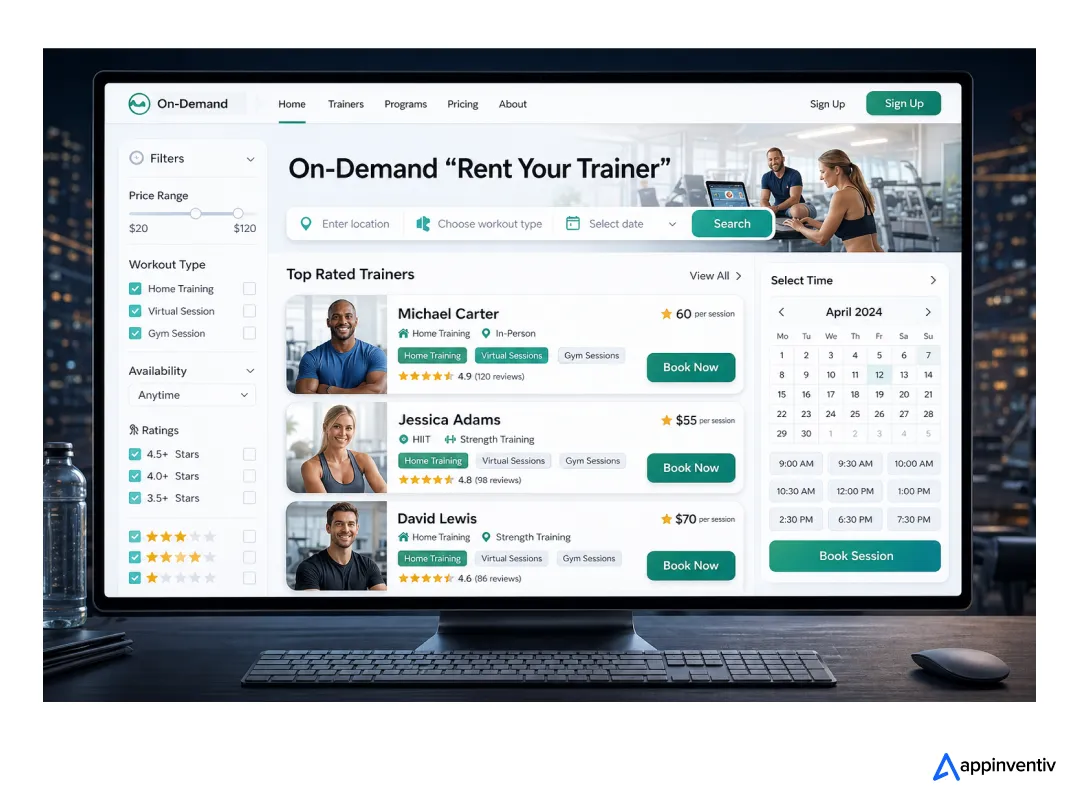
8. On-Demand “Rent Your Trainer” Platform
Not everyone wants a long-term plan. Sometimes, you just need a trainer for a session or a short program. This model makes it easy; users can find, compare, and book trainers on demand, either at home or online.
Why it works
- Flexible and low commitment for users
- Helps trainers fill unused time slots
- Simple commission-based revenue model
- Easy to expand into packages or group sessions
9. Find Your Fitness Partner Platform (Social Matching + Accountability)
Staying consistent alone is tough. Miss a couple of days, and it’s easy to fall off. But when someone’s on the same journey, it feels different.
This idea matches users with compatible fitness partners based on goals, schedules, or activity levels, turning workouts into a shared routine instead of a solo task.
Why it works
- Builds natural accountability, which improves retention
- Keeps users coming back through simple social interaction
- Can grow into groups, challenges, and local communities
10. AI-Powered Fitness Assessment and Computer Vision Platform
Getting proper form feedback usually means booking a trainer. Here, users can record a quick video and get instant insights, making assessments accessible without scheduling or location constraints.
Why it matters
- Improves onboarding accuracy
- Reduces dependency on trainers
- Can be licensed as a feature to other platforms
11. Gamified Fitness Community and Engagement Platform
On days when motivation drops, small things like streaks, challenges, or community check-ins can make the difference. This model builds those loops in, so users keep coming back without feeling pushed.
Why it works
- Drives daily active usage
- Lowers churn significantly
- Works across consumer and corporate models
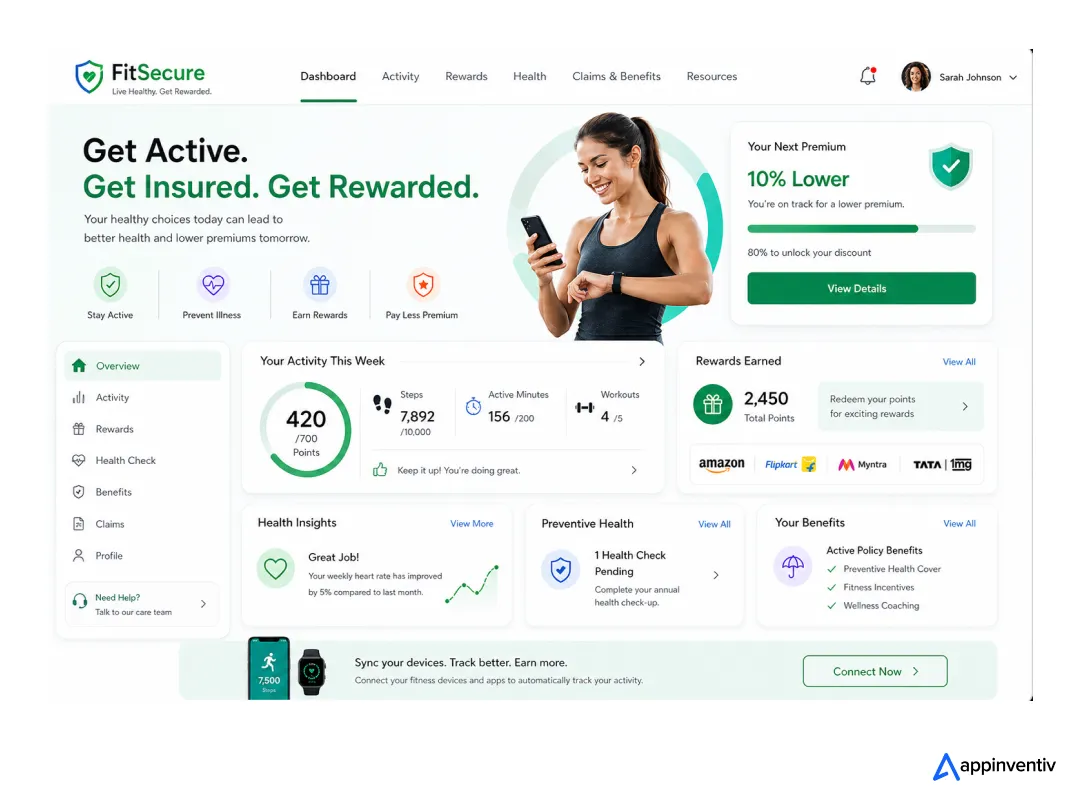
12. Insurance-Linked Fitness and Preventive Health Programs
This goes a step further by tying fitness directly to real-world benefits. Users don’t just work out, they see tangible rewards through better premiums, incentives, or health-linked benefits.
Why it’s valuable
- Strong alignment between users, insurers, and providers
- Encourages long-term engagement
- High partnership potential with large institutions
13. Fitness API and Developer Platform (Fitness-as-a-Service)
Think about how many apps today need fitness data or insights but don’t want to build everything from scratch. This model focuses on that gap. Instead of a direct-to-consumer app, you offer APIs for workout recommendations, recovery scoring, and activity tracking that other platforms can integrate with.
Why this works
- You’re building infrastructure, not just another app
- Revenue comes from integrations and usage, not just users
- Easier to scale across industries like health, insurance, or wellness
14. Preventive Health and Clinical-Fitness Integration Platform
There’s a noticeable shift happening here. Fitness is no longer just about workouts; it’s increasingly connecting with long-term health management. This platform brings fitness data and clinical insights into one place, so doctors, coaches, and users are all working with the same information.
Where it creates value
- Helps move from reactive care to preventive care
- Opens doors to hospital and digital health partnerships
- Builds trust, which is hard to replicate later
15. Workplace Performance and Energy Optimization Platform
Most corporate wellness programs stop at basic activity tracking. But if you’ve ever sat through a long workday after poor sleep, you already know there’s more to it. This idea focuses on how movement, recovery, and sleep affect energy and productivity at work, and then distills those insights into simple, usable ones
Why companies care
- Links directly to performance, not just wellness
- Fits into hybrid and remote work setups
- Easier to justify from a budget perspective
16. Creator-Led Fitness Platform (Monetization Infrastructure for Coaches)
Many fitness creators have strong audiences today. The problem is, their tools are scattered across subscriptions, content platforms, and messaging apps. This platform brings everything together. Coaches can run programs, build communities, and manage payments in one place under their own brand.
Why it stands out
- Taps into the growing creator economy
- Gives trainers more control over revenue
- The platform can scale through revenue sharing or SaaS
17. Immersive and Mixed Reality Fitness Platform (AR + VR + Spatial Experiences)
AR/VR integration in fitness has been around for a while, but most of it still feels like a one-time experience. The next step is making it feel more natural. Blending real movement with digital environments so workouts don’t feel repetitive or disconnected.
Why it’s worth exploring
- Keeps users engaged for longer sessions
- Feels different from traditional apps or gyms
- Aligns with where hardware is heading
18. Fitness Marketplace for Equipment, Trainers, and Services
If you’ve ever tried to book a trainer, rent equipment, or find a short-term program, you’ll notice how fragmented it is. Everything sits in different places. This model brings it together. A marketplace where users can discover trainers, book sessions, rent equipment, or join programs, all in one place.
Why it works
- Aggregates supply and demand in a fragmented market
- Monetization through commissions and listings
- Scales across cities without heavy infrastructure
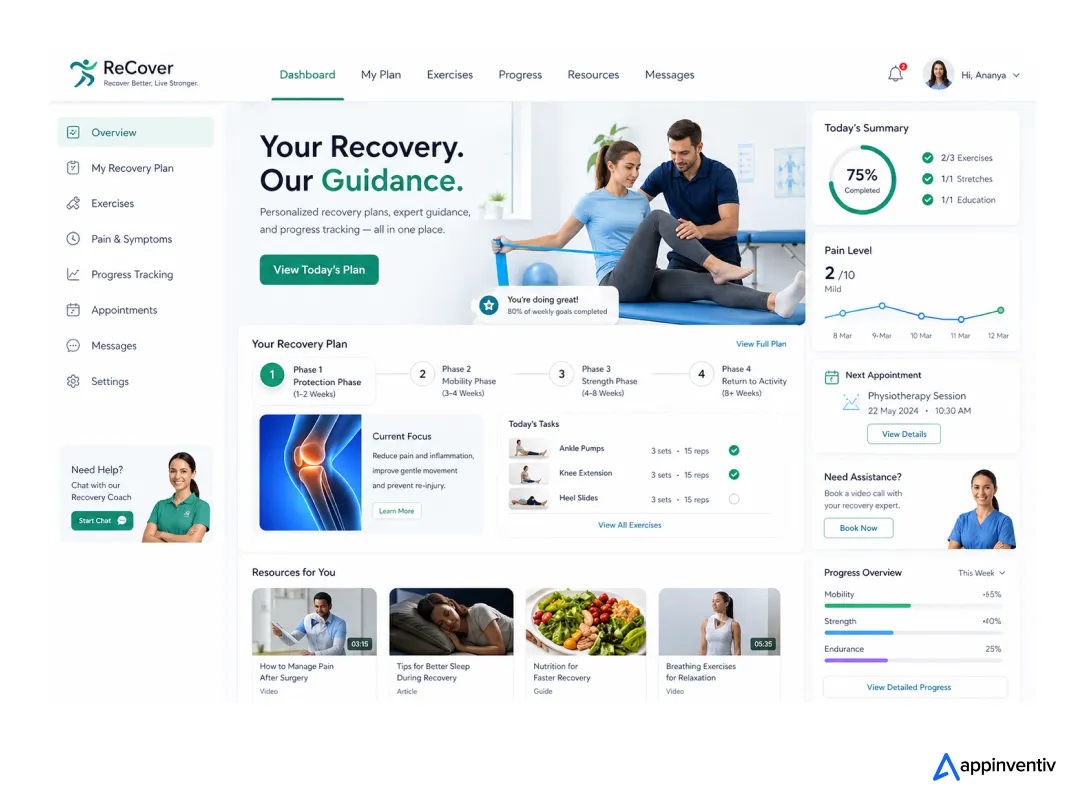
19. Post-Rehabilitation and Guided Recovery Platform
There’s a gap most people hit after physiotherapy ends. You’re told to continue exercises, but there’s no structured system to follow. This platform focuses on that transition phase. It guides users with structured recovery plans, progress tracking, and light supervision.
Where it creates value
- Targets a highly specific but underserved need
- Strong retention due to goal-driven usage
- Potential partnerships with clinics and rehab centers
20. Fitness for Aging Population (Longevity-Focused Platform)
Fitness products often focus on younger users, while older adults have very different needs around mobility, balance, and long-term health. This idea is built specifically for that segment, with guided routines, safety-focused tracking, and simplified user experiences.
Why it stands out
- Less crowded compared to mainstream fitness apps
- High willingness to pay for health-focused solutions
- Long-term engagement driven by necessity, not trends
21. AI-Powered Fitness Content Generation Platform
Creating fitness content at scale is hard for trainers and platforms. Workouts, videos, plans, all of it takes time. This platform helps generate personalized workout plans, scripts, or even content variations using AI, tailored to different user segments.
Why it’s valuable
- Reduces content production effort significantly
- Supports both creators and fitness platforms
- Opens B2B SaaS monetization opportunities
22. Offline-to-Online Gym Digitization Platform
Walk into a mid-sized gym, and you’ll often see manual processes still running, from attendance to program tracking. This platform helps gyms digitize operations, member engagement, and performance tracking without requiring a full rebuild of their setup.
Why it works
- Solves a real operational gap in traditional gyms
- Easier adoption compared to fully digital models
- Recurring SaaS revenue with strong retention
From AI fitness apps to hybrid platforms, turn the right opportunity into a high-retention product.

Scalable Fitness Business Models and Monetization Strategies
When you start thinking about top fitness business ideas from a money point of view, things become clearer pretty quickly. A lot of ideas sound exciting, but the real question is simple: Will people actually pay for this, and will they keep paying?
Instead of overcomplicating it, it helps to look at what feels natural to users. Here’s a straightforward way to think about the models that are working right now, especially if you’re exploring health and fitness business ideas that need to grow over time.
| Model | How It Feels for the User | Where It Fits Best | Why It Works |
|---|---|---|---|
| Subscription-Based | You pay once a month and just keep using it, like an app you open before your morning workout. | AI apps, habit platforms and online fitness business ideas | Works well when it becomes part of a daily routine |
| Usage-Based (Pay-as-You-Go) | You pay only when you need it, such as when you book a session or unlock a report. | Remote coaching, tools for business for fitness professionals | Feels low-risk and easy to try |
| Freemium Model | You start free, use it for a while, then upgrade when you see value. | Consumer apps, gamified tools low cost fitness business ideas | Pulls users in without pressure |
| Outcome-Based Pricing | You pay when you see results, not just for access. | Coaching programs, corporate wellness and innovative ideas for fitness business | Builds trust because it’s tied to progress |
| B2B / Enterprise Model | A company pays, and users get access through their workplace or gym. | SaaS tools, corporate wellness and types of fitness businesses | Bigger deals and more stable income |
| Hardware + Software Bundling | You buy a device and get an app experience along with it. | Smart gyms, wearable-led setups, gym business ideas | The product brings users in, and the app keeps them engaged |
| Data-Driven Monetization | Insights are used to improve services or create partnerships (with user consent). | Larger platforms, wearable ecosystems and fitness business plan strategies | Adds another layer of revenue over time |
If you’re planning on starting a fitness business, the model you choose will shape how everything works, from pricing to how people experience your product.
Most profitable fitness business ideas in 2026 don’t rely on just one approach. They usually combine a couple. For example, someone might start using a free version, move to a subscription, and never even notice there’s a B2B layer running in the background.
In the end, it’s simple. If people find value, they’ll pay. If it fits into their routine, they’ll stay. That’s what really makes a model work.
Also Read: How to Choose the Right Pricing Strategy for your Mobile App
Key Challenges in Building AI-Driven Fitness Platforms and How to Overcome Them
If you look closely, most challenges in AI-driven fitness platforms don’t come from the idea itself. They come from how data, systems, and user behavior interact at scale.
A fitness app might work perfectly with 1,000 users. The real complexity starts when you’re handling real-time inputs from multiple devices, generating recommendations, and keeping everything in sync without delays. That’s where architecture decisions start to matter.
Here are the challenges that come up most often, especially in health and fitness business ideas, along with what actually helps in practice.
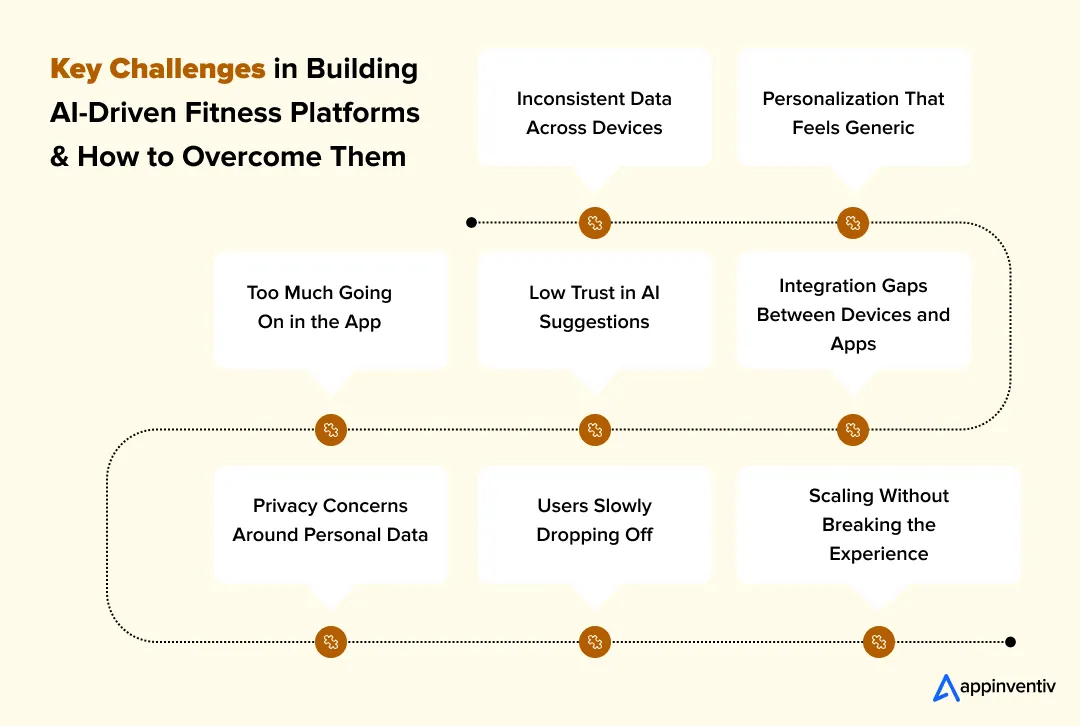
1. Inconsistent Data Across Devices: People don’t use just one device. A smartwatch, a band, maybe manual inputs, all of it comes together, and not always neatly.
What helps: Stick to a few reliable signals first, like activity or sleep. Clean that well before adding more layers. It makes everything else easier later.
2. Personalization That Feels Generic: A lot of platforms say they’re personalized, but users notice quickly when it doesn’t reflect how they actually feel or perform.
What helps: Look at what users do over time, not just what they enter on day one. Missed workouts, low energy days, consistency patterns, that’s where real personalization comes from in today’s business ideas in the fitness industry.
3. Too Much Going On in the App: It’s easy to keep adding features, more stats, more dashboards. But most people just want to know what to do next.
What helps: Keep it simple. One clear next step is usually enough. If users have to think too much before starting, they won’t.
4. Low Trust in AI Suggestions: If the app tells someone to push harder on a day they feel tired, it breaks trust fast. This is a common challenge in the AI in fitness industry, especially across newer online fitness business ideas, where recommendations don’t always reflect real user conditions.
What helps: Start safe and let users adjust things. When people feel like they have some control, they trust the system more.
5. Integration Gaps Between Devices and Apps: Think about how people actually use fitness tools. One day it’s a smartwatch, the next day it’s a different app or device. They don’t think in “ecosystems,” they just expect everything to sync.
What helps: Start with the devices most people already use and make that experience smooth. Don’t try to connect everything at once. Keep your setup flexible so you can add more integrations later without having to rebuild from scratch.
6. Privacy Concerns Around Personal Data: Fitness data is personal. It can say a lot about someone’s habits, routines and even their health. People are more aware of that now, especially when trying something new.
What helps: Be straightforward and tell users what you’re collecting and why, in plain language. Keep controls simple. When people feel like nothing is hidden, they’re more comfortable sticking around, which matters a lot for any fitness business plan.
7. Users Slowly Dropping Off: This is the one most teams run into. People start with energy, maybe even excitement, then a few missed days turn into a break, and eventually they stop opening the app.
What helps: Don’t push too hard. Focus on small, repeatable actions. A quick reminder, a simple progress update, even a short check-in can bring someone back. These small touches often matter more than big features, especially in low-cost fitness business ideas.
8. Scaling Without Breaking the Experience: Things feel smooth when you have a small group of users. Then the numbers grow, and suddenly the app slows down or glitches.
What helps: Build for growth early, even if it feels unnecessary at the start. Keep things modular, test often, and avoid rushing new features. It’s much easier to grow something stable than to fix something under pressure.
If you’re working on one of these types of fitness businesses, none of these challenges is unusual. Every team runs into them at some point.
What usually makes the difference is how simply you handle them. Keep things clear, fix issues early, and improve step by step. That’s what turns a good idea into something people actually keep using.
How to Choose the Right Fitness Business Idea in 2026
When you’re looking at a bunch of fitness and healthcare business ideas, it’s easy to get drawn to the ones that sound impressive on paper. But once you start building, things get really pretty quickly. Some ideas just fit into people’s lives. Others don’t, no matter how good they look.
A quick way to avoid going down the wrong path is to pressure-test the idea early:
| Factor | What to Look At | What It Looks Like in Reality | Why It Matters |
|---|---|---|---|
| User Frequency | How often will someone actually open this? | An AI coach or habit app becomes part of a daily routine. A one-time tool gets forgotten. | If people don’t come back often, retention becomes a struggle. |
| Problem Strength | Is this solving something people deal with regularly? | Staying consistent with workouts is a real pain point. Basic tracking usually isn’t. | Strong problems keep users engaged and willing to pay. |
| Data Dependency | How much data does this need to work well? | A recovery app may rely on sleep and activity data. A simple app might not. | More data can improve accuracy, but it also makes things harder to build early on. |
| Build Complexity | How difficult is it to get a working version out? | Real-time AI takes time. A simple coaching app can be launched much faster. | Keeps you from overcomplicating things in the beginning. |
| Scalability | Can this grow without adding more effort behind the scenes? | Digital platforms scale easily. One-on-one coaching doesn’t. | Growth gets expensive if the model isn’t scalable. |
| Monetization Fit | Does the pricing feel natural for this kind of product? | Subscriptions work when people use it often. One-time payments fit occasional use. | If pricing feels forced, users won’t stick around. |
| Time to Value | How quickly does someone see a benefit? | Instant feedback keeps people interested. Long programs need patience. | If users don’t see value early, they tend to drop off. |
In the end, the best ideas are usually the ones that feel simple to use and easy to come back to. If it fits into someone’s day without effort and solves a real problem, you’re already on the right track.
Align your model, technology, and user experience to create a product people keep coming back to.

Why Appinventiv Is the Right Partner for Fitness App Development
When you’re building a fitness product, the early choices tend to stick. Teams often move quickly at the start, then run into issues once real users come in, data starts flowing, and things need to scale. That’s usually the point where having a top-notch fitness application development company like Appinventiv on your side makes things a lot smoother. You’re not just putting features together, you’re building something that can handle real usage without constant rework.
The difference mostly comes down to experience. Appinventiv has delivered 500+ digital health platforms, supported 450+ healthcare clients, and spent over 10 years on HealthTech projects. That shows up in small but important ways, such as how data is handled, how simple the app feels to users, and how well the system holds up as more people start using it. These are the areas where many teams slow down later if they’re not planned early.
In the end, it’s about building something people actually keep using. Whether you’re testing new and unique fitness business ideas or trying to scale an existing one, the right partner helps you move forward with more confidence and fewer surprises.
If you’re serious about building this right, now’s a good time to get started. Let’s talk and shape something that actually works in the real world.
FAQs
Q. How to start a fitness business?
A. Start with one focused idea and a clearly defined user. Don’t try to build everything at once. Test it with a small group first; this could be coaching, a niche program, or even simple gym business ideas.
A basic fitness business plan should cover three things: who you’re targeting, what problem you’re solving, and how you’ll charge. Once you see consistent usage or early payments, then you expand. Starting small reduces risk and gives you real feedback early.
Q. How to make money in fitness?
A. There’s no single model that works for everyone. Most businesses for fitness professionals combine a few approaches: subscriptions for recurring revenue, one-on-one coaching for higher value, and programs or content for scale.
The important part is alignment. If your product solves a daily need, subscriptions work well. If it’s occasional use, pay-per-session or premium features make more sense. Revenue usually follows once users see ongoing value.
Q. How long does it take to start a fitness business?
A. It depends on the model. Simple online fitness business ideas, like coaching or content, can go live in a few weeks. More complex products, like apps or platforms, typically take a few months to build and test properly.
What matters more than time is validation. Launching a smaller version early helps you understand user behavior before investing more time and resources.
Q. What is the most profitable fitness business?
A. The most profitable fitness business ideas in 2026 tend to be digital and scalable. Subscription-based apps, niche platforms, and data-driven products perform well because they don’t rely heavily on manual effort.
Focused solutions, like targeting a specific audience or problem, often outperform broad offerings. Profitability comes from retention and scale, not just pricing.
Q. What is a low-risk fitness business to start?
A. If you want to reduce risk, start with models that don’t require heavy upfront investment. Low-cost fitness business ideas, such as coaching, community programs, or content-based platforms, are a good starting point.
These let you test demand, build an audience, and generate early revenue. Once you see traction, you can reinvest in more advanced products or platforms.
Q. How can fitness businesses use challenges and community engagement to improve retention?
A. People are more likely to stay consistent when they don’t feel like they’re doing it alone. Simple things like step challenges, run clubs, or short seasonal programs give users a reason to show up regularly.
Add light competition with leaderboards or team-based challenges, and it becomes more engaging without adding pressure. Over time, that sense of community is what keeps people coming back, not just the workout itself.
Q. How can fitness businesses expand into wellness, nutrition, and holistic health?
A. A lot of users today are looking for more than just training plans. They want support across recovery, nutrition, and mental well-being. That’s where services like nutritional coaching, meditation, breathwork, or even wellness retreats start to fit in naturally.
Some businesses go deeper with corporate wellness programs or senior-focused offerings, while others build private communities around these experiences. When done right, this approach makes the product feel more complete and keeps users engaged beyond just workouts.


Fast 2-minute response, fully NDA-protected.

Wearable Data Integration: Connecting Multiple Devices to a Unified Health Platform
Key takeaways: Device support should reflect the measurements your service needs, the people using it, and the decisions those readings inform. A unified health data platform must preserve source, timing, and measurement context while resolving duplicate records. Phone health platforms, manufacturer APIs, and direct device connections serve different integration needs. Clinical workflows require agreed review…
Sleep Tracker App Development: Features, Wearable Integration, AI, and Compliance
Key takeaways: Sleep tracking presents opportunities across consumer wellness, fitness, healthcare, employee wellness, senior care, and infant-care markets. Successful products combine actionable insights, wearable connectivity, user-friendly reports, privacy controls, and clearly differentiated experiences. HealthKit, Health Connect, and direct device APIs provide different data depths, costs, limitations, and maintenance requirements. AI supports sleep-stage estimation and personalization,…

Diet and Nutrition App Development: Process, Features, Cost, and Technology Stack
Key Takeaways Diet and nutrition tracking app development goes past basic calorie counters with verified food databases, custom meal schedules, AI tools, wearable device links, and corporate manager tools. Structure database models around raw food items, serving portions, nutrient facts, recipes, software links, and regional diet rules. Pair computer vision models, recommendation algorithms, language engines,…