

























10 Use Cases, Benefits and Examples of AI in procurement

- AI in Procurement: Market Insights
- AI Governance in Procurement: Managing Financial, Supplier, and Compliance Risk
- Types of Procurement AI
- 10+ AI Use Cases in Procurement
- Real World Examples of AI in Procurement
- Key Benefits of AI in Procurement
- AI Adoption Challenges in Procurement and How to Overcome
- How to Get Started with AI in Procurement
- How Appinventiv Can Help You Leverage AI in Procurement
- FAQs

Key takeaways:
- AI turns procurement into a strategic value function by improving visibility, efficiency, and insight.
- Rapid AI adoption reflects growing budgets and urgent digital transformation across procurement teams.
- AI reduces supplier risk, speeds sourcing decisions, and improves contract accuracy and compliance.
- Automation eliminates repetitive tasks, freeing procurement teams to focus on higher-value strategic work.
- Successful AI adoption requires clean data, small pilots, internal champions, and expert guidance.
Not too long ago, the procurement function quietly handled suppliers, contracts, and costs behind the scenes. Today, that same function is being redefined by AI in procurement, turning it from a cost-control role into a growth driver.
Procurement teams are now under more pressure than ever: managing disruptions, navigating sustainability mandates, and unlocking efficiency through digital transformation. This shift isn’t just conceptual; it’s measurable. According to recent reports, 66% of global enterprises are already using AI agents in procurement tasks, up from just 27% last year, a sign of how fast AI for procurement is becoming standard practice.
Artificial intelligence in procurement is doing far more than automating spreadsheets. It’s interpreting supplier data, predicting risks, and optimizing sourcing strategies with precision. Whether it’s AI for procurement and supply chain management, automated invoice processing, or predictive supplier analytics, these systems now handle what once took teams days or weeks to complete.
In this blog, we’ll break down 10+ practical AI use cases in procurement, showing exactly how organizations are applying AI procurement solutions to achieve cost efficiency, transparency, and smarter decision-making. By the end, you’ll understand not only the benefits of AI in procurement but also how your organization can begin its journey with purpose-built AI-driven procurement software.
Join the 66% of global enterprises adopting AI in procurement. Partner with Appinventiv to build intelligent systems that automate sourcing and drive measurable growth.
AI in Procurement: Market Insights
Procurement has stopped being back-office paperwork. It’s becoming a strategic operation, driven by serious investment in AI for procurement. Recent numbers show exactly how fast this shift is happening.
AI spending in procurement is climbing sharply. A 2025 study found that 90% of leaders either use AI agents in procurement already or are seriously considering them to streamline operations. Meanwhile, procurement technology budgets are growing by 5.6%, with most of that increase going toward generative AI in procurement and analytics tools, according to The Hackett Group.
Market projections tell a similar story. The global “AI in procurement” market currently stands at around USD 1.9 billion. Forecasts put it at USD 22.6 billion by 2033, roughly 28% annual growth. That’s not gradual adoption. That’s a rapid transformation being funded and implemented now. The takeaway? The future of AI in procurement is not just promising; it’s here, and procurement teams must adapt to stay relevant.
Based on the above, there is significant potential: organizations that embrace digital transformation in procurement aren’t just keeping pace, they’re setting the pace.
Who This Guide Is For:
- Enterprise procurement leaders managing complex supplier ecosystems
- CFOs and COOs responsible for cost, compliance, and resilience
- Organizations modernizing procurement within SAP, Oracle, or Dynamics
- Teams adopting AI under regulatory, ESG, or audit constraints
AI in Procurement is an Integration Problem, Not a Tooling Problem
Enterprise procurement does not run in isolation. It operates inside complex ERP environments like SAP, Oracle, and Microsoft Dynamics, shaped by years of workflows, approvals, and vendor data. The challenge is not adding AI. It is making AI work without disrupting systems that already run the business.
At Appinventiv, we treat AI in procurement as intelligent middleware, not a replacement layer. Our approach integrates AI into existing ERPs through secure hooks and event-driven APIs, allowing analysis and execution without rip-and-replace migrations.
Core principles we follow:
- ERP integration hooks instead of data duplication
- Zero-copy data architectures to reduce latency and compliance risk
- Human-in-the-loop controls for approvals and critical decisions
This ensures AI becomes operational inside procurement workflows, not just advisory.
AI Governance in Procurement: Managing Financial, Supplier, and Compliance Risk
AI-driven procurement decisions directly impact spend, contracts, suppliers, and regulatory exposure. Governance ensures AI accelerates value without introducing hidden risk.
Enterprise Governance Controls for Procurement AI
- Decision Ownership: Clear accountability for AI-driven sourcing, approvals, and risk alerts
- Human-in-the-Loop Controls: Mandatory human validation for supplier onboarding, contract changes, and high-value sourcing
- Explainability: Transparent reasoning for supplier scoring, pricing recommendations, and risk flags
- Audit Trails: Full traceability of AI decisions across invoices, contracts, and approvals
- Bias & Fairness Controls: Prevent supplier exclusion or skewed sourcing recommendations
- Fail-Safe Mechanisms: Kill-switches for automated approvals and contract actions
Types of Procurement AI
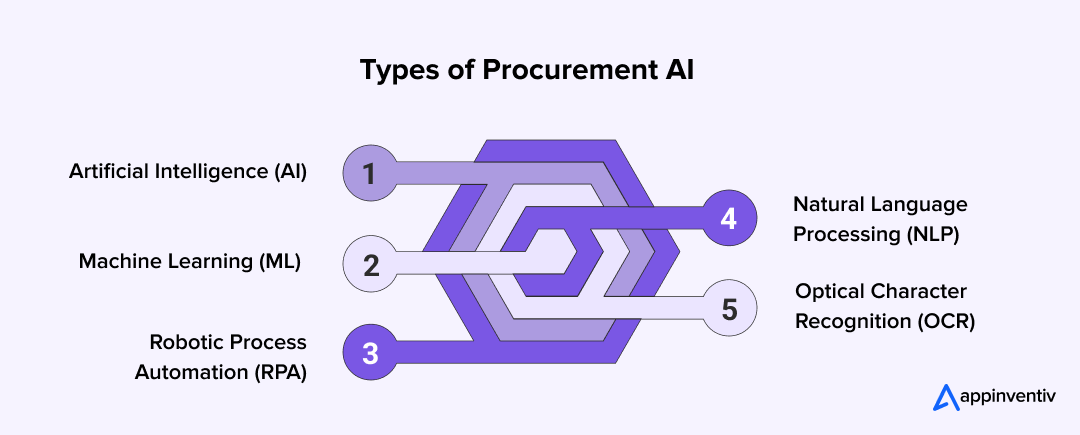
AI in procurement automates and enhances processes like contract management, supplier evaluation, and strategic sourcing. Procurement teams now rely on AI in procurement to cut costs, reduce risks, improve decision-making, and stay efficient in a rapidly changing business environment. There are five main types of AI used in procurement today:
Why This Matters for Procurement & Finance Leaders
- Machine Learning: Predicts supplier risk and cost overruns before impact
- NLP: Reduces contract review time and compliance errors
- RPA: Eliminates manual invoice and approval delays
- Generative AI: Accelerates RFPs and contract drafting with controlled accuracy
- OCR: Improves invoice accuracy and payment cycles
10+ AI Use Cases in Procurement
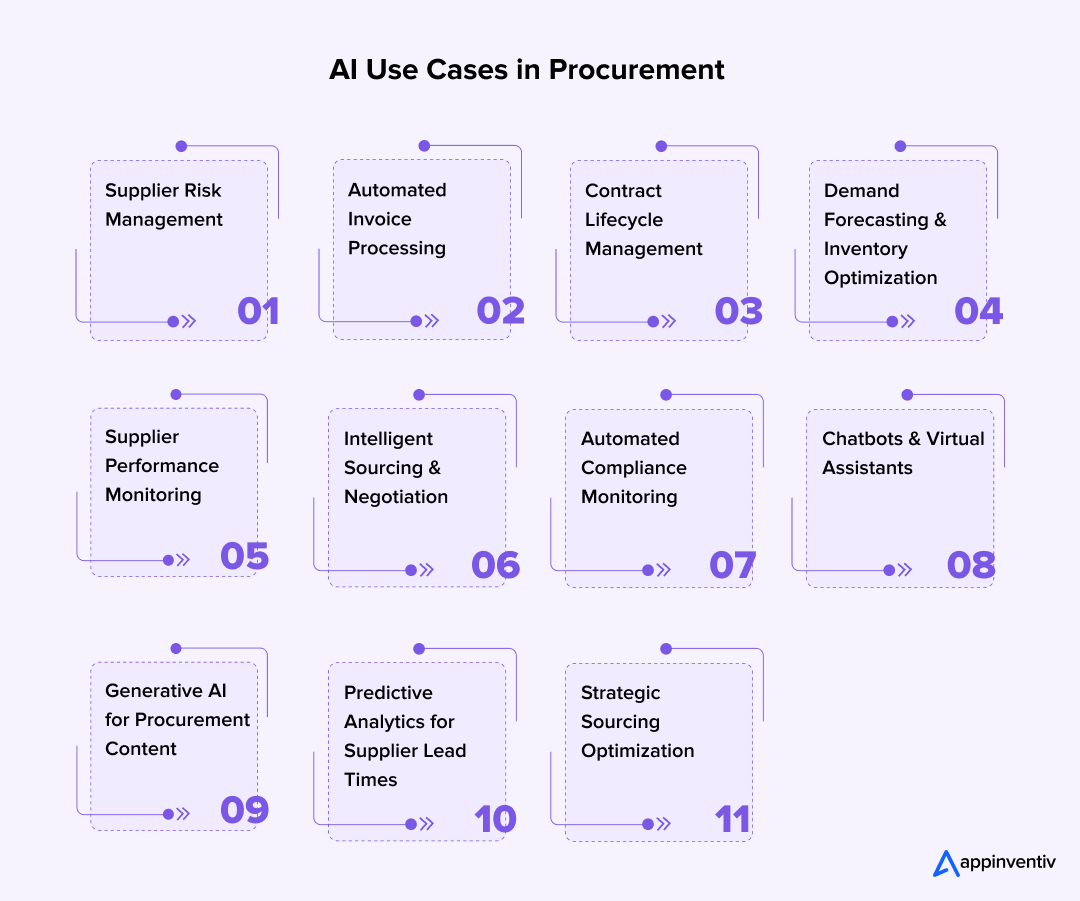
A few years ago, procurement meant juggling spreadsheets, long email chains, and endless approval loops. Today, it’s smarter, powered by AI in procurement that automates, predicts, and simplifies complex decisions. It’s not about replacing humans; it’s about removing the friction from their daily work.
1. Spend Analysis & Classification (Knowledge Graph–Driven)
Traditional spend analysis relies on flat classification models that struggle with vendor name variations, subsidiaries, and fragmented procurement structures. As organizations scale, these models lose accuracy and hide meaningful risk.
Appinventiv applies knowledge graphs combined with vector databases to create a semantic layer over global spend data. This approach maps parent–child vendor relationships, uncovers duplicate suppliers across legal entities, and identifies concentration and savings opportunities based on real purchasing behavior. The result is spend intelligence that reflects how procurement actually operates, not how data is labeled.
2. Supplier Risk Management
Before AI, you usually found out about supplier issues when it was already too late, shipments were delayed, payments were stuck, and operations were disrupted. Now, Artificial intelligence in procurement keeps an eye on everything: supplier finances, performance, and even global news.
It sends early warnings when something looks off, so you can act before the crisis hits. It’s not magic, it’s just a lot of smart data watching your back.
3. Automated Invoice Processing
Remember the old days of typing invoice numbers into systems and matching POs by hand? That’s gone. AI for procurement automation reads invoices like a digital assistant, extracts the numbers, verifies details, and flags mismatches automatically.
No burnout, no missed payments, no chasing paperwork. Just clean, transparent processing that happens in hours, not days.
4. Contract Lifecycle Management (RAG-Based AI Architecture)
Generic generative AI is not suitable for contract workflows. Hallucinated clauses and inconsistent legal language introduce unacceptable risk, especially in regulated and multi-jurisdiction environments. Contract intelligence requires precision, traceability, and control.
To address this, Appinventiv uses a Retrieval-Augmented Generation (RAG) architecture for contract analysis and drafting. The AI references only internal legal playbooks, approved clause libraries, past contracts, and jurisdiction-specific compliance rules. This allows AI to support audits, renewals, and drafting while ensuring outputs remain accurate, compliant, and legally defensible.
5. Demand Forecasting & Inventory Optimization
This one’s huge. AI predicts what you’ll actually need, and when, by looking at market trends, supplier capacity, and your own purchasing history. You over-order out of fear or under-order out of habit.
Shelves aren’t stacked with excess stock, and your teams aren’t scrambling at the last minute. It’s predictable, balanced, and finally logical. These are the hallmarks of true AI procurement optimization.
6. Supplier Performance Monitoring
In the past, you’d review suppliers every few months, relying mostly on memory and opinion. Now, AI-driven procurement analysis monitors performance 24/7. It tracks delivery times, product quality, and response rates.
You get a complete, unbiased view of who’s consistent and who’s costing you trouble. Performance reviews go from gut feeling to hard facts, and everyone’s accountable.
7. Intelligent Sourcing & Negotiation
AI doesn’t replace negotiation; it preps you for it. Now, AI solutions for procurement efficiency recommend the best suppliers, simulate pricing outcomes, and even suggest negotiation strategies.
It even models negotiation outcomes: “If you push on delivery times, they’ll likely counter on price.” You walk into the meeting informed, confident, and ready to win better deals.
8. Automated Compliance Monitoring
Procurement operates under heavy regulations, ESG, GDPR, sustainability, and internal audits. Missing a single rule can mean real penalties. AI acts like a compliance assistant, automatically scanning every document and transaction.
It keeps you ahead of audit season and makes “compliance” something you manage daily, not yearly.
9. Chatbots & Virtual Assistants
Procurement teams get bombarded with the same questions: “Where’s the order?” “Has this been approved?” “Send the supplier update.” AI in procurement use cases now includes compliance bots that automatically review every invoice, contract, and PO against policies. Chatbots now handle all that, instantly, 24/7.
Your team finally gets to focus on the strategic side of work instead of answering the same emails ten times a day. It’s like having an extra pair of hands that never get tired.
10. Generative AI for Procurement Content
Writing RFPs, reports, and vendor summaries eats up entire afternoons. Generative AI in procurement now drafts the first version in minutes. You review, tweak, and send.
It’s not about replacing people, it’s about removing the blank-page stress. Documents remain consistent and professional, and are completed faster.
11. Predictive Analytics for Supplier Lead Times
AI keeps an eye on global logistics, from port congestion to factory slowdowns, and predicts when suppliers might fall behind. Instead of panicking at the last minute, you get early alerts to reroute, adjust timelines, or source alternatives.
It keeps your operations steady while others scramble. It’s one of the most valuable applications of AI in procurement, turning reactive chaos into proactive planning.
Also Read: AI in Logistics Industry: Key Benefits and Use Cases
12. Strategic Sourcing Optimization
Big-picture sourcing used to depend on intuition, who you trust, who you’ve worked with, who’s local. AI replaces guesswork with insight. With AI and ML in procurement, sourcing strategies shift from gut instinct to data evidence.
It compares cost, reliability, quality, and sustainability side by side. You end up with a supplier mix built on data, not politics. When the market shifts, you’re ready, because your strategy isn’t built on assumptions.
Executive Snapshot for Chief Procurement Officer / CFO
- Improved spend visibility and cost discipline across suppliers
- Reduced supplier risk exposure through predictive monitoring
- Faster, audit-ready procurement decisions without manual bottlenecks
Real World Examples of AI in Procurement
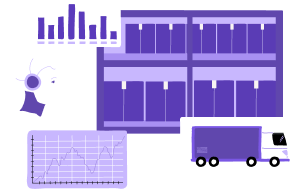
AI in procurement isn’t theoretical anymore; it’s happening across industries, from manufacturing and logistics to retail and energy. Enterprises are using AI for procurement and supply chain management to predict risks, optimize sourcing, and unlock efficiencies once thought impossible. Companies are using AI to clean up spend data, spot supplier risks before they escalate, and streamline entire contract cycles. Here are a few real-world examples showing how leading enterprises are already applying AI to solve practical procurement challenges.
1. AI in Spend Analytics at Suplari
Suplari provides a clear narrative of how their platform evolved from traditional spend classification to full AI-driven procurement analysis. They now handle millions of transactions, clean up scattered data, harmonize categories, and automatically surface savings opportunities.
What it means for your team: Instead of digging through static reports and spreadsheets, you’ll get real-time dashboards showing where money goes, where contracts are weak, and where to focus your category strategy.
2. Contract & Document Automation with Evalueserve
Evalueserve worked with a global manufacturing client to apply generative AI in procurement and document analysis tools throughout the contract lifecycle. Their AI reviewed huge volumes of supplier contracts, flagged non-compliant clauses, and helped draft new contracts based on patterns of past agreements.
What it means for you: Rather than spreadsheets and lawyers poring over dozens of contracts, you have tools that highlight risk, speed up drafting, and let your team focus on negotiation instead of admin.
3. Vendor Portfolio & Contract Monitoring via Clarative
Clarative describes how they provided procurement teams with a “vendor-360° view” by extracting data from contracts, analyzing deviations from standard terms, and tracking renewals/alliance benefits across portfolios.
What it means for you: You don’t just know which contracts are about to expire — you know which suppliers aren’t meeting terms, where hidden rebates sit, and where renegotiation opportunities exist.
4. Holistic Procurement Transformation via GEP
GEP’s blog outlines multiple case studies in which AI procurement solutions were applied to sourcing, supplier risk, and process automation. They note that clients have moved from reactive workflows to proactive, data-informed procurement operations.
What it means for you: AI isn’t just automating one task; it can serve as the foundation of modern procurement, shifting from tactical cost-control to strategic value-creation.
5. AI for Supplier Risk Management in Retail & CPG
A white paper titled Sphera’s “AI-Powered Supplier Risk Management” Survey 2025 revealed that 94.5% of senior procurement leaders plan to shift their supplier base within the next 18 months, with AI-powered procurement platforms driving risk prediction and mitigation.
From spend analytics to risk prediction — make smarter, faster, data-driven decisions with Appinventiv’s AI development services.
Key Benefits of AI in Procurement
Let’s be honest, procurement has never been short on complexity. Between managing suppliers, contracts, and compliance, there’s rarely enough time for strategy. That’s where AI in procurement makes the real difference. It doesn’t replace human expertise; it amplifies it, giving teams the speed, insight, and confidence to make smarter calls every day.
1. Real, Sustainable Cost Savings
AI doesn’t just trim budgets; it finds money that’s been slipping through the cracks for years. Through AI-driven procurement analysis, it digs into spending patterns, exposes duplicate vendors, and spots pricing inconsistencies that would otherwise go unnoticed. Procurement teams finally see where the money’s hiding, and it’s often not where they expected. Instead of one-off cuts, they create ongoing savings strategies rooted in real insight rather than hunches.
2. Time Back and Less Burnout
Every procurement professional knows the grind: endless invoices, manual matching, late nights building reports no one reads twice. AI for procurement automation quietly takes over those repetitive jobs. It sorts, verifies, and cross-checks data faster than anyone could. Suddenly, teams have hours, even days, back in their week. That time doesn’t go to waste; it’s spent building supplier relationships, exploring new markets, and thinking strategically rather than firefighting.
3. Decisions That Don’t Rely on Guesswork
Procurement used to run on instinct, what worked last time, what felt right. Now, AI procurement solutions provide a factual backbone. It pulls together data from across the business: supplier performance, delivery trends, risk alerts, and pricing histories. The benefits of AI in procurement processes show up in every meeting. Decisions that are faster, more confident, and backed by actual proof. It’s not about removing the human touch; it’s about giving it better information.
4. Seeing Risks Before They Hit
A supplier suddenly misses a shipment, and panic sets in. But AI for procurement and supply chain management constantly scans performance data, financial indicators, and even global news; these shocks become rarer. Teams can see early warning signs and take action before things fall apart. It’s like having radar for risk, one that keeps the business running smoothly when others are scrambling.
5. Stronger, Fairer Supplier Relationships
Suppliers can tell when feedback is based on opinion instead of data, and it strains trust. With continuous monitoring, AI-based procurement optimization changes that dynamic completely. It creates transparent scorecards that focus on facts: delivery times, quality levels, and responsiveness. Suppliers know exactly how they’re doing and what’s expected of them. The conversations shift from blame to collaboration, making partnerships healthier and more productive.
6. Procurement That Feels Strategic Again
AI transforms procurement from a back-office cost center into a core business driver. By merging analytics, automation, and foresight, teams step into a new era of digital transformation in procurement, one where decisions are strategic, work feels purposeful, and outcomes are measurable.
AI Adoption Challenges in Procurement and How to Overcome
Adopting AI in procurement works differently from installing new accounting software. This isn’t about technology alone—it changes how people work, make decisions, and handle their daily tasks. Organizations say they want to become “data-driven,” but getting there involves messy progress, occasional setbacks, and constant learning.
Here’s what actually happens during implementation and how successful teams navigate it.
1. The Data Hurdle: Cleaning Before Climbing
Every AI procurement implementation starts with the same problem: your system performs only as well as your data quality. Most procurement data isn’t clean; it’s scattered across ERPs, spreadsheets, and shared drives, with inconsistent naming and fields that people never finished filling out.
How to overcome it: Start small. Pick one dataset maybe your supplier list or last year’s spend and clean it thoroughly. Standardize naming conventions, combine duplicate entries, make everything consistent. Perfect data isn’t required to begin; trustworthy data is. Once systems use consistent terminology, AI solutions for procurement efficiency can process everything else more effectively.
2. The Human Resistance: “Will AI Replace Me?”
Great tools fail when teams don’t embrace them. Professionals worry privately that AI for procurement automation will make their roles disappear.
How to overcome it: Involve people from the beginning. Don’t introduce tools suddenly on a Monday and expect enthusiasm. Show what’s changing and what stays constant. Be specific: “This won’t replace your negotiation expertise, it provides better data for those negotiations.” When people understand that AI procurement solutions handle tedious work rather than eliminating their expertise, they support its implementation.
3. The Skills Gap: Using the Insights Effectively
AI generates insights, but only helps when people know how to act on them. Procurement professionals often have deep supplier and category knowledge but less experience reading AI dashboards or interpreting predictive models.
How to overcome it: Train for practical application, not credentials. Don’t overwhelm people with technical language. Offer hands-on sessions showing how AI for procurement and supply chain management applies to real tasks. Connect training to daily work: “This dashboard identifies which suppliers to prioritize next quarter based on performance patterns.” Learning should feel like developing useful capabilities, not completing coursework.
4. Scaling the Pilot Trap
Common experience: the pilot succeeded. Everyone celebrated. Then nothing scaled. The project stalled because processes got complicated, budgets shifted, or ownership became unclear.
How to overcome it: Treat pilots as proof requiring clear expansion plans—not isolated tests. Measure results from the start, document what succeeded, and build rollout strategies from those findings. Share early wins across departments so colleagues can see evidence rather than just promises. Scaling AI procurement manufacturing efforts isn’t about expansion overnight — it’s about consistency and adaptability.
5. The Trust Factor: Keeping Humans in Control
Procurement depends on relationships and accountability. When AI makes recommendations nobody understands “Why recommend this supplier?” or “Why trigger this alert?” trust erodes quickly.
How to overcome it: Maintain transparency consistently. People need to trace how systems arrived at their conclusions. Humans should control final decisions, especially for supplier selection and compliance matters. When procurement AI supports judgment instead of replacing it, trust develops organically, and teams adopt the technology willingly.
How to Get Started with AI in Procurement
Getting started with AI in procurement can feel overwhelming. Every vendor swears their product will transform your operations, every demo runs flawlessly, and every article implies you’re already behind. Real transformation doesn’t work that way. It starts small, usually quietly, with a few people curious enough to try something new.
Here’s how to actually take those first steps.
Step 1: Start With a Problem, Not a Platform
Too many AI projects kick off with slick sales presentations rather than the actual problems your team faces daily. The best AI in procurement use cases begin with simple, tangible issues. Don’t ask “Which AI tool should we buy?” Ask “What’s eating up our team’s time most?”
Maybe it’s someone spending three hours every Friday matching invoices to purchase orders. Maybe it’s constantly emailing suppliers asking for status updates. Perhaps it’s honestly not knowing where half your quarterly budget went. Once you know the pain points, map them to specific applications of AI in procurement, like spend analysis, risk monitoring, or automated contract processing. That alignment ensures your AI strategy is grounded in business reality rather than buzzwords.
Step 2: Get Your House in Order (Data First)
AI can’t magically fix terrible data. Suppose your spending data uses six different category names for the same thing. In that case, your supplier database still has contacts who left three years ago, or invoices live scattered between email, SharePoint, and someone’s desktop folder; even the best AI won’t help.
Before adding machine learning models, focus on AI procurement implementation basics: data cleaning, consolidation, and governance. Build a single source of truth for spend, suppliers, and contracts. This foundation transforms your organization from reactive firefighting to proactive planning.
Step 3: Start Small, Learn Fast
Don’t try to automate your entire operation at once. Launch a pilot in one function, like AI, procurement, manufacturing forecasting, or invoice reconciliation. Measure outcomes time saved, accuracy improved, or cost reduced. Once you prove impact, scaling across categories becomes easier and more credible.
Think of it like training wheels: start small, fail fast if needed, and adapt based on what you learn. That’s how the most successful procurement transformations grow, one data-backed step at a time.
Step 4: Build Internal Champions
Change fails when executives announce it from conference rooms and expect everyone to fall in line. It succeeds when people on the ground feel a sense of ownership.
Find your naturally curious team members—people who volunteer to test new tools, ask lots of questions, or genuinely enjoy figuring things out. Permit them to experiment, break things safely, and share what they learn. When excitement builds within your team, you no longer need to push adoption from above. These champions become your internal advocates, showing others the tangible benefits of AI in procurement rather than abstract theory.
Step 5: Partner with the Right Experts
Even the best procurement teams need guidance to unlock AI’s full potential. Partnering with a trusted AI consulting company helps you avoid the usual pitfalls — fragmented tools, poor integration, and lack of long-term scalability.
Choose experts who understand digital transformation in procurement end-to-end, from workflow mapping to predictive analytics. That’s what ensures your investment translates into measurable results, not another unfinished project on the shelf.
Risk & Compliance Gates Before Scaling AI in Procurement
- Pre-deployment validation for supplier scoring models
- Bias checks in sourcing and supplier recommendations
- Explainability requirements for audit-facing decisions
- Continuous monitoring for data and performance drift
- Kill-switches for automated approvals and contract actions
Step 6: Scale What Works—But Keep It Simple
Once something proves valuable, scaling shouldn’t turn into a bureaucratic nightmare. Write down what worked, what bombed, and what you’d change next time. Use those notes to expand carefully into the next area.
Scaling doesn’t mean buying five more tools. It means taking what worked and applying it elsewhere without adding complexity. You want consistency, same basic approach, measurable better results, fewer headaches for everyone involved.
Scale smarter with Appinventiv’s AI development services.
Build intelligent procurement systems that deliver real results, faster, leaner, and future-ready.
How Appinventiv Can Help You Leverage AI in Procurement
At Appinventiv, we see AI in procurement as a fundamental change in how organizations work, not just new technology. As an AI consulting company, we help enterprises move past spreadsheets and manual approval processes into operations where data drives decisions, things happen faster, and accuracy improves substantially.
As an AI Development Services, we design and implement AI solutions that let procurement teams automate repetitive tasks, predict supplier risks before problems hit, and find savings buried in transaction data—while keeping compliance intact and operations transparent.
One recent project worked with a global manufacturing and logistics company struggling with fragmented supplier data and rising transportation costs. Our team built a unified AI-powered procurement and supply chain management platform that brought procurement, warehousing, and logistics together into a single dashboard. The numbers were significant: 60% better visibility across their supplier networks, 40% lower logistics costs, 30% higher operational efficiency. It was a clear demonstration of how AI procurement implementation can transform complexity into clarity and costs into opportunities.
Appinventiv’s AI solutions for procurement efficiency, from predictive spend analytics to intelligent supplier negotiations- help organizations make smarter, faster decisions, backed by better information. We operate with enterprise-grade security standards, including ISO 27001 certification and SOC 2 Type II compliance, ensuring procurement data remains protected across global deployments.
Want to turn procurement into a competitive advantage? Connect with our AI experts to map an intelligent procurement strategy tailored to your specific business needs.
FAQs
Q. How to use AI in procurement?
A. Using AI in procurement starts with identifying repetitive, time-consuming processes that can be automated — such as spend analysis, supplier risk assessment, and invoice processing. Once those areas are defined, AI tools can analyze large volumes of procurement data to predict trends, flag risks, and recommend smarter sourcing decisions. Over time, AI helps you shift from reactive firefighting to proactive, insight-led decision-making.
Q. How can AI improve procurement processes in my business?
A. Artificial intelligence in procurement transforms traditional workflows into faster, more efficient systems. It automates manual approvals, reconciles invoices, tracks supplier performance, and predicts demand fluctuations. Beyond speed, it adds strategic value by offering real-time insights into spend patterns and risk exposure. In short, AI for procurement lets your team focus less on paperwork and more on building relationships and creating value.
Q. What are the key benefits of using AI in procurement?
A. The benefits of AI in procurement go well beyond automation. You gain improved cost control through smarter spend analysis, stronger supplier relationships via data transparency, and faster decision-making powered by predictive insights. It also enhances compliance and reduces human error — two of the biggest challenges in global procurement operations today.
Q. What are the most effective AI use cases for procurement?
A. The most impactful AI in procurement use cases include:
- Spend classification and analytics for visibility into where money flows.
- Supplier risk management to detect early signs of instability or non-compliance.
- Automated invoice processing for faster payments and fewer mismatches.
- Generative AI in procurement for drafting contracts and reports.
- Predictive analytics for accurate demand forecasting and inventory planning.
These applications of AI for procurement streamline daily tasks while making procurement far more strategic.
Q. How much does AI-based procurement software cost?
A. The cost of AI-based procurement software depends on the scope, features, and level of customization required. On average, small to mid-sized implementations may range from $50,000 to $150,000, while enterprise-grade AI procurement solutions that integrate with ERP or supply chain systems can exceed $250,000. Factors like data integration, automation complexity, and cloud infrastructure also influence the final investment.
Q. How does Appinventiv help with AI integration in procurement?
A. Appinventiv helps enterprises reimagine procurement with AI-driven procurement software tailored to their unique needs. From data cleaning and process mapping to predictive analytics and chatbot automation, we ensure AI fits seamlessly into your workflows. Our AI consulting company’s approach focuses on measurable outcomes, improved visibility, faster decision cycles, and reduced operational costs.
If you’re ready to explore how AI for procurement can transform your business, connect with our AI experts for a personalized strategy session.

- In just 2 mins you will get a response
- Your idea is 100% protected by our Non Disclosure Agreement.

Simple Steps to Hire AI Governance Consultants in 2026
Key Takeaways Define AI risk tolerance and compliance goals before hiring consultants. Look for multidisciplinary teams combining governance, ML auditing, and MLOps expertise. Ensure consultants understand frameworks like the EU AI Act, NIST RMF, and ISO 42001. Prioritize experts who can operationalize governance inside ML pipelines. Embed responsible AI practices directly into CI/CD and model…
AI in Smart Homes in Australia: Use Cases, Cost & Real-World Impact
Key takeaways: The adoption of AI in Australian smart homes is primarily dictated by energy economics, insurance risk mitigation, and the evolving needs of an ageing population. AI development costs in smart homes range from AUD 70,000 to AUD 700,000+, depending on grid integrations, compliance engineering, and AI model complexity. Adherence to the Privacy Act…

Enterprise AI Integration in the Middle East: Scaling with Expert Architects
Key takeaways: Middle Eastern enterprises lead in AI adoption, driven by strong government support and investment in digital infrastructure. Successful AI integration requires robust data governance, compliance with local regulations, and tailored architectural design. Addressing talent gaps, localization needs, and legacy system challenges is crucial for scalable AI deployments. Systems integrators and big data architects…