



































 Leader in AI-First Product Engineering Read Full Article
 IT Managed & Outsourcing
 Contact Us
With 30+ wearable app projects delivered and 120+ specialists on board, we provide wearable application development services designed for Dubai enterprises. Our solutions are secure by design, deployed on UAE-hosted cloud infrastructure, and integrated seamlessly with ERP, CRM, and operational systems.
Our Core Capabilities



















Our digital engineering excellence in
MENA, validated in numbers:
Digital Engineering Projects Delivered in the ME
Enterprise Workflows Modernized
Government & Compliance Programs Executed
Strategic Partnerships in the UAE
Regional Excellence Centers
Industries Empowered in MENA


As a wearable app development company in Dubai, we help organizations identify where wearable technologies can create measurable business value. From remote patient monitoring and workforce safety to logistics visibility and connected enterprise operations, we design strategies that align with long-term business objectives.
• Use-Case Alignment
Identifying where wearables create real operational value, from patient monitoring and workforce safety to field operations, logistics tracking, and connected enterprise environments.
• Architecture Direction
Designing flexible, cloud-native architectures that scale across devices and support evolving business needs without requiring repeated system rebuilds.

As a custom wearable app development company, we build applications for real-world environments, not just ideal conditions. Our expertise spans smartwatches, fitness devices, medical wearables, industrial hardware, and connected IoT ecosystems used across healthcare, enterprise, and industrial sectors.
• Platform-Specific Engineering
Native development for Wear OS, Apple Watch, and other wearable ecosystems, selected based on performance requirements, user expectations, and device capabilities.
• Wearable-First UX
Interfaces designed for glance-based interactions, low-latency experiences, accessibility, and multilingual support, including Arabic language and right-to-left (RTL) experiences.

Wearables only begin to deliver value when they connect seamlessly with existing systems. Our wearable app development services are built around interoperability from day one, ensuring data moves securely across enterprise and healthcare environments.
• API-First Integrations
Secure integrations with ERP, CRM, SCM, EHR, and IoT platforms, including support for HL7 FHIR-based healthcare systems and UAE healthcare interoperability requirements.
• Legacy System Integration
Enabling wearable solutions to work alongside existing infrastructure and enterprise applications without requiring costly system replacements. We also support integration requirements for UAE healthcare ecosystems where applicable.

Collecting wearable data is only the first step. We apply AI and analytics to transform continuous data streams into meaningful insights that support faster and more informed decision-making.
• Machine Learning Models
Used to detect anomalies, classify activities, monitor user behavior patterns, and improve operational visibility over time.
• Predictive Analytics
Helping organizations anticipate health risks, workforce fatigue, equipment failures, and operational disruptions before they become larger business challenges.

Wearable platforms process sensitive personal, operational, and healthcare data. Our wearable app development services in the UAE embed security, compliance, and performance optimization into the architecture from the outset.
• Multi-Layered Security Frameworks
Continuous monitoring, threat detection, identity controls, and role-based access management to protect wearable ecosystems throughout their lifecycle.
• API Security & Encrypted Data Pipelines
End-to-end encryption, secure API communication, and protected cloud infrastructure designed to align with UAE PDPL requirements, healthcare data protection standards, and enterprise security best practices.
Most wearable apps stop at data collection. We help enterprises build intelligent software platforms that analyze, predict, and automate decisions using wearable data.

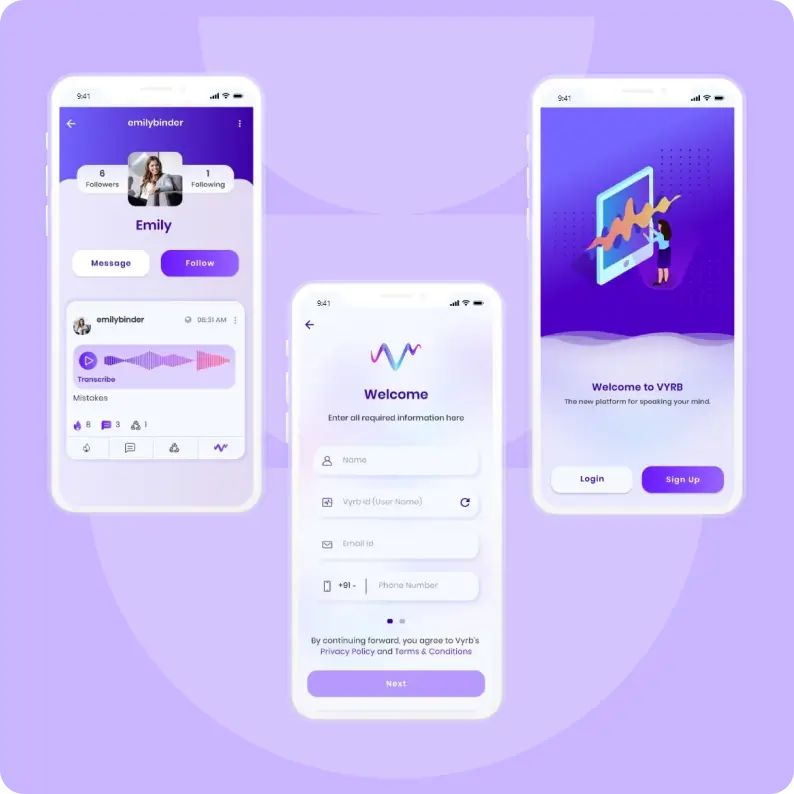
The goal was to build a social experience that worked without screens. The client wanted people to stay connected through wearables while moving, working, or multitasking, something existing platforms weren’t designed to handle well.

We built Vyrb as a voice-first social app made for Bluetooth wearables. Users can send and listen to short voice messages instantly, making communication feel easy and natural on the move.

We design and engineer compliant, scalable wearable applications aligned with UAE regulations, approved devices, and real operational workflows across healthcare, logistics, manufacturing, and retail.


PDPL UAE Personal Data Protection Law

Dubai Data Law (Law No. 26 of 2015)

DESC ISR Dubai Electronic Security Center Information Security Regulation

NESA / IAS National Electronic Security Authority / UAE Information Assurance Standards

TDRA ICT & Cloud Computing Regulatory Framework

DHA Health Data & AI Regulations Dubai Health Authority

MOHAP Health Information Exchange Standards

DIFC Law No. 5 of 2020 Dubai International Financial Centre Data Protection Law

ADGM Data Protection Regulations Abu Dhabi Global Market

ISO 27799 Health Informatics Information Security Management

ISO 13485 Medical Devices Quality Management Systems

ISO 22301 Business Continuity Management Systems

ISO/IEC 62304 Medical Device Software Lifecycle Processes

HL7 Health Level Seven

FHIR Fast Healthcare Interoperability Resources
PDPL UAE Personal Data Protection Law
Dubai Data Law (Law No. 26 of 2015)
DESC ISR Dubai Electronic Security Center Information Security Regulation
NESA / IAS National Electronic Security Authority / UAE Information Assurance Standards
TDRA ICT & Cloud Computing Regulatory Framework
DHA Health Data & AI Regulations Dubai Health Authority
MOHAP Health Information Exchange Standards
DIFC Law No. 5 of 2020 Dubai International Financial Centre Data Protection Law
ADGM Data Protection Regulations Abu Dhabi Global Market
ISO 27799 Health Informatics Information Security Management
ISO 13485 Medical Devices Quality Management Systems
ISO 22301 Business Continuity Management Systems
ISO/IEC 62304 Medical Device Software Lifecycle Processes
HL7 Health Level Seven
FHIR Fast Healthcare Interoperability Resources


One of the most common reasons wearable initiatives stall is poor integration. Our wearable app development services are designed to connect directly with ERP, CRM, healthcare platforms, and analytics tools using API-first integrations and open standards. The goal is simple: wearables should extend how your systems work, not create new silos.
Enterprises grow quickly here. As a wearable devices app development company, we build cloud-native platforms using modular architecture and automated cloud infrastructure, so adding users, devices, or locations does not require re-engineering the core system later.
Wearable platforms often deal with sensitive health and operational data. Our wearable app development services in the UAE embed security at the architectural level, from encrypted data pipelines and API security to automated security checks. This helps teams meet local compliance expectations without slowing down delivery.
Getting data out of wearables is rarely the hard part. The challenge is figuring out what actually matters. We use AI and data analytics where they genuinely add value, whether that’s identifying unusual patterns, understanding trends over time, or supporting early decisions. The aim is clear insight teams can use, not more dashboards to manage.
As a custom wearable app development company, we plan for change from the start. By using open standards and modular components, we make it easier for enterprises to add new devices, extend analytics, or respond to regulatory shifts without rebuilding the platform each time.

Extend ERP, healthcare, and operational systems to the wearable layer
Deploy solutions that perform consistently across devices and locations
Reduce integration friction with API-first, enterprise-ready architectures
Support long-term scale without reworking the core platform

The India's Fastest-Growing Companies 2026 Recognised by TIME and Statista

Statista High Growth Companies APAC - 2026

Statista India's Growth Champions 2023





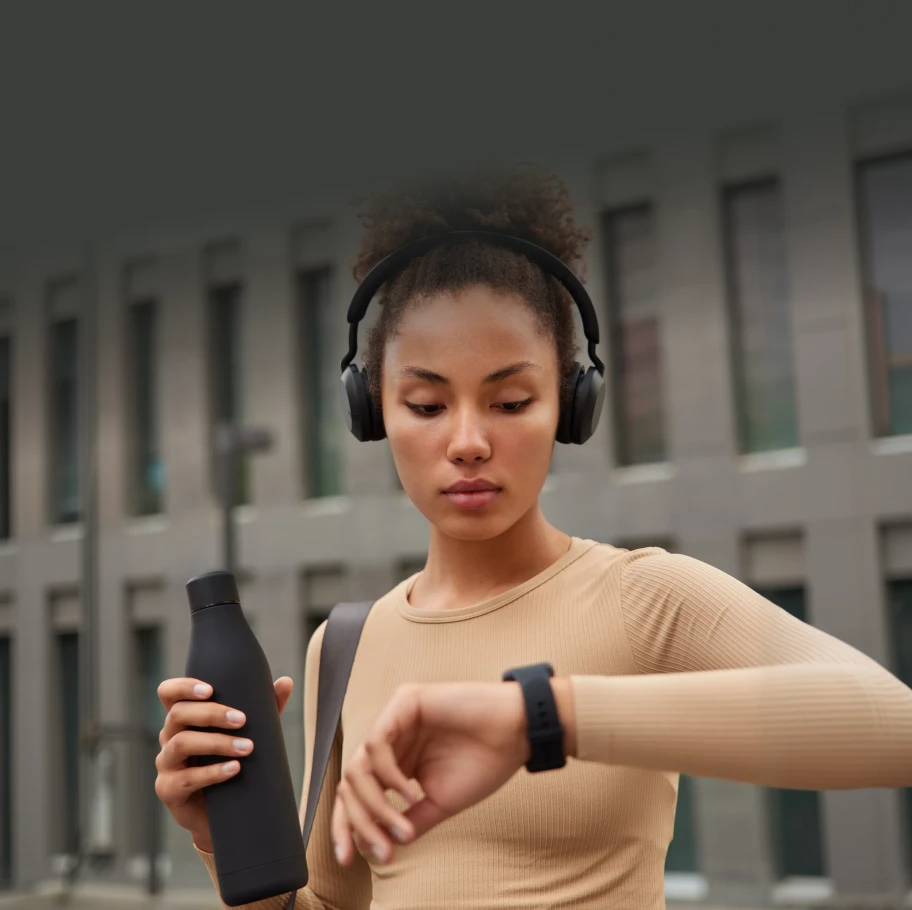
We use AI-powered capabilities to help wearables notice patterns humans usually miss. That could be early signs in health data, subtle changes in movement, or signals that something is drifting off track. The goal isn’t automation for its own sake, but clearer, earlier insight.
Generative AI comes into play when wearables need to feel less rigid. Instead of fixed rules, apps can adapt, suggest, and respond based on how someone actually lives or trains. Over time, the experience feels more natural and less programmed.
Machine Learning helps wearable platforms get better quietly. As people use the app, the system learns what “normal” looks like, flags what isn’t, and improves accuracy without constant manual tuning from teams behind the scenes.
Wearables rarely work alone. We make sure devices talk reliably with other systems, whether that’s sensors, mobile apps, or enterprise platforms. Secure syncing and real-time data flow are what keep everything useful, not just connected, thanks to IoT.
In cases where data trust matters, especially health or enterprise data, blockchain technology helps ensure records stay intact. It adds confidence that what’s recorded hasn’t been altered and that data sharing happens in a controlled, transparent way.
For some wearables, screens aren’t enough. AR and VR let us add guidance, training, or feedback that feels visual and immediate, whether during rehab sessions, fitness routines, or hands-on training.
When wearables are part of immersive or collaborative environments, we help connect them to virtual spaces. Real-world data from devices can then influence simulations, shared environments, or digital twins in meaningful ways.
Cloud infrastructure keeps wearable platforms stable as they grow. It’s what makes data available when it’s needed, keeps systems responsive, and enables new features to roll out without disruption.
In the end, BI helps teams make sense of what wearables collect. Instead of raw numbers, decision-makers get views they can act on, whether that’s improving care, safety, or overall performance.







With the right architecture, tooling, and delivery approach, we help organizations build applications that scale reliably and integrate seamlessly with existing systems.


We start by understanding how wearables will operate in real conditions. This includes mapping sensors, data frequency, battery impact, and usage scenarios across smartwatches, medical wearables, AR devices, and IoMT hardware. The aim is to define a clear scope that supports scale, integration, and regulatory alignment from the outset.
Wearables run under tight power and performance limits. We plan platform choices, SDK usage, background processing, and cloud dependencies carefully to avoid battery drain while still supporting real-time data capture and secure syncing.
Wearable interfaces must be quick to read and easy to use in motion. We design glanceable screens, minimal interactions, and haptic feedback where appropriate. Early prototypes help validate what works on the wrist or device, not just on paper.
Development focuses on efficient on-device processing, fast APIs, and secure data exchange between wearables, companion apps, and enterprise systems. Features are added only when they improve reliability or operational value.
Testing goes beyond standard QA. We validate performance on real devices under battery constraints, continuous sensor usage, and network drops. Security and data handling are also tested to ensure reliability in live environments.
Deployments are managed across watchOS, Wear OS, and device-specific channels using controlled release pipelines. Monitoring is configured early to track stability, connectivity, and data flow after launch.
Wearable platforms evolve quickly. We support ongoing updates to maintain compatibility with OS changes, new devices, and regulatory requirements, without disrupting active users or enterprise operations.
Most enterprise wearable implementations reach an initial production release within 3 to 6 months. Timelines extend when projects involve regulated data, multi-device support, ERP or EHR integrations, and formal compliance validation.
Wearable development costs vary based on device complexity, system integrations, data security requirements, and compliance scope. Enterprise-grade projects typically range from AED 80,000 to AED 400,000, with regulated healthcare and industrial solutions requiring higher investment.
Wearable applications in the UAE must comply with regulations related to data privacy, healthcare, and connected devices. Fitness and wellness apps typically need to adhere to the UAE Personal Data Protection Law (PDPL), while healthcare-focused wearable solutions may require compliance with guidelines from authorities such as MoHAP, EDE, DHA, and DoH. Organizations should also consider UAE health data hosting requirements and TDRA regulations when developing connected wearable and IoT solutions.
Wearable platforms secure data through end-to-end encryption, secure Bluetooth and API communication, cloud security controls, and role-based access management. Data is protected both in transit and at rest, while authentication, continuous monitoring, and compliance-driven security practices help safeguard sensitive user and health information.
Yes. We build wearable platforms that seamlessly integrate with EHRs, hospital systems, ERP, CRM, and other enterprise applications through secure API-first architectures. Our solutions can support healthcare interoperability standards such as HL7 FHIR and align with UAE data protection and integration requirements.
Yes. At Appinventiv, we can localize wearable applications with Arabic language support, right-to-left (RTL) interfaces, and region-specific usage patterns, ensuring the user experience aligns with UAE market requirements, local workforce needs, and user expectations.