Appinventiv is a digital product development company that helps businesses move from an idea to a working solution that makes a difference. Over the years, we’ve worked with thousands of startups, Fortune 500 companies and leading enterprises to build and upgrade digital products that scale.
Appinventiv’s core leadership team includes executive leaders across sales, technology, delivery, operations, and marketing. Key executives at Appinventiv include:
We began in 2015 with a small team. Now, after a decade, we are recognized as one of the world’s most trusted software and app development firms.
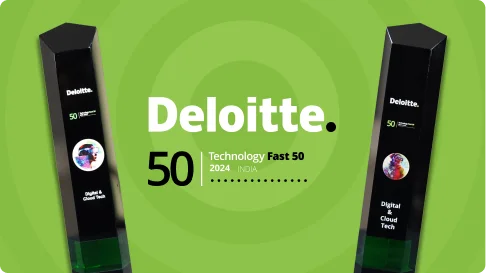
Our IT and AI development expertise is recognized by Economic Times, Deloitte, Statista, Clutch, Good firms and many other esteemed organizations.
Our headquarters are in Noida, India, supported by 5+ international delivery centers and offices in:
We boast a skilled team of 1,600+ tech experts that include developers, designers, data scientists, consultants, AI experts, project heads, etc. Each project brings together:
Our clients range from global enterprises to government institutions and funded startups. Our portfolio includes success stories across diverse industries:
Yes, we have 5+ federal partnerships with leading technology ecosystems to deliver robust and secure solutions. We are:
Yes, of course. Our portfolio page showcases real-world examples of how we’ve helped brands achieve tangible outcomes.
You can explore detailed client testimonials from diverse industries like healthcare, fintech, eCommerce and real estate.
At Appinventiv, our work goes beyond development. It’s about helping companies shape technology that supports their strategy.
We usually work across these core areas:
Yes, absolutely. We don’t just jump straight into building; that’s a recipe for confusion later. Before we start building anything, we schedule a consultation meeting to understand your project’s goal, your competitors, your target audience, and the market gaps you can fill. We’ll also help you figure out how to make money from the product, not just in theory, but in a way that actually fits your users and business model.
We start by understanding where you are right now; what’s working and what isn’t. Then we help map out how to innovate and improve your systems. The final roadmap shows you the steps to modernize and scale your business over time.
We build custom software products that support both consumer experiences and enterprise operations. Our software development capabilities cover:
We work across 35+ industries in both regulated and high-scale environments. Our experience spans across sectors, including:
We provide both. If you’re looking for a full-cycle technology partner, we handle everything: discovery, design, development, deployment, and post-launch optimization.
But we also step in at any stage of the process. Many of our enterprise clients bring us in to:
Enterprises choose Appinventiv when delivery needs to move fast without compromising security, reliability, and scale. Our approach combines structured governance with hands-on engineering, so complex programs stay predictable from discovery to production.
Here’s what sets us apart:
Yes. We regularly deliver for industries where security, auditability, and process rigor are non-negotiable, such as healthcare, BFSI, and other regulated sectors. Engagements are structured to align with compliance needs, including secure SDLC practices, documentation discipline, access controls, and validation processes required for audits and internal governance.
Our consulting service typically focuses on reducing execution risk upfront. This includes aligning stakeholders on the problem statement and success metrics, defining scope and phased roadmaps, assessing technical feasibility, identifying integration and data dependencies, mapping compliance requirements, and outlining architecture and delivery governance.
The output is a practical plan that engineering teams can execute without ambiguity or rework.
Yes. We frequently build integration layers that connect digital products with enterprise systems such as ERP, CRM, and finance platforms, including SAP, Oracle, Salesforce, and Microsoft Dynamics.
Integrations are typically implemented through APIs, middleware, and event-based patterns where appropriate, with attention to data mapping, security, performance, and reliability so the connected workflows stay stable at scale.
Yes, definitely. In fact, many enterprises approach us when their legacy software becomes too rigid or expensive to maintain. Our modernization work often involves:
The goal of our legacy system modernization service is simple: preserve what works, replace/upgrade what limits you, and build a system that supports future growth.
Client relationships are our biggest strength. We boast a 97% client satisfaction rate and 90% repeat clientele. Our ratings on leading platforms validate this high satisfaction rate:
We have delivered over 3000 digital products across consumer and enterprise contexts. Our portfolio spans mobile, web, and platform engineering, with solutions built to handle real-world scale, security, and performance expectations. A few of the most notable types of digital products we have built in our decade-long experience are:
Our experience includes engagements with global and high-growth brands such as Adidas, IKEA, KFC, Pizza Hut, Domino’s, KPMG, 6th Street, Edfudno and Edamama, among others.
The specific scope varies by engagement, and we share relevant references through case studies or during enterprise discussions when appropriate.
Outcomes are tracked case by case, based on the business objectives agreed with each client at the start of the engagement.
In published success stories, results have included higher conversion rates, stronger digital ordering performance, faster rollouts of customer-facing experiences, and measurable improvements in operational efficiency
Business impact metrics reported across engagements include:
(Actual outcomes vary by industry, scope, and data maturity, and are validated per project.)
Yes. We typically share case studies aligned to your industry, product type, and delivery model (build, modernization, or scale-up). For regulated or confidential engagements, we may share outcomes at a high level or discuss comparable work under NDA.
Appinventiv has been recognized by established industry bodies and publications for its growth and delivery capabilities. Notable recognitions include:
On the assurance side, we maintain process and security certifications aligned to enterprise expectations, including ISO 27001, ISO 9001, and CMMI Level 3.
Our work covers a wide spectrum of technologies. We work extensively with:
With strong partnerships with leading cloud platforms like AWS, Microsoft Azure, and Google Cloud, we design, build, and modernize cloud environments.
Our cloud capability typically includes:
Where needed, we align delivery with your internal cloud standards, compliance requirements, and preferred tooling so adoption is smooth and auditable.
We start with the current architecture and a clear use-case. Then:
AI slots into analytics/CRM flows, IoT feeds secure device data to the cloud, and Blockchain covers auditability where it’s actually needed.
We stay updated through continuous learning, R&D, and close collaboration with tech partners like AWS, Google Cloud and Microsoft Azure.
Our tech team explores new tools and frameworks before they become mainstream. This approach helps us bring proven innovation into client projects instead of untested trends.
Scalability is built into our engineering DNA. We approach it from three layers:
This layered approach ensures your product remains fast and reliable, even if usage multiplies over time.
We cover the full spectrum of AI and ML development across strategy, build, integration, and governance, including:
Our AI engineers also help companies embed these models within their current workflows.
Yes. We build AI agents as controlled workflows, not open-ended chatbots. That means your agent follows a defined sequence: retrieve the right context (RAG), reason within guardrails, then act through approved tools (APIs, DB actions, ticketing, CRM updates). We typically implement permission-aware retrieval (so the agent only sees what the user is allowed to see), tool allowlists, and execution safety checks.
The outcome is an agent that can support real tasks like “summarize a customer case and create a Salesforce note” without becoming unpredictable.
Yes. We build domain assistants that are trained around your enterprise vocabulary, workflows, and documents, so responses stay consistent and usable in real operations. Depending on the use case, we use fine-tuning to improve accuracy on domain language and structured outputs, or we use private knowledge grounding (RAG) when the priority is keeping answers traceable to approved sources.
We also design these assistants to integrate with your systems (for example, CRM, ticketing, or internal portals) so they can support tasks like drafting responses, summarizing cases, generating reports, or guiding teams through SOPs. The goal is a dependable assistant that improves throughput and reduces manual effort, not a generic chatbot.
We reduce hallucinations by making answers grounded, verifiable, and constrained. Concretely, we implement retrieval confidence checks (retrieve-first, answer-second), citation/source linking when needed, and “abstain/ask clarification” behavior when evidence is weak. We also run an evaluation harness with golden test sets (real enterprise queries + expected outcomes), then measure quality using metrics like groundedness, correctness, and refusal accuracy. For critical workflows, we add schema-validated outputs (JSON/fields) and secondary validation rules before anything is written back to systems.
We productionize AI like any other enterprise service: versioned releases, monitoring, and rollback. We typically set up model/prompt/version control, CI/CD gates for AI changes, runtime monitoring (latency, cost, error rate, tool failures), and quality monitoring based on feedback signals.
We also implement drift handling differently for different systems: RAG systems need knowledge freshness and retrieval quality checks, while predictive models may need feature drift detection and retraining schedules. The value is fewer surprises after launch and faster iteration without breaking production.
We design AI systems to fit enterprise controls from day one. That includes access control mapped to your identity layer (SSO/RBAC), encryption and key management, audit logs for retrieval and tool actions, and data minimization (only the minimum context is sent to the model).
For sensitive environments, we support private or restricted deployments, data residency needs, and guardrails like PII redaction/DLP checks. Governance-wise, we help define what data can be used, who can access it, retention policies, and how AI decisions are reviewed for compliance.
Yes. Most of our enterprise clients have approached us to connect AI models with their CRM, ERP, or analytics tools through APIs or cloud-based integrations. The goal is to add AI intelligence without disrupting what’s already working.
Accuracy starts with data quality. Considering this, our team runs multiple data validation rounds using clean datasets, bias checks, and continuous retraining once the model is in production. We also adhere to GDPR, HIPAA, and SOC 2 for data security.
A few things stand out in our AI development services:
Yes. Many clients come to us with older systems that lack automation or data intelligence.
We modernize them step by step, improving data pipelines, introducing machine learning layers, and connecting APIs for predictive insights.
This approach gives legacy platforms a new life without the need for a full rebuild.
Transition from experimental POCs to secure,
enterprise-grade AI
ecosystems.

Yes. Every project starts with an NDA. It’s not a formality for us; it’s the first step toward trust. We sign your company’s standard agreement or use our own version. Either way, it protects every detail you share: ideas, data, prototypes, or business plans from being used or disclosed outside the project.
We follow an enterprise-grade security approach across delivery and operations, including:
Ownership always stays with you. Once the project is done and payments are cleared, we transfer complete rights to you. The entire IP moves to your account, not ours.
A. Ownership always stays with you. Once the project is done and payments are cleared, we transfer complete rights to you. The entire IP moves to your account, not ours. Appinventiv keeps a copy only for internal record-keeping and support continuity, never for reuse or redistribution.
We follow globally accepted standards to keep our processes consistent and secure. These certifications include, but are not limited to:
We keep things simple and safe.
Internal audits run quarterly to confirm these practices stay tight. Only the people who need access ever have it.
Security starts at the architecture level. We deploy on AWS, Azure, or Google Cloud with environments configured for:
We maintain a 24×7 incident response plan. If something abnormal surfaces, the first step is isolation, cutting off the affected environment. The security team then investigates, fixes, and documents the root cause. Clients are informed immediately with a summary of what happened, what data was impacted (if any), and the measures taken to prevent recurrence. Afterward, we conduct a post-incident review updates so the same issue doesn’t repeat.
Yes. We sign an SLA that spells out uptime commitments, response timelines, and support levels.
It ensures both teams share a clear understanding of expectations: how we deliver, how quickly we respond, and what performance standards the product will maintain once live.
We follow a structured lifecycle that goes through a series of structured steps:
We adapt the delivery model to the program’s complexity, stakeholders, and governance needs. In practice, many engagements run on Agile principles, often executed through Scrum sprint cycles for predictable delivery and frequent demos.
For large enterprise programs, we may use a hybrid approach, where sprint execution continues as usual while planning, risk reviews, and change approvals align with your internal governance. This keeps delivery flexible without compromising control or accountability.
Quality is enforced through engineering standards, peer reviews, automated checks, and consistent documentation. We focus on clean interfaces, reusable components, and clear ownership boundaries so systems remain easy to extend. Maintainability is treated as a delivery requirement, not an afterthought.
We choose architecture based on scale, integration complexity, compliance needs, and operational overhead. Where warranted, we use microservices or event-driven patterns; where not, we keep it simpler and easier to operate. The goal is stability and scalability without unnecessary complexity.
We treat QA as a release-gating function, not a final-stage checklist. Our approach typically includes:
Our DevOps approach is designed to make releases predictable and production-safe. We set up CI/CD pipelines that fit your environments and approval workflows, with disciplined versioning and controlled deployments to reduce release risk.
Where appropriate, we use repeatable infrastructure configurations to keep environments consistent across development, staging, and production. We also implement observability foundations, so teams have clear visibility into system health, performance, and incidents after release.
We test every product as if it’s going into production the next day. Quality isn’t a phase we add at the end; it’s part of the entire process.
Our testing strategy includes:
Only after the product passes every layer of review, it moves toward deployment. This way, our clients get something stable, secure, and ready to scale from day one.
There isn’t a flat number that fits every project. The final cost varies based on several variables. On average, app or software development costs look like:
Several components determine a project’s cost. The most common include:
The typical timelines for a digital product at Appinventiv are:
Yes, always. Before any work starts, you receive a document that breaks down:
It’s normal for ideas to evolve. When that happens, we adapt accordingly. Your project manager will log the change, analyze its impact on timeline and cost, and discuss it with you before taking action. Once you approve, it becomes part of the next sprint.
You can simply reach out through our contact page.
Share a short brief, even a rough outline, helps. Within a few working days, our consulting team will respond with an initial estimate, possible tech approaches, and an expected timeline range.
It’s quick, transparent, and costs nothing. The goal isn’t to sell you development hours; it’s to help you make an informed decision about what building your product will actually take.
We start a new project with clarity, not code.
When a project comes in, our team runs a discovery session to learn about your product goals, market, and technical constraints. We identify what success looks like and build a roadmap that outlines milestones, dependencies, and delivery timelines.
We adapt to different engagement models depending on our clients' preferences. Based on your project’s nature, you can choose between:
Our approach is rooted in DevOps and Agile methodologies: quick iterations, steady progress, constant feedback. It helps us stay adaptable to real-world changes.
We use:
You’ll have a dedicated project manager who stays in touch throughout the project. It means you can communicate with us anytime during your project lifecycle.
We maintain constant communication through diverse channels that include, but are not limited to:
Yes, absolutely. You’ll have access to live dashboards where you can track your project progress in real time.
Clients often tell us this transparency makes them feel part of the team, not just observers.
We’ve teams spread from New York to Sydney, so coordination across time zones comes naturally. Our teams in India, the UAE, the US, the UK, Canada and Australia keep development running in shifts. It feels like a 24-hour work cycle without anyone losing sleep.
We prepare for risks early. Each project plan includes backup resources, alternative workflows, and a clear escalation matrix. So, if something unexpected happens, we escalate immediately and realign priorities.
Our rule is simple: problems don’t wait for the weekly review; they get addressed the same day.
Yes. After launch, we stay involved to keep your product stable and reliable in production. We monitor performance, address critical fixes, and support minor updates as real usage patterns emerge.
We also include 2 months of initial post-launch support as part of standard delivery, followed by ongoing maintenance options based on your roadmap and SLA needs.
Yes, we do that for most clients.
As platforms update and user needs shift, we manage version upgrades, apply patches, and add new capabilities.
Each change is tested before release to make sure performance and data security stay intact.
Every project runs under a clear SLA.
If there’s an urgent issue, downtime, payment error, or data bug, we respond within a few hours.
Less-critical requests follow set turnaround times, so everything gets addressed without delay.
Yes, for enterprise clients who need round-the-clock assistance, we are round-the-clock ready to support.
Since our teams work across multiple time zones, someone is always available to step in when needed.
When we hand over a project, we also hand over know-how. Your team receives all source files, credentials, and deployment notes.
You don’t need a long brief, a clear idea is enough to request a quote. Think about these points before we talk:
Even a rough idea of your project helps us understand your vision better and gives you a realistic estimate.
Once the agreement is signed, we can usually get started within a week or two. If the project is urgent, we can adjust schedules to move faster.
The most direct option is the contact form on our website, which routes your request to the right team based on service area and region. If you prefer a conversation first, we can schedule a short discovery call on Zoom or Google Meet at a time that works for you. Sharing a brief outline of your goals, scope, and timeline helps us respond faster and with the right stakeholders on the call.
Yes, of course. We’re open to both in-person and virtual meetings.
You can visit us at any of our offices in India, UK, US, Australia, Canada and the UAE.
For virtual meetings, we run a workshop online, sharing screens, prototypes, and design boards in real time.
Your first point of contact will be a product strategist or business consultant who understands both technology and your industry.
They’ll help shape the idea into a workable plan. Once things move to execution, a dedicated project manager becomes your day-to-day contact, keeping communication clear and everything on track.
Appinventiv hires across core engineering, product, and delivery functions that support enterprise-grade digital programs. Common roles include mobile and web engineering, backend and platform engineering, QA and automation, DevOps and cloud, data engineering, and AI/ML. We also hire for UX/UI, business analysis, project and program management, digital marketing and delivery leadership roles.
Open positions are published on the Careers page and are updated based on active project requirements and strategic hiring priorities.
Our hiring process is designed to be structured and role-relevant. It typically includes:
For certain roles, candidates may be asked to complete a brief task or case-based evaluation. Timelines vary by team and hiring pipeline, but communication is kept consistent across stages.
Shortlisting is primarily based on clarity of fit and evidence of capability. Candidates usually stand out when they:
A concise, well-structured profile that reflects real outcomes typically performs better than a broad, generic resume.

Schedule a consultation call and we’ll answer to all your queries in real-time