


































 Leader in AI-First Product Engineering Read Full Article
 Contact Us

As a cryptocurrency wallet development company, we build custodial and non-custodial wallet solutions with secure key management, multi-chain transaction support, and enterprise-ready architectures designed for real-world adoption and regulatory alignment.
Our Core Capabilities





















What Our Long-Term Delivery
Experience Looks Like in Practice
Tech Evangelists
Solutions Designed And Delivered
Legacy Processes Transformed
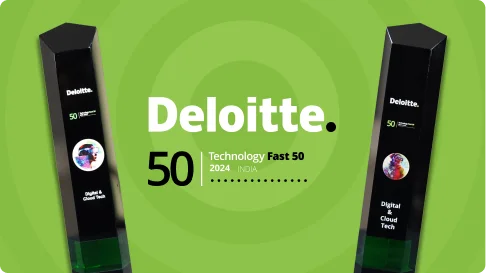
Global Recognitions and Awards
Industry Certifications
Security Assurance in Deployments


We build wallets tailored to specific product, custody, and compliance needs rather than forcing generic templates.
• Custom key management, signing flows, and recovery logic aligned to product risk models
• Wallet logic engineered around chain behavior, transaction volume, and user workflows

Our consulting helps teams choose the right wallet model and system design before development decisions become difficult to reverse.
• Custody model selection, threat modeling, and security architecture reviews
• Guidance from experienced crypto wallet developers across consumer and enterprise platforms

As a crypto wallet app development company, we deliver mobile wallets built for real-world usage and scale.
• Native Android and iOS apps with secure storage, signing, and lifecycle handling
• Optimized UX for balance sync, transaction speed, and error recovery under load

We offer white label crypto wallet development for teams that need faster market entry without compromising baseline security and scalability. These solutions are configurable, brand-ready, and designed to integrate with your custody, compliance, and blockchain infrastructure.
• Pre-built wallet frameworks customized for branding and asset support
• Faster deployment with configurable security and transaction logic

We design wallets that support multiple coins and tokens without adding user or system complexity.
• Unified balance and transaction views across assets and blockchain wallets networks
• Extensible architecture for adding new chains and token standards safely

We build custodial wallets for exchanges and fintech platforms where control and compliance are centralized.
• HSM or MPC-based key custody with withdrawal rules and approval workflows
• Audit-ready transaction tracking with role-based access controls

We design non-custodial wallets that give users full key ownership without sacrificing usability.
• Client-side key generation, signing, and seed phrase management
• Secure interaction with blockchains without backend key exposure

We integrate wallets with blockchains, exchanges, and third-party systems while preserving integrity.
• Node and API integrations with retry logic and transaction reconciliation
• Secure connections to automate KYC, payment, analytics, and monitoring systems

Hot wallets are engineered for speed and availability in high-transaction environments.
• Online wallets optimized for low-latency signing and frequent transfers
• Real-time monitoring, rate limiting, and automated risk controls

We design cold storage systems focused on long-term asset protection and institutional custody.
• Offline key storage with controlled signing and access workflows
• Secure asset movement between cold and hot environments
Align functionality, security, and custody decisions
before development begins.




Discuss how custody models, security controls, and
integrations should be
shaped for
your specific market.


SOC 2 Type II (System and Organization Controls 2 – Type II)

ISO 27001 (Information Security Management System Standard)

ISO 22301 (Business Continuity Management System Standard)

PCI DSS (Payment Card Industry Data Security Standard)

NIST Cybersecurity Framework (National Institute of Standards and Technology)

GDPR (General Data Protection Regulation – EU)

CCPA (California Consumer Privacy Act)

CPRA (California Privacy Rights Act)

LGPD (Lei Geral de Proteção de Dados – Brazil General Data Protection Law)
FATF Travel Rule (Financial Action Task Force Travel Rule)

AML Regulations (Anti-Money Laundering Regulations)

KYC Requirements (Know Your Customer Requirements)

OFAC Sanctions Screening Readiness (Office of Foreign Assets Control)

FinCEN Guidelines (US) (Financial Crimes Enforcement Network)

MiCA Readiness (EU Crypto Regulation)
SOC 2 Type II (System and Organization Controls 2 – Type II)
ISO 27001 (Information Security Management System Standard)
ISO 22301 (Business Continuity Management System Standard)
PCI DSS (Payment Card Industry Data Security Standard)
NIST Cybersecurity Framework (National Institute of Standards and Technology)
GDPR (General Data Protection Regulation – EU)
CCPA (California Consumer Privacy Act)
CPRA (California Privacy Rights Act)
LGPD (Lei Geral de Proteção de Dados – Brazil General Data Protection Law)
FATF Travel Rule (Financial Action Task Force Travel Rule)
AML Regulations (Anti-Money Laundering Regulations)
KYC Requirements (Know Your Customer Requirements)
OFAC Sanctions Screening Readiness (Office of Foreign Assets Control)
FinCEN Guidelines (US) (Financial Crimes Enforcement Network)
MiCA Readiness (Markets in Crypto-Assets Regulation – EU)
We design wallets with hardened key management, secure signing flows, and isolation between critical components. Security decisions are embedded at the architecture level, not added after development.
Our teams work across custodial, non-custodial, hot, and cold wallet models. This allows us to guide clients on trade-offs around control, compliance, usability, and operational risk before systems are locked in.
We build wallet platforms that account for blockchain behavior such as network latency, fee volatility, chain reorganizations, and transaction finality, ensuring predictable user experiences.
Compliance requirements influence how wallets are built, not just how they are operated. We align identity flows, transaction monitoring, and data handling with global regulatory
Our wallet architectures are designed to scale across users, assets, and geographies. Modular services, clean APIs, and observability tooling support long-term evolution without repeated rebuilds.
With structured delivery practices and experienced crypto wallet developers, we support roadmap planning, risk management, and stable releases across high-stakes financial platforms.
Architecture choices made today will define operational risk tomorrow.
Review
your
wallet strategy before scaling users and assets.


Statista High Growth Companies
APAC
2025 & 2024

Statista India's Growth Champions 2023






We apply AI services and solutions where it strengthens transaction safety and user trust. This includes anomaly detection for suspicious wallet activity, behavioral risk scoring, next-best action signals, and intelligent assistance for support and fraud response workflows.
Our teams design machine learning systems for wallet platforms to detect churn risk, flag abnormal usage patterns, optimize fee strategies, and tune security thresholds based on real transaction behavior and historical wallet activity.
Computer vision is used to support identity verification and compliance workflows. This includes document validation, biometric checks where required, and image quality assessment to reduce onboarding friction while maintaining regulatory safeguards.
We create data analytics pipelines that process large volumes of transaction data, wallet events, and behavioral signals. These systems support fraud analysis, usage insights, and operational reporting without impacting live transaction performance.
Wallet architectures are aligned with cloud platforms to ensure predictable scaling, cost control, and global availability. APIs, transaction services, and monitoring layers are designed for secure operation across regions and traffic spikes.
We apply blockchain technology beyond basic transactions. This includes secure entitlement management, tamper-resistant records, audit-ready transaction histories, and integration with smart contracts for premium access and wallet governance logic.
For advanced use cases, we do IoT development that allow wallets to interact with secure devices and hardware signals. This supports hardware wallets, contextual authentication, and optional device-based trust indicators.
Cyber security is embedded across wallet systems through threat modeling, secure coding practices, key isolation, encryption, and continuous monitoring. These measures protect private keys, APIs, transaction flows, and user data from exploitation.
Where platforms explore immersive experiences, we support AR and VR development tied to secure identity, asset visualization, or guided user interactions. These experiences remain controlled, measurable, and governed within the wallet ecosystem.




Align your stack with real-world transaction volume and
evolving risks.

We begin by understanding custody models, asset flows, target jurisdictions, and threat exposure. Scoping reflects real operational and compliance constraints rather than idealized wallet architectures.
Key management, signing workflows, and custody boundaries are defined early. Hot, cold, custodial, and non-custodial approaches are evaluated based on risk, regulatory impact, and long-term operability.
Wallet logic, transaction handling, and integrations are developed in segmented environments with strict access controls. Testing includes failure scenarios such as network congestion, chain reorganizations, and partial outages.
Engineering, security, and compliance stakeholders review decisions together. Trade-offs are documented, assumptions are challenged, and ownership is clear before changes move forward.
Production releases include monitoring, alerting, and rollback mechanisms. Transaction integrity, balance accuracy, and abnormal behavior are observable from day one.
Post-release, we support audits, security reviews, performance tuning, and roadmap evolution. The focus stays on building a wallet platform teams can operate, explain, and scale with confidence.
When teams ask how do you build a crypto wallet, the answer starts well before coding. The process begins with defining custody, security boundaries, and regulatory exposure, followed by architecture and controlled execution.
Key steps typically include:
A reliable crypto wallet is built by aligning security, usability, and long-term operability from day one, not by assembling features in isolation.
Timelines depend on scope, supported blockchains, and compliance needs. Simple wallets can move faster, while regulated or multi-chain systems require more planning.
Typical timelines look like:
Discovery and security design often define the final timeline.
A custom crypto wallet must balance usability with strict security and operational control. Feature sets are shaped by custody model and user risk.
Core features usually include:
Additional features are layered based on business and regulatory needs.
Crypto wallet app development costs vary depending on security requirements, blockchain support, integrations, and compliance scope. While pricing differs by project complexity, most builds typically fall between $40,000 and $400,000.
In general:
Costs are best estimated after architecture and risk assessment.
KYC requirements depend on jurisdiction and custody model. Non-custodial wallets may not require KYC, while custodial wallets and platforms offering on-ramps or transfers usually need identity verification aligned with local regulations.
Custom cryptocurrency wallet development costs more upfront than white-label crypto wallet development, but it provides better security control, scalability, and long-term flexibility. White-label options are faster but often limit customization and compliance control.