
































Transportation Management System Development: How to Build a TMS That Scales

 Share -



- 01How do you build a custom TMS, step by step?
- 02What architecture keeps the project from aging out?
- 03What should a custom TMS actually do?
- 04What does a TMS need to integrate with?
- 05How much does it cost to build a custom TMS?
- 06Where do TMS development projects go wrong?
- 07What compliance does a US transportation management system have to meet?
- 08What ROI does a custom TMS actually return?
- 09What separates a transportation management solution that ships from one that stalls?
- 10How can Appinventiv Help You Out?
- 11FAQs

Key takeaways:
- Successful TMS development follows a structured path: discovery and design first, development and integrations next, then testing, deployment, and optimization.
- Building a scalable TMS requires cloud-native architecture, API-first integrations, and real-time data visibility from the start.
- Treat TMS implementation as a continuous business transformation program, not a one-time software deployment project.
- Custom TMS development costs typically range from $50,000 to $300,000+, depending largely on scope, integrations, and automation requirements.
- The biggest TMS challenges are integration complexity, poor data quality, scope creep, and user adoption, rather than the technology itself.
Freight is one of the largest controllable costs on your books. Plenty of operations still run it on spreadsheets, a shared inbox, and a dispatcher with the phone wedged against one shoulder. Transportation management system development is how you take that money back.
The expense is already moving. MarketsandMarkets pegged the global transportation management system market at $18.5 billion in 2025, headed for about $37 billion by 2030, a 14.9% CAGR. Precedence Research runs the line further out, to roughly $48 billion by 2035. So the question stopped being whether to invest. It is what to build, and how to build it, without the project stalling halfway.
What follows skips the brochure. How a build actually runs, what it costs, where these projects quietly die, what compliance demands, and the returns that make the case to your finance team.
Scope and integration depth swing the number more than any price sheet. Get a real estimate built around how your freight actually moves.
How do you build a custom TMS, step by step?
A TMS build is not one sprint. It is a chain, and each link de-risks the next. Rush the front, and you pay at the back, usually in rework, usually at month-end peak when everyone is watching. Here is how a disciplined transportation management software development program runs.
- Discovery. Map the freight flows, the pain points, every integration touchpoint, and the rules that actually govern assignment and pricing. Scope gets set here. So does the implementation roadmap.
- Design. Architecture, data models, integration layers, and the panel each role will live in. Put logistics specialists in the room next to the architects. Design grounded only in engineering, with no one who has dispatched a load, is a design that breaks on contact with the dock.
- Build. Core modules first, in priority order, on a working stack. Automated workflow and rule-based assignment get encoded now. Demo against real scenarios every couple of weeks, not staged happy-path clicks, and the build stays honest about what custom TMS software has to handle.
- Integration. Enterprise resource planning (ERP), warehouse management, carrier application programming interfaces (APIs), telematics, and finance all get wired in. This is the phase that decides your timeline, so it gets its own section below.
- Testing. Functional, integration, and performance testing under load that looks like a bad Monday, not a quiet demo. Software that sails through a sandbox and buckles at peak is not finished. It is dangerous.
- Deployment and support. Roll out in phases. Train the people who will use it. Monitor hard for the first weeks, and treat post-launch tuning as part of the job rather than a favor. Adoption is won or lost in this window.
One reframe separates teams that hit their date from teams that do not. Treat the project as an integration program with a user interface on top, not a user interface program with a few integrations bolted on.
That shift changes how you sequence, who you staff, and where the money goes. The discipline is ordinary custom software development pointed at a freight-specific problem. And it works whether you’re going for a partial development or a full platform build.
What architecture keeps the project from aging out?
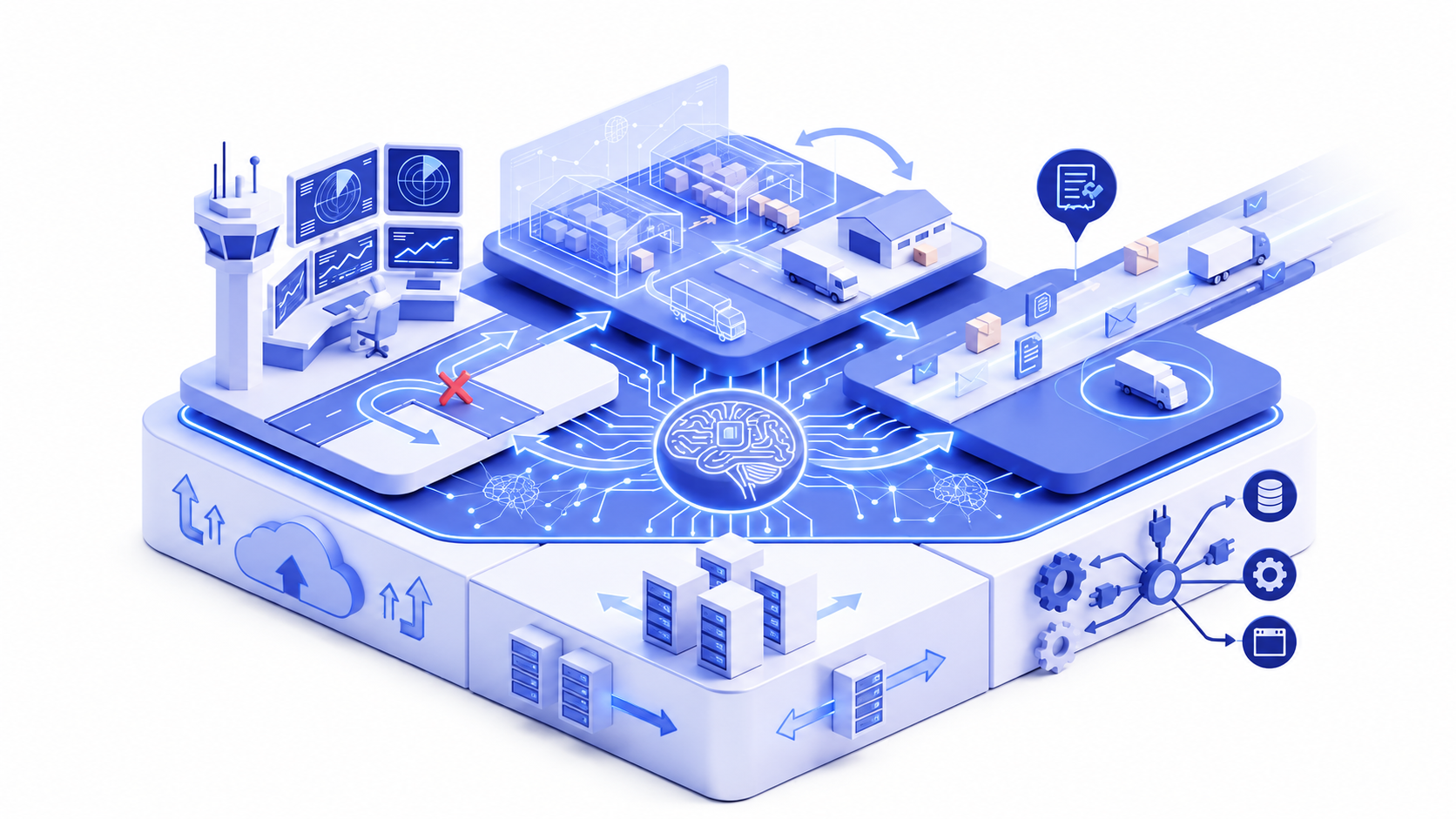
Architecture is where you decide whether the system ages into an asset or a liability.
Start with what you can’t sacrifice on: cloud platforms for elastic capacity, horizontal scaling so peak season does not flatten you, and an API-first design so the next integration is an afternoon and not a quarter. Cloud has become the default for new TMS builds, and Mordor Intelligence flags that shift to cloud-based solutions as a primary engine of market growth.
Then the part that looks ahead. The future of transportation and logistics software development is already legible in three patterns worth designing toward:
- Control towers that do not just flag a disruption but recommend or execute the reroute
- Digital twins that let you test a network change before it costs real money
- And an event-driven backbone where services react the instant a load is tendered or a truck crosses a geofence.
Sitting under all three is AI development, the layer that turns a system of record into a system that recommends. None of that is exotic. It is deliberate, and it is cheaper to build in now than to retrofit later.
What should a custom TMS actually do?
Strip the feature lists off a dozen vendor sites and the same three jobs are left standing: plan the freight, move the freight, run the desk. Get those right, and the rest is polish. Miss one and people route around your software, which is how a six-figure build ends up as shelfware.
The table below is the spine of the transportation management system software.
| Layer | Core modules | What it does |
|---|---|---|
| Planning | Transport planning, visual load planning, route optimization and demand forecasting | Works out the cheapest, fastest, legal way to move each load |
| Execution | Carrier selection and dispatch, order and shipment management, real-time tracking, and exception handling | Turns the plan into movement, then reacts when reality breaks the plan |
| Administration | Admin panel, role-based access control, reporting and analytics, freight audit and claims | Controls who can do what, and proves what actually happened |
| User panels | Dispatcher dashboards, mobile driver module, carrier and customer portals | Gives each role the exact view and actions it needs, nothing more |
Real-time visibility is table stakes; customers expect to watch a shipment crawl across a map, not call to ask where it is.
Exception handling is where the system earns its budget, catching the missed pickup before it becomes a chargeback. And a clean mobile driver module is the gap between accurate status and a dispatcher chasing drivers by text.
Those are the transportation management system features that show up in the daily grind, and the transportation management system benefits people notice within a week.
Mapping the types of transportation management software? Same spine, different weight. A shipper builds on planning and settlement. A carrier or third-party logistics (3PL) builds on dispatch, driver tools, and fleet management technologies such as telematics, maintenance scheduling, and driver scorecards.
Dispatch-heavy shops usually grow out of patterns like trucking dispatch software. The strongest transportation management system examples in any category are rarely the ones with the longest feature list. They are the ones who nailed the few features that matter for that operation.
Generic software ignores what makes your operation work. Our transportation software development starts from how you actually run freight.
What does a TMS need to integrate with?
Here is the part that buyers underestimate and failed projects share. A transport management system is only as good as the systems it can talk to. Integrated transportation management is the entire pitch: one unbroken flow from order to delivery to settlement.
Break a link in that chain, and you are back to rekeying data and reconciling by hand.
| System | What it connects | Why it matters |
|---|---|---|
| ERP | Orders, costs, invoicing | Keeps freight cost and financial truth in sync |
| Warehouse management (WMS) | Inventory, dock, fulfillment | Lines up warehouse readiness with the transport plan |
| Carrier APIs | Rates, tendering, tracking | Automates sourcing, booking, and status updates |
| Telematics and hardware | Vehicles, assets, hours of service | Feeds live location and compliance data |
| Accounting platforms | Freight audit, payment | Closes the loop on freight pay and audit |
| Payment gateways | Settlement | Pays carriers and reconciles without manual touches |
| Order management | Demand signal | Triggers planning from real orders, not guesses |
| Legacy systems of record | Existing data | Syncs in without a rip-and-replace gamble |
Two things teams routinely lowball. Legacy synchronization is almost always harder than the integration that looks scary on the diagram, so budget time for it instead of hoping.
And hardware integration with GPS, radio-frequency identification (RFID), and electronic logging devices (ELDs) drags physical-world mess into clean data, so plan for validation and fallbacks when a device goes dark on a mountain pass.
This connected backbone is the same one behind serious logistics software development across freight, fleet, and warehouse environments.
How much does it cost to build a custom TMS?
Straight answer: the cost to build an advanced transportation management system rides on two things, scope and integration depth. The rest is rounding. A lean execution-and-visibility build is a different animal from a full planning, optimization, and analytics platform, and quoting them the same way is how budgets get torched.
Here is roughly how scope maps to money and time. Treat these as conversation-framing ranges, not a quote, because your integration count and rules complexity will swing the number more than anything on a price sheet.
| Build tier | What’s included | Indicative range | Timeline |
|---|---|---|---|
| Core execution | Order and shipment management, dispatch, basic tracking, one or two integrations | $50,000 to $120,000 | 3 to 5 months |
| Operational platform | Planning, route optimization, carrier APIs, ERP and WMS integration, dashboards | $120,000 to $300,000 | 6 to 10 months |
| Advanced, AI-driven | Control tower, AI optimization, telematics, analytics, multimodal, scalable infrastructure | $300,000 and up | 10 months and up |
The line items that actually move the total:
- How many integrations and how messy they are
- How clever your routing and carrier-selection rules get
- Real-time data volume
- AI features like estimated time of arrival (ETA) prediction and carrier scoring
- And the reporting that your finance and ops teams cannot live without.
Compliance and security are not padding. For regulated freight, they are load-bearing, and skipping them just defers the cost to an audit.
Think total cost of ownership, not sticker price. A custom build front-loads spend, then bends the curve down: no per-seat licensing, no per-shipment toll, infrastructure you control. Off-the-shelf flips that are cheap to start and steadily more expensive as you scale.
The TMS implementation question is simply which curve fits your volume and time horizon. For the underlying mechanics, estimating custom software development costs and logistics app development costs both apply directly to a number like this.
Where do TMS development projects go wrong?
Most TMS programs do not fail loudly. They stall. The demo dazzles, the rollout drags, adoption never lands, and a year later, the dispatchers are back on the phone next to a dashboard nobody trusts. The failure points are predictable, which is the good news, because predictable means avoidable.
- Dirty data. Carrier lists are riddled with duplicates, lane history nobody scrubbed and addresses that will not geocode. AI-driven routing inherits every flaw in that data and amplifies it. Clean first, automate second.
- Integration sprawl. A 20-year-old ERP that speaks a dialect of electronic data interchange (EDI) that no modern API expects. Each connector looks small alone. Together, they are the project.
- Scope creep. Every dispatcher wants the one feature that makes their day easier. Say yes to all of them, and the timeline doubles while focus evaporates. Guard the roadmap.
- Carrier onboarding. Your tendering automation is worthless if half your carriers will not connect to it. Onboarding is a people problem dressed as a technical one.
- Adoption. Dispatchers trust the phone because it has never crashed on them. Win them over with a tool that is faster than their workaround, or watch the rollout quietly fail.
- Over-customization. Building rules for edge cases you hit twice a year bloats the system and the bill. Automate the common path hard, handle the rare one by exception.
There is a strategic version of this trap, too. A recent Gartner survey found 83% of supply chain organizations are still applying AI incrementally, with only 17% pursuing a full redesign, and the gap between the two camps keeps widening.
Bolting AI onto a broken process just gives you a faster broken process. The teams pulling ahead treat AI in transportation as core architecture from the start. That is the difference disciplined TMS software development makes between a system that compounds and one that stalls.
What compliance does a US transportation management system have to meet?
Compliance is not the boring chapter you skim. In freight, it shapes the architecture, and getting it wrong is expensive in ways a fine barely captures. A TMS moving loads in the United States runs into a stack of rules that touch data, drivers, and the trucks themselves.
- FMCSA authority and carrier vetting. Before a load is tendered, the system should verify carrier operating authority, insurance, and safety ratings, which means a live tie to FMCSA data rather than a stale spreadsheet.
- Hours of service and ELD mandates. Driver hours are federally capped and electronically logged. Plans that ignore available hours are not just inefficient; they push drivers toward violations, so the telematics feed has to inform routing.
- Data security controls. Encryption in transit and at rest, role-based access control, and audit logging are the floor. Enterprise buyers will ask for SOC 2 or ISO 27001 alignment, and they will ask early.
- Personal and customer data. Driver records, customer addresses, and shipment details are sensitive. Handle them under recognized privacy practices, because a freight breach is still a breach.
- Specialized freight. Hazmat adds chain-of-custody and documentation rules. Cold chain under food-safety regulation adds temperature logging and alerts. Cross-border adds customs paperwork and trade-program requirements.
The point is not to memorize the alphabet soup. It is to build these obligations into the data model and the workflow on day one, where they cost a design decision, instead of retrofitting them after an auditor or a customer forces the issue, where they cost a rebuild. Compliance-first is cheaper than compliance-eventually. Every time.
What ROI does a custom TMS actually return?
Finance does not fund architecture diagrams. It funds returns. A TMS has an unusually clear line to the P&L, because transportation is a big, measurable, leaky cost.
Start with the research. McKinsey ties AI embedded in distribution operations to logistics cost cuts of 5% to 20%, inventory reductions of 20% to 30%, and 7% to 15% more usable warehouse capacity.
Run freight at even a modest share of revenue, and a few points back is real money, not a rounding error. Those are the advantages of transportation management systems that finance actually cares about.
Where the hard returns show up:
- Lower freight spend. Smarter route optimization and carrier-selection rules trim both rates and empty miles.
- Recovered overbilling. Automated freight audit catches the charges a tired human would have waved through.
- Fewer penalties. Exceptions get flagged before they curdle into chargebacks and detention fees.
- Freed working capital. Tighter planning leaves less cash frozen in buffer stock and last-minute expedites.
Then the soft returns that compound: dispatcher hours handed back, customers who get an answer without a phone call, and clean data to carry into the next carrier negotiation. At the strategic level, that is where TMS supply chain management earns its keep, turning transportation from a cost center you tolerate into a lever you pull.
Frame the payback against total cost of ownership. A custom build costs more upfront, then stops charging per seat and per shipment, so the longer your horizon and the higher your volume, the faster it overtakes a subscription that never stops climbing. Returns on that scale are what justify treating serious logistics software development as an investment, not a line-item expense.
What separates a transportation management solution that ships from one that stalls?
The line between software that sits in the corner and a transportation management solution that earns its budget comes down to fit: how closely the system matches the way you actually move freight.
Packaged software for a transport management system hands you a baseline. A custom transportation management system hands you an edge, because the rules, the integrations, and the data model are yours to shape.
Good transportation software development gets judged on outcomes, not feature counts. An automated transportation management system that tenders the right load to the right carrier at the right rate, flags the exception before the customer notices, and closes the freight audit without a human touching it, that is what moves the needle. Every automated decision is one your team stops making by hand. Every clean integration is money that quits leaking at the seams.
Your competitors are already automating the desk while you reconcile invoices by hand. Talk to an engineering lead before peak season makes that gap permanent.
How can Appinventiv Help You Out?
We have spent over a decade building secure, compliance-heavy systems for enterprises that cannot afford for software to fail. Transportation sits squarely in that wheelhouse.
As a logistics and transportation software development partner, we have shipped 3,000+ digital solutions across 35+ industries, including logistics, supply chain, mobility, and transportation. Compliance-first is baked into the build, not bolted on at the end.
Our approach is the one this guide describes, because it is the one that ships:
- Discovery that pins down reality. Scope and integration truth get settled before code, not discovered halfway through it.
- Event-driven architecture. Built to scale through peak season instead of buckling the week it matters most.
- Integrations are the core work. Your ERP, WMS, carriers, and finance systems are treated as the project, not an afterthought.
Where it earns its place, we fold AI services into the build for route optimization, ETA prediction, and carrier scoring, so the system sharpens with every load. For telematics, fleet visibility, and supply chain initiatives, we also support logistics software development as part of a unified digital transformation roadmap.
Case studies
The proof is in what shipped. A few from logistics, last-mile delivery, and enterprise operations:
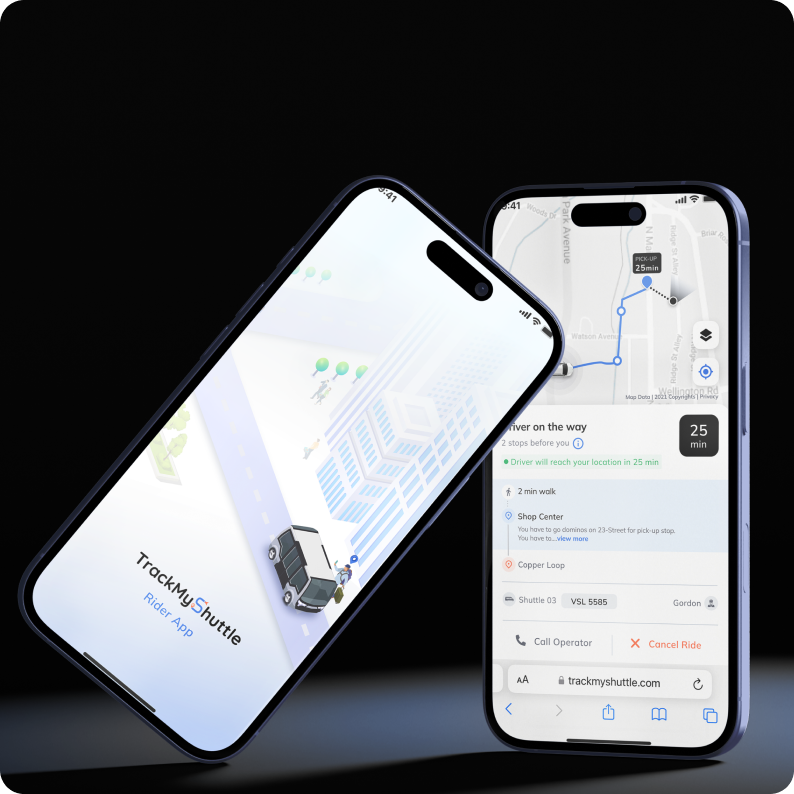
TrackMyShuttle


- All Hilton properties onboarded
- GPS fusion enabled precise real-time tracking
- Series A growth momentum unlocked
Americana Restaurants
- Unified dispatch and coordination
- Real-time shipment tracking
- Central multi-brand fleet control

IKEA (UAE)
- 7+ outlets integrated
- 1 unified ERP backbone
- ROI measured from one source
Every month, a freight desk runs on spreadsheets and phone calls, and a margin is walking out the door, and somewhere a competitor with a smarter system is quietly winning the lane. If you are weighing a build, talk to an engineering lead about scoping your TMS, or book a short architecture review to pressure-test the integration plan before you commit a dollar of budget.
FAQs
Q. What is a transportation management system?
A. It is software that plans, executes, and tracks the movement of freight across a supply chain. Think of a transportation management system (TMS) as the control layer for transportation: it decides how shipments move, who carries them, what they cost, and where they are right now.
Q. How does a transportation management system work?
A. It pulls orders from upstream systems, plans the most efficient legal moves, tenders loads to carriers through APIs, tracks shipments by GPS and telematics, flags exceptions, and reconciles freight charges, all on an event-driven backbone that reacts as conditions change.
Q. What are the main types of transportation management software?
A. Broadly, shipper-focused systems that lean on planning and settlement, carrier and 3PL systems built around dispatch and driver tools, and broker platforms centered on sourcing and tendering. Many real builds blend these, weighting the modules toward how that business actually moves freight.
Q. What are some transportation management system examples in practice?
A. Common transportation management system examples include retail and e-commerce shippers automating carrier selection, manufacturers coordinating inbound and outbound freight, 3PLs running dispatch and driver apps at scale, and cold-chain operators tracking temperature end to end. The best ones nail a few critical features rather than chasing every box.
Q. What are the essential modules for a robust transportation management system?
A. Planning (transport and load planning, route optimization), execution (carrier selection and dispatch, order and shipment management, real-time tracking, exception handling), administration (role-based access, reporting, freight audit), and dedicated panels for dispatchers, drivers, carriers, and customers.
Q. How do you develop a custom transportation management system from scratch?
A. Run the sequence in order: discovery to map flows and rules, design for architecture and integrations, build core modules by priority, wire in ERP, WMS, and carrier systems, test under realistic load, then deploy in phases with real support and tuning afterward.
Q. What tech stack is used for developing a TMS?
A. Typically cloud infrastructure for scale, event-driven microservices, API-first integration layers, a transaction-grade database, and real-time data pipelines, with AI and machine learning services layered in for optimization, ETA prediction, and forecasting.
Q. How much does it cost to build a transport management system?
A. It depends on scope and integration depth. A core execution build often runs $50,000 to $120,000, an operational platform $120,000 to $300,000, and an advanced, AI-driven system $300,000 and up. Integration count and rules complexity move the number most.
Q. How long does TMS software development take?
A. Roughly 3 to 5 months for a focused execution build, 6 to 10 months for an operational platform, and 10 months or more for an advanced, AI-driven system. Integration count and data complexity are the biggest schedule drivers.
Q. What industries benefit most from TMS software?
A. Retail and e-commerce, manufacturing, third-party logistics and freight brokerage, distribution and wholesale, food and beverage, pharmaceuticals and cold chain, and any operation moving high volumes across multiple carriers or modes.
Q. What are the benefits of a transportation management system?
A. Lower freight spend through smarter routing and carrier selection, fewer chargebacks from better exception handling, real-time visibility for customers and ops, automated freight audit, and cleaner data for planning and carrier negotiations. Those advantages of transportation management systems land directly on operating costs.
Q. What role does AI play in integrated transportation management?
A. AI turns a reactive system into a predictive one. It optimizes routes, predicts ETAs, scores carriers, forecasts demand, and powers control towers that recommend or execute reroutes, which is what makes integrated transportation management feel proactive rather than after-the-fact.
Q. What security and compliance requirements apply to TMS development?
A. Expect encryption, role-based access control, and audit logging as a baseline, plus US transport rules such as FMCSA authority checks and electronic logging mandates, and SOC 2 or ISO 27001 controls for enterprise data. Regulated freight like pharma and hazmat adds chain-of-custody and reporting duties.
Q. How do you choose the right development company to build a TMS?
A. Look for proven delivery on large-scale logistics or supply chain systems, deep integration capability, a structured implementation approach, serious security and compliance practice, and clear ownership of scope, timeline, and code. Ask to see documented outcomes, not just a polished demo.

Build a failure-proof TMS with experts

Fast 2-minute response, fully NDA-protected.

How AI Is Transforming the Logistics Industry: Use Cases & AI Adoption Challenges in 2026
Key takeaways: Use Cases: High-impact use cases of AI in logistics in Australia are concentrated in routing, warehousing, and demand forecasting, where decisions are frequent and cost-sensitive. Implementation: Successful adoption depends on sequencing—data readiness, integration with legacy systems, and embedding AI into real workflows. Cost: The cost to implement AI in logistics in Australia typically…

How to Build a Warehouse Management System: A CIO's Guide for Australian Enterprises
Key takeaways: A WMS is now a boardroom decision, not an ops line item with AU online retail hit $82.6B in 2025, up ~14% year-on-year. Success depends on integration and data quality first; AI, robotics, and automation only pay off once that foundation is solid. WMS development cost ranges between AUD 70,000 and 700,000 or…
Computer vision is no longer a futuristic concept confined to sci-fi books and movies. The technology is everywhere, subtly reshaping the way users interact with technology. From facial recognition on smartphones to quality inspections on factory floors, computer vision helps machines interpret and understand images, videos, and other visual inputs. This powerful technology has proven…