































RPA in Banking: Use Cases, Implementation Costs, and Strategic Challenges

 Share -


- 01Steps to Implement RPA in Banking
- 02What Does RPA Implementation in Banking Cost?
- 03Integration of AI-Powered RPA in the Banking Industry
- 04What Are the Biggest Challenges of Robotic Process Automation in Banking, and How Do You Solve Them?
- 05How Appinventiv Can Help You Deploy RPA in Banking
- 06It’s Time for You to Catch Up!
- 07FAQs

Key takeaways:
- Identify high-volume, rule-based banking processes that are fit for RPA.
- Use a scoring matrix to prioritize workflows with the highest automation value.
- Map the selected process end-to-end before starting bot development.
- Build, test, and deploy bots with strong security, compliance, and audit controls.
- Monitor bot performance and scale using reusable components and AI-powered automation.
For starters, implementing RPA in banking is not about picking the right tool and, you know, letting it automate processes. It’s about first identifying which banking operations are rule-based, high-volume, auditable, and painful enough to automate. A strong implementation strategy often focuses on processes like KYC & onboarding, compliance, loan processing, and more.
To identify your requirements, you can also go for the scoring system. This allows you to score each banking process based on its priority. Will explain it in detail ahead.
Let’s start with the basic step!
Have a team on your side that knows how it works.

Steps to Implement RPA in Banking
You will need a nine-step strategy where the process begins with identifying the correct requirements and ends with scaling.
Here’s how it can look:
Step 1: Pinpoint the perfect banking process that requires automation
You will have to create a list of all banking processes in this stage, and then identify the ones with massive redundancy. Automate these processes and the layers involved in them. Be careful, though, don’t compromise anything where human involvement is absolutely necessary. Whether it’s because of legal requirements, compliance, or maybe the sensitivity of the process itself.
Typically, banks implement RPA use cases in these layers:
- KYC Processes: Bots automatically ingest identification documents and cross-reference global watchlists instantly. Instead of analysts manually verifying data across disparate portals, RPA executes strict, rule-based checks to ensure total compliance of KYC automation.
- Customer Screening: Automated background checks eliminate onboarding friction and reduce manual review times. RPA pulls applicant data, queries external credit bureaus, and flags only the complex exceptions for human review.
- Account Creation: Frictionless setup drastically improves customer retention and accelerates time-to-revenue. Once automated screening is complete, bots seamlessly provision the new account across the bank’s core ledger, CRM, and online banking platforms simultaneously, requiring absolutely zero human keystrokes.
- Loan Application Processing: Algorithms validate applicant data across multiple bureaus instantly for rapid approvals. By integrating Optical Character Recognition (OCR), bots extract unstructured data from tax forms and pay stubs to feed directly into the loan origination system.
- Mortgage Lending: RPA eliminates manual bottlenecks in intensive, document-heavy underwriting workflows. Bots handle repetitive, mandatory steps like ordering flood certificates, verifying property addresses, and compiling data for QA/QC reviewers.
- Fraud Detection: Continuous transactional scanning flags anomalies proactively, allowing human teams to investigate faster. Rather than waiting for post-mortem audits, bots monitor transaction velocity and geographic data in real-time, instantly triggering alerts or freezing accounts that breach predefined risk thresholds.
- Regulatory Compliance: Bots autonomously compile, format, and submit required federal and state reports. They extract the necessary audit data directly from internal systems, ensuring mathematical perfection in documents like Suspicious Activity Reports (SARs).
- Trade Processing: RPA in investment banking enforces split-second trade accuracy and reconciles discrepancies immediately. Bots monitor the settlement status of complex trades and automate the data transfer between front-office trading desks and back-office clearing systems.
- Fund Accounting/NAV Calculation: Ensures decimal-perfect precision in daily valuations and reporting. RPA extracts daily pricing feeds from global market data providers, updates portfolio valuations, and calculates the Net Asset Value (NAV) automatically, entirely removing the risk of catastrophic human spreadsheet errors.
- Commercial Insurance Policy Underwriting: Eliminates redundant manual data entry when processing complex, bank-affiliated commercial policies. Bots aggregate risk data from third-party databases and populate the underwriting software, allowing human underwriters to focus purely on pricing strategy rather than data gathering.
By attacking these specific operational bottlenecks, you transform your back-office from a cost center into a scalable asset.
Step 2: Score and rank each process using a prioritization matrix
Here is where the scoring system comes in. The scoring system is basically your attempt to prioritize what requires automation and what does not.
You need a structured way to separate the quick wins from the heavy lifts. Build a scoring matrix that evaluates each process across five dimensions: volume of transactions, error frequency, compliance sensitivity, number of systems involved, and current cost per transaction.
The next phase requires you to score each dimension on a 1-to-5 scale. Processes that rack up a combined score of 18 or above? Those are your first candidates. Anything between 12 and 17 goes into the second wave.
If the score is below 12, reduce the priority assigned to it for now.
| Scoring Criteria | Weight | What to Evaluate |
|---|---|---|
| Transaction Volume | 25% | Daily/weekly repetitions; higher volume = higher priority |
| Error Rate / Risk | 25% | Frequency of manual errors; regulatory penalty exposure |
| Number of Systems Touched | 20% | Cross-platform complexity; more systems = more automation value |
| Current Processing Cost | 15% | Fully loaded labor cost per transaction or per cycle |
| Standardization Level | 15% | How rule-based and consistent the process already is |
This is not academic. The scoring matrix directly shapes your RPA implementation in the banking roadmap, and frankly, it separates the programs that deliver ROI in months from the ones that stall out after a proof of concept.
Step 3: Map the current process end-to-end before building anything
You cannot automate what you do not fully understand. And here is where a lot of banks trip up. They hand a process to an RPA developer and say, “automate this.” But the developer only sees the documented version. The real process, the one that lives in the heads of your operations team, includes these parameters:
- Workarounds,
- Exception paths,
- And judgment calls that never made it into any process document.
Sit with the people who actually run the process. Watch them work. Document every click, every decision point and every exception they handle manually. This is process mining in its most practical form. The output should be a detailed process flow, complete with decision trees, that captures both the happy path and every single edge case.
For banks still running critical operations on aging core platforms, this mapping exercise often reveals opportunities beyond RPA. The bottlenecks that surface frequently point toward deeper legacy banking system modernization needs that, when addressed alongside automation, multiply the efficiency gains.
Step 4: You need the right team and a structure that governs well
This is where you identify the talent. If you’re not familiar with how the tech world works, it’s better that you hire consulting experts.
These pros will understand your bank’s requirements, brainstorm with you, use their experience and research skills to help you prepare a map, and more.
If you’re going for a team-building experience yourself, here’s the kind of skill sets you might need.
| Role | Responsibility |
|---|---|
| Business sponsor from operations or compliance | Owns the business case and ROI targets |
| RPA developers | Build and maintain the bots |
| Process analysts | Translate business requirements into automation specifications |
| IT security and infrastructure leads | Manage bot access, credential vaulting, and network security |
| Compliance officer | Validates that every bot operates within regulatory guardrails |
The CoE also needs clear governance policies: who approves new bots, how changes are tested and deployed, what happens when a bot fails, and how performance gets reported to leadership. Without this structure, RPA programs grow wild and eventually collapse under their own weight.
Step 5: Select an RPA platform that works the best for you
Selecting a platform comes with a commitment of years. So, you need to carefully evaluate your options before picking one. The strategy can involve evaluating based on what is super critical for banking processes, not something that falls under the category of generic enterprise features.
However, some options are non-negotiable. For instance, SOC 2 Type II certification, role-based access controls, credential vaulting, and complete audit trail logging. Beyond security, you also have to look at how well the platform integrates with your specific core banking systems, whether it supports attended and unattended bot deployment, and how robust the orchestration and scheduling capabilities are.
The bigger question you should be asking is whether pure RPA technology in banking is sufficient, or whether the roadmap calls for intelligent process automation in banking, where AI, machine learning, and NLP capabilities are baked into the platform. Choosing a platform that supports both gives you room to grow without hitting a ceiling at the 60-70% automation mark.
Step 6: Build a prototype or proof of concept, as they call it
This will require you to build a working bot that demonstrates all the features of your RPA strategies. Run it in parallel with the existing manual process for two to four weeks.
Measure everything:
- Processing time
- Accuracy rate
- Exception frequency,
- And how the human team interacts with the bot output.
The proof of concept serves two purposes. First, it validates that the technical approach works in your environment with your systems. Second, and this one is arguably more important, it generates the hard data you need to justify the budget for full-scale rollout.
You should not greenlight enterprise automation programs based on vendor promises. Greenlight them based on measured performance from a controlled pilot.
One important guardrail: Do not over-engineer the POC. Keep it focused on one process, one department, one measurable outcome. The goal is speed to insight, not architectural perfection.
Step 7: Develop, test, and deploy bots to production
Once the POC proves the model, move into full development. From here, you have to build bots that can handle massive requirements. Whether it’s the enterprise-level error handling, logging, or recovery mechanisms, your bots need to be flawless.
To achieve that, you have to ensure two things:
- Every bot has a defined escalation path for exceptions it cannot handle.
- Every bot should log its actions in a format that satisfies your audit and the requirements of any kind of financial software compliance involved in your day-to-day operations.
Remember, do not ever use shortcuts in the testing process. Your testing strategy should target each bot function individually.
If you’re not so confident in the task, hire QA experts with a proven history. That will help you avoid flaws that you might not even be aware of. Cyber attackers keep evolving, and leftover RPA flaws can help them out if they target your bank. It’s better if you have the right team by your side that runs unit tests on individual bot functions for you.
- This QA team should run integration tests across connected systems.
- Explore user acceptance testing with the operations team that will live with the bot daily.
- And test regression every time the underlying banking system pushes an update.
A UI change on your core platform can break a bot overnight if the integration is purely screen-based. Deploy in controlled phases. Start with a single branch or business unit before rolling out enterprise-wide.
Step 8: Enough with the development, now’s the time to observe
Building isn’t where the job ends, it’s only the beginning. Hope you had planned for a maintenance routine. If not, here’s what you need to integrate into your strategy:
- You will need real-time dashboards that track bot utilization rates, processing volumes, error rates, exception frequencies, and SLA compliance.
- Beyond that, it will become crucial for you to compare every metric against the pre-automation baseline you established during process mapping.
- Then, pay close attention to exception rates. A bot that runs at 95% straight-through processing sounds great until you realize that the remaining 5% exceptions are piling up faster than your team can handle them.
- If exception rates stay above target, revisit the process logic, refine the bot, or evaluate whether AI-augmented automation can resolve the exceptions autonomously.
Step 9: Get ready to hustle for scaling
Planning to scale a product or process is basically how you become future-ready. But scaling doesn’t mean blindly copying what others are doing.
You will need to identify how far you can scale, and what will give you a competitive and security edge. It’s not just about becoming better than other banks out there, but also about becoming safer as cybersecurity measures evolve.
Scaling also means building reusable bot components, modular pieces that handle common banking functions like data extraction, validation, and reporting. These components can be assembled into department-specific workflows. This modular architecture cuts development time for each new deployment by 40-60% and makes maintenance significantly easier.
Which means, every time you refine your RPA solution, you save money and resources.
At this stage, banks running RPA in banking and finance at scale also start evaluating how to layer in cognitive capabilities. Standard bots handle the structured, predictable work. Agentic AI in banking systems step in for the judgment-heavy, unstructured work that pure RPA cannot touch, things like interpreting free-text customer complaints, analyzing unstructured loan covenants, or predicting which compliance alerts are likely to escalate.
That evolution from basic banking robotic process automation to intelligent, autonomous systems is where the real competitive separation happens. The banks that plan for it from the start will scale faster and extract more value from every dollar invested.
What Does RPA Implementation in Banking Cost?
Honestly, there’s no specific number that we can give you without knowing how deep your requirements go. But for a range, we can break down the cost based on what often works in the US markets.
A five-bot pilot automating account reconciliation is a different animal from a 200-bot enterprise deployment covering KYC, fraud detection, regulatory reporting, and loan processing across retail, commercial, and investment banking divisions.
Here is a realistic cost breakdown based on what financial institutions typically invest:
| Cost Component | Range | What Drives the Cost |
|---|---|---|
| Platform Licensing | $5,000 – $15,000 per bot per year | Vendor, deployment model (cloud vs. on-prem), enterprise agreement discounts |
| Bot Development | $8,000 – $50,000 per bot | Process complexity, number of systems integrated, AI/ML components |
| Process Discovery & Mapping | $15,000 – $75,000 | Number of processes assessed, depth of mapping, process mining tool costs |
| Center of Excellence Setup | $150,000 – $500,000 per year | Headcount (analysts, developers, governance leads), tooling, training |
| Infrastructure (Cloud/On-Prem) | $20,000 – $120,000 per year | Server costs, security certifications, DR/failover, monitoring tools |
| Change Management & Training | $30,000 – $150,000 | Staff retraining scope, communication programs, org design changes |
| Ongoing Maintenance | 15-25% of initial build cost annually | Bot updates for system changes, performance tuning, break-fix support |
| Security & Compliance Audits | $10,000 – $50,000 per year | Frequency of audits, number of bots in scope, regulatory environment |
For a mid-sized bank automating 10-15 processes, the first-year investment typically lands between $500,000 and $1.5 million, including the CoE, licensing, development, and change management. That sounds like a big number until you stack it against the returns.
What ROI can you realistically expect?
Our experts have seen RPA in finance delivering approx 20% to 150% ROI in the same year it was deployed. But that’s now the end of the story. Even external data backs claims that are similiar.
The Australia and New Zealand Banking Group (ANZ) deployed RPA at scale and reported annual cost savings exceeding 30% in targeted functions, with over 40 processes automated. Barclays introduced robotic process automation across accounts receivable and fraudulent account closure workflows, reducing bad-debt provisions by approximately $225 million per year and saving over 120 full-time equivalents.
Robotic process automation examples in banking like these prove a consistent pattern: the returns are real, they are measurable, and they come fast, provided the implementation follows the disciplined approach outlined in the nine steps above.
The RPA for the banking and finance market itself was valued at $3.5 billion in 2024 and is projected to reach $12.2 billion by 2033, growing at a CAGR of 15.4%. Fraud prevention alone accounts for approximately 30% of that market revenue, underscoring how tightly RPA applications in banking are linked to risk and compliance functions.
Explore how we have been helping clients secure great ROIs.

Integration of AI-Powered RPA in the Banking Industry
RPA is the muscle; artificial intelligence is the cognitive engine. Halting your progress at basic banking robotic process automation leaves millions on the table.
We are entering the era of intelligent process automation. When you fuse machine learning with traditional RPA, you unlock digital process automation capable of parsing complex financial instruments. Natural language processing empowers AI agents to extract intent from unstructured documents.
This creates true process intelligence. APIs seamlessly bridge fintech partnerships with legacy system integration. Systems trigger Celonis action flows autonomously. The shift toward agentic automation in banking means your architecture doesn’t just execute commands—it makes calculated decisions.
If you want to grasp how algorithms redefine institutional risk, our deep dive into AI in banking outlines the required cognitive frameworks.
What Are the Biggest Challenges of Robotic Process Automation in Banking, and How Do You Solve Them?
The challenges of robotic process automation in banking are not theoretical. They are the specific, practical obstacles that cause 30-50% of first-time RPA programs to underperform or stall. The good news: every one of them is solvable when you approach it with the right strategy, the right expertise, and the right technology partner.
Here are some challenges you should brace for, along with their solutions.
| Challenge | Root Cause | Solution Approach |
|---|---|---|
| Legacy system fragility | Outdated core platforms, UI-dependent bots | API-level integrations + legacy modernization strategy |
| Process fragmentation | Undocumented variations across locations | Deep process discovery + workflow standardization |
| Compliance exposure | Poor bot governance, excessive access | Compliance passports, credential vaulting, RegTech integration |
| Scaling bottlenecks | Project-based approach, no automation platform | Enterprise CoE, modular bot architecture, orchestration infrastructure |
| Staff resistance | Fear of displacement, poor communication | Transparent change management, reskilling programs |
| Unstructured data ceiling | Rule-based bots can’t handle variable inputs | IDP, NLP, ML layering + AI agent augmentation |
| Vendor lock-in | Deep coupling to proprietary platform features | Open standards, API-first design, portable bot patterns |
How Appinventiv Can Help You Deploy RPA in Banking


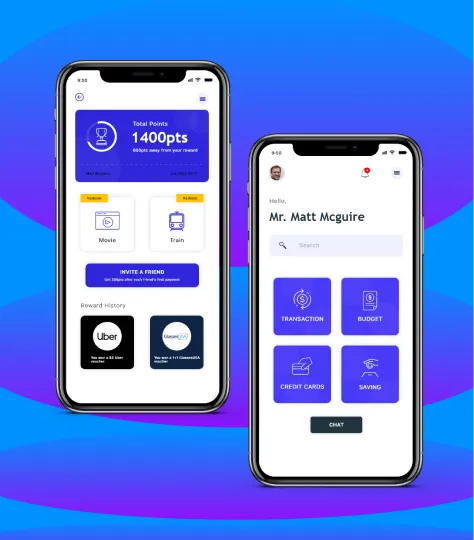
Bridging the youth financial literacy gap through a secure, native learning and payments.


- $500K: Pre-seed funding secured post-launch
- $3M: Seed round target
- #1: World’s first kid-centric financial intelligence hub
- 12+: International markets ready for deployment
- 6 Months: From concept to production-ready build
- Zero: Manual data entry for users

- 92%: Increase in ATM service levels via automated forecasting
- 20%: Boost in home loan customer retention
- 35%: Reduction in manual back-office operations
Every quarter you delay your automation strategy, you are actively subsidizing your competitors’ digital dominance through your own operational inefficiencies. You have seen the metrics. You understand the margin bleed. But recognizing the need for automation and actually deploying it securely across a highly regulated legacy infrastructure are two entirely different battles.
That is exactly where our RPA development services step in.
At Appinventiv, we do not just sell software licenses; we engineer financial resilience. We know that in the banking sector, uptime is your lifeline and compliance is non-negotiable.
As demonstrated by our rapid deployments for Edfundo, Mudra, and that European bank, our approach is militant. We target the friction, extract the operational bloat, and replace it with zero-defect, highly scalable algorithms.
Here is why top-tier financial institutions trust us with their core infrastructure:
- Battle-Tested Pedigree: As a banking software development company with expertise in high-tech solutions like RPA, AI, etc., we bring the raw engineering firepower of over 3,000 successful digital deliveries across 35+ industries. We have seen every legacy constraint and integrated around every mainframe roadblock imaginable.
- An Army of Elite Talent: You aren’t getting outsourced, off-the-shelf templates. You gain immediate access to our roster of 1,500+ in-house tech professionals, including dedicated AI architects, data scientists, and compliance-focused engineers.
- Zero-Disruption Deployment: We understand the fear of ripping out core systems. Our RPA protocols act as a non-invasive integration layer. We automate your workflows by sitting flawlessly on top of your existing IT infrastructure, ensuring zero downtime.
- Rapid Time-to-Value: We don’t believe in multi-year consulting engagements that yield zero ROI. We conduct lean analyses, identify your most profitable workstream candidates, and deploy surgical pilot programs that deliver measurable cost reductions in weeks, not years.
The gap between the banks that will dominate the next decade and those that will quietly be acquired for parts comes down entirely to execution speed. You have the industry expertise. We have the technical blueprints to completely insulate your back office from market volatility.
Stop letting manual processes dictate your growth ceiling.
Hire Appinventiv to replace your legacy banking bottlenecks with zero-defect, high-speed automation.

It’s Time for You to Catch Up!
By now, you probably already know exactly where your back office is bleeding. We’ve mapped the choke points, from manual KYC checks to sluggish loan approvals, and outlined the financial blueprint to fix them. But simply recognizing the limitations of your legacy infrastructure doesn’t stop the margin bleed. Execution does.
Deploying bots over unrefined workflows will only scale your chaos. That is where Appinventiv takes over. We don’t do endless consulting cycles. We engineer surgical, enterprise-grade RPA architectures that bypass your mainframe roadblocks and deliver hard ROI in weeks.
The era of manual data entry is over. Stop subsidizing your own operational friction. Let our tech professionals audit your workflows and build a digital workforce that actually scales.
Share Your Requirements With An RPA Architect Today
FAQs
Q. How is RPA used in banking?
A. Think of it as a digital workforce that handles the mind-numbing data entry your team hates. We deploy software bots to execute repetitive tasks—like customer screening and data transfer—at machine speed. It sits right on top of your existing IT infrastructure, meaning zero disruptions to your daily operations.
Q. How to implement RPA in fraud detection in banking?
A. You deploy bots to monitor transaction velocity and geographic markers 24/7. When a transaction breaches your defined risk parameters, the bot instantly freezes the asset and pings a human investigator. It immediately shifts your strategy from reactive audits to proactive defense.
Q. How does RPA improve banking processes?
A. It completely kills manual “swivel-chair” data entry. By letting bots handle cross-platform data transfers, you slash transaction cycle times and drop error rates to near zero. Your human workforce is finally freed up to focus on actual client advisory roles.
Q. What are the primary benefits of robotic process automation for financial institutions?
A. Elastic scalability and flawless compliance. You can suddenly handle massive spikes in transaction volumes without hiring a single new temp worker. Plus, at Appinventiv, we typically see our banking partners achieve full ROI within just three to six months.
Q. How to implement robotic process automation in banks?
A. Do not just install software and hope for the best. You have to clean up your workflows first. We conduct a lean analysis to find your highest-ROI bottlenecks, standardize those processes, and then engineer UI-level bots that integrate securely with your legacy mainframes.
Q. How does RPA improve compliance and risk management in banking operations?
A. Bots do exactly what they are told, 100% of the time. Every single data extraction and file transfer generates a permanent, time-stamped audit log. When regulators ask questions, you simply hand them mathematically perfect records.
Q. What are the typical challenges when implementing robotic process automation in a large bank?
A. The biggest threat is internal disorganization. If you automate a broken workflow, you just get bad results faster. The real hurdle isn’t the software; it’s navigating rigid legacy mainframes and ensuring your data is entirely clean before the bots ever touch it.
Q. What are some examples of RPA in banking?
A. The quick wins include bots cross-referencing global watchlists for KYC, validating applicant data instantly for mortgage lending, and extracting daily pricing feeds for fund accounting. We also see massive success in automating routine account setups across multiple core ledgers simultaneously.
Q. How can Appinventiv help you deploy RPA in banking?
A. Appinventiv engineers financial resilience by replacing manual margin bleed with zero-defect, high-speed automation. Unlike traditional consultants, we bypass legacy mainframe roadblocks using a non-invasive RPA layer, as proven by our 92% surge in service levels for leading European banks. From KYC automation to AI-driven fraud detection, we deliver a production-ready digital workforce that ensures 100% compliance and measurable ROI within 10 to 12 weeks.


Fast 2-minute response, fully NDA-protected.

Key takeaways: Connected software updates entire banking pipelines from start to finish. This technology cuts manual labor. It sharpens compliance, stops fraud, and pleases clients. AI, RPA, and document tools build scalable bank operations. They integrate directly with your core platform rather than replacing existing infrastructure. Project success requires deep process redesign and API connections.…

Mobile Banking App Development Cost: A Complete Pricing Guide
Key takeaways: The cost of mobile banking app development begins at $40,000 and can climb to $1,000,000 for enterprise-level applications, depending on the scope and infrastructure complexity. Features such as AI-powered fraud detection, open banking integrations, biometric authentication, and others significantly increase development effort and overall project cost. Adherence to security and regulatory compliances such…

How Australian Banks Are Modernising Core Banking Systems: Key Strategies and Challenges
Key takeaways: Regulatory pressure from APRA, CDR, and CPS frameworks is forcing banks to prioritise auditability, resilience, and real-time capabilities. Banks modernising core banking systems are reducing risk by migrating high-value functions first while maintaining legacy ledgers for stability. The cost of core banking modernisation for an Australian bank is shaped by data migration, compliance…