





















How to Build a Custom Multilingual Chatbot? Features, Process, Costs

- Market Trends and Analysis: The Multilingual Revolution
- Understanding The Core Components of Multilingual Chatbots: Beyond Simple Translation
- Key Features for AI Chatbot Solution Development
- Advanced Features and Technologies Considerations for Multilingual Chatbot Development in the Coming Years
- How to Build a Multilingual Chatbot for Your Business: Step-by-Step Development Process
- Best Practices for the Smooth Implementation of Chatbot Development
- Real-World Examples and Success Stories of Multilingual Chatbots
- Benefits of Multilingual Chatbot Implementation
- How Much Does It Cost to Build a Multilingual Chatbot
- Cost Optimization Strategies for Multilingual Chatbot Development
- Why Choose Appinventiv for AI Chatbot Development?
- Transform Your Business with Appinventiv’s Multilingual Chatbot Development Expertise
- FAQ

Key takeaways:
- Multilingual Chatbots Drive Revenue Growth: Companies see higher conversion rates when customers can interact in their native language, with nearly 75% of global customers preferring to buy from websites in their preferred language.
- Beyond Translation to Cultural Intelligence: Successful implementations require cultural adaptation, not just language translation. Systems must understand context, emotion, and local customs to create genuine customer connections.
- Advanced AI Features for Efficiency: Modern multilingual chatbots use NLP and real-time translation engines to handle customer inquiries in multiple languages with context-awareness.
- Strategic Implementation Matters: Start with core languages serving your largest customer segments, then expand gradually. Focus on seamless integration with existing CRM and business systems for maximum operational efficiency.
Imagine your business could speak every customer’s language well, understand cultural details perfectly, and never sleep. Sounds great, right? Well, this is what modern multilingual chatbots can do.
Here’s something that might shock you: while you read this, someone across the globe probably left your competitor’s website because they couldn’t get help in their native language. Meanwhile, smart businesses turn this common problem into their biggest edge. Remember that feeling when you travel abroad and try to explain something important in a language you barely speak? Your global customers feel that same frustration every time they deal with English-only customer support. But imagine if you could remove that barrier completely.
Things have changed. Today’s winning businesses aren’t just going global; they’re going local at scale via multilingual chatbot development. They’re having real talks with customers in Mumbai at breakfast time, Mexico City during lunch, and Manchester at midnight. And they do it all without hiring thousands of multilingual support workers or opening offices in dozens of countries.
Start developing a multilingual chatbot today and ensure your customer support is accessible to audiences across the world.

Market Trends and Analysis: The Multilingual Revolution
Talks about multilingual chatbot development have moved from “nice-to-have” to business-critical. Recent market data shows some big trends that smart business leaders can’t ignore. The chatbot industry is seeing huge growth, with a yearly growth rate of 23.3% from 2025 to 2030.
What’s behind this jump? Companies are finding that multilingual AI solutions aren’t just customer service tools; they’re money makers.
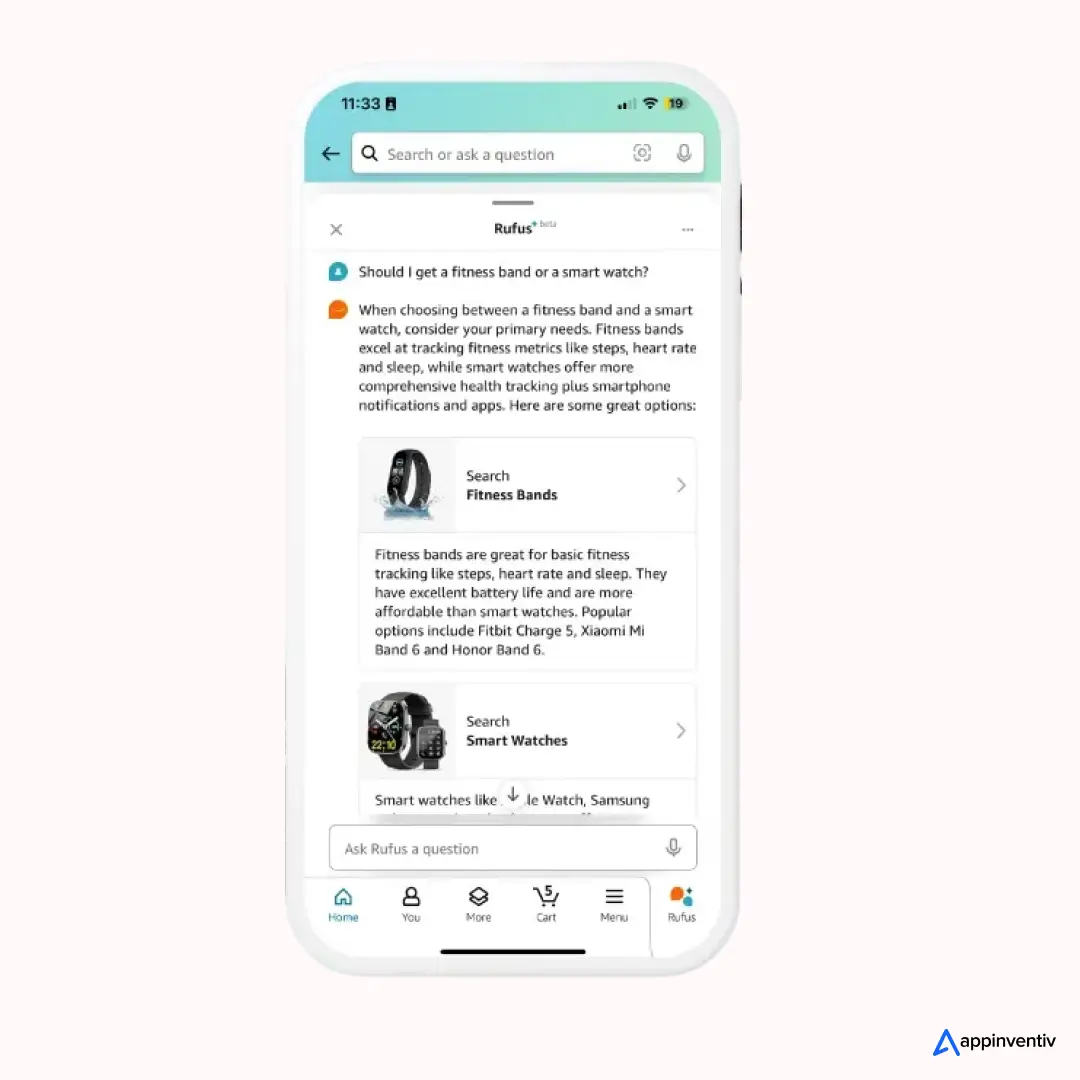
In November 2024, Meesho rolled out a multilingual Gen AI voice chatbot for handling 60K calls daily with 95% resolution, demonstrating how multilingual chatbot development can scale operations without proportional cost increases. Meanwhile, Amazon India introduced Rufus, a generative AI-enabled shopping assistant within the Amazon app, showing how enterprise leaders are prioritizing multilingual capabilities.
This democratization of AI technology means that custom chatbot development is no longer exclusive to tech giants.
Recommended Read: Chatbots vs. Conversational AI: Which Suits Your Business?
Understanding The Core Components of Multilingual Chatbots: Beyond Simple Translation
A multilingual chatbot goes beyond a basic bot with Google Translate stuck on. It’s an advanced chatbot that blends deep natural language processing (NLP), cultural knowledge, and situational awareness to create genuine talks in multiple languages. It is like having a culturally-skilled worker who speaks your customers’ languages naturally and gets their local habits, working 24/7 without needing coffee breaks or calling in sick.
Related: Challenges Associated With Developing Multi-lingual Apps
These intelligent systems work through three core components:
- Natural Language Processing (NLP) acts as the brain of your multilingual setup. Today’s NLP goes beyond word translation; it reads intent, emotion, and context. When a Spanish customer types “estoy frustrado con mi pedido” (“I’m frustrated with my order.”), the system gets both the frustration and the order-related situation, not just the word-for-word meaning.
- Real-time Translation Engines, run by neural machine translation, give context-smart responses. Unlike older rule-based programs, these engines get subtle differences. They know that “bank” in a money situation differs from “bank” near a river.
- Cultural Intelligence makes sure responses match local habits and talking styles. A chatbot helping Japanese customers uses formal, polite language patterns, while one helping Australian customers can be more relaxed and straight.
The best part happens when these pieces work together. A customer types a question in broken English mixed with their native language. The system spots the language choice, gets the intent despite grammar mistakes, and responds in perfectly local language that feels right.
Key Features for AI Chatbot Solution Development
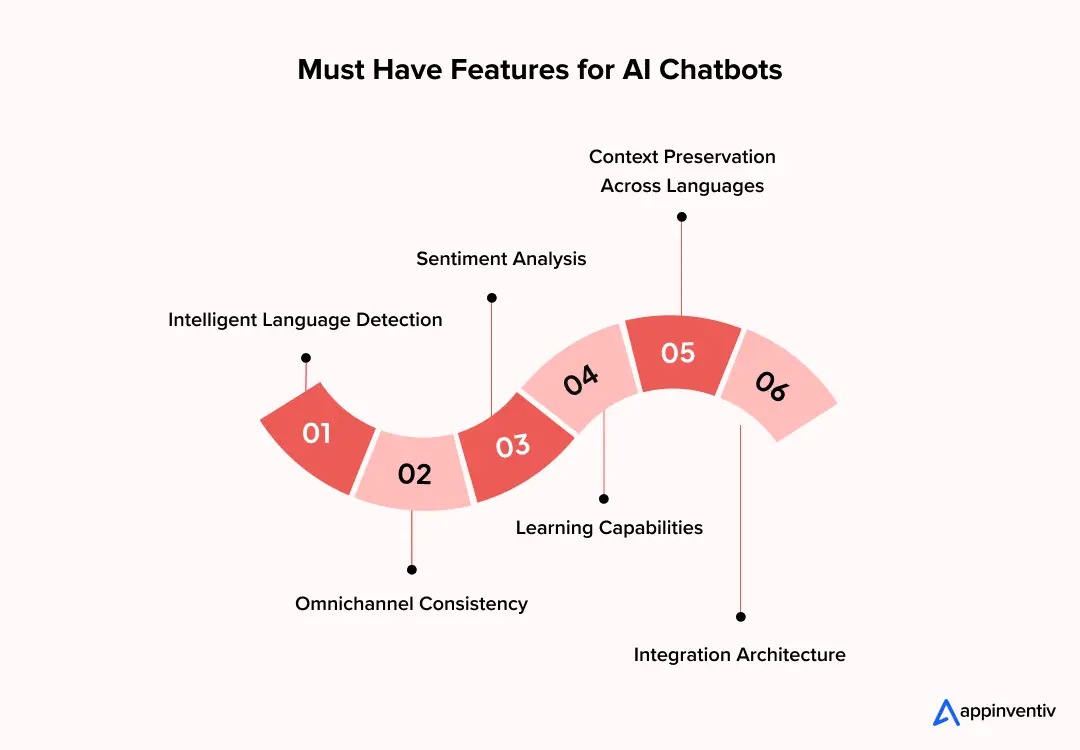
Modern features of AI chatbot solutions go far beyond basic question-and-answer functionality. Today’s enterprise chatbot solutions include sophisticated capabilities that transform customer interactions. Let’s get a quick look at some of the must have features of AI chatbot solutions:
Intelligent Language Detection
It automatically identifies the customer’s preferred language from the first message. Advanced systems can detect language switches mid-conversation and adapt accordingly. No more asking customers to select languages from dropdown menus.
Context Preservation Across Languages
It ensures conversation continuity when customers switch between languages. If a French customer starts in English but switches to French mid-conversation, the bot maintains the conversation context seamlessly.
Sentiment Analysis
In multiple languages, AI driven sentiment analysis helps identify frustrated customers regardless of their language. The system can escalate angry Spanish customers to human agents just as effectively as English-speaking ones.
Omnichannel Consistency
This ensures your multilingual bot provides identical service quality across WhatsApp, Facebook Messenger, your website, and mobile apps. Customers can start conversations on one channel and continue on another without losing context.
Learning Capabilities
These capabilities allow the system to improve responses based on successful interactions. When customers express satisfaction with particular responses, the AI learns to use similar approaches for future conversations.
Integration Architecture
It connects seamlessly with existing business systems. Your multilingual bot can check order status, schedule appointments, process returns, and update customer records while maintaining conversation flow in any supported language.
Must Read: AI Chatbot Integration for Business Applications
Advanced Features and Technologies Considerations for Multilingual Chatbot Development in the Coming Years
The future of multilingual chatbot development includes emerging technologies that will further transform customer interactions. Organizations planning long-term implementations should consider these advancing capabilities.
Voice and Conversational AI Integration
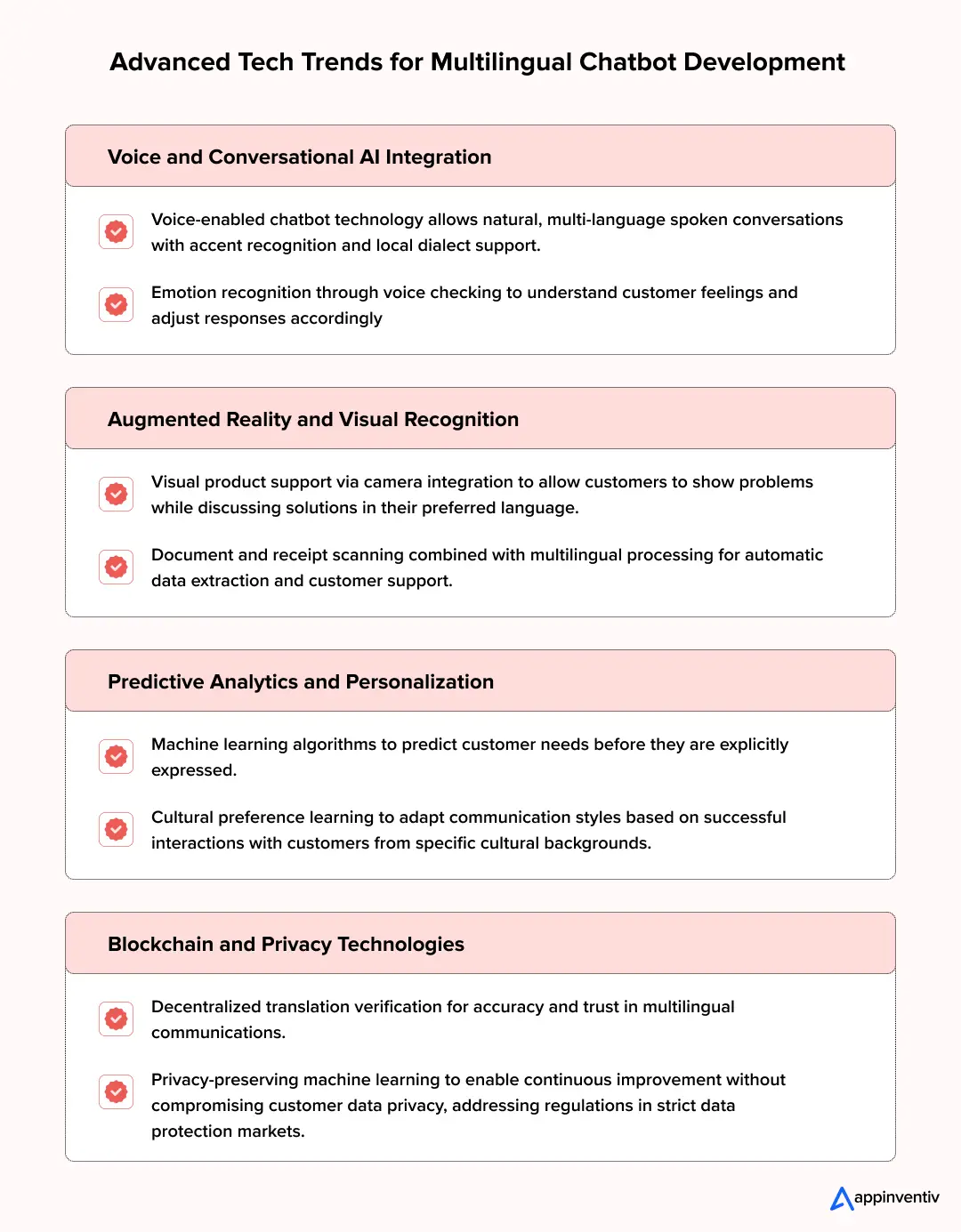
Voice-enabled chatbot technology allows customers to speak naturally in their preferred language. This allows natural spoken talks in multiple languages with accent recognition and local dialect support. Customers can switch between text and voice within the same chat.
Emotion recognition through voice checking adds another level of customer understanding. These voice-powered bots can spot frustration, excitement, or confusion no matter what language and change responses to match.
Related Article: Role of AI in Voice Commerce
Augmented Reality and Visual Recognition
Visual product support allows customers to show problems through camera integration while discussing solutions in their preferred language. This capability particularly benefits technical support and retail applications.
Document and receipt scanning combined with multilingual processing enables automatic data extraction and customer support across languages.
Predictive Analytics and Personalization
Machine learning algorithms analyze conversation patterns to predict customer needs before they’re explicitly expressed. This proactive approach works across all supported languages.
Cultural preference learning enables bots to adapt communication styles based on successful interaction patterns with customers from specific cultural backgrounds.
Blockchain and Privacy Technologies
Decentralized translation verification ensures accuracy and builds trust in multilingual communications. Blockchain-based systems can track translation quality and accuracy over time.
Privacy-preserving machine learning enables continuous improvement without compromising customer data privacy, addressing concerns in markets with strict data protection regulations.
How to Build a Multilingual Chatbot for Your Business: Step-by-Step Development Process
The chatbot development process for multilingual solutions requires strategic planning and methodical execution. Successful projects follow a structured approach that addresses both technical and business requirements. Here is a step by step process to build an AI-powered multilingual chatbot:
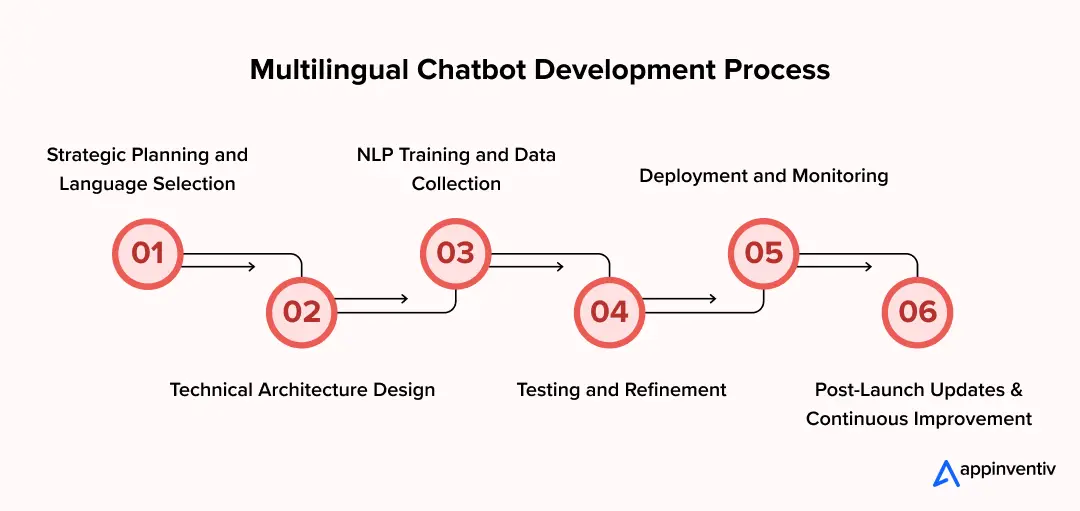
Phase 1: Strategic Planning and Language Selection
Begin by checking your customer data to find target languages. Don’t guess based on location alone. Look at support tickets, website analytics, and sales data to see where language barriers hurt your business.
Think about regional differences within languages. Spanish speakers in Mexico use different words than those in Spain. Portuguese differs between Brazil and Portugal. Your custom chatbot development plan should handle these differences.
Check competitor methods to find gaps and chances. If competitors only support basic languages, offering support for growing markets could give you an edge.
Phase 2: Technical Architecture Design
Next, you need to build your system setup with growth in mind. A multilingual chatbot that grows with your business needs smart tech choices. Your task is to pick between cloud-based and on-site solutions based on data security, rule needs, and growth requirements.
Most modern setups prefer cloud solutions for their flexibility and auto scaling capabilities. Plan your connection strategy early. Your bot needs to link with CRM systems, inventory management, payment processors, and customer databases. Chatbot integration with CRM systems gets more complex when multiple languages and cultural contexts are involved.
Related Read: How AI in CRM Transforms Customer Engagement
Phase 3: NLP Training and Data Collection
Gather conversation data in target languages through multiple sources. Use data sources such as customer service transcripts, social media interactions, and competitor analysis to get valuable training material.
Work with native speakers to ensure cultural accuracy. A bot that sounds like a direct translation will frustrate customers. Native speakers help identify colloquialisms, cultural references, and appropriate formality levels.
Create comprehensive intent mapping across languages. The same customer need might be expressed differently in different cultures. Germans might be direct (“I need a refund”), while Japanese customers might be indirect (“There seems to be an issue with my order”).
Phase 4: Testing and Refinement
Do lots of testing with native speakers from your target markets. What sounds natural to a translator might still feel weird to real customers.
Test tricky cases like code-switching (customers mixing languages), typos, slang, and regional dialects. Your bot should handle these well rather than breaking or giving wrong responses.
Check cultural fit across all supported languages. Color meanings, number significance, and gesture references change a lot between cultures.
Phase 5: Deployment and Monitoring
Roll out gradually, starting with languages where you have strong internal support capabilities. Monitor performance metrics closely during initial deployment.
Establish feedback loops for continuous improvement. Customer satisfaction scores, conversation completion rates, and escalation frequency indicate areas needing attention.
The comprehensive chatbot development process includes ongoing refinement and cultural adaptation to ensure your solution remains effective across all target markets.
Phase 6: Post-Launch Updates and Continuous Improvement
Even after your multilingual chatbot is live, the job is far from over. Your enterprise chatbot solution requires ongoing optimization to stay relevant as language trends, slang, and customer preferences evolve.
You must regularly update your chatbot’s NLP models with new data to improve its understanding and responses. Consider adding more languages or expanding to new regions as your business grows.
Recommended: Building AI Language Learning Apps: A Complete Guide
Partner with us to bring your vision to life with seamless integration and global reach.
Best Practices for the Smooth Implementation of Chatbot Development
Understanding how to build a multilingual chatbot that truly resonates with diverse audiences requires more than technical implementation; it demands cultural intelligence and ongoing adaptation. Learn from organizations that have navigated these challenges successfully.
Cultural Sensitivity Considerations
Skip straight translation without cultural context. What works in one culture might offend or confuse people in another. Work with local chatbot development companies that get local customs, humor, and talking styles. Test lots with native speakers from target markets, not just internal team members who speak multiple languages.
Outside views catch problems that internal teams might miss. Think about local rules and compliance needs that change by location. Data protection, financial rules, and consumer protection laws shape how your bot can work in different markets.
Technical Architecture Decisions
Plan for growth from the start. Adding languages later to a badly designed system costs more than building growth ability into the first setup. Add strong backup options for unsupported languages or complex questions. Smooth downgrade keeps customer happy when the system hits limits.
Also, build the system for offline abilities where network connection might be spotty. Some markets need strong offline features to serve all customer groups well.
Quality Assurance and Monitoring
Establish native-speaker review processes for all supported languages. Automated translation quality checking catches obvious errors but misses cultural inappropriateness.
Monitor conversation quality continuously across all languages. Performance can vary significantly between languages based on training data quality and model effectiveness.
Create feedback loops to enable customers to report translation or cultural issues. Learning how to build a multilingual chatbot effectively requires balancing technical capabilities with cultural sensitivity and ongoing user feedback integration.
Team Structure and Expertise
Technical skills alone don’t ensure cultural appropriateness. The best development strategies combine technical expertise with a deep understanding of cultural nuances.
To develop a truly effective AI chatbot, it’s essential to understand that different markets have varying expectations when it comes to automation versus human interaction. This requires a comprehensive approach that balances both technical development and cultural adaptation to ensure the chatbot meets the diverse needs of global customers.
Real-World Examples and Success Stories of Multilingual Chatbots
Leading companies demonstrate how multilingual chatbots translate into measurable business results. These real-world examples of multilingual chatbots show the practical impact of well-executed AI and NLP in chatbot development.
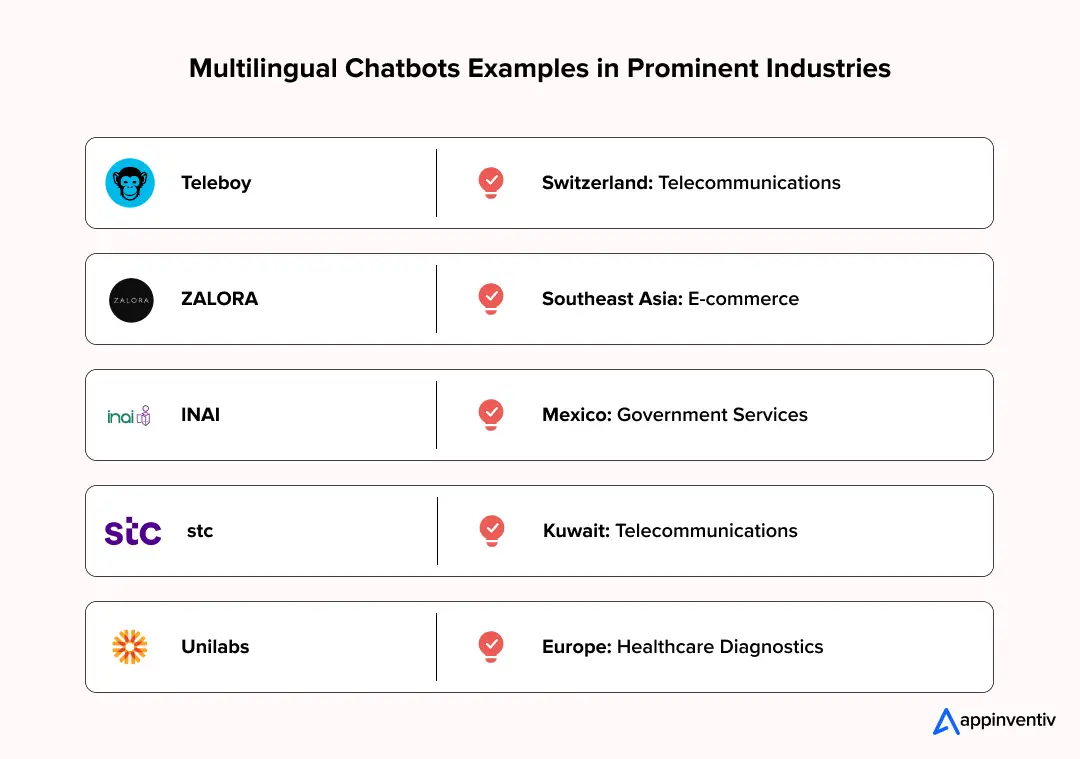
1. Teleboy (Switzerland) – Telecommunications
Teleboy, a major Swiss telecom company with 400,000 monthly users, added the moinAI multilingual chatbot in 2023 to handle service requests in French, Italian, German, and English. After adding it, around 71% of chat questions get answered automatically, with recent success rates reaching 85-90%.
The system has handled 24,609 conversations so far, showing how multilingual automation can greatly help support teams while boosting 24/7 service quality across multiple languages.
2. ZALORA (Southeast Asia) – E-commerce
In June 2024, ZALORA, a major Asian fashion and lifestyle online platform, started an AI customer service chatbot giving personal support across Singapore, Malaysia, Philippines, Indonesia, Hong Kong, and Taiwan.
The chatbot can adjust and respond to any language used with it, letting conversations begin in English and smoothly change to Mandarin or local languages. Since starting, ZALORA’s deflection rate has gotten better by 30%, beating early goals and letting human workers focus on complex questions while the AI handles routine customer service work.
3. INAI (Mexico) – Government Services
INAI (Instituto Nacional de Transparencia, Acceso a la Información y Protección de Datos Personales), Mexico’s National Institute for Transparency, Access to Information and Personal Data Protection, implemented REVE Chat’s multilingual chatbot to serve citizens in both Spanish and English.
The chatbot is deployed on both their website and WhatsApp to help people access public information and protect personal data The implementation resulted in a 45% increase in customer satisfaction, demonstrating how government institutions can use multilingual AI to break language barriers and better serve diverse populations with essential public services.
4. stc Kuwait – Telecommunications
Kuwait Telecommunications Company (stc), which runs the biggest 5G network in Kuwait serving 2.4 million customers, added AI multilingual chatbots supporting Arabic and English. The chatbot was connected to stc’s website and WhatsApp to give 24/7 support, handling routine jobs like balance checks and subscription management.
The setup reached a 60% automation rate for customer questions and cut wait times to under a minute, showing how telecom companies can use multilingual AI to serve different customer groups while running the biggest 5G network setup in the region.
5. Unilabs (Europe) – Healthcare Diagnostics
Unilabs, one of Europe’s leading diagnostics providers, deployed moinAI’s multilingual solution across Switzerland and the Netherlands to have intelligent chatbots converse with patients in German, Italian, French, and Dutch. The implementation greatly relieved Unilabs’ support team by answering recurring questions in a standardized way while providing quick assistance to help-seekers. The solution demonstrates bilateral benefits: patients receive immediate assistance in their preferred language while staff resources are freed for more complex tasks requiring human expertise.
These verified examples of multilingual chatbots demonstrate that organizations that opt for custom chatbot development report consistent improvements in customer satisfaction, operational efficiency, and market expansion.
Must Read: Representing How Chatbot Development Can Help You Earn $80,000 a Month
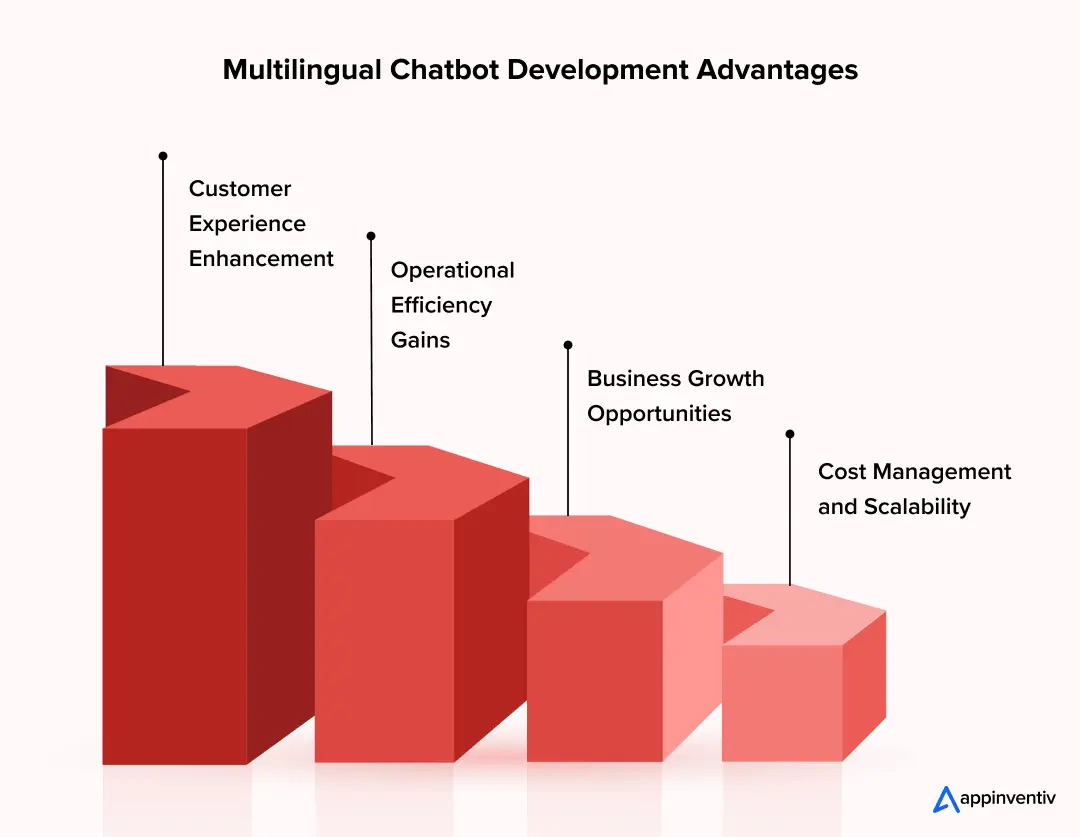
Benefits of Multilingual Chatbot Implementation
The benefits of multilingual chatbot deployment extend far beyond customer service improvements. Organizations experience transformative impacts across multiple business functions when they successfully implement comprehensive multilingual customer support.
Customer Experience Enhancement
Customers talk better when language barriers go away. Support chats get more accurate because customers can describe problems in their native language without struggling with translation. Cultural matching makes customers more comfortable. When bots get cultural context, customers feel more understood and valued.
This emotional link leads directly to loyalty and repeat business. 24/7 availability in multiple languages gives steady service quality, no matter what time zones or local business hours. International customers get the same high-quality support as local ones.
Operational Efficiency Gains
Automated multilingual support cuts human agent work by handling routine questions across all languages. This speed lets multilingual human agents focus on complex issues that need cultural awareness. Steady service quality across languages removes the differences that come with different human agents having mixed language skills and cultural knowledge.
Faster fix times happen from instant response availability and accurate issue understanding. Customers don’t waste time explaining problems multiple times because of language confusion.
Business Growth Opportunities
Market expansion becomes feasible without hiring local support teams in each target geography. Organizations can test new markets with minimal upfront investment in human resources.
Competitive differentiation emerges in markets where multilingual support isn’t common. Superior customer experience in local languages creates significant competitive advantages.
Also, data collection improves across all markets when customers communicate naturally in their preferred languages. Better data leads to improved products, services, and customer understanding.
Cost Management and Scalability
Reduced per-interaction costs result from automation replacing expensive human support across multiple languages. The cost savings multiply as conversation volume increases.
Predictable scaling costs allow accurate budget planning for international expansion. Adding new languages to existing infrastructure costs less than hiring and training multilingual support teams.
Faster time-to-market for new geographies eliminates lengthy hiring and training cycles for multilingual support staff.
How Much Does It Cost to Build a Multilingual Chatbot
Understanding the cost to build a multilingual chatbot requires examining both upfront development expenses and ongoing operational costs. Smart budget planning considers total cost of ownership over a three-to-five-year period.
Custom Multilingual Chatbot Development Costs
The initial cost for developing a basic multilingual chatbot typically falls between $30,000 and $200,000, depending on the number of languages and the complexity of features. For enterprise-level solutions with advanced AI capabilities, costs start around $200,000 and can exceed $500,000 for more comprehensive implementations.
Language-specific costs can add up due to translation, localization, and cultural adaptation. You should budget approximately $10,000 to $25,000 per language for quality localization that goes beyond literal translation.
Integration complexity also significantly impacts costs. Simple website integration might add $10,000 to $20,000, while comprehensive chatbot integration with CRM systems, inventory management, and payment processing can add $50,000 to $100,000.
Ongoing Operational Expenses
Monthly cloud hosting and API costs usually run $2,000 to $10,000 based on how many chats and features you use. Busy systems might need their own servers, pushing costs up more. Upkeep and updates eat up 15-25% of your first build costs each year.
This covers system improvements, new language additions, and cultural update changes. Monitoring and checking quality needs dedicated professionals. Plan money for native-speaking quality checkers and customer feedback review tools.
Cost Optimization Strategies for Multilingual Chatbot Development
While the cost to build a multilingual chatbot seems substantial initially, there are ways you can walk on to reduce the cost and save big on your budget.
For instance, you should work with a skilled and reputed custom chatbot development company that addresses multilingual challenges. Their knowledge stops expensive mistakes, and cuts build time. They begin with the main languages serving most customer groups, then grow slowly.
This method spreads costs over time while making money to pay for growth. Also, you can use existing translation and local content. If your website and marketing stuff already support multiple languages, this content can teach your chatbot for less money.
Try mixed methods combining rule-based answers for common questions with AI handling for tough situations. This mix cuts costs while keeping service quality.
Why Choose Appinventiv for AI Chatbot Development?
| Evaluation Criteria | Appinventiv | Typical AI Chatbot Vendors |
|---|---|---|
| Chatbot Strategy & Advisory | AI advisory-led approach aligned with business KPIs, ROI, and automation goals | Tool-first approach with limited strategic guidance |
| Custom AI Development | Fully custom conversational AI built around your data, workflows, and users | Template-based bots with limited customization |
| Enterprise-Grade Architecture | Secure, scalable, cloud-native, and compliance-ready | Often not designed for enterprise scale |
| RAG & Data Control | Private RAG pipelines with full data ownership and governance | Shared models with limited data control |
| CRM & System Integration | Deep integration with CRMs, ERPs, ticketing, and legacy systems | Basic or API-limited integrations |
| Voice & Multimodal AI | Voice-enabled, text, and multimodal chatbot experiences | Mostly text-only chatbots |
| Scalability & MLOps | Built-in MLOps, monitoring, retraining, and continuous optimization | Minimal post-deployment optimization |
| Industry Expertise | Proven delivery across eCommerce, FinTech, Healthcare, SaaS, and Enterprises | Generalized solutions with little domain depth |
| Long-Term Support | Dedicated support, performance tuning, and roadmap evolution | Limited support after deployment |
Transform Your Business with Appinventiv’s Multilingual Chatbot Development Expertise
When it comes to delivering next gen AI chatbot development services, there are only a few companies that match the proven expertise and global recognition that we bring to the table. As a leader in AI product engineering and digital transformation, we have earned our reputation by consistently delivering intelligent, scalable solutions that drive measurable business growth.
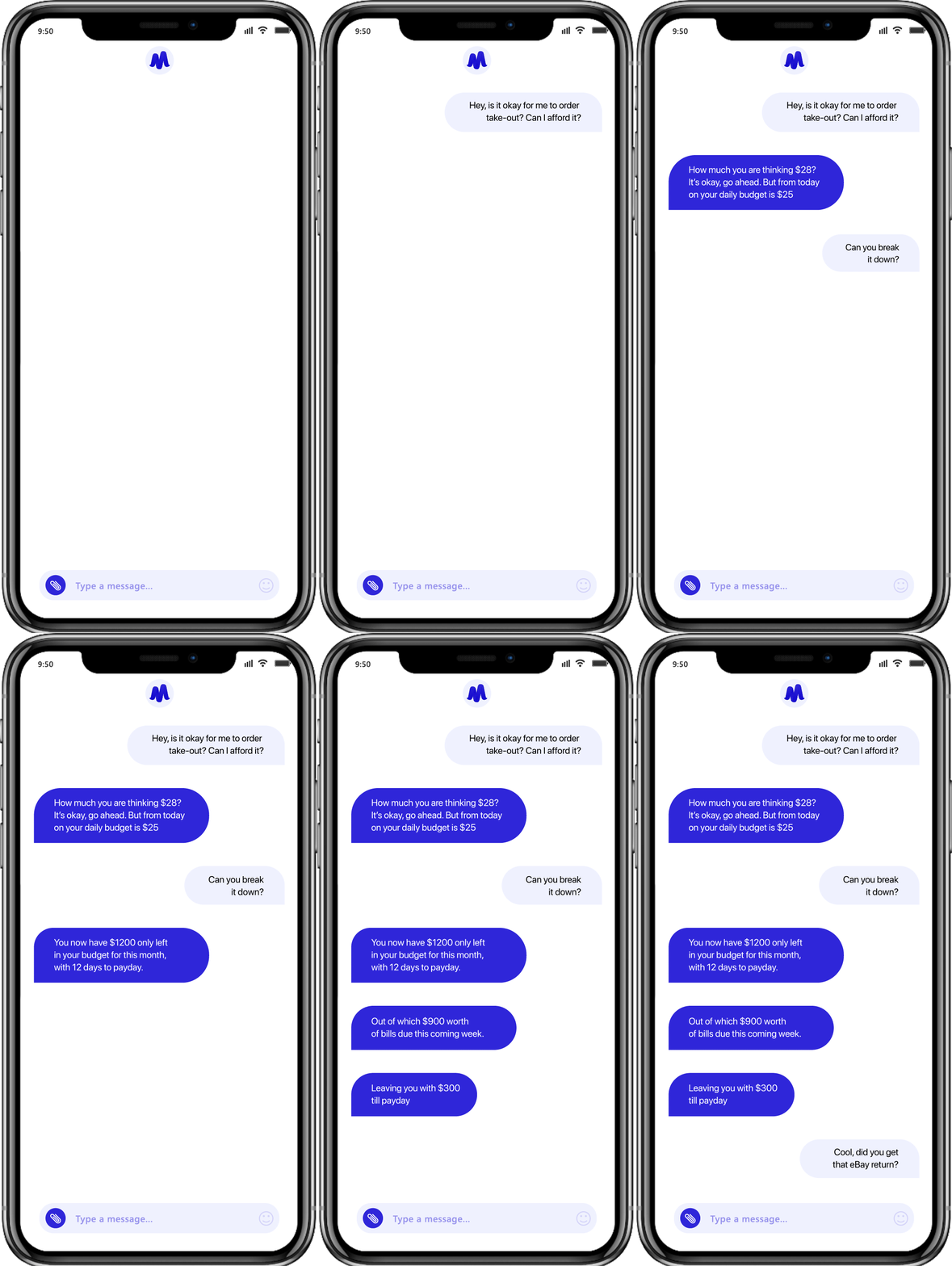
Our impressive client portfolio speaks volumes about our capabilities. For instance, we developed Mudra, an AI powered chatbot for the FinTech sector.
Challenge: The client aimed to help millennials manage their finances and budgets in an engaging and accessible way. They sought an interactive platform to make financial management more appealing and easier for this demographic.
Solution: We developed an AI-powered budget management platform with a chatbot-centric approach. This empowered users to learn about finance management in an interactive and user-friendly manner.
The Impact?
- 12+ countries adopted the chatbot
What’s even more impressive? Our commitment to innovation has earned us many prestigious industry recognitions:
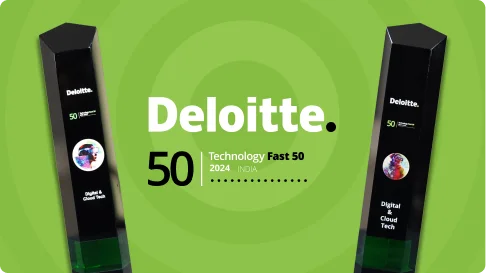
- Consecutive Deloitte Technology Fast 50 Awards (2023 & 2024): We ranked #1 in Digital & Cloud Tech category with 260% revenue growth
- Economic Times Leadership Award: We were named “The Leader in AI Product Engineering & Digital Transformation.”
With over 1,600+ technology experts and successful delivery of 3,000+ projects across 35+ industries, we combine deep technical knowledge with strategic business insight. Our 90% client retention rate demonstrates our ability to build lasting partnerships that deliver continuous value.
From concept to deployment, our comprehensive approach to multilingual chatbot development ensures your solution not only meets current needs but scales seamlessly as your business grows globally. Partner with Appinventiv to experience your business transformation like never before.
FAQ
Q. Why do global businesses need multilingual chatbots?
A. Global businesses need multilingual chatbots because language walls hurt revenue and customer happiness. With 76% of customers wanting to buy from websites in their native language, businesses without multilingual support miss big sales chances. Multilingual chatbots allow 24/7 customer service across all time zones and languages, letting companies grow internationally without matching increases in human support staff costs.
Q. How do multilingual chatbots improve customer experience?
A. Multilingual chatbots improve customer experience by eliminating communication frustration and enabling more accurate problem resolution. When customers can express themselves naturally in their preferred language, they provide better problem descriptions and understand solutions more clearly. Additionally, cultural awareness features ensure responses feel natural rather than translated, creating emotional connections that build loyalty and trust with international customers.
Q. What are the benefits of using NLP in chatbot development?
A. NLP in chatbot building creates real understanding beyond simple keyword matching. Smart NLP systems read intent, emotion, and context across multiple languages while handling changes like slang, typos, and cultural expressions.
This tech lets chatbots give context-right responses, keep conversation flow across language switches, and always learn from customer talks to get better accuracy and cultural awareness over time.
Q. Which industries benefit most from multilingual chatbots?
A. E-commerce, healthcare, banking, and travel industries gain the most from multilingual chatbots because of their worldwide customer groups and high chat volumes. For instance:
- E-commerce platforms see higher conversion rates when customers can shop in their favorite language.
- Healthcare providers make patient care better through clear symptom talk across language barriers.
- Banks boost customer trust by giving financial services in native languages
- Travel companies help international customers better throughout their trip experience.

- In just 2 mins you will get a response
- Your idea is 100% protected by our Non Disclosure Agreement.
AI Inventory Management in Australia: Benefits, Use Cases, and Implementation Strategies
Key takeaways: Traditional ERP planning reacts to history; AI predicts demand shifts, reallocates stock dynamically, and prevents costly stockouts across distributed Australian networks. AI in inventory management in Australia typically reduces inventory levels 20–40% while maintaining service targets, unlocking significant working capital across multi-state operations. Enterprise implementations usually range from AUD 70,000 to AUD 700,000+,…
How to Hire RAG Architects for Enterprise AI
Key takeaways: Define your RAG architecture scope to avoid misaligned hiring decisions Identify end-to-end architectural ownership across retrieval, governance, and scaling Evaluate deep technical capabilities beyond prompt engineering and tools Validate governance and compliance readiness at the retrieval layer Test system-level thinking through real-world failure scenarios Choose the right hiring model based on scale, risk,…
Key Takeaways: Healthcare chatbots in the UAE are moving beyond queries to support triage, patient communication, and real clinical workflows across hospitals. Effective healthcare chatbot development depends on clean data, strong system integrations, and alignment with regulations like DHA, DOH, and MOHAP. Development costs typically range from AED 147,000 to AED 1,470,000+, depending on complexity,…