


































Are Micro Apps the Future of Mobile Applications?

 Share -



The purpose of mobile app, since its advent, has been to offer quick solutions to users, which they won’t have to browse websites for. But, the pressure to remain above the competition of thousands of similar apps, have taken brands away from offering to the point solutions to providing them with a wholesome feature rich mobile app.
While, there is no way to judge which approach is better, but over time, we have been observing that offering quick solutions has become the new mantra to app success. And if there is one concept that we have been focusing on for just this, is – Micro Apps Development.
In this article, we will be looking into the concept in detail, focusing on elements that brought in its need and what makes them the future of Mobile Apps.
What are Micro Mobile Apps?
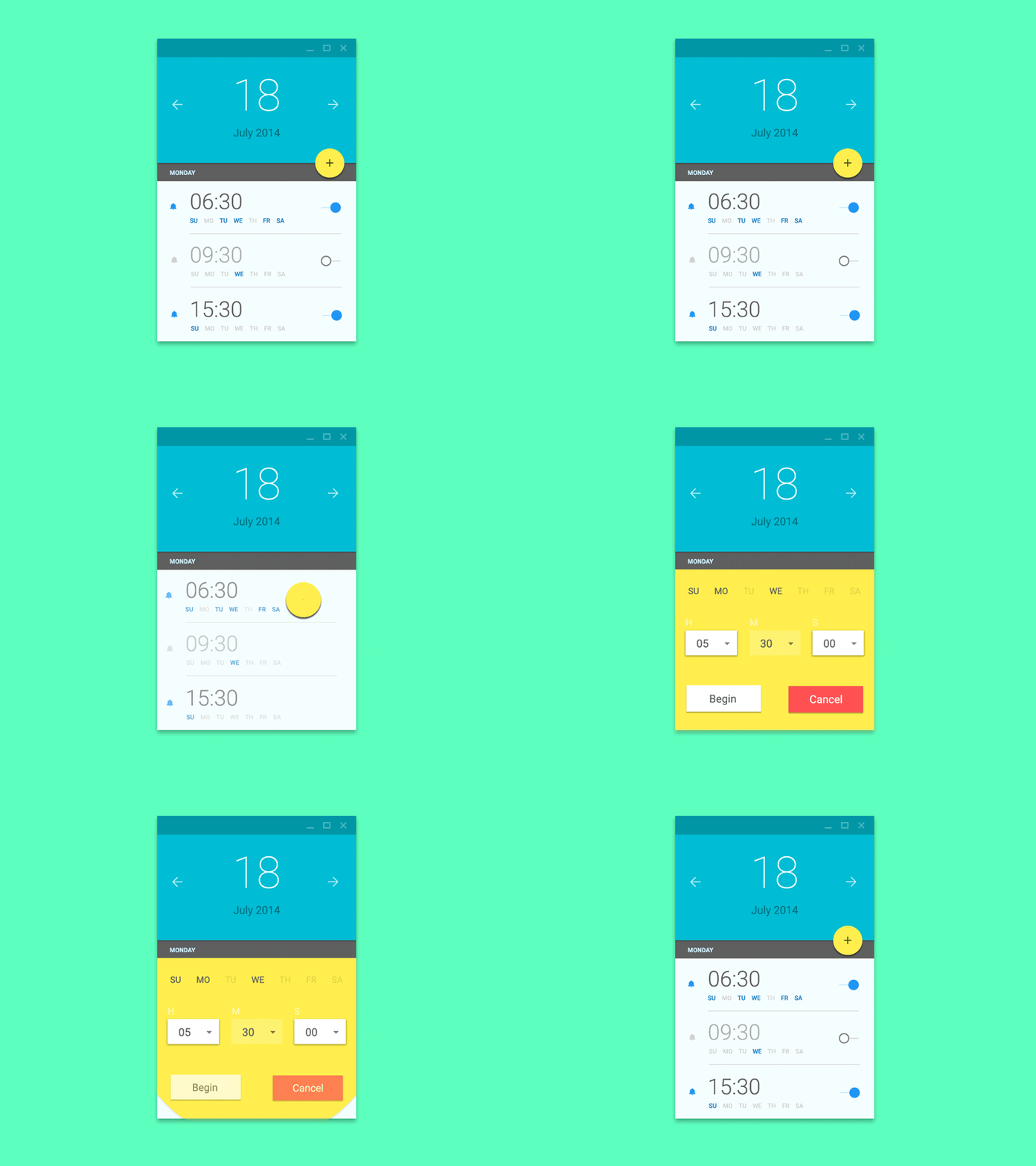
Micro Apps are HTML based, customized applications that are built to solve a specific purpose. They may or may not be a part of a bigger mobile app. For example, while Facebook Messenger app is a part of Facebook, Google Weather app acts as a standalone micro app in form of a card in the device’s Google Page.
Now that you know what Micro Apps mean, you must be wondering, why people are resorting to these apps, when they have the option to work around a bigger, all inclusive application? The question is the exact reason why users are making the shift.
Let’s delve into this a little further.
Why the Sudden Rise in Demand for Micro Applications Development?
1. Mobile Apps have become Irksome
In the race to offer more value than the competitors, brands continue to add in more features in their mobile apps, making them large in size, slow to load, and more storage space consuming. All of this pulls the consumers into a large, complex structure, which more often than not takes them away from the simple task that they intended to do when they launched the app.
2. Lack of an in and out experience
In continuation of Mobile Apps becoming irksome, the other thing that has happened is that the in and out experience is lacking.
One of the main reasons why users install mobile apps in the first place, is to save time browsing a website or working around its functionalities. But, by offering a mobile application as the miniature version of the websites, brands take away the purpose users first came to them.
3. Soaring Mobile App Development Cost
While it is easier for the bigger brands, small and mid-size brands usually end up staying and then opting out at the development phase itself. The lack of budget for developing an app that is at par with the top rating ones in the category, is the number one reason why most app idea never see the morning sun.
These three are the reasons why the world is now seeing a gradual shift from the heavy, all functions inclusive mobile applications towards a new found demand for Micro Apps Development.
But, where does Micro Apps fit in these issues? Let’s find out.
All of the above mentioned issues can be easily solved by the advent of micro-apps. Short in app size and device resource usage, micro-apps allow users to be in control of doing what they intend to, without any distraction.
Micro Mobile Apps come in the picture of struggling mobile app development market, with their USPs specifically focusing on providing –
– Simplest Form of User Experience
Designed to address a specific issue faced by the users, Micro Apps come with a no nonsense, direct user flow.
– Development with Limited Resources
Being focused on a specific task, Micro Apps Development do not call for complex technological processes. It helps cut down the app development cost to a great extent.
With features such as these, Micro Apps have emerged as the rightful solution to the dwindling user retention issue. By offering to the point features to the users, they serve the purpose of what Mobile Application industry is based on.
It’s time to add a Micro App as a part and parcel of your high value embedding application. Talk to our Mobile App Experts and know where to start.


Fast 2-minute response, fully NDA-protected.

How Much Does It Cost to Develop a Remote Patient Monitoring App in the UAE?
Key takeaways: Feature scope and system integrations, not the app itself, determine your final development cost. DHA, DOH, and MOHAP compliance must be built into your architecture from day one. Wearables, EHRs, and health information exchanges are the biggest technical cost drivers. A successful RPM platform combines continuous monitoring, clinical workflows, and secure interoperability. Early…

How Much Does It Cost to Develop an App Like Herfy in 2026?
Key takeaways: Herfy-like app development costs SAR 150,000 to SAR 1,500,000 ($40,000 to $400,000). Costs rise with rider tracking, POS sync, kitchen displays, loyalty, and branch controls. Saudi apps need Arabic UX, Mada, STC Pay, VAT, and ZATCA-ready invoice flows. Peak loads during Ramadan, Eid, and weekends need strong backend and load testing. A phased…

Key takeaways: The operating model determines survival. The code does not. Compliance under PDPL in the UAE and SDAIA in Saudi Arabia must be engineered into architecture, not added before launch. A serious build costs between AED 147,000 and AED 1,470,000 (USD 40,000 to USD 400,000), depending on scope. The single largest cost most operators…