


















Auto-ingest multiple content formats and extract key topics.

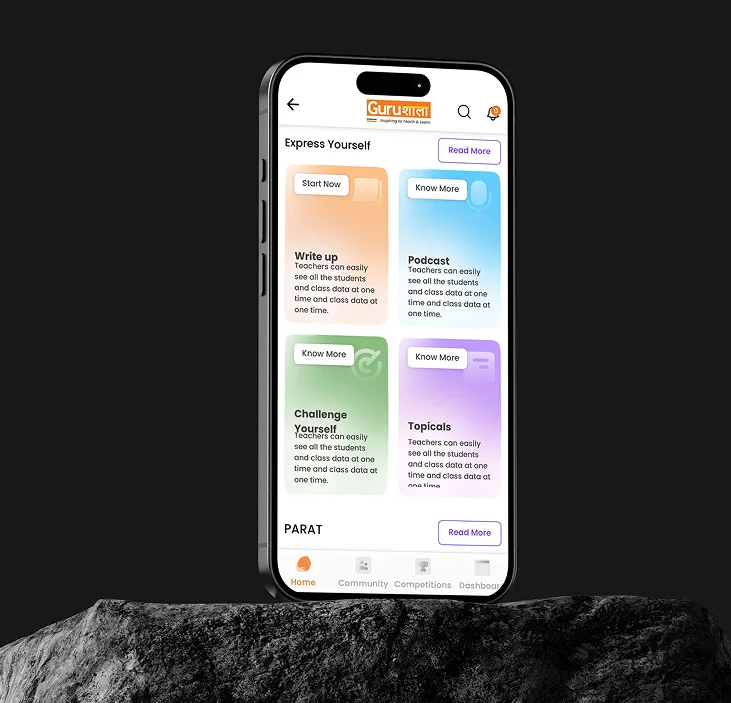
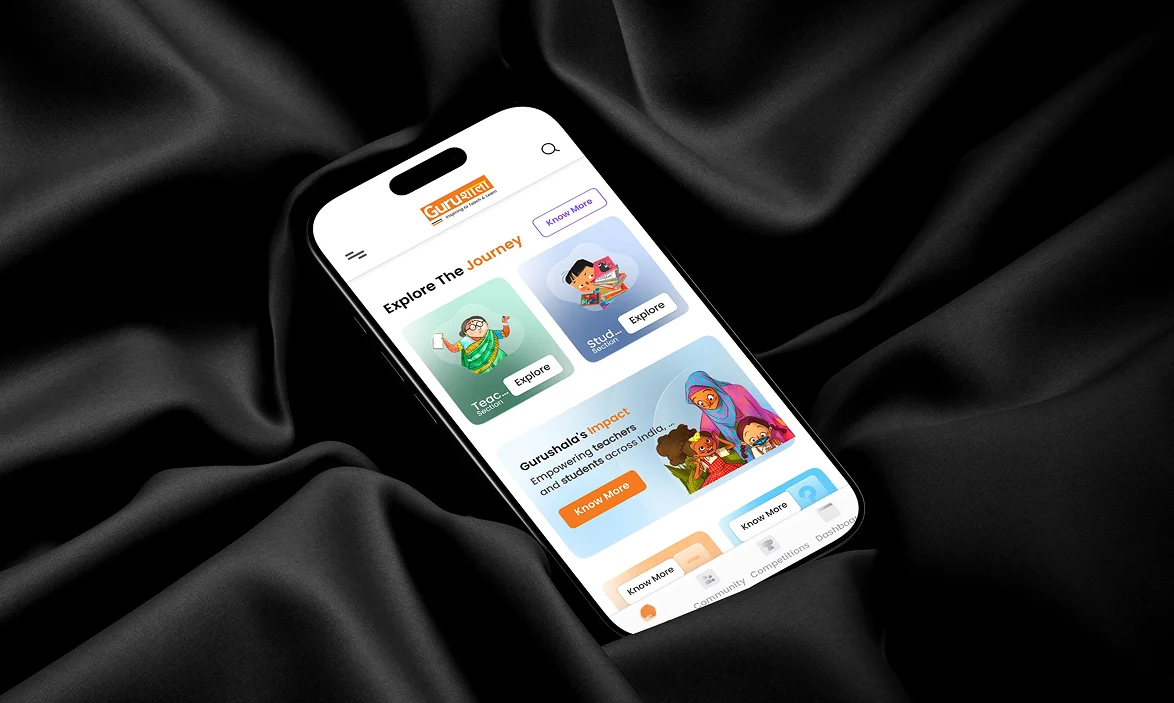
Gurushala is a digital learning platform designed to simplify large-scale online education content generation for school students. Its mission is to transform traditional assessment creation by leveraging AI to automatically generate questions, classify content, and apply structured tagging aligned with educational standards.
The platform aims to reduce teachers’ workload while ensuring consistent, high-quality assessments. Gurushala combines advanced AI technologies with intuitive dashboards, allowing educators to review, edit, and approve content. This lays the foundation for future tools such as multilingual translation, AI chatbots, personalized recommendation engines, and Generative AI for education platforms.
Gurushala approached us to develop a solution that converts diverse course materials, such as PDFs, videos, and YouTube content, into structured, high-quality assessment questions. The goal was to reduce manual effort, maintain alignment with Bloom’s taxonomy, and support varied skill levels.
The platform needed to
Auto-ingest multiple content formats and extract key topics.
Generate multi-level questions, including comprehension, grammar, theory-based, MCQs, and mathematical problems using an LLM-based assessment model generation.
Automatically tag and classify content by chapters, topics, subjects, Bloom’s levels, and question types using AI question tagging and classification.
Allow teachers to review, edit, and approve AI-generated questions via an interactive dashboard.

Our approach combined cutting-edge AI with scalable backend infrastructure. By integrating LLMs, NLP techniques, OCR, and document processing or document-based question answering AI, we built a system that handles large volumes of educational content while enabling future innovations like recommendation engines and multilingual assessments.
We crafted an intuitive solution for Gurushala that combined AI-driven question and tag generation across multiple subjects, interactive dashboards that gave teachers full control over content quality, and automated workflows that significantly streamlined assessment preparation.
From question banks to dashboards, we help put the pieces together so
teachers
spend
less time on repetitive tasks.

PDFs, videos, and YouTube content, into structured, high‑quality assessment questions. The goal was to reduce manual effort, maintain alignment with Bloom’s taxonomy, and support varied skill levels.

Creating questions that were academically sound and genuinely useful in classrooms required more than model training. AI outputs had to reflect learning objectives, grade-level expectations, and curriculum depth. This meant ongoing LLM fine-tuning, repeated validation cycles, and regular collaboration with teachers to review question quality and relevance before approval.
Educational content arrived in many forms, from structured PDFs to long-form videos and YouTube lessons. Each format brought its own challenges around transcription accuracy, context extraction, and summarization. These were addressed through carefully designed OCR and NLP pipelines that could adapt to inconsistencies in source material without losing meaning.
Automation was required to speed up work without taking control away from educators. Teachers had to trust the system while still having the final say. Review and approval workflows were therefore designed to be quick, clear, and flexible, allowing edits and feedback without adding extra steps or slowing everyday teaching tasks.
We began by studying how teachers traditionally prepare assessments and where time is lost. By applying AI thoughtfully, we built a system that automates question generation and tagging while keeping educators firmly in control through an AI-powered question generation system.


Key solution features


The platform reduced the daily operational burden on teachers by compressing time-intensive academic tasks into a structured, repeatable workflow. What once required hours of manual effort became faster, more predictable, and easier to manage.
Gurushala achieved 10x faster content digitization and assessment preparation, allowing teachers to focus on review rather than repetitive groundwork.
Reusable question banks and structured workflows now support long-term growth, with room for multilingual content, recommendations, and educational chatbots.
Create a platform that reduces manual effort without compromising
academic
oversight.

Costs depend on AI complexity, number of supported content formats, question types, and dashboard functionality. On average, platforms built around an AI-powered question generation system range between $80,000 and $300,000. Additional features such as multilingual support or advanced analytics may increase this range.
Also Read: How Much does it Cost to Build an Educational App?
Development typically takes 9–14 months. This includes requirement analysis, AI model tuning, content ingestion setup, dashboard development, testing with real educational material, and feedback-driven refinements.
Gurushala focuses on large-scale automation of assessment creation while maintaining teacher oversight. It combines multiple AI trends and techniques, including AI question tagging and classification, to process documents, videos, and online content, producing structured questions that align with learning objectives rather than generic outputs.
Yes. The platform architecture supports scaling across new subjects, increased content volumes, and additional languages. AI pipelines and backend infrastructure can be extended without redesigning the core system.
Teachers can define difficulty levels, question types, topic coverage, and Bloom’s taxonomy alignment. The system adapts AI outputs based on these inputs, allowing educators to stay in control while benefiting from automation.