















Track conversation context across multiple user intents without resetting the flow.

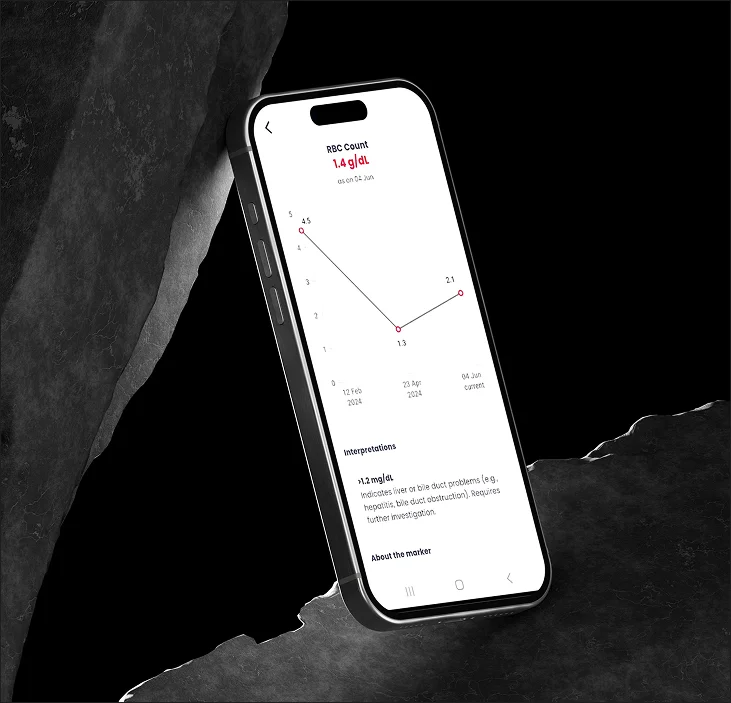
Dr. Morepen Laboratories Ltd has been around for decades, known for diagnostic devices, health supplements, and consumer healthcare products. People trust the brand for everyday health management. It serves both individuals and healthcare professionals, and over time, it built a reputation for reliability. As more users went digital, interactions got complicated. A single support request could touch connected devices, mobile apps, health readings, reports, reminders, or open tickets. Conversations rarely stayed on one topic.
Traditional support systems struggled to follow, and users often had to repeat themselves. Instead of adding more fragmented channels, Dr. Morepen rolled out an AI-powered enterprise chatbot. The idea wasn’t just automation, it was continuity. The bot had to remember context, respond in structured ways, and guide users without bouncing them around.


Dr. Morepen needed to improve how users moved through support conversations inside its healthcare app. Queries rarely stayed confined to one topic. A single interaction often shifted from device usage to health reports to reminder setup. Forcing users to restart each time created friction and repeated requests.
The solution needed to
Track conversation context across multiple user intents without resetting the flow.
Handle transitions between device support, health insights, and app features naturally.
Respond clearly at each step without pushing users into rigid menu paths.

We approached this by designing a conversational AI layer that could sit across systems rather than inside predefined support trees. The AI-powered healthcare chatbot was built to retain context as conversations evolved, allowing users to move forward without repeating earlier steps.
The result was a calmer, more continuous support experience. Users could ask related questions in sequence, receive consistent responses, and complete tasks without interruption, making the interaction feel closer to how healthcare conversations actually unfold.
From devices to app workflows, we help keep conversations
connected so users
get
answers without repeating themselves.


Health insights, device issues, reminders, and reports; all needed to work together. Users move between topics, repeat questions, or circle back. The system couldn’t treat these as separate silos; it had to feel continuous.
Questions could be about devices, the app, or health data. Sometimes all in one go. Answers needed to make sense step by step, even when users switched topics or added new concerns mid-conversation.
Users often referenced earlier questions or ongoing issues. The AI had to keep track, adjust responses, and follow the conversation naturally. Without this memory, support would feel fragmented and slow.
We started by looking at real user support conversations. People rarely stick to one topic, and they circle back, repeat questions, or jump between devices, apps, and health readings. Understanding these patterns helped us design a system that could follow the user, provide clear guidance, and keep the flow continuous.


Key solution features
Agent-driven setup where each module handles a specific area, such as health insights, device issues, and reminders, while the system keeps everything connected.
LangChain orchestration decides which agent, tool, or data source to use based on what the user asks. This makes responses context-aware and relevant.
ChromaDB integration pulls device and app-specific information. LLMs then turn that into easy-to-follow step-by-step instructions.
Structured, actionable outputs including text, media, and links that guide users from explanation to action without breaking the conversation.


The AI-powered support bot reshaped user interactions by carrying context across conversations, reducing friction for both customers and support teams.
Users resolved problems more quickly as conversations no longer restarted, lowering repeat queries and follow-ups.
Clearer AI-guided troubleshooting reduced ticket escalations and created a smoother, more predictable support environment.
Develop LLM-powered support automation that understands intent, keeps context, and reduces escalation.

Traditional chatbots often rely on fixed scripts and isolated flows. This system functions as an enterprise conversational AI chatbot, capable of managing multiple healthcare intents within a single conversation. It remembers context, routes queries intelligently, and adapts responses based on what the user has already shared.
Yes, within defined boundaries. Device and app-related issues are handled through a combination of ChromaDB retrieval and LLM fine-tuning and reasoning. The system provides step-by-step guidance, supported by media where useful, before escalating only when necessary.
The platform was designed with structured outputs, predictable response formats, and controlled orchestration. This makes it suitable for enterprise environments where stability and consistency matter as much as intelligence.
Yes. The modular architecture allows new knowledge bases, workflows, and languages to be added without reworking the core system. This makes the agentic AI chatbot for healthcare adaptable as Dr. Morepen’s ecosystem grows.
This Appinventiv healthcare AI case study demonstrates a focus on practical conversational systems. Rather than chasing novelty, the solution prioritizes continuity, accuracy, and user trust, principles that guide Appinventiv conversational AI solutions across healthcare and enterprise use cases.