

























50+ Best Mobile App Business Ideas to Launch in 2026 (AI, Fintech, SaaS & More)

 Share -


- 01Breakout Mobile App Business Ideas Shaping the Next Wave of Digital Products
- 02AI-Powered Mobile App Business Ideas (Automation, Personal Assistants, Intelligent Workflows)
- 03Fintech Mobile App Business Ideas (Payments, Investing, Financial Automation)
- 04SaaS & Business Automation App Ideas (CRM, Marketing, Operations)
- 05Productivity & Knowledge Management App Ideas (Learning, Focus, Digital Workflows)
- 06Social & Community Mobile App Business Ideas (Networking, Collaboration, Interest Groups)
- 07Lifestyle & Household Management App Ideas (Daily Life, Organization, Home Management)
- 08Travel & Exploration App Ideas (Personalized Travel, Culture, Discovery)
- 09Super App Business Ideas (All-in-One Digital Ecosystems)
- 10How to Develop a Successful Mobile App Business Idea
- 11App Monetization Ideas for Mobile Startups and Enterprises
- 12Common Challenges When Building a Mobile App Business
- 13How Appinventiv Helps Businesses Build Scalable Mobile Apps
- 14FAQs

Key takeaways:
- 50 mobile app business ideas for 2026 across AI, fintech, SaaS, productivity, and digital platforms.
- Proven frameworks to validate, develop, and scale profitable mobile app businesses.
- Monetization models and revenue strategies used by successful mobile apps.
- Development timelines, costs, and enterprise considerations for launching scalable mobile apps.
Mobile apps are no longer optional. For businesses exploring mobile app business ideas, they have become the front door to customers. With more than 8 billion smartphones in use globally, the real challenge isn’t presence. It’s getting attention early and scaling before others do.
At Appinventiv, after working with startups and enterprises across 35+ industries, a clear shift stands out. Apps are no longer built just to support operations. More teams are building AI-led products that drive revenue, automate decisions, and deepen customer relationships.
Timing is starting to matter more than most expect. In spaces like AI productivity, fintech automation, and mobile SaaS, competition is picking up quickly. Some categories are already getting crowded. Early movers are gaining ground, while others are finding it harder and more expensive to catch up.
That makes the idea you choose far more important.
This blog brings together 50+ mobile app ideas shaped by real demand and product experience—ideas that are practical, scalable, and aligned with how people actually use digital products today.
Companies are already building apps that capture market share early. Delay means lost opportunity and higher entry cost.
Breakout Mobile App Business Ideas Shaping the Next Wave of Digital Products
These ideas come from real behavior patterns. People feel stuck, overloaded, or underused. Each concept targets a clear gap.
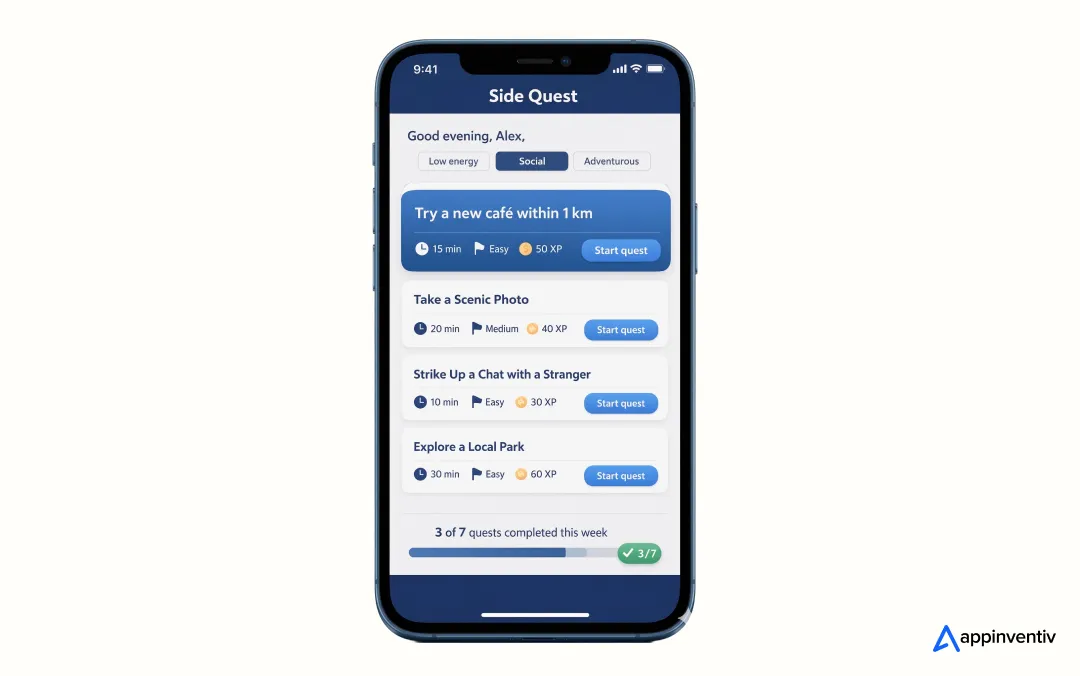
Side Quest App for Real-Life Experiences
Many people follow the same routine each day. Work, home, repeat. This app breaks that loop. It gives small tasks like visiting a new place or trying a short activity. Tasks take 10 to 30 minutes. Over time, users build new habits and experiences.
AI “Second Brain for Decisions”
People make hundreds of decisions each week. Most never track what worked. This app logs choices and outcomes over time. It then shows simple patterns. For example, it may show that certain work decisions led to better results. Users start making sharper choices with real data from their own history.
Real-Time Life Admin Automation App
Daily admin work adds up fast. Bills, renewals, and forms take time. This app handles those tasks in the background. It connects to email and calendars, then acts when needed. Missed deadlines drop. Mental load drops as well.
Context-Aware Learning App
Most people stop learning once work starts. This app fits learning into daily tasks. Writing an email can trigger a quick writing tip. Reviewing numbers can show a simple explanation. Users learn during work, not after.
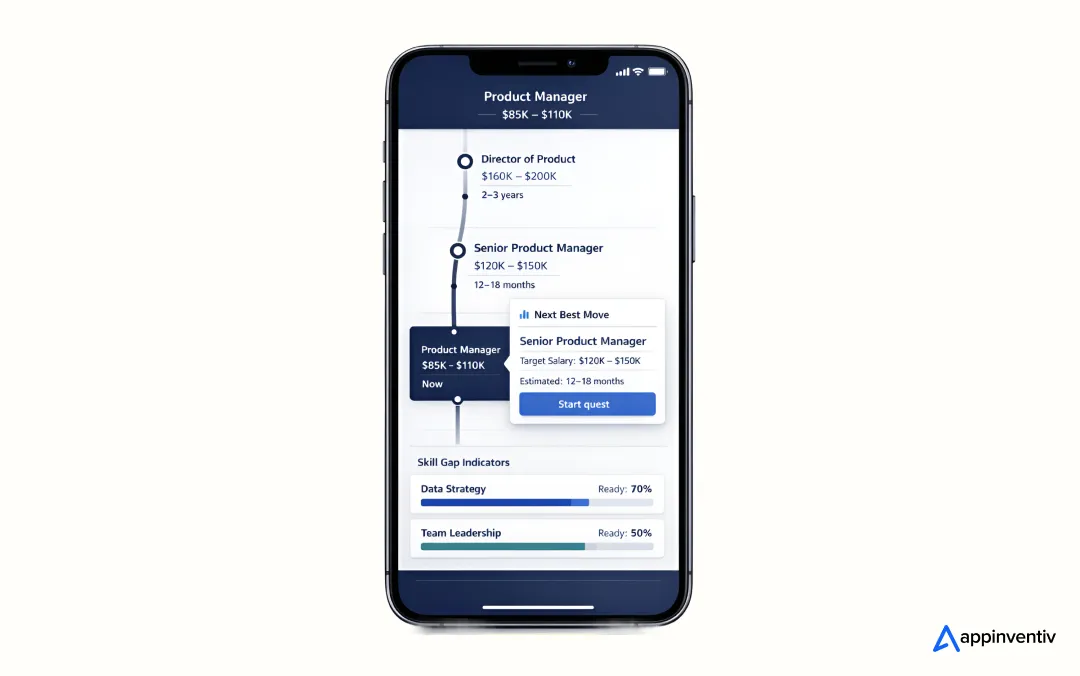
Digital Twin of Your Career App
Career decisions often feel unclear. This app maps possible paths using real job data. It shows salary ranges, skill gaps, and role shifts. Users can compare paths before making a move.
Personal Data Ownership App
People share data every day. Most get no return from it. This app shows what data exists and who uses it. Users can allow access or block it. Some data can be shared for direct payment.
Reputation Score App
Work quality is hard to measure. This app tracks delivery, response time, and feedback. It builds a score over time. Freelancers and teams use it to build trust.
Micro-SaaS Builder App
Not every idea needs a full product team. This app lets users build small tools from a phone. A simple calculator, tracker, or workflow tool can go live fast. Users can share or sell these tools.
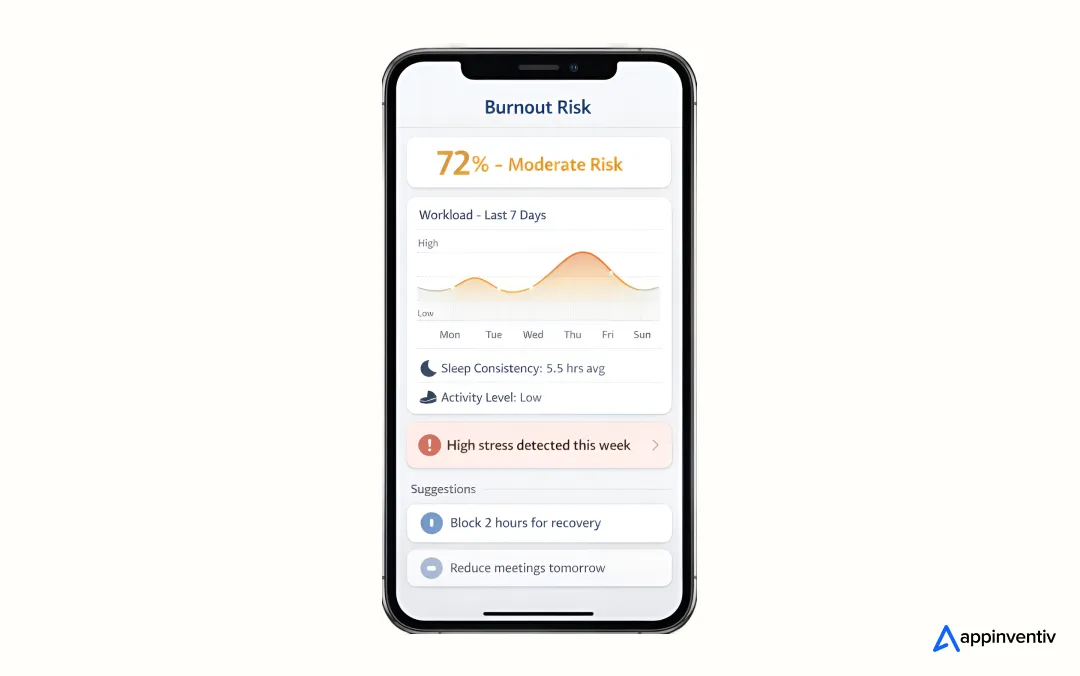
Burnout Prediction App
Burnout builds slowly. Most people miss the early signs. This app tracks work hours, breaks, and patterns. It flags risk early and suggests small changes. A lighter schedule or break can prevent long-term stress.
Offline-to-Online Business App
Many small shops still run offline. This app sets up digital basics in minutes. Payments, listings, and customer records get created fast. Owners start accepting orders without tech knowledge.
Negotiation Assistant App
Negotiation feels hard for many people. This app gives simple prompts during conversations. It suggests when to push or pause. Users gain more control in salary talks or deals.
Digital Legacy App
People hold many digital accounts. Few plan what happens later. This app stores access rules and instructions. Families can access important data when needed.
Human + AI Work Platform
Speed matters in most work today. This platform splits tasks into two parts. Machines handle the first draft. People refine the final output. Work gets done faster without losing quality.
Intent-Based Social App
Most platforms group people by interest. This app groups them by goals. A user who wants to start a business meets others doing the same. Conversations feel more useful.
AI-Powered Mobile App Business Ideas (Automation, Personal Assistants, Intelligent Workflows)
AI is becoming a core layer in modern mobile apps. Based on our experience delivering 300+ AI-powered solutions and deploying 150+ custom models, we’ve seen a clear shift.
Apps that embed AI into everyday workflows move beyond simple utility and become decision-support systems.
In many cases, this has led to up to 75% faster decision-making and stronger user engagement, especially in productivity, analytics, and automation-driven applications.
The ideas below show practical ways AI apps support common activities on a phone.
AI Personal Research Assistants
Professionals read large volumes of information each week. This particular AI personal assistant app scans articles, reports, podcasts, and videos related to topics the user selects. It produces short briefings with the main facts and key takeaways.
Users receive daily updates that highlight important developments. Over time, the system learns user interests and prioritizes the most relevant sources.
AI Meeting-to-Task Automation Apps
Teams hold many meetings each week. Important points often disappear once the call ends. This app records conversations and converts speech into text. It extracts action items, deadlines, and responsibilities from the discussion.
The system then sends those tasks to project management tools such as Slack, Asana, or Trello.
AI Study Companion Apps
Students often need extra support outside the classroom. This app explains lessons in simple terms and creates short quizzes based on study material.
It tracks progress and highlights weak areas. Teachers can assign practice exercises and review student performance through the same platform.
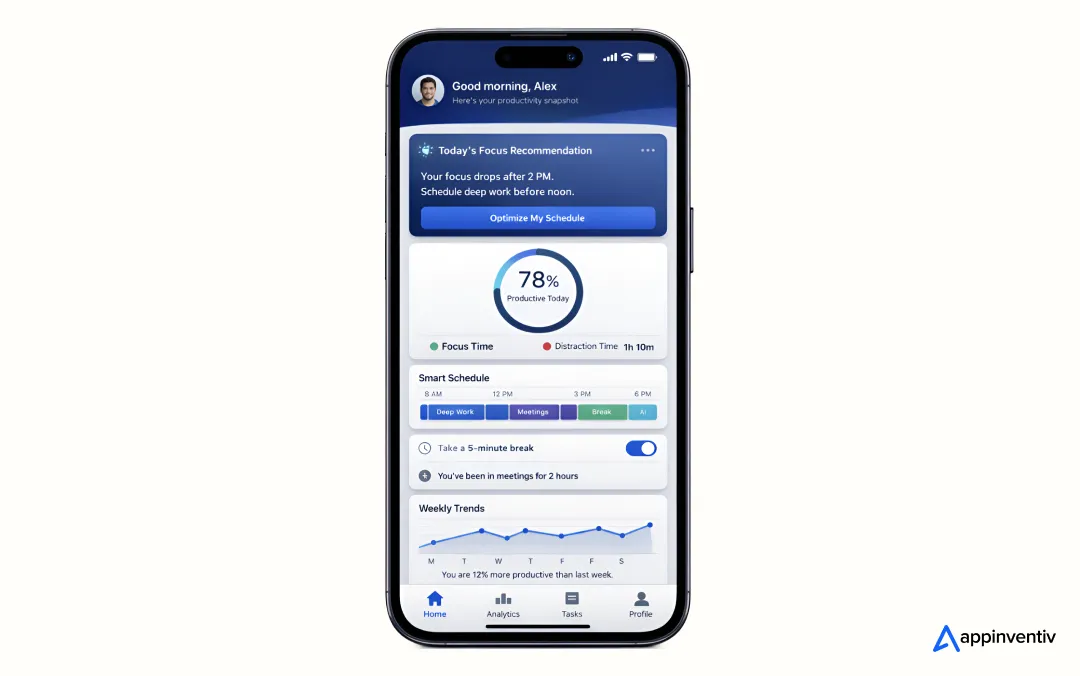
AI Productivity Coaching Apps
Work patterns differ across people and roles. Some struggle with distractions, while others overload their schedules. This app reviews calendars, task lists, and focus sessions.
It suggests small changes that improve time management. Users receive reminders that encourage healthy work habits.
AI Career Advisor Apps
Career decisions require clear information about job demand and skill gaps. This app reviews resumes and compares them with hiring trends across industries.
It identifies missing skills and suggests courses or certifications. Users receive guidance on possible career paths and growth opportunities.
AI Content Summarization Apps
Professionals often read long reports, research papers, and news updates. This app shortens documents into clear summaries.
It highlights the most important points and removes repetitive sections. Users understand the main ideas quickly without reviewing the full document.
AI Decision Support Apps
Some choices involve many variables such as cost, timing, and risk. This app gathers relevant data and organizes the options clearly.
It ranks alternatives based on user preferences. People can compare travel plans, purchases, or investment options in one place.
Also Read: 20 Best Profitable AI Business Ideas in 2026
AI Health & Wellness Advisor Apps
Smartphones and wearable devices collect daily health information. This includes sleep patterns, step counts, and heart rate data.
This app reviews that information and provides practical guidance. Users receive suggestions related to exercise routines, rest schedules, and daily activity.
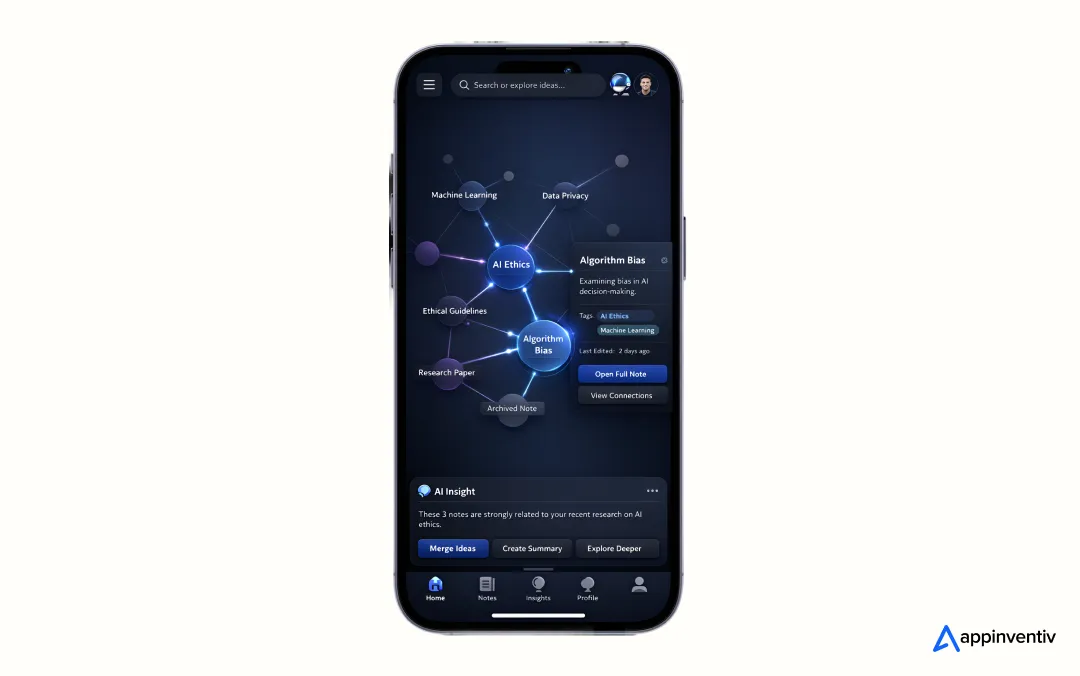
AI Knowledge Graph Apps
Many professionals store notes, research, and documents across different tools. Finding connections between ideas becomes difficult.
This app links information through visual maps that show relationships between topics. Users move through related ideas quickly and discover patterns in their research.
AI Email Management Assistants
Email overload slows down many professionals. This app reviews incoming messages and sorts them by urgency. It summarizes long threads and highlights key points. The system can also draft reply suggestions that users review before sending.
AI Legal Document Analyzer Apps
Contracts and agreements often contain dense legal language. This app scans documents and identifies clauses that require attention. It highlights risks, obligations, and unusual terms. Legal teams review agreements faster and focus on the sections that matter most.
AI Personal Finance Advisor Apps
Managing personal finances requires clear records of income and spending. This app reviews bank transactions and tracks savings goals. It identifies spending patterns and suggests budgeting strategies. Users receive regular updates that show progress toward financial targets.
Also Read: How to Build an AI App? Steps, Features, Costs, Trends
From our experience of over a decade in mobile app development, one trend stands out. Apps that adopt AI early gain faster traction and stronger user retention.
In the US alone, 12% of workers already use AI daily, and 25% use it frequently, which shows how quickly user behavior is shifting toward AI-powered experiences.
Early movers are locking in users, data, and market share. Waiting now means higher costs and slower growth later. The gap is widening fast.

Fintech Mobile App Business Ideas (Payments, Investing, Financial Automation)
Digital financial behavior is rapidly shifting to mobile. According to Statista, global digital payment transaction value is projected to exceed $36 trillion by 2030, driven largely by mobile-first users. This growth continues to create demand for apps that simplify payments, investing, and everyday financial management.
These tools give users more control over daily financial activity and long-term planning.
Subscription Management Apps
Subscription services now cover streaming platforms, cloud storage, fitness apps, software tools, and even groceries. Many people lose track of these recurring payments. A subscription management app scans bank transactions and lists active subscriptions in one dashboard.
Users can cancel unused services, track monthly spending, and receive alerts before the next billing cycle. As the subscription economy continues to grow, tools that help users manage recurring payments will remain valuable.
AI Budgeting Apps
Budgeting still feels difficult for many people. This app reviews spending and groups expenses into clear categories. Users see where money goes each month and adjust spending habits.
Also Read: AI-Based Budget Management App Mudra
Refund Automation Apps
Online shoppers often miss refund deadlines. This app tracks purchases and alerts users when refunds are possible. It prepares the refund request and sends it to the seller.
Micro-Investment Apps
Some people want to invest but lack large savings. This app rounds up spare change from daily purchases. The system invests those small amounts into funds or stock portfolios.
Freelancer Income Tracking Apps
Freelancers receive payments from many clients and platforms. This app records invoices, payments, and tax estimates. Users view income history and monthly earnings in one place.
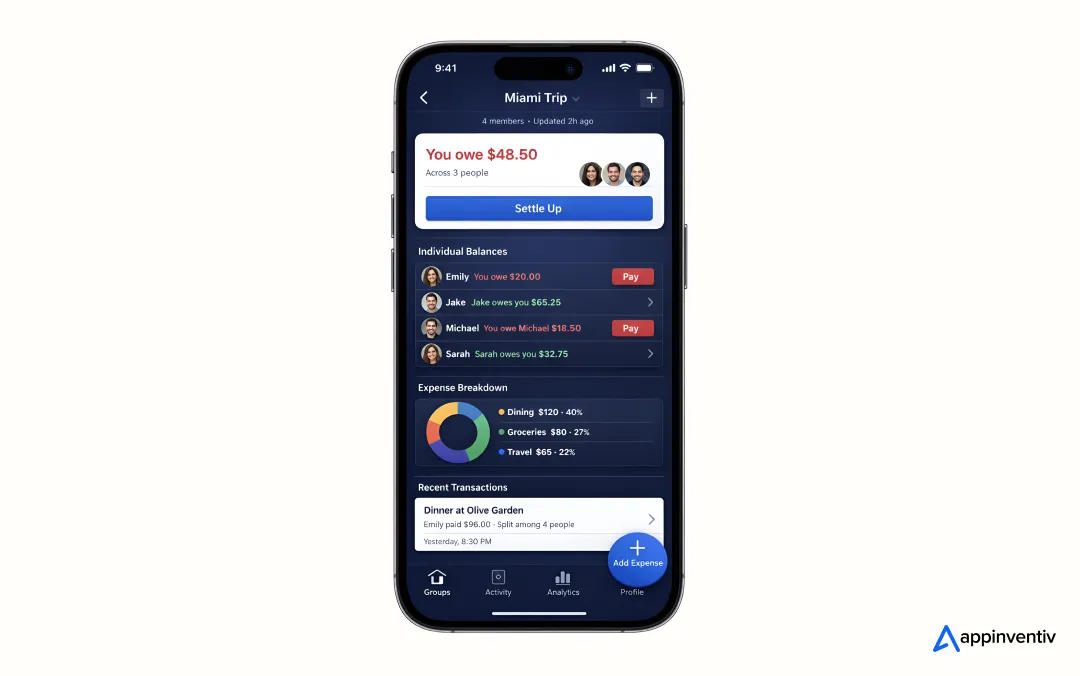
Expense Splitting Apps
Shared expenses often create confusion between friends, families, and roommates. People regularly split rent, travel costs, group dinners, and event expenses. An expense-splitting app records who paid for what and automatically calculates the balance.
Users can settle payments through integrated digital wallets or bank transfers. This type of app solves a daily financial problem and works across many situations, which makes it a reliable long-term product idea.
Financial Goal Planning Apps
People save money for goals such as travel, education, or a home purchase. This app lets users set a target amount and timeline. The system tracks savings progress over time.
Sustainable Spending Tracker Apps
Some consumers want to understand the environmental impact of purchases. This app reviews transaction history and estimates carbon impact. Users receive suggestions for lower-impact alternatives.
Crypto Portfolio Tracker Apps
Cryptocurrency investors often use several exchanges. This app tracks token prices and portfolio value in real time. Users monitor gains, losses, and market changes.
Peer-to-Peer Lending Apps
Traditional loans often involve long approval cycles. This app connects lenders and borrowers through a digital platform. The system records loans and manages repayment schedules.
Also Read: Top 20 FinTech Startup Ideas for Businesses to Consider in 2026
SaaS & Business Automation App Ideas (CRM, Marketing, Operations)
Mobile-first SaaS adoption is accelerating across industries. In our experience building 2000+ applications across 35+ industries, businesses that prioritize mobile-driven workflows tend to scale faster and operate more efficiently.
We’ve consistently seen up to 2x faster deployment cycles and improved operational visibility when core systems like CRM, scheduling, and analytics are optimized for mobile access rather than desktop-first environments.
The ideas below focus on apps that help companies manage customers, sales activity, and internal operations.
Freelancer CRM Apps
Freelancers manage many tasks beyond their main work. They track clients, invoices, contracts, and project deadlines. Many still rely on spreadsheets and scattered email threads. A freelancer CRM app stores client information, project details, payment records, and communication history in one place.
It can also include reminders for invoices and follow-ups. With the global freelance workforce continuing to grow, dedicated management tools will remain in demand.
AI Social Media Management Apps
Brands post content on several social platforms each week. Managing these posts takes time. This AI social media management app can help schedule posts, track engagement numbers, and show which content performs best.
Industry-Specific CRM Platforms
Some industries require tools built for their own workflows. Real estate agents track property listings. Clinics manage patient visits. This app focuses on one industry and builds features that match daily tasks in that field.
Client Onboarding Automation Apps
New clients often complete forms, upload files, and sign documents. These steps take time for both sides. This app guides clients through the onboarding process and stores their information in a single system.
Online Booking & Appointment Apps
Many service businesses depend on scheduled appointments. Doctors, salons, repair technicians, tutors, and fitness trainers all manage bookings throughout the week. An online booking app allows customers to schedule appointments directly through their phones.
The system updates the calendar automatically and sends reminders before the appointment. Businesses reduce scheduling conflicts and missed visits, and customers gain a simple way to reserve time.
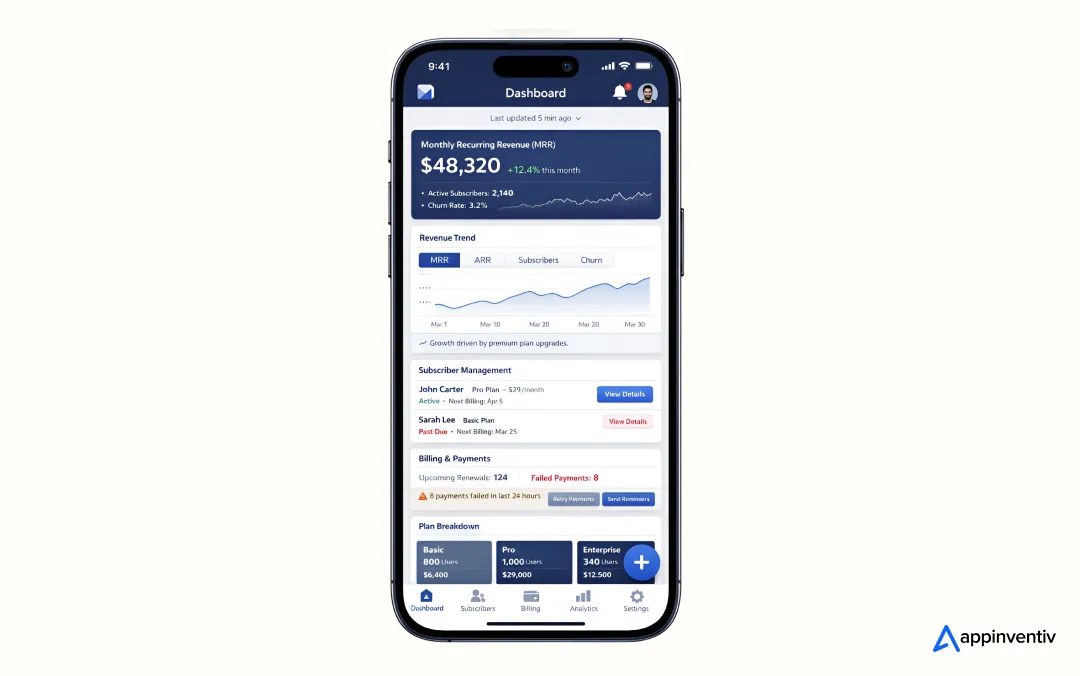
Subscription Business Management Apps
Subscription services continue to grow across software, media, and education. This app records recurring payments, tracks subscriber numbers, and manages billing cycles.
Influencer Marketing Campaign Apps
Brands work with creators to promote products and services. Managing these campaigns involves communication, content approvals, and payment tracking. This app helps marketing teams organize these activities.
Inventory Management Apps
Retailers and small businesses constantly track product stock levels. Manual methods often lead to errors or missing items. An inventory management app records product movement and shows current stock levels in real time.
Staff can scan items, update quantities, and receive alerts when stock falls below a set limit. Businesses that sell physical products rely on inventory tracking every day, which keeps this app category relevant.
Large retailers rely on mobile platforms to manage product catalogs and customer purchases. Appinventiv helped develop the IKEA mobile shopping experience, allowing customers to explore products, check availability, and shop directly from their phones.
Also Read: What Are Some SaaS Product Ideas To Boom In The Coming Years?
Sales Pipeline Tracking Apps
Sales teams manage leads at different stages of the buying process. This app records deal progress, customer communication, and potential revenue.
AI Customer Support Chatbot Apps
Support teams receive many repeated questions. Customers ask about order status, product details, or account issues. This app answers routine queries through chat, so support agents handle more complex requests.
CRM, automation, and business apps win with speed and execution. The sooner you launch, the faster you capture market demand.

Productivity & Knowledge Management App Ideas (Learning, Focus, Digital Workflows)
Digital work produces large volumes of information every day. Emails, documents, research notes, and tasks often sit across several tools. Many professionals lose anywhere from 51 minutes to an hour a week to tool fatigue and want a simple way to organize this information and stay focused.
Productivity apps address this need by helping users manage knowledge, track work, and plan tasks more effectively.
Email Organization Apps
Professionals receive dozens of emails each day. This app groups messages by priority and topic. Users quickly find important conversations without scrolling through a crowded inbox.
Research Aggregator Apps
Writers, analysts, and students collect information from many sources. This app gathers articles, reports, and notes in one place. Users track research material and review it later.
Bookmark Management Apps
Many people save useful links during work or study. This app stores bookmarks and sorts them by topic. Users locate saved resources without searching through browser folders.
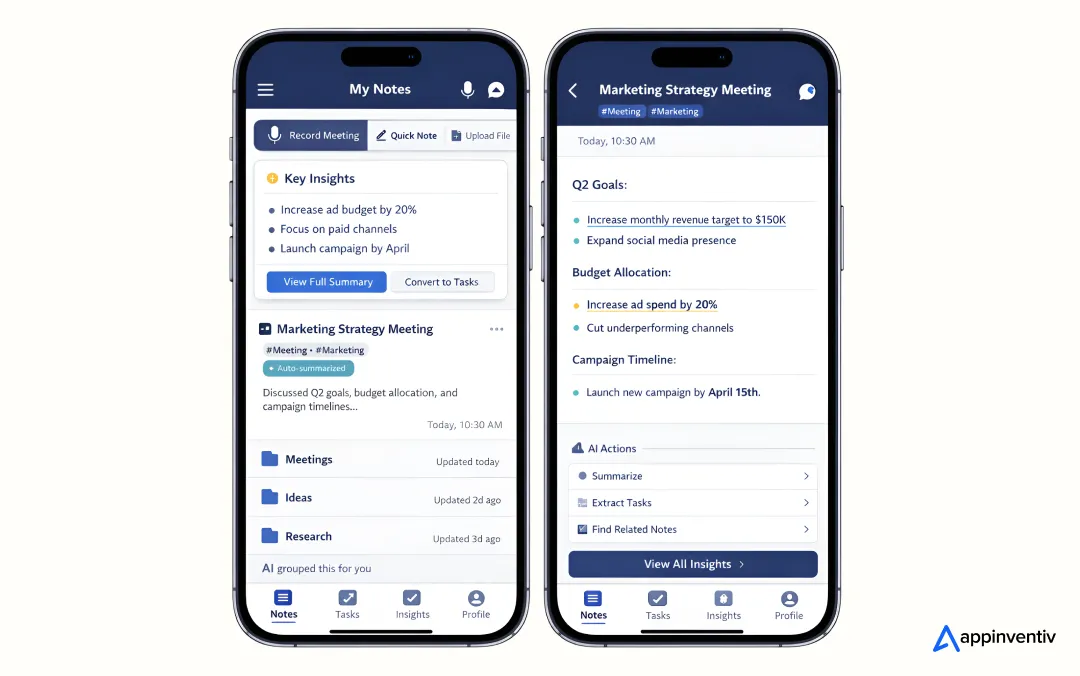
AI Note-Taking Apps
Meetings, classes, and brainstorming sessions generate large amounts of information. People often lose track of notes across documents and devices. An AI note-taking app captures conversations or typed notes and automatically organizes them.
It highlights key points, groups related topics, and stores them in searchable folders. Professionals and students both benefit from having structured notes they can review quickly later.
Productivity Analytics Apps
Work habits affect daily performance. This app tracks time spent on tasks and applications. Users review activity reports and adjust their schedules.
Also Read: Best Productivity Tools for Mobile App Developers
Smart Reminder Apps
People manage tasks across work and personal life. This app sends reminders based on time, location, or task deadlines. Users receive alerts before important activities.
Personal Knowledge Library Apps
Professionals store documents, reports, and learning materials across many devices. This app creates a central library for important files. Users search and retrieve information quickly.
AI Task Prioritization Apps
Many professionals manage long task lists each day. This app reviews deadlines, workload, and task importance. It suggests which tasks require attention first.
Social & Community Mobile App Business Ideas (Networking, Collaboration, Interest Groups)
Phones changed how people connect. Many friendships now start online, then move into real life. On average, users spend over 2 hours daily on social media apps, which reflects how deeply these platforms are embedded in everyday life. New social apps often focus on smaller groups and shared interests.
These app ideas center on meeting people, learning from others, and building local communities.
Adult Friendship Apps
Many adults struggle to make new friends after college. Work and relocation break old social circles. This app matches users who share interests such as fitness, books, or travel. People start with a chat, then meet at local events.
Hobby Community Platforms
Hobbies feel more rewarding in a group. A runner improves faster with other runners. A photographer learns new tricks from other photographers. This app brings together users with similar hobbies so they can share work and advice.
Local Event Discovery Apps
Cities host hundreds of events each month. Small workshops and meetups often pass unnoticed. This app lists activities happening nearby. Users search by interest and reserve a place through the app.
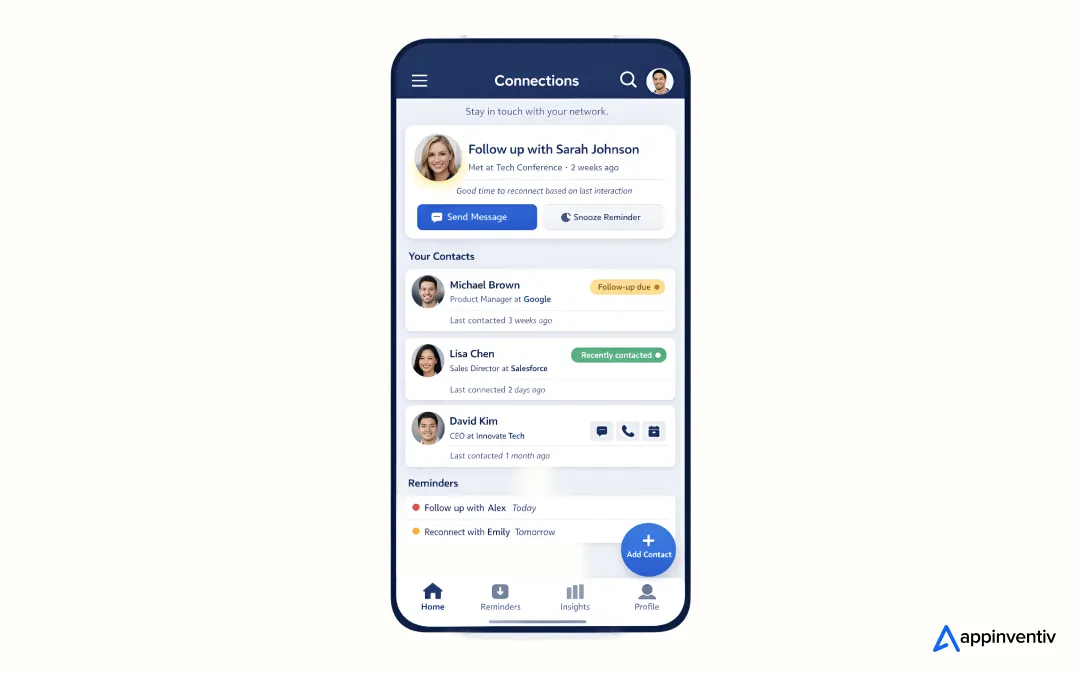
Networking Reminder Apps
Many professionals exchange contacts at conferences and meetings. Weeks later, most of those contacts fade from memory. This app stores meeting notes and contact details. It reminds users to reconnect after a set time.
Creative Collaboration Platforms
Creative work often grows through collaboration. Writers, designers, and musicians frequently search for partners. This app helps creators find people to collaborate on projects. Users share drafts, discuss ideas, and collaborate online.
Skill Exchange Apps
People often have skills they rarely use outside work. One person may know coding. Another may know photography or video editing. This app connects users who want to teach and learn from each other.
Mentor–Mentee Matching Apps
Early career professionals often seek advice from experienced leaders. Many experts enjoy guiding newcomers. This app pairs mentors with mentees who share the same field. They schedule regular conversations and discuss career growth.
Also Read: How to Create a Social Media App in 2026? A Comprehensive Guide
Lifestyle & Household Management App Ideas (Daily Life, Organization, Home Management)
Most households juggle many small tasks every week. Bills arrive on different days. Grocery lists change often. Repairs appear without warning. Many people keep this information in notes, messages, and calendars.
About 40% of mobile grocery users place orders weekly, reflecting how routine household activities are shifting to mobile. A mobile app can organize these tasks into a single system.
These app ideas focus on tools that help people manage everyday responsibilities at home.
Household Management Apps
Running a household involves many small tasks. Families track bills, grocery lists, school activities, and shared responsibilities. A household management app gathers this information in one place.
Household members can check schedules, assign tasks, and store important records. The app serves as a shared organizer, helping everyone stay informed about daily responsibilities.
Smart Meal Planning Apps
Planning meals for the week can take time. This app suggests meal ideas from ingredients already available in the kitchen. It then creates a simple grocery list that matches the plan.
Home Maintenance Reminder Apps
Every home requires routine maintenance. Air filters, appliances, heating systems, and plumbing components need regular checks. A home maintenance app records service schedules for each item.
The system sends reminders when maintenance dates approach. Homeowners stay on top of repairs before problems become costly.
Chore Management Apps
Shared homes often divide chores across family members or roommates. Cleaning, laundry, and trash collection follow a schedule. This app assigns those tasks and records completion.
Document Expiration Reminder Apps
Important documents expire at different times. Passports, driver’s licenses, and insurance papers often get forgotten. This app stores document records and sends alerts before renewal deadlines.
Digital Decluttering Apps
Phones collect thousands of photos and files over time. Screenshots, downloads, and duplicate images quickly fill storage. This app scans the device and groups unnecessary files. Users remove duplicates and organize the remaining content.
Travel & Exploration App Ideas (Personalized Travel, Culture, Discovery)
Travel habits changed once smartphones became common. 70% of travelers now prefer digital travel bookings; instead, they carry maps, tickets, and guides on a single device. Mobile apps help people plan trips, find places to visit, and manage bookings during travel.
The ideas below focus on apps that support trip planning and help visitors understand new places.
AI Travel Itinerary Apps
Trip planning often requires comparing attractions, travel routes, and opening hours. This process takes time when done manually. An AI travel itinerary app creates a daily plan after the traveler selects a destination and trip length.
The system groups nearby attractions together and suggests efficient travel routes. Travelers spend less time planning and more time enjoying the trip.
Cultural Discovery Apps
Visitors often want more than photos of famous landmarks. They want context about local history and traditions. This app provides short descriptions about places, events, and customs.
Sustainable Travel Apps
Travel choices affect the environment. Flights, hotels, and transport options all carry different impacts. This app tracks travel activity and shows the estimated carbon footprint for each trip.
Food Discovery Apps
Food experiences shape how people explore cities and cultures. Travelers and locals both search for new restaurants and regional dishes. A food discovery app helps users locate popular eateries, street food markets, and local specialties.
Filters allow searches by cuisine, price range, or neighborhood. Reviews and ratings guide people toward memorable dining experiences.
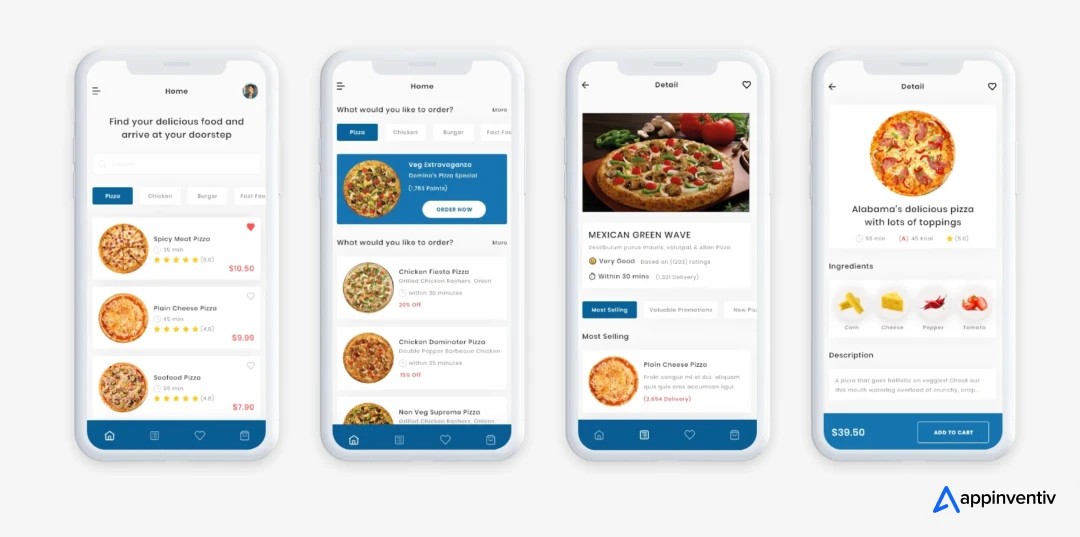
Global food brands already rely heavily on mobile platforms. For example, Appinventiv helped build Domino’s mobile ordering experience, allowing customers to browse menus, place orders, and track deliveries directly from their phones.
Multilingual Travel Assistant Apps
Language differences create common travel problems. Travelers need help with directions, menus, and conversations. This app translates short phrases and spoken language in real time.
Local Experience Booking Apps
Travelers often want hands-on activities during a trip. Cooking classes, walking tours, and craft workshops attract many visitors. This app lists local experiences and allows users to book them directly.
Also Read: A Travel Agent Guide on Travel Booking App Development Cost
Super App Business Ideas (All-in-One Digital Ecosystems)
Most apps solve one task. Users switch between apps all day. A super app reduces that friction. It brings multiple services into one place and keeps users active longer.
About 70% of consumers value access to multiple services in one app to reduce digital clutter. For businesses, this means more repeat usage and more revenue paths inside a single product.
1. Personal AI Command Center App
This app combines calendar, tasks, email, finance, and health data. It studies daily patterns and adjusts schedules in real time. A user sees what to do next, not just a list of tasks. It can shift meetings, block focus time, and flag overload days before they happen.
2. Hyperlocal Daily Services App
This app connects users with nearby services such as groceries, repairs, medical visits, and transport. It focuses on small cities where service discovery is still fragmented. Local vendors get digital access. Users get faster bookings and real-time availability.
3. Learning + Job Pipeline App
This app links courses, skill tracking, job listings, and mentor access. A user starts with a skill goal. The app tracks progress and suggests roles based on real hiring data. It can match users with jobs once they reach required skill levels.
4. Small Business Control Hub App
This app replaces multiple tools with one system. It handles payments, invoices, inventory, payroll, and customer tracking. A store owner can run daily operations from one dashboard. It reduces tool switching and keeps all business data in one place.
5. Health + Insurance Tracker App
This app tracks fitness, doctor visits, prescriptions, and insurance coverage. It stores reports and gives alerts for checkups or renewals. Users can book consultations and manage claims from the same app. It connects daily health data with long-term care planning.
How to Develop a Successful Mobile App Business Idea
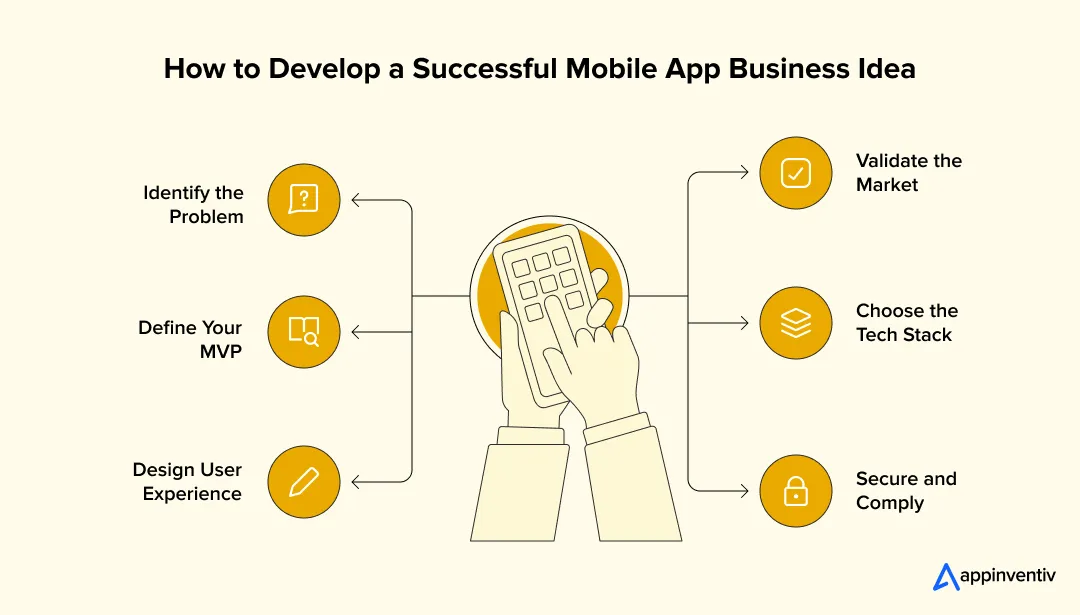
Many founders start with a simple thought. “This would make life easier.” Turning that thought into a real product takes discipline. Teams must test the idea, define a small product, and build the right technology behind it. This process helps companies move from rough mobile app development ideas to a working product that people use.
Identify a Real Market Problem
Start with a problem people often face.
- Observe daily workflows in work, finance, travel, or health
- Read user complaints in app store reviews
- Study discussion forums where people share frustrations
- Choose a problem that affects many users
Conduct Market Validation and Competitor Analysis
Before building anything, study existing products.
- Search app stores for similar tools
- List their main features and pricing models
- Read reviews to find common complaints
- Identify gaps that your app can address
Define MVP Features and Product Scope
Early versions of an app should stay small.
- Select two or three features that solve the main problem
- Remove secondary features for the first release
- Build a simple version that users can test quickly
- Collect feedback before adding more features
Choose the Right Technology Stack
Mobile app technology architecture and stack choices affect performance and cost.
- Decide between native development and cross-platform tools
- Use frameworks such as Flutter or React Native
- Select a reliable cloud infrastructure for the backend
- Plan systems that support growth over time
Focus on UX Design and Scalable Architecture
Users judge an app within seconds.
- Keep navigation simple and clear
- Design screens that load quickly
- Structure systems that handle large user growth
- Test performance across different devices
Ensure Data Security and Compliance
Mobile apps handle sensitive information.
- Protect user data with encryption
- Apply secure login and authentication systems
- Follow data protection laws such as GDPR and CCPA
- Store financial and personal information securely
App Monetization Ideas for Mobile Startups and Enterprises
Every successful mobile product needs a clear revenue model. Strong app ideas that attract users make money, but a clear revenue plan sustains the business. Many companies combine several app monetization ideas based on user behavior, product type, and market demand.
| Monetization Model | How It Works | Best For | Example Platforms |
|---|---|---|---|
| Subscription-Based Revenue | Users pay a recurring monthly or annual fee to access features or services | SaaS apps, productivity tools, streaming platforms | Spotify, Notion |
| Freemium Model | Core features remain free, and advanced features require payment | AI apps, productivity apps, design tools | Canva, Dropbox |
| Transaction-Based Model | The platform charges a small fee for every financial transaction processed | Fintech apps, payment apps, and booking platforms | PayPal, Stripe |
| In-App Purchases | Users buy digital goods, upgrades, or extra features inside the app | Gaming apps, creator platforms, fitness apps | Mobile games |
| Advertising Model | Apps display ads and earn revenue from impressions or clicks | Social apps, news apps, free mobile tools | YouTube |
| Marketplace Commission | The platform takes a percentage from transactions between buyers and sellers | Service marketplaces, travel apps, gig platforms | Uber, Airbnb |
Also Read: How Do Apps Make Money? A Practical Monetization Guide
Top apps grow through clear monetization from day one. Build with the right model and capture revenue early.

Common Challenges When Building a Mobile App Business
Launching an app sounds simple at first. The idea feels clear. The build begins. Then new issues appear. Teams face market risk, user growth problems, and technical pressure. Planning early helps reduce these common mobile app development challenges.
Achieving Product–Market Fit
Some apps launch and gain little traction. Users install them once and never return. The product solves a problem that few people feel they have.
Solution
- Talk with potential users before development begins
- Study reviews of similar apps in the store
- Launch a small MVP and watch how people use it
User Acquisition and Retention
A well-built app still needs attention from users. Without visibility, downloads remain low.
Solution
- Focus marketing on a clear benefit
- Promote the app in communities where users gather
- Track user activity and adjust features over time
Technical Scalability
Early versions often run well with a small audience. Heavy traffic creates new pressure on the system.
Solution
- Host the app on a stable cloud infrastructure
- Monitor performance during testing
- Prepare the system for higher user numbers
Data Privacy and Security
Mobile apps collect emails, payment details, and location data. Weak protection breaks user trust.
Solution
- Apply encrypted data storage
- Use strong login protection
- Follow data protection rules in major markets
Competition in App Stores
Millions of apps exist today. Many new products struggle to stand out.
Solution
- Target a narrow audience first
- Solve one clear problem well
- Improve the product through user feedback
How Appinventiv Helps Businesses Build Scalable Mobile Apps
Many companies have strong mobile app business ideas but lack the technical team to build them. Appinventiv works with startups and enterprises that want to launch reliable mobile products through custom mobile app development services tailored to specific business goals.
Over the past 10 years, the company has delivered 2000+ applications across 35+ industries. Teams build mobile apps, AI features, and cloud systems that support growing user traffic. Many startups launch an MVP in about three weeks, then expand the product after early feedback.
Appinventiv operates from 5+ international offices and works with brands such as Americana, IKEA, Adidas, and Domino’s. The company holds 15+ global recognitions, maintains a 95% client satisfaction rate, and reports 90% repeat clientele.
Schedule a consultation with Appinventiv’s mobile app development team.
FAQs
Q. How long does it take to develop a mobile app for a startup, enterprise, or business?
A. Development time depends on complexity and features. A basic MVP with core functions often takes eight to twelve weeks. Medium-scale apps with integrations and analytics usually require four to six months. Enterprise platforms with advanced security, AI features, and large user capacity may take nine months or more. Teams often launch an MVP first, then expand features after early user feedback.
Q. How much does it cost to develop a mobile app for a new business idea?
A. Development cost varies with features, design complexity, and technology choices. A basic startup MVP may cost between $50,000 and $120,000. Medium-scale apps with custom design, integrations, and backend systems often range from $120,000 to $250,000. Large enterprise platforms with AI features, security layers, and high traffic support can exceed $500,000. Ongoing maintenance and updates add additional yearly costs.
Q. How do I start a mobile app business from scratch?
A. Begin with research into the problem and market validation. Define a simple MVP that solves the main user need. Work with designers and developers to create the app’s first version. Launch the product, collect user feedback, and improve the features. Successful founders treat the first release as a learning stage and refine the product based on real user behavior.
Q. Why should businesses choose Appinventiv for mobile app development?
A. Many startups and enterprises look for experienced partners to turn mobile app ideas into real products. Appinventiv supports the entire development cycle, from product discovery and MVP development to AI integration and large-scale architecture. With 10+ years of experience, 2000+ applications delivered, and expertise across 35+ industries, the company helps businesses launch reliable mobile apps and expand them as user demand grows.


Fast 2-minute response, fully NDA-protected.

How Much Does It Cost to Develop a Remote Patient Monitoring App in the UAE?
Key takeaways: Feature scope and system integrations, not the app itself, determine your final development cost. DHA, DOH, and MOHAP compliance must be built into your architecture from day one. Wearables, EHRs, and health information exchanges are the biggest technical cost drivers. A successful RPM platform combines continuous monitoring, clinical workflows, and secure interoperability. Early…
How Much Does It Cost to Develop an App Like Herfy in 2026?
Key takeaways: Herfy-like app development costs SAR 150,000 to SAR 1,500,000 ($40,000 to $400,000). Costs rise with rider tracking, POS sync, kitchen displays, loyalty, and branch controls. Saudi apps need Arabic UX, Mada, STC Pay, VAT, and ZATCA-ready invoice flows. Peak loads during Ramadan, Eid, and weekends need strong backend and load testing. A phased…

Key takeaways: The operating model determines survival. The code does not. Compliance under PDPL in the UAE and SDAIA in Saudi Arabia must be engineered into architecture, not added before launch. A serious build costs between AED 147,000 and AED 1,470,000 (USD 40,000 to USD 400,000), depending on scope. The single largest cost most operators…