




































 Leader in AI-First Product Engineering Read Full Article
 IT Managed & Outsourcing
 Contact Us
Aviation software only works when the moving parts stay connected: flights, crews, gates, fleet status, maintenance records, passenger updates, and compliance evidence. These are the core capabilities we build into the platform.
Core Capabilities Behind Our Aviation Software Development



















Our Engineering Strength in Numbers
Aviation Solutions Designed And Delivered
Legacy Processes Transformed
Strategic Federal Partnerships
Presence Across Countries Powered by Tech Innovation
Global Recognitions and Awards
Repeat Clientele


We build flight operations and airline management software that helps aviation organizations coordinate scheduling, dispatch, crew planning, passenger services, and operational workflows from a centralized platform.

We develop fleet and aircraft maintenance software that helps organizations improve aircraft availability, streamline maintenance planning, manage inspections, and maintain visibility across engineering operations.

We build airport and ground operations software that helps teams manage terminals, gates, baggage movement, turnaround activities, and airside operations with better coordination and visibility.

We develop aviation analytics software that helps organizations monitor performance, analyze operational data, improve decision-making, and gain deeper visibility into flight, fleet, and airport operations.

We build aviation compliance and safety management software that helps organizations maintain regulatory readiness, improve traceability, manage risks, and support safety-first operations.

We develop aerospace engineering and avionics software that supports product development, engineering workflows, simulation environments, technical documentation, and avionics data management.

We build aviation integration and infrastructure platforms that connect operational systems, enable secure data exchange, modernize legacy environments, and support scalable aviation operations.


Let’s turn your flight operations, fleet workflows, airport systems, and maintenance data into one platform built for real-world aviation pressure.



Flynas already had strong market momentum, with 1,500+ flights each week, a 38-jet fleet, and 60M+ passengers served. The gap was in the app. The experience felt busy, onboarding added extra steps, and booking did not feel as quick as it should for a high-volume airline.

Appinventiv rebuilt the iOS and Android apps with a simpler reservation path, cleaner brand-led screens, and an AI chatbot that helped users book flights inside the app. The team also set up DevOps practices so future releases, fixes, and performance improvements could move with better control.

















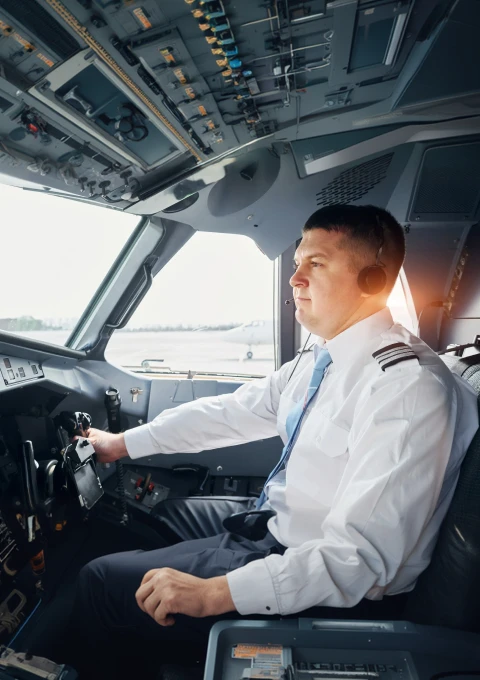
Flight operations, maintenance, crew coordination, airport teams, and passenger servicing all affect each other. We design the platform around those handoffs, so teams are not forced to work around the software during live operations.
Appinventiv brings the delivery strength of 3000+ digital solutions and 1700+ technology specialists. That depth matters when aviation software development solutions need product thinking, engineering discipline, and release control at the same time.
Audit trails, access rules, reporting, and data controls need to be part of the build from the start. We structure aviation systems so evidence is easier to trace and compliance teams are not left fixing gaps later.
Most aviation companies run on a mixed stack of airport systems, MRO tools, ERP platforms, telemetry feeds, scheduling tools, payment layers, and passenger apps. We connect these systems without creating fragile shortcuts.
AI only helps when it solves a real operating problem. We apply AI solutions and services to areas like passenger assistance, disruption visibility, predictive maintenance, fleet performance, demand signals, and faster decisions for operations teams.
Launch is not the finish line. We plan for monitoring, DevOps, release control, performance tuning, cloud scale, and future integrations so the platform can keep improving as routes, teams, and passenger demand grow.
Your operations should not depend on tools that only work when everything goes as planned. Let’s build aviation software that connects workflows, supports live decisions, and keeps scaling as your business grows.


The India's Fastest-Growing Companies 2026 Recognised by TIME and Statista

Statista High Growth Companies APAC - 2026

Statista India's Growth Champions 2023






AI in aviation is placed inside flight, crew, passenger, and operations workflows to catch disruption risks, demand shifts, route pressure, and planning gaps before teams are forced into last-minute decisions.
The role of digital twin models is to mirror fleet movement, airport workflows, and maintenance scenarios, giving teams a safer way to test operational changes before they touch live schedules or ground activity.
IoT integrations in aviation bring aircraft signals, ground assets, sensors, and maintenance tools into one monitoring layer, so operators can see asset health, usage, and readiness without waiting on manual updates.
Predictive analytics models read inspection history, usage data, sensor signals, and repair records to help MRO teams spot early risk patterns, plan interventions sooner, and reduce avoidable downtime.
Cloud-native architecture gives aviation platforms room to scale, release faster, monitor live usage, handle failover, and connect securely with the systems teams already depend on.
Generative AI development fits into booking, policy, disruption, and service journeys, helping passengers resolve routine requests faster while keeping avoidable tickets away from support teams.

















From cloud and data to integrations and security, let’s define the stack that fits your current systems and future aviation software goals.


We begin by understanding how the aviation environment runs today. Flight operations, fleet systems, maintenance workflows, airport tools, passenger platforms, vendors, and reporting gaps are mapped before architecture decisions are made.
In custom aviation software development, the architecture is shaped around uptime, secure data movement, user roles, integrations, compliance needs, and future scale. The outcome is a delivery plan your product, operations, and technology teams can actually work with.
Aviation users do not have time to decode messy screens. We design role-specific workflows for passengers, crew teams, dispatch users, ground staff, maintenance teams, and operations leaders who need fast, clear actions.
Build and integration move together because aviation platforms rarely work alone. ERP, MRO tools, airport systems, payment gateways integration, weather APIs, GDS platforms, telemetry feeds, and internal databases are connected with care.
Before release, the platform is checked for performance, data accuracy, access control, audit trails, integration behavior, failover readiness, and workflow stability. The aim is to catch risk before live operations do.
Rollout is handled in controlled phases, backed by monitoring, release management, performance checks, and post-launch improvements. As routes, users, integrations, and operating needs grow, the platform keeps moving with them.
Appinventiv brings enterprise software engineering depth, aviation-specific workflow understanding, and experience building scalable digital platforms. Our work covers flight operations, fleet systems, airport workflows, passenger apps, data platforms, integrations, and compliance-sensitive architecture.
Our aviation software development services include aviation consulting, custom aviation software development, system modernization, cloud infrastructure, data engineering, analytics, AI implementation, platform integrations, and passenger-facing app development.
Yes. We build custom aviation software development solutions for airlines, airports, MRO providers, fleet operators, and aviation enterprises. Each platform is designed around the client’s workflows, integrations, compliance needs, and operating model.
We build flight operations software, aircraft fleet management software, airport management software, MRO systems, aviation analytics platforms, passenger service systems, airline reservation platforms, compliance tools, and aerospace engineering software.
Yes. We modernize legacy aviation systems by improving architecture, enabling APIs, migrating workloads to scalable cloud environments, strengthening integrations, and improving operational visibility without disrupting live aviation workflows.
We build aviation platforms with controlled access, audit trails, secure data movement, traceable workflows, and reporting visibility. Our teams support compliance needs around FAA, EASA, ICAO, IATA, IOSA, ISAGO, DO-178C, ISO 27001, SOC 2, GDPR, and PCI DSS.
Yes. We integrate aviation platforms with ERP systems, MRO tools, airport systems, GDS platforms, payment gateways, telemetry feeds, weather APIs, scheduling tools, and passenger-facing systems through stable integration architecture.
Yes. We apply AI where it solves real aviation problems, such as disruption alerts, predictive maintenance, passenger assistance, route planning, demand forecasting, fleet performance monitoring, and operational decision support.
The cost of aviation software development usually depends on platform complexity, integrations, compliance requirements, cloud infrastructure, data volume, AI features, and the number of user roles. A custom aviation platform can range from $40,000 to $400,000+, depending on scope.
A basic aviation software product may take 3 to 5 months, while a complex aviation platform with integrations, compliance workflows, AI, analytics, and multi-role access can take 6 to 12+ months. The exact timeline depends on the system scope and operational complexity.