


























An Entrepreneur’s Guide on the Blockchain Technology and Its Uses
 Share -



- 01Understanding Blockchain: A Gateway to the Future of Digital Innovation
- 02The Four Foundation Pillars of Blockchain Technology
- 03Why Businesses Should Invest in Blockchain App Development
- 04How to Develop a Blockchain App: A Step-by-Step Process
- 05Use Cases of Blockchain Across Various Industries
- 06How Much Does Blockchain App Development Cost?
- 07Blockchain App Development Trends to Maximize ROI
- 08Game-Changing Technology Combinations That Help Businesses Maximize Blockchain ROI
- 09Challenges Businesses Face While Developing a Blockchain App
- 10Why Appinventiv Is the Smartest Choice for Your Custom Blockchain App Development Needs
- 11FAQs

- Blockchain creates the most value when multiple parties need a shared, auditable record without relying on one controlling intermediary.
- Tokenized RWAs reached $19.32B by March 2026, growing 256.7% from the start of 2025.
- Enterprise blockchain architecture must separate on-chain records from sensitive off-chain data, identity systems, APIs, and legacy infrastructure.
- Smart contracts can automate settlement and workflows, but production deployments still require audits, testing, monitoring, and controlled upgrades.
- Blockchain budgets rise sharply with smart-contract complexity, security requirements, third-party integrations, platform choices, and enterprise scalability demands.
Tokenized real-world assets (RWAs) reached $19.32 billion by March 31, 2026, growing 256.7% from the start of 2025.(Source: CoinGecko) This growth shows how blockchain is expanding beyond cryptocurrencies into asset tokenization, financial infrastructure, and programmable transactions.
For entrepreneurs and business leaders, blockchain matters when it solves a clear business problem, such as improving traceability, enabling trusted data sharing, or automating multi-party transactions. From supply chain transparency and healthcare data management to smart contracts and digital assets, blockchain is creating new ways to improve business processes and services.
This guide explores blockchain application development, including its business use cases, essential technologies, development process, costs, and implementation considerations. It also covers how blockchain app development can support industry-specific solutions and where businesses should consider the technology.
Talk directly with Appinventiv’s blockchain experts to turn tokenization, traceability, or smart-contract opportunities into production systems.
Understanding Blockchain: A Gateway to the Future of Digital Innovation
Blockchain is a distributed database shared among several nodes of a system. It is called Blockchain since it collects information in encrypted blocks and links them to other sets of blocks, forming a digital chain. The Blockchain concept has become widespread through the creation of various cryptocurrencies, dApp monetization, Smart Contracts, DeFi (Decentralized Finance) applications, and NFTs (Non-Fungible Tokens).
Understanding the growth and market potential of the blockchain technology market is crucial for businesses looking to innovate or gain a competitive edge.
Statista states it’s projected to reach nearly $943 billion by 2032, witnessing a compound annual growth rate (CAGR) of 56.1%. This indicates immense business potential, highlighting blockchain as a rapidly evolving technology with increasing adoption across various industries.
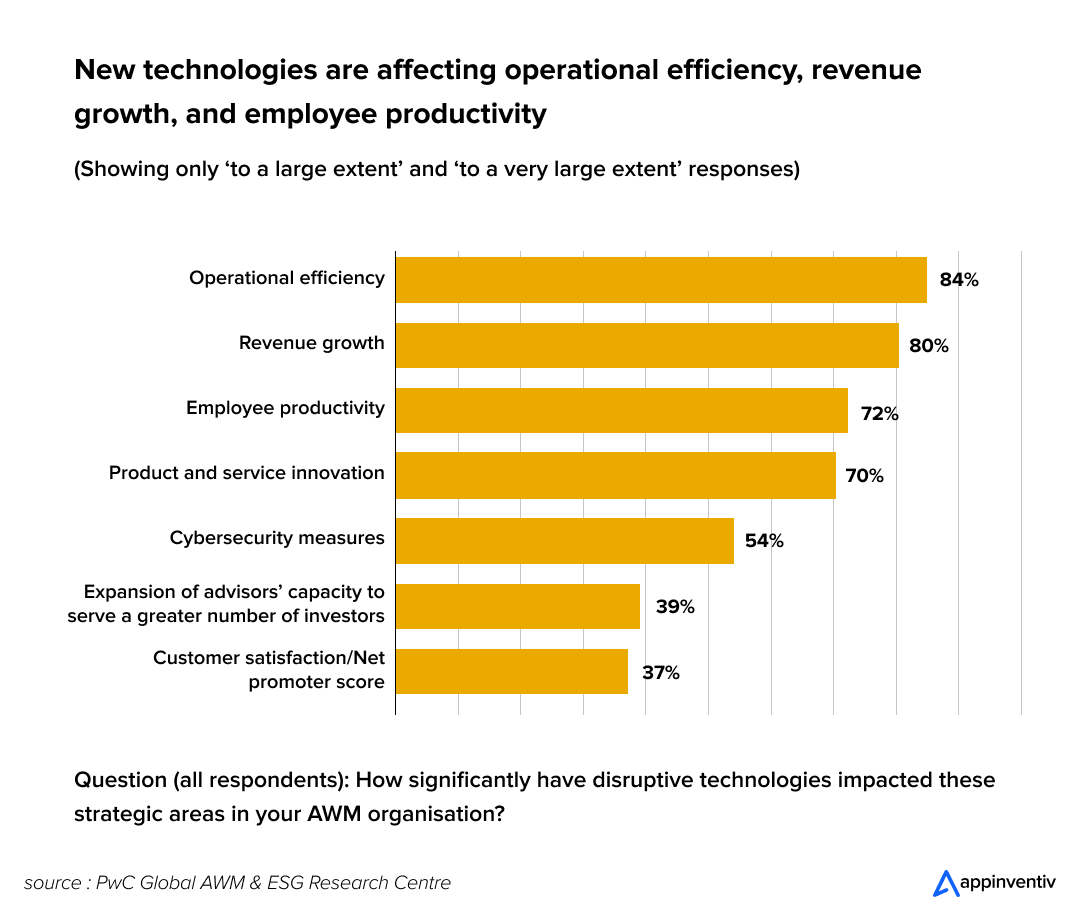
Furthermore, regarding asset and wealth management, PwC reports that 80% of surveyed managers acknowledge that disruptive technologies, including blockchain, fuel revenue growth. This shows that forward-thinking companies are leveraging blockchain for efficiency and as a vital revenue enhancement and innovation tool.
Moreover, McKinsey notes that blockchain in business and distributed ledger technologies (DLTs) can create new opportunities by decreasing risk, reducing compliance costs, creating more cost-efficient transactions, driving automated and secure contract fulfillment, and increasing network transparency. This trend reflects the escalating demand for blockchain expertise in the tech industry.
For entrepreneurs eager to stay ahead, blockchain app development isn’t just a tool but a transformative business strategy that can redefine your competitive edge and open doors to previously unreachable markets.
Simply put, if you invest in blockchain technology, you are not just adopting a trend; you are laying the foundation for long-term growth, resilience, and innovation. Whether you are in finance, healthcare, logistics, or real estate, blockchain can streamline operations, build trust with stakeholders, reduce costs, and unlock new revenue models.
The Four Foundation Pillars of Blockchain Technology
Now that we know that Blockchain is a broader phenomenon beyond transactions and crypto, let’s examine what technologies act as a base for Blockchain to fuel technological development.
ICO
Initial Coin Offering is a fundraising model chosen by startups and enterprises that have a Blockchain element in their business model. Here is how it works;
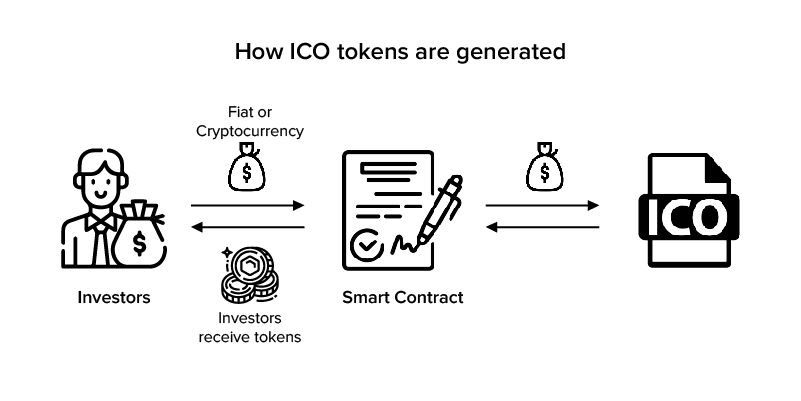
- Pre-Announcement—The first stage of the ICO is preparation. At this stage, the white paper containing the details of the project is drafted, and marketing campaigns are started on websites that the ICO investors frequent.
- Offering—This includes the contract’s terms and conditions, which are drafted and passed on to prospective investors.
- The financial instrument – cryptocoin, which has a toe assigned with it, is offered to investors in return for their capital.
- Marketing Campaign – This is the stage where the actual legwork happens. The campaign generally tends to stay up to around a month and targets an audience belonging to small investors and institutions.
Smart Contracts
Next to ICOs, the technology that has found its prominence in the world of businesses powered by Blockchain is Smart Contracts.
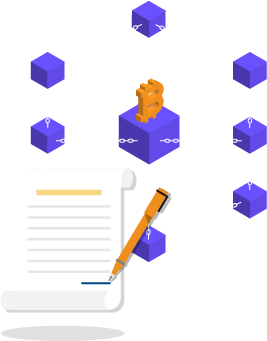
Smart contracts are programs deployed on a blockchain that automatically execute predefined rules when specified conditions are met. They can reduce manual intervention, improve consistency, and automate transactions or workflows.
However, smart contracts do not eliminate disputes or guarantee security. Poorly written logic, vulnerable dependencies, faulty external data, and incorrect assumptions can still cause failures. Production-grade smart contracts should undergo rigorous testing, code review, security audits, and controlled deployment before they handle valuable transactions.
Cryptocurrency Wallets
Cryptocurrency wallets apps are one of the most recognizable applications of blockchain technology. For businesses, wallet architecture can support digital assets, tokenized assets, programmable payments, and other blockchain-based transactions. The appropriate wallet model depends on factors such as custody requirements, transaction frequency, security controls, and the type of assets the application supports.
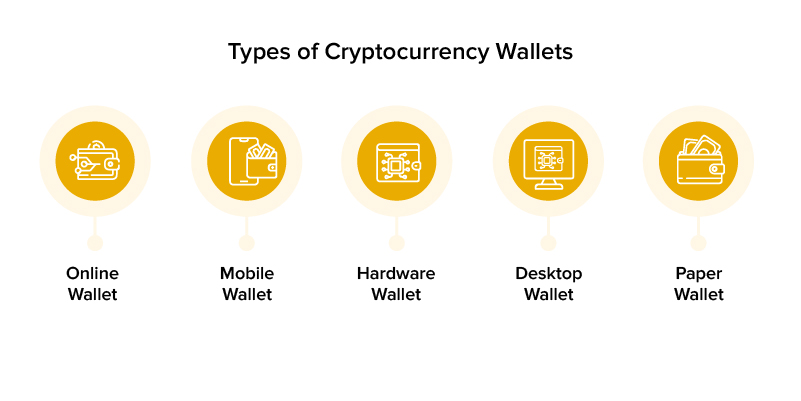
You have several options, even on the blockchain app development front, regardless of what purpose you are willing to solve with your cryptocurrency wallet. For businesses, blockchain wallet app development options include desktop wallet, mobile wallet, online web wallet, hot/cold wallet, hardware wallet, paper wallet, etc.
Blockchain NFTs
NFTs, or Non-Fungible Tokens, represent unique digital or physical rights on a blockchain. Unlike interchangeable cryptocurrencies, each NFT can carry a distinct identity, ownership record, or set of associated attributes.
Businesses can use NFTs beyond digital collectibles, including for memberships, credentials, product provenance, warranties, loyalty programs, and other applications where each asset or entitlement needs to be uniquely identifiable.

NFTs can be anything digital, like artwork, music, videos, virtual real estate, or items in online games. Because they are one-of-a-kind, people like artists, collectors, and businesses are drawn to them. Everyone wants to own or sell something original that stands out
Today, NFTs are not limited to the Ethereum network. They are also built on networks such as Solana, Polygon, and BNB Chain. These platforms allow businesses and creators to invest in blockchain technology to ensure more flexible and creative digital experiences using smart contracts.
Now that you have explored what blockchain is, how it’s used across industries, and the key technologies driving its adoption, it’s time to dive into how your business can benefit from blockchain app development.
Why Businesses Should Invest in Blockchain App Development
Blockchain apps can simplify business processes, improve security, and open new revenue opportunities. Here are some of the key benefits of blockchain app development for businesses:
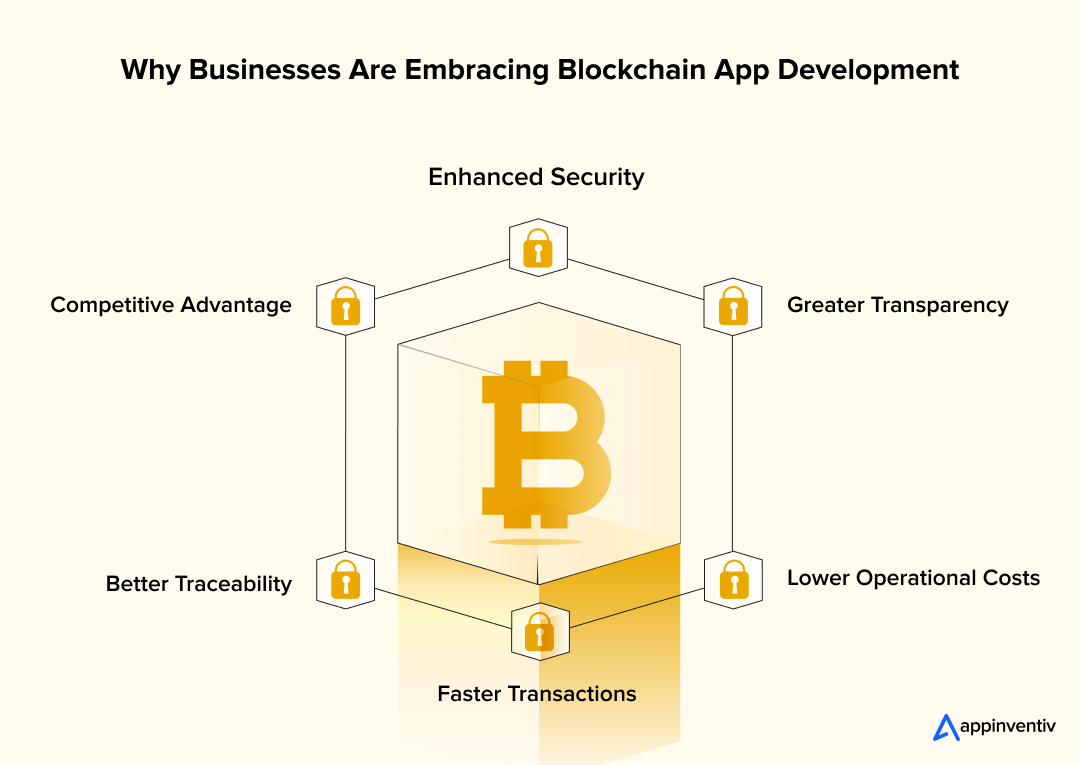
1. Enhanced Security
Blockchain uses encryption and decentralized networks, making your business data far more secure and resistant to hacking or unauthorized changes.
2. Greater Transparency
With blockchain, all transactions are recorded and visible to authorized parties. This builds trust with customers, partners, and even regulators.
3. Lower Operational Costs
Lower operational costs is one of the major benefits of blockchain technology. By removing middlemen and automating processes through smart contracts, businesses can reduce expenses tied to verification, settlements, and administrative overhead.
4. Faster Transactions
Traditional systems often take days to process transactions. Blockchain application development helps businesses speed things up by eliminating third-party delays and enabling real-time processing.
5. Better Traceability
For industries like supply chain, food, or pharmaceuticals, blockchain provides a clear history of product movement, improving safety and reducing fraud.
6. Competitive Advantage
Regarding the benefits of blockchain technology, gaining a competitive advantage stands out above the rest. By adopting blockchain early, you position your brand as innovative and forward-thinking, which acts as an advantage that can attract modern customers and top-tier partners.
How to Develop a Blockchain App: A Step-by-Step Process
Blockchain application development can be smooth if broken down into clear, manageable steps. Here’s a step-by-step guide to blockchain app development:
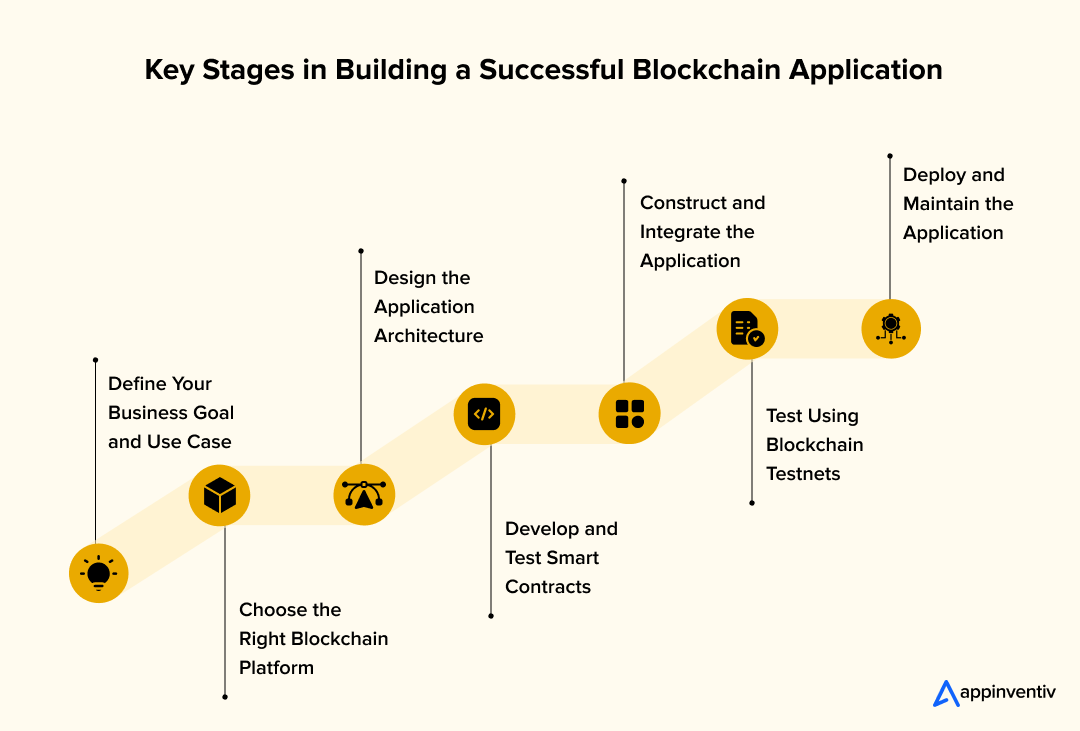
1. Define Your Business Goal and Use Case
Before jumping into development, identify the problem your app will solve and why blockchain is the right solution. For example, blockchain’s transparency and traceability features make it a perfect fit if you want to build trust in supply chain tracking. This clarity helps align development with your business needs.
2. Choose the Right Blockchain Platform
Different blockchains serve different purposes. Ethereum is widely used for smart contracts and NFTs, while Solana and Polygon offer faster transactions with lower fees. Choose a platform based on your app’s features, security needs, and budget.
3. Design the Application Architecture
Plan out the application’s architecture, detailing the user interface, the data handling mechanisms, and how these elements will interact with the blockchain network. Thorough planning at this stage helps prevent potential pitfalls during development.
4. Develop and Test Smart Contracts
Smart contracts form the core functionality of your blockchain app, automating tasks such as transactions, permissions, and data validations. Develop these with precision, conduct exhaustive tests, and ensure robust security measures are in place, as these contracts are immutable once deployed.
5. Construct and Integrate the Application
This stage of blockchain app development involves actual development, including crafting and integrating the user interface with the blockchain infrastructure and smart contracts. This phase leads to a cohesive system that is ready for deployment.
6. Test Using Blockchain Testnets
Before going live, extensively test the app in a blockchain testnet environment to simulate real-world usage. This testing is crucial for identifying bugs, verifying user experiences, and ensuring the application performs reliably under various conditions.
7. Deploy and Maintain the Application
Following successful testing, launch the app on the main blockchain network. Post-launch, continuously monitor its performance, swiftly address any emerging issues, and update the application in response to technological advancements or user feedback to maintain its relevance and security.
After looking into the various steps of blockchain application development, let us now move ahead and look into the various use cases of blockchain in business.
From healthcare records to tokenized assets, build secure blockchain applications designed around your operational and integration requirements.
Use Cases of Blockchain Across Various Industries
The rise of blockchain technology and its applications unveiling the future. Blockchain app development is leveraged by various industry niches. Let us now offer you a quick insight into the industries that have embraced decentralization in their regular process.
Blockchain in Healthcare
Blockchain is helping solve some of healthcare’s biggest problems, such as fragmented patient records, slow data sharing, and security risks. It allows hospitals, labs, and insurance providers to access and update medical data in real time, securely, and transparently. Since the data is stored in a decentralized network, it’s nearly impossible to tamper with, and only authorized users can access it.
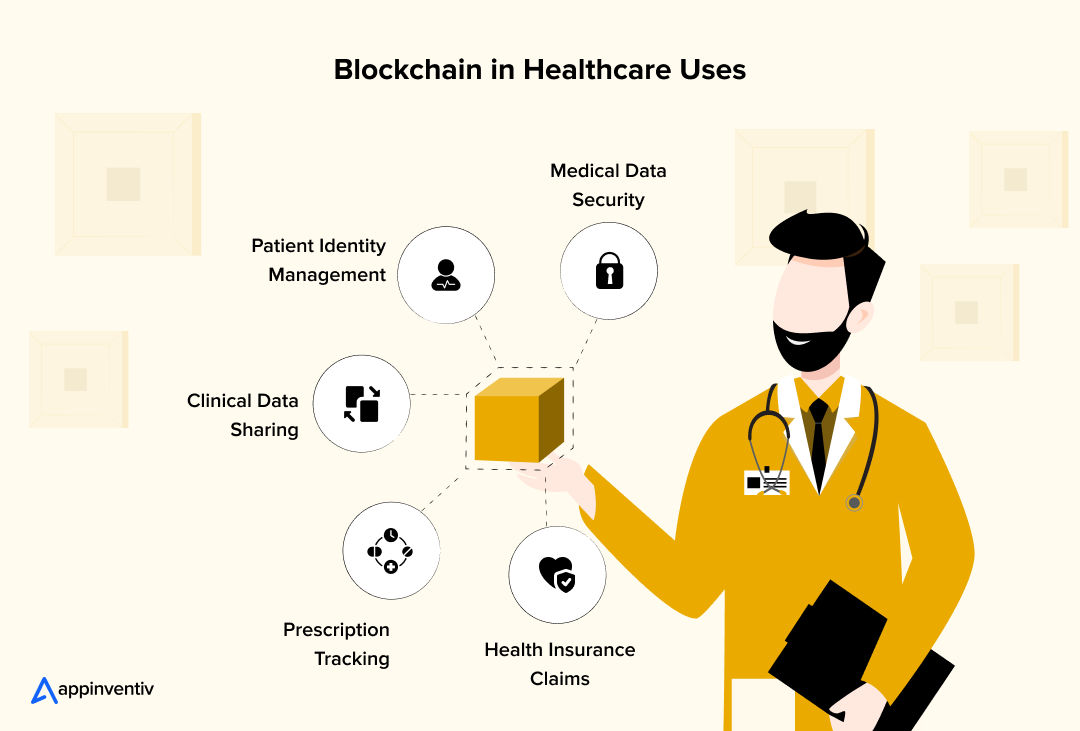
This also helps create better system interoperability, meaning different clinics or hospitals can safely share patient records. As a result, patient care becomes faster and more accurate, and operational costs are reduced.
Real-World Example: Guardtime Health
Guardtime uses a blockchain system to manage patient records. Their platform securely stores critical health data and ensures every access is logged and verified. This allows doctors to retrieve accurate, up-to-date information instantly, reducing administrative delays and improving care.
If you wish to leverage blockchain technology in the healthcare market, here’s a quick insight into the features of a blockchain-powered healthcare app:
| Feature | What does it do? |
|---|---|
| Patient Data Encryption | Ensures medical records are securely stored and protected from unauthorized access. |
| Role-Based Access Control | Grants access to patient data only to verified doctors, labs, or hospitals. |
| Real-Time Record Updates | Allows instant updating and sharing of patient information. |
| Decentralized Health ID | Provides patients with a unique blockchain-based health identity. |
| Data Traceability | Tracks who accessed or modified a patient record and when. |
| Cross-Hospital Data Exchange | Enables hospitals and labs to share patient records securely. |
| Consent Management | Lets patients give or revoke permission to access their data. |
| Audit Trail | Maintains a permanent log of all medical record activities. |
| Emergency Data Access | Allows verified access to critical health records during emergencies. |
| Integration with IoT Health Devices | Connects wearable health data securely to patient records. |
Blockchain in FinTech
Blockchain in businesses like FinTech is reshaping the sector by making processes faster, more secure, and less expensive. It removes the need for middlemen in transactions, enables secure identity checks, and helps build trust with automated smart contracts.
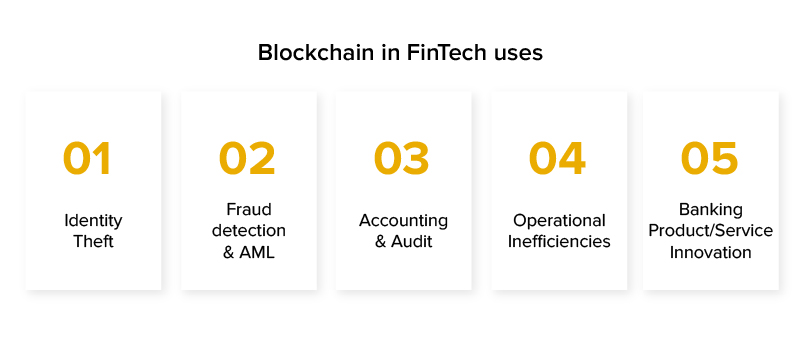
Blockchain is especially useful in areas such as digital payments, asset settlement, tokenized financial instruments, identity verification, and programmable transactions. Adoption is also moving into live financial infrastructure. Broadridge’s 2025 DLT in the Real World study, based on 427 respondents globally, found that 45% of banks had issued a digital asset in the previous 12 months, while 50% of North American firms were running live DLT or digital-asset projects.
Real-World Example: JPMorgan Chase
J.P. Morgan’s Kinexys provides blockchain-based infrastructure for institutional financial services. In November 2025, J.P. Morgan made its JPM Coin USD deposit token available to institutional clients on Base, an Ethereum Layer 2 blockchain, enabling on-chain money movement and near-instant 24/7 settlement.
In May 2025, Kinexys also demonstrated cross-chain delivery-versus-payment settlement involving tokenized U.S. Treasuries and USD deposits, showing how blockchain infrastructure can connect payments with tokenized assets across different networks.
If you are a business looking to leverage blockchain technology in banking or FinTech market, let’s offer you a quick insight into the features of a blockchain-powered fintech app:
| Feature | What Does it Do? |
|---|---|
| Digital Asset Wallet | Enables users to store and manage cryptocurrencies securely. |
| Smart Contract Automation | Automatically executes financial agreements like loans or insurance. |
| KYC Verification System | Stores and shares verified user identities securely across institutions. |
| Instant Settlement | Supports real-time payment processing with no intermediaries. |
| Fraud-Proof Transactions | Ensures transactions are traceable and tamper-resistant. |
| Tokenized Assets | Allows businesses to issue or manage digital versions of financial assets. |
| Currency Convertor | Enables easy conversion between cryptocurrencies and local currency. |
| Encrypted Transaction History | Stores user transaction logs securely on blockchain. |
| Peer-to-Peer Lending Interface | Facilitates secure direct lending between users. |
| AML Monitoring Integration | Adds automatic checks to detect suspicious financial activities. |
Blockchain in Real Estate
Real estate involves many stakeholders, long documentation processes, and often a lack of transparency. Blockchain app development can solve these problems by securely and unchangeably recording property data, transactions, and ownership history.
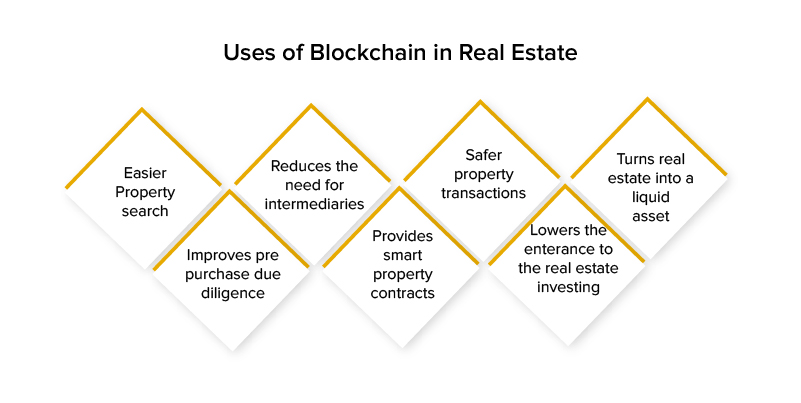
It reduces the need for intermediaries, speeds up deal closures, and prevents fraud by making every action traceable. It’s also useful for land registries, rental agreements, escrow services, and digital property tokenization.
Real-World Example: Red Swan CRE
In September 2025, RedSwan Digital Real Estate announced the tokenization of $100 million in commercial real estate assets on the Stellar blockchain. The portfolio included institutional-grade multifamily and hospitality properties, with the tokenized structure designed to support fractional ownership, greater transparency, and broader access to real-estate investments.
If you are a business looking to leverage blockchain technology in real-estate, let’s offer you a quick insight into the features of a blockchain-powered real estate app:
| Feature | What Does it Do? |
|---|---|
| Tokenized Property Listings | Breaks property ownership into digital tokens for easier investment. |
| Blockchain Land Registry | Stores property ownership and legal history immutably. |
| Buyer-Seller Verification | Confirms identities of both parties using digital KYC tools. |
| Instant Ownership Transfer | Uses smart contracts to complete transfers after payment. |
| Rental Contract Automation | Digitally handles lease terms, rent collection, and renewals. |
| Cross-Border Access | Let’s international investors buy and manage properties easily. |
| Escrow Payments | Holds funds securely until transaction terms are met. |
| Property Title Validation | Prevents fraud by verifying title authenticity on-chain. |
| Property Token Marketplace | Enables the resale or exchange of real estate tokens. |
| Document Timestamping | Adds proof-of-date to all legal property documents. |
Blockchain in Manufacturing and Supply Chain
Blockchain is also bringing transparency and efficiency to businesses like manufacturing and supply chains by recording every step in the supply chain. From raw materials to final delivery, businesses can track goods in real time, ensuring quality and preventing counterfeiting.
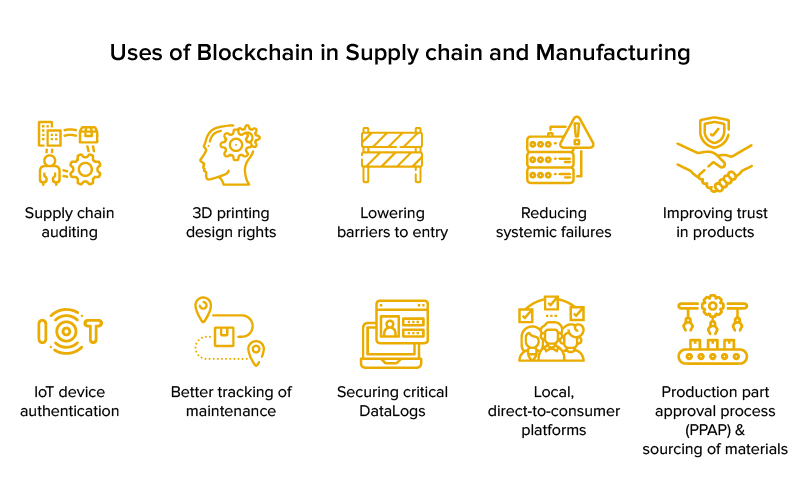
With IoT, blockchain helps monitor equipment, predict maintenance needs, and log device data securely. This makes operations smoother and more cost-effective, especially in global manufacturing environments.
Real-World Example: Walmart
Walmart continues to use blockchain as part of its food-traceability infrastructure. Its current supplier requirements include blockchain-based traceability for certain fresh-produce categories, with product information captured from the farm through subsequent supply-chain stages. The approach helps create a verifiable chain of product data that can support faster traceability and food-safety investigations.
If you are a business looking to leverage blockchain technology in the supply chain industry, let’s offer you a quick insight into the features of a blockchain-powered manufacturing or supply chain app:
| Feature | What Does it Do? |
|---|---|
| Batch-Level Product Tracking | Records product history at every stage from raw material to delivery. |
| Blockchain-Based Supplier Records | Maintains a verified list of supplier and vendor data. |
| Quality Certification Logs | Stores inspection reports and compliance certificates immutably. |
| IoT Integration for Asset Tracking | Connects sensors and scanners to live blockchain records. |
| Delivery Verification Logs | Confirms when and where goods were delivered. |
| Anti-Counterfeit Labeling | Tags products with blockchain-authenticated QR codes. |
| Smart Contract Payments | Automates supplier payments once goods are delivered. |
| Real-Time Inventory Updates | Updates warehouse stock data instantly across the network. |
| Tamper Alert System | Detects and records unauthorized handling during transport. |
| Cold Chain Monitoring | Tracks temperature-sensitive items like food or medicine. |
Blockchain in Transportation & Logistics
Transportation and logistics rely on large networks of partners and real-time tracking. Custom blockchain app development brings transparency, better coordination, and trust between all parties. It helps track goods from origin to destination, stores records securely, and automates payments through smart contracts.
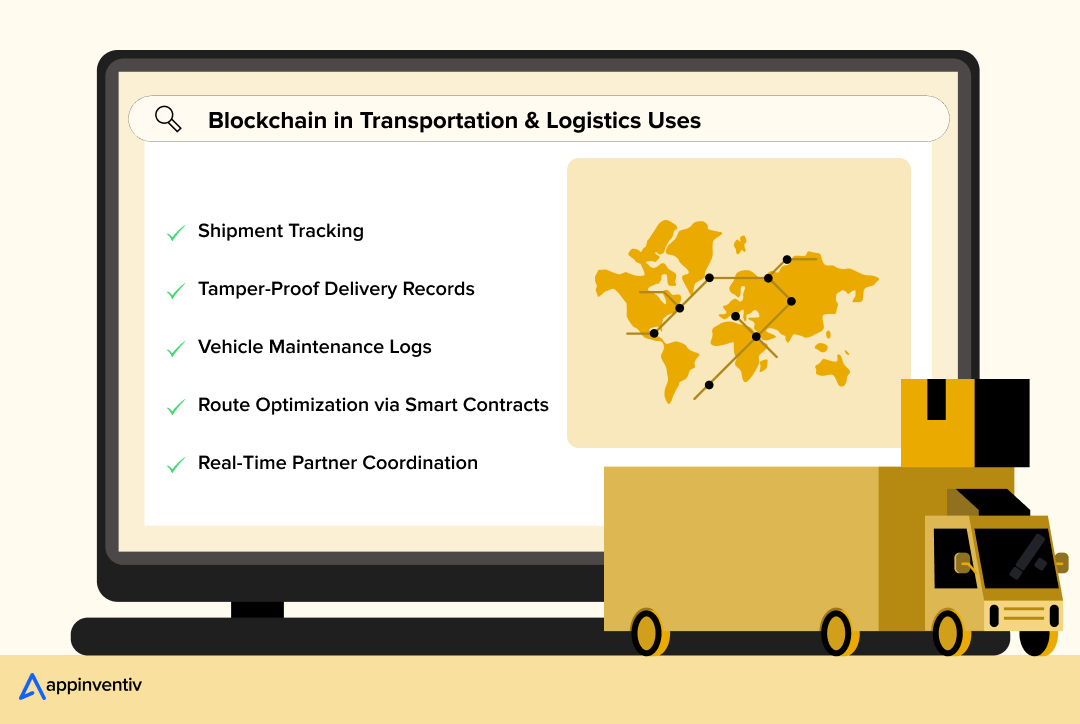
Blockchain in businesses like logistics and transportation also supports secure vehicle records, driver identity verification, and automated insurance claims, making the overall system more efficient and tamper-proof.
Real-World Example: FedEx
Blockchain can support transportation and logistics workflows that involve multiple parties, shared shipment records, document verification, and automated settlement. Its strongest use cases are those where carriers, shippers, customs authorities, insurers, and other stakeholders need a trusted shared record rather than separate systems.
For enterprise implementations, the architecture should define which data belongs on-chain, which remains off-chain, how participants are authenticated, and how blockchain records integrate with existing logistics platforms.
If you are a business looking to leverage blockchain technology in the transportation logistics market, let’s offer you a quick insight into the features of a blockchain-powered transportation app:
| Feature | What Does it Do? |
|---|---|
| Decentralized Shipment Tracking | Monitors real-time location and movement of shipments. |
| Verified Driver ID | Stores verified digital identities of drivers and handlers. |
| Smart Delivery Contracts | Automates payments and delivery confirmation. |
| Vehicle Maintenance Ledger | Keeps detailed vehicle service history on blockchain. |
| GPS Timestamping | Adds verified time and location data to delivery records. |
| Tamper-Proof Cargo Records | Prevents editing of shipment logs after dispatch. |
| Automated Insurance Claims | Processes claims automatically if delivery terms are unmet. |
| Partner Access Control | Allows logistics partners to view and update data securely. |
| Carbon Footprint Logs | Tracks and reports emissions for green logistics tracking. |
| Customs Clearance Automation | Speeds up border checks with verified digital documents. |
After looking into the various blockchain technology uses and how it impacts various sectors, let us move ahead and understand the cost associated with blockchain application development in detail.
It is vital for businesses to understand that the above mentioned applications of blockchain technology uses not only offer strategic advantages but also influence the overall development cost based on the complexity, industry requirements, and features involved.
How Much Does Blockchain App Development Cost?
Blockchain app development can be a powerful investment, but the cost depends on the complexity of your idea and your specific business requirements. On average, the cost can range from $40,000 to $200,000 or more, depending on the scope, features, type of industry, and more.
You can estimate your total blockchain application development cost using this basic formula:
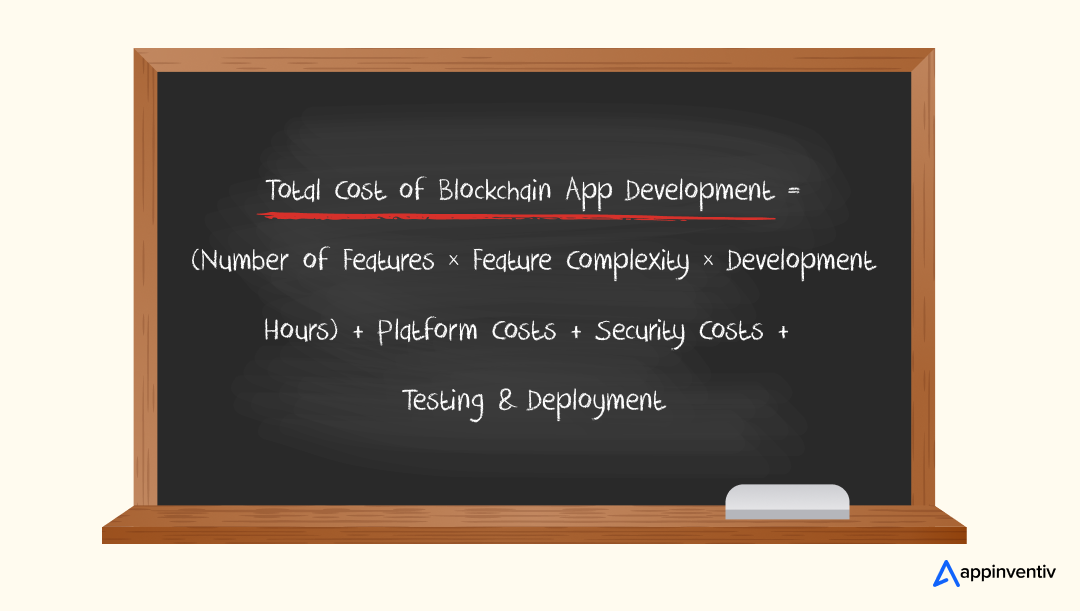
This helps give a clearer picture instead of just ballpark figures.
Here’s a quick breakdown of how different stages of development affect the budget:
1. Planning & Requirement Analysis – Involves research, use case identification, and feasibility analysis.
Cost range: $5,000 – $10,000
2. UI/UX Design – Includes app wireframes, visual design, and user journey flows.
Cost range: $5,000 – $15,000
3. Blockchain Architecture & Platform Setup – Selection and configuration of blockchain network.
Cost range: $10,000 – $30,000
4. Smart Contract Development – Coding the core blockchain logic.
Cost range: $10,000 – $25,000
5. App Development – Building the actual user interface, backend APIs, and integrating with smart contracts.
Cost range: $20,000 – $70,000
6. Testing & QA – Performance, security, and usability testing on testnets and simulated environments.
Cost range: $5,000 – $15,000
7. Deployment & Maintenance – Launching on mainnet, monitoring, bug fixes, and updates.
Cost range: $5,000 – $20,000+ annually
Also Read: How Much Does It Cost to Develop a Crypto Wallet App Like Metamask?
Factors Affecting Blockchain App Development Cost
The blockchain mobile app development cost depends on several important factors. Everything from the number of features of the blockchain app to the technical complexity and the expertise of your development team can influence the overall budget. Let us look at the key factors that impact blockchain app development costs:
| Factor | How It Affects Cost |
|---|---|
| App Complexity | More features usually require more time and thus, more budget |
| Blockchain Platform | Ethereum, Solana, Polygon, all these platforms have costs that vary by transaction speed and fees |
| Type of App | Wallet, NFT marketplace, DeFi, Supply Chain, etc, each has different needs |
| Smart Contract Logic | Complex contracts take longer to write, test, and secure |
| Security Requirements | Apps with high user sensitivity need advanced audits and protections |
| Third-Party Integrations | More external APIs and tools usually require higher integration time and thus, increased costs |
If you wish to understand in detail about the blockchain mobile app development cost, you can check out our blog on- Blockchain App Development Cost
Blockchain App Development Trends to Maximize ROI
Blockchain technology in business is evolving rapidly, and companies need to stay ahead by integrating the latest features that enhance security, transparency, and user trust. Leveraging these blockchain mobile app development trends can improve the performance and also deliver better ROI while future-proofing your solution.
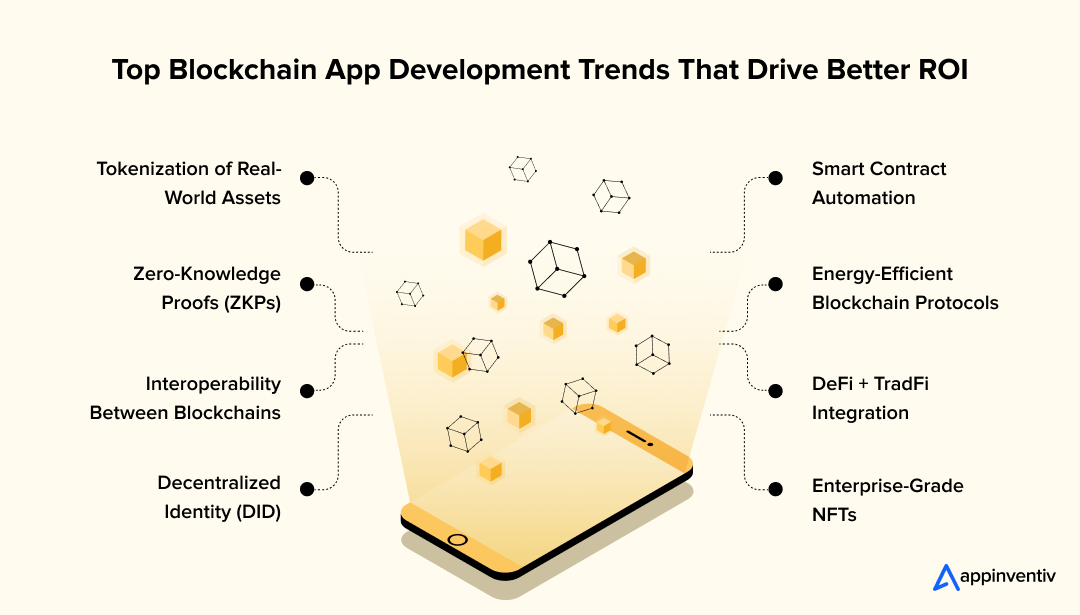
Tokenization of Real-World Assets
One of the major trends in blockchain technology in business is dominating the market is tokenization of assets. Businesses are now tokenizing physical assets like real estate, art, and commodities to enable fractional ownership and liquidity. This opens new investment avenues and simplifies asset transfers without traditional intermediaries.
Zero-Knowledge Proofs (ZKPs)
With growing concerns around data privacy, ZKPs allow users to prove something without revealing the actual data. It’s a game-changer for apps dealing with KYC or compliance-heavy industries.
Interoperability Between Blockchains
Users and businesses no longer want to be tied to a single chain. Cross-chain capabilities are rising, allowing apps to interact with multiple blockchains seamlessly, offering better flexibility, speed, and lower transaction costs.
[Also Read: Blockchain Interoperability: The Key to Connect Siloed Blockchain Networks]
Decentralized Identity (DID)
Blockchain-based identity systems give users full control over their personal data, improving both security and compliance. DIDs are becoming essential in sectors like healthcare, finance, and education.
Smart Contract Automation
Modern smart contracts are no longer basic and the future of blockchain technology will vouch for that. Smart contracts are being used to automate entire workflows in areas like insurance, supply chains, and lending. This reduces manual errors, speeds up operations, and cuts costs.
Energy-Efficient Blockchain Protocols
As sustainability becomes critical, businesses are choosing eco-friendly blockchain platforms like Tezos, Algorand, and Cardano that use Proof-of-Stake (PoS) or similar mechanisms.
DeFi + TradFi Integration
Traditional financial institutions are slowly integrating DeFi principles to offer more transparent, real-time, and programmable financial services like loans, trading, and investment management.
Enterprise-Grade NFTs
NFTs are no longer just for art and collectibles. Businesses are using them for supply chain tracking, product warranties, digital identities, and customer loyalty programs.
After looking into the blockchain app development trends, let us move ahead and understand in detail the advanced technology combinations that can take your blockchain app to the next level.
Game-Changing Technology Combinations That Help Businesses Maximize Blockchain ROI
While blockchain in business is powerful on its own, its true value comes to life when combined with other emerging technologies. These integrations drive smarter automation, deeper insights, and greater efficiency, helping businesses stay competitive and future-ready.
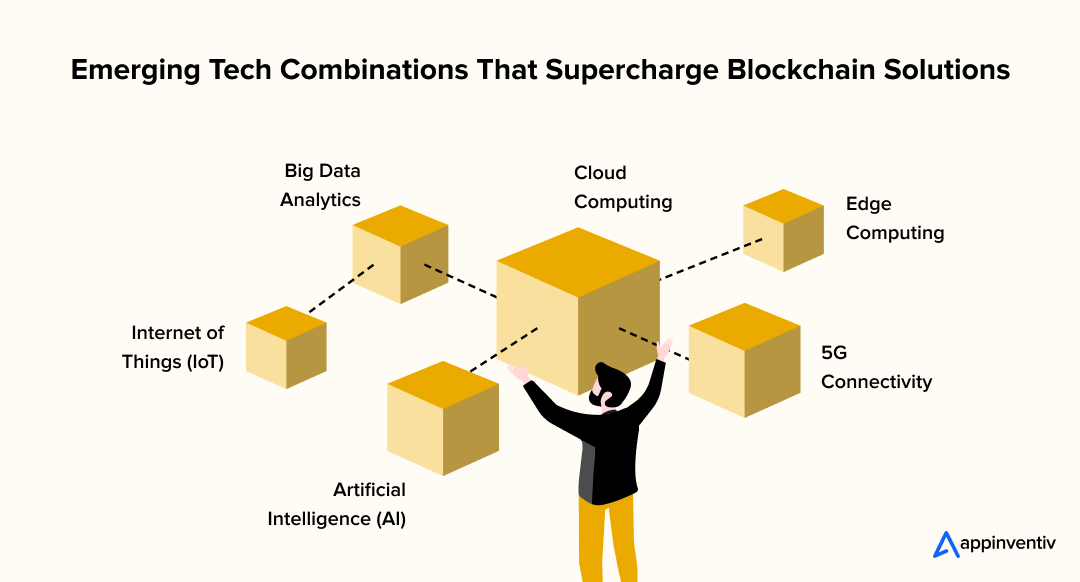
1. Artificial Intelligence (AI)
AI helps businesses make sense of data, automate decisions, and predict trends. When paired with blockchain, AI can use reliable, tamper-proof data to power smarter and safer business operations.
2. Internet of Things (IoT)
IoT devices collect real-time data from machines, vehicles, and other assets. Blockchain ensures this data is securely stored, verified, and cannot be changed, making it ideal for supply chain, logistics, and maintenance tracking.
3. Big Data Analytics
Blockchain makes sure the data being analyzed is accurate and transparent. Combining it with big data helps businesses gain deeper insights while maintaining data integrity and compliance.
4. Cloud Computing
Blockchain and the cloud allow decentralized apps to scale easily. The cloud provides flexible storage and processing power, while blockchain adds security and auditability to the data.
5. Edge Computing
Edge computing processes data closer to where it’s generated. Blockchain can then record this data securely, enabling faster, real-time decisions in manufacturing, healthcare, and energy industries.
6. 5G Connectivity
Faster data transmission through 5G supports real-time blockchain applications, especially in IoT-based sectors like smart cities, autonomous transport, and connected factories.
Challenges Businesses Face While Developing a Blockchain App
Custom blockchain app development offers great potential but also unique challenges. After finalizing the few blockchain business ideas you wish to implement, you must choose the right platform, meet security and compliance requirements, and more. Understanding these roadblocks early can save you time, money, and effort.
| Challenge | Why It Happens | Solution |
|---|---|---|
| Choosing the Right Blockchain Platform | Ethereum, Polygon, Solana, Hyperledger all offer different benefits. Picking the wrong one can lead to scalability or cost issues. | Before choosing, evaluate transaction speed, cost, and ecosystem. For enterprise apps, consider private chains like Hyperledger. |
| Ensuring Data Security & Compliance | Blockchain is secure, but storing sensitive user or business data improperly can lead to privacy violations. | Use encryption, tokenization, and privacy tools. Ensure GDPR compliance based on industry. |
| Smart Contract Bugs & Exploits | Errors in contract logic can cause major financial loss or security breaches. | Get smart contracts audited by experts. |
| High Development Costs | Building from scratch with custom features, secure infrastructure, and skilled teams can get expensive. | Start with an MVP and scale based on user feedback. |
| Scalability Bottlenecks | Public blockchains often face congestion and high fees. This limits app performance under heavy load. | Explore hybrid architectures. |
| Lack of User Awareness or Trust | Users may not understand how blockchain works or trust its safety. | Build simple, intuitive UX. Educate users through in-app onboarding and content. |
| Integration with Legacy Systems | Many businesses still use outdated systems that don’t connect well with blockchain. | Use APIs to bridge legacy databases and smart contracts. |
| Post-Launch Maintenance | Blockchain is complex. Apps need regular updates, monitoring, and upgrades for long-term success. | Allocate budget for monitoring tools, contract upgrades, and community feedback integration. |
Build beyond the demo with interoperability, legacy integration, security controls, and maintenance designed into the architecture from day one.
Why Appinventiv Is the Smartest Choice for Your Custom Blockchain App Development Needs
We hope this guide has helped you understand everything about blockchain business ideas, blockchain app development, from use cases and blockchain technology trends to costs and key challenges.
As blockchain technology continues to disrupt industries like finance, healthcare, energy, and supply chain, businesses that invest in blockchain technology and strategy today will lead tomorrow’s decentralized economy. At Appinventiv, we build blockchain apps and pave the way for secure, scalable, and future-ready platforms that deliver real business impact.
As a leading blockchain application development company, here’s why we are the right development partner for your project:
- Complete Blockchain Development Support
We take care of everything, from idea validation and smart contract development to launching your app on the main network and providing ongoing updates. You don’t have to work with different teams or worry about technical steps.
- Support for All Major Blockchain Platforms
We work with all popular blockchain platforms, such as Ethereum, Polygon, Solana, Hyperledger, and even private blockchains. We help you pick the right blockchain business idea and related platform based on your goals, budget, and more.
- Secure Smart Contracts
Our team carefully builds smart contracts and checks them for errors. This ensures that your app runs correctly, automates tasks safely, and protects against possible risks.
- Apps That Work Across Blockchains
We design apps that can connect with different blockchains, support more users as you grow, and work with other Web3 tools and platforms.
- Solutions Built for Your Industry
As a leading blockchain consulting services firm, we can help you leverage blockchain business opportunities for all kinds of industries. Whether you need a DeFi platform, an NFT marketplace, a digital identity tool, or a supply chain tracker, we build apps that best suit your business.
For instance, our experts recently developed Empire, a blockchain-powered hotel booking application that brings transparency and trust to travel reservations. The app allows users to book hotels securely using crypto payments, preventing fraud and double bookings.
We also built Nova, an innovative education app that uses blockchain to manage student records, course certifications, and learning milestones. The platform ensures that all academic data is secure, verifiable, and unaltered.
If you are ready to explore how blockchain can unlock value for your business, contact us. Let’s build your dream app together.
FAQs
Q. What is blockchain technology and how does it work?
A. Blockchain is a digital system for recording information securely, transparently, and unchangeable.
- It works as a shared digital ledger where data is stored in blocks and linked in a chain.
- Each block contains records of transactions, a timestamp, and a unique code called a hash.
- Once a block is full, it’s connected to the previous one, forming a chain that cannot be changed without altering all the blocks.
- Blockchain runs on a decentralized network of computers, which makes it more secure and resistant to tampering.
Q. What is the purpose of blockchain technology in business?
A. The main goal of blockchain app development for businesses is to create trust, transparency, and security in digital transactions, without needing middlemen.
- It enables secure, real-time data sharing across multiple stakeholders without relying on intermediaries.
- It reduces operational inefficiencies in multi-party processes like procurement, logistics, and cross-border payments.
- It provides an immutable audit trail for compliance, fraud prevention, and dispute resolution.
- It helps automate contracts and workflows through smart contracts, reducing manual effort and human error.
- It builds transparency and accountability in supplier, partner, and customer networks.
Q. What are the blockchain business opportunities?
A. Some leading blockchain business opportunities include: supply chain transparency, smart contracts, decentralized finance (DeFi), digital identity verification, and secure data sharing.
Q. Why is leveraging AI and how does blockchain technology works for businesses?
A. Combining AI and blockchain is becoming essential for businesses that want to stay ahead in a fast-changing digital world. AI helps companies automate routine tasks, analyze data to predict blockchain technology trends, and offer personalized services to customers. Blockchain, on the other hand, ensures that the data being used by AI is secure, accurate, and cannot be tampered with. These technologies create a powerful foundation for smarter and more reliable operations when used together. They enable businesses to improve efficiency, reduce risk, and build trust across their systems.
Q. What are the future trends for blockchain technology in gaming?
A. Future trends include the growth of play-to-earn models, integration with virtual reality for immersive economies, and increased adoption of decentralized platforms to give players more control over their gaming data.
Q. What are the security measures required for blockchain wallet app development?
A. Key security measures include encryption for data protection, multi-factor authentication, cold storage for private keys, regular security audits, and integration of anti-malware systems.


Develop a blockchain-powered app with us!

Fast 2-minute response, fully NDA-protected.
Mobile app development now sits at the center of how large companies operate and grow. Banks route payments, loan checks, and alerts through mobile systems. Retail brands track that over half of their digital sales now come from apps, based on data from Statista. Inside the business, custom apps cut manual work across logistics, finance,…

When Google acquired Fitbit for $2.1 billion in 2021, it was not just buying a fitness tracker but investing in a thriving ecosystem powered by wearable apps. Fitbit’s success was not just about hardware; its app’s ability to deliver real-time health insights, sync seamlessly with multiple devices, and engage users with personalized recommendations made it…

Data science is the domain that couples data-bound analytical techniques along with scientific theories to extract insights for business stakeholders. Its form, factor and magnitude enable businesses to optimize operational fluency, identify new business opportunities, and alleviate the functional performance of departments like marketing and sales. Put simply, data science imparts competitive advantages over rivals…